



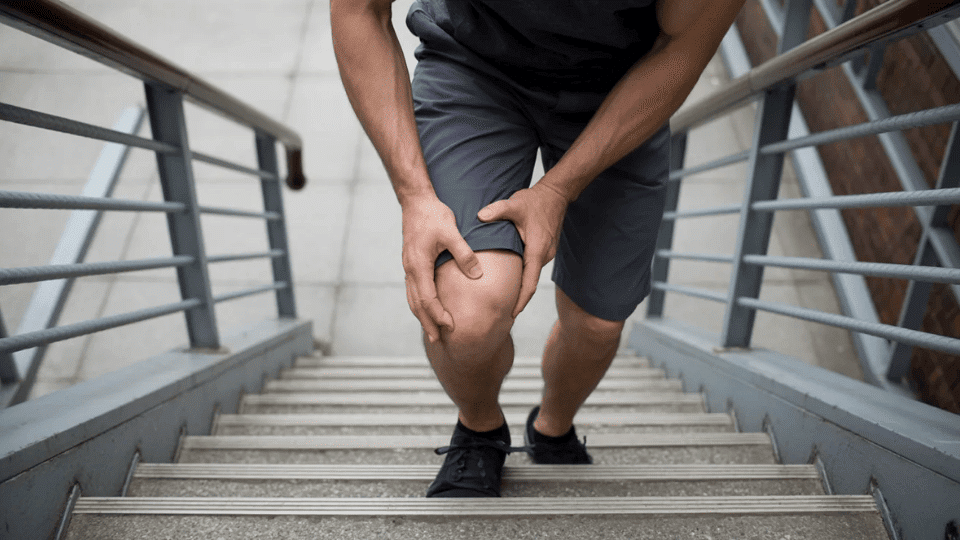






That dull ache when you bend down. The sharp pinch of climbing the first step in the morning. The knee that swells after a long walk, with no clear reason why.
Knee pain affects millions of people, and from what I have seen, most of them are managing it blindly. No clear cause, no real plan, just hoping it goes away on its own.
It usually does not. What actually works is understanding what is driving the pain in the first place, if that is a structural issue, a movement problem, or something happening at the hip or ankle that your knee is quietly paying for.
I cover causes, diagnosis, exercises, nutrition, recovery timelines, and home care, all in one place.
What Your Knee Is Actually Made Of
Before fixing a problem, it helps to understand what’s there. Your knee is a hinge joint connecting your thigh bone (femur) to your shin bone (tibia) .
The kneecap (patella) sits in front, protecting the joint and helping your leg muscles work more efficiently. Inside the joint, cartilage acts as a smooth cushion between the bones.
Two crescent-shaped pads, called the menisci, act as shock absorbers. Four ligaments, the ACL, PCL, MCL, and LCL , hold everything in place during movement.
Tendons connect your muscles to the bones. The patellar tendon, just below the kneecap, is one of the most commonly irritated.
Small fluid-filled sacs called bursae sit around the joint and reduce friction. When they get inflamed, that’s bursitis. All of these parts work together; when one gets overloaded, you feel it.
Why Does Knee Pain Happen?
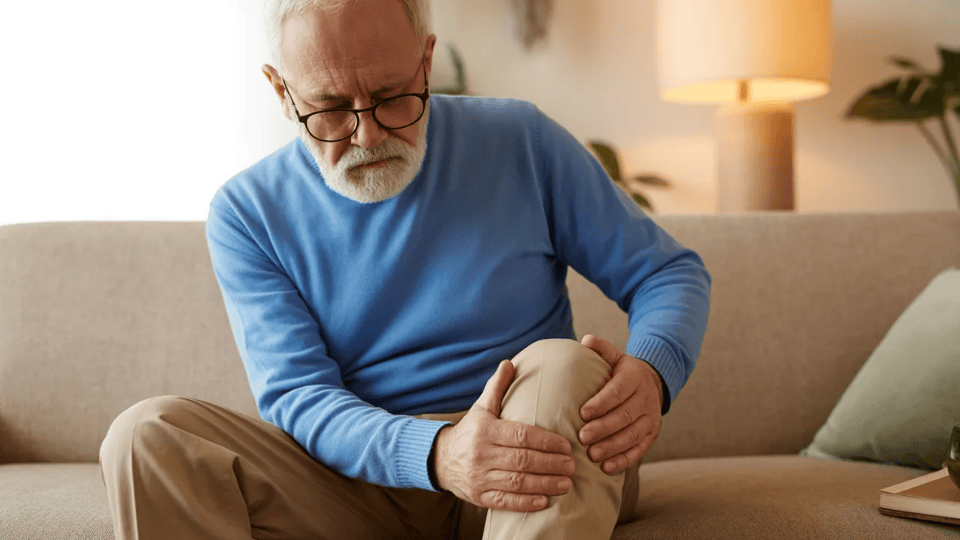
Knee pain doesn’t come from just one thing. Here are the most common causes, along with what makes each one distinct.
1. Patellofemoral Pain Syndrome (Runner’s Knee)
Pain around or behind the kneecap is caused by the kneecap not tracking properly in its groove. Very common among runners, cyclists, and frequent squatters. Friction and irritation build up gradually over time.
- Dull ache at the front of the knee, especially when going downstairs
- Gets worse with activity and improves with rest
2. Osteoarthritis
Wear-and-tear of the cartilage inside the joint. Most common in people over 50, though earlier injuries or years of heavy loading can bring it on sooner. Bones start moving closer together as cartilage breaks down.
- Morning stiffness and a deep, persistent ache
- Swelling that worsens after long periods of activity
3. Ligament Injuries
The ACL and MCL are the most frequently injured. These usually come from sudden stops, pivots, or direct impact, common in football, basketball, and skiing. Injuries range from mild stretches to full tears.
- Sudden sharp pain and a feeling of instability
- Rapid swelling within the first few hours
4. Meniscus Tears
The meniscus can tear from a sudden twist or gradually from years of use. Younger people tend to get these from sport; older adults often get degenerative tears from normal wear.
- Clicking, catching, or locking sensation when bending the knee
- Swelling and localized tenderness along the joint line
5. Patellar Tendinitis (Jumper’s Knee)
Inflammation of the patellar tendon just below the kneecap. Most common in volleyball and basketball players, anyone who jumps or sprints repeatedly. The tendon gets overloaded faster than it can recover.
- Pain directly below the kneecap, pinpoint tender to touch
- Worse when jumping, kneeling, or climbing stairs
6. IT Band Syndrome
The iliotibial band runs down the outside of your thigh. When it gets tight and inflamed, it rubs against the outer knee. Runners get this one a lot, usually after increasing mileage too quickly.
- Sharp or burning pain on the outer side of the knee
- Typically starts during a run and worsens as you continue
7. Bursitis
When a bursa becomes inflamed, it causes swelling and tenderness around the joint. Often comes from kneeling on hard surfaces for extended periods or from a direct hit to the knee.
- Noticeable swelling and warmth around the kneecap
- Tenderness when pressing directly on the front of the knee
8. Overuse and Poor Movement Mechanics
No specific diagnosis, the knee hurts because it’s absorbing more load than it can handle. Weak glutes, poor squat form, or a sudden spike in training volume are the usual culprits.
- Gradual onset with no single incident you can point to
- Pain that increases progressively the more you do
9. How Body Weight Loads Your Knee
Every extra pound of body weight places roughly four pounds of pressure on your knee joints when you walk. On stairs, that multiplier climbs to around seven, meaning the joint load adds up fast with every step you take.
- Losing 10 to 15 lbs can reduce daily joint discomfort noticeably
- High-impact exercise may not be the right entry point; cycling, swimming, or walking protects the joint while still building strength
Acute vs. Chronic: What Kind of Pain Is This?
Knowing which type of knee pain you have changes everything about how you respond to it. Here’s how they differ.
| Factors | Acute Pain | Chronic Pain |
|---|---|---|
| Onset | Suddenly, during or right after a specific event | Gradual, builds over weeks or months |
| Cause | Ligament tear, meniscus injury, direct impact | Overuse, poor movement mechanics, and arthritis |
| Feel | Sharp, immediate, often with rapid swelling | Dull ache, stiffness, worsens with activity |
| First response | Rest and ice for 48 hours | Movement and strengthening, not more rest |
| Red flag signs | Cannot bear weight, visible deformity, knee locks | No improvement after 2–3 weeks of consistent rehab |
Acute pain needs immediate offloading; movement too soon makes it worse. Chronic pain usually gets worse with prolonged rest, not better. Either way, if the knee locks, gives way, or shows no improvement after two to three weeks, see a doctor.
Your Hips and Ankles Are Probably Involved Too
A lot of knee pain doesn’t start in the knee at all. Your body works as a chain. The knee sits right in the middle, between the hip above and the ankle below.
When either joint isn’t doing its job, the knee absorbs stress it was never designed to handle alone.
Weak glutes let the thigh rotate inward during movement, pulling the kneecap off its tracking path. Tight hip flexors shift the pelvis, changing the entire line of force through the leg.
For people who’ve already treated the knee directly and still can’t get relief, psoas tightness affecting your knees is often what’s been missed.
Poor ankle mobility does the same from below; if the ankle can’t flex properly, the knee collapses inward to compensate. Hip pain and knee strength are more connected than most people realize.
Knee Pain by Age Group
Knee pain shows up differently depending on where you are in life. The cause and the right response shift with age.
| Age Group | Common Condition | Key Symptom |
|---|---|---|
| Teens (12–18) | Osgood-Schlatter Disease | Pain and swelling just below the kneecap, worse during sport |
| Young Adults (19–35) | Runner’s knee, ligament injuries, IT band | Front-of-knee ache, outer knee pain, instability |
| Adults (36–55) | Patellar tendinitis, meniscus tears, and overuse | Below-kneecap tenderness, stiffness, and clicking |
| Older Adults (55+) | Osteoarthritis, bursitis | Morning stiffness, deep ache, post-activity swelling |
Osgood-Schlatter is often dismissed in teenagers; it can look alarming, but responds well to activity modification and stretching. For older adults, gentle, consistent movement supports arthritic knees far better than rest does.
Three Exercises Everyone With Knee Pain Should Know
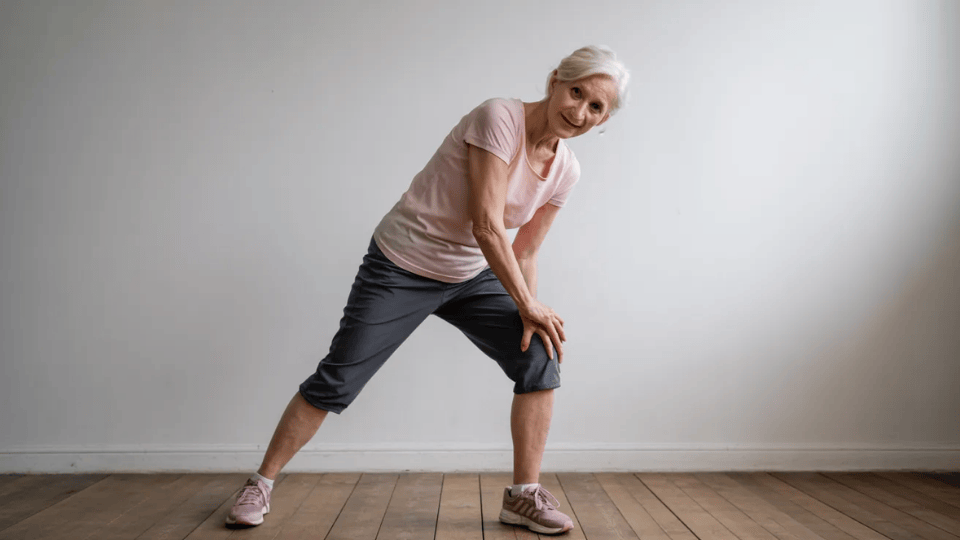
These three movements are the foundation of almost every knee rehab plan I build. No equipment needed. They target the root causes, not just the symptoms. Start here before anything else.
1. Glute Bridge
Lie on your back with knees bent and feet flat. Push through your heels and lift your hips until your body forms a straight line from shoulders to knees. Hold two seconds at the top, then lower slowly.
This directly strengthens the glutes, the muscle group that stops the knee from collapsing inward during movement.
- 3 sets of 15 reps
- Squeeze the glutes at the top, don’t arch the lower back
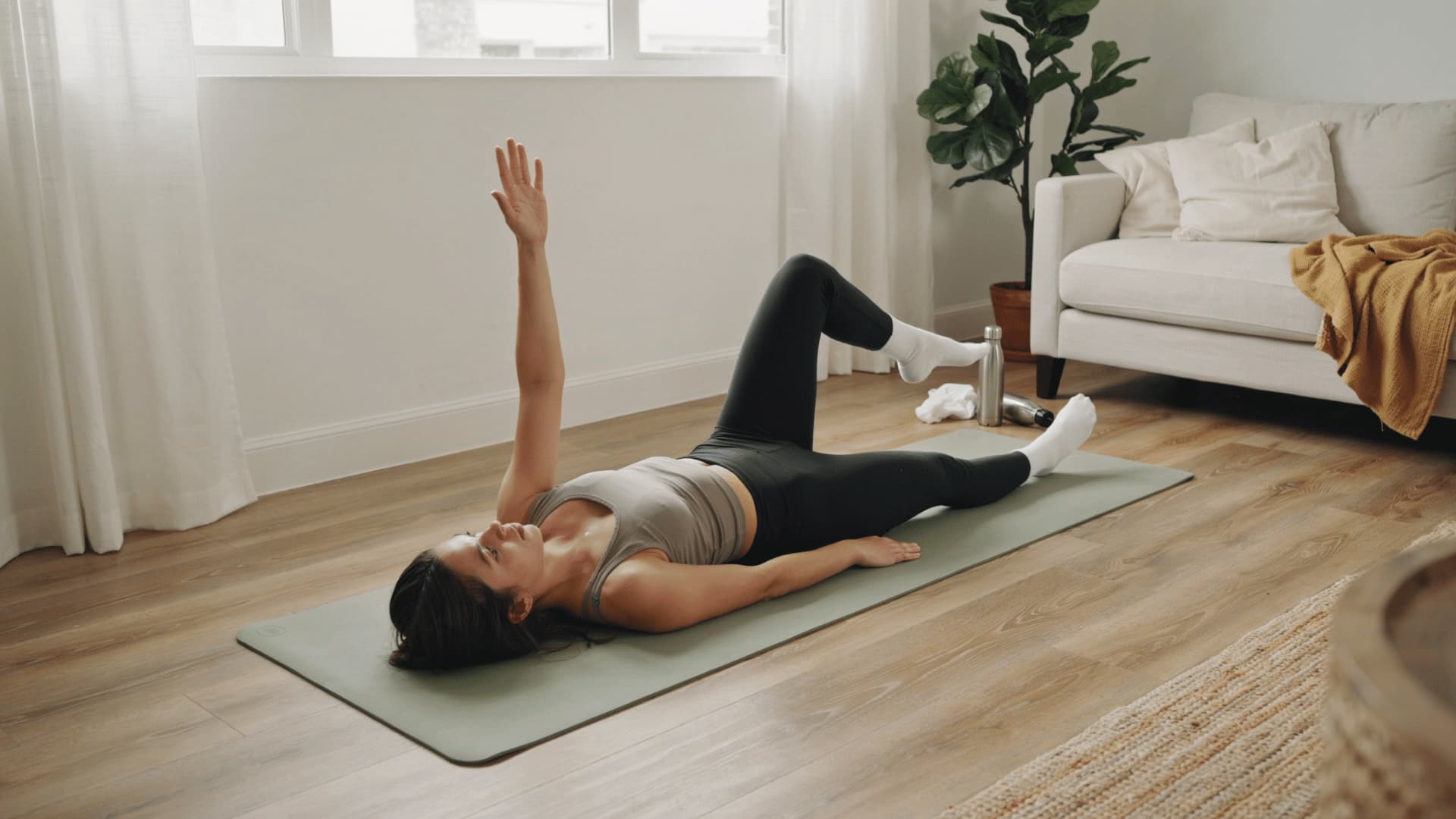
2. Straight Leg Raise
Lie on your back. Bend one knee with the foot flat. Keep the other leg straight and raise it to about 45 degrees.
Hold two seconds, then lower slowly. This builds quad strength without putting any bending load through the knee, ideal when the joint is too sore for loaded movements.
- 3 sets of 12 reps each side
- Keep the core engaged so the lower back stays flat on the floor
3. Clamshell
Lie on your side with knees bent at roughly 45 degrees. Keep feet together and rotate the top knee open like a clamshell. Hold one second at the top, then lower with control.
Weak hip abductors are one of the most overlooked causes of knee pain; this targets them directly.
- 3 sets of 12 reps each side
- Keep the pelvis still; movement should be isolated to the hip only
Knee Pain During Specific Activities
Where and when your knee hurts tells you a lot about what’s driving it. Here’s the breakdown by activity.
1. When It Hurts to Squat
Squat pain usually means the kneecap is being pushed against the femur, driven by stiff ankles, inactive glutes, or caving-in knees. Two movements that address this specifically:
| Exercise | How to Do It | Why It Helps |
|---|---|---|
| Terminal Knee Extension (TKE) | Loop a band at knee height, step back, and straighten the knee against the band | Activates the VMO, the inner quad that controls kneecap tracking |
| Ankle Mobility Drill | Stand 4 inches from a wall, drive the knee forward without lifting the heel | Improves dorsiflexion so the knee stops compensating inward |
Weakness in the VMO and restricted ankle mobility are also why pain tends to show up at the bottom of a squat, not at the top, the same mechanics behind squatting with knee discomfort that doesn’t respond to rest alone.
2. When It Hurts on Stairs
Stair pain typically points to quad weakness, patellofemoral irritation, or a meniscus issue. The fix is building single-leg load control:
| Exercise | How to Do It | Why It Helps |
|---|---|---|
| Step-Down | Stand on a low step (6–8 inches), lower the free foot to the floor slowly over 3–4 seconds | Builds the quad control that directly mimics stair descent |
| VMO Squeeze | Sit in a chair, squeeze a rolled towel between your knees for 5 seconds | Isolates the inner quad, particularly effective for patellofemoral pain |
The quad control built through step-downs is also what makes climbing stairs with knee pain feel different going up versus coming down, two distinct muscle demands on the same joint.
3. When It Hurts to Run
Running pain most often comes from IT band syndrome or patellar tendinitis, both overuse injuries where the knee is overworking because the hips aren’t contributing enough.
- Strengthen glutes and hip abductors first; the clamshell in the section above is the direct starting point
- Reduce mileage temporarily before adding any loading work
- Check the running surface and footwear before assuming it’s a strength problem alone
How to Manage Pain at Home
For support during activity, sleeve braces provide compression to reduce general soreness. Hinged braces limit
For acute flare-ups, RICE is the right first move, but the order and the details matter more than most people think.
- R(est): not complete bed rest, just stopping whatever triggered the pain
- I(ce): within the first few hours, 15 to 20 minutes at a time, never directly on the skin
- C(ompression): a sleeve or bandage applied early, before the swelling sets in
- E(levation): leg above heart level, lying down with a pillow under the calf, not just propped on a footstool
Patellar straps sit just below the kneecap and reduce tendon irritation during movement. KT tape can offload the kneecap or IT band, though the application takes a little practice to get right.
To specifically heal knee ligament injuries , natural approaches such as cold therapy, compression, and anti-inflammatory foods can support each stage.
What to Eat for Knee Recovery
What you eat affects how fast your knee heals, more than most people realize.
| What to Add | Why It Helps |
|---|---|
| Omega-3 fatty acids (fish, flaxseed, walnuts) | Reduce systemic inflammation and joint stiffness |
| Collagen with Vitamin C | Supports repair of cartilage, tendons, and ligaments |
| Vitamin D and calcium | Maintain bone density and support muscle function |
| Turmeric (curcumin) | Mild anti-inflammatory, takes 4 to 8 weeks of consistent use |
Ultra-processed foods, excess sugar, and refined carbohydrates drive inflammation and slow recovery. You don’t need to eat perfectly, but consistently reducing these makes a real difference. Hydration matters too: cartilage depends on fluid movement to stay nourished since it has no direct blood supply.
How Long Does Recovery Take?
The honest answer: it depends on what’s wrong and how consistently you do the work.
| Typical Timeline | Condition |
|---|---|
| Days to 2 weeks | Minor overuse or flare-up |
| 3 to 6 weeks | Patellar tendinitis (mild) |
| 4 to 8 weeks | IT band syndrome |
| 6 to 12 weeks | Meniscus tear (conservative) |
| 4 to 12 weeks | Ligament sprain (Grade I–II) |
| 6 to 12 months | ACL tear (post-surgery) |
| Ongoing management, no fixed endpoint | Osteoarthritis |
Pain going away is not the same as being fully healed. Tendons and ligaments take longer to remodel than they take to stop hurting.
Returning to full activity before that process is complete is the most common reason re-injuries happen; progress gradually, not just painlessly.
Final Thoughts
Knee pain rarely resolves on its own from sitting still. But pushing through it blindly doesn’t work either. The middle ground is consistent, smart movement, the right things, at the right load, with enough patience to let the tissue respond.
Start with what your body allows. Strengthen the muscles that support the knee. Address what’s happening at the hip and ankle. Give it time.
Most people I work with see real improvement in four to eight weeks, not from anything complicated, but from showing up and getting the basics right. Your knee is more resilient than you think. Give it the right input, and it will respond.