










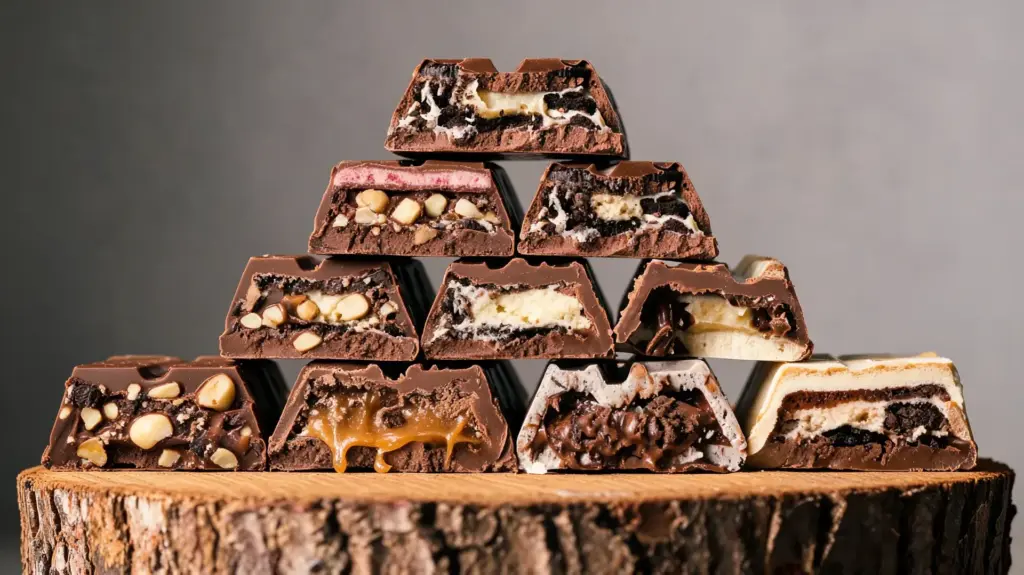

That chocolate bar at the checkout counter looks harmless, but the label tells a completely different story.
After a decade of working with clients on restricted diets, chocolate comes up in my sessions more than most people expect. It’s one of those foods I’ve seen cause the most confusion; innocent on the outside, complicated the moment you flip it over and read what’s actually in it.
Pure chocolate is naturally safe. The problem starts the moment manufacturers begin adding things to it. What follows breaks down which types are safe, which ones carry hidden risks, and exactly what to check before buying; including whether does chocolate have gluten is even the right question to ask.
Does Chocolate Have Gluten?
The short answer: pure chocolate does not have gluten. Cocoa beans, cocoa butter, and sugar — the core building blocks of chocolate; are all naturally gluten-free, much like many gluten-free diet carbs that are often misunderstood. So, is chocolate gluten-free in its most basic form? Yes, it is.
The confusion starts when you factor in everything modern manufacturing adds to the mix. Milk solids, emulsifiers, flavorings, fillings, and coating agents all create real pathways for gluten to appear in a product.
Even without intentional wheat-based additives, cross-contamination during production is a documented risk.
For someone with celiac disease, even trace amounts of gluten, as low as 20 parts per million, can trigger a reaction. So while chocolate as a raw ingredient is safe, most products on a store shelf deserve a much closer look.
| Product Category | Gluten Risk Level | Why It Matters |
| Bars with cookie, pretzel, wafer layers | High | Direct gluten ingredients like wheat or malt |
| Cocoa mixes and assorted chocolates | High | Often includes gluten or faces cross-contamination |
| Flavored bars and processed snack coatings | Moderate | Add-ins and shared equipment increase risk |
| Plain dark chocolate and cocoa powder | Low | Simple ingredients with fewer gluten pathways |
| Plain chocolate chips (GF facilities) | Low | Safer when made in dedicated environments |
What Makes Some Chocolate Not Gluten-Free?
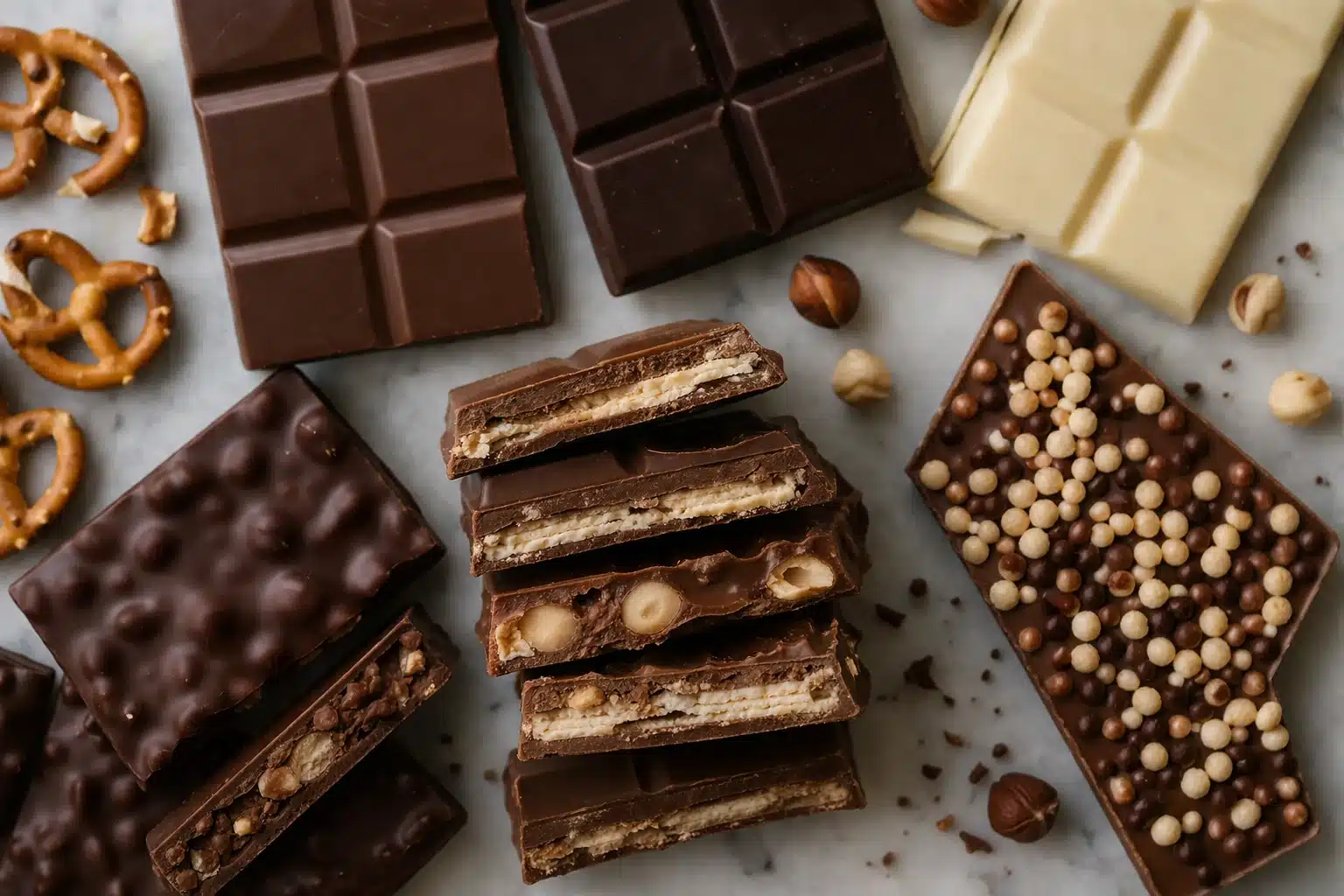
Plain chocolate has a clean, short ingredient list. The moment manufacturers start adding to it, the risk of gluten appearing through direct additives or shared equipment becomes very real.
1. Added Ingredients
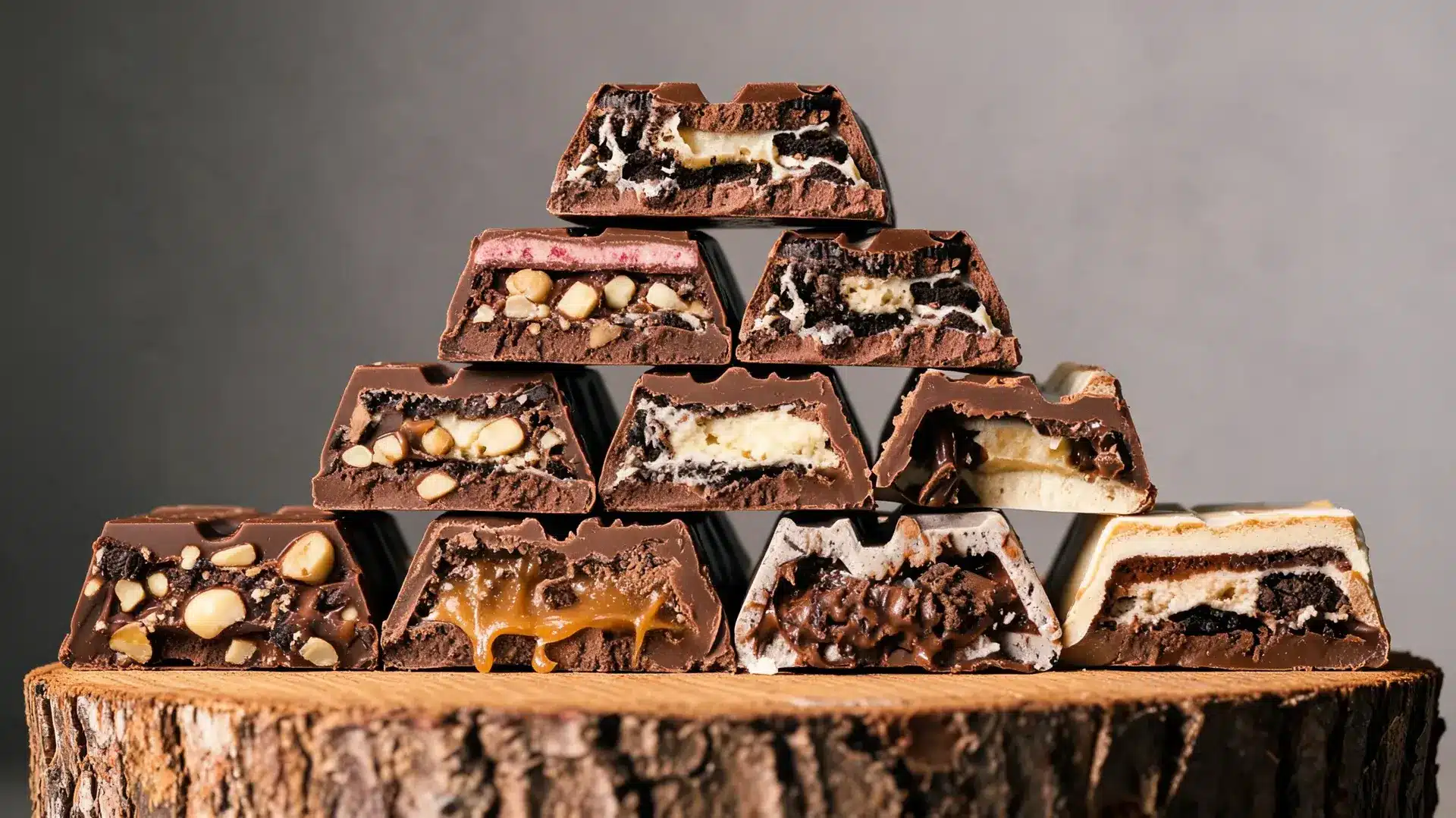
Common additions like cookie dough, pretzels, wafer pieces, and crispy rice can turn a naturally safe product into a gluten hazard. Malted barley is one of the most overlooked culprits; it shows up in flavored bars and some milk chocolates without much notice on the front label.
Chocolate-covered cereals and multi-layer candy bars almost always carry a gluten risk from at least one ingredient somewhere in the lineup.
2. Hidden Gluten in Flavorings
Some “natural flavors” and emulsifiers carry gluten, and that’s not always easy to spot at a glance. Malt flavoring is commonly used in flavored or sweetened chocolates and is one of the easiest things to miss on a label.
These ingredients don’t need to be listed prominently; they can sit in the middle of a long ingredient list and still trigger a reaction for someone with celiac disease.
I always tell clients to avoid anything with “barley malt extract” or “malt flavoring” on the label; both come from barley, which contains gluten.
These ingredients show up more than you’d think in chocolates marketed as “natural” or “artisan,” and that wholesome packaging makes it easy to stop paying attention.
3. Cross-Contamination During Manufacturing
Even when a chocolate product contains zero intentionally gluten-containing ingredients, the production line still matters. Many manufacturers run chocolate bars on the same equipment used for wheat-based or malt-containing products.
“May contain wheat” and “processed in a facility with wheat” are not interchangeable warnings; the former signals a more direct risk. For anyone with celiac disease, both labels call for real caution.
None of these risks makes chocolate off-limits for a gluten-free diet. They just make label-reading a necessary step. It’s also worth noting that gluten-free bread carbs follow the same pattern; removing gluten doesn’t lower carbohydrate intake.
Once you know what to look for, specific ingredients, facility warnings, and product types, picking a safe bar gets considerably easier.
4. Compound Chocolate vs. Real Chocolate
This one trips up a lot of buyers. Real chocolate is made with cocoa butter. Compound chocolate is the kind used in candy coatings, cheap confections, and most commercial baked goods.
It swaps cocoa butter out for vegetable oils and throws in extra emulsifiers, stabilizers, and flavorings. All those added ingredients mean more chances for gluten to sneak in.
If a label says “chocolate-flavored coating” or “chocolatey” instead of just “chocolate,” you’re looking at compound chocolate. Those are the ones I’d read extra carefully before buying.
Is All Chocolate Safe? Breaking It Down by Type
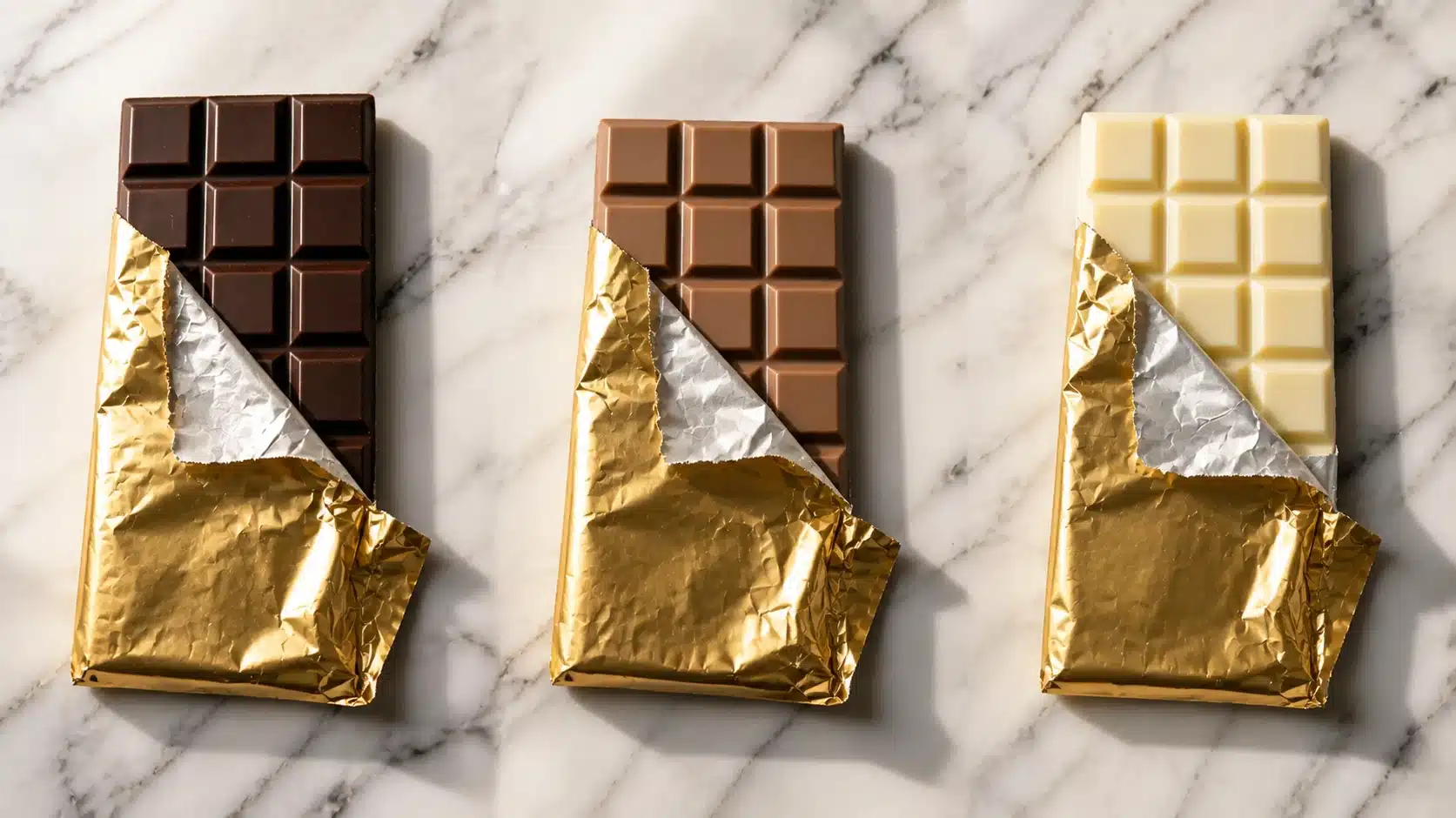
Not every type of chocolate carries the same risk. Dark, milk, and white each have a different base formula, and that directly affects how likely they are to contain gluten.
1. Is Dark Chocolate Safe?
Dark chocolate is generally the safest type for a gluten-free diet. Its simpler base and shorter ingredient lists make it a reliable starting point when choosing carefully.
| Product Type | Gluten Risk | Why |
| Plain 70%+ dark bar (3–5 ingredients) | Low | No added fillings or malt |
| Flavored dark bar (espresso, caramel, dried fruit) | Moderate | Additives may carry gluten |
| Dark bar with crispy or wafer layers | High | Direct gluten-containing add-ins |
From my standpoint as a registered dietitian, a plain dark bar with 70% or more cocoa and five ingredients or fewer is a reasonable everyday choice for gluten-sensitive clients. Just confirm the facility warning reads clean before committing to a brand regularly.
2. Is Milk Chocolate Safe?
Milk chocolate has a gluten-free base, but it tends to attract more add-ins than dark chocolate. That makes it a higher-risk category overall, even when the core ingredients look clean.
| Product Type | Gluten Risk | Why |
| Plain milk chocolate (cocoa, milk, sugar only) | Low | No added malt or fillings |
| Milk bar with crispy rice or wafer layers | High | Direct gluten from add-ins |
| Malt-flavored or caramel milk chocolate | High | Malt extract is a direct gluten source |
Multipacks and seasonal tins are particularly high-risk because shared production lines are standard at scale. Even familiar brands can quietly change formulations without any clear notice on the packaging, so checking the label every single time is the only fully reliable habit.
3. Is White Chocolate Safe?
White chocolate’s core ingredients, cocoa butter, sugar, and milk solids, are naturally gluten-free. The real risk starts with flavored varieties, which almost always carry added ingredients worth a close look.
| Product Type | Gluten Risk | Why |
| Plain white chocolate bar | Low | Minimal ingredients, no fillers |
| Flavored white bar (matcha, strawberry, cookie) | Moderate to High | Flavoring agents may contain gluten |
| White chocolate coating on commercial snacks | High | Compound coatings often include additives |
If you’re managing multiple food sensitivities alongside a gluten restriction, flavored white chocolate products deserve extra scrutiny. All three types of chocolate can fit a gluten-free diet in their plain forms. The risk scales with complexity; the more add-ins, flavors, or shared equipment involved, the more carefully you need to read what’s on the label.
How Much Gluten Is Actually Dangerous?
The Food and Drug Administration sets the threshold for gluten-free labeling at 20 parts per million, the level at which research shows the average person with celiac disease can eat without triggering measurable intestinal damage. It is not a comfort zone; it is a clinical floor.
That number matters because celiac disease is an autoimmune condition where gluten exposure causes the immune system to attack the small intestine, whether or not symptoms appear. Someone with celiac disease can sustain real damage from trace exposure and feel nothing at the time.
Non-celiac gluten sensitivity works differently; it doesn’t carry the same immune-mediated damage, and tolerance varies from person to person; similar to how individual responses vary with an antihistamine diet approach that targets inflammation through food choices. For celiac disease, self-reported tolerance is an unreliable guide.
The absence of a reaction doesn’t mean the product was safe; it means the damage went unnoticed. That context makes the difference between chocolate types much easier to read.
Gluten-Free Chocolate and Candy Picks
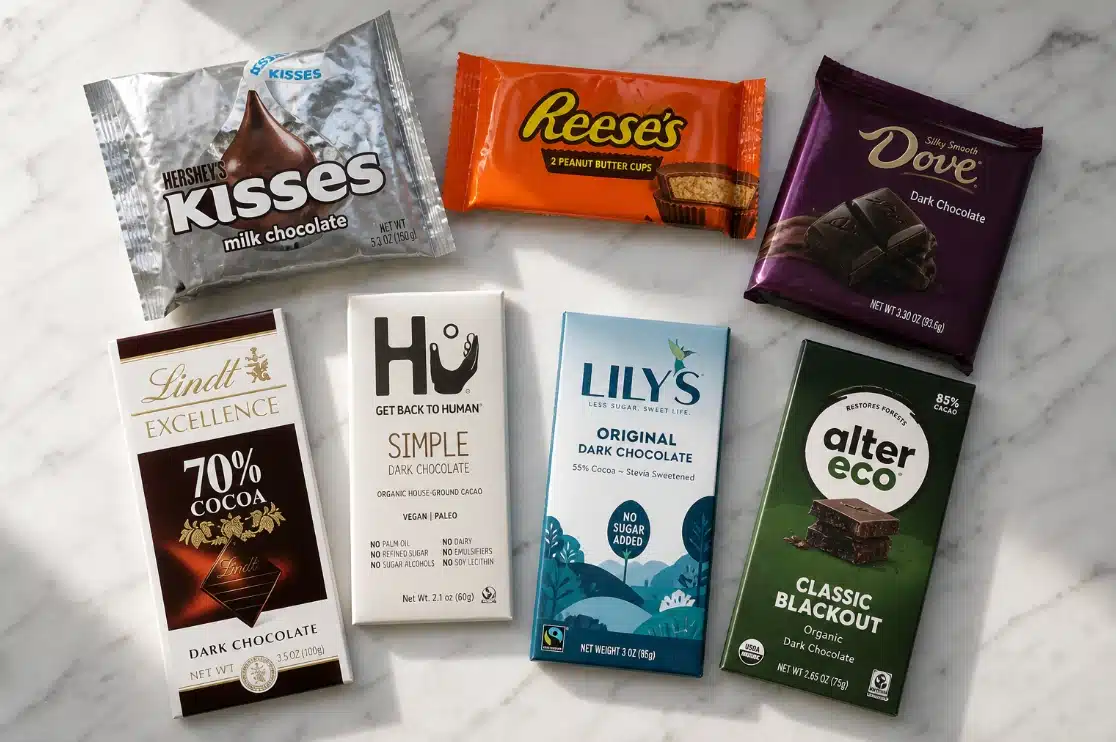
People managing a gluten-free diet don’t have to give up well-known chocolate brands. These products span mass-market staples and certified options, something for every preference and budget. Following are som gluten free options for you:
| Product | GF Status | Notes |
| HERSHEY’S KISSES Milk Chocolates | Confirmed GF | Classic milk chocolate pieces; plain varieties only, skip cookie and cookies ‘n’ creme versions |
| REESE’S Milk Chocolate Peanut Butter Cups | GF claim confirmed | Original cups only; seasonal shapes may not meet the same standard |
| DOVE Dark Chocolate Bar | No gluten ingredients | Simple semisweet formula with no wheat-based additives listed |
| Lindt Excellence Dark 70% Cocoa Bar | No gluten ingredients | Four-ingredient bar; produced in a shared facility, check current packaging |
| Hu Simple Dark Chocolate Bar | Certified GF | Organic, paleo, vegan; no refined sugar, no emulsifiers, no soy |
| Lily’s Original Dark Chocolate Bar | Certified GF (GFCO) | No sugar added; stevia-sweetened; fair trade cocoa |
| Alter Eco Classic Blackout 85% Dark Bar | Certified GF (GFFP) | Organic and fair trade; most bars are certified, Dark Salt & Malt is the one exception |
Product formulations change without notice. Always read the current label before buying, and for celiac disease specifically, look for third-party certification rather than relying on ingredient lists alone.
Why Even Familiar Brands Aren’t a Permanent Safe List
A bar that was safe to buy last year may not carry the same formula today. Food manufacturers change ingredients, switch suppliers, and update production lines regularly, and none of that is required to appear as a front-of-pack announcement.
The allergen statement at the bottom of the label reflects the current version of the product. The brand reputation you built your trust in reflects a previous one. Seasonal and limited-edition lines are the most common place brands quietly introduce new ingredients.
A holiday tin version of a bar you buy year-round may share a production line that the standard version never touches. The same logic applies to value multipacks, which are often produced at different facilities than single-bar retail versions.
That’s exactly why the label-reading framework below matters more than any brand list. Brand knowledge is a useful shortcut for narrowing your choices; it is not a substitute for reading what’s actually on the package in your hand.
How to Choose Gluten-Free Chocolate
Label-reading is the single most reliable habit for avoiding gluten in chocolate. Every product, every time, this three-part framework covers what to check and what each signal actually means. Here’s a clear breakdown of things to keep in mind:
| What to Check | What to Look For | What It Means |
| Ingredient list | Wheat, wheat flour, wheat starch, barley, barley malt, rye, malt extract, malt flavoring, oats (unless certified gluten-free) | Any one of these is a direct red flag, stop there |
| Allergen statement | “Contains wheat” is printed below the ingredient list | Clearer than scanning the full ingredient text; most manufacturers disclose wheat here |
| Facility warning | “May contain wheat” vs. “manufactured in a facility that also processes wheat.” | The first signals direct cross-contamination risk; the second is a shared-environment exposure, and both call for caution with celiac disease |
| Certification label | Certified gluten-free symbol or Crossed Grain mark | The product has been tested below 20 ppm, the clearest, most reliable signal available |
None of these steps takes more than thirty seconds at the shelf. Running all four checks together, ingredients, allergen statement, facility warning, and certification, gives you a complete picture before any product goes in your cart.
Frequently Asked Questions
Is cocoa powder gluten-free?
Pure unsweetened cocoa powder is naturally gluten-free. The risk comes with flavored or sweetened mixes, which often contain malt flavoring or run on shared equipment. Brands like Ghirardelli and Hershey’s Natural carry low risk but always check the label.
Is Nutella gluten-free?
Nutella contains no wheat ingredients and Ferrero says it’s made without gluten-containing ingredients. It isn’t certified gluten-free though, and cross-contamination isn’t guaranteed against. For celiac disease, a certified gluten-free hazelnut spread is the safer call.
Are chocolate chips gluten-free?
Plain chips from Ghirardelli and Hershey’s are generally gluten-free by ingredient but neither certifies against cross-contamination. Enjoy Life Chocolate Chips are GFCO-certified and made in a dedicated allergen-free facility, making them the stronger option for celiac disease.
Final Thoughts
So, does chocolate have gluten? Pure chocolate doesn’t. But the moment extra ingredients, flavorings, or shared equipment enter the picture, the risk becomes very real and none of that shows up on the front of the package.
In my years working with clients on restricted diets, this question comes up constantly. The answer is always the same: it depends entirely on what’s in the product.
Three habits cover most of the risk: check for wheat or malt in the ingredients, look for certified gluten-free labeling, and choose simpler bars when possible.
Great chocolate that fits a gluten-free diet is completely realistic. If you have questions about other gluten-free foods, drop them in the comments below.