






Water is something most people don’t think twice about, until they realize they’ve gone half the day without a proper sip.
In my experience working with clients, that’s one of the most common patterns: people know water matters, they just don’t know how many bottles of water they should drink a day.
The answer depends on more than a number. Your size, your routine, what you eat, where you live, all of it plays a role. What works for a sedentary adult in a cool climate won’t cut it for someone sweating through a summer workout.
My position as a registered dietitian has always been that hydration is personal. Here’s what the evidence actually says, broken down into something practical you can use.
What the Daily Water Guidelines Actually Say
Before getting into bottles and ounces, it helps to understand where the standard daily water intake guidelines come from.
The National Academy of Medicine recommends roughly 2.7 liters (91 oz) per day for women and 3.7 liters (125 oz) per day for men, covering all fluids, not just plain water.
That includes beverages like tea and coffee, as well as the water naturally present in food. About 20% of your daily fluid intake typically comes from what you eat, particularly fruits, vegetables, and soups.
The familiar “8 glasses a day” rule is a loose approximation, easy to remember, but not grounded in the precision your body actually needs. Hydration needs shift based on age, activity, health status, and climate. Knowing your real baseline is where healthy water consumption habits actually start.
How Many Bottles of Water Should You Drink a Day?
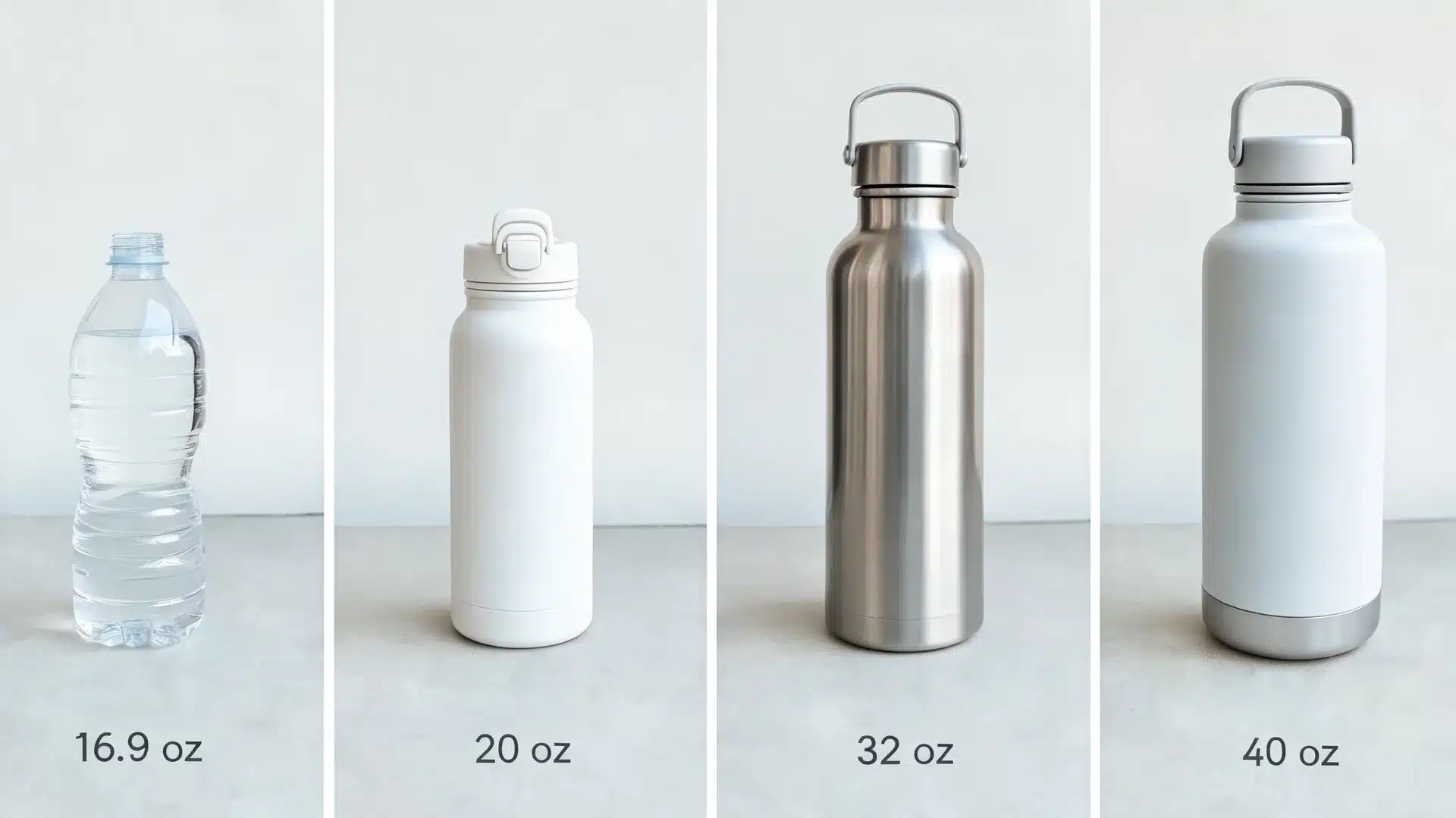
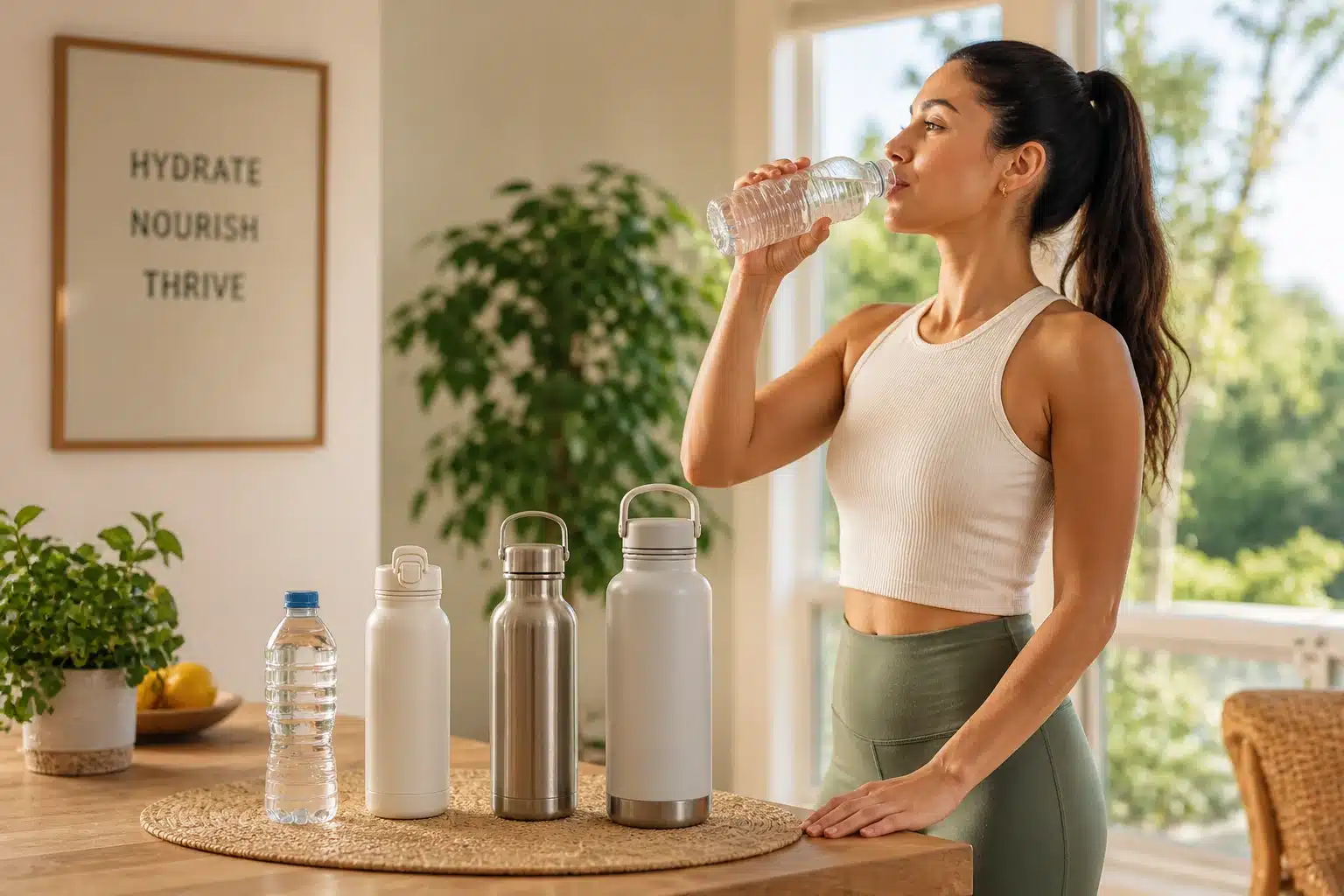
The answer depends almost entirely on the size of your bottle. Most people switch between sizes daily, so the number changes. Before getting into the breakdown, it helps to understand why daily water intake matters more than most people realize.
1. 16.9 oz (Standard Single-Use Bottle)
This is the bottle you’ll find in most convenience stores and fridges. It’s the most common reference point for daily water targets.
- Women: around 5–6 bottles per day
- Men: around 7–8 bottles per day
- Children (6–12 years): around 3–4 bottles per day
- Older adults (65+): around 4–5 bottles per day, with scheduled reminders rather than relying on thirst
One standard bottle holds roughly 2 cups of water. That adds up fast, which is one reason these bottles aren’t the most practical way to hit your daily goal. Keeping track of five or more separate bottles throughout the day is easy to lose count of, and most people underestimate how many they’ve actually finished.
2. 20 oz Bottle
A step up from the standard size, commonly found in gyms, cafés, and office bags. Slightly fewer refills are needed compared to the 16.9 oz option.
- Women: around 4–5 bottles per day
- Men: around 6–7 bottles per day
- Children (6–12 years): around 2–3 bottles per day
- Older adults (65+): around 3–4 bottles per day, ideally spread across set times during the day
The 20 oz size works well as a middle ground for people who find the standard bottle too small but aren’t ready to commit to a large reusable one. It fits most cup holders and bags without much hassle.
3. 32 oz Reusable Bottle
A popular size for people who prefer fewer refills and want a more practical daily tracking method.
- Women: 3 refills per day
- Men: 4 refills per day
- Children (6–12 years): 1–2 refills per day
- Older adults (65+): 2–3 refills per day, with a refill scheduled at each main meal as a reliable anchor
Three or four refills throughout the day are manageable without constantly tracking how many small bottles you’ve finished. The 32 oz size hits a practical sweet spot, large enough to reduce refill frequency, small enough to carry comfortably through most of the day.
4. 40 oz Bottle
Larger reusable bottles built for workouts, long commutes, or full workdays at a desk. Fewer refills, stronger visual reminder.
- Women: 2–3 refills per day
- Men: 3 refills per day
- Children (6–12 years): 1 refill per day is generally sufficient for most age groups in this range
- Older adults (65+): 2 refills per day, though a smaller bottle refilled more often may be easier to manage physically
Knowing your bottle size ahead of time removes most of the mental load from tracking water. Pick one size that fits your routine, keep it within reach, and count refills instead of ounces. Consistency with one bottle beats switching between multiple sizes every day.
What Affects How Much Water Your Body Needs?
Daily water targets are a starting point. Your actual needs shift based on who you are, how you move, and where you live. Here is a clear breakdown of what affects your water needs:
| Factor | What Changes | Adjusted Target |
| Body Weight | Larger body = higher fluid demand | Divide weight (lbs) by 2 for daily oz target |
| Activity Level | Sweat increases fluid loss | Add 12–16 oz per 30 min of exercise; drink before, during, and after |
| Heat or Humidity | More sweat, faster fluid loss | Increase daily intake by 20–30% |
| High Altitude | Faster breathing raises fluid loss | Increase intake; watch for early thirst signals |
| Pregnancy | Higher fluid demand for fetal support | ~2.4 liters per day |
| Breastfeeding | Fluid output increases significantly | ~3.1 liters per day |
| Older Adults | Thirst signals become less reliable | Schedule water intake rather than relying on thirst |
| Illness | Fever, vomiting, or diarrhea depletes fluids fast | Increase intake; consider electrolyte support |
| Medications or Health Conditions | Some drugs or conditions affect fluid balance | Check specific needs with a healthcare provider |
These factors rarely work in isolation. An active person living somewhere warm and pregnant, for example, needs significantly more water than the standard daily figure suggests. When multiple factors apply to you, adjust upward and pay close attention to how your body responds.
Why Staying Hydrated Matters Every Day
Your body needs water to function well. Small changes in hydration can affect energy, mood, and focus more than most people realize. The following are a few benefits of drinking water every day:
- Drinking enough water keeps your energy levels steady throughout the day.
- Proper hydration supports digestion and gut health and helps your system run smoothly.
- Water helps flush out the waste your kidneys remove daily.
- Staying hydrated keeps your skin looking clearer and more refreshed.
- Even mild dehydration can make it harder to focus and think clearly.
- Water helps regulate body temperature when you feel overheated or stressed.
- Drinking water before meals can help you feel full more naturally.
These benefits add up fast when hydration becomes part of your daily routine. If plain water feels boring, try warm or hot water with lemon; it supports digestion and feels gentler on the stomach first thing in the morning. Small habits like this are easy to build and easy to keep.
Does Coffee, Tea, or Food Count Toward Your Daily Total?
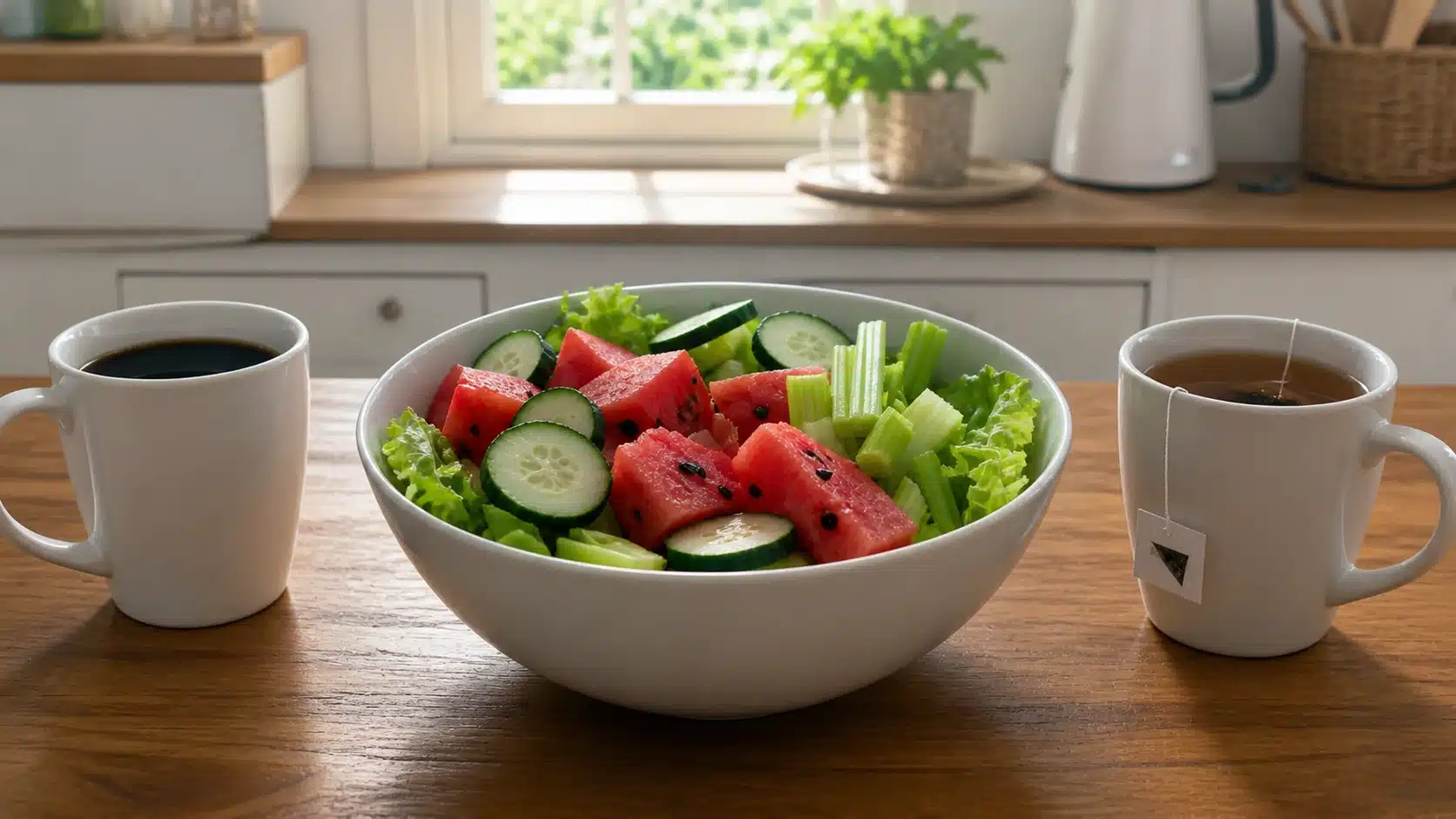
Yes, and this is a detail that often gets skipped.
About 20% of your daily fluid intake comes from food. Water-rich foods like cucumber, watermelon, celery, lettuce, and oranges all contribute. This means your actual water bottle target can be slightly lower if your diet includes a lot of these foods.
Coffee and tea count toward your daily total, despite the long-standing belief that caffeine dehydrates you. At moderate intake levels, the fluid in these beverages offsets any mild diuretic effect. The same applies to vitamin-rich water options, though it’s worth understanding what you’re actually consuming alongside the hydration.
What doesn’t count: alcohol and sugary drinks. Both can work against hydration rather than support it. If you drink alcohol, matching each drink with a glass of water helps offset the fluid loss.
How to Know If You’re Drinking Enough
Tracking ounces is one way to stay on top of hydration, but your body gives you real-time feedback that’s far more reliable. The easiest place to start is urine color. The following table explains what your urine color says about your water intake:
| Urine Color | What It Signals | What to Do |
| Pale yellow | Well hydrated | Keep up your current intake |
| Dark yellow or amber | Mild to moderate dehydration | Drink water soon and increase intake for the rest of the day |
| Clear | Possibly overhydrated | Ease back slightly; excess water can dilute electrolytes |
| Bright or unusual color | May reflect diet, supplements, or medications | Monitor closely; consult a doctor if it persists |
Beyond urine color, a few other signals are worth paying attention to. Headaches mid-afternoon, mental fog, low energy, and dry mouth are all early signs of mild dehydration. By the time you feel thirsty, your body is already asking for the water it needed earlier.
What People Actually Say About Daily Water Intake
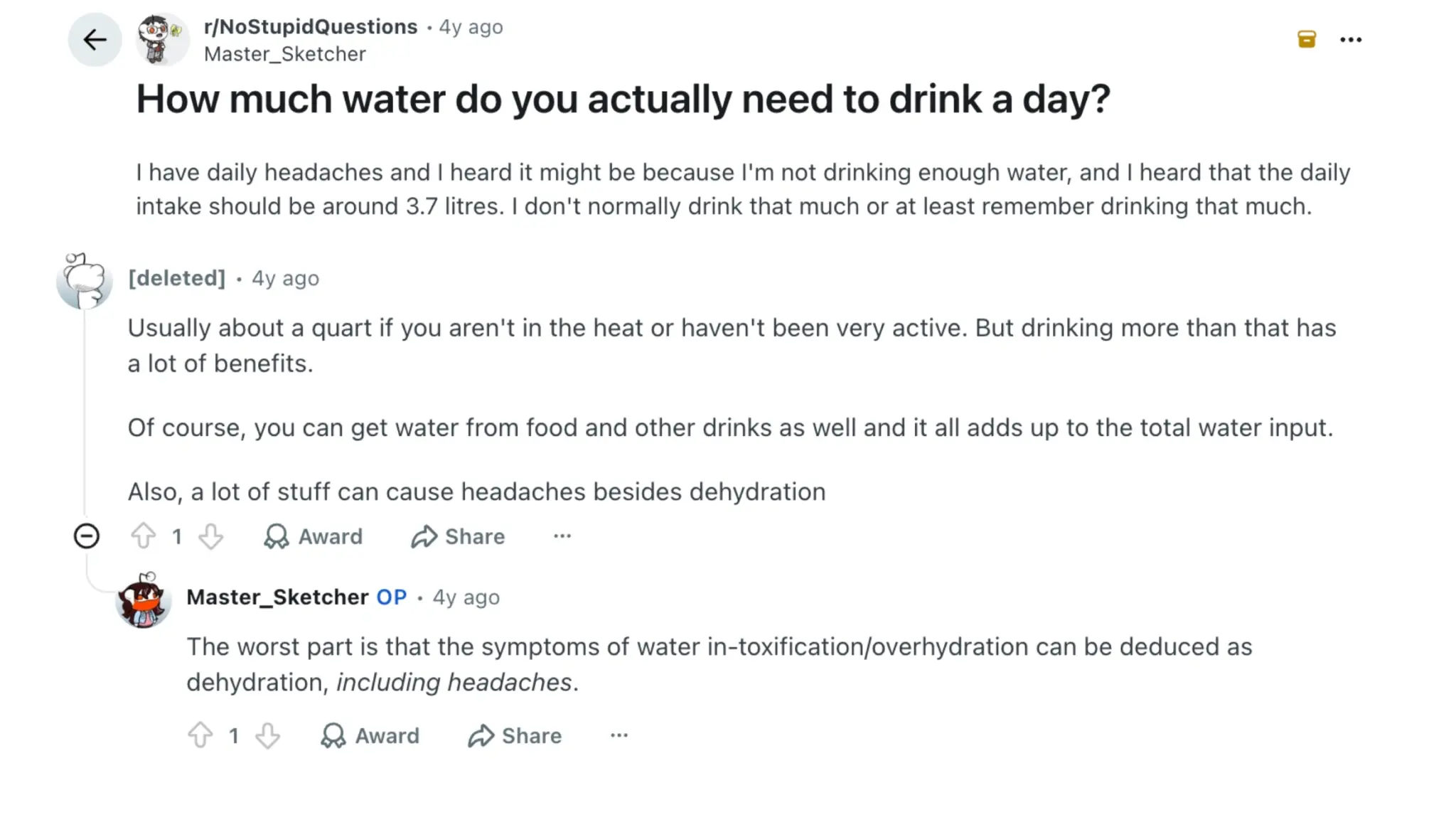
When you read this Reddit conversation, one thing stands out fast. There isn’t one fixed number that works for everyone.
In that Reddit thread, people share very different habits. Some say they don’t track anything. They just drink when they feel thirsty and adjust throughout the day. Others prefer counting bottles because it keeps them consistent.
You’ll likely see yourself in one of these approaches. Many users point out how activity changes everything. If you’re active or in the heat, you drink more without thinking. On slower days, intake naturally drops.
One user said, “Of course, you can get water from food and other drinks as well and it all adds up to the total water input.”
I’ve noticed the same in my own routine. Another common point is frustration with the “8 glasses” idea. People feel it doesn’t match real life. Instead, they trust body signals like thirst, energy, and focus.
The overall takeaway is simple. You don’t need a perfect number. You need a routine that fits your day.
Can You Drink Too Much Water?
Yes, but it’s genuinely rare for the average person. Drinking excessive amounts of water in a short period can lower sodium levels in the blood, a condition called hyponatremia. When sodium levels drop too low, fluid moves into cells, causing them to swell.
Symptoms include nausea, confusion, headaches, and muscle weakness. In severe cases, it can become a medical emergency. That said, most healthy adults will never come close to this threshold through normal daily drinking.
The real risk tends to show up in endurance athletes who consume large volumes of plain water without replacing electrolytes. To stay on the safe side, avoid drinking more than about 1 liter (34 oz) per hour.
Spreading your intake steadily across the day, a glass here, a refill there, is both safer and more effective than consuming large amounts in one sitting. For most people, underhydration remains the far more common concern.
Simple Ways to Hit Your Daily Water Goal
Small, repeatable habits close the gap between knowing your daily target and actually reaching it. None of these requires extra effort or planning.
- Start your morning with a full glass of water before coffee or food
- Carry a reusable bottle and count refills rather than tracking individual ounces
- Pair water with meals; one glass before eating works as a reliable trigger
- Add lemon, cucumber, or fresh mint if plain water feels unappealing to you
- Eat water-rich foods like watermelon, spinach, tomatoes, and broth-based soups daily
- Set phone reminders at set intervals if forgetting to drink is a recurring issue
One habit worth noting from my practice: clients who switch to a single large reusable bottle tend to drink more water consistently than those tracking multiple small ones. The visual cue matters.
Frequently Asked Questions
Does the type of water you drink affect hydration?
Tap, filtered, and bottled water all hydrate equally well. Mineral water adds small amounts of calcium and magnesium, but the difference is minor. What matters most is total daily volume, not the source.
Is sparkling water as hydrating as still water?
Yes. Carbonation doesn’t reduce hydration. Plain sparkling water counts toward your daily fluid intake the same as still water. Avoid sparkling drinks with added sugar or sodium, as those work against your hydration goals.
How long does it take to rehydrate after being dehydrated?
Mild dehydration can be corrected within 45 minutes to a few hours of steady fluid intake. Severe dehydration can take longer to resolve and may require medical attention, particularly if accompanied by dizziness or a rapid heartbeat.
Should you drink water first thing in the morning before eating?
Yes. The body loses fluid overnight through breathing and light sweating. Drinking a full glass of water before breakfast helps replace that loss and supports digestion, energy, and focus early in the day.
Final Thoughts
Hydration does not need to be complicated, but it does need to be consistent. The answer to how many bottles of water I should drink a day is not the same for everyone.
It shifts based on body weight, activity level, and lifestyle. If you are active, pregnant, or in a warm climate, your needs go up. Rather than chasing a fixed target, listen to your body.
Urine color, energy levels, and thirst are honest indicators. Start each day with water and keep a bottle within reach. Small, steady habits work better than perfect numbers.
Drop a comment below and share what your water intake looked like today.