



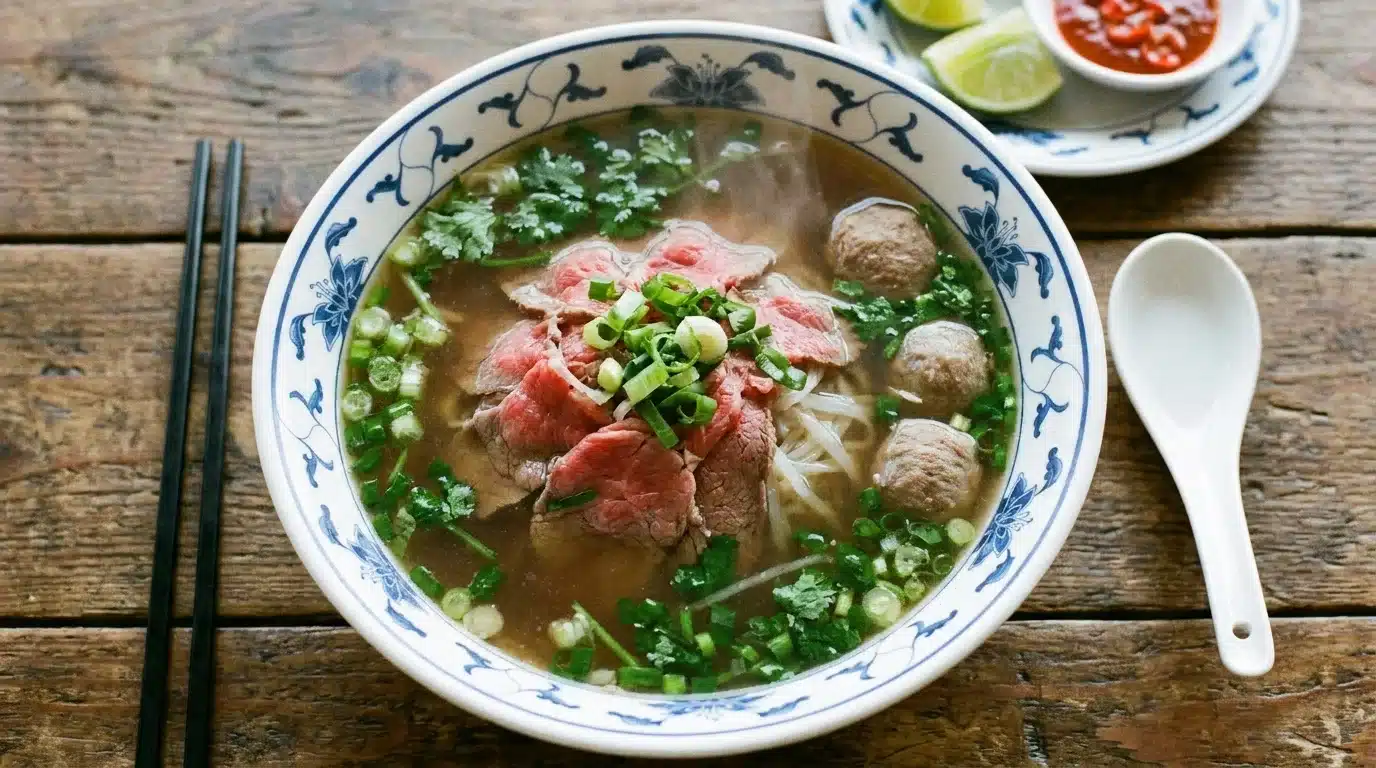







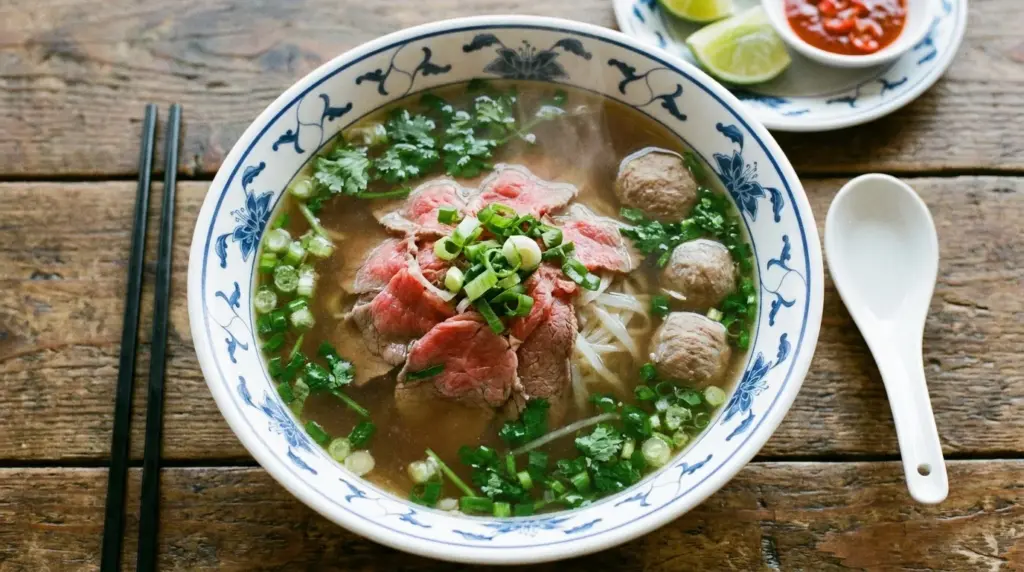

Steam rises from the bowl, herbs float on top, and that initial sip of broth feels quite comforting on a cold day.
Pho has gained cult status beyond Vietnam, appearing in both casual noodle shops and upscale restaurants.
Behind the comfort-food appeal sits a real question: is pho healthy, or does it just taste as comfort food should?
The answer isn’t just yes or no; it depends on the protein type, portion size, and sauce amount in the bowl.
This blog provides general nutrition info and isn’t a substitute for personalized advice from a registered dietitian or doctor.
Is Pho Healthy? A Quick Nutrition Verdict
Pho earns its place on the healthy food list.
A single bowl packs protein, veggies, and a broth simmered for hours to pull out minerals.
The noodles bring carbs for energy, and the herbs on top add fiber and antioxidants.
Sodium is the real catch. Restaurant broths often load up on salt, so that’s the number to watch. Skip extra sauce, go light on the fried toppings, and pho turns into a balanced meal. Protein keeps you full. Broth hydrates.
Herbs provide nutrients without additional calories.
Order it wisely, and this dish can compete with any clean eating trend out there.
Pho Nutrition Facts: What is Actually in a Typical Bowl?
A bowl of pho is made from several key ingredients, each contributing its own nutritional benefits.
- Broth: Beef or chicken bones simmered with charred onion, ginger, star anise, cinnamon, and cloves,
- Noodles: Flat rice noodles, gluten-free and light on fat.
- Protein: Thin-sliced beef (brisket, flank, or eye of round), chicken, or meatballs.
- Fresh toppings: Bean sprouts, Thai basil, cilantro, and scallions.
- Add-ons: Lime wedges, sliced jalapeño, and fish sauce for seasoning.
Each component contributes uniquely: spices provide anti-inflammatory compounds, fresh toppings add crunch and micronutrients, and citrus balances the flavor without increasing sodium content.
Protein provides the main nutritional boost in the bowl.
A serving usually provides between 20 and 30 grams, depending on the cut and the amount of meat added.
Is Pho High in Calories?
A standard bowl runs 350 to 450 calories, depending on protein choice and portion size.
That’s lower than a burger combo or a plate of fried rice.
Beef brisket adds more calories than lean flank steak. Meatball versions can push numbers higher due to added fat content. Noodles contribute the bulk of the carbs, while broth stays fairly light.
Ordering a small or regular size keeps calories in check.
Adding extra meat or hoisin sauce changes the count fast. Pho stays moderate unless toppings pile up.
Is Pho High in Cholesterol?
Cholesterol content depends heavily on the cut of meat used.
Brisket and fatty beef cuts carry more cholesterol than lean options like eye of round.
A typical bowl of beef pho holds roughly 40 to 60 mg of cholesterol, though this varies by cut and restaurant, so treat it as an estimate rather than a fixed number. Chicken pho tends to run lower.
Bone broth itself contains minimal cholesterol despite popular myths.
People managing cholesterol levels should choose leaner proteins and skip fatty broth toppings.
Portion control matters here too. Small adjustments in meat choice make a real difference.
How Much Sodium is in Pho?
A restaurant bowl can contain 1,200 to 2,500 mg of sodium, largely from fish sauce, broth seasoning, and added spices. That’s more than half the daily recommended limit in one meal.
Homemade pho allows better control, significantly cutting sodium.
Requesting broth on the side or asking for less salt helps at restaurants.
Sriracha and hoisin sauce add even more sodium if used liberally.
Watching these extras keeps the dish from tipping into unhealthy territory.
What are the Health Benefits of Pho?
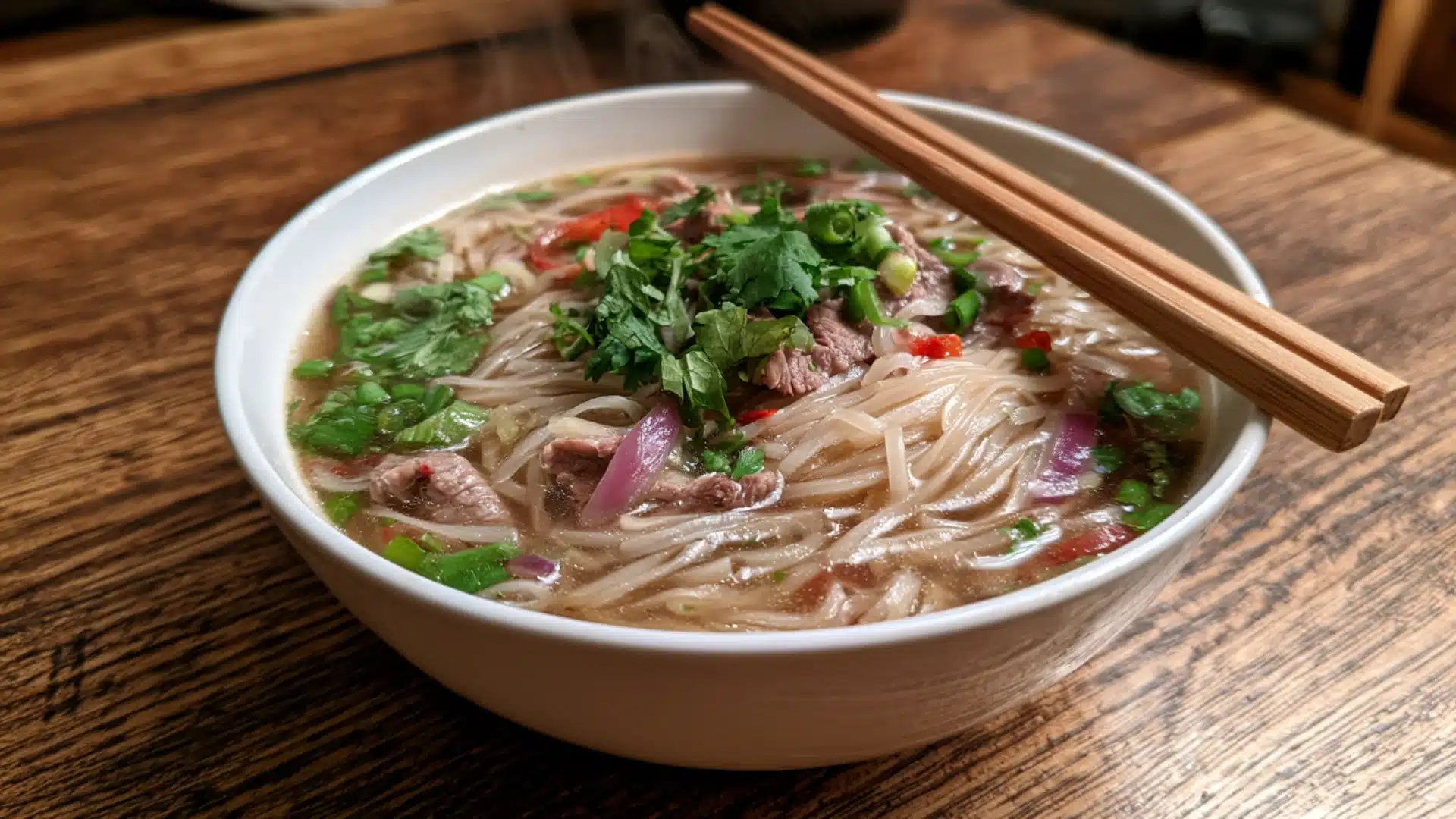
Apart from its calorie content, pho offers genuine nutritional benefits.
Here are the reasons why this bowl is known as comforting food that also provides health advantages.
1. Supports Muscle Repair
Protein from beef, chicken, or meatballs helps rebuild muscle tissue after exercise or daily wear and tear.
Amino acids in the meat assist with tissue repair at the cellular level.
A single bowl delivers a solid protein dose without heavy fat, depending on the cut chosen. Athletes and active people often turn to pho post-workout for this reason.
Lean protein sources make recovery smoother and support long-term muscle maintenance.
2. Promotes Gut Health
Bone broth contains collagen and gelatin, compounds linked to gut lining support.
Long simmering breaks down connective tissue into digestible amino acids like glycine and proline.
These compounds may help soothe digestive discomfort and support the gut barrier.
Fermented additions like fish sauce introduce beneficial bacteria too. People with sensitive stomachs often find pho easier to digest than heavier, cream-based soups. The broth does quite a bit of work here.
3. Boosts Immune Function
Star anise, cinnamon, and ginger aren’t just flavor agents. These spices carry compounds studied for immune-supportive properties, including antimicrobial and antioxidant effects.
Ginger specifically shows promise for reducing inflammation markers in some studies. Cloves add another layer of antioxidant support.
Combined, this spice blend turns pho into more than a comfort meal during cold season.
Many cultures already treat this bowl as a natural remedy for sniffles and fatigue.
4. Aids Hydration
Broth-based soups contribute significantly to daily fluid intake, and pho is no exception.
A full bowl delivers a substantial volume of liquid alongside electrolytes like sodium and potassium. This combination supports hydration more effectively than water alone during illness or heavy sweating.
Rehydrating after a workout or a rough night becomes easier with a warm bowl.
The warmth also encourages slower sipping, which aids fluid absorption over time.
5. Eases Digestion
Rice noodles are naturally gluten-free and gentler on the stomach than wheat-based alternatives. The lightness of the broth, paired with mild spices, makes pho a common choice during recovery from illness.
Ginger specifically aids gastric motility, helping food move through the digestive tract smoothly.
This makes pho a frequent go-to after stomach bugs or during periods of low appetite.
Digestion feels less effortful with this bowl.
6. Delivers Key Vitamins
Fresh toppings like bean sprouts, basil, and cilantro bring vitamin C, vitamin K, and folate into the mix.
These micronutrients support immune defense, blood clotting, and cell growth. Lime adds another vitamin C boost right before eating. Because toppings are added fresh rather than cooked, more nutrients survive intact.
This raw-topping structure gives pho an edge over soups where vegetables get boiled down and lose potency.
7. Fights Inflammation
Ginger and cinnamon contain anti-inflammatory compounds studied for their role in reducing chronic inflammation markers.
Regular consumption of these spices may support joint health and lower systemic inflammation over time. Bone broth itself contains compounds linked to reduced inflammatory response too.
This combination makes pho a smart addition for people managing inflammatory conditions.
The spice blend does more work than most people realize.
8. Supports Weight Management
Compared to heavier takeout options, pho offers a filling meal without excessive fat or refined carbs.
Protein and broth combine to create satiety, reducing the urge to snack later.
Choosing lean protein and going light on noodles keeps the bowl within a moderate calorie range. This balance makes pho a practical choice for people watching their weight without sacrificing flavor or fullness.
9. Provides Comfort During Illness
Warm broth loosens congestion and soothes sore throats, much like other chicken soup remedies.
Steam from the bowl helps clear nasal passages temporarily. The combination of hydration, protein, and warmth supports recovery when energy and appetite are low.
This is likely why pho remains a go-to meal across generations during cold and flu season.
Comfort food, in this case, actually delivers measurable benefits.
Health Concerns Worth Knowing
Pho isn’t without its drawbacks, and a few things deserve a second look before this becomes a regular meal.
Here’s what you should watch out for:
- MSG use: Some restaurants add MSG for flavor depth, which can trigger sensitivity in certain people.
- Portion creep: Large bowl sizes at restaurants often exceed what’s nutritionally necessary in one sitting.
- Raw meat risk: Rare beef slices cooked only by hot broth may not reach safe internal temperatures.
- Allergen exposure: Fish sauce, peanuts, or shellfish-based broths can pose risks for people with food allergies.
- Blood sugar spikes: Refined rice noodles can raise blood sugar quickly in people managing diabetes.
What Can Make Pho Less Healthy?
Certain choices turn a balanced bowl into a less healthy one fast.
Fatty cuts like tendon or tripe add saturated fat without much nutritional payoff.
Excessive hoisin or sriracha squirts pile on sugar and sodium beyond what’s needed.
Deep-fried toppings, like crispy shallots in large amounts, tack on extra fat and calories.
Ordering combo bowls with multiple meat types often means doubling portion sizes unnecessarily.
Skipping vegetables and herbs removes fiber and micronutrients from the equation. The same pattern shows up in other Asian comfort foods, where cooking method changes dumpling nutrition just as much as filling choice does.
A few small adjustments at the counter can quickly transform this dish from balanced to indulgent.
Chicken Pho vs Beef Pho: Which is Healthier?
Both bowls offer benefits, but the protein selection alters the nutritional profile in particular ways.
| Factor | Chicken Pho | Beef Pho |
|---|---|---|
| Fat Content | Lower, especially with skinless cuts | Higher, depending on the cut used |
| Iron Levels | Lower | Higher, good for iron deficiency |
| Broth Richness | Lighter, milder flavor | Deeper, more robust taste |
| Digestibility | Easier on sensitive stomachs | Slightly heavier to digest |
| Best For | Light meals, upset stomach recovery | Post-workout recovery, iron boost |
Is Pho Healthy for Weight Loss?
Pho can be incorporated into a weight loss plan when prepared appropriately.
Lean protein keeps hunger at bay longer than greasy takeout options.
Choosing a regular-sized bowl instead of a large one prevents excess calorie intake.
Loading up on herbs and sprouts adds volume without adding calories. Skipping fried toppings and sugary sauces keeps the meal in a lower-calorie zone. Broth-based soups generally support satiety better than dry, dense meals.
Consistency with portion size matters more than avoiding pho altogether.
Smart ordering transforms this dish into a helpful option for achieving weight goals.
Is Pho Healthy to Eat Every Day?
Daily pho consumption depends on how it’s prepared and ordered.
Restaurant versions carry high sodium levels, making daily intake risky for blood pressure over time.
Homemade pho, with controlled salt and fresh ingredients, works better for frequent meals. Rotating protein sources prevents nutritional gaps that come from eating the same cut repeatedly.
Balancing pho with other meals throughout the week supports overall dietary variety.
Eating pho occasionally poses no real concern, but daily reliance on restaurant bowls needs mindful adjustments.
How to Make Pho Healthier at Home
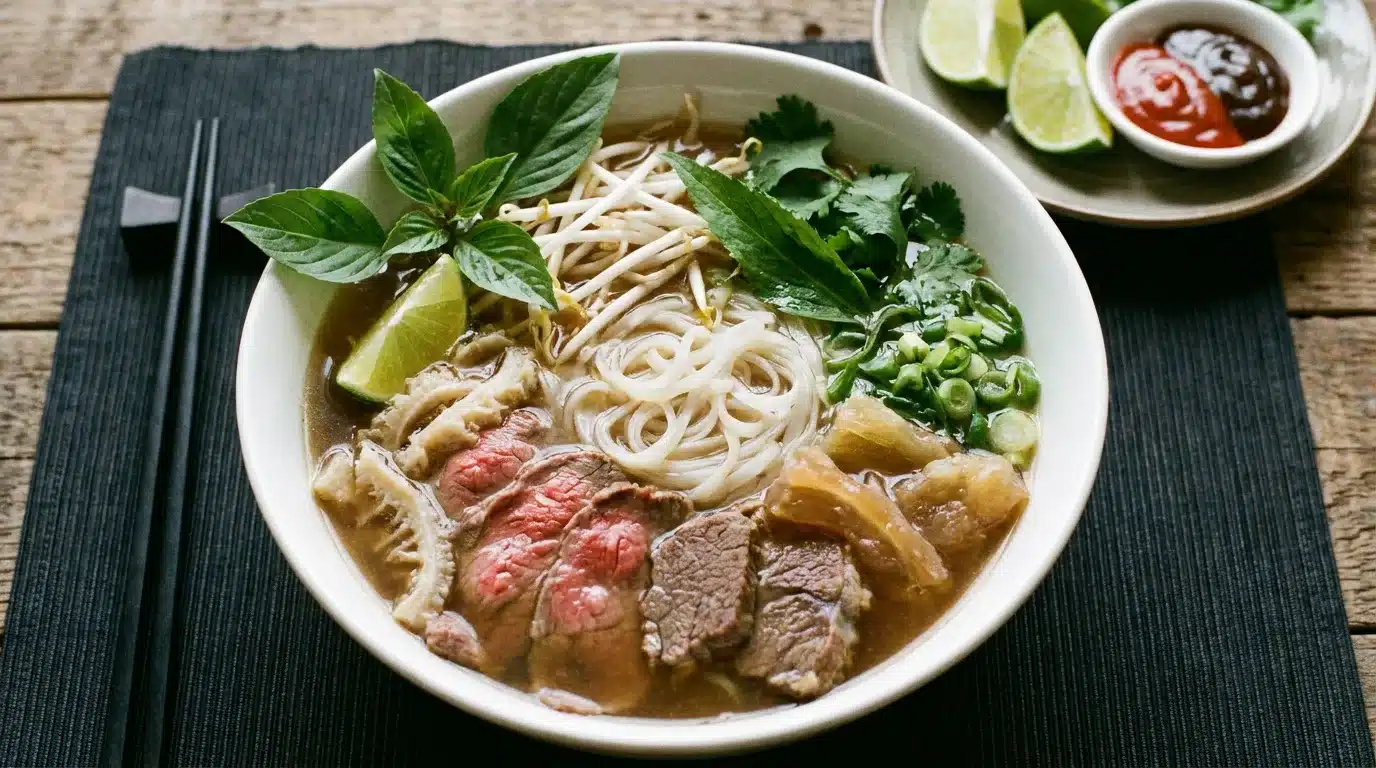
Making small substitutions in the kitchen can transform this dish into an even healthier option.
1. Homemade Bone Broth: Simmering bones fully controls sodium, unlike store-bought or restaurant versions.
This also lets you skip preservatives and MSG entirely, giving full control over what ends up in the bowl.
2. Swap in Zucchini Noodles: Spiralized zucchini cuts carbs significantly while adding extra fiber and vitamins.
This helps those managing blood sugar or reducing refined grains without losing the noodle experience.
3. Load Up on Vegetables: Adding shredded cabbage, extra sprouts, or bok choy boosts fiber and volume.
This keeps the bowl filling without piling on calories, stretching the meal further on a budget too.
This is the same principle behind building a protein-forward, veggie-heavy bowl in other cuisines: more volume from produce, fewer empty calories from sauce.
4. Choose Leaner Protein Cuts: Opting for chicken breast or eye of round over fatty brisket cuts reduces saturated fat significantly. This small swap keeps flavor intact while trimming unnecessary calories from the final bowl.
5. Season with Fresh Herbs: Doubling up on basil, cilantro, and scallions instead of sauces adds flavor naturally.
This reduces reliance on hoisin or sriracha, cutting sodium and sugar without sacrificing taste.
Which Ingredients are the Best and Worst Nutritional Choices?
Not all ingredients in the bowl have the same nutritional value. Here’s what to include and what to limit:
Best Choices
- Bean sprouts: Low-calorie, high in vitamin C and folate.
- Lime: Adds vitamin C without sodium or sugar.
- Star anise and cinnamon: Bring antioxidant value with zero calories.
- Lean eye of round: Delivers protein with minimal saturated fat.
- Scallions: Provide fiber and micronutrients with almost no calorie cost.
Worst Choices
- Fatty brisket or tripe: High in saturated fat with lower nutrient density.
- Hoisin sauce: Packed with added sugar per serving.
- Fried garlic or shallot bits: Add unnecessary fat and calories.
- Extra fish sauce: Contributes heavily to overall sodium load.
Pho vs Other Noodle Soups
When compared to other noodle soups, pho maintains a unique nutritional profile that deserves analysis.
| Soup | Base | Noodle Type | Calorie Range | Sodium Level |
|---|---|---|---|---|
| Pho | Clear beef/chicken broth | Rice noodles | 350–450 | High |
| Ramen | Rich pork or miso broth | Wheat noodles | 500–700 | Very high |
| Udon | Light dashi broth | Thick wheat noodles | 400–550 | Moderate |
| Laksa | Coconut curry broth | Rice noodles | 600–800 | High |
| Wonton Soup | Light chicken broth | Thin wheat wrappers | 300–400 | Moderate |
Final Verdict
Pho earns its spot as a genuinely nourishing bowl, not just a comforting one.
Protein builds muscle, spices support the immune system, and fresh herbs add vitamins most soups skip.
Sodium is the one number worth watching, and portion size still decides where calories land. Homemade broth gives the tightest control; restaurant orders just need a few smarter choices, like lean cuts and lighter sauce.
Build it with intention, and this bowl holds up as a regular part of a balanced diet.
Have a go-to pho order or a homemade broth trick that works for you?
Drop it in the comments; other readers watching their sodium or calories would probably want to know.
Frequently Asked Questions (FAQ’s)
1. Is Pho Gluten-Free?
Traditional pho uses rice noodles and is gluten-free unless soy sauce or wheat ingredients are added.
2. Can Pregnant Women Eat Pho?
Yes, if meat is fully cooked and sodium intake stays moderate throughout the day’s other meals.
3. Does Pho Contain Dairy?
No, traditional pho recipes skip dairy entirely, relying on broth, meat, noodles, and fresh herbs for flavor.
4. Is Pho Keto-Friendly?
Not typically, since rice noodles carry carbs that don’t align with strict ketogenic macronutrient requirements.
5. Can I Freeze Leftover Pho?
Yes, but store broth and noodles separately, since noodles turn mushy after freezing and thawing.