














Chicken thighs deserve their own spotlight, not just a quick mention next to breast meat.
Chicken thigh nutrition offers surprising mineral and macro benefits often overlooked. Cooking methods can significantly change nutrition, and portion size can mislead those avoiding scales.
This blog pulls apart every angle, comparing cuts, methods, and serving sizes side by side.
Expect precise figures rather than rough estimates, making macro tracking specific instead of guesswork.
Chicken Thigh Nutrition Facts at a Glance
Chicken thighs pack more flavor than breasts, and the nutrition numbers back that up too.
A 100-gram serving delivers roughly 209 calories, 26 grams of protein, and 11 grams of fat. Skin-on cuts run richer in fat, while skinless versions trim it down. Thighs also carry iron, zinc, and B vitamins like niacin and B6.
That combination supports muscle repair and steady energy throughout the day.
Boneless Skinless Chicken Thigh Calories and Macros
Remove the skin and bone, and the numbers change slightly.
One average cooked thigh, around 85 grams, holds close to 178 calories. Protein sits at about 22 grams, while fat drops to roughly 8 grams. Carbs stay at zero, so it fits well into low-carb plans.
Sodium lands near 70 milligrams naturally, before any seasoning. Cholesterol runs about 90 milligrams per piece.
Since there’s no skin to trim fat from, portion size becomes the main lever for adjusting your daily macros.
Two thighs roughly double every number above, which matters if you’re tracking intake closely.
Baking or grilling maintains these figures accurately, as frying increases calories and fat due to the oil.
Chicken Thigh Macros and Calories by Serving Size
Serving size changes everything on the label, so here’s how the math plays out across common portions.
A kitchen scale beats guesswork every time, since eyeballing portions often skews numbers higher than expected.
These figures assume plain cooked meat, with no marinade or breading added:
- 1 ounce (28g): 58 calories | 7g protein | 3g fat
- 3 ounces (85g): 175 calories | 21g protein | 9g fat
- 4 ounces (113g): 233 calories | 28g protein | 12g fat
- 1 cup diced (140g): 289 calories | 35g protein | 15g fat
- 1 pound (454g): 938 calories | 113g protein | 48g fat
Restaurant portions are typically about 4 ounces, and meal prep containers usually hold one cup.
Chicken Thigh With Skin vs. Skinless Nutrition
Leaving the skin on affects the fat content more seriously than many people realize.
A skin-on thigh brings close to 10 extra grams of fat compared to its skinless twin, mostly from saturated fat.
Calories climb by about 60 per piece too. Protein stays nearly identical either way, since muscle tissue doesn’t change. Skin does add crispness and richer flavor during roasting or frying.
For heart-health goals, skinless wins out. For flavor and texture, skin-on has the edge.
Deciding between them ultimately depends on which trade-off aligns best with your priorities.
Raw vs. Cooked Chicken Thigh Calories and Macros
Weight decreases during cooking as moisture escapes, so 100 grams becomes more nutrient-dense after heating.
Cooking reduces meat size and concentrates nutrients, changing the nutritional values shown on paper.
Chicken Thigh Nutrition by Cooking Method
The cooking method you choose affects more than just flavor; it also influences calories, fat content, and texture.
Grilled Chicken Thigh

Grilling lets fat drip away as it cooks, which trims the final numbers.
A 100-gram grilled thigh lands near 195 calories, with 25 grams of protein and 9 grams of fat.
Char marks add flavor without extra oil. Sodium stays low unless a marinade brings salt along. This method suits anyone watching fat intake, since excess drips onto the grates rather than staying in the meat.
Air-Fried Chicken Thigh

Air frying mimics crispiness using hot circulating air instead of oil.
Calories sit around 220 per 100 grams, with fat near 10 grams. Protein holds steady at 25 grams. Skin still crisps up nicely, though it absorbs less grease than deep frying. Cleanup stays simple too, since there’s no oil bath involved.
It’s a middle ground between health goals and texture cravings.
Braised Chicken Thigh

Braising involves slow cooking in liquid, often broth or wine.
This method yields tender meat with about 230 calories per 100 grams. Fat rises slightly to 12 grams, since the process breaks down connective tissue into richness.
Protein remains near 24 grams. Braising suits tougher cuts well, softening fibers over time.
Flavor absorption runs deep here, since the meat sits in liquid for hours.
Chicken Thigh Protein, Fat, and Carbohydrates Explained
Each macro has a specific role, and analyzing them separately clarifies why thighs are important for balanced diets.
| Nutrient | Breakdown | Role |
|---|---|---|
| Protein | Complete, all 9 essential amino acids | Muscle repair, satiety |
| Fat | Mostly monounsaturated and saturated | Energy, vitamin absorption |
| Carbohydrates | None present | No blood sugar impact |
| Selenium | Trace mineral | Thyroid function, immunity |
| Phosphorus | Mineral | Bone strength, cell repair |
| Potassium | Electrolyte mineral | Fluid balance, muscle function |
| Vitamin B12 | Water-soluble vitamin | Nerve health, red blood cells |
| Choline | Essential nutrient | Liver function, brain health |
Thighs offer complete protein without carbs, plus trace minerals and B12, improving their nutritional profile.
Chicken Thigh Vitamins and Minerals
Beyond the core macros, thighs carry a solid lineup of micronutrients that support everyday body functions.
- Iron: Supports oxygen transport in blood.
- Zinc: Strengthens immune response.
- Niacin (B3): Aids energy metabolism.
- Vitamin B6: Supports brain and nerve function.
- Magnesium: Helps muscle and nerve signaling.
Is Chicken Thigh Healthy?
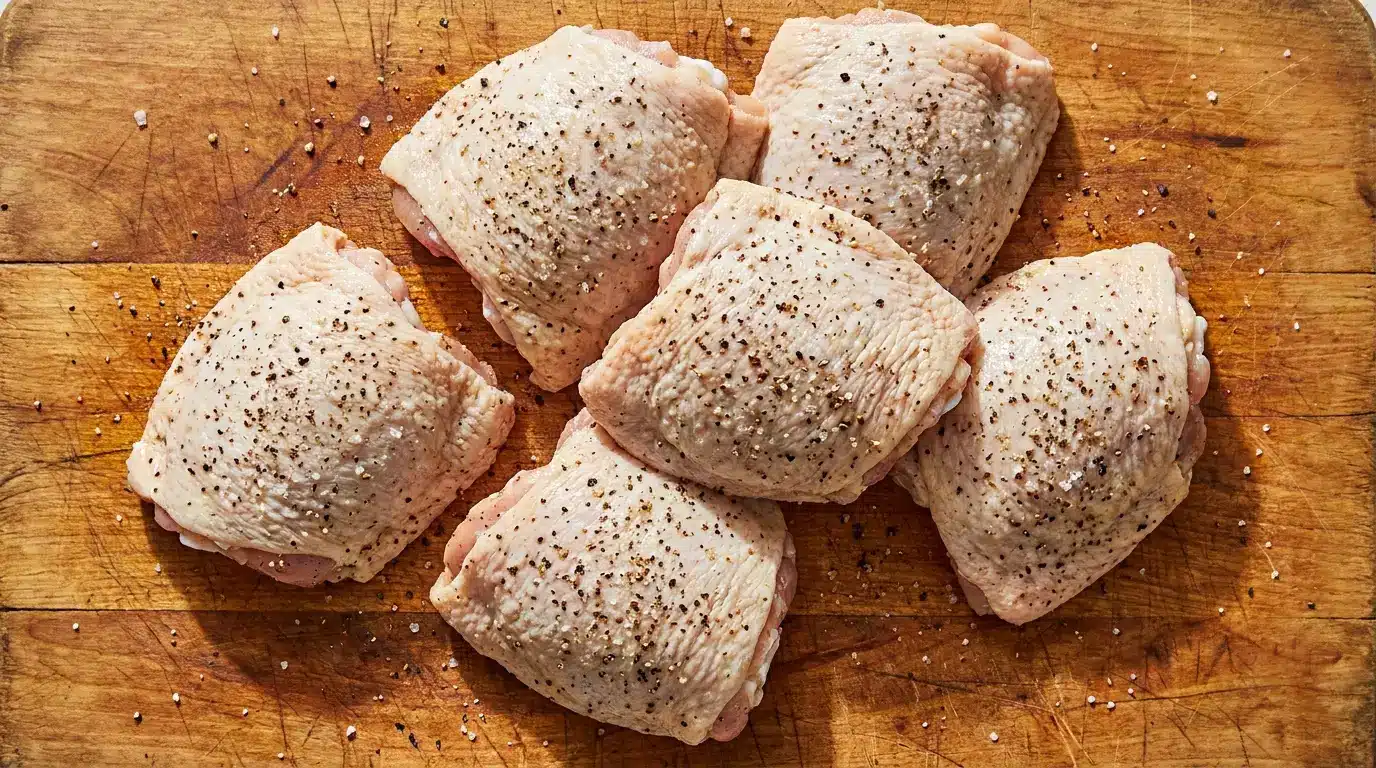
Yes, thighs fit comfortably into a healthy diet when portioned sensibly.
It’s not a bad cut; it’s simply richer than breast meat. Moderation matters more than complete elimination.
Pairing thighs with vegetables and whole grains balances out the meal.
Athletes and active people often lean toward thighs for the extra calories, which support recovery.
Those managing heart conditions might favor skinless cuts more often. Whole, minimally processed chicken beats packaged nuggets or breaded tenders every time, regardless of which part you choose.
Chicken Thigh vs. Chicken Breast Nutrition
Breast meat often gets the “healthy” label by default, but the comparison tells a fuller story.
Breast offers lean protein, whereas thighs provide more flavor, iron, and cost-effective value.
Chicken Thigh Nutrition for Weight Loss, Muscles, and Diets
Thighs can absolutely work for weight loss goals, especially skinless versions trimmed of visible fat.
Protein keeps hunger in check longer than carbs do, which helps with portion control naturally.
For muscle building, the amino acid profile supports repair as well as leaner cuts, and pairing thighs with other protein-rich recovery foods rounds out a muscle-repair plate.
Keto and low-carb followers prefer thighs for their higher fat content, which helps hit macros easily.
Paleo diets welcome thighs too, since they’re unprocessed and nutrient-dense.
Bodybuilders rotate between breast and thigh to vary calorie intake during bulking and cutting.
How to Accurately Track Chicken Thigh Calories and Macros
Accuracy starts with a kitchen scale, not a measuring cup.
Weigh the meat after cooking, since raw weight throws off calorie counts once moisture cooks away.
Log the cooking method too, as grilling and frying shift fat numbers significantly. Skip eyeballing portions against your palm or fist, since thigh shapes vary too much for that trick to work reliably.
Building thighs into a structured daily calorie plan makes this kind of precision easier to sustain.
Round down slightly if unsure, as overestimating burns and underestimating calories both hinder accurate tracking.
Common Chicken Thigh Nutrition Tracking Mistakes
Small errors can quickly accumulate when logging thighs, and a few errors happen more frequently than expected.
- Recording the raw weight of cooked meat leads to inaccurate calorie calculations.
- Overlooking added oils or marinades results in unaccounted calories.
- Using a mix of bone-in and boneless items disrupts accurate portion calculations.
- Omitting skin removal notes can inflate fat measurements.
- Relying on generic app defaults can distort results because database entries differ across brands.
Frequently Asked Questions (FAQ’s)
1. How Many Calories Are in One Chicken Thigh?
One boneless, skinless cooked thigh has roughly 178 calories.
2. Is Chicken Thigh Good for Weight Loss?
Yes, especially skinless portions eaten with vegetables and portion control.
3. Which Has More Protein, Chicken Thigh or Breast?
Breast has more protein per gram; thigh offers more iron and flavor.
4. Can I Eat Chicken Thigh Every Day?
Yes, in moderate portions as part of a balanced, varied diet.
5. Does Chicken Thigh Have Carbs?
No, chicken thigh contains zero carbohydrates in its natural form.
Key Takeaway
Chicken thigh nutrition supports various goals: muscle building, weight loss, or enjoying a meal after a long day.
Small choices at the cutting board or stovetop ripple through the entire nutritional profile. Skip the shortcuts that lead to inflated or underestimated logs. A little precision goes a long way toward hitting targets accurately.
Chicken thighs earn their place on the plate for substance, not hype, as the data throughout this guide shows.
Cooking a batch this week? Drop your go-to method in the comments below.