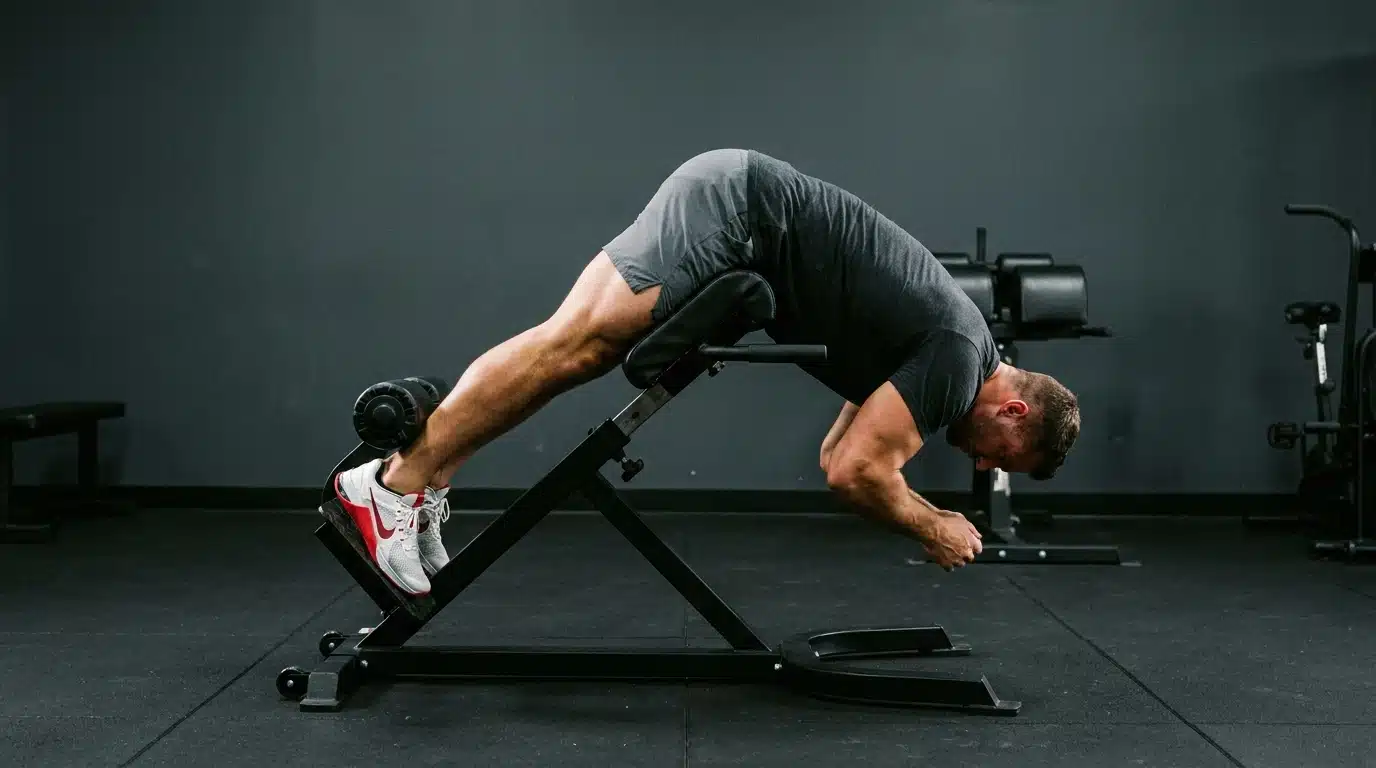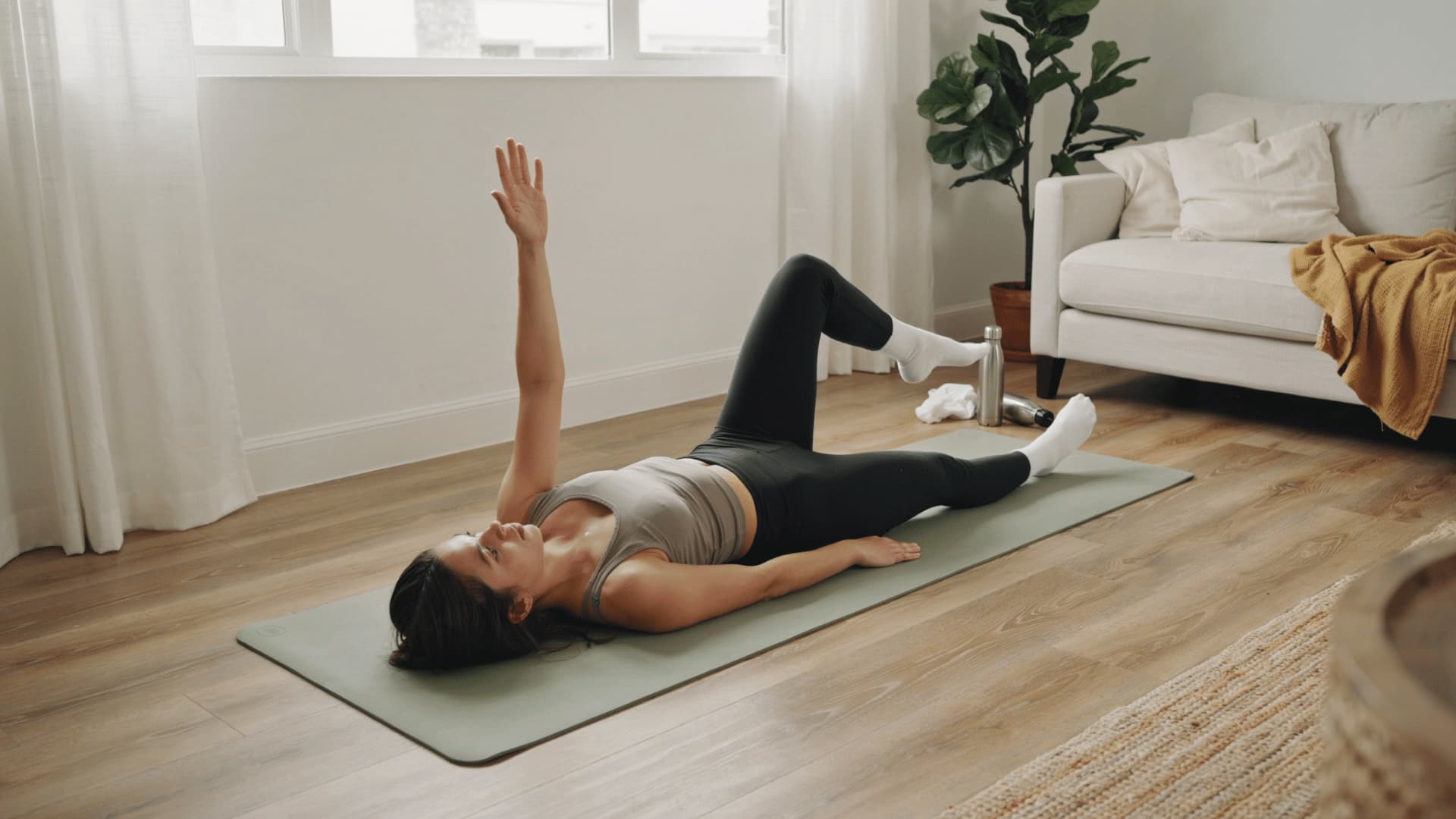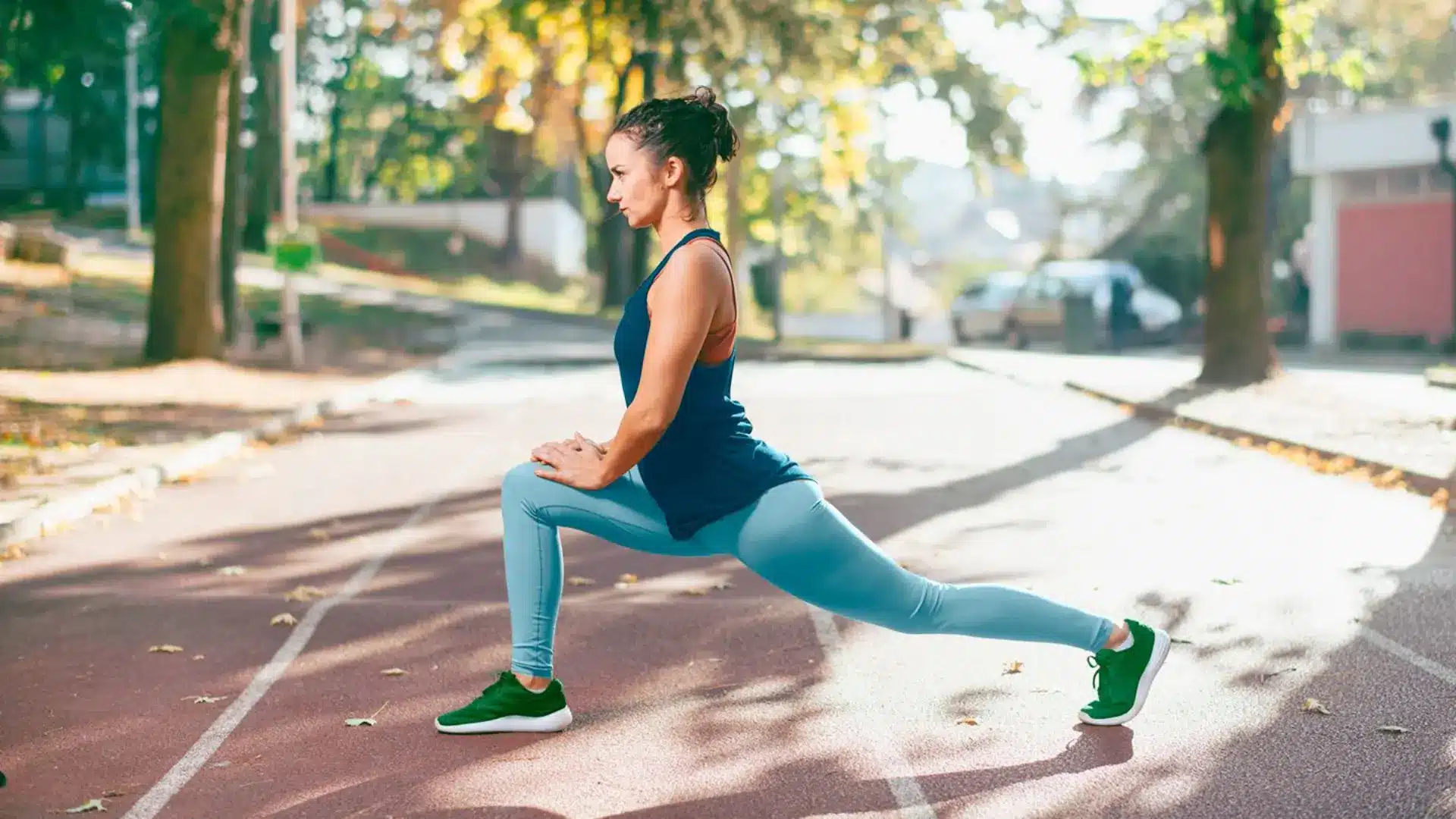








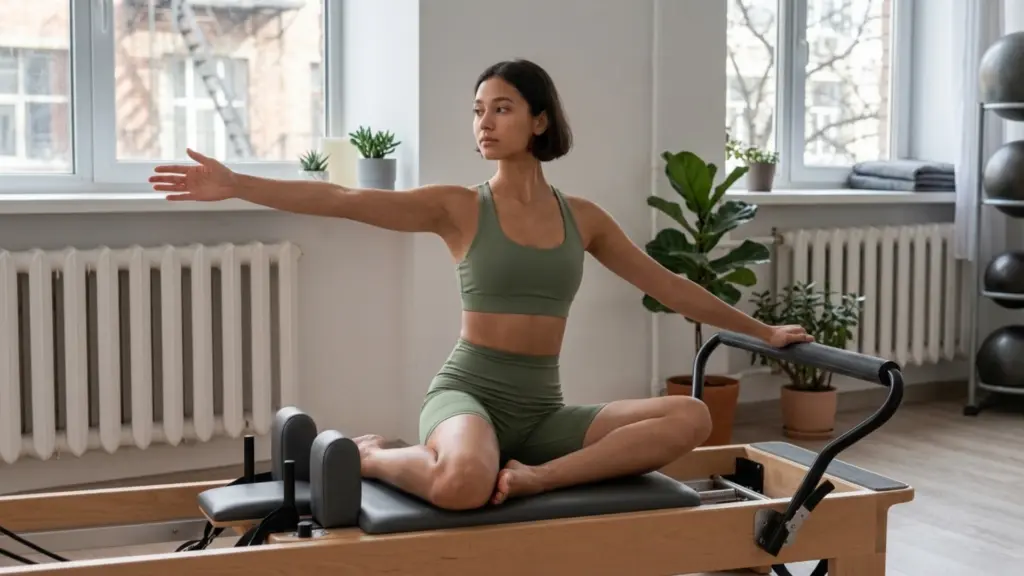
One person watches a dimly lit video featuring an unfamiliar machine, while another repeats the same routine on a mat with a resistance band. A third person struggles to distinguish Pilates from yoga.
This confusion isn’t accidental.
The term gets stretched to cover things that don’t always match, and most people never stop to ask why.
This blog explains what Asian Pilates is, its origin, benefits, myths, and everything you need to know.
Before picking a class, an app, or a random video off your feed, it helps to know exactly what you’re signing up for.
What is Asian Pilates? The Actual Meaning
Asian Pilates doesn’t refer to a single workout, and that is where the confusion starts.
Some apps use it as a label for basic mat stretches done at home, no equipment required.
Usually, it’s just basic beginner Pilates with a different label.
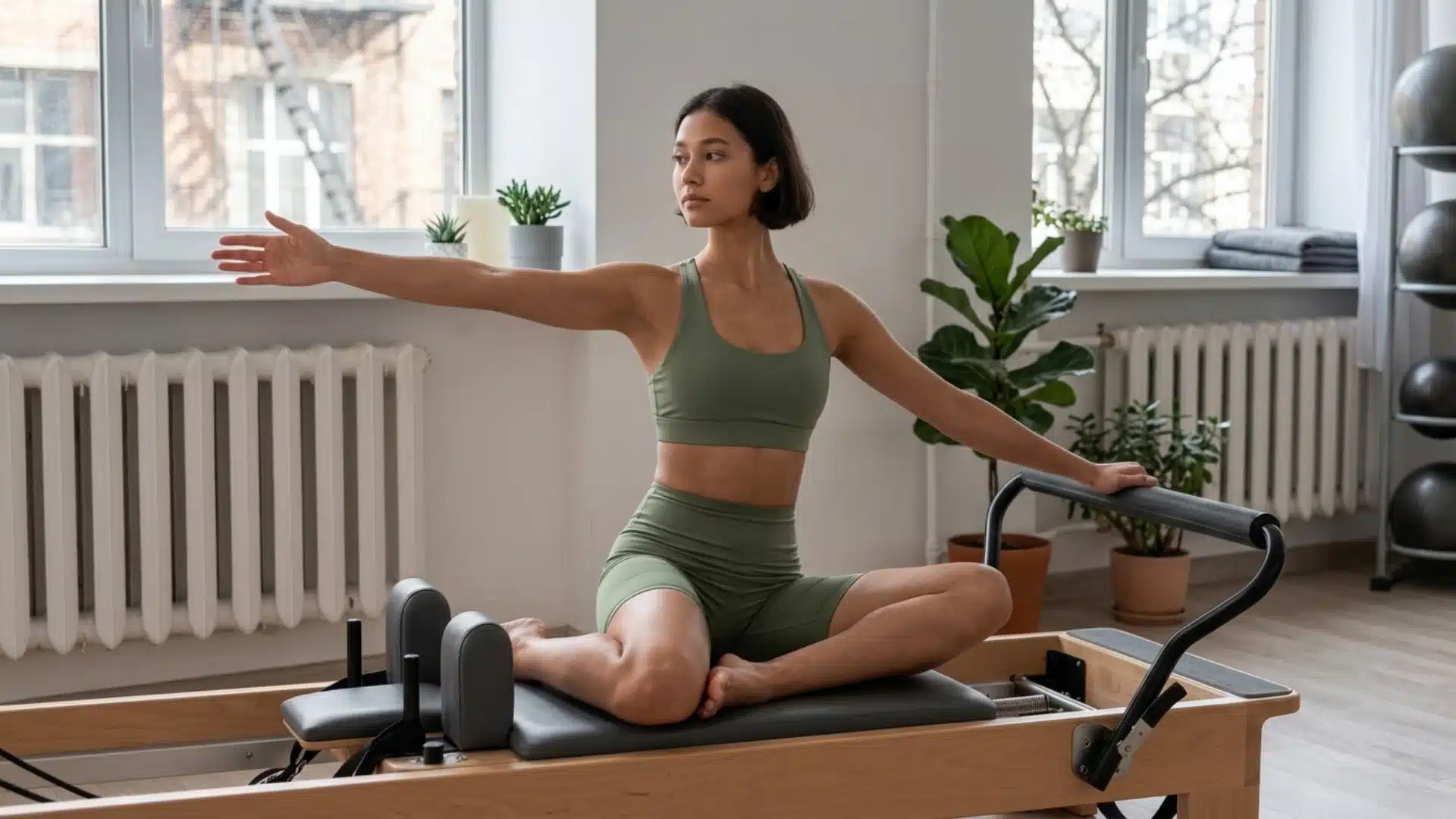
In studios across South Korea, Japan, and Taiwan, the term means something else. Classes focus on a Reformer machine with slow pacing and precise joint alignment. Transitions between moves remain smooth and controlled.
Control matters more than speed or repetition here.
Where Did the Term Asian Pilates Come From?
The name traces back to Joseph Pilates’ classical method, not a separate invention.
Studios across Asia adapted his core principles- breath, alignment, control- to fit local movement traditions.
In Japan, some classes borrow from Zen practices like Noguchi Taiso, a bodywork style built around relaxation.
In parts of China and Southeast Asia, instructors incorporate Tai Chi or Qigong, adding slow, circular transitions between exercises. Korea leaned toward structure instead, keeping classes closer to the original Reformer format.
No single country owns the style; each region reshaped the same foundation to fit its movement culture.
Is Asian Pilates a Real Pilates Style or Just an Online Trend?
Both, depending on where it’s practiced. No certifying body defines “Asian Pilates” as an official discipline, so the label itself is trend-driven. But the movements underneath aren’t invented for social media.
- No governing organization or standardized curriculum exists.
- Underlying exercises come from verified, research-backed Pilates fundamentals.
- Regional studios apply real, trained instruction, not gimmicks.
- Online use of the term often outpaces its in-studio accuracy.
View it not just as a new fitness category, but as a cultural perspective applied to something already proven.
What Does an Asian Pilates Workout Usually Look Like?
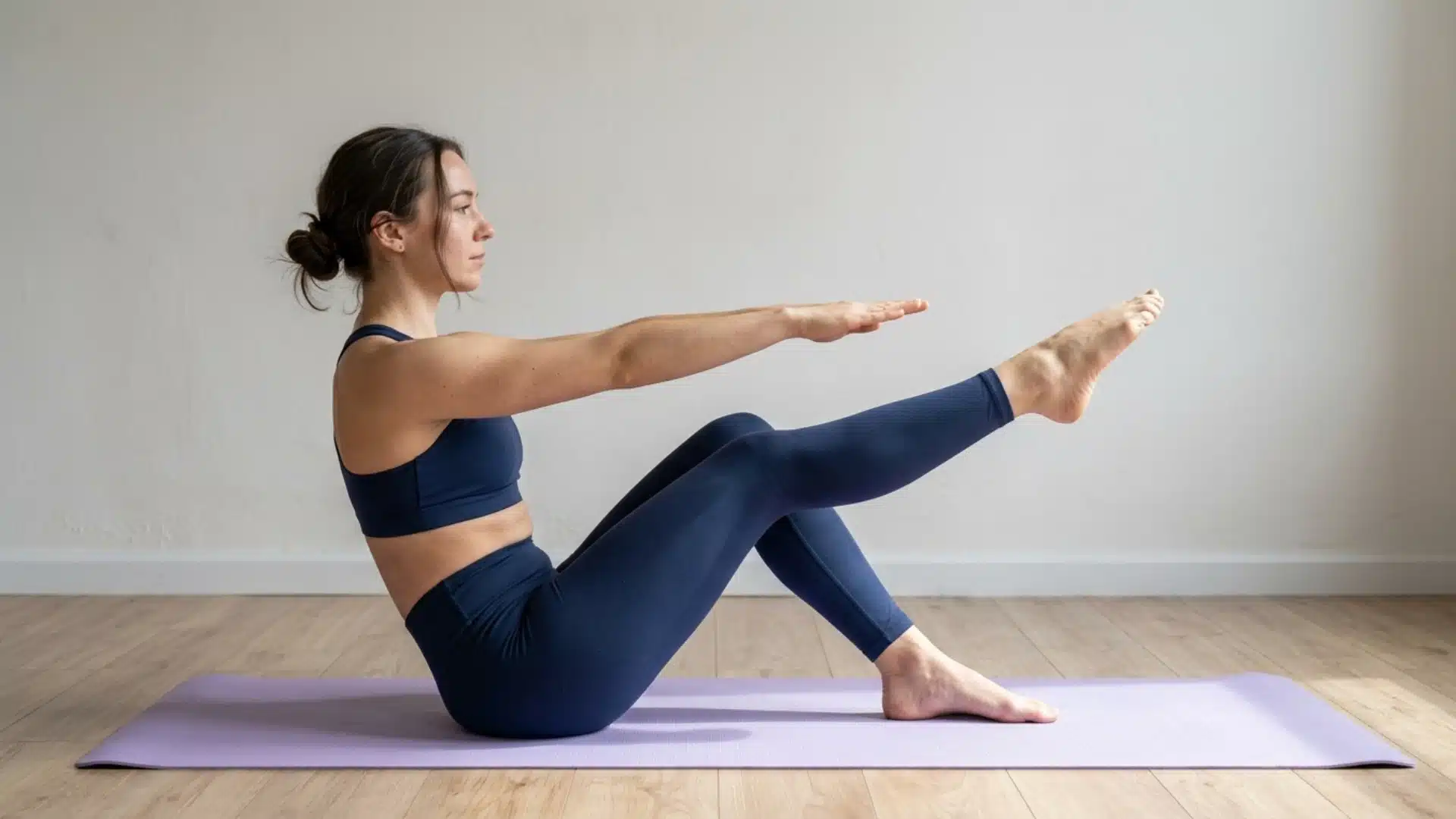
Instructors adjust hips, shoulders, or spine instead of relying on verbal cues alone.
Studios limit sessions to 6-10 people for individual attention.
Positions are held for seconds, increasing time under tension rather than quick reps. Cueing is sparse and quiet, with instructors correcting via touch or brief phrases rather than constant narration.
The room avoids typical gym setups, focusing internally rather than visually or competitively.
1. Warm-Up with Breathwork: Class starts with slow breathing and gentle spinal movements to calm the nervous system before exertion, with instructors spending minutes on breath control before adding movement.
2. Core and Glute Muscles: The main segment includes bridges, dead bugs, and leg lifts held longer than usual.
Each rep gets stretched out, with pauses built in for correction rather than moving straight into the next one.
3. Balance and Stability Work: Single-leg holds and slow weight shifts show up mid-class.
These moves train smaller stabilizing muscles that rarely get worked in faster, higher-impact formats elsewhere.
4. Posture Correction Pauses: Instructors pause the class briefly multiple times per session to adjust a student’s hip, rib, or shoulder before proceeding with the next rep, rather than just once at the beginning.
5. Quiet Cooldown Stretch: Class closes with a few slow stretches and a moment of stillness.
The music remains soft throughout, ensuring this section never feels hurried or overlooked.
Asian Pilates vs Traditional Pilates: What’s Actually Different?
Apart from pace and posture, a few practical differences set the two apart in daily practice.
| Feature | Asian Pilates | Traditional Pilates |
|---|---|---|
| Session length | Often 45–60 minutes | Typically 50–55 minutes |
| Rep counting | Rarely counted aloud | Counted through sets |
| Studio availability | Concentrated in East Asia, growing elsewhere | Widely available worldwide |
| Typical marketing | Framed as calming, aesthetic-focused | Framed as core strength and rehab |
| Cost per class | Comparable to Reformer pricing | Comparable to Reformer pricing |
| Progression style | Slow, form-first advancement | Faster progression to harder variations |
Is Asian Pilates Influenced by Other Asian Fitness Practices?
Yes, though the influence varies by region and studio.
Some classes borrow acupressure-style points, working pressure along specific lines said to support circulation.
Others draw from Shin-shin-toitsu-do, a Japanese practice stressing mind-body unification through relaxed posture.
In Indonesia, instructors often incorporate yoga-inspired flow between exercises to smooth transitions.
Korean studios occasionally pair movements with K-pop-style conditioning drills, borrowed from idol training routines. None of this replaces core Pilates mechanics.
These factors influence the tone and transition style, rather than the core exercises.
What Benefits Can You Expect?
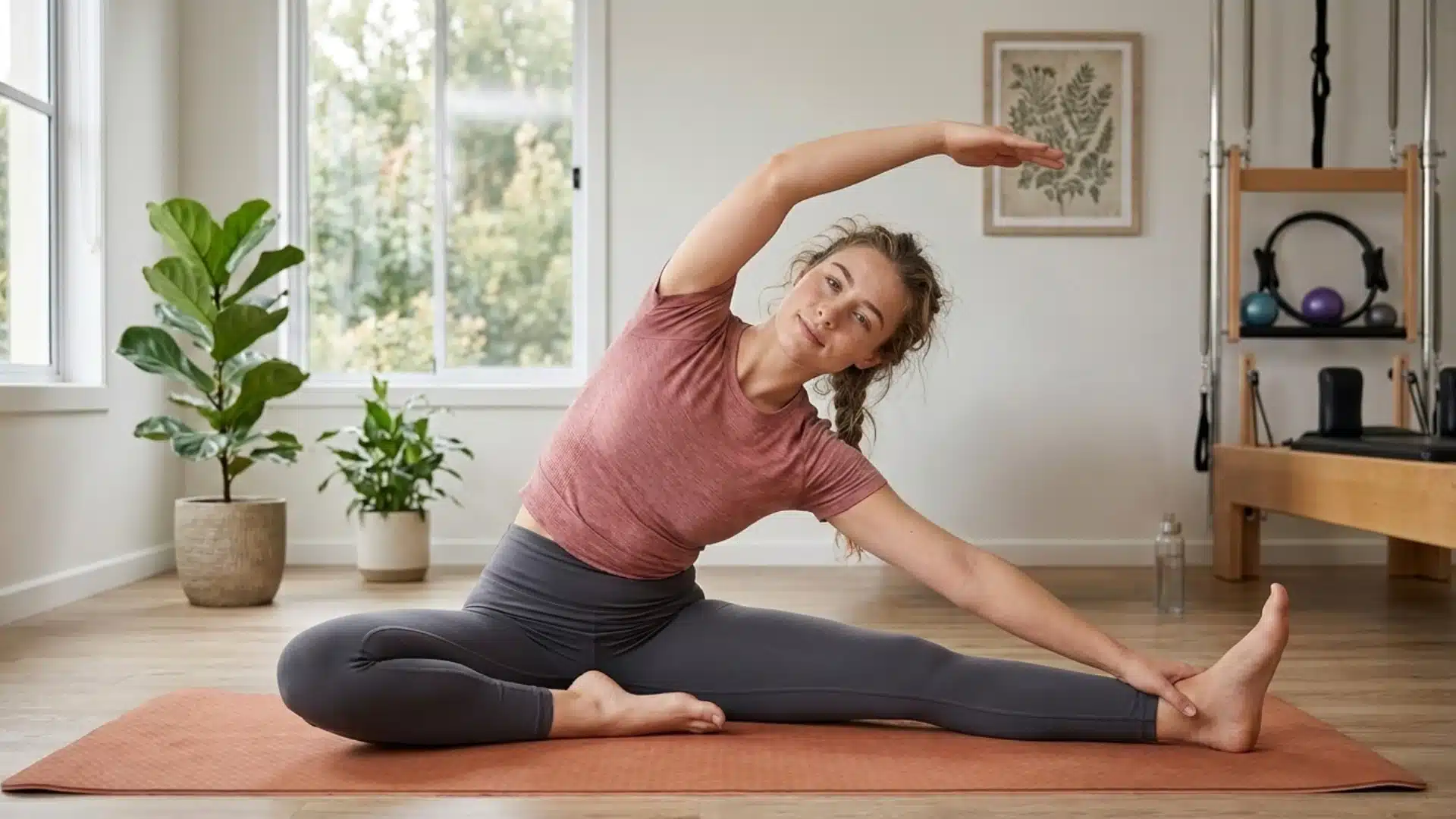
Asian Pilates appeals to more than just the calming music and slow pace shown in trend videos.
Regular practice builds real changes in how the body moves through the day:
- Better posture: Slow, controlled reps train the spine to hold a neutral position without effort.
- Stronger core stability: Deep abdominal and hip muscles stay engaged throughout each session.
- Lower joint strain: No jumping or sudden impact keeps the workout accessible for sensitive joints.
- Improved balance: The slow tempo forces smaller stabilizing muscles to activate and hold.
- Reduced stress: The steady breathing pattern shifts the body out of a rushed, tense state.
What Asian Pilates Cannot Do: Common Myths
It won’t reshape your body overnight, no matter what a viral clip promises.
Slow, controlled movement builds endurance and posture, not rapid fat loss or spot reduction.
It also isn’t a secret ancient discipline passed down for centuries.
The exercises are modern, built on Joseph Pilates’ original method with regional styling added recently.
It can’t replace physical therapy or medical treatment for injuries, chronic pain, or hormonal symptoms. Instructors guide movement, not diagnoses. Lastly, no one needs Asian heritage or geography to practice it correctly.
The name indicates a teaching style, not a qualification for who can attempt it.
Who is Asian Pilates Best For?
Athletes often use it as an active recovery day between harder training sessions.
Dancers and performers rely on it to sharpen body control and precision.
Older adults looking for joint-safe strength work tend to do well here too, since nothing involves jumping or sudden load. People who like small-group settings with real feedback, rather than solo home workouts, also fit naturally.
It suits anyone who values steady, gradual progress over fast results.
The format rewards patience and suits those willing to show up consistently rather than chasing quick change.
Who May Need a Different Type of Exercise?
Some goals call for a different format entirely:
- Calorie burn per session stays low compared to cardio-heavy formats.
- Progressive heavy loading suits that goal better than bodyweight-based control work.
- Heart-rate demands stay too low here for serious cardiovascular training.
- Weight-bearing impact work builds density more effectively than low-impact movement
A Sample 20-Minute Asian Pilates Routine for Beginners
Here’s a straightforward routine you can do at home using just a mat:
| Time | Move | Focus |
|---|---|---|
| 0–3 min | Seated breath count | Settle breathing rhythm |
| 3–7 min | Pelvic curl | Warm up the spine |
| 7–11 min | Clamshell lifts | Hip and glute activation |
| 11–15 min | Standing single-leg reach | Balance and control |
| 15–18 min | Spine twist, seated | Rotational mobility |
| 18–20 min | Child’s pose hold | Cooldown and stillness |
Does Asian Pilates Help With Weight Loss?
Not directly, and it’s not the right tool if that’s the only goal.
The workout builds strength and control rather than burning large amounts of energy per session.
That said, consistent practice can support weight management indirectly. Better sleep, lower stress, and steadier movement habits often follow regular sessions, and those factors influence weight over time.
Pairing it with a nutrition plan or a higher-intensity workout gets better results than relying on this alone.
Can You Practice Asian Pilates at Home?
Yes, and many people start there before ever visiting a studio.
Free routines on YouTube or fitness apps cover most beginner sequences without a subscription.
The tradeoff is correction. A screen can’t adjust your hip position or catch a rounded spine mid-rep, so form mistakes go unnoticed longer. A wall mirror or phone camera helps catch obvious errors.
For proper alignment, initial in-person sessions help build habits that home practice alone can’t teach.
How to Tell If an Online Asian Pilates Class is High Quality
Check the instructor’s credentials first. Look for a real Pilates certification, not just a fitness influencer background.
Camera angle matters; good instructors film from angles showing full-body alignment, not just flattering close-ups.
Quality classes provide modifications for different fitness levels, highlighted before each exercise. Cueing should explain the why behind a move, not just count reps, and include clear breath patterns with movement.
Classes with vague direction, fast cuts, or no modification options usually signal style over substance.
Tips For Better Results
A few small habits separate people who see real progress from people who quit after two classes:
- Exhaling on effort keeps the core engaged and prevents holding tension in the wrong places.
- Rushing through a rep defeats the purpose, since control matters more than how many reps get finished.
- Two to three sessions a week build more progress than one intense class followed by weeks off.
- Add a few minutes or one extra session at a time instead of increasing everything at once.
- Muscle fatigue is normal, but sharp or pinching pain means stopping and adjusting the movement immediately.
Frequently Asked Questions (FAQ’s)
1. Is Asian Pilates the Same as Classical Pilates?
No, it shares the same core moves but slows the pace and adds more focus on posture and breath.
2. Do I Need a Reformer Machine to Try It?
No, mat-based versions work just as well at home with a mat and maybe a resistance band.
3. How Often Should Beginners Practice?
Two to three sessions a week build consistency while giving muscles enough time to recover.
4. Why Do Legs Shake so Much During Class?
It means smaller stabilizing muscles are activating under the slow pace, not a sign of weakness.
5. Can Asian Pilates Help with Back Pain?
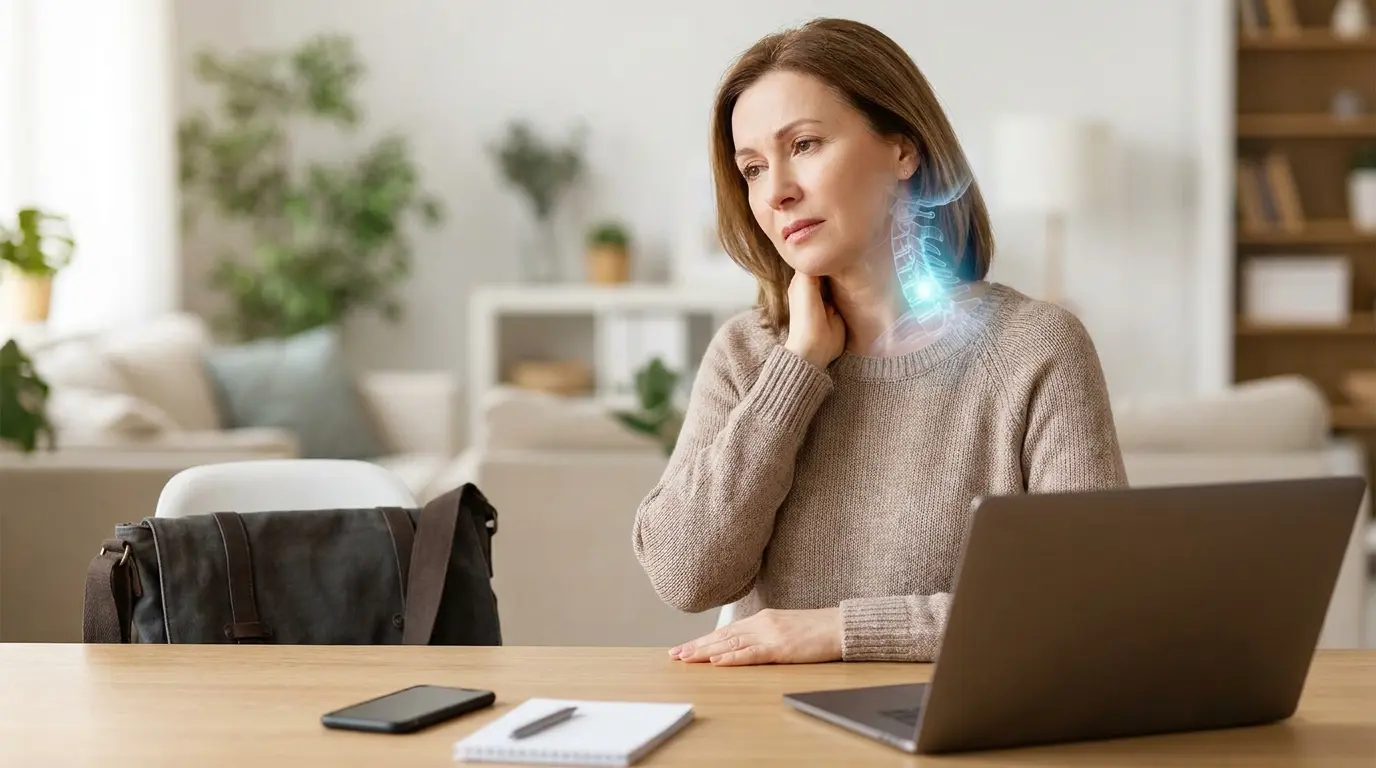
It can ease mild stiffness from sitting or poor posture, but severe pain needs a professional assessment first.
Summing It Up!
What is Asian Pilates in simple terms? It’s genuine practice wearing a label: no miracle, no ancient secret.
It builds posture, core control, and joint-friendly strength through slow, precise movement.
The branding leans on hype; the mechanics don’t. Skip it if you want fast fat loss or heavy cardio.
Choose it if you want steady, low-impact progress and don’t mind showing up more than once.
One class teaches you more than any video could.