



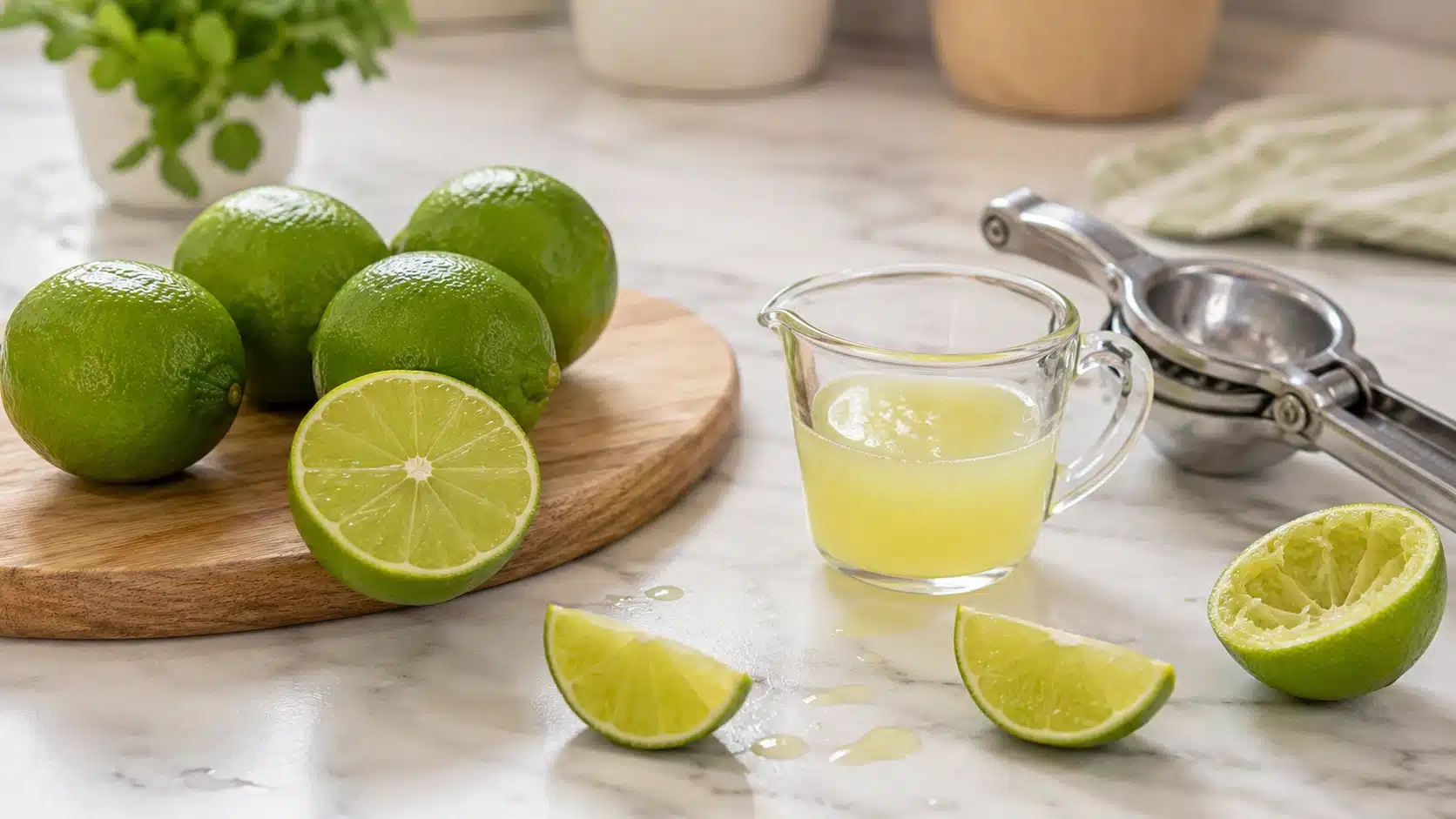









Recipes always say juice of one lime, then you squeeze one and wonder if that is really enough. Some limes give a generous pour. Others feel replaced with a decorative green marble.
How much juice a lime has depends on more than just its size. Variety, ripeness, temperature, and how you cut it play a role.
The average numbers exist, but understanding what shifts them helps when planning a recipe, shopping, or stretching limes into enough juice for a pitcher of drinks.
This piece covers the average yield, how lime types differ, how to pick a juicy one before buying, and fast ways to get every drop from whatever limes you have.
| Disclaimer: This is for informational and educational purposes only. It does not constitute medical advice and should not replace consultation with a qualified healthcare provider. Always consult a doctor before making changes to your diet, supplement routine, or health practices. |
How Much Juice Is In One Lime?
One medium lime yields about 2 tablespoons of juice, which equals 1 fluid ounce (about 30 milliliters). If you need the fastest answer, use two tablespoons as your working number.
Half a medium lime provides about a tablespoon of juice, enough for salsa, dressing, or a squeeze over cooked vegetables. This varies by lime size, variety, ripeness, weight, storage, and method.
A smaller lime yields about one tablespoon, a larger one three or more. Consider this a rough guide for recipes, shopping, substitutions, and scaling. It’s a planning estimate, not a fixed measure, as production varies.
As outlined on Allrecipes, a medium lime’s average juice yield aligns with this baseline. This quick answer gets the measurement clear first. Next, it helps to see how different lime types can shift the amount.
Types Of Limes And How Much Juice They Produce
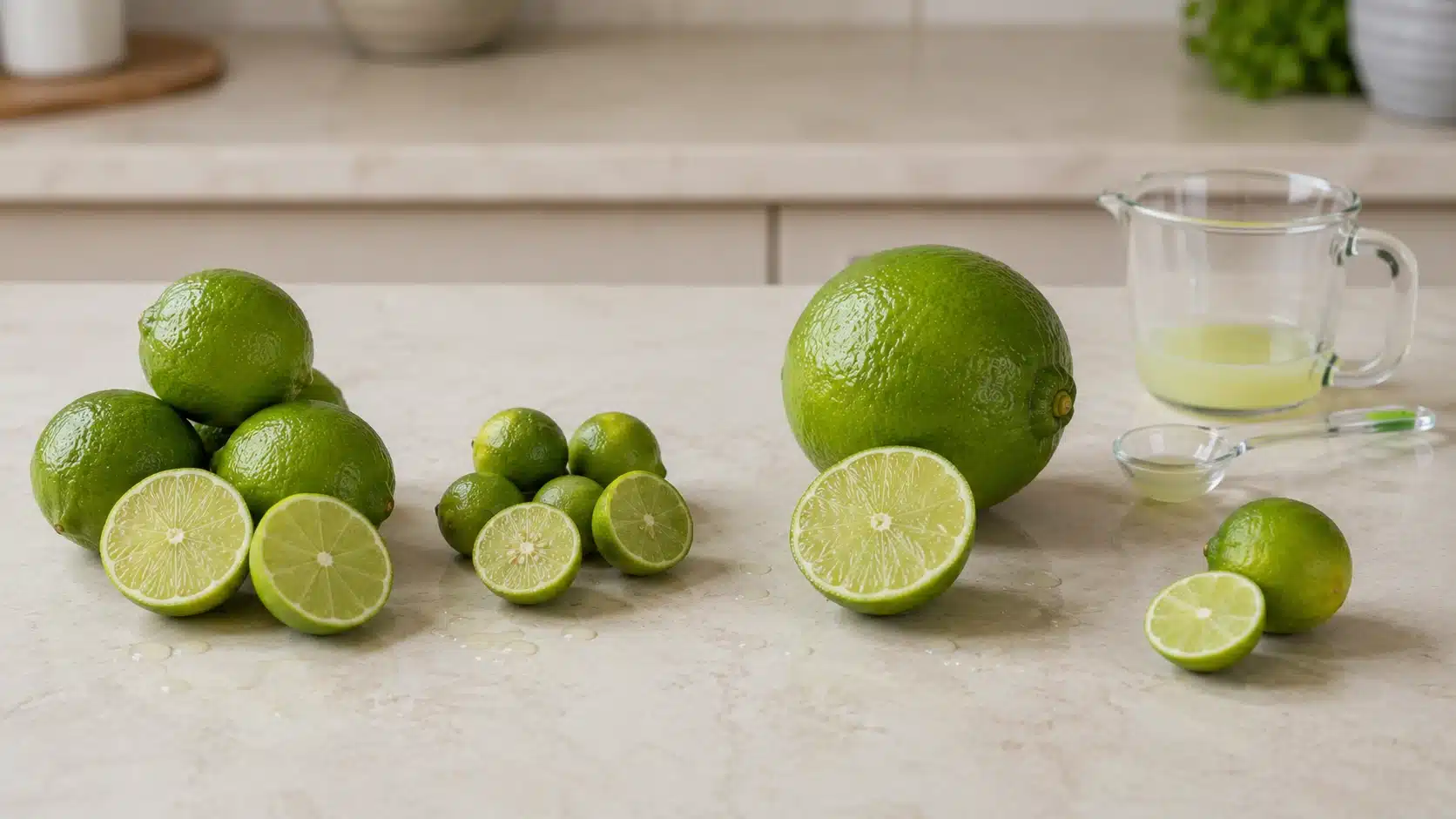
Not every lime in the produce section is the same variety, and variety makes a measurable difference in yield. A Key lime and a standard Persian lime may look similar in a photo, but they behave differently when squeezed.
The table below shows average juice yields by lime type to help plan recipes and shopping trips accurately.
| Lime Type | Average Juice Yield | Best Uses |
|---|---|---|
| Medium Persian Lime | 2 to 3 tablespoons | Everyday cooking, marinades, drinks |
| Key Lime | 1 to 2 tablespoons | Desserts, Key lime pie, cocktails |
| Large Persian Lime | 3 tablespoons or more | Large-batch drinks, dressings |
| Small or Underripe Lime | About 1 tablespoon | Garnishes, small flavor additions |
Persian limes are large, seedless, dark green, and sold in supermarkets. Key limes are smaller, rounder, lighter, with a sharper, floral flavor.
Key limes produce less fruit but have a higher juice-to-flesh ratio, so you need about twice as many to match the volume of Persian limes. If a recipe calls for four Persian limes, plan for about eight Key limes instead.
| Nutrition Tip: Key limes yield about half the juice volume of Persian limes but contain approximately 30% more vitamin C per gram and a higher limonene concentration. If you are using lime for the nutritional value rather than volume, Key limes deliver more per squeeze, so you will just need more of them. |
Factors That Affect How Much Juice A Lime Gives
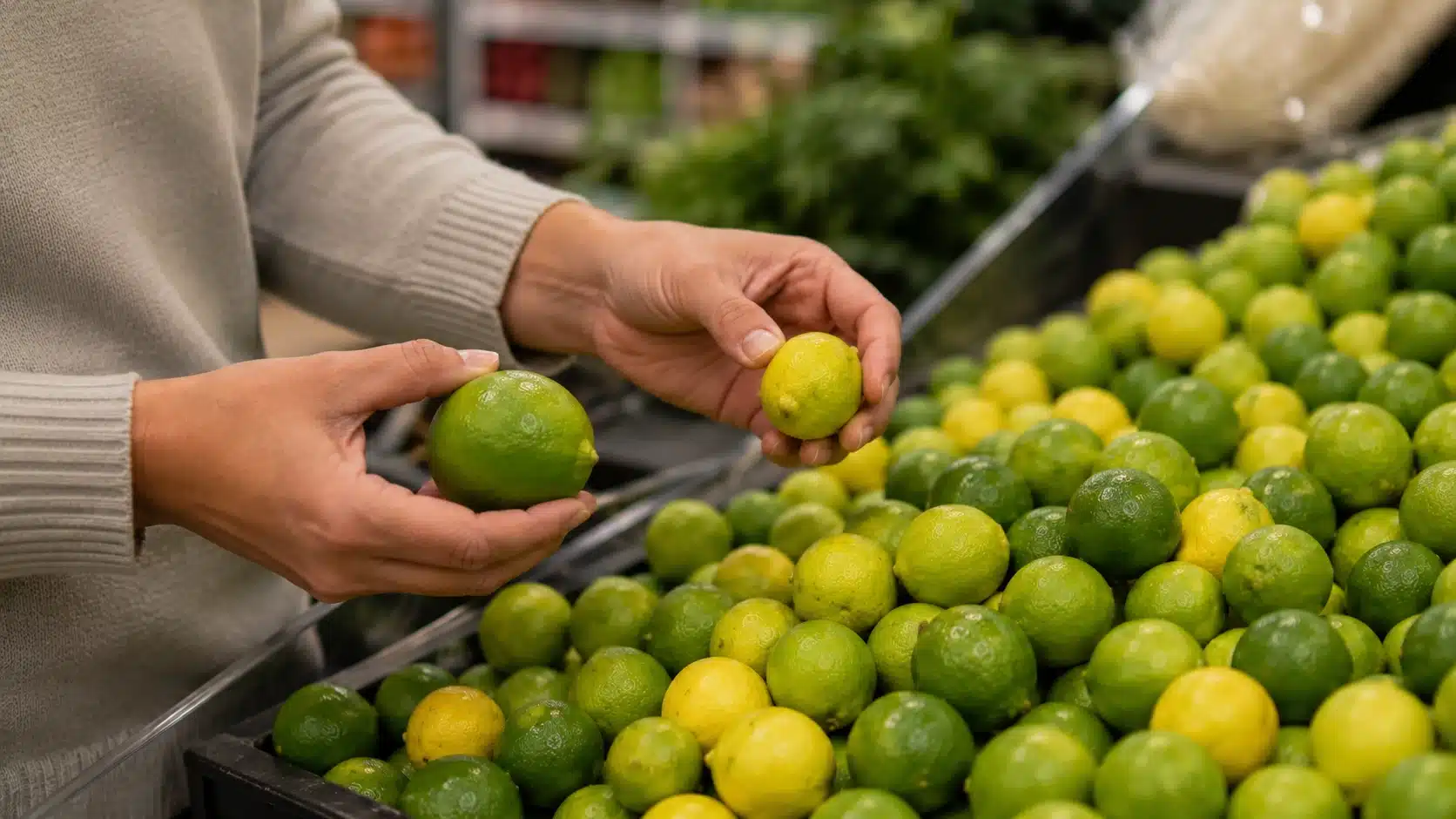
It is genuinely frustrating to squeeze four limes and get barely enough for a recipe that promised two limes would do the job. The difference is not random. Several factors directly affect how much juice a lime can produce.
| Factor | How It Affects Juice Yield | What To Look For |
|---|---|---|
| Size | Larger limes usually contain more flesh and more juice. | Choose limes that look full and feel larger than average. |
| Ripeness | Ripe limes release juice more easily because the inner membranes are softer. | Pick limes that give slightly when pressed gently. |
| Weight | A heavier lime for its size usually has higher water content. | Compare similar-sized limes and choose the heavier one. |
| Storage Temperature | Cold limes often feel firmer and can be harder to squeeze. | Let refrigerated limes sit at room temperature before juicing. |
| Variety | Persian limes and Key limes naturally produce different amounts. | Use Persian limes for higher yield and Key limes for specific recipes. |
| Prep Technique | Rolling a lime firmly under your palm before cutting breaks down internal membranes and loosens juice. | Roll the lime on a counter for ten to fifteen seconds before slicing, the same kind of small prep habit that makes a difference in wellness shots made at home. |
In client consultations, I often point out that the rolling step alone can noticeably change how much usable juice someone gets, especially with limes that have been sitting in the fridge for days.
This same logic explains why a large, heavy lime can outperform its size on paper: weight and ripeness compound to release juice more easily once it’s cut.
Quick Lime Juice Conversion Chart
If you only need the measurements quickly, this chart provides the most useful lime juice conversions in one place. It is based on the standard estimate that one medium Persian lime gives about two tablespoons of juice.
| Lime Amount | Juice Yield |
| ½ lime | 1 tablespoon |
| 1 lime | 2 tablespoons |
| 1 lime | 1 fluid ounce |
| 1 lime | 30 ml |
| 2 limes | ¼ cup |
| 4 limes | ½ cup |
| 8 limes | 1 cup |
According to Southern Living’s lime conversion guide, one lime yields about two tablespoons of juice and approximately two teaspoons of zest, based on a standard lime.
This chart is the easiest shortcut when you are cooking, mixing drinks, or scaling a recipe. For more precise planning, remember that Key limes, large limes, and smaller, underripe fruit can affect the final amount.
How To Juice Limes
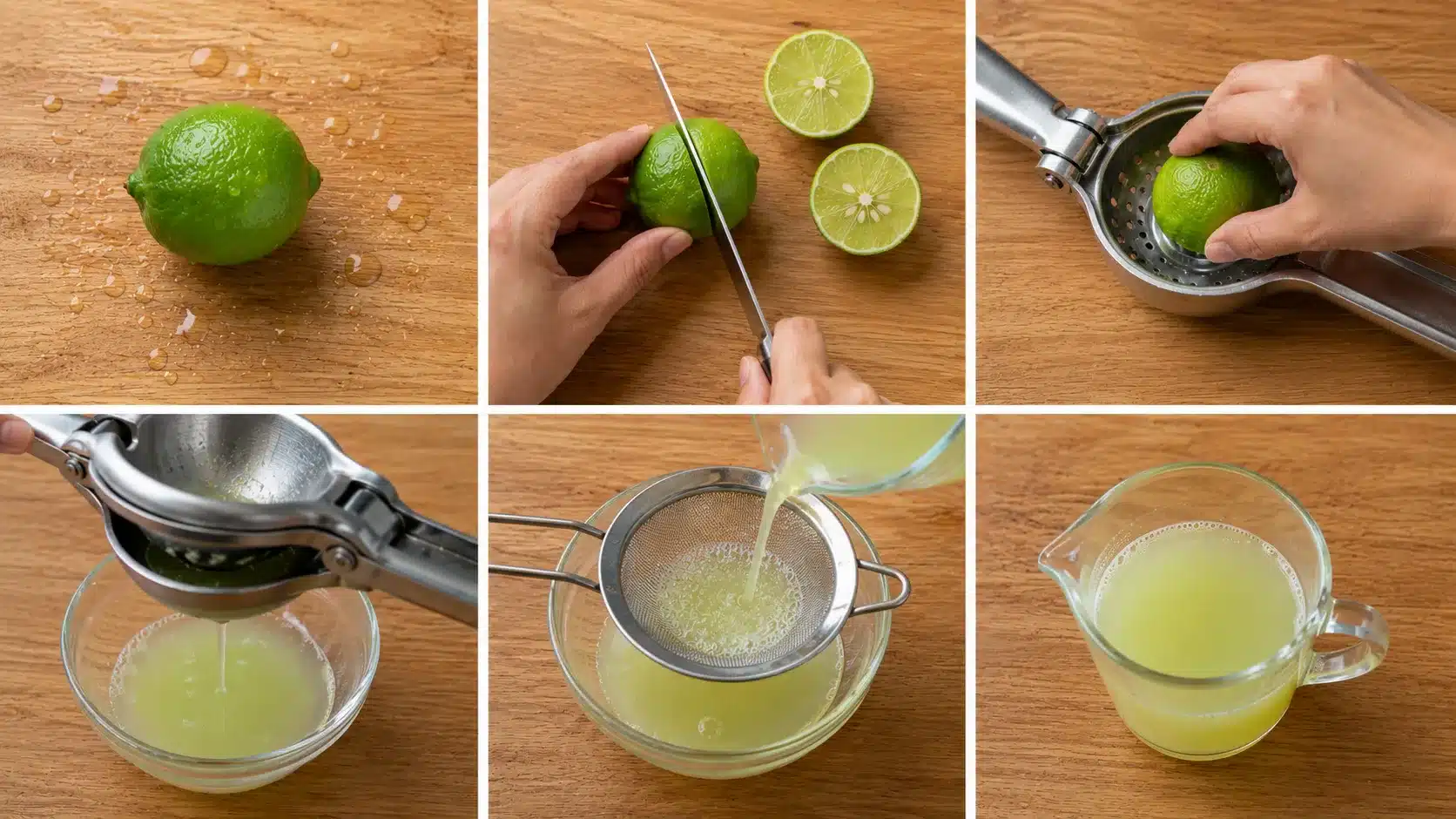
Juicing limes is simple when the setup is clean and the method is steady. This section is only the step-by-step process, so use the tips above first if your limes are cold, firm, or not giving much juice.
- Wash and dry the lime: Rinse the lime under cool running water, then dry it well. Clean, dry skin makes the fruit easier and safer to handle.
- Cut the lime: Use a sharp knife and cut the lime for your tool. Across the middle works for most presses, while lengthwise can help with hand squeezing.
- Press over a bowl or cup: Place the cut side down in a citrus press and apply steady pressure. If using your hand, squeeze over a bowl.
- Loosen stubborn sections: If juice remains inside, insert a fork into the cut half and twist gently while squeezing to release more liquid.
- Strain if needed: Pour the juice through a fine-mesh strainer you remove seeds or pulp.
- Measure before adding: Check the amount before pouring it into the recipe. This keeps sauces, drinks, and dressings balanced.
A clean process makes the final measurement more reliable. Once the lime juice is squeezed and measured, the last decision is whether fresh juice matters for your recipe or whether bottled lime juice can do the job.
Tips For Getting More Juice From A Lime
Even a good lime can fall short of its best if the prep step is skipped. These are extra yield tricks to use before cutting.
- Warm it slightly: If refrigerated, let the lime sit at room temperature for 15-20 minutes or microwave for 10 seconds to loosen juice, a tip that applies equally when prepping carrot juice at home. Warmer citrus releases juice more easily.
- Cut lengthwise for handheld squeezers: Cut a lime from stem to tip instead of across for a better fit and pressing in some juicers. Test both cuts to see which yields cleaner results.
- Use a citrus press: A metal hinged citrus press applies more even pressure than hand-squeezing, often extracting more juice and keeping seeds out without a separate strainer.
- Juice immediately after cutting: Exposure to air quickly dims fresh lime juice. Cut only when ready to juice, and use or store immediately. I advise clients to do this to reduce sodium and additives, as fresh acid easily boosts flavor at home.
These small habits remove most of the guesswork before the knife even comes out. Once the lime is ready, the final part is simple: cut it cleanly, press it well, and measure the juice before adding it to the recipe.
Can You Substitute Bottled Lime Juice For Fresh?
Bottled lime juice can work in some recipes, but it does not taste exactly like fresh lime juice. It often tastes flatter because it is processed for shelf life, so the best choice depends on how important lime flavor is.
| Factor | Fresh Lime Juice | Bottled Lime Juice |
| Flavor | Bright, clean, sharp | Flatter, slightly bitter |
| Convenience | Requires prep | Ready to pour |
| Shelf Life | 2 to 3 days refrigerated | Months after opening |
| Seed and Pulp | Present, can strain | Already filtered |
| Best For | Cocktails, dressings, fresh salsas | Cooked sauces, marinades, and baking |
| Cost | Varies by season | Consistent year-round |
As a general conversion, two tablespoons of bottled lime juice equal one medium lime, a handy reference when scaling kidney- and liver-friendly juice recipes.
Fresh juice works better when lime is the main flavor, while bottled juice is more practical when lime plays a smaller role in the background.
| Note: Fresh lime juice freezes well. Pour into ice cube trays (1 tablespoon per cube), freeze solid, then transfer to a sealed bag. Frozen cubes keep their flavor for up to 4 months and pull out in exact portions, useful if you tend to buy limes in bulk when they are in season. |
Frequently Asked Questions
Does lime juice lose nutrients once it’s squeezed?
Fresh lime juice begins to lose some of its vitamin C content within a few hours of exposure to air and light. For anyone juicing limes for health reasons rather than just flavor, squeezing right before use preserves more of that nutritional value than juicing ahead and storing it.
Why do some limes feel heavy but still give little juice?
A lime can feel heavy due to thick pith or a dense rind rather than its actual juice content. Gently pressing the skin gives a better sense of juiciness than weight alone, since pith and rind add bulk without adding liquid.
Do Key limes produce less juice than Persian limes?
Yes. Key limes are smaller and yield about one to two tablespoons of juice per fruit compared to two to three tablespoons from a medium Persian lime. Key lime juice has a sharper, more floral flavor, so recipes using Key limes are often written with the smaller yield in mind.
Can you freeze fresh lime juice?
Fresh lime juice freezes well and keeps its flavor for up to four months in a sealed container. Freezing in ice cube trays first makes it easy to pull out exact tablespoon-sized portions for recipes. Once frozen solid, transfer the cubes to a zip-top bag.
Is bottled or fresh lime juice better for a low-sodium diet?
Fresh lime juice is naturally sodium-free, but some bottled versions may contain preservatives or other added ingredients that can contain trace amounts of sodium. For anyone closely managing sodium intake, checking the label on bottled juice matters more than most people assume.
Final Thoughts
Lime juice measurements seem minor until a recipe falls short because of a sad, dry lime that had no business being in the fruit bowl.
Knowing that a standard medium lime gives about two tablespoons helps from the moment the grocery list gets written. The juice from a lime depends on size, variety, temperature, and prep.
Persian limes at room temperature usually yield about 2 tablespoons when pressed properly. Key limes are smaller, cold limes produce less juice, and heavy limes often yield more.
Pick well, prep simply, and the measurements get easier. If you found this useful, check out our guide on citrus storage tips to keep your limes fresher for longer, or drop a comment below with how you measure yours.