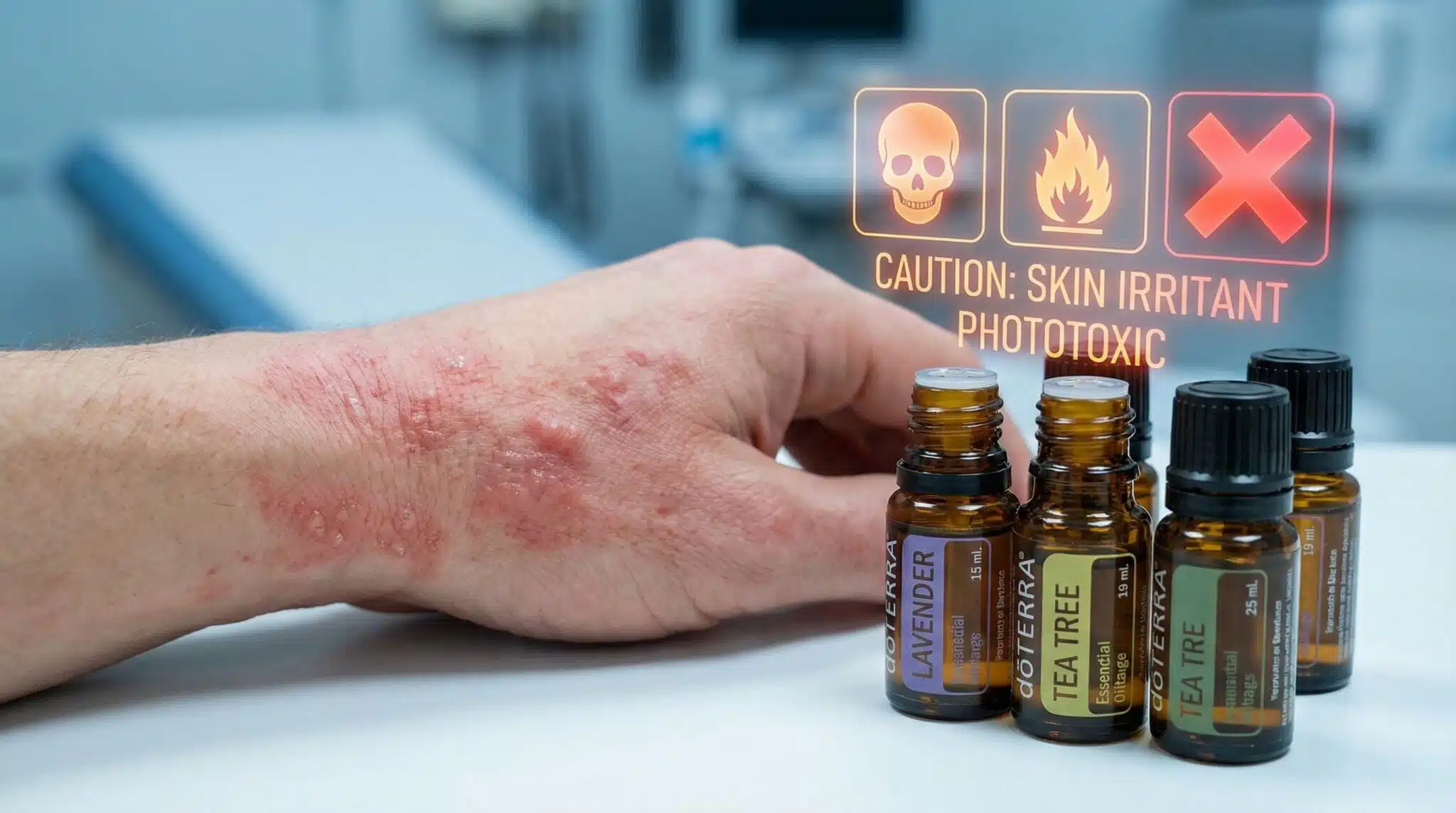






Essential oils are tiny bottles of wow… and also tiny bottles of why is my arm on fire? if you treat them like harmless little perfume waters.
They’re wildly concentrated. Like, peppermint oil gets compared to something like a whole bunch of peppermint tea crammed into one drop. Which is adorable until you realize you’re about to smear “28 cups of tea” directly onto your skin like that’s a normal Tuesday.
So let’s talk dilution aka the unglamorous step that keeps your DIY “calming roller blend” from turning into a rash you have to explain to your coworker.
Why dilution isn’t optional (unless you enjoy chaos)
Putting essential oils straight on your skin (“neat”) can cause:
- Immediate irritation: redness, burning, itching, the whole dramatic production.
- Sensitization: the bigger, scarier one. This is when your body basically decides, “Cool, we’re allergic to lavender now,” and it can be permanent. Like, forever-forever.
And the annoying part? Sensitization can happen after you’ve used an oil “just fine” for years. I’ve seen people go from “lavender fixes everything” to “lavender makes me break out in hives” seemingly overnight. Your immune system is petty like that.
Dilution is your seatbelt. Not sexy. Extremely effective.
And yes: “Neat” is for cocktails, not essential oils.
Carrier oils: the responsible friend in the group chat
Carrier oils are the plain, stable oils you mix essential oils into so they’re actually wearable on human skin. They do three big jobs:
- Spread the essential oil out so you don’t get a concentrated hit in one spot.
- Slow down absorption so your skin isn’t getting jump scared.
- Make it usable (because essential oils don’t mix with water more on that bath trap later).
A few carriers I actually like (and why):
- Jojoba: My ride or die for faces and sensitive skin. It’s technically more of a wax ester and plays nice with most skin types.
- Fractionated coconut oil (FCO): Light, fast absorbing, great for roll ons and massage if you hate feeling greasy.
- Sweet almond: A classic for body oil, especially if you’re on the drier side.
- Grapeseed: Light and “dry” feeling, nice for oily skin—BUT it goes rancid faster (so don’t buy a gallon like you’re opening a spa).
- Avocado: Rich and slower to sink in. Great if your skin is basically a desert.
Quick PSA: carrier oils can go rancid, and rancid oil smells like regret and can irritate skin. Store them cool/dark, and if it smells “off,” toss it. No heroics.
Dilution ratios without the math headache
You’ll see dilution written as a percentage. Here’s what you actually need to know for real life, at home use:
My simple rule:
Start at 1% for face/sensitive folks. Start at 2% for most adult body blends.
And yes, higher isn’t “more effective.” It’s usually just… more irritating.
The most useful dilutions (topical use)
- 1%: gentle, great for face, sensitive skin, older adults, and kids over 2
- 2%: the everyday standard for healthy adults (body oil, massage, lotion add ins)
- 3%: short term, targeted use (like “my shoulders are screaming after moving furniture”)
- 5-10%: only for tiny spot use for a few days, and only if you know the oil is safe at that level (many aren’t)
Drop cheat sheet (because that’s what you came for)
These are general guidelines (drop size varies, but this works fine for most home blending):
Per 1 ounce (30 mL) carrier oil:
- 1% = ~6 drops
- 2% = ~12 drops
- 3% = ~18 drops
Per 1 tablespoon (15 mL) carrier oil:
- 1% = ~3 drops
- 2% = ~6 drops
- 3% = ~9 drops
If you’re blending for kids or someone medically fragile, be more precise (and honestly? go lower).
Your skin should not have to file a complaint.
Extra gentle rules: kids, seniors, pregnancy (the “do not freestyle” category)
If you’re blending for someone other than your average healthy adult—especially kids, pregnant/nursing people, or older adults—this is where you stop winging it.
- Kids over 2: generally 0.5-1% max. Avoid strong respiratory oils like peppermint, eucalyptus, rosemary (high 1,8-cineole), especially around kids with asthma.
- Under 2: I’m going to be that person and say skip topical essential oils unless a qualified clinician tells you otherwise.
- Older adults: 1% is often safer skin tends to be thinner and more reactive.
- Pregnancy/nursing: 1% or less, and get actual medical guidance. “Some lady on the internet said it was fine” is not a plan.
When in doubt: dial it down.
How I make a simple blend (without turning my counter into an oil slick)
If you want a no drama first blend, do this:
- Pick a bottle size (let’s say 1 oz / 30 mL).
- Pick a dilution (2% for adult body = 12 drops total).
- Add your carrier oil first.
- Add your essential oils (the total drops across all oils should equal your target).
Example: 12 drop blend could be 6 lavender + 4 frankincense + 2 tea tree.
- Cap and roll between your palms to mix (shaking makes bubbles and I hate bubbles).
- Label it with what’s inside + the date (because Future You will not remember, and Future You will be annoyed).
That’s it. You’re officially someone who makes “blends” now. (Just don’t start giving everyone unsolicited roller bottles for Christmas. Ask me how I know.)
The oils that are… a little high maintenance
Some oils need extra respect because they can cause issues even when diluted.
“Hot” oils (aka: spicy drama in a bottle)
Think cinnamon bark, clove, oregano. These can irritate like crazy. Keep them very low (around 0.5% or less) and avoid sensitive skin and broken skin.
Phototoxic citrus oils (the sneaky ones)
Mostly cold pressed citrus oils like bergamot, lemon, lime, grapefruit. They can react with UV light and cause burns or pigmentation.
If you use them on skin: avoid sun/tanning beds for 12-18 hours.
Steam distilled versions are often not phototoxic, but check your specific bottle.
Basically: don’t make a lemony body oil and then go lay out like a rotisserie chicken.
Low dermal limit oils
Wintergreen and birch (high methyl salicylate) are big ones. These aren’t casual use oils look up dermal limits before you dab them on.
Face, body, bath: same oils, different rules
- Face: keep it gentle (usually 1%) because facial skin loves to overreact.
- Body/massage: 2% is the usual sweet spot.
- Roll ons: 2% is fine for body, but go lower if you reapply all day.
- Bath: listen closely because this is where people get burned.
The bath mistake everybody makes
Essential oils do not mix with water. They float. So if you drip them straight into the tub, you’re basically creating little undiluted oil slicks that can stick to your skin.
Instead, mix them into a dispersing “buffer” first: full fat milk, unscented liquid castile soap, or a proper bath dispersant.
A simple method:
- Mix 5-8 drops essential oil into 1 tablespoon of your dispersant
- Add that mix to running water
And still go easy. Bath time is supposed to be relaxing, not a chemistry experiment with consequences.
The three classic dilution mistakes (please don’t join this club)
- “But it’s 100% pure!”
Pure doesn’t mean safe to slap on skin undiluted. It just means it isn’t cut with other stuff.
- “More must work better.”
Not with essential oils. More usually means “more likely to irritate.”
- Skipping the patch test.
You don’t want to discover you’re sensitive to something by accidentally oiling your entire legs and then panic Googling at midnight.
Patch test + what to do if you react (aka my least fun but most useful section)
Patch test (quick and simple)
- Put a small amount of your diluted blend on the inside of your forearm (dime sized).
- Cover loosely and leave for 24 hours.
- If you see redness, bumps, itching, burning: that blend is not your friend.
If your skin reacts
- Stop immediately.
- Wash gently with mild soap.
- Apply plain carrier oil to the area (water can drive essential oils deeper rude, right?).
- If you get spreading redness, swelling, blistering, or any breathing issues: seek medical care and bring the ingredient list.
If you suspect sensitization (reacting to an oil you used to tolerate), stop using that oil completely and go back to dilution and patch testing. Sensitization tends to be the “this is forever now” kind of thing, and I would like better for you.
Final reminder from your slightly bossy friend
Diluting essential oils is not about being fussy. It’s about getting the benefits including helichrysum oil benefits without turning your skin into an angry, itchy protest sign.
Start low. Keep it simple. Label your blends. Respect the spicy oils. And please please don’t drip straight lemon oil into your bath and then wonder why your thighs are mad at you.
Your skin and your future self will both be grateful.