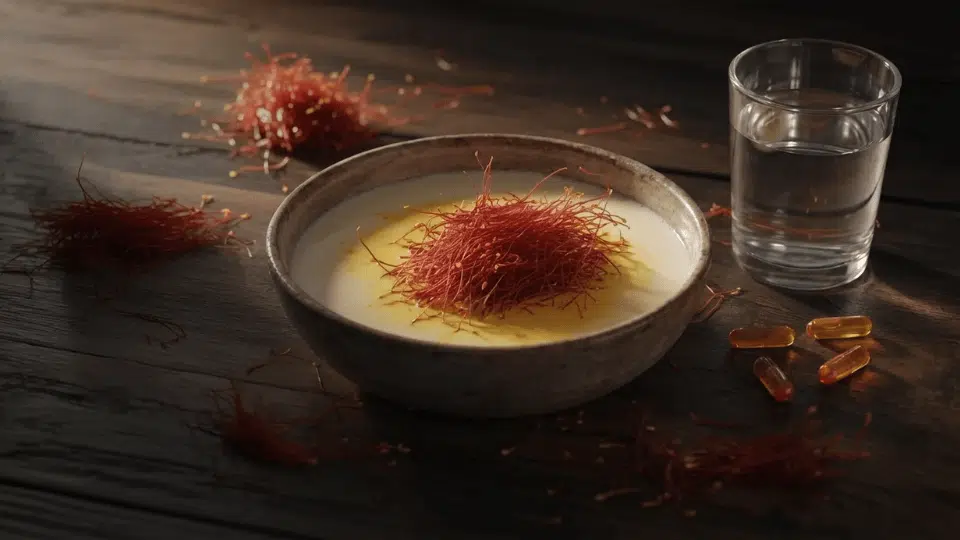



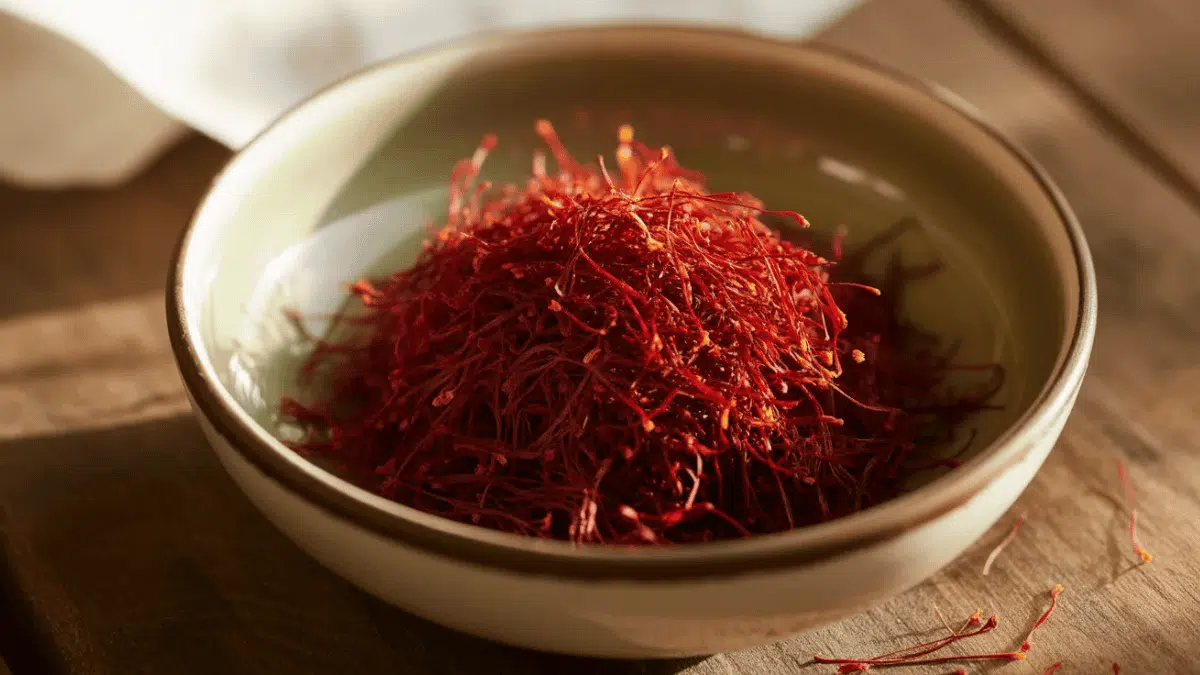







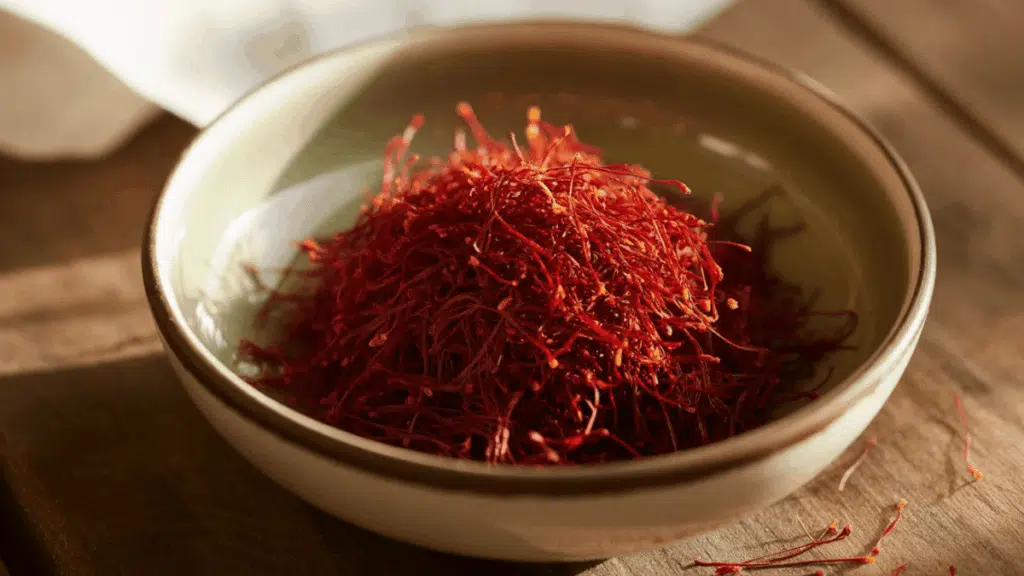
For thousands of years, saffron sat quietly in kitchens and apothecaries, valued for its colour, its flavour, and what traditional healers believed it could do for the mind.
The same spice behind saffron tea’s growing reputation is now sitting in a very different kind of conversation, one that involves neuroscience, clinical trials, and some of the most prescribed medications in the world.
My interest in saffron didn’t start with ADHD. But the more I looked into this ancient plant, the harder it became to ignore what modern research was quietly beginning to uncover.
Why Saffron Is Being Studied for ADHD
Saffron has quietly moved from kitchen spice to research subject, and for good reason. What makes it particularly interesting in the context of ADHD is its influence on two key brain chemicals: dopamine and serotonin.
Both play a direct role in focus, impulse control, and emotional regulation, the very areas where ADHD creates the most friction.
From what I’ve seen in the research, saffron’s active compounds, particularly crocin and safranal, appear to support neurotransmitter activity in ways that feel genuinely relevant to ADHD symptoms.
That’s likely why more parents and adults are exploring it as a gentler, plant-based option alongside conventional approaches.
What Research Says About Saffron for ADHD
The research on saffron for ADHD is still early, but a few well-designed studies have produced results worth taking seriously.
- A 2019 randomized, double-blind trial in the Journal of Child and Adolescent Psychopharmacology found that saffron was equally effective as methylphenidate in children over 6 weeks, with similar side-effect profiles.
- A 2021 clinical trial went a step further, finding that combining saffron with methylphenidate outperformed the stimulant alone, pointing to its potential as an add-on support.
Larger studies with longer follow-ups are still needed, but for a plant this accessible, the early signals are genuinely encouraging to me.
Saffron vs. Adderall: How Do They Compare?
Both saffron and Adderall engage the same brain systems, but the similarities end there. Here’s a closer look at how each actually works, and where they genuinely differ.
How Adderall Works
Adderall is a prescription stimulant that has been studied and prescribed for ADHD for decades. It works by directly increasing the availability of dopamine and norepinephrine in the brain, producing fast, measurable improvements in focus and impulse control, well documented across large clinical populations.
- Controlled Substance: Classified as a Schedule II drug due to significant dependency risk
- Fast Acting: Works within 30-60 minutes, with effects lasting 4-12 hours depending on formulation
- Strong Evidence: Consistently well-researched for improving attention and reducing hyperactivity
- Prescription Only: Requires medical diagnosis and ongoing professional management
Adderall’s track record is hard to argue with, but for some, the side effects and dependency risk make alternatives worth exploring.
How Saffron Works (or Might Work)
Saffron doesn’t flood the brain with neurotransmitters; it nudges them. Its active compounds, crocin and safranal, appear to gently modulate dopamine and serotonin activity rather than force a spike, which may explain both its milder effects and its more gradual timeline.
- Gradual Effect: Works slowly, with benefits building over several weeks rather than hours
- Targeted Support: Most consistent evidence sits around hyperactivity and mood regulation
- No Stimulant Properties: Does not sharpen attention the way Adderall does
- Early Stage: Small trials only, not yet validated at scale
Saffron won’t replace a stimulant, but as a gentler option with growing research behind it, it’s worth understanding properly.
Can Saffron Replace ADHD Medication?
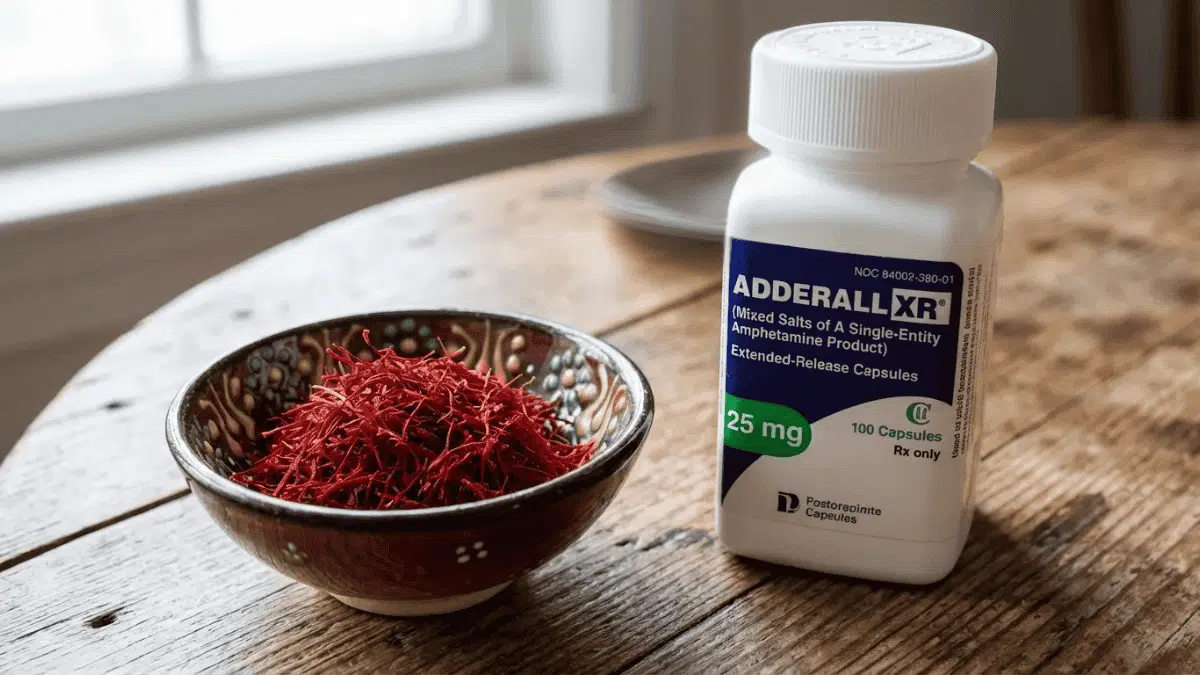
Based on everything the research shows right now, no, saffron cannot replace ADHD medication.
The studies are promising, but small sample sizes and short follow-up periods mean we’re nowhere near the evidence threshold needed to call it a proven substitute.
What saffron may offer is a role alongside conventional treatment, particularly for those looking to support hyperactivity or emotional regulation without adding another prescription.
What concerns me most is when people quietly stop medication in favour of a supplement without looping in their doctor. That’s a real risk. Reducing or stopping ADHD medication should
What to Know Before Trying Saffron for ADHD
Saffron is generally well-tolerated, but treating any herb as casually as a kitchen spice when using it medicinally is where things can quietly go wrong.
- Quality and dosing are inconsistent: Most clinical studies used standardised extracts at specific doses. Many retail supplements don’t match that. What’s on the label and what’s in the capsule aren’t always the same thing, which makes replicating study results difficult.
- Drug interactions are real: Saffron influences serotonin pathways, which means combining it with antidepressants, mood stabilisers, or other serotonin-affecting medications carries genuine interaction risk that shouldn’t be brushed aside.
- Vulnerable groups need extra caution: For children, teenagers, and pregnant individuals, the safety data is especially thin. These are not populations where experimenting without medical supervision makes sense.
Saffron has real potential, but potential is not the same as safety clearance. Understanding what not to mix with saffron across drugs, herbs, and food is just as important as knowing the benefits before you start. A conversation with a knowledgeable practitioner before starting always matters.
That’s a Wrap
Saffron is not Adderall, and it was never trying to be. What the early research suggests is a plant with a specific, modest role, particularly around hyperactivity and emotional regulation, where conventional treatment doesn’t always feel like enough.
Does saffron work like Adderall for ADHD? Not in the way most people mean when they ask. But dismissing it entirely means ignoring genuinely interesting science.
Treat it as a promising addition to a wider conversation, not a replacement for one. I’d love to hear your thoughts in the comments below.