



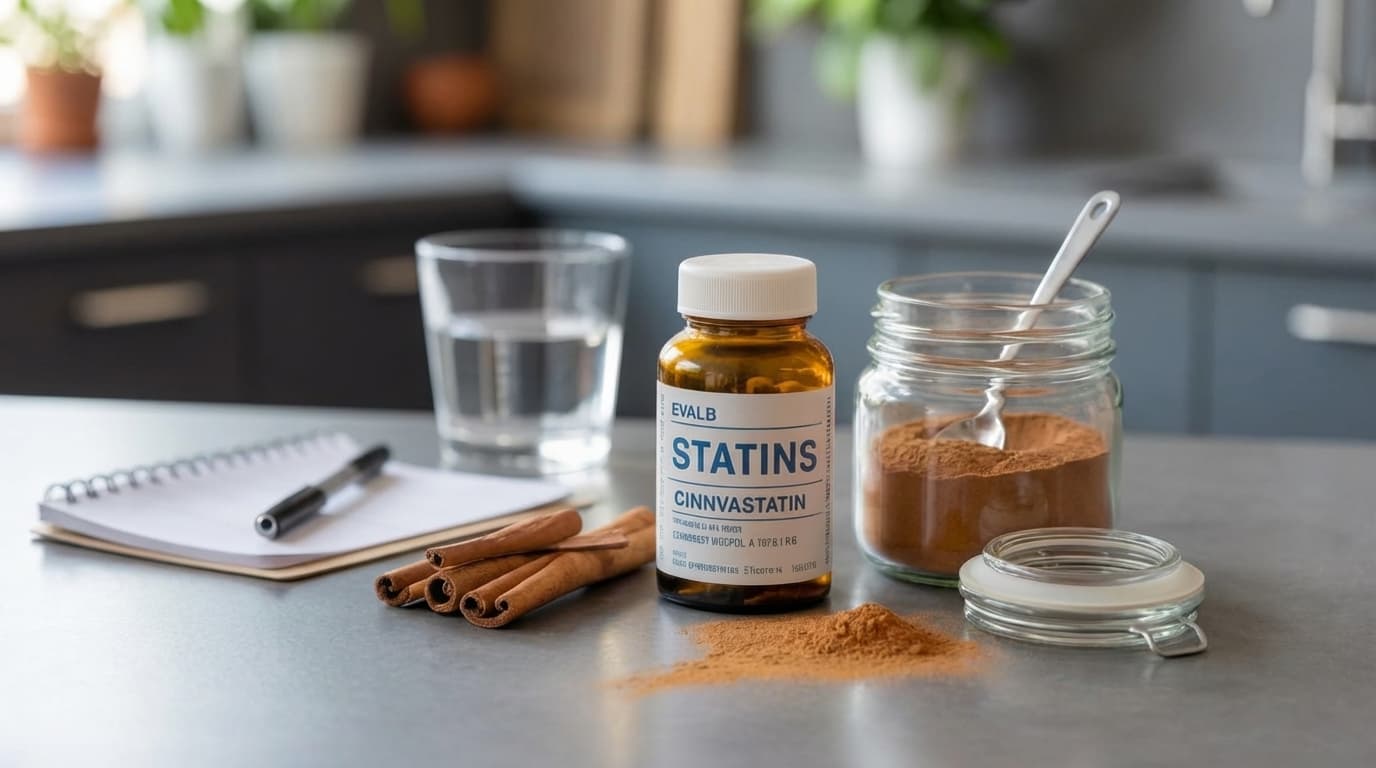






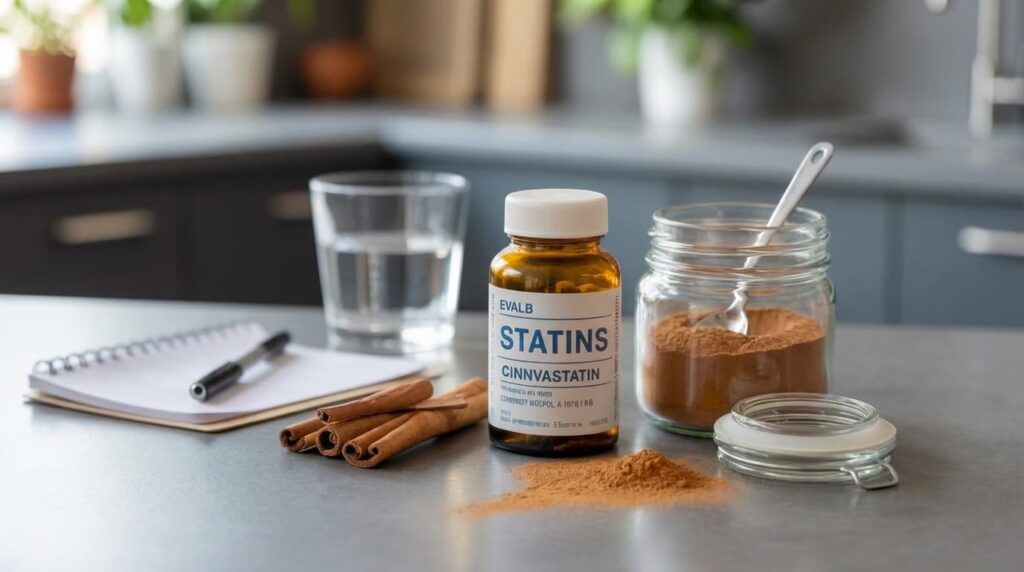

Cinnamon sits in almost every kitchen, and statins sit in millions of medicine cabinets worldwide. Among the people I see managing cholesterol or blood sugar, both often run together as part of the daily routine, with little thought given to whether that combination is actually safe.
From what I’ve observed, that’s worth pausing on. The interaction between cinnamon and statins isn’t a clear yes-or-no; it’s more nuanced, and that nuance rarely gets the attention it deserves.
What I’ll cover here: the interaction mechanism, what the research shows, why the type of cinnamon matters, and the practical steps worth taking to use both safely.
Why People Combine Cinnamon and Statins
The reason so many people combine cinnamon and statins without questioning it comes down to one thing: both are being used for the same underlying goal. Statins lower LDL cholesterol and reduce cardiovascular risk.
Cinnamon, backed by several clinical trials, has shown it can lower LDL, total cholesterol, and triglycerides, while also improving fasting blood glucose and insulin sensitivity. The fact that cinnamon’s calorie count is virtually zero makes it feel like a completely risk-free addition to any daily routine.
Particularly if you’re looking for a natural supplement with negligible caloric content and a well-documented effect on metabolic markers, reaching for one that targets the same markers as your prescribed medication feels like a logical step.
The real question is not whether the goals overlap; they clearly do. The question is whether combining them is safe, redundant, or quietly problematic.
What Research Says About Cinnamon and Statins
The honest view is that specific clinical research on this interaction is limited, but what exists points to a clear dose-dependent risk pattern. Here is how the risk breaks down:
| Cinnamon Use | Interaction Risk | Key Concern |
|---|---|---|
| Culinary amounts, pinch or teaspoon | Low | Unlikely to cause meaningful interaction |
| Supplement form 1–3g per day | Moderate | As coumarin exposure increases, liver enzyme interaction becomes relevant |
| Supplement form 3–6g per day | Higher | Meaningful coumarin load, particularly with cassia |
| Ceylon cinnamon at any dose | Low | Negligible coumarin content regardless of dose |
Several studies have reported that coumarin in cinnamon carries a documented cinnamon statin hepatitis risk, and its concomitant use alongside statins is a clinical concern worth taking seriously.
The risk scales directly with dose, cinnamon type, and individual liver function, and published clinical cases confirm this is not purely theoretical.
The Main Interaction Concern: Liver Processing
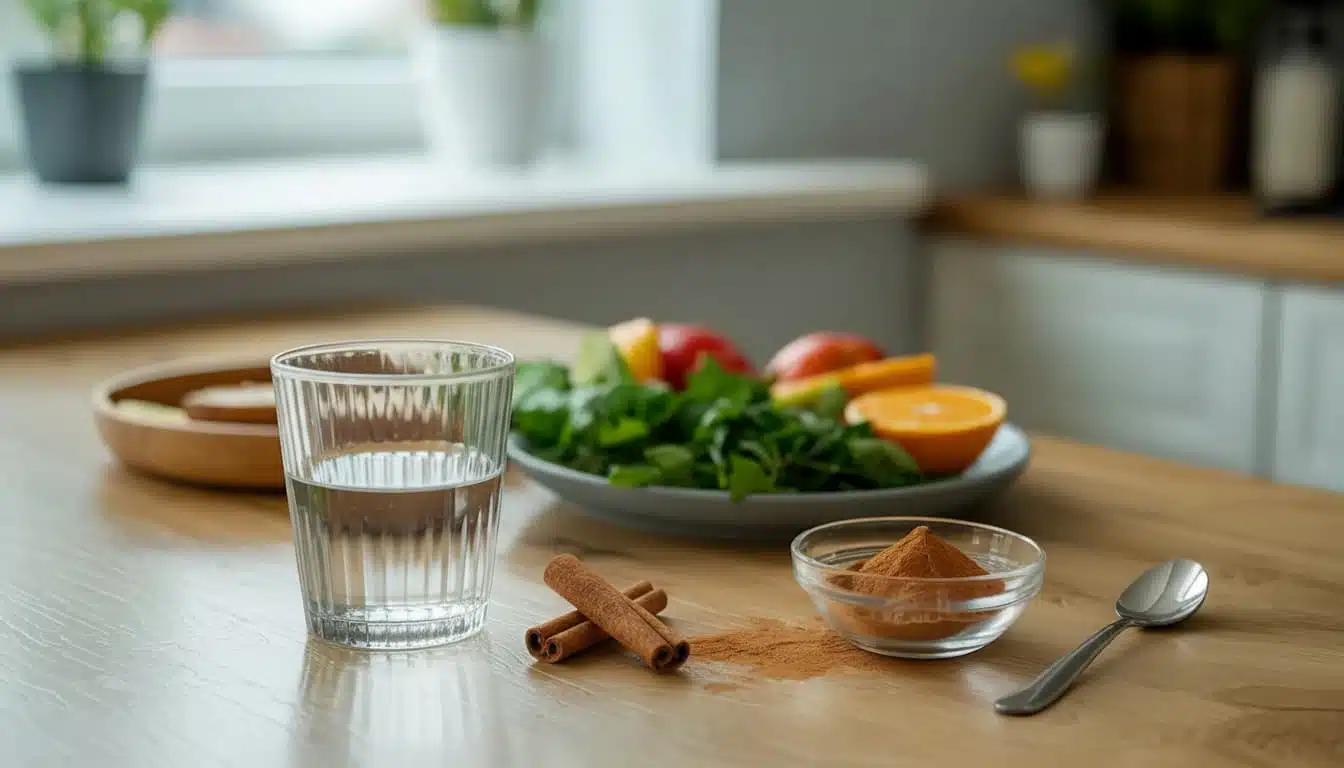
The interaction between cinnamon and statins is not about one canceling out the other; it is about how both are processed in the same place at the same time.
Most statins, including atorvastatin, simvastatin, and lovastatin, are metabolized by a liver enzyme called CYP3A4, the same pathway relevant for those using cinnamon specifically to lower blood sugar (A1C) over time. Cassia cinnamon, the variety in most kitchen cupboards, contains coumarin, a compound processed through the same pathway. When two substances compete for the same enzyme, one can interfere with the other’s breakdown.
If cinnamon slows CYP3A4 activity, statin levels in the blood rise. Higher statin levels increase the risk of myopathy, muscle pain and weakness, and in serious cases, rhabdomyolysis, a severe muscle breakdown that affects the kidneys.
Cassia vs Ceylon: The Distinction That Changes Everything
Not all cinnamon carries the same risk alongside statins, and the difference between the two most common types is significant enough to change the conversation entirely.
Here is how they compare:
| Factors | Cassia Cinnamon | Ceylon Cinnamon |
|---|---|---|
| Also known as | Common or supermarket cinnamon | True cinnamon |
| Coumarin content per teaspoon | 1–12mg | Less than 0.04mg |
| Risk alongside statins | Higher at therapeutic doses | Negligible at any dose |
| Availability | Widely available | Health food stores, online |
| Best for statin users | Culinary amounts only | Safe for therapeutic use |
The coumarin difference between the two is not marginal; it is the difference between a meaningful liver interaction risk and virtually none at all.
Should You Space Cinnamon and Statins Apart
Spacing cinnamon supplements and statins by a few hours is a reasonable precaution, and one commonly recommended in integrative medicine circles.
Most statins are taken in the evening when cholesterol synthesis peaks, making morning cinnamon supplementation with meals a natural and practical separation.
It allows the body to process each compound on a somewhat separate timeline. However, timing alone does not fully resolve the underlying concern.
The type and dose of cinnamon matter more than timing, especially with high-coumarin cassia cinnamon, where interaction risk exists regardless of the dosing interval. Spacing helps, but doesn’t eliminate the core risk.
The Right Way to Time Cinnamon Alongside Statin Use
Timing does not eliminate the interaction risk between cinnamon and statins, but it meaningfully reduces it when combined with the right cinnamon type and dose. Here is how to structure it practically:
| Factor | Recommendation | Why It Matters |
|---|---|---|
| Statin timing | Evening, as prescribed | Aligns with peak cholesterol synthesis |
| Cinnamon timing | Morning with food | Creates separation in the CYP3A4 pathway |
| Taking with meals | Always eat when taking cinnamon | Slows absorption and reduces peak concentrations |
| What timing does not do | Replace cinnamon type selection | Spacing manages risk but does not eliminate it |
The practical takeaway is straightforward. Morning cinnamon with food, evening statin as prescribed, and always Ceylon over cassia regardless of timing. Spacing helps manage the interaction, but does not replace choosing the right type of cinnamon.
Warning Signs to Watch For When Combining Both
If you are using cinnamon supplements alongside statins, these are the specific warning signs that warrant an immediate call to your doctor, not a wait-and-see approach.
- Unexplained muscle pain, cramps, or weakness: the primary statin side effect and the earliest sign of elevated statin levels
- Unusual or persistent fatigue can signal both muscle stress and early liver strain simultaneously
- Dark or discolored urine: a direct indicator of muscle breakdown affecting kidney function
- Yellowing of skin or eyes: signals liver stress and requires urgent medical attention
- Abdominal pain or nausea: associated with elevated statin levels and coumarin-related liver strain
Routine liver function tests already included in most statin monitoring programs will detect any coumarin-related liver stress, provided your doctor knows you are taking cinnamon supplements
When Should You Consult Your Doctor
Before adding cinnamon supplements to a statin routine, a conversation with your doctor is not optional. It is the right first step.
Tell your doctor everything. Current medications, any supplements you already take, your diet, and any liver or digestive issues you have had. Cinnamon seems harmless, but at therapeutic doses, it interacts with the same liver enzyme pathway statins use.
Your doctor can check your liver function, assess your individual risk, and tell you whether Ceylon cinnamon at a specific dose is safe for you personally.
No supplement decision should happen around a prescription. It should happen with the person who wrote it.
Final Thoughts
Combining natural supplements with prescribed medication is never as simple as it sounds, and the cinnamon and statins interaction is a good example of why the details matter. The risk is not in the spice rack. It is in the supplement aisle, the dose, and the type of cinnamon you choose.
What I find most reassuring about this topic is that the solution is genuinely straightforward: switch to Ceylon, keep doses sensible, and give your doctor the full picture. You do not need to choose between natural and pharmaceutical approaches to cholesterol.
You just need to manage them with the same care you would give any medication. If this helped clarify something you were unsure about, share it with someone navigating the same decision.