












I remember wondering how many sit ups a day actually make a difference. Advice online is all over the place. Some people say ten is enough, while others push for fifty or even a hundred.
After years of working as a fitness trainer and rehabilitation specialist, I’ve seen that the answer usually depends on your starting point, goals, and how consistent you are with training.
I’ll help you understand the right daily range for beginners, intermediate exercisers, and advanced trainees. You’ll also learn the real benefits of sit-ups, the limits people often overlook, and how to perform them safely with proper form.
By the end, you’ll have a simple routine and clear expectations so you can build stronger abs without wasting time or risking injury.
How Many Sit-Ups Should You Do a Day?
Many people ask how many sit-ups they should do each day to build stronger abs. The right number mostly depends on your training experience and current activity level.
When I guide clients through core training programs, I usually adjust sit-up volume based on their strength level and how their body responds to the movement.
Here’s a practical breakdown based on experience level. Pick the category that matches your current fitness level, then adjust as your strength builds over the coming weeks.
| Your Fitness Level | Daily Target | Frequency |
|---|---|---|
| Beginner (new to exercise) | 10–20 | Every other day |
| Intermediate (active 2–3x/week) | 25–50 | 4–5 days/week |
| Advanced (train regularly) | 75–100 | 5–6 days/week |
Start with a number that feels manageable and focus on correct technique instead of speed. As your core becomes stronger, you can slowly increase the repetitions for better results.
Benefits of Sit-Ups

Doing sit-ups regularly can strengthen your core and improve how your body moves. In my experience coaching clients through core training routines, even small daily sets can build consistency and better abdominal control.
- Core Strength: Sit-ups strengthen the abdominal muscles, helping your core support everyday movements like bending, lifting, and twisting.
- Abdominal Endurance: Repeating sit-ups helps your abs work longer without tiring, improving stamina during workouts and daily activities.
- Posture Support: A stronger core helps keep your spine stable, which can improve posture while sitting, standing, or walking.
- Overall Fitness: Sit-ups add basic core training to your routine, helping support balance, coordination, and general physical fitness.
Sit-ups can’t create visible abs alone; that requires fat loss through diet. They also don’t work the entire core; obliques and stabilizers need other exercises like planks.
What People Actually Experience When They Do Sit-Ups Daily
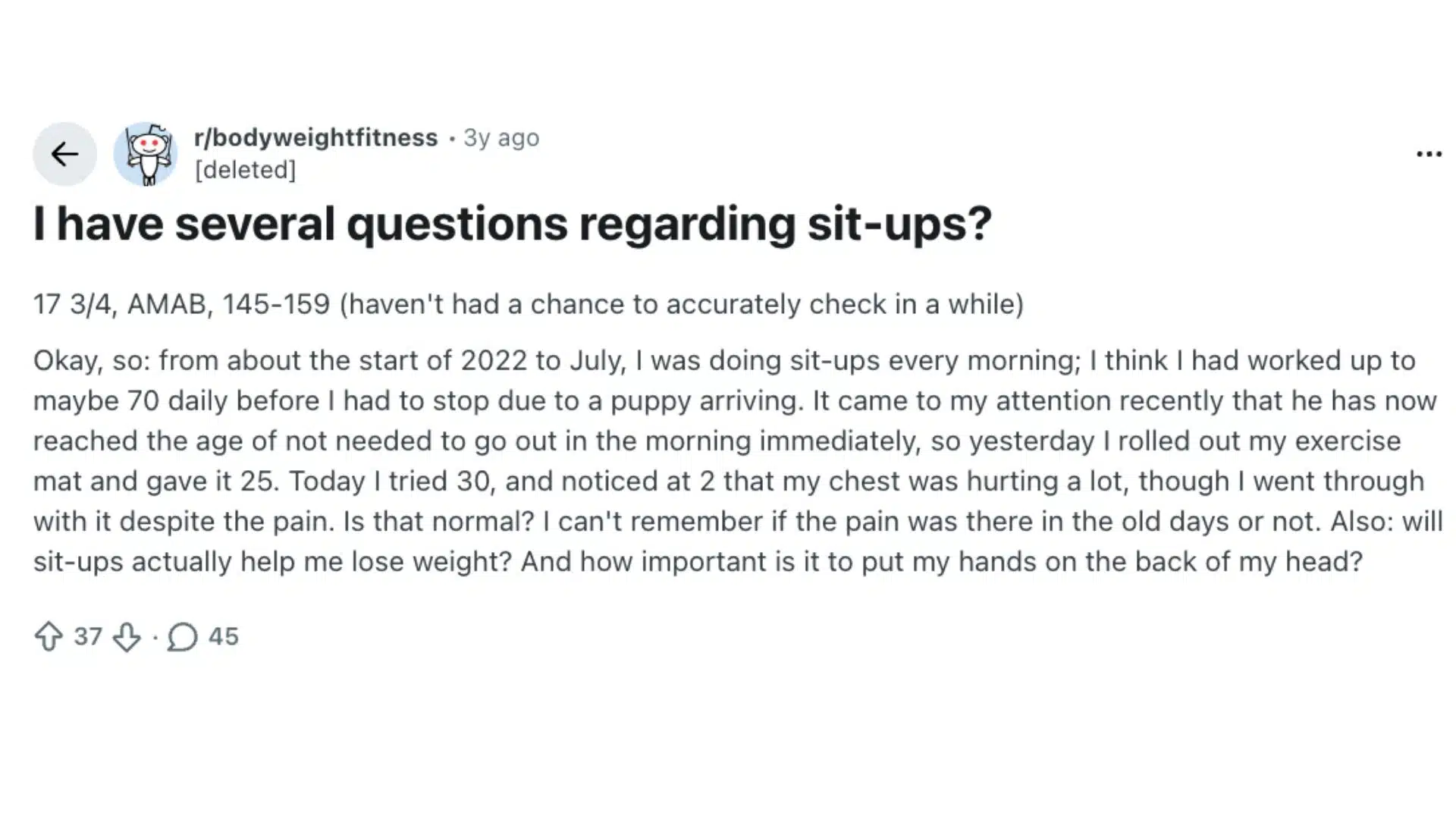
In a discussion on the Bodyweight Fitness community forum, one user shared their experience of doing sit-ups every morning and gradually reaching about 70 per day before stopping for a while.
After restarting with 25–30 sit-ups, they noticed chest discomfort and asked if that was normal. Other community members explained that Sit-ups mainly build abdominal strength, but they do very little for weight loss.
Many suggested focusing more on diet, cardio exercises like walking or running, and full-body movements such as squats or burpees.
Several users also emphasized that fat loss depends on calorie balance, and it’s not possible to lose fat from one specific area through sit-ups alone.
Possible Risks of Doing Too Many Sit Ups
Doing sit-ups every day can help build core strength, but too many can create problems.
In both fitness coaching and rehabilitation work, I’ve seen people push sit-ups too aggressively without rest, and the lower back often starts to feel the strain.
- Lower Back Strain: Repeating sit-ups too often can put pressure on your lower back and cause discomfort.
- Poor Form Injuries: When you rush or get tired, your form suffers, increasing the risk of injury.
- Muscle Fatigue: Overworking your core without rest can lead to soreness and reduced performance during workouts.
How to Do Sit-Ups Correctly (Step-by-Step)
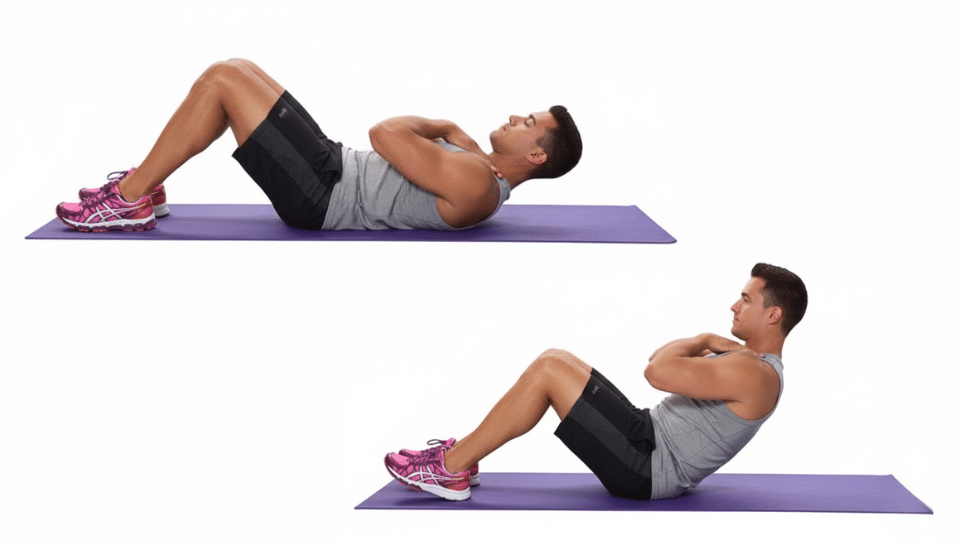
Doing sit-ups the right way helps you work your core safely and effectively. I always focus on form first because good technique prevents strain and improves results.
Step 1: Lie on your back with your knees bent and feet flat on the floor. Place your hands across your chest or lightly beside your head.
Step 2: Tighten your abdominal muscles before moving. This helps support your lower back and keeps the movement controlled.
Step 3: Slowly lift your upper body toward your knees while keeping your feet on the floor. Avoid pulling your neck forward.
Step 4: Hold the position for a second while keeping your core engaged. This helps activate the abdominal muscles more effectively.
Step 5: Lower your back down with control until your shoulders touch the floor again. Avoid dropping quickly.
Practicing these steps regularly helps build stronger core muscles while reducing the chance of discomfort or poor form.
Quick form check: If hip flexors or lower back feel the burn more than abs, form is off. Slow down and focus on using the core to curl up, not momentum to swing up. Proper technique protects the body and maximizes results. Knowing how many sit-ups I should do each day is only useful when combined with proper execution.
What to Expect From Daily Sit Ups Over Time
These stages are very similar to what I’ve observed with many clients when they begin consistent core training.
Real experiences matter more than theory. Here’s what typically happens when someone commits to daily or near-daily sit-ups:
Week 1–2: The Start
Abs: Feeling sore, hips burn, movement clunky at first. Common worry: “Am I doing this wrong?” (usually form is fine, body adapts). Motivation is high, but execution is rough. Honest thought: “This is harder than it looks.”
Week 3–4: Adjustment
Soreness nearly vanishes, reps become smoother without effort. A major drop-off occurs here, as many feel less productive and quit.
However, this signals progress, as the body adapts. A small victory is faster core engagement during daily tasks like rising or lifting.
Week 5–8: Plateau
The target number feels easier to complete. No visible changes yet without diet changes. Common frustration: “Is this still working?”
Endurance builds steadily, but visual changes take time and fat loss. Consider increasing volume, adding resistance, or varying exercises.
Week 10+: Routine
Sit-ups become autopilot, requiring no mental effort. Core strength benefits activities like lifting, running, and sports.
Lean individuals might see definition; others won’t (muscle under fat). Many quit from boredom or include sit-ups in routines. Long-term success needs either loving simple exercises or varying them regularly.
Sit Ups vs. Other Core Exercises
Not all core exercises work the same muscles in the same way. I like to compare a few common options so you can see which one fits your routine best.
| Exercise | Main Focus | Key Benefit |
|---|---|---|
| Sit Ups | Full abdominal muscles | Builds core strength and endurance |
| Crunches | Upper abs | Easier movement with less lower back pressure |
| Planks | Whole core | Improves stability and posture |
| Leg Raises | Lower abs | Strengthens the lower abdominal area |
Each exercise targets the core differently. Mixing them in your routine helps build stronger and more balanced abdominal muscles.
The Bottom Line
By now, you have a clear idea of how many sit ups a day you should aim for. I showed you how many repetitions different fitness levels can handle, why proper form matters, and what real people experience when they stick with the exercise over time.
You also saw that sit-ups strengthen the core and support overall fitness, though visible abs usually require healthy eating and consistent activity.
When I approach workouts, I start small, stay consistent, and increase reps gradually. You can do the same and build progress without stressing your body.
Try the routine that matches your level and pay attention to how your core responds. If you’ve been doing sit-ups regularly, share your experience or results in the comments so others can learn from you.