




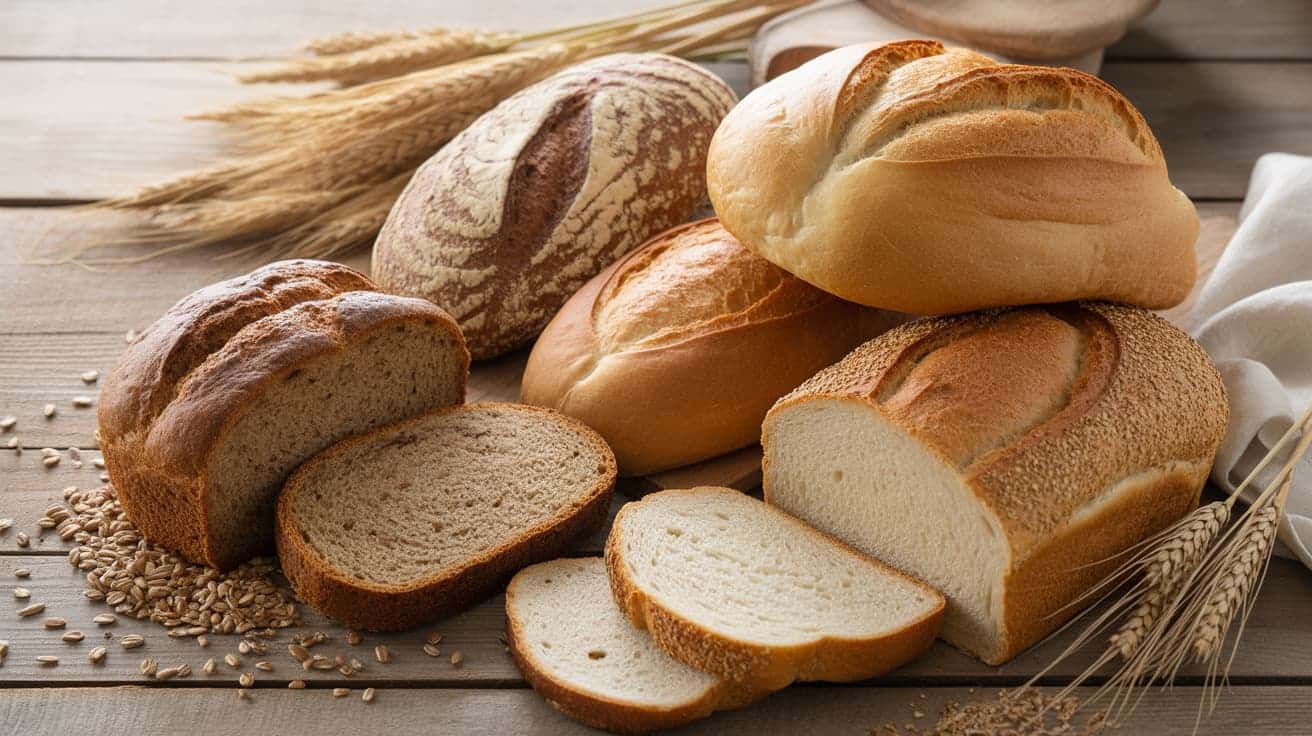







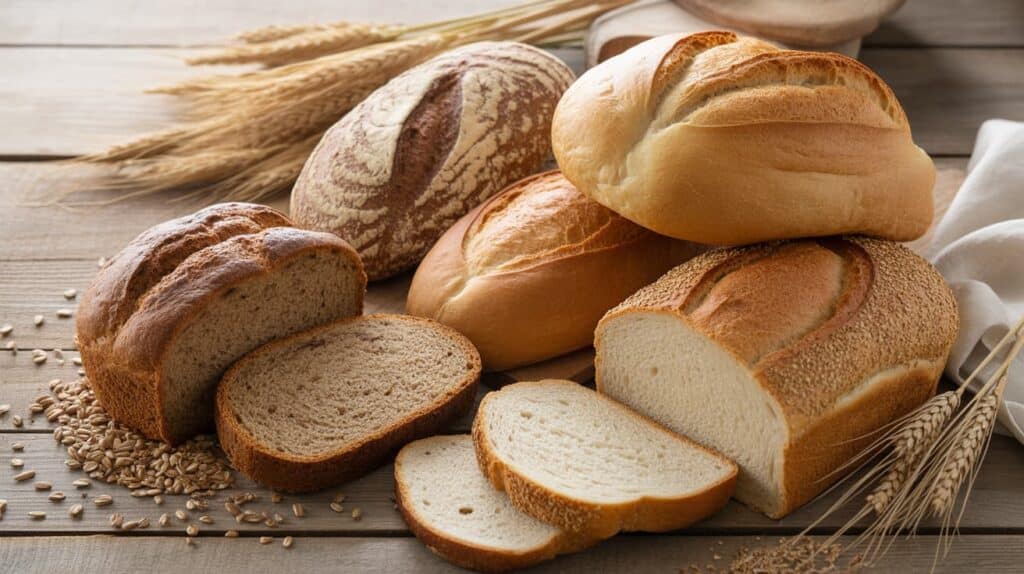

The bread aisle has not changed much, but the advice around it has shifted dramatically over the last few years. I get why it feels confusing. Every loaf on the shelf claims to be healthy, and most of them are designed to look that way without actually delivering on it.
Here is what I can tell you: the healthiest bread is not one single answer. It depends on what your body needs and what your week actually looks like.
This blog covers bread types ranked by nutrition, what to look for on the label, and which store-bought brands are worth your money. A few of the answers might genuinely surprise you.
What Makes a Bread Healthy?
Healthy bread starts with whole grains as the first ingredient; look for “whole wheat,” “sprouted whole grain,” or similar, not just “wheat flour,” which means refined and stripped of nutrients. Aim for at least 3g fiber per slice to steady blood sugar and promote fullness, plus 3-5g protein per serving from grains, seeds, or legumes for sustained energy.
Keep added sugars under 2g per slice to avoid crashes, and sodium below 200mg if monitoring blood pressure. A shorter, recognizable ingredient list (grain, water, yeast, salt) beats long chemical rosters, a bonus for seeds, oats, rye, or sprouted grains, adding omega-3s, beta-glucan, or better digestibility.
How filling it feels matters, too: dense, chewy loaves satisfy more than airy white bread. Ultimately, no bread is “best” for everyone. The healthiest bread depends on your taste, digestion, blood sugar needs, budget, and meal style, sprouted for gut health, oat for cholesterol, and low-carb for keto. Match it to your body.
Note: No bread is “best” for everyone. The healthiest bread to eat depends on your taste, digestion, blood sugar needs, budget, and meal style.
Healthiest Breads That Are Actually Good for You
Not all bread is created equal. Here are the nine types that consistently come out on top, ranked by nutritional value, research backing, and real-world results.
1. Ezekiel bread: Best Overall
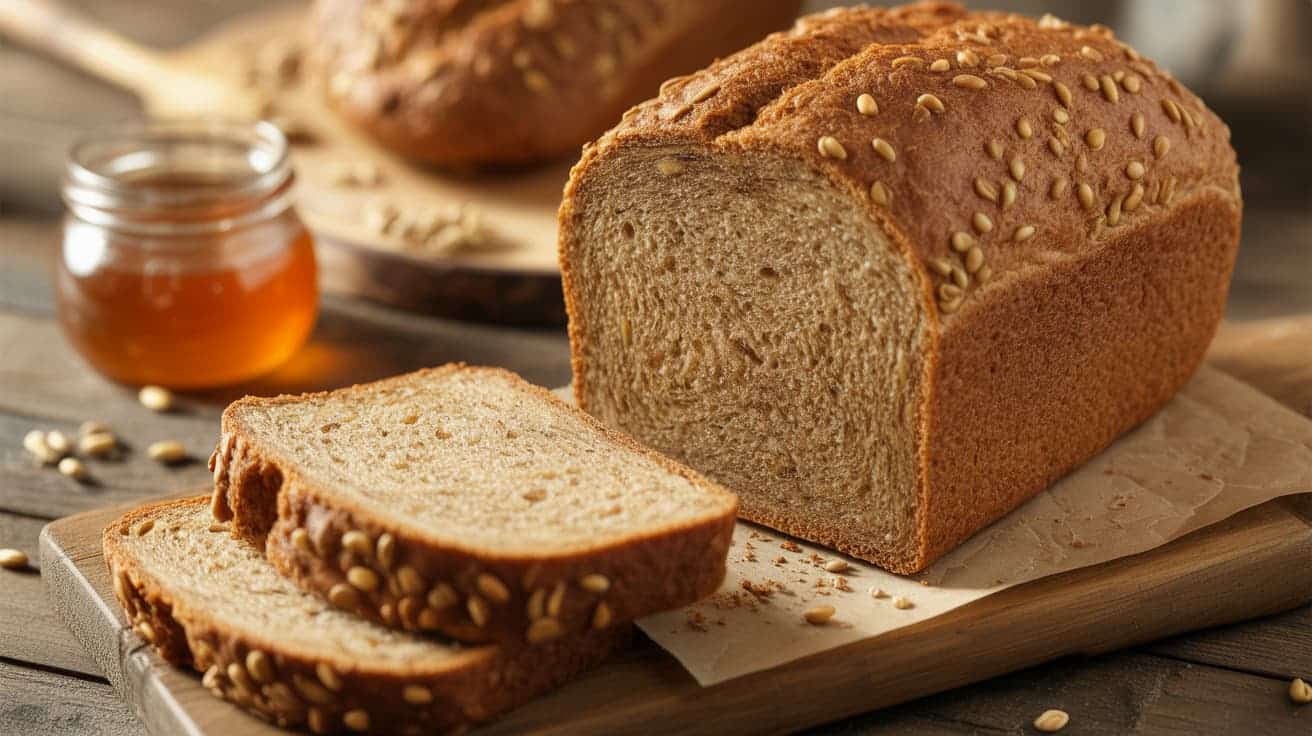
Ezekiel bread is made from six sprouted whole ingredients: wheat, barley, millet, lentils, soybeans, and spelled, with no flour added at any point.
The sprouting process increases the availability of iron, zinc, and B vitamins by breaking down phytic acid that normally blocks mineral absorption.
The addition of lentils and soybeans, two protein-rich plant foods, gives it a complete amino acid profile that grain-only breads cannot match, making it nutritionally unique among packaged breads.
- Calories: 80 per slice
- Fiber: 3g
- Protein: 4g
- Fat: 0.5g
- Added sugar: 0g
Best if you want the highest nutrient availability from a sprouted bread with a complete protein profile and zero added sugar.
2. Sourdough Bread: Best for Gut Health
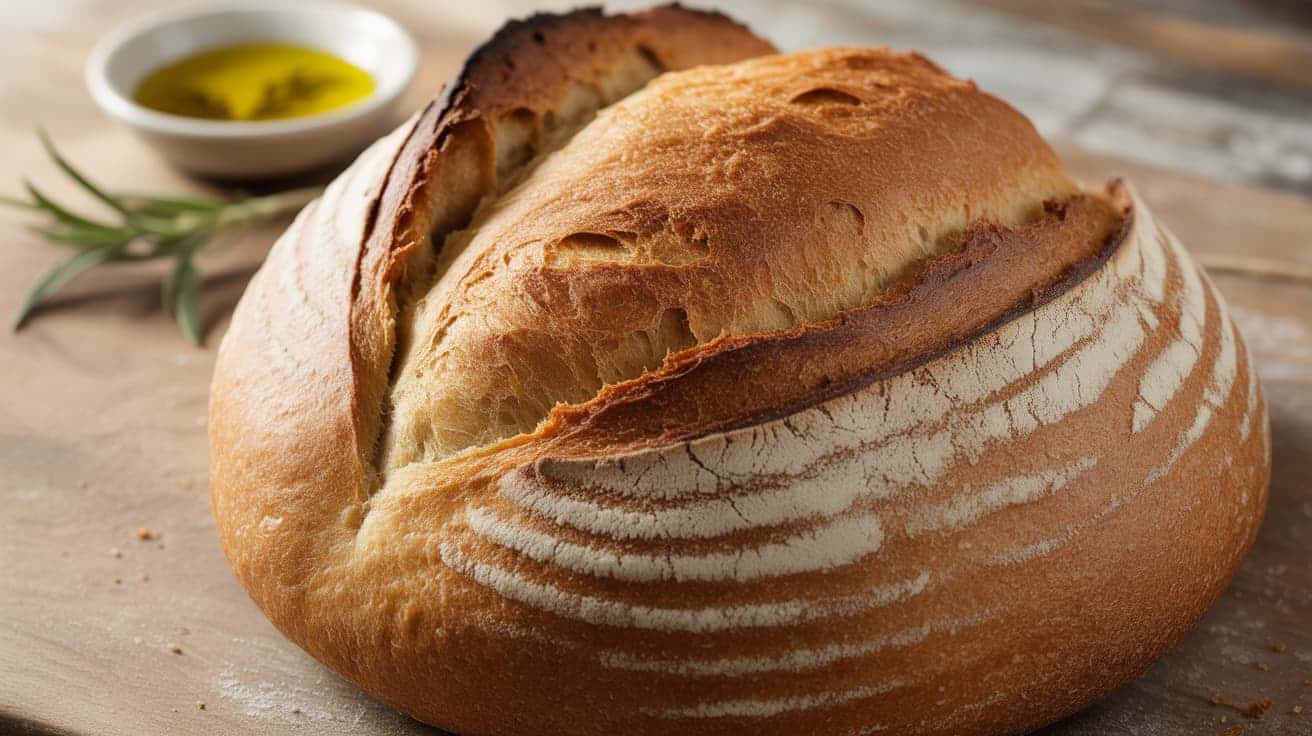
Sourdough is made through natural fermentation using wild yeast and bacteria. Fermentation breaks down carbohydrates and proteins, making it easier to digest than most breads.
It reduces phytic acid, improves mineral absorption, and converts some carbs into resistant starch, keeping you fuller longer. Its low glycemic index means steadier blood sugar rather than sharp spikes after eating.
- Calories: 100 per slice
- Fiber: 4g
- Protein: 4g
- Fat: 0.5g
Best if you: experience digestive discomfort with standard bread or want a flavorful everyday option that supports gut health.
3. 100% Whole Wheat Bread: Best Everyday Option
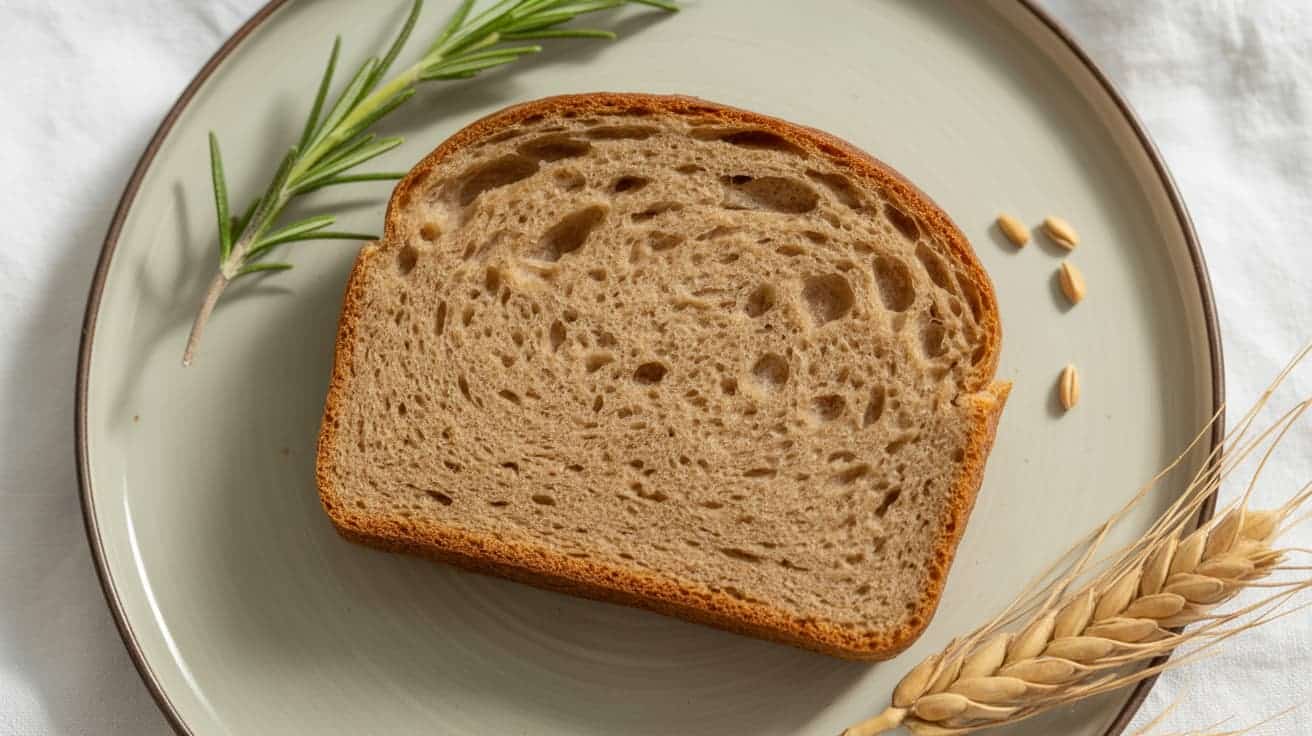
100% whole wheat bread uses the entire grain kernel, bran, germ, and endosperm, delivering more nutrition per slice than any refined alternative.
The bran provides fiber and B vitamins, while the germ adds healthy fats and antioxidants. It is linked to a lower risk of type 2 diabetes and heart disease, and it remains the most affordable whole-grain option in any grocery store.
- Calories: 110 per slice
- Fiber: 4g
- Protein: 4g
- Fat: 0.5g
Best if you want a reliable, budget-friendly whole grain bread without spending extra on specialty options.
4. Oat Bread: Best for Heart Health
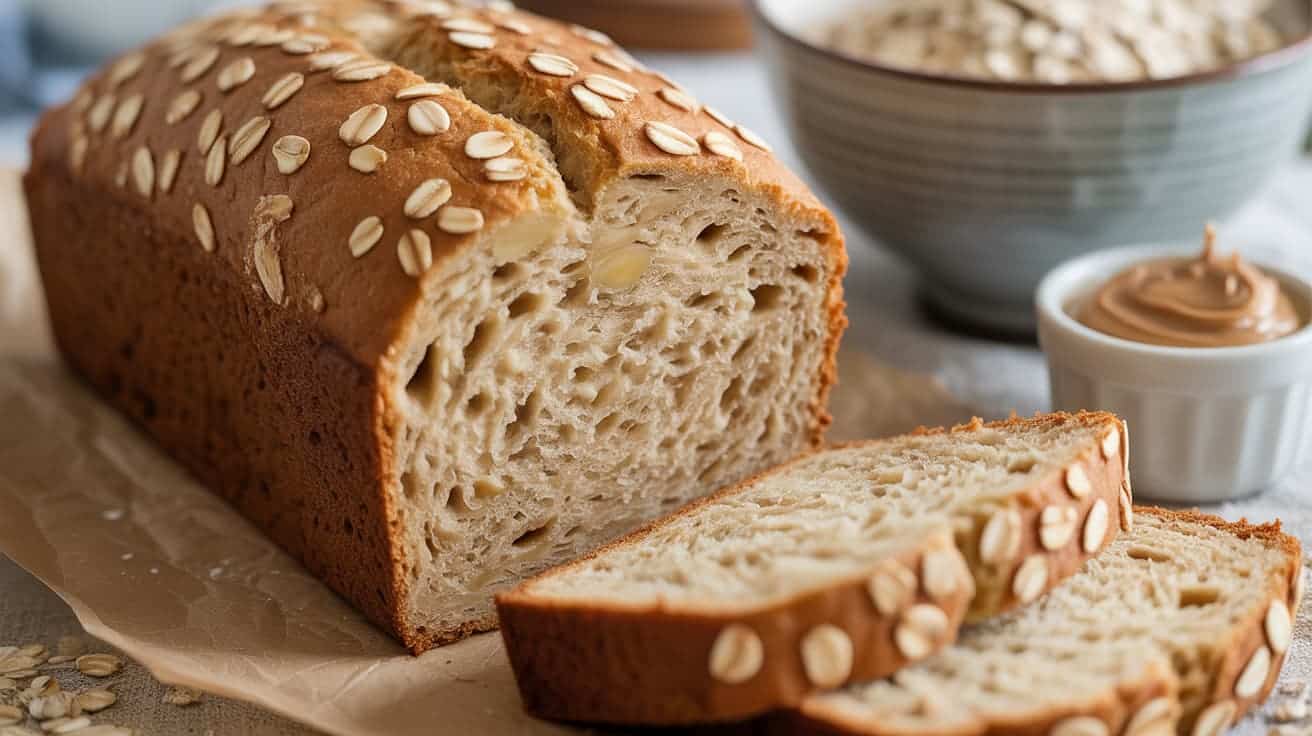
Oat bread gets its nutritional edge from beta-glucan, a soluble fiber in oats with strong evidence supporting its ability to lower LDL cholesterol and reduce blood pressure. It also delivers magnesium, thiamine, iron, and zinc.
Many commercial versions contain minimal oats alongside refined flours, no different from cholesterol spiking foods in their cardiovascular impact. Always check that oats and whole wheat flour appear as the first two ingredients before buying.
- Calories: 130 per slice
- Fiber: 3g
- Protein: 6g
- Fat: 1.5g
Best if you are actively managing cholesterol, blood pressure, or overall cardiovascular health.
5. Flax Bread: Best for Omega-3s
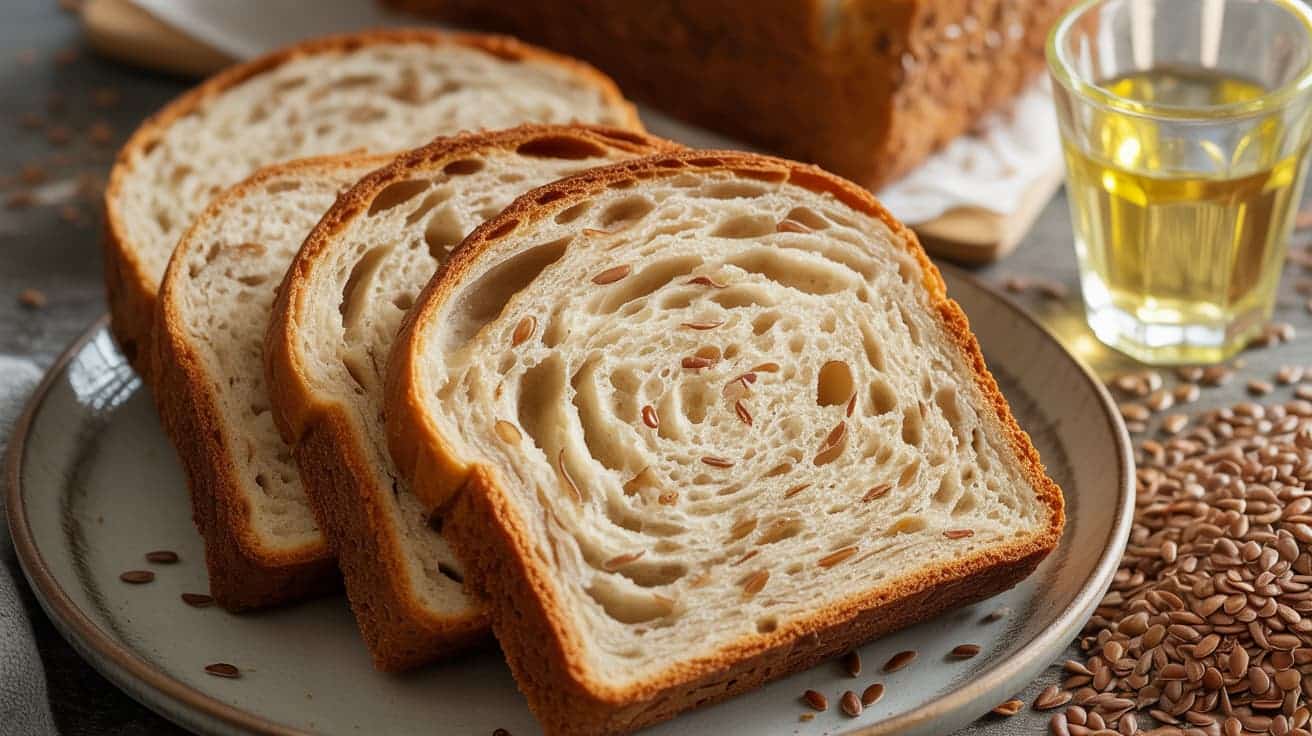
Flax bread stands out because of its flaxseed content, one of the best plant sources of alpha-linolenic acid (ALA), an omega-3 fatty acid linked to reduced heart disease risk.
Flax seeds also contain lignans, plant compounds that act as antioxidants. The combined fiber and natural properties of flax seeds support digestive regularity alongside the cardiovascular benefits.
- Calories: 80 per slice
- Fiber: 3g
- Protein: 5g
- Fat: 1g
Best if you want to increase omega-3 intake from whole food sources rather than supplements.
6. 100% Sprouted Rye Bread: Best for Blood Sugar
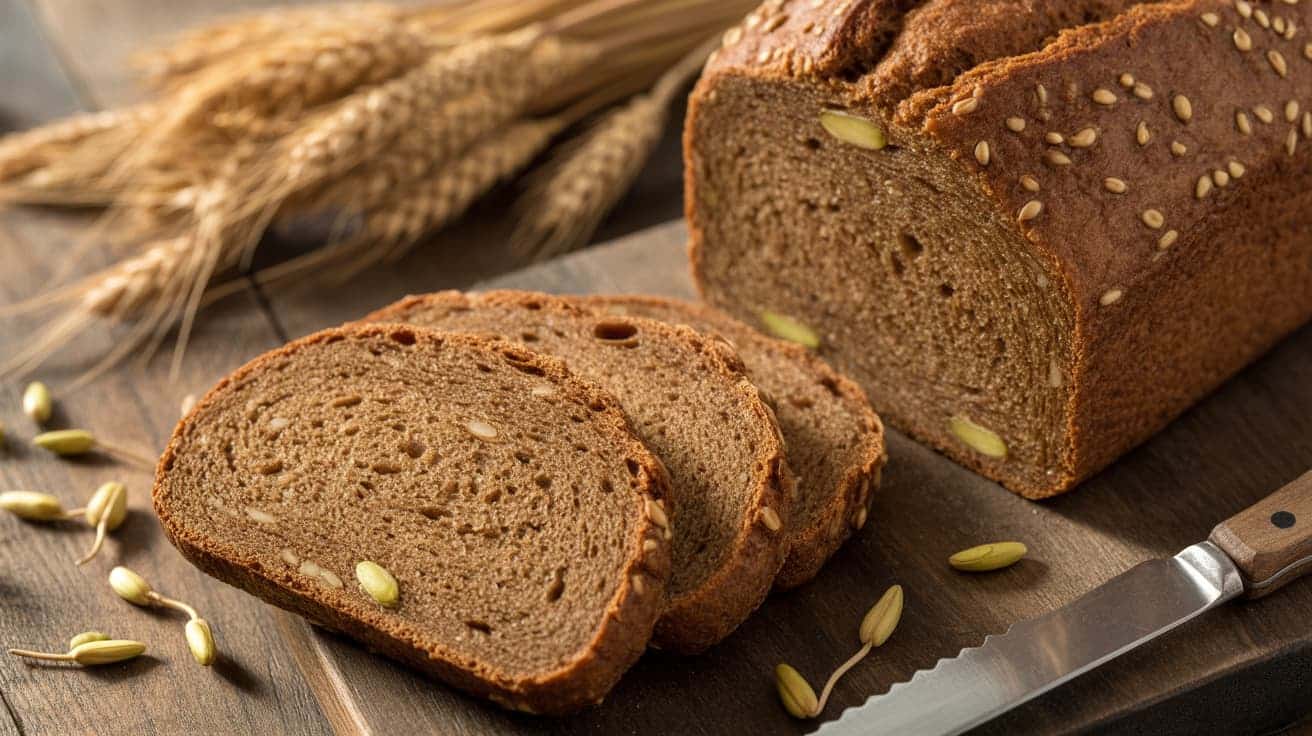
Sprouted rye has one of the lowest blood sugar impacts of any bread available, driven by its high soluble fiber content slowing carbohydrate digestion significantly.
It is rich in B vitamins, including folate, thiamin, and niacin, and naturally denser than wheat bread; smaller portions satisfy hunger more effectively. Sprouted rye always outperforms non-sprouted rye nutritionally.
- Calories: 60 per slice
- Fiber: 3g
- Protein: 4g
- Fat: 1g
Best if you: are managing blood sugar levels or looking for a dense, filling bread with strong B vitamin content.
7. Pumpernickel Bread: Best for B Vitamins
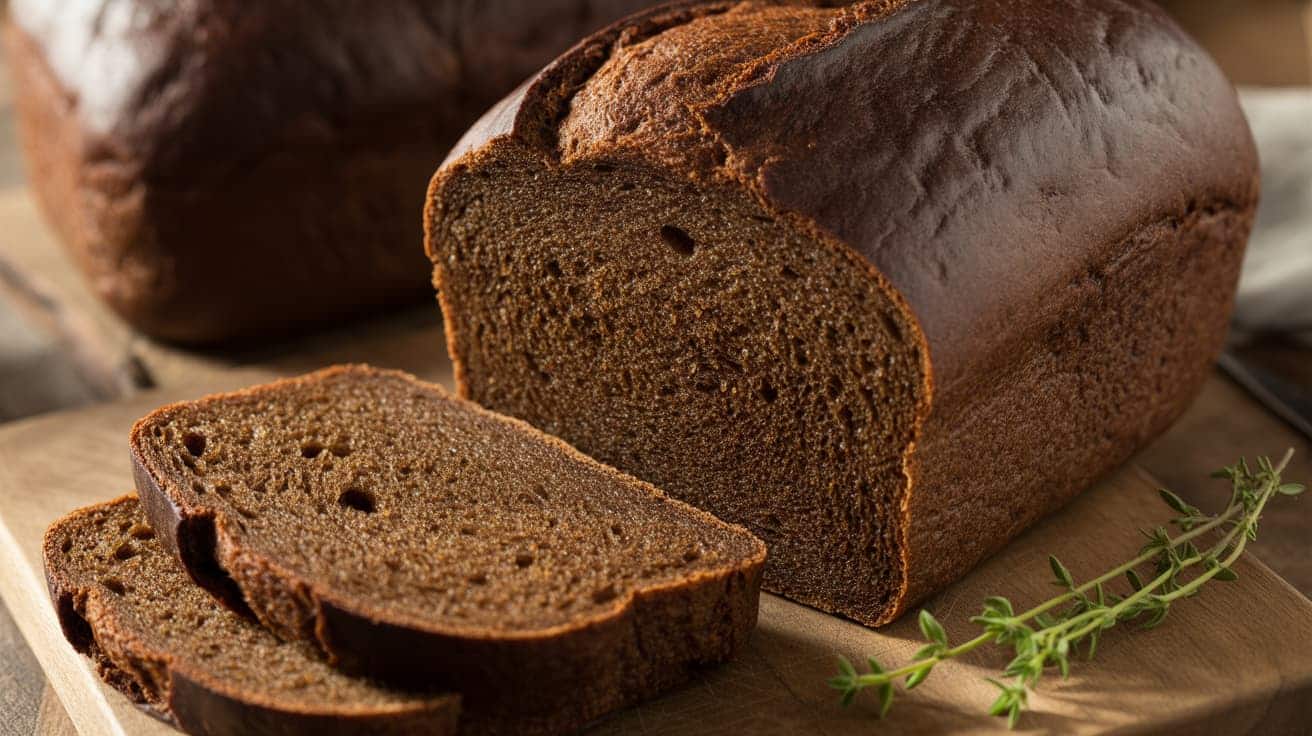
Pumpernickel combines sourdough fermentation with rye flour, delivering digestive benefits alongside strong nutrient density in one dark, dense loaf. It is a solid source of B vitamins, including folate, thiamin, riboflavin, and niacin.
Not all pumpernickel uses whole grains, so look specifically for “100% whole grain” on the label; without it, the nutritional value drops considerably.
- Calories: 160 per slice
- Fiber: 1.5g
- Protein: 6.5g
- Fat: 1g
Best if you want a deeply satisfying, flavorful bread combining the benefits of rye and fermentation in one loaf.
8. Gluten-Free Bread: Best for Celiac and Sensitivity
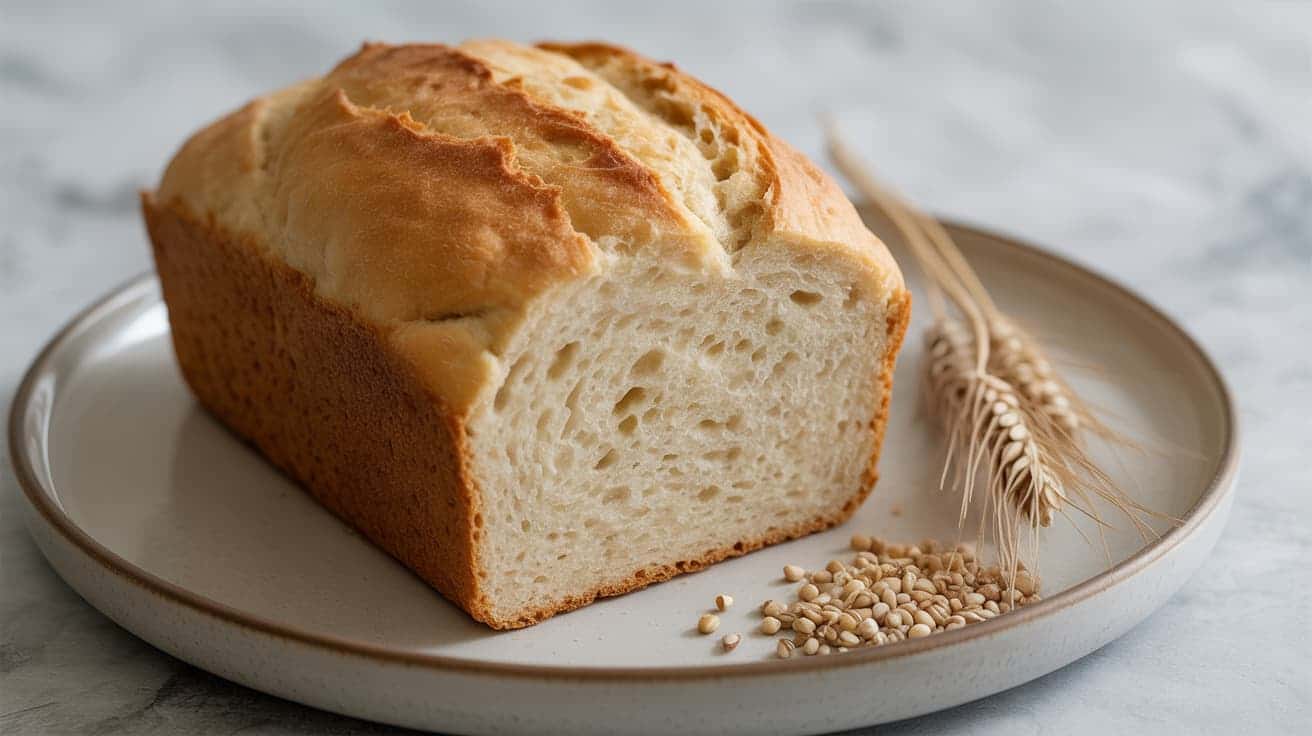
Gluten-free bread is essential for anyone with celiac disease or diagnosed gluten sensitivity. Made from alternative flours like buckwheat, teff, sorghum, almond, or coconut flour, carbs in gluten free bread vary widely by brand and often run higher than people expect.
Most commercial versions are made from refined flours and contain more sugar and fat. The best options use almond or coconut flour.
- Calories: 90 per slice
- Fiber: 5g
- Protein: 3g
- Fat: 5g
Best if you have been diagnosed with celiac disease or genuine gluten sensitivity requiring complete gluten elimination.
9. Keto Bread: Best for Low-Carb Eating
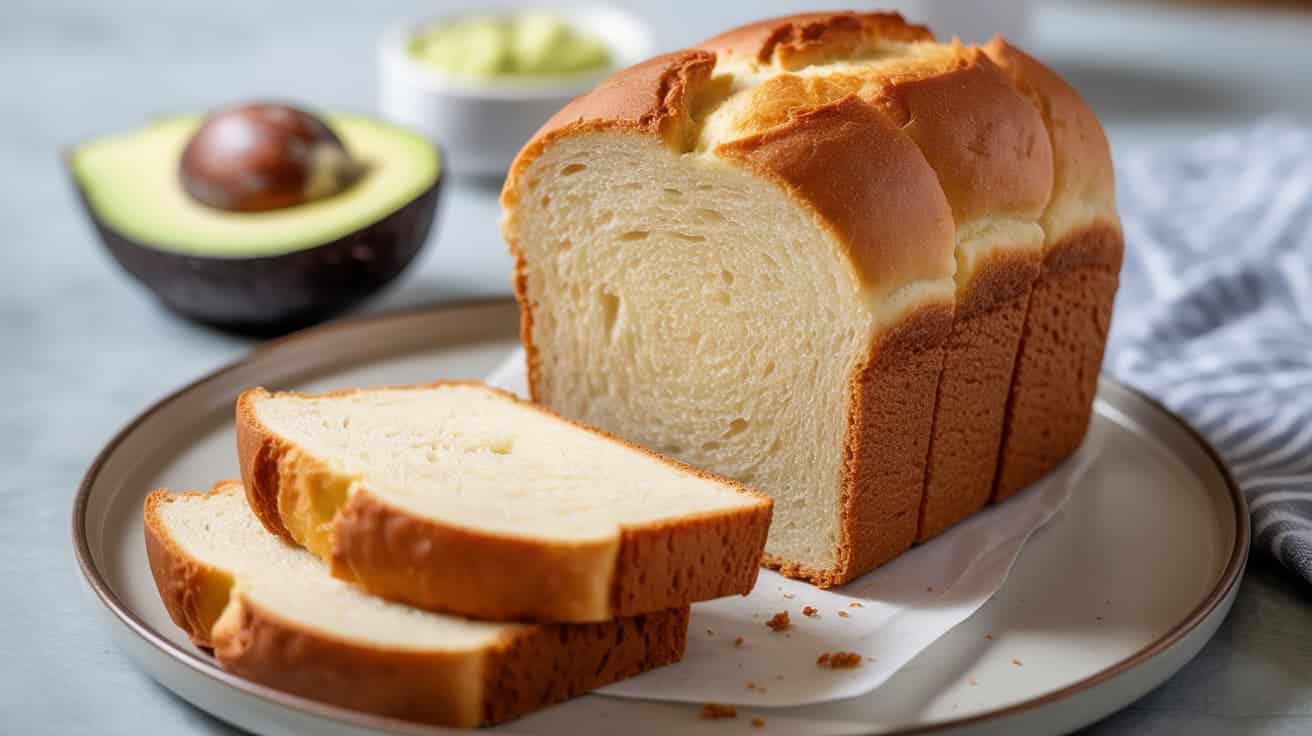
Keto bread replaces standard wheat flour with almond flour, coconut flour, or keto wheat flour, dramatically reducing carbohydrate content per slice. It has significantly fewer carbs than any other bread on this list.
Quality varies considerably; always look for short, recognizable ingredient lists rather than versions built around heavily processed additives to achieve the right texture.
- Calories: 60 per slice
- Fiber: 9g
- Protein: 5g
- Fat: 1g
Best if you: follow a low-carb or ketogenic eating pattern and want bread as part of your daily routine.
Nine breads, nine distinct nutritional profiles. The right one depends entirely on your health goals; the sections below help you match the right bread to your needs.
Healthiest Bread Comparison at a Glance
Different breads vary a lot in calories, fiber, and protein, which can affect daily nutrition choices. This comparison helps make sense of common bread options at a glance.
| Bread Type | Calories | Fiber | Protein | Fat | Best For |
|---|---|---|---|---|---|
| Ezekiel Bread | 80 | 3g | 4g | 0.5g | Complete protein, zero sugar |
| Sourdough | 100 | 4g | 4g | 0.5g | Gut health, blood sugar |
| 100% Whole Wheat | 110 | 4g | 4g | 0.5g | Everyday use |
| Oat Bread | 130 | 3g | 6g | 1.5g | Heart health, cholesterol |
| Flax Bread | 80 | 3g | 5g | 1g | Omega-3s, heart health |
| Sprouted Rye | 60 | 3g | 4g | 1g | Blood sugar, weight |
| Pumpernickel | 160 | 1.5g | 6.5g | 1g | B vitamins, satiety |
| Gluten-Free | 90 | 5g | 3g | 5g | Celiac, gluten sensitivity |
| Keto | 60 | 9g | 5g | 1g | Low-carb eating patterns |
This overview makes it easier to compare breads based on nutrition goals. Small differences in fiber, protein, and calories can guide better everyday food choices.
What to Look for on the Label for A Healthy Bread
Most people pick bread based on the front of the packaging. That is exactly where the misleading information lives.
- The first ingredient should say “whole”: if the label reads “wheat flour” or “enriched flour,” it is refined, regardless of how the packaging looks.
- At least 3 grams of fiber per slice: fiber slows digestion, steadies blood sugar, and keeps you full longer.
- Under 3 grams of added sugar per slice: added sugar can cause energy crashes and contribute to inflammation over time.
- Under 200mg of sodium per slice: relevant for anyone monitoring blood pressure.
- Short, recognizable ingredient list: bread needs a grain, water, salt, and sometimes yeast. Anything unrecognizable is worth questioning.
- Look for the Whole Grain Stamp: tells you exactly how much whole grain is in each serving, removing all guesswork.
Spending 30 seconds on the ingredient list will tell you more about a loaf than anything printed on the front ever will.
What is the healthiest bread, as per People’s Experience
Research and dietitian recommendations tell one part of the story. Real people with real eating habits tell others.
Practical Label Focus From Insights
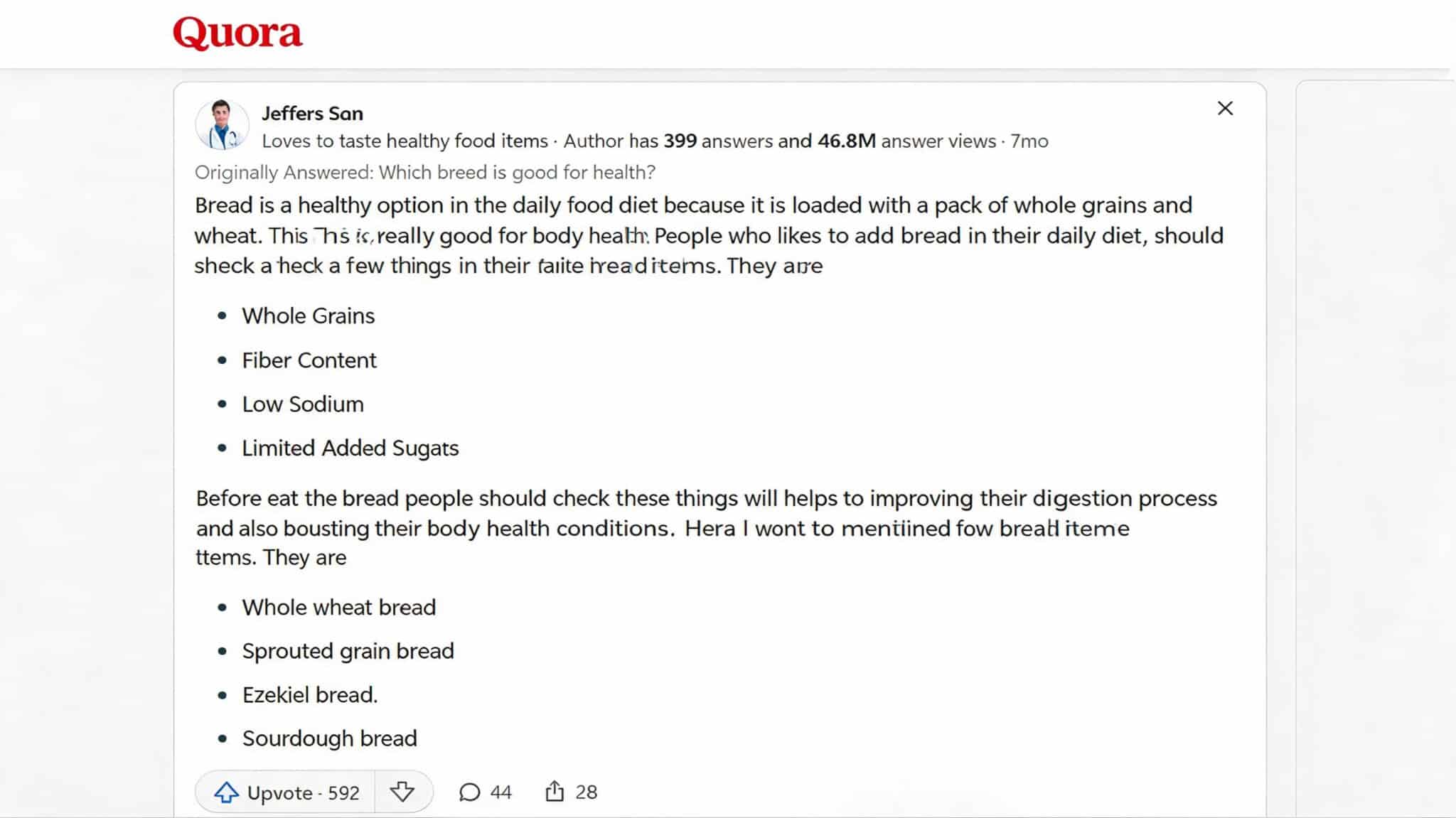
A food enthusiast, with nearly 47 million answer views on Quora, kept his advice refreshingly practical: “Bread is a healthy option in the daily food diet because it is loaded with a pack of whole grains and…though those with high sugar levels should eat less sugary bread.”
Pairing bread with healthy toppings like avocado, nut butter, or eggs can further boost its nutritional value and keep you fuller for longer.
Ultimately, the key is to choose quality over quantity and listen to your body’s needs when incorporating bread into your daily meals.
Overwhelmed Shopper Experience

A parent on Reddit shared relatable frustration. The thread drew hundreds of honest replies echoing the same confusion. Like “I prefer very high fiber and no HFCS. (Like 5g/slice) Depending on where you are, you can find Dave’s Killer Bread at some pretty great places. I also dig zucchini/banana/corn breads too.” and the other one replied
The healthiest bread is the bread that fits into the rest of your diet. If you eat tons of vegetables, get a good amount of protein in, and don’t overindulge in snacks and sweets, there’s absolutely nothing wrong with white bread toast.
If you want your bread to add more fiber to your diet, then go for the whole grain or the multi-grains. The pro is that these also hold toppings really well; the con is that they’re a bit thicker and denser (which is also a pro in its own way, since a single slice of bread is really filling).”
Breads to Avoid or Limit
Knowing what to buy matters, but knowing what to put back on the shelf matters just as much. These are the ones worth avoiding consistently.
- White bread: mostly starch, minimal fiber, fast blood sugar impact.
- Misleading “wheat” bread: brown coloring does not mean whole grain. Always check the first ingredient.
- High fructose corn syrup: added sugar linked to inflammation and energy crashes in a daily staple food.
- Partially hydrogenated oils: trans fats- are directly linked to increased LDL cholesterol and cardiovascular risk.
- Potassium bromate or BHA: chemical additives with limited safety evidence and zero nutritional value.
The ingredient list tells you everything the front of the packaging is designed to hide. One quick check before buying is all it takes.
Best Store-Bought Bread Brands Worth Buying
Knowing which bread type to choose is only half the work. Finding a genuinely good version of it on a grocery shelf is where most people get stuck.
| Bread Brand | Key Features | Nutrition (Per Slice) | Best For |
|---|---|---|---|
| Ezekiel 4:9 Sprouted Whole Grain Bread | Six sprouted grains and legumes, flour-free, no added sugar | 4g protein, 3g fiber, 0g sugar | Clean ingredients, balanced nutrition |
| Dave’s Killer Bread (21 Whole Grains & Seeds) | USDA organic, non-GMO, seed-rich formula | 3g protein, 3g fiber, 140mg ALA omega-3s | Heart health, nutrient density |
| Silver Hills Sprouted Power Bread | Organic sprouted ancient grains with seeds | 3g fiber, moderate protein | Every day, healthy sandwich bread |
| Alvarado St. Bakery Bread | Organic sprouted whole wheat berries | 6g protein, 20g whole grains | High protein, sustained energy |
| Rudi’s Organic Rocky Mountain Sourdough | Traditional sourdough, clean label | 3g protein, 0g sugar, 0g fat | Gut-friendly, simple ingredients |
These seven brands cover every health goal and budget on this list. Start with whichever bread type from the section above matches your bread type, and go from there.
Simple Ways to Eat Healthy Bread Every Day
Start with the right base, add a protein, and finish with a healthy fat. That formula works with every bread on this list.
- Base: Sprouted whole grain, sourdough, or whole wheat: toasted for a lower glycemic response than soft bread.
- Protein: Eggs, tuna, cottage cheese, smashed beans, nut butter, or sliced turkey; any of these turns a slice of bread into a complete meal rather than just a carbohydrate.
- Healthy fat: Avocado, olive oil, almond butter, or a drizzle of tahini, slows digestion and keeps hunger away for longer after eating.
One slice built this way delivers fiber, protein, and healthy fat in a single meal that actually holds you through the morning or afternoon.
Frequently Asked Questions
How long does healthy bread stay fresh after opening?
Most whole-grain and sprouted breads stay fresh for 5–7 days at room temperature. Refrigeration can extend shelf life up to 10–14 days, while freezing preserves quality for several months without major nutrient loss.
Is toasted bread healthier than soft bread?
Toasting does not significantly change nutrition, but it can slightly lower the glycemic impact in some cases. Many people also find toasted bread more filling and easier to portion.
Why do some breads feel heavier than others?
Denser breads usually contain whole grains, seeds, or sprouted ingredients. These components increase fiber and protein content, making the bread more filling and slower to digest.
What is the best time of day to eat bread?
Bread can be eaten at any time of day. Many people prefer it earlier in the day when energy demands are higher, but it depends more on overall meal balance than timing.
The Bottom Line
The bread aisle does not have to be this confusing. One label check, finding whole grain as the first ingredient and putting back anything with added sugar or unrecognizable additives, changes what ends up in your cart every single week.
The healthiest bread to eat is not one universal answer. It depends on what your body needs: gut health, blood sugar, heart health, or simply reliable everyday nutrition. The nine options covered here give you a clear starting point for every goal.
I genuinely believe small swaps like this add up more than any strict diet ever will. Pick one bread, try it for a week, and drop a comment. I would love to know which one worked for you.