














Acid reflux can turn an ordinary meal into something you regret an hour later. The burning, the pressure, the sour taste that lingers, it adds up fast when it happens every day. Managing it through food doesn’t have to mean eating bland or going hungry.
My goal with this 7-day meal plan for acid reflux is to give you a clear, practical structure: gentle breakfasts, filling lunches, easy dinners, and snacks that don’t set anything off.
Every meal leans on low-acid foods, lean protein, whole grains, and cooked vegetables in portions that sit well. Use it as a starting point and adjust around your own triggers.
GERD and Acid Reflux: What Does the Difference Mean for Your Diet
Acid reflux and GERD are closely related but not the same thing. Acid reflux is the physical event: stomach acid flows back into the esophagus, usually causing a burning sensation in the chest or a sour taste in the mouth.
When that event happens consistently, at least twice a week over several weeks, it meets the clinical definition of gastroesophageal reflux disease, or GERD.
The root mechanism in both cases is a weakened or poorly timed lower esophageal sphincter (LES), the ring of muscle that separates the esophagus from the stomach. When the LES relaxes at the wrong time, stomach acid travels back into the esophagus and irritates the esophageal lining. Certain foods directly weaken the LES. Others slow the rate of stomach emptying, keeping acid in contact with the sphincter longer and increasing the risk of backflow.
This 7-day meal plan for acid reflux addresses both problems: it removes the most common LES-weakening foods and builds meals around ingredients that move efficiently through digestion. Seven days is enough to notice a meaningful shift in how your stomach feels from morning to night.
| Condition | What it means |
| Acid reflux | Occasional backflow of stomach acid into the esophagus |
| Heartburn | The burning sensation that results from acid reflux |
| GERD | Chronic acid reflux occurring at least twice a week |
| LES (lower esophageal sphincter) | The valve between the stomach and the esophagus; weakened LES is the core driver of reflux |
Foods And Drinks That Often Trigger Symptoms
Trigger foods are different for everyone, but some consistently cause problems for many people. The following are the gut-damaging foods to cut first when managing reflux. Limiting them first is the most practical starting point:
- Fatty and fried foods: Fried foods, pizza, creamy desserts, full-fat dairy, and large portions of red meat sit longer in the stomach and delay digestion.
- Spicy and pungent ingredients: Hot peppers, garlic-heavy sauces, and onion-heavy meals can irritate the throat and stomach lining.
- Acidic foods and drinks: Tomato sauce, citrus fruits, orange juice, and grapefruit may increase burning and worsen reflux symptoms.
- Caffeine and chocolate: Coffee and chocolate are common triggers that relax the lower esophageal sphincter, increasing the likelihood of backflow. The calories in your coffee also add up quickly when cream or syrup is involved, compounding the fat-related pressure on the LES.
- Carbonated and alcoholic drinks: Soda and alcohol increase stomach pressure, promote burping, and can aggravate symptoms noticeably.
You do not have to permanently remove every trigger. Test foods slowly once symptoms settle, and keep notes on meals, timing, and reactions so your choices stay based on your body rather than guesswork.
7-Day Meal Plan For Reflux-Friendly Eating
This plan includes breakfast, snacks, lunch, dinner, and an evening drink each day. Portions should match your hunger, but keep meals moderate. If a food bothers you, swap it with another gentle option from the list above.
Day 1: A Calm Start That Sets the Tone
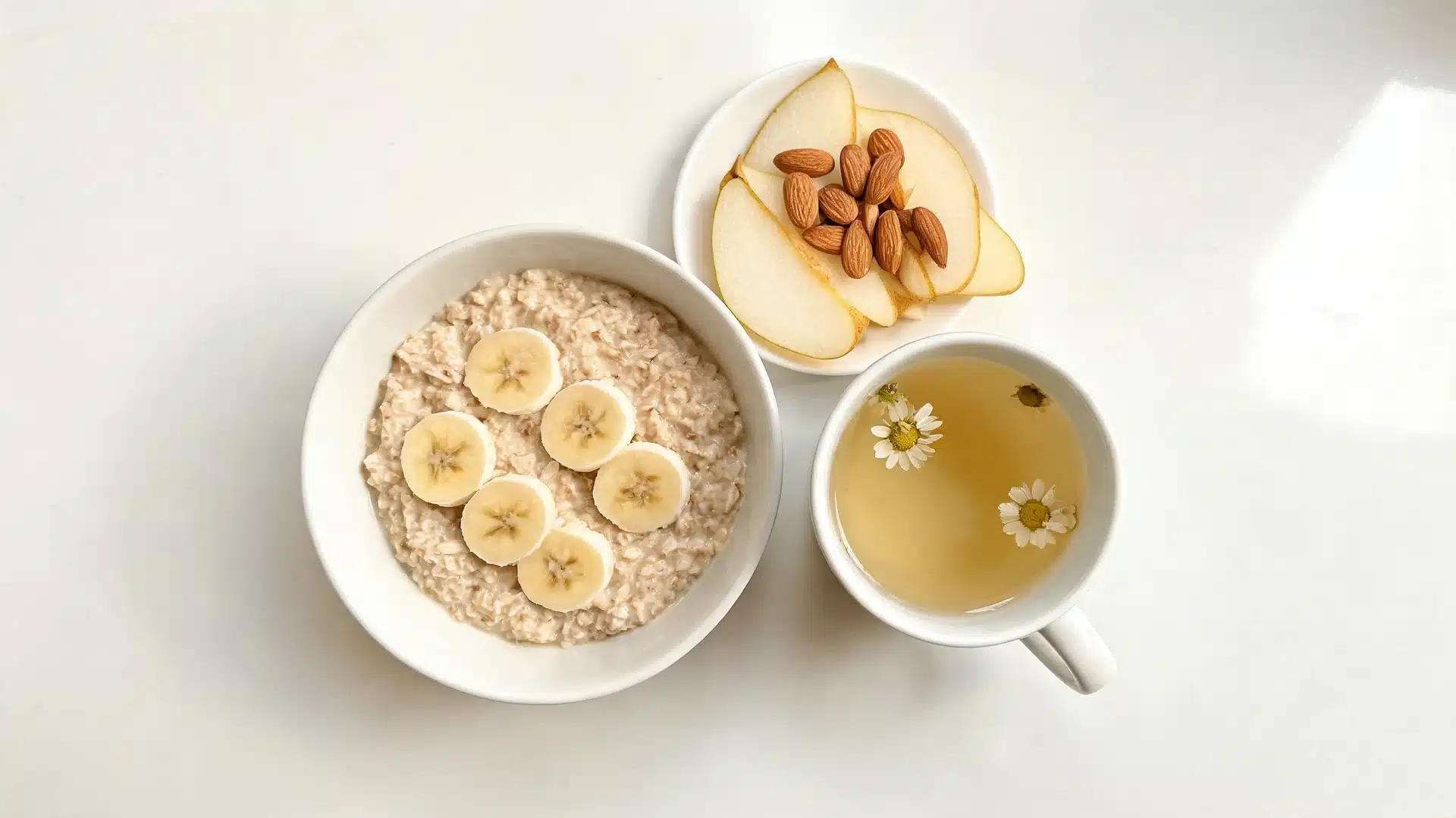
This first day uses simple meals with gentle ingredients that may feel easier on digestion. The meals include lean protein, steady fiber, and softer textures that fit well into a regular weekday routine.
| Meal | Food | Nutrients | How It’ll Help You |
| Breakfast | Oatmeal with almond milk, banana, and cinnamon | Fiber, potassium, calcium, complex carbs | Supports fullness while keeping breakfast lighter and easier on the stomach during the morning |
| Snack | Pear slices with almonds | Fiber, healthy fats, and vitamin E | Helps control hunger between meals without relying on processed snacks or greasy foods |
| Lunch | Turkey lettuce wraps with cucumber, carrots, and brown rice | Lean protein, fiber, B vitamins | Gives balanced energy while avoiding heavier bread, creamy sauces, and fried ingredients |
| Snack | Plain low-fat yogurt with melon cubes | Protein, probiotics, hydration | Adds a lighter snack option that may support digestion and steady fullness |
| Dinner | Baked salmon with sweet potato and green beans | Omega-3 fats, protein, vitamin A, fiber | Gives satisfying protein without the greasy cooking methods that may trigger discomfort |
| Evening Drink | Chamomile tea | Antioxidants, hydration | Helps create a calmer evening routine and helps the stomach feel less heavy before bed |
These meals stay practical while giving enough variety throughout the day. Keeping sauces mild, portions balanced, and cooking methods simple may help reduce extra stomach pressure during meals and evenings.
Day 2: Steady Energy Without the Heaviness
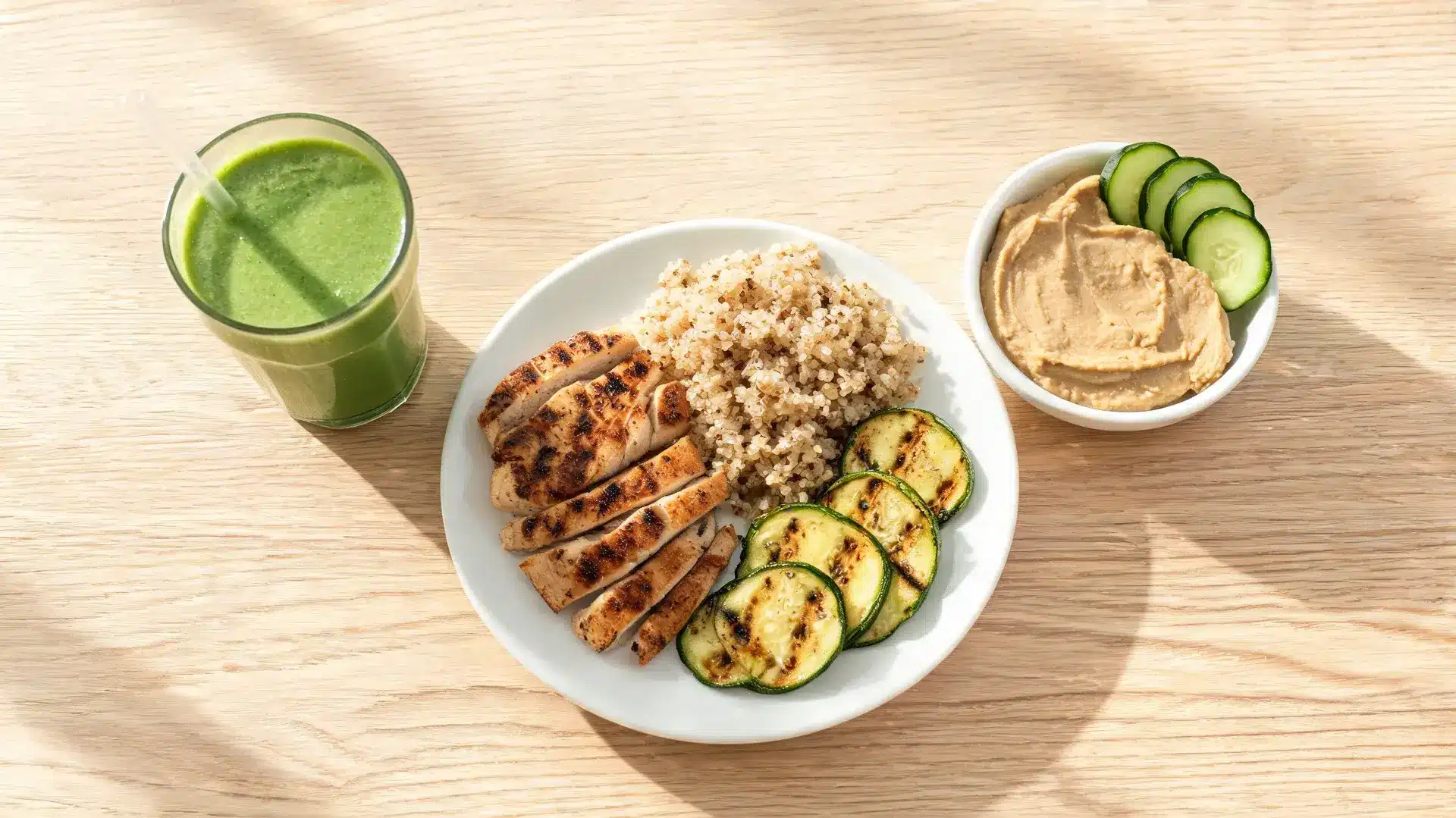
This day adds moderate fiber and balanced protein while keeping meals simple and manageable. The foods support steady energy without relying on fried ingredients, spicy flavors, or overly rich sauces throughout the day.
| Meal | Food | Nutrients | How It’ll Help You |
| Breakfast | Spinach, banana, almond milk, and oat smoothie | Fiber, potassium, iron, calcium | Gives a quick breakfast option that still feels filling without becoming too heavy |
| Snack | Rice cakes with almond butter | Healthy fats, carbs, and vitamin E | Supports energy between meals while keeping portions lighter and easier to manage |
| Lunch | Grilled chicken breast with quinoa and roasted zucchini | Lean protein, fiber, magnesium | Helps maintain fullness without greasy cooking methods or rich sauces |
| Snack | Cucumber slices with hummus | Fiber, hydration, plant protein | Adds a fresh snack option that feels lighter during the afternoon |
| Dinner | Turkey meatballs with whole-grain pasta and broccoli | Protein, fiber, B vitamins | Creates a balanced dinner without depending on fried foods or creamy ingredients |
| Evening Drink | Ginger tea | Antioxidants, hydration | May help support digestion while keeping the evening meal routine lighter |
The meals on this day stay balanced without becoming overly rich or difficult to prepare. Smaller portions of healthy fats may feel more comfortable during reflux flare-ups or busy workdays.
Day 3: Softer Meals for Harder Symptom Days
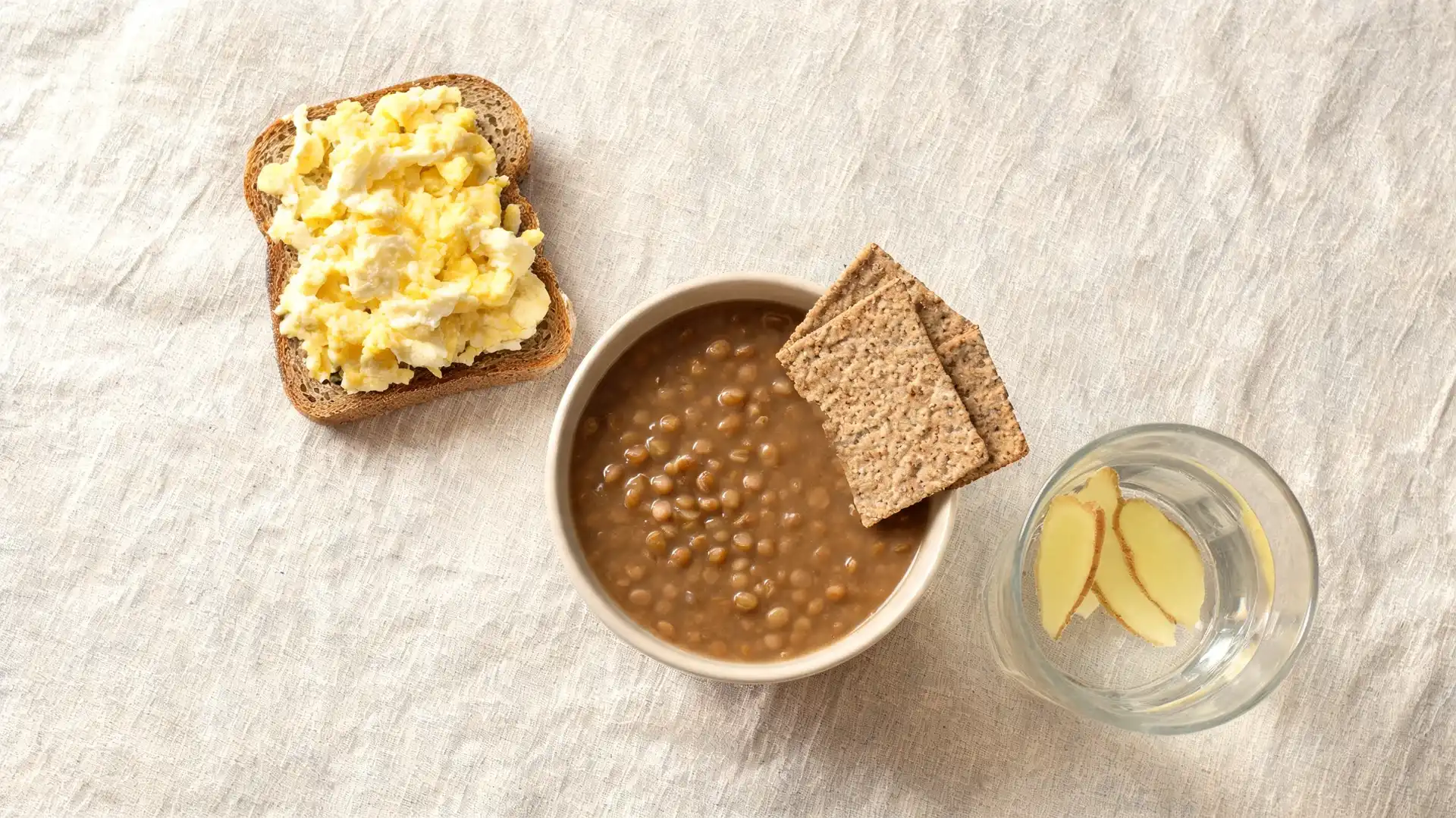
This day focuses on softer textures and warm meals that may feel gentler during stronger reflux symptoms. The meals include steady protein, moderate fiber, and lighter cooking methods across the entire day.
| Meal | Food | Nutrients | How It’ll Help You |
| Breakfast | Scrambled egg whites with whole-grain toast and spinach | Protein, iron, fiber | Gives a warm breakfast that feels filling without excess grease or heavy ingredients |
| Snack | Melon slices | Hydration, vitamin C | Adds a lighter snack that may help soothe reflux discomfort |
| Lunch | Lentil soup with whole-grain crackers | Plant protein, fiber, and iron | Supports fullness while keeping lunch warm, soft, and simple to digest |
| Snack | Low-fat yogurt with oats | Protein, probiotics, fiber | Helps maintain energy between meals without relying on sugary snacks |
| Dinner | Baked cod with quinoa and roasted carrots | Lean protein, fiber, and vitamin A | Gives a lighter dinner option that avoids fried foods and heavier sauces |
| Evening Drink | Warm water with ginger slices | Hydration, antioxidants | Helps support hydration while keeping nighttime drinks gentle on digestion |
Warm meals and softer foods may feel more manageable during difficult reflux days. Keeping meals balanced without large portions may also help lower discomfort later in the evening after dinner.
Day 4: Practical Eating for a Busy Schedule
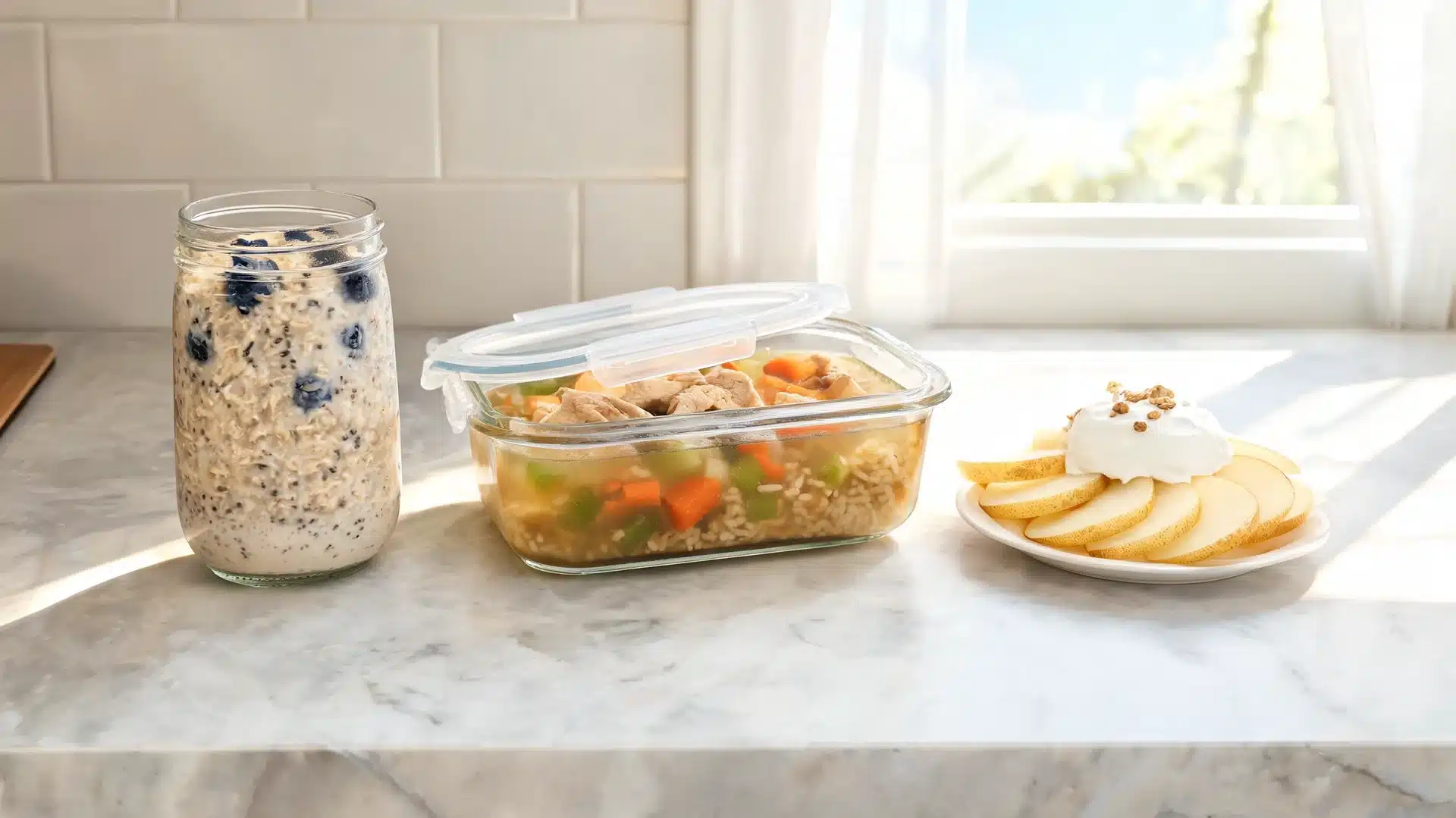
This day centers on practical meals that work well for meal prep and busy schedules. The ingredients stay mild while still giving balanced nutrition, steady energy, and enough variety throughout the day.
| Meal | Food | Nutrients | How It’ll Help You |
| Breakfast | Overnight oats with chia seeds, banana, and almond milk | Fiber, omega-3 fats, potassium | Gives a filling breakfast that can be prepared ahead for busy mornings |
| Snack | Boiled egg with cucumber slices | Protein, hydration, B vitamins | Helps maintain fullness without processed or fried snack options |
| Lunch | Chicken and vegetable soup with brown rice | Lean protein, fiber, vitamins | Keeps lunch warm, soft, and easier to handle during reflux symptoms |
| Snack | Pear slices with plain yogurt | Fiber, protein, probiotics | Adds balanced nutrition while staying light enough for afternoon snacking |
| Dinner | Roasted cauliflower tacos with avocado in whole-wheat tortillas | Fiber, healthy fats, and vitamin C | Brings variety to dinner while avoiding heavy sauces and fried ingredients |
| Evening Drink | Chamomile tea | Antioxidants, hydration | Supports a lighter evening routine before bedtime |
Simple preparation and balanced portions help keep meals manageable throughout the week. Using mild seasonings and lighter cooking methods may help lower stomach discomfort after larger or richer meals.
Day 5: Filling Meals That Stay Light
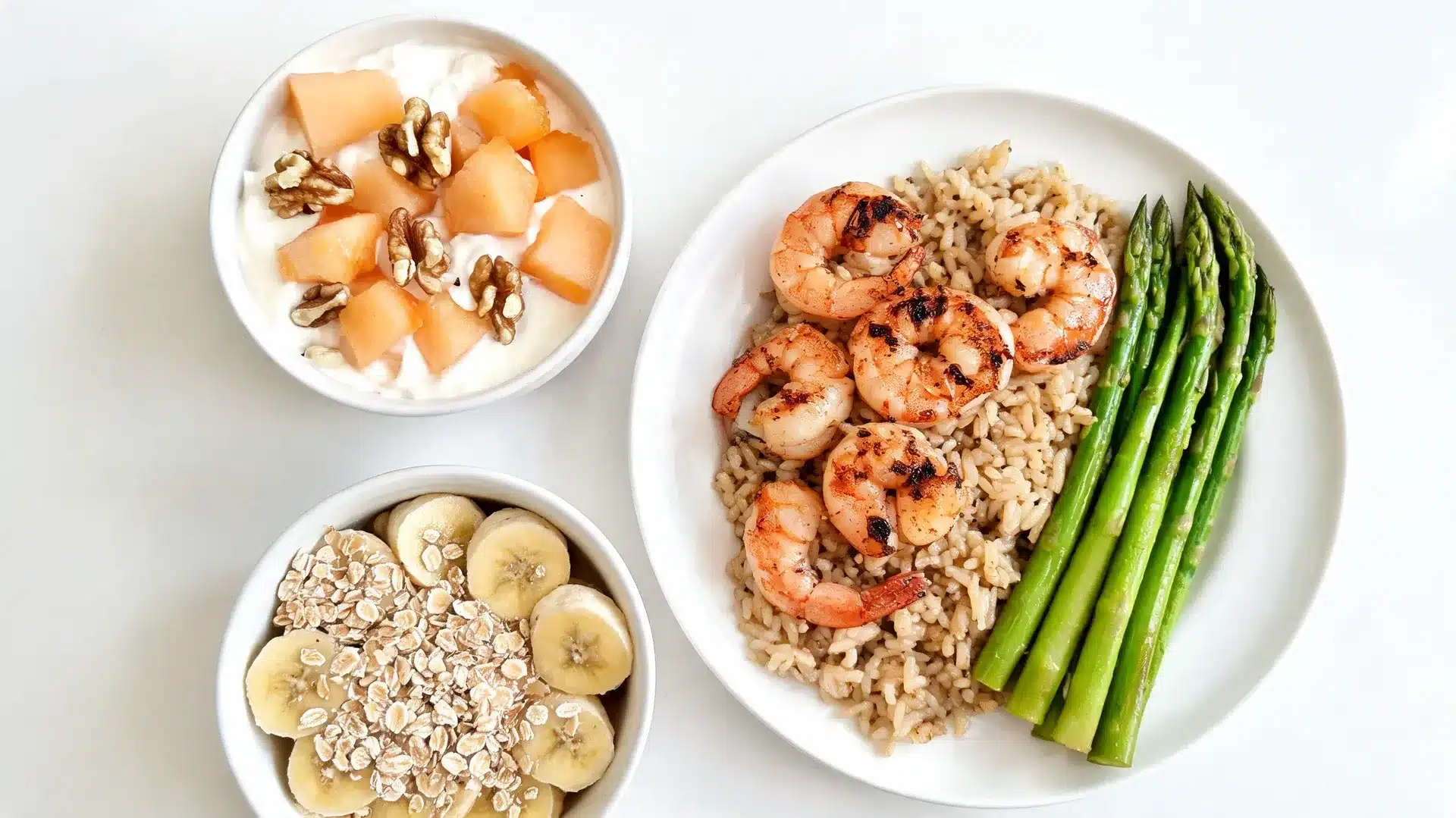
This day keeps meals filling with balanced portions and practical ingredients that work well during a busy schedule. The foods stay lighter while still giving protein, fiber, and steady energy throughout the day.
| Meal | Food | Nutrients | How It’ll Help You |
| Breakfast | Greek yogurt with melon and walnuts | Protein, calcium, healthy fats | Supports fullness during the morning without relying on heavier breakfast foods |
| Snack | Whole-grain crackers with hummus | Fiber, plant protein, carbs | Helps manage hunger between meals with balanced nutrition |
| Lunch | Grilled shrimp with brown rice and asparagus | Lean protein, fiber, selenium | Gives a satisfying lunch without greasy cooking methods or rich sauces |
| Snack | Banana slices with oats | Potassium, fiber, carbs | Adds quick energy while staying gentle on digestion |
| Dinner | Chicken breast with mashed sweet potato and green beans | Lean protein, vitamin A, fiber | Creates a balanced dinner that feels comforting without becoming overly heavy |
| Evening Drink | Warm herbal tea | Hydration, antioxidants | Helps finish the evening with a lighter drink option before bed |
Balanced meals and moderate portions may help keep digestion steadier during the day. Simple cooking styles also help reduce extra grease, heavy sauces, and foods that commonly worsen reflux discomfort.
Day 6: Weekend Comfort Without the Richness
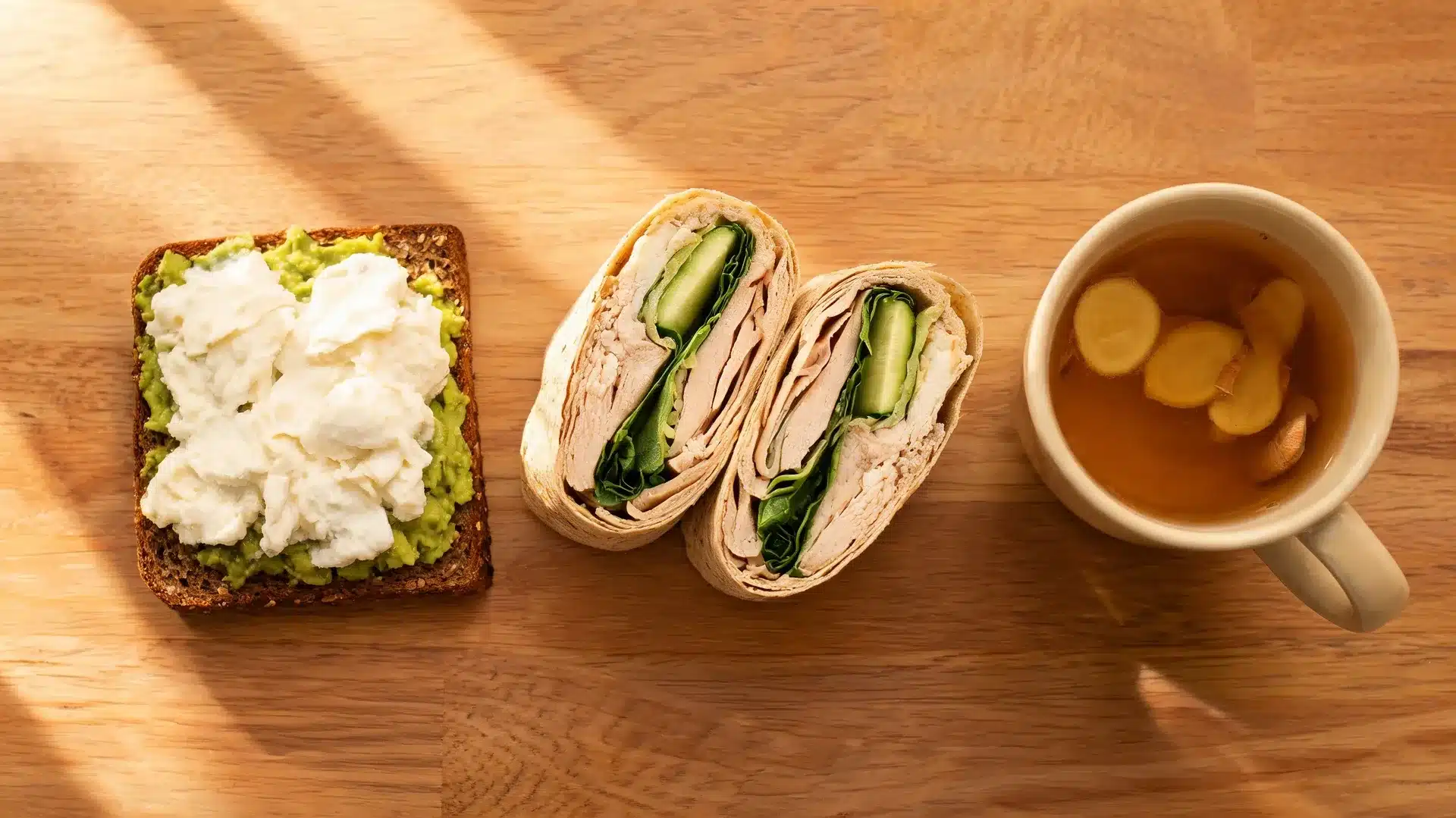
This day keeps meals comforting while avoiding foods that often feel too heavy on weekends. The meals work well for leftovers, meal prep, and flexible schedules without relying on rich ingredients.
| Meal | Food | Nutrients | How It’ll Help You |
| Breakfast | Whole-grain toast with avocado and egg whites | Fiber, healthy fats, protein | Gives steady morning energy while keeping breakfast balanced and practical |
| Snack | Pear slices with almonds | Fiber, vitamin E, healthy fats | Helps maintain fullness between meals without processed snacks |
| Lunch | Roasted turkey wrap with spinach and cucumber | Lean protein, iron, fiber | Supports balanced energy while avoiding heavier sandwich ingredients and sauces |
| Snack | Melon cubes | Hydration, vitamin C | Adds a lighter afternoon snack that feels refreshing and simple |
| Dinner | Baked tilapia with roasted root vegetables and quinoa | Lean protein, fiber, magnesium | Gives a filling dinner without fried foods or overly rich cooking methods |
| Evening Drink | Ginger tea | Hydration, antioxidants | May help support digestion during the evening hours |
The meals on this day stay practical while still giving enough variety and nutrition. Mild ingredients and lighter preparation methods may help reduce stomach discomfort during busier weekends or relaxed evenings.
Day 7: Finishing the Week on a Settled Note
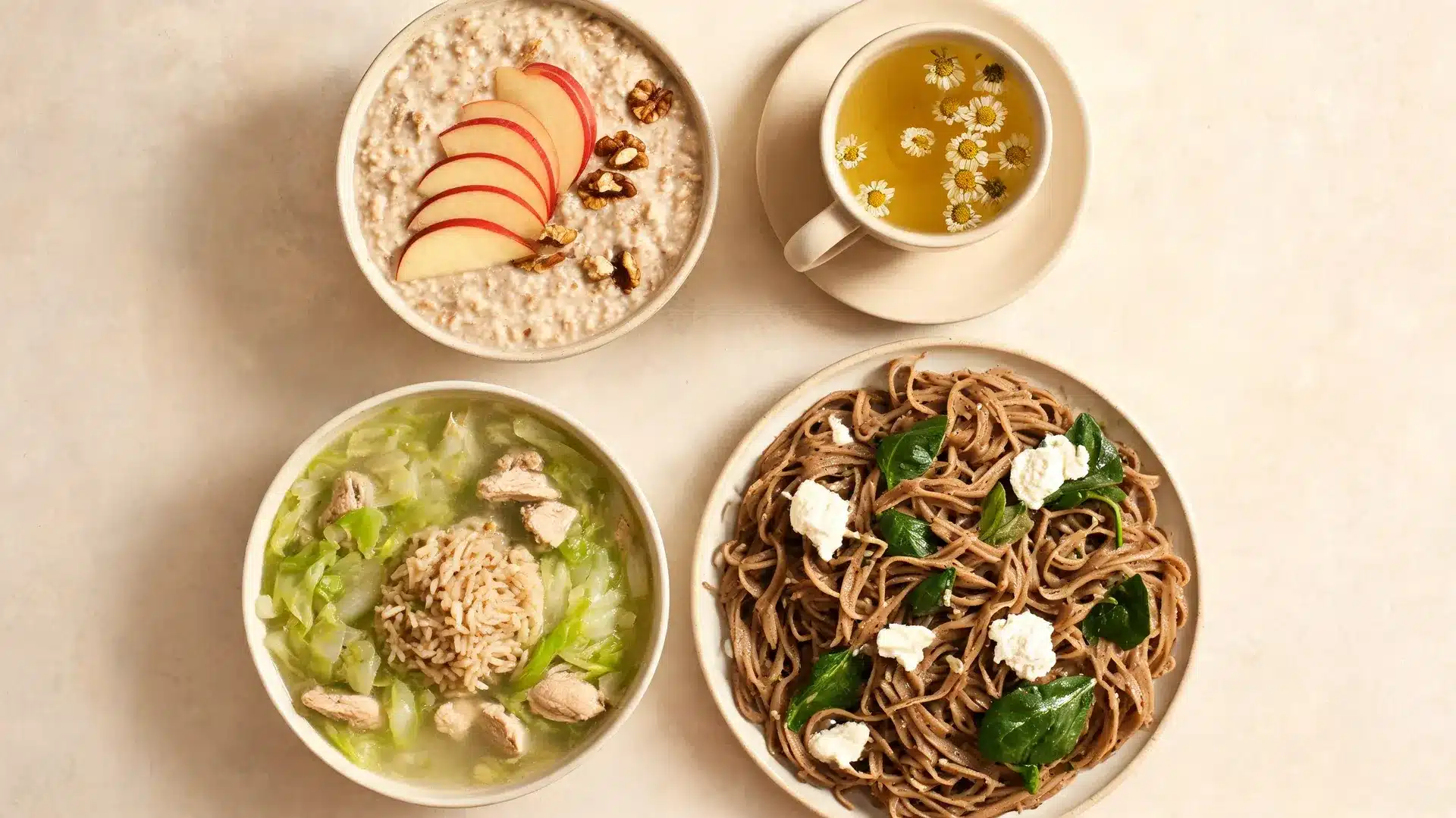
The final day keeps meals balanced and satisfying while avoiding strongly acidic ingredients. The meals offer enough variety to prevent repetition while still supporting a calmer, lighter weekly eating routine.
| Meal | Food | Nutrients | How It’ll Help You |
| Breakfast | Oatmeal with apple slices and walnuts | Fiber, healthy fats, potassium | Helps support fullness during the morning without relying on rich breakfast foods |
| Snack | Rice cakes with almond butter | Healthy fats, carbs, and vitamin E | Gives steady energy between meals while keeping portions manageable |
| Lunch | Chicken and cabbage soup with brown rice | Lean protein, fiber, vitamins | Creates a warm, balanced lunch that’s easier on digestion |
| Snack | Plain yogurt with banana slices | Protein, probiotics, potassium | Helps manage hunger while keeping snacks lighter and simpler |
| Dinner | Whole-grain pasta with spinach and mild ricotta sauce | Fiber, calcium, protein | Gives a comforting dinner option without acidic tomato-based sauces |
| Evening Drink | Chamomile tea | Hydration, antioxidants | Supports a calmer nighttime routine before sleep |
This final day keeps meals balanced without becoming repetitive or overly rich. Mild ingredients, moderate portions, and lighter cooking methods may help maintain better comfort throughout the entire week.
Eating Habits That Make The Plan Work Better
Food choices matter, but how you eat often makes just as much difference. Even mild meals can cause discomfort when portions are too large or dinner comes too close to bedtime. A few simple shifts can go a long way:
- Eat smaller, more frequent meals to reduce stomach pressure and minimize the chance of backflow throughout the day.
- Chew slowly and stay upright after eating to support steady digestion and give your stomach the time it needs to work properly.
- Choose baked or steamed foods over fried options to keep meals easier on the digestive system without sacrificing satisfaction.
- Limit drinks during meals to avoid overfilling the stomach before it has had a chance to process what is already there.
- Keep dinner noticeably lighter than lunch and finish every meal before reaching the point of feeling stuffed.
Building these habits does not require a complete overhaul of your eating habits. Small, consistent adjustments are what quietly move the needle over time.
Simple Grocery List
A simple grocery list helps keep meals organized during the week and lowers the chance of choosing foods that may worsen reflux symptoms. Focus on balanced ingredients that work across several meals and snacks.
| Category | Foods | Benefit |
| Proteins | Chicken, turkey, salmon, cod, tilapia, shrimp, egg whites, lentils, yogurt | Balanced protein choices |
| Grains | Oats, brown rice, quinoa, whole-grain bread, pasta, tortillas, crackers, rice cakes | Adds fiber and energy |
| Fruits | Bananas, melons, pears, apples | Mild fruit options |
| Vegetables | Spinach, carrots, zucchini, green beans, broccoli, cucumber, cabbage, cauliflower, asparagus, sweet potatoes | Adds nutrients and variety |
| Extras | Almond milk, chamomile tea, ginger tea, chia seeds, walnuts, almonds, hummus, mild herbs | Useful for snacks and meals |
Keeping these ingredients on hand makes meal planning faster and more flexible on busy days. Simple foods with balanced portions may help meals feel lighter while supporting steadier digestion throughout the week.
Meal Prep Tips To Save Time
Meal prep does not need to be complicated to be effective. A little preparation at the start of the week can make balanced, reflux-friendly eating far easier to manage. A few practical steps can set the whole week up:
- Prep a simple base: Cook one whole grain, one lean protein, and two vegetables ahead of time; brown rice, baked chicken, steamed green beans, and carrots work well across bowls, wraps, soups, and quick dinners.
- Stock the basics: Keep prepped ingredients on hand to reduce last-minute fast-food choices or heavily seasoned meals that can worsen reflux discomfort.
- Prep breakfasts in advance: Make overnight oats or freeze smoothie ingredients in small containers before the week begins.
- Make snacks visible: Place easy options like pear slices, rice cakes, yogurt, and almonds somewhere they are easy to grab without thinking.
Good preparation does not demand hours in the kitchen every weekend. It simply creates enough flexibility to keep meals lighter, balanced, and easier on digestion throughout the week.
Easy Swaps For Different Needs
Making small food swaps can help meals feel more comfortable without changing your entire routine. Whether the need is digestive ease, variety, or dietary preference, these simple substitutions keep meals balanced and practical:
| Concern | Swap Out | Swap In | Why It Helps |
|---|---|---|---|
| Dairy discomfort | Regular milk, dairy yogurt | Almond milk, oat milk, dairy-free yogurt | Reduces dairy-triggered reflux and bloating |
| Repetitive protein | Chicken | Turkey, fish, shrimp, tofu, lentils | Keeps meals varied and nutritionally balanced |
| Heavy meal-based | Regular pasta | Brown rice or quinoa | Lighter on the stomach and easier to digest |
| Bloating from vegetables | Raw vegetables | Soft-cooked or steamed vegetables | Gentler on digestion, especially during flare-ups |
| Vegetarian preference | Meat-based proteins | Lentils, tofu, egg whites, quinoa, beans | Plant-based options that stay reflux-friendly |
| Gas from beans | Large bean portions | Small portions, increased gradually | Minimizes stomach pressure while preserving fiber |
Start with one or two swaps at a time rather than changing everything at once. Small, steady adjustments are far easier to maintain and give the digestive system time to adapt comfortably.
Common Mistakes To Avoid
Even meals made with gentle ingredients may still cause discomfort when eating habits are inconsistent. Paying attention to timing, portions, and hidden triggers can make the meal plan work better.
- Eating too quickly: Fast eating may increase swallowed air and stomach pressure.
- Large portions: Bigger meals can make reflux symptoms feel stronger.
- Late-night eating: Lying down soon after dinner may worsen discomfort.
- Heavy sauces: Creamy, spicy, or tomato-based sauces may trigger burning.
- Too much caffeine: Coffee and energy drinks may irritate the stomach.
- Ignoring personal triggers: Even healthy foods can affect people differently.
Small changes in daily habits often matter just as much as food choices. Keeping meals moderate, eating slowly, and watching trigger foods may help digestion feel calmer throughout the week.
When To Speak With A Doctor
Diet changes may help manage mild reflux symptoms, but ongoing discomfort should still be taken seriously. Speak with a doctor if you notice chest pain , trouble swallowing, vomiting, black stools, unexplained weight loss, or reflux symptoms several times each week.
Frequent nighttime symptoms may also indicate a larger issue that requires medical attention. If symptoms persist even after adjusting meals, portions, and eating habits, it is important to seek proper medical advice rather than waiting too long.
Long-term acid irritation may affect the esophagus and lead to additional complications. Paying attention to warning signs early may help prevent symptoms from becoming harder to manage later.
A doctor can help identify triggers, check for related conditions, and recommend treatment options that better fit your symptoms, health history, and daily routine.
Frequently Asked Questions
Can you eat out while following a reflux-friendly meal plan?
Yes. Choose grilled, baked, or steamed dishes and ask for sauces on the side. Avoid fried options, heavy dressings, and carbonated drinks. Eating smaller portions and skipping late-night meals out also helps manage symptoms effectively.
Does eating position during meals affect reflux symptoms?
Sitting upright while eating and remaining upright for at least two hours afterward may reduce backflow noticeably. Eating hunched over or lying down shortly after meals tends to worsen symptoms and should be avoided as a general habit.
How long does it take for dietary changes to reduce reflux symptoms?
Most people notice some improvement within one to two weeks of consistent changes. Since triggers vary from person to person, keeping a simple food and symptom log helps identify what is actually making the biggest difference for your body.
Can stress make acid reflux worse, even with a good diet?
Yes. Stress may increase stomach acid production and slow digestion, undermining even the best dietary efforts. Managing sleep quality, reducing daily pressure where possible, and eating at consistent times can meaningfully support the dietary changes already in place.
Final Thoughts
Reflux doesn’t have to turn every meal into a guessing game. This 7-day meal plan for acid reflux gives you a clear starting point, not a rigid script. The meals are simple, the ingredients repeat in useful ways, and the portions are built around comfort rather than restriction.
What works here is the pattern: lighter dinners, steady snacks, gentle cooking methods, and enough variety to keep the week from feeling monotonous.
Stick with it for a full week, take notes on what sits well, and adjust from there. Your body will tell you more in seven days than any list of rules will. Which meal from this plan are you trying first? Drop it in the comments below.