















If you want to know how to sleep to avoid neck pain, the short answer is this: keep your cervical spine in a neutral position all night, support the gap between your head and mattress with the right pillow height, and stop sleeping on your stomach. These three changes alone can reduce morning stiffness significantly within a week.
This article is for informational purposes only and does not constitute medical advice. If you experience persistent or worsening neck pain, numbness, tingling, or weakness in the arms, consult a licensed healthcare provider before making changes to your sleep setup.
| Condition / Goal | Prevent and reduce neck pain during sleep |
| Primary Mechanism | Maintaining cervical spine neutral alignment reduces overnight muscle and ligament strain |
| Evidence Level | Well-studied: sleep position, pillow height, and mattress firmness each have documented effects on cervical spine load |
| Who It’s For | Adults who wake with neck stiffness, shoulder tightness, or morning headaches linked to their sleep setup |
| Who Should Avoid Self-Managing | Anyone with neck pain following injury, arm tingling or weakness, or chronic worsening pain should see a clinician first |
Why Your Neck Hurts After Sleep
Neck pain after sleep almost always comes down to one problem: your cervical spine spent several hours in a position it was not designed to hold.
When your head tilts forward, backward, or to one side for four to eight hours, the muscles and ligaments supporting the vertebrae have to work continuously instead of resting. By morning, that accumulated strain shows up as stiffness, soreness, or a reduced range of motion.
The most common causes are a pillow that is too high or too flat, stomach sleeping with the head rotated to one side, a mattress that allows the hips and shoulders to sink unevenly, and daytime posture carried into the evening.
Research published in BMC Musculoskeletal Disorders links forward head posture from smartphone use to tissue overload in the cervical spine, which means tension you build up during the day can make poor sleep positioning feel significantly worse by morning.
If your neck pain feels worse after long phone or laptop use, your daytime posture may be part of the problem. Adding simple tech neck exercises can help reduce forward head strain before it carries into your sleep position.
Best Sleeping Position for Neck and Shoulder Pain
Back sleeping and side sleeping are the two positions most consistently recommended by physical therapists and sleep medicine specialists for reducing neck pain. Both allow the cervical spine to stay close to its natural curve.
Stomach sleeping is the one position that almost universally makes neck pain worse, because it requires the head to rotate 70 to 90 degrees for the duration of the night.
1. Back Sleeping With Neck Support

Back sleeping is the most mechanically straightforward option for neck pain because the head stays centered and the load on the cervical spine is distributed evenly. The pillow needs to be thin enough to keep the chin level, not pushed toward the chest.
How to set it up:
- Lie flat on your back.
- Use a pillow that supports the natural forward curve of the neck without lifting the head more than a few inches off the mattress.
- Keep the chin level, not tucked down or tilted up.
- Place a small pillow under the knees if the lower back feels tight. This reduces pelvic tilt and indirectly takes strain off the upper spine.
- Avoid thick stacked pillows. Anything that forces the chin toward the chest will strain the posterior neck muscles overnight.
A contour or cervical pillow can help back sleepers who find standard pillows either too high or too flat. The raised edge supports the neck curve while the lower center section keeps the head from being elevated too far.
2. Side Sleeping With Correct Pillow Height

Side sleeping works well for neck pain, but only when the pillow fills the full gap between the ear and the shoulder. That distance is typically four to six inches for most adults. A pillow that is too thin lets the head drop toward the mattress.
A pillow that is too thick pushes the head up and creates a lateral neck bend. Either way, the muscles on one side are held in a shortened position for hours.
How to set it up:
- Lie on your side with shoulders stacked, not rolled forward.
- Choose a pillow thick enough to keep the nose in line with the center of the chest, not tilting up or down.
- Place a pillow between the knees to keep the hips level and reduce spinal rotation.
- Avoid curling the chin tightly toward the chest, which is common in the fetal position and adds cervical flexion strain.
- If one shoulder is painful, sleep on the opposite side. Place a pillow against the chest and let the affected arm rest on it instead of hanging forward.
Side sleeping on a firm mattress often requires a thicker pillow than side sleeping on a soft mattress, because the shoulder sinks less into a firm surface, leaving a larger gap for the pillow to fill.
3. Reclined Back Sleeping

A slight incline can reduce cervical spine pressure for people who find flat-back sleeping uncomfortable. This is particularly useful if neck pain is accompanied by upper back tightness or if acid reflux disrupts sleep in a flat position.
How to set it up:
- Use a wedge pillow or adjustable bed base to raise the upper body five to fifteen degrees.
- Support the head and neck with a single pillow rather than stacking multiple pillows under the head only.
- Keep the shoulders relaxed, not rounded forward.
- The incline should raise the entire torso, not just the head. Raising only the head replicates the problem of a pillow that is too high.
4. The Position to Avoid: Stomach Sleeping
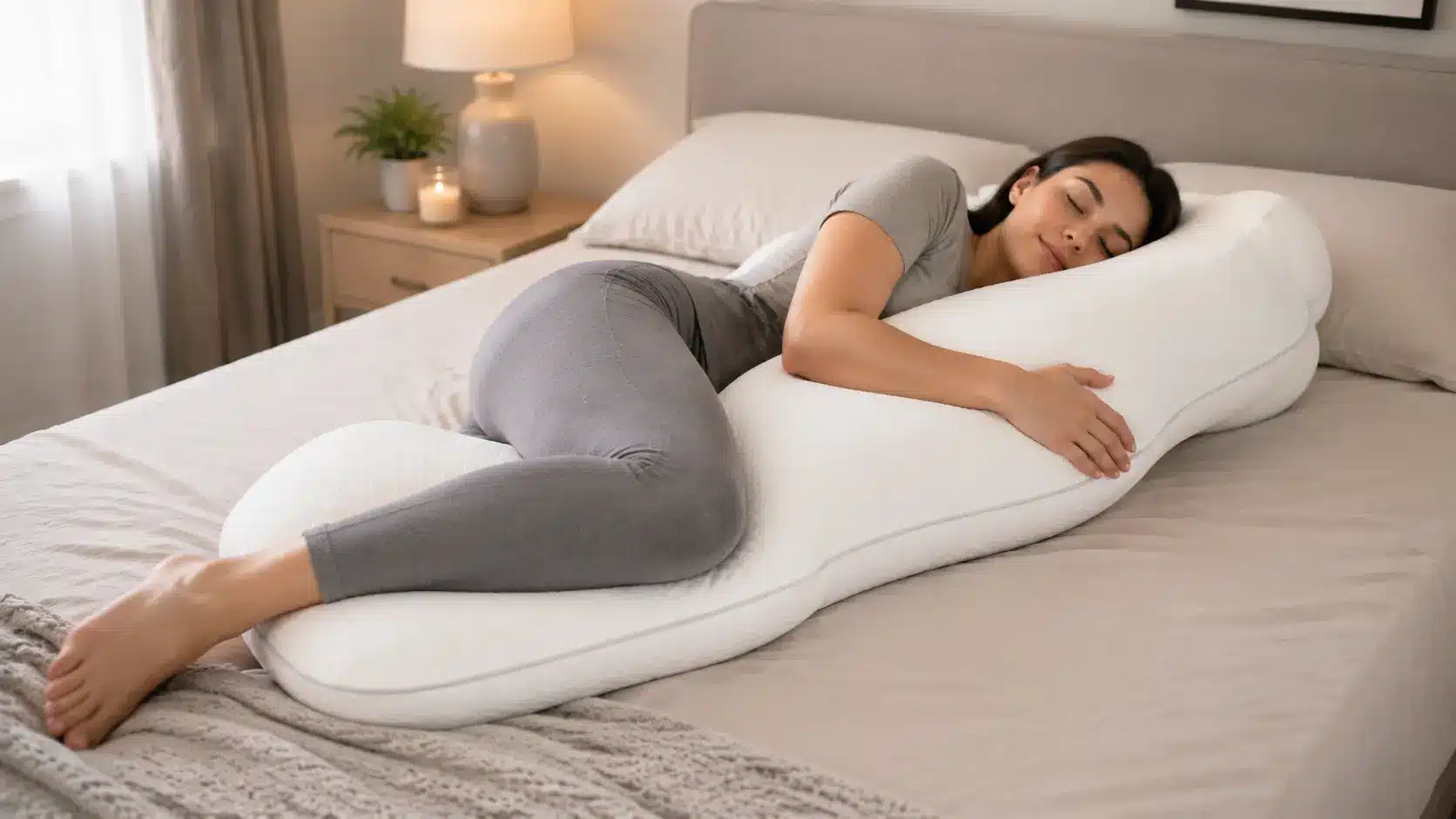
Stomach sleeping forces the head into full rotation to one side for the entire night. At 70 to 90 degrees of sustained neck rotation, the muscles and joints on the opposite side are stretched beyond their resting length for hours. This is a direct cause of morning stiffness and, in people with existing cervical issues, can aggravate disc or nerve symptoms.
If stomach sleeping is deeply habitual, the transition takes time. Placing a body pillow along one side of the body creates a physical barrier that makes rolling face-down less automatic.
Starting the night on the back or side and using a very thin pillow under the pelvis (not the head) on nights when you do roll over can reduce the intensity of the strain while you adjust.
How to Choose the Right Pillow for Neck Pain
The pillow’s job is simple: fill the space between the head and mattress so the cervical spine stays in a neutral position. What varies is how much space needs to be filled, which depends on your sleep position, shoulder width, and mattress firmness.
| Pillow Type | Best For | Key Consideration |
|---|---|---|
| Cervical (contour) pillow | Back sleepers with persistent neck curve stiffness | The raised edge supports the neck; the lower center section prevents excessive head elevation |
| Memory foam pillow | Both back and side sleepers who need stable support that does not compress overnight | Avoid models that sink too far and allow the head to drop into the mattress level |
| Adjustable fill pillow | Side sleepers who need fine-tuned height | Add or remove fill until the ear stays parallel to the mattress in the side-lying position |
| Rolled towel under a standard pillow | Back sleepers who need modest cervical curve support without buying a new pillow | Place the roll under the neck, not under the head; the diameter should fill the natural curve without forcing it |
A 2021 study comparing pillow materials found that spring and rubber (latex) pillows were associated with reduced neck pain compared to feather pillows, likely because they maintain consistent height through the night rather than compressing unevenly. Whatever material you choose, height and firmness matter more than brand.
Signs Your Pillow Is Making Neck Pain Worse
A pillow can look intact and still be contributing to morning neck pain. These are the signs worth checking before blaming the mattress or sleep position.
- You wake with stiffness that improves within 30 to 60 minutes of being upright. This pattern suggests the issue is positional, not an underlying joint condition.
- Your neck feels worse on one specific side each morning. This often means the pillow is the wrong height for the side you favor.
- You frequently readjust or fold the pillow during the night to find a comfortable position.
- The pillow looks flat, lumpy, or compressed in the center. Most pillows lose their support within 18 to 36 months of regular use.
- Morning headaches concentrate at the base of the skull. This can indicate the pillow is too high or too low for the back-sleeping position, creating sustained neck flexion or extension overnight.
Try the fold test: fold the pillow in half and release it. A pillow that stays folded or takes more than a few seconds to spring back has lost its structural support and needs replacing.
How Your Mattress Affects Neck Pain
The mattress affects the neck indirectly by determining how much the shoulders and hips sink into the sleep surface. That sinkage changes the gap the pillow needs to fill.
A mattress that is too soft allows the hips and shoulders to drop disproportionately, which tilts the spine and changes the angle of the neck relative to the mattress. A mattress that is too firm does not allow the shoulders to sink at all, which creates a gap under the neck and lower back that goes unsupported.
A medium-firm mattress tends to be a reasonable starting point for most adults sleeping on their back or side. Research from Spine Team Texas supports medium-firm mattresses as most consistently compatible with natural spinal alignment.
However, body weight and sleep position both affect the ideal firmness: a lighter person may find medium-firm too hard, while a heavier person may need firmer support to prevent excessive sinkage at the hips.
The practical check: if you sleep on your side and your shoulder feels pressed into the mattress rather than cushioned, the bed is probably too firm. If your hips sink noticeably lower than your shoulders when lying on your side, the mattress is probably too soft. Either condition changes the geometry the pillow has to compensate for.
Pillow height and mattress firmness need to be calibrated together. If you switch to a softer mattress, your side-sleeping pillow may need to be lower because the shoulder sinks further. If you move to a firmer mattress, the opposite applies.
Nightly Habits That Reduce Morning Neck Stiffness
Even a well-chosen sleep position can be undermined by what happens in the hour before bed. These habits address the most common contributors to overnight neck tension.
Limit phone use while lying down. Looking down at a screen held in the lap adds 40 to 60 degrees of cervical flexion beyond neutral. Doing this for 30 to 60 minutes before sleep increases the tension that carries into your sleep position. Hold the phone at eye level or stop screen use 30 minutes before sleep.
Warm the neck muscles before lying down. A warm shower, moist heat pad, or 15 minutes of gentle heat on the neck and upper shoulders before bed reduces overnight resting tension. This is especially useful if your day involves desk work or driving.
Do a brief neck mobility routine. Gentle chin tucks, slow side-to-side rotation, and shoulder rolls before bed can release daytime tension before it becomes overnight strain. Keep movements slow and within a pain-free range. If you have existing symptoms from occipital neuralgia or a cervical disc issue, check with your provider on which movements are appropriate.
Set your pillow arrangement before you get drowsy. Adjusting pillows while already sleepy leads to inconsistent placement. Set your head pillow, knee pillow, and any arm support before lying down so the setup is consistent from the start of the night.
Avoid falling asleep on the couch. Couch cushions rarely support spinal alignment, and the armrest often puts the neck into sustained lateral flexion for however long you sleep there. Even a 45-minute couch nap in a misaligned position can leave you with stiffness that carries into the following night’s sleep.
Keep the room cool. Sleeping too warm increases the likelihood of tossing, turning, and waking in a twisted position. A room temperature between 65 and 68 degrees Fahrenheit supports more stable sleep positioning through the night.
You can also try gentle neck massage techniques before sleep to relax tight muscles around the upper shoulders and base of the skull. Keep the pressure light and avoid deep massage if the area feels sharp, swollen, or irritated.
What Medical Experts Say About Sleep Position and the Cervical Spine
Sleep quality is directly related to proper head and neck support to maintain cervical spine alignment.
Experts note that sleep-related neck pain and discomfort are associated with higher and longer muscle activity due to improper neck support, particularly when the spine is held in a non-neutral position for hours.
A peer-reviewed study published on NCBI/PubMed found that people with cervical symptoms spent significantly more time in undesirable or provocative sleep postures compared to those without symptoms.
Additionally, research published in IJRSI (2026) confirms that maintaining normal sleep duration may represent a modifiable strategy to support long-term cervical spine health.
Side sleeping with proper pillow height is generally considered the safest position for cervical alignment.
Common Sleep Habits That Make Neck Pain Worse
Most people who wake with daily neck stiffness have one or more of these habits working against them, even when the sleep position itself is reasonable.
- Sleeping with an arm under the head or pillow. This elevates the shoulder of the raised arm, creating asymmetric lateral neck flexion for the duration of sleep on that side.
- Using stacked pillows. Two or three standard pillows push the chin toward the chest. Even if the neck feels supported, the sustained forward flexion strains the posterior cervical muscles overnight.
- Sleeping with arms overhead. This position can compress the brachial plexus and create referred tension up into the neck and shoulder. Keep the arms below shoulder level.
- Ignoring a mattress that has aged past its useful life. Most mattresses lose structural support after seven to ten years. A sagging mattress changes body alignment regardless of how carefully the pillow is positioned.
- Changing sleep positions every night without consistency. If the pillow height is calibrated for side sleeping and you switch to back sleeping without adjusting, the same pillow will be too thick for the new position.
When Neck Pain From Sleep Requires Medical Attention
Most morning neck stiffness from sleep resolves with positional and pillow adjustments within one to two weeks. The following symptoms are reasons to see a healthcare provider rather than continue self-managing.
- Numbness, tingling, or burning that travels from the neck into the arm, hand, or fingers. This pattern suggests nerve involvement and needs clinical evaluation.
- Weakness in the grip or arm. If you notice difficulty gripping objects or reduced arm strength alongside neck pain, do not wait.
- Neck pain that followed a fall, accident, or collision, even a minor one.
- Pain that worsens progressively over two weeks despite sleep setup changes.
- Neck pain accompanied by fever, unexplained weight loss, or severe headache. These combinations can indicate conditions unrelated to sleep position that require prompt assessment.
- Pain that wakes you from sleep rather than appearing in the morning. Positional neck pain from sleep typically eases once you are upright. Pain that disrupts sleep itself often has a different cause.
A physical therapist can assess cervical alignment directly and identify whether the issue is muscular, joint-related, or disc-related. One nerve-related pattern frequently confused with general sleep stiffness is occipital neuralgia, which produces base-of-skull pain that worsens overnight and can mimic pillow-related stiffness.
Frequently Asked Questions
Can stress cause neck pain while sleeping?
Yes, stress can tighten the neck, jaw, and shoulder muscles before bed. If those muscles stay tense overnight, you may wake up stiff or sore. A short wind-down routine, gentle breathing, heat, or light stretching may help reduce tension before sleep.
Is sleeping on the floor good for neck pain?
Sleeping on the floor may help some people feel more supported, but it is not right for everyone. A very hard surface can increase shoulder, hip, or neck pressure. If you try it, use a thin mat and keep your neck neutral.
Can a new pillow make neck pain worse?
Yes, a new pillow can make neck pain worse if the height or firmness does not match your sleep position. Give your body a few nights to adjust, but stop using it if pain increases, headaches start, or your neck feels more strained.
Should I use a neck roll while sleeping?
A neck roll can help some back sleepers support the natural curve of the neck. It should sit under the neck, not under the head. If it feels too high, causes pressure, or increases pain, use a smaller roll or remove it.
Can shoulder tightness cause neck pain?
Yes, tight shoulders can pull on the muscles connected to the neck and upper back. This can make sleep-related neck pain worse. Supporting your arms, relaxing your shoulders before bed, and avoiding arms-overhead sleep positions may help reduce strain.
Is memory foam good for neck pain?
Memory foam can help neck pain if it holds your head and neck in neutral alignment. The problem is not the material itself, but the pillow height and firmness. If your head sinks too far or tilts upward, it may worsen pain.
Can dehydration make neck stiffness worse?
Dehydration does not directly cause most sleep-related neck pain, but it may make muscles feel tighter or more prone to discomfort. Staying hydrated during the day supports normal muscle function. Still, pillow height, sleep position, and posture usually matter more.
How often should I replace my neck pillow?
Most pillows should be replaced every 18 to 36 months, depending on quality and use. Replace yours sooner if it feels flat, lumpy, uneven, or no longer supports your neck. A worn pillow can slowly change your alignment overnight.
Final Verdict
A pain-free morning starts the moment your head hits the pillow. By focusing on neutral spinal alignment and eliminating stomach sleeping, you can drastically reduce overnight strain on your delicate cervical muscles.
Finding the right balance between your mattress and pillow height ensures your body stays supported until morning.
Now that you know how to sleep to avoid neck pain, it is time to put these adjustments into practice tonight. Small tweaks to your nightly routine can yield massive relief within just a few days.
Which adjustment are you going to try first? Share your thoughts or your current pillow setup in the comments below.
Sources
Harvard Health Publishing, “Say Good Night to Neck Pain.” Harvard Medical School. https://www.health.harvard.edu/pain/say-good-night-to-neck-pain
Jeon MY, et al., “The effects of pillow height on head and neck muscle activity, cervical range of motion, and sleep quality.” Biomed Research International / PMC. 2021. https://pmc.ncbi.nlm.nih.gov/articles/PMC8544534/
GoodRx Health, “How to Sleep With Neck Pain.” GoodRx. https://www.goodrx.com/well-being/sleep/best-sleeping-position-for-neck-pain
Limitless Physical Therapy, “Best Sleeping Position for Neck Pain.” https://limitlesspts.com/sleep-with-neck-pain-positions/