



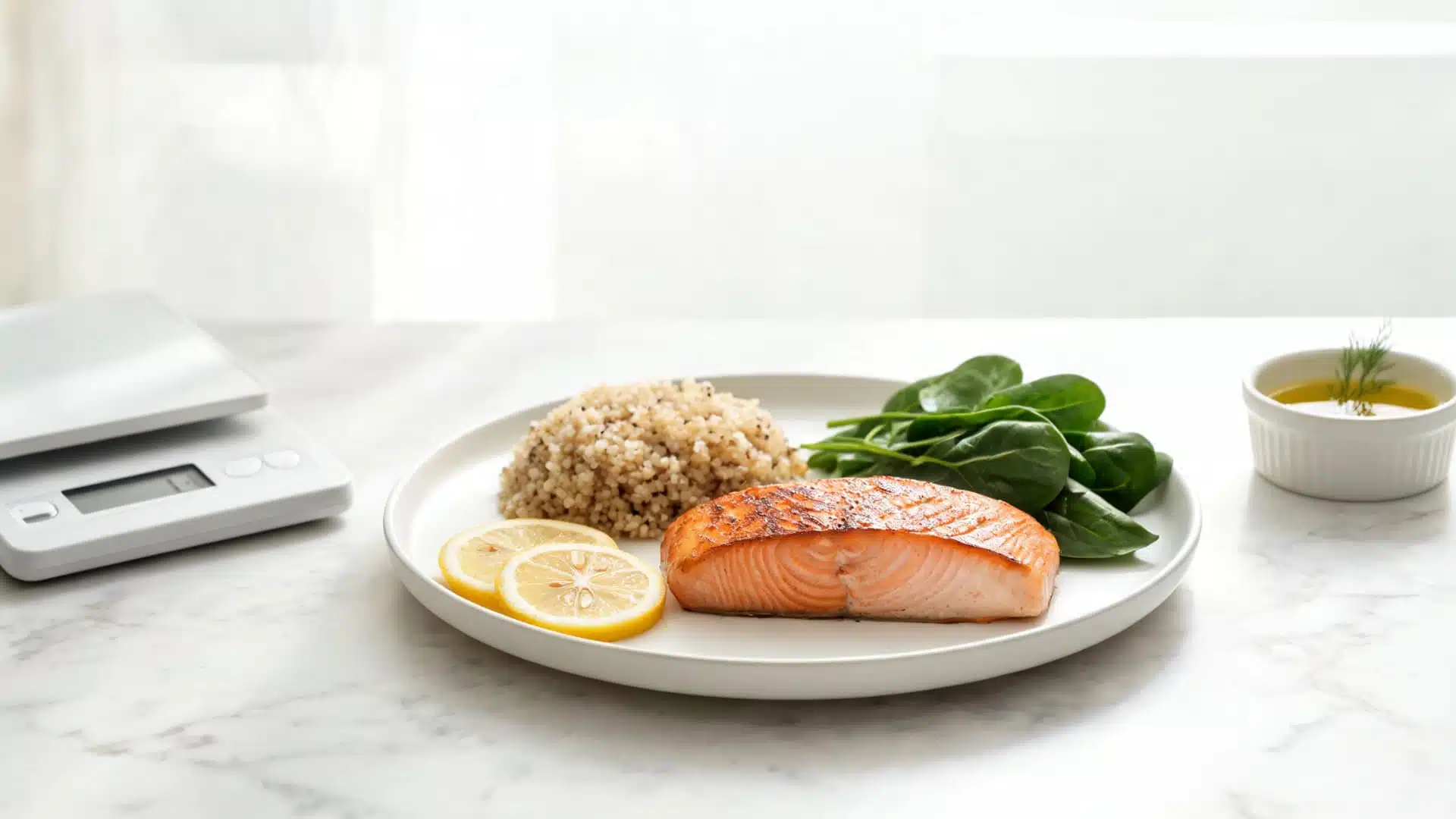








Ever tried logging salmon and felt unsure if the numbers are even correct? One entry shows low calories, another looks much higher, and suddenly your tracking feels unreliable.
I know how frustrating it gets when salmon nutrition facts don’t match across apps or labels, especially when you’re trying to stay consistent with your meals.
In this guide, I’ve broken down the real differences in calories, protein, fat, and carbs across wild, farmed, and cooked salmon so you can log your food with confidence.
You’ll also see how portion size and cooking method change the numbers, helping you make accurate, stress-free tracking decisions every time you eat salmon
| Medical Disclaimer: This article is for informational purposes only and does not constitute medical advice, diagnosis, or treatment. The information provided is not a substitute for professional medical consultation. If you have a medical condition, are pregnant, or are taking medications, consult your healthcare provider before making any dietary changes. Individual results vary. |
Salmon Nutrition Facts at a Glance
The numbers below cover the three forms you are most likely to encounter: raw wild-caught salmon, raw farmed Atlantic salmon, and a cooked portion. All values are based on USDA FoodData Central data and reflect a 100g (3.5 oz) serving unless noted.
| Nutrient | Wild Salmon (100g raw) | Farmed Atlantic (100g raw) | Cooked (100g / 3.5 oz) |
| Calories | 150-182 kcal | 200-210 kcal | 180-232 kcal |
| Protein | 22-25 g | 20-23 g | 22-25 g |
| Total Fat | 5-8 g | 10-13 g | 8-16 g |
| Carbohydrates | 0 g | 0 g | 0 g |
| Omega-3 (EPA + DHA) | 1.5-2.5 g | 1.8-2.3 g | High |
| Vitamin B12 | 100-130% DV | 110-130% DV | High |
| Vitamin D | High (97%+ DV) | Moderate-High | High |
| Selenium | 75-85% DV | 70-80% DV | High |
| Potassium | 10-13% DV | 8-10% DV | Moderate |
Salmon has 0 g of carbs on its own. Every calories in salmon comes from protein and fat, making it a clean fit for low-carb, keto, and high-protein eating patterns. A standard 4 oz (113g) raw farmed portion delivers roughly 236 calories, 23 g protein, and 15 g fat. Those numbers change once cooking is involved, so match your tracking entry to whether you weighed the fish raw or cooked.
| Tracking Tip: Always log salmon based on how you weighed it. Raw weight before cooking and cooked weight after cooking are different measurements. Using a raw entry for cooked salmon, or vice versa, can throw off your calorie count by 20-30%. |
Salmon Nutrition by Common Portion Size
Most tracking apps list salmon per 100g, but real-life portions rarely match that. Here are the salmon nutrition facts for the serving sizes you are most likely to cook or order.
| Portion | Calories | Protein | Fat | Carbs |
| 3 oz (85g) raw farmed | 175 kcal | 17-18 g | 11 g | 0 g |
| 4 oz (113g) raw farmed | 236 kcal | 23 g | 15 g | 0 g |
| 6 oz (170g) raw farmed | 354 kcal | 34 g | 22 g | 0 g |
| 8 oz (226g) raw farmed | 472 kcal | 46 g | 29 g | 0 g |
| 3.5 oz (100g) wild, cooked | 182 kcal | 25 g | 8 g | 0 g |
Restaurant fillets often run 6-8 oz, not the 3 oz standard listed in apps. Weigh once at home to calibrate your eye, then use that as your reference when eating out. If salmon is one of your go-to proteins in takeout bowls, the same tracking logic applies to dishes like a poke bowl with salmon, where the fish portion is rarely the standard 3 oz entry in most apps.
Key Rule for Accurate Tracking
Accurate salmon tracking depends less on the fish itself and more on how the weight is recorded in your log. The same fillet can show different calorie and macro values simply because it is entered as raw or cooked food in an app.
Raw salmon contains more water, so its calories are distributed across a higher weight, while cooked salmon loses moisture and becomes more calorie-dense per gram. This is why a cooked 100g portion is not equal to a raw 100g portion in most tracking databases.
To stay consistent, always match the entry type with how the salmon was weighed before or after cooking. If it was weighed before cooking, choose raw data; if weighed after cooking, choose cooked data. This small habit prevents common tracking errors that can easily shift daily calorie intake by 20–30%, especially when cooking oils or sauces are also included.
Why Salmon Nutrition Values Differ
Salmon nutrition values change because several natural and preparation-related factors affect calories, protein, and fat content. Understanding these differences helps improve accuracy when tracking meals or comparing nutrition data across apps and databases.
Key Reasons for Variation:
- Species differences: Wild salmon is usually leaner, while farmed Atlantic salmon contains more fat and therefore more calories per 100g.
- Natural diet: What salmon eat in the wild versus farm feed slightly changes fat composition and omega-3 levels.
- Fat content range: Even within the same species, individual fish can vary in fat percentage depending on size and maturity.
- Cooking method impact: Oil, butter, marinades, or breading add extra calories that are not part of the salmon itself.
Cooking removes water from salmon, which increases nutrient density per gram. This is why cooked salmon often appears higher in calories compared to raw weight entries, even when the total calorie content of the fillet remains similar.
Salmon Nutrition Facts by Type
The salmon nutrition label on your screen may not match the fish in your pan. Species, farming method, and processing all shift the numbers. Here is what differs and why it matters for tracking.
1. Atlantic Salmon
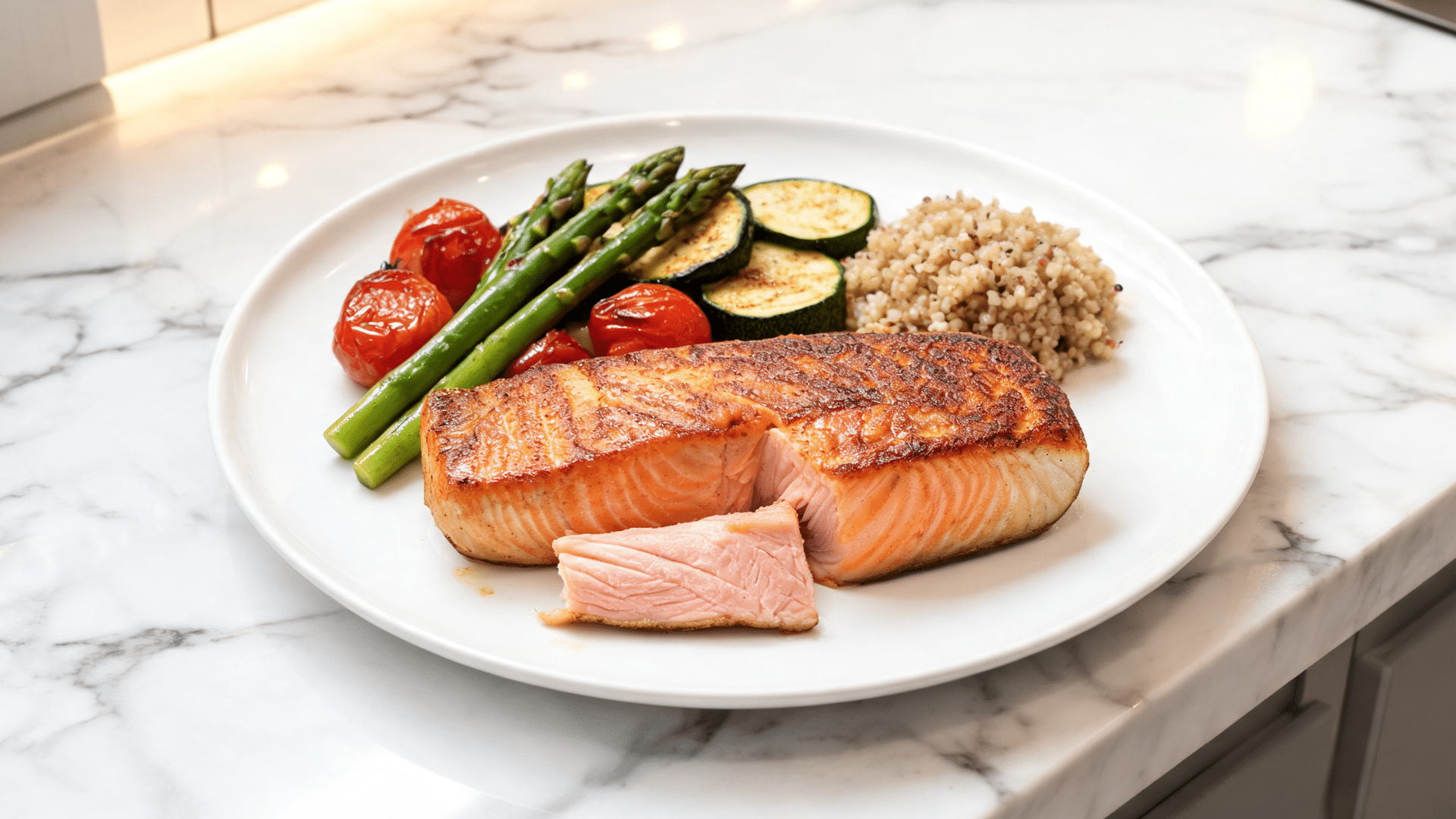
Atlantic salmon is almost always farmed in the US market, which is why it sits at the higher end of the calorie range: roughly 200-210 calories per 100g raw.
The higher fat content, mostly from an omega-3-rich diet in aquaculture, gives it a softer texture and milder flavor that holds up well to baking, grilling, pan-searing, and air frying. If your food app just says “salmon” without a species name, it is likely pulling Atlantic farmed data.
2. Sockeye Salmon
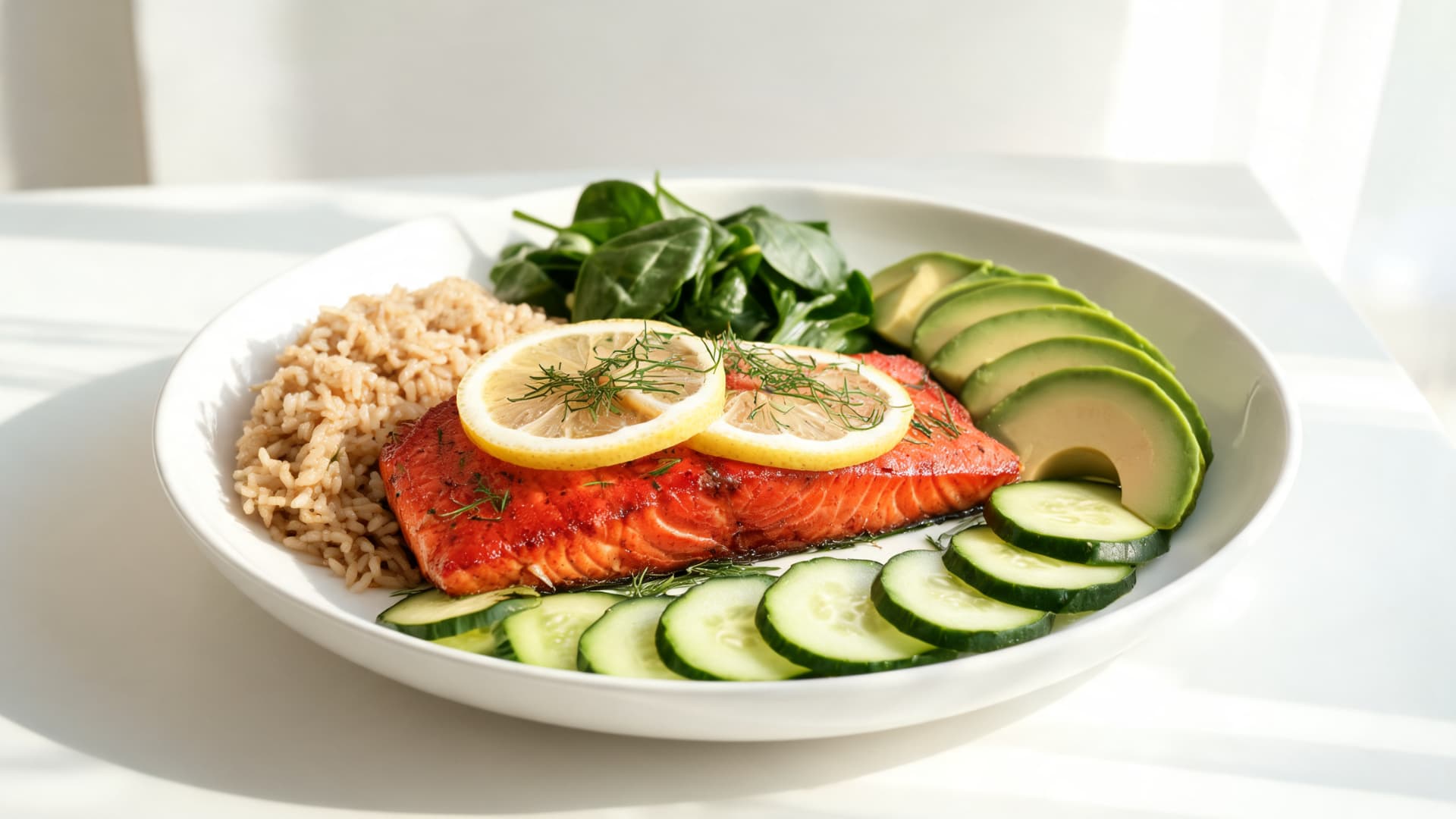
Sockeye runs leaner than Atlantic, coming in closer to 150-168 calories per 100g raw, with 5-8 g of fat and a firmer texture. It is always wild-caught, which is one reason the protein density tends to be slightly higher per calorie.
The deeper red color comes from astaxanthin in its natural diet, the same carotenoid that research has linked to antioxidant effects in humans. Use sockeye in bowls, grain salads, and meal prep where you want a firmer bite.
3. Coho Salmon
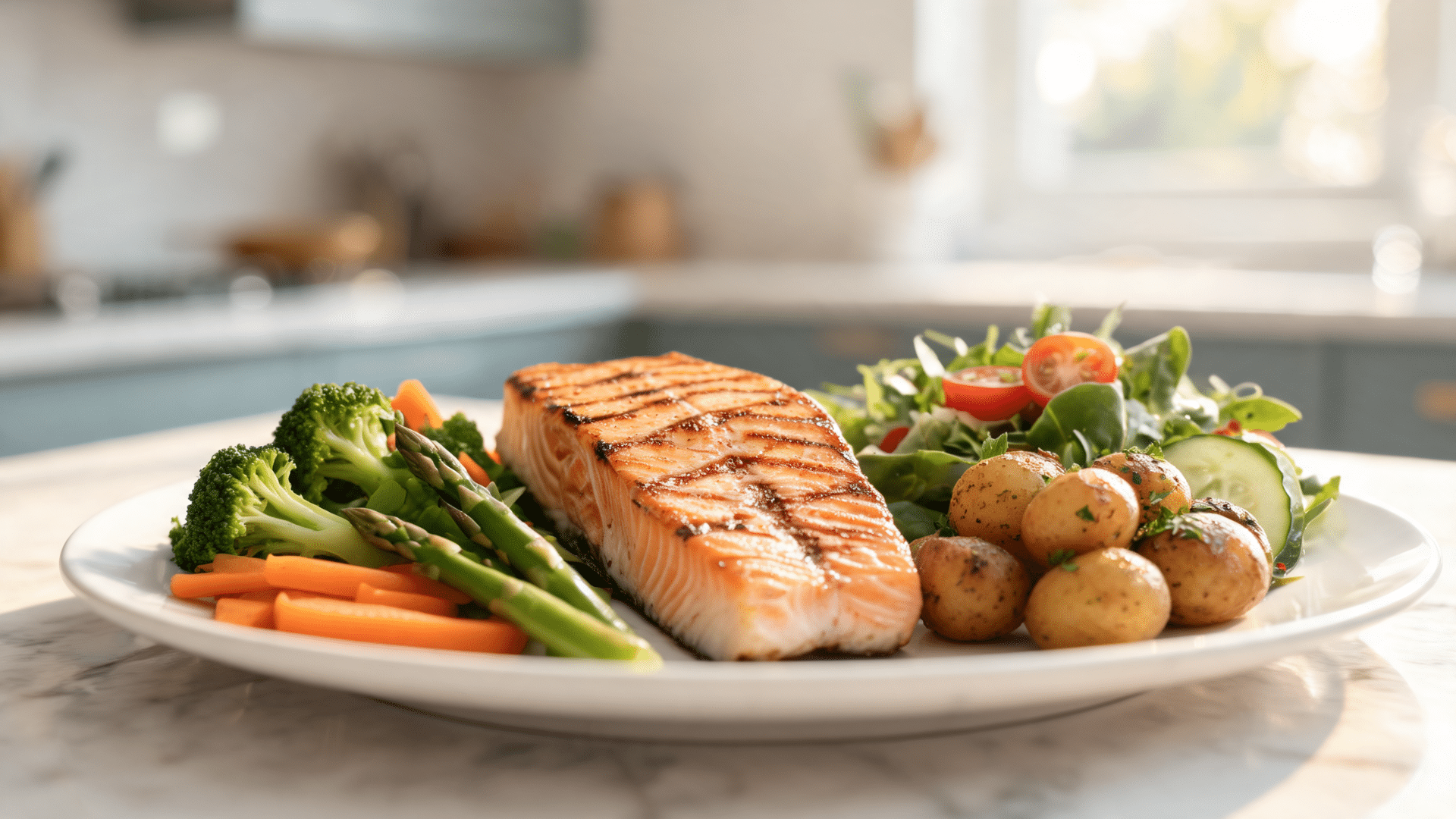
Coho sits between lean and rich, roughly 146-180 calories per 100g raw depending on sourcing. Not as fatty as Atlantic or chinook, not as light as pink.
That balance makes it a practical everyday option for balanced meals with vegetables, rice, or potatoes, and it pairs well with simple preparations that do not add much extra fat.
4. Chinook (King) Salmon
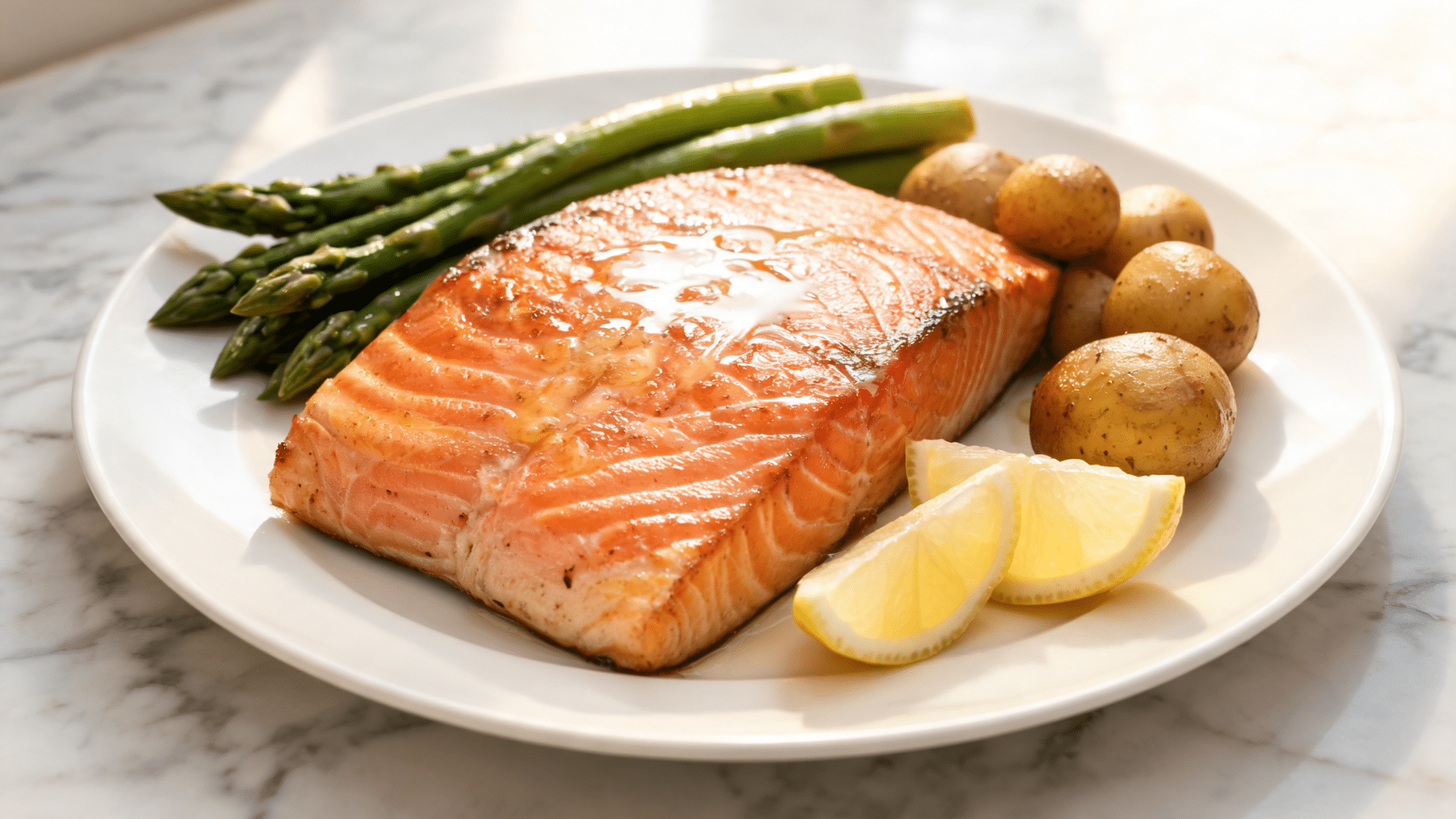
Chinook is the richest salmon type. Fat content can reach 15 g per 100g raw, pushing calories toward 220-230 kcal. That higher fat also means more omega-3s per serving, making it one of the most nutrient-dense options you can eat.
Simple cooking works best here because the fish itself has enough flavor and richness without needing heavy sauces.
5. Pink Salmon
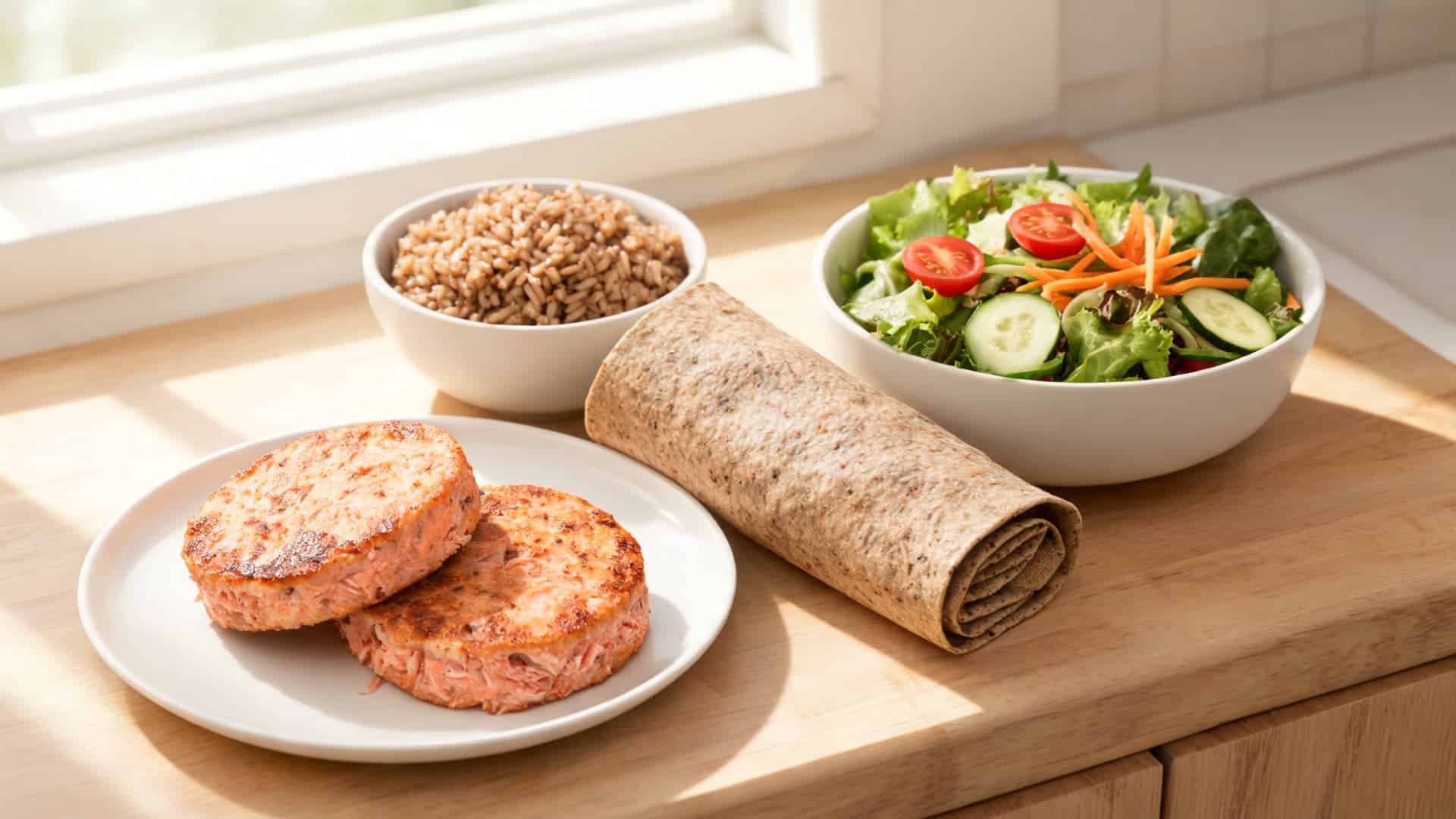
Pink salmon is the leanest common species, around 116-130 calories per 100g raw. It is the variety most often found in canned salmon, which makes it useful for quick, budget-friendly meals.
Lower fat means it tastes milder and less rich than Atlantic or chinook, but you still get solid protein and a good omega-3 baseline. Use it in patties, wraps, salads, and grain bowls.
6. Canned Salmon
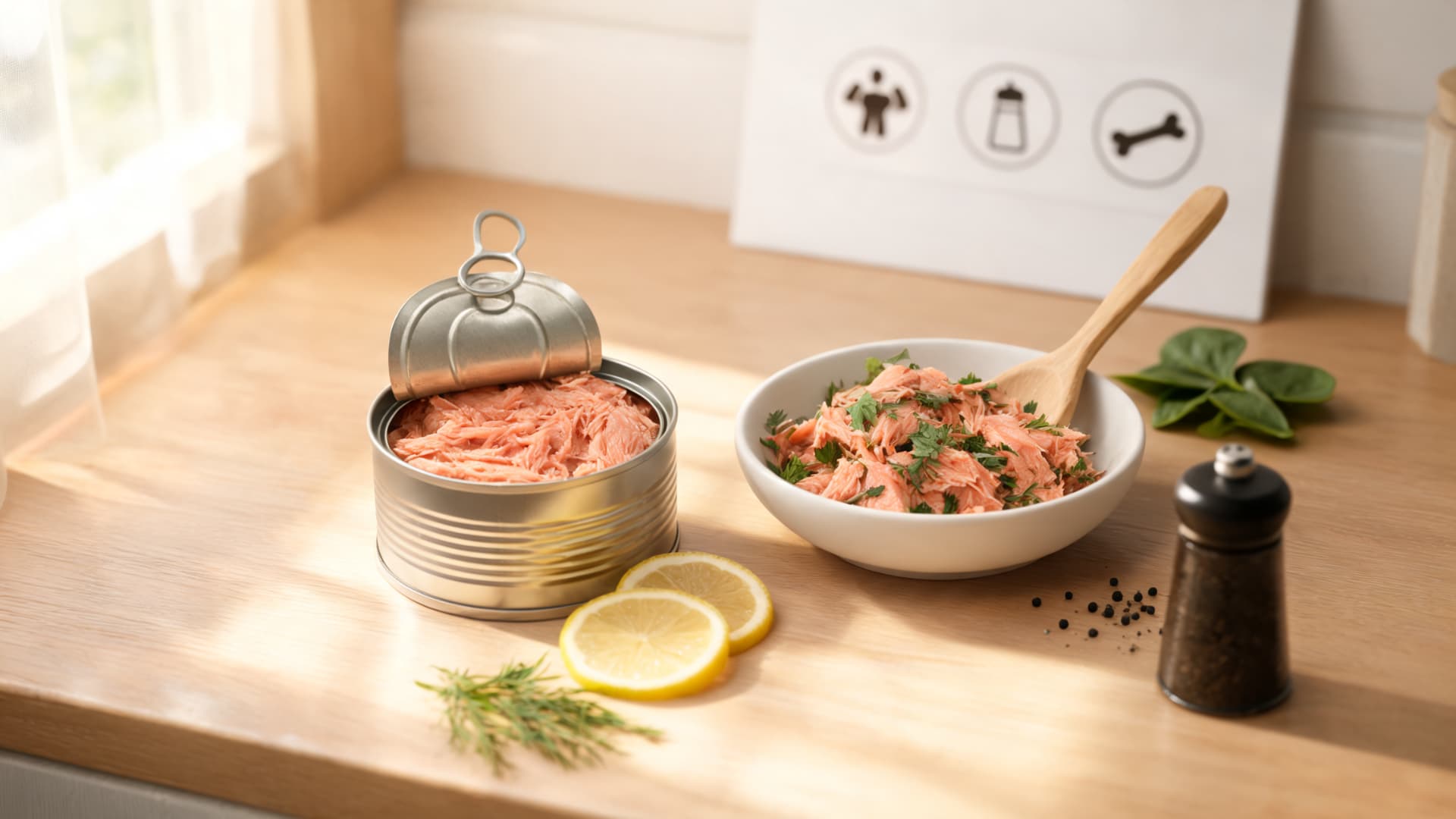
Canned salmon is nutritious and affordable, but the sodium level is the number to watch. Brands vary widely: some pack 400-600mg sodium per serving, others stay well below 200mg.
Cans that include soft edible bones add a meaningful calcium boost, sometimes 15-25% DV per serving. Check the label before buying, especially if you are managing blood pressure or sodium intake.
| Safety Note: People managing hypertension or on a sodium-restricted diet should choose “no salt added” canned salmon varieties and rinse before using to further reduce sodium content. |
7. Smoked Salmon

Smoked salmon should not be tracked the same way as fresh salmon. Curing with salt before smoking can push sodium levels to 600-1,000mg per 100g. Calories are moderate (about 117-140 per 100g), protein is good, but the salt load makes portion size relevant. Use it in smaller amounts on eggs, toast, or bowls, and check the package serving size if sodium is a concern for you.
That covers the most common types you will find in US grocery stores. The next factor that shifts the numbers just as much as species is how the salmon is cooked.
How Cooking Method Changes Salmon Calories
Plain salmon is predictable. What you add to it during cooking is where tracking breaks down.
| Cooking Method | Calorie Impact | What to Watch |
| Baked (plain) | Minimal change | Oil or butter added before baking |
| Grilled (plain) | Minimal change | Marinade or glaze adds sugar and calories |
| Pan-seared | Moderate rise | Cooking oil absorbs into fish; 1 tbsp olive oil adds 120 cal |
| Air-fried | Low; easy to track | Coating or spray oil can add 30-80 extra calories |
| Breaded or battered | Higher | Coating adds carbs, fat, and significantly more calories |
| Teriyaki glaze | Higher | Sugar in sauce; 2 tbsp teriyaki = 30-60 added calories |
| Smoked (pre-processed) | Not a calorie issue | Sodium is the primary concern |
One practical habit: measure the oil you use at least once. Most people underestimate how much cooking fat absorbs into the fish, and 1 tablespoon of olive oil adds 120 calories that never show up in a plain salmon entry.
Health Benefits of Salmon
The salmon nutrition profile explains why registered dietitians recommend it consistently, but the specific mechanisms are worth understanding so you know what you are actually getting from regular consumption.
1. Heart Health
EPA and DHA, the two long-chain omega-3 fatty acids in salmon, have well-documented effects on cardiovascular risk markers.A 2025 review published in Nutrients found that omega-3 fatty acids counteract inflammation in adipose tissue, inhibit immune cell infiltration, and improve lipid metabolism, particularly in the context of metabolic disease.
Regular consumption of fatty fish like salmon is also associated with lower triglyceride levels and improved blood vessel function. The American Heart Association recommends eating fatty fish at least twice a week for cardiovascular support.
If you are watching cholesterol specifically, the omega-3s in salmon are among the foods that actively support cholesterol balance rather than working against it.
2. Brain Function and Cognition
DHA makes up a significant share of the brain’s structural fat. Low DHA status has been linked to cognitive decline, and adequate intake through food sources like salmon is associated with maintained memory and processing speed in aging adults.
A 2025 analysis of 35 studies also found that eating at least 68g of fish daily correlated with meaningfully reduced depression risk. The B12 in salmon, which can cover 110-130% of daily value in a single serving, also supports neurotransmitter production.
3. Anti-Inflammatory Effects
Salmon’s omega-3 content suppresses the production of pro-inflammatory compounds, which matters for conditions linked to chronic systemic inflammation such as arthritis, metabolic syndrome, and cardiovascular disease.
Astaxanthin, the carotenoid that gives wild salmon its deep red color, adds a second anti-inflammatory layer by neutralizing free radicals. These two compounds working together is one of the reasons salmon shows up consistently in anti-inflammatory diet protocols.
4. Weight Management and Satiety
High-quality protein increases satiety hormones and suppresses ghrelin, the hunger signal, more effectively than equivalent carbohydrate or fat calories.
Salmon’s protein and fat combination keeps people full longer than leaner proteins paired with simple carbohydrates. Omega-3s may also support fat metabolism, though the evidence for this effect in humans is still developing.
5. Bone and Vision Support
Salmon provides vitamin D, selenium, phosphorus, and vitamin A. Vitamin D is the one most people fall short on, and a single serving of wild-caught salmon can cover close to 100% of the daily recommended value. Selenium acts as a cofactor in antioxidant enzymes that protect tissue integrity, including eye tissues.
Vitamin A supports retinal function and low-light vision. These are not secondary benefits. They are clinically meaningful for people who do not get adequate sun exposure or eat a varied enough diet.
Those benefits are well-documented, but there are also a few considerations worth knowing before increasing salmon intake significantly.
Potential Risks and Considerations
- Trace contaminants: Salmon may contain small levels of mercury or PCBs depending on source. Wild Pacific salmon generally tests lower for contaminants than some farmed sources. The FDA considers salmon a lower-mercury fish and safe to eat 2-3 servings weekly.
- High sodium in processed forms: Smoked and canned salmon often contain significant added salt. Track sodium separately if you are managing blood pressure.
- Fish allergies: Salmon is a common allergen. Reactions range from mild to severe. If you are new to eating salmon, introduce it in a small portion first.
- Blood-thinning medications: High omega-3 intake from food sources is generally safe, but if you take anticoagulants such as warfarin, discuss increased fish consumption with your prescribing physician before making it a daily habit.
For most healthy adults, two to three servings of salmon per week poses no meaningful risk and delivers clear nutritional benefit. These considerations mostly apply at higher intake levels or in specific clinical situations.
Common Tracking Mistakes With Salmon Nutrition Facts
These are the errors I see most often when clients bring in their food logs. Each one silently throws off accuracy.
- Mixing raw and cooked entries: A cooked 4 oz fillet started as roughly 5 oz raw. Use the entry that matches how you weighed it.
- Skipping cooking oil: Pan-searing with two teaspoons of oil adds approximately 80 extra calories that a plain salmon entry will not capture.
- Using the wrong species: Atlantic farmed and sockeye wild have meaningfully different fat and calorie profiles. Species matters when you are counting closely.
- Ignoring sodium in smoked and canned: These can run 400-1,000mg sodium per serving. If you are managing salt intake, that number needs to be tracked separately.
- Guessing restaurant portions: A restaurant salmon fillet is typically 6-8 oz, not the 3-4 oz entry you select in an app. Adjust accordingly.
- Not counting sauce: Teriyaki, creamy dill, or butter-based sauces need separate entries. They do not appear in a plain salmon log.
Frequently Asked Questions
Does salmon lose protein when cooked?
No, salmon does not lose protein when cooked. Heat mainly removes water, which makes protein appear more concentrated per gram. The total protein in the fillet remains almost unchanged, so cooked salmon still delivers the same nutritional value as raw salmon when portion size is considered correctly.
Is salmon safe to eat every day?
Salmon can be eaten daily by most healthy people, but moderation is usually recommended. Dietary guidelines suggest 2–3 servings per week to balance nutrients like omega-3s while reducing exposure to contaminants such as mercury or PCBs that may be present in small amounts depending on the source.
Why does salmon sometimes taste oily or dry?
Taste and texture depend on fat content and cooking method. Fatty salmon like Atlantic tastes rich and oily, while lean varieties like pink salmon can feel dry if overcooked. High heat also reduces moisture, making texture firmer and less juicy than gently cooked salmon.
Can salmon be part of a low-calorie diet?
Yes, salmon fits well in low-calorie diets when portion size is controlled. Leaner types like sockeye or pink salmon work best. Avoiding excess oil, butter, and heavy sauces is important, as these add more calories than the salmon itself and can double total meal energy content.
Does farmed salmon have more omega-3 than wild salmon?
Farmed salmon often contains similar or slightly higher omega-3 levels because of controlled feed diets. Wild salmon has a more natural nutrient profile, but both provide strong EPA and DHA content. The difference is usually small and not significant for most dietary needs or health goals.
What is the best way to measure salmon for tracking accuracy?
The most accurate method is weighing salmon raw before cooking and logging it using raw nutrition data. This avoids errors caused by water loss during cooking. If weighed after cooking, use cooked entries to maintain consistency and prevent calorie miscalculations in tracking apps.
Final Verdict
Salmon is simple on the surface, but the nutrition changes quickly once you look at species, portion size, and cooking style together.
I’ve shown you how wild and farmed salmon differ, why cooked weight isn’t the same as raw, and how oils or sauces can quietly change your totals.
When you understand these basics, salmon nutrition facts become much easier to use in real tracking instead of guessing between conflicting entries. I also want you to remember that consistency matters more than perfection when logging meals.
If you apply even a few of these habits, your daily numbers will become far more reliable. Try using these tips in your next meal and see how much cleaner your tracking feels.
Nutritional values based on USDA FoodData Central data. Individual values may vary by brand, preparation method, and serving size. Verify current data at fdc.nal.usda.gov.
Sources
USDA FoodData Central, “Fish, Atlantic salmon, farmed, raw.” https://fdc.nal.usda.gov
NIH National Institutes of Health, “Omega-3 Fatty Acids: Fact Sheet for Health Professionals.” 2024. https://ods.od.nih.gov/factsheets/Omega3FattyAcids-HealthProfessional/
USDA Agricultural Research Service, “Nutrient content and variability in newly obtained salmon data.” https://www.ars.usda.gov/ARSUserFiles/80400525/Articles/EB07_Salmon.pdf
American Heart Association, “Fish and Omega-3 Fatty Acids.” https://www.heart.org/en/healthy-living/healthy-eating/eat-smart/fats/fish-and-omega-3-fatty-acids