














Does drinking water help your skin, or is that glowing complexion promise just a myth? I know how confusing it feels when everyone claims H2O is a miracle cure, yet your mirror says otherwise.
The reality is that extra hydration can’t fix structural issues like acne or wrinkles overnight. This guide cuts through the internet noise to show you exactly how water intake impacts your skin barrier at a cellular level.
You will learn the crucial difference between dry and dehydrated skin, discover what fluid changes can actually achieve, and gain practical habits to build a routine that delivers genuine, lasting results.
Does Drinking Water Help Your Skin?
Drinking water supports your skin, but not in the glowing overnight way most people expect. The real answer is more specific: adequate hydration helps your body function normally, including skin cell function, nutrient delivery, and circulation.
Many people also ask, Is drinking water good for your skin, and the honest answer is yes, but only within limits. Water supports hydration, circulation, and normal skin function, especially if you are not drinking enough.
But once your body is already hydrated, extra water will not automatically fix acne, wrinkles, rough texture, or barrier damage. Knowing that distinction matters, because it changes what you should actually prioritize.
| Disclaimer: This article is for informational and educational purposes only. It does not constitute medical advice and should not replace consultation with a qualified healthcare provider. Always consult a doctor before making changes to your diet, supplement routine, or health practices. |
| Topic | Hydration and skin health |
| Primary Mechanism | Hydration supports circulation, nutrient transport, and stratum corneum water content |
| Evidence Level | Preliminary to moderate — limited large-scale human trials |
| Who Benefits Most | People who are mildly dehydrated or have low habitual fluid intake |
| Who Won’t See Change | People already adequately hydrated; those with barrier damage, acne, or aging-related changes |
What the Evidence Actually Says
Most of the popular claims about water and skin are not well-supported by rigorous clinical research. A review noted in the dermatology literature found just one controlled study specifically examining how water intake affects skin appearance.
That study, published in Clinical, Cosmetic and Investigational Dermatology (2015), found that participants who increased water consumption over 30 days showed measurable improvement in skin density and hydration, but the effect was most notable in people who had been chronically underdrinking.
A separate review of six studies concluded that increasing fluid intake improved hydration of the stratum corneum, the outermost skin layer, and reduced surface dryness and roughness. That is meaningful. But the gains came from correcting dehydration, not from drinking more water on top of adequate intake.
Dermatologists at Rush University Medical Center and the Cleveland Clinic have both noted the same ceiling: once you are adequately hydrated, more water does not keep plumping skin or removing wrinkles. What produces those results is a strong skin barrier, sunscreen, and targeted skincare ingredients, not additional fluid volume.
How Hydration Affects Skin at the Cellular Level
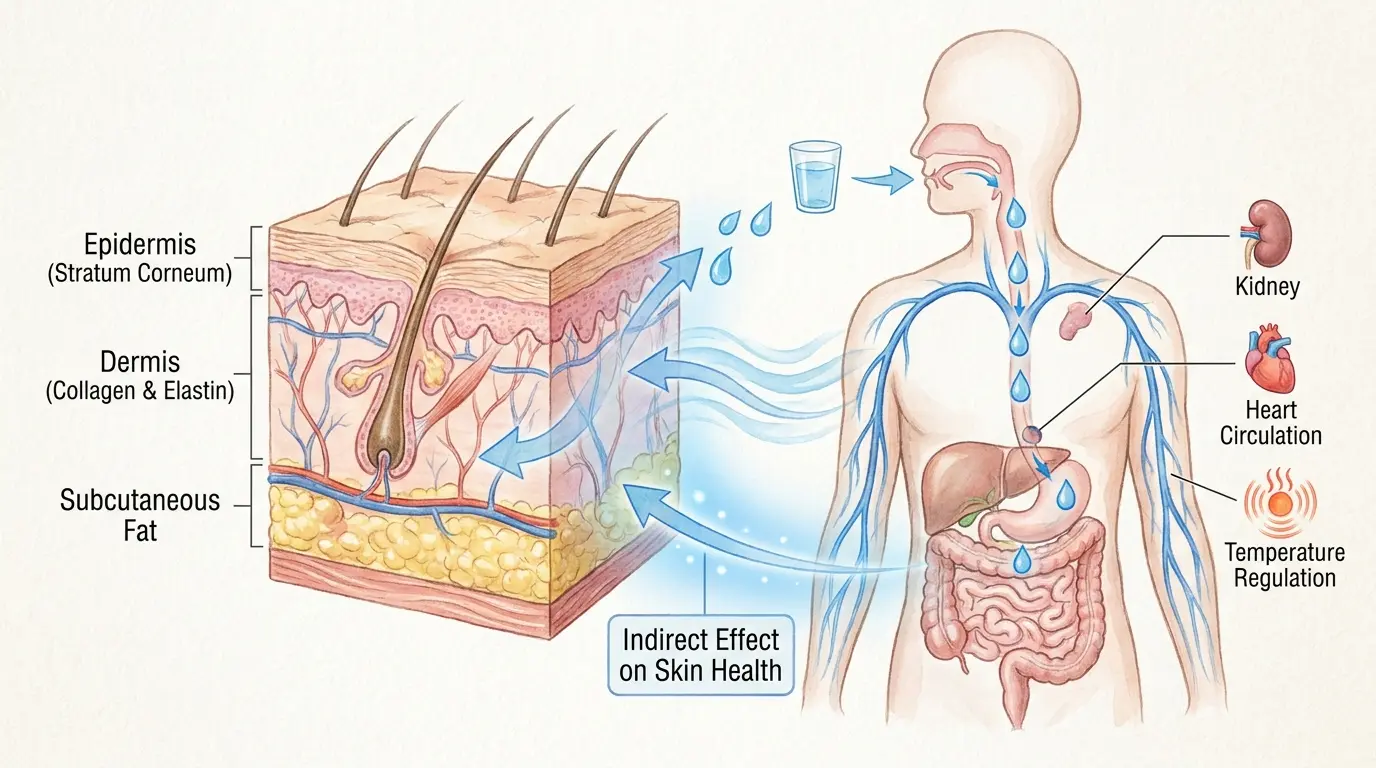
Skin is made up of three layers. The deepest is subcutaneous fat. The middle is the dermis, where collagen and elastin live. The outermost is the epidermis, and its surface layer, the stratum corneum, is what you actually see and touch.
The stratum corneum needs adequate water content to stay flexible and intact. When it loses too much water, either from low intake or from a compromised barrier, it feels tight, looks dull, and can develop fine surface lines that appear sharper than usual.
Water consumed orally reaches skin cells indirectly. It travels through the digestive system, enters the bloodstream, and is distributed to organs in priority order.
Skin is not at the top of that queue. What oral hydration does support is circulation, which delivers oxygen and nutrients to skin cells, kidney function, which clears waste, and normal temperature regulation. All of these have downstream effects on how skin looks over time.
Dry Skin vs. Dehydrated Skin: Two Different Problems
This distinction matters practically because the fix is different for each condition.
| Skin Concern | Root Cause | Common Signs | What Actually Helps |
| Dry skin | Insufficient oil production or barrier damage | Flaking, roughness, itching, red patches | Cream or ointment moisturizer, gentle cleanser, ceramide repair |
| Dehydrated skin | Insufficient water content in the stratum corneum | Tightness, dullness, fine lines look more prominent | Fluid intake, humectants like glycerin and hyaluronic acid, less aggressive cleansing |
Dry skin and dehydrated skin can occur together, but they respond to different interventions. Oily skin can still be dehydrated, which surprises many people. If your skin feels tight or looks flat immediately after cleansing, you are more likely dealing with dehydration than dryness.
If it flakes and feels rough regardless of how much you drink, barrier damage is the more likely driver, and moisturizer will do more than water intake ever will.
What Drinking Water Can and Cannot Do for Your Skin?
Keeping expectations accurate here is the most useful thing this article can do.
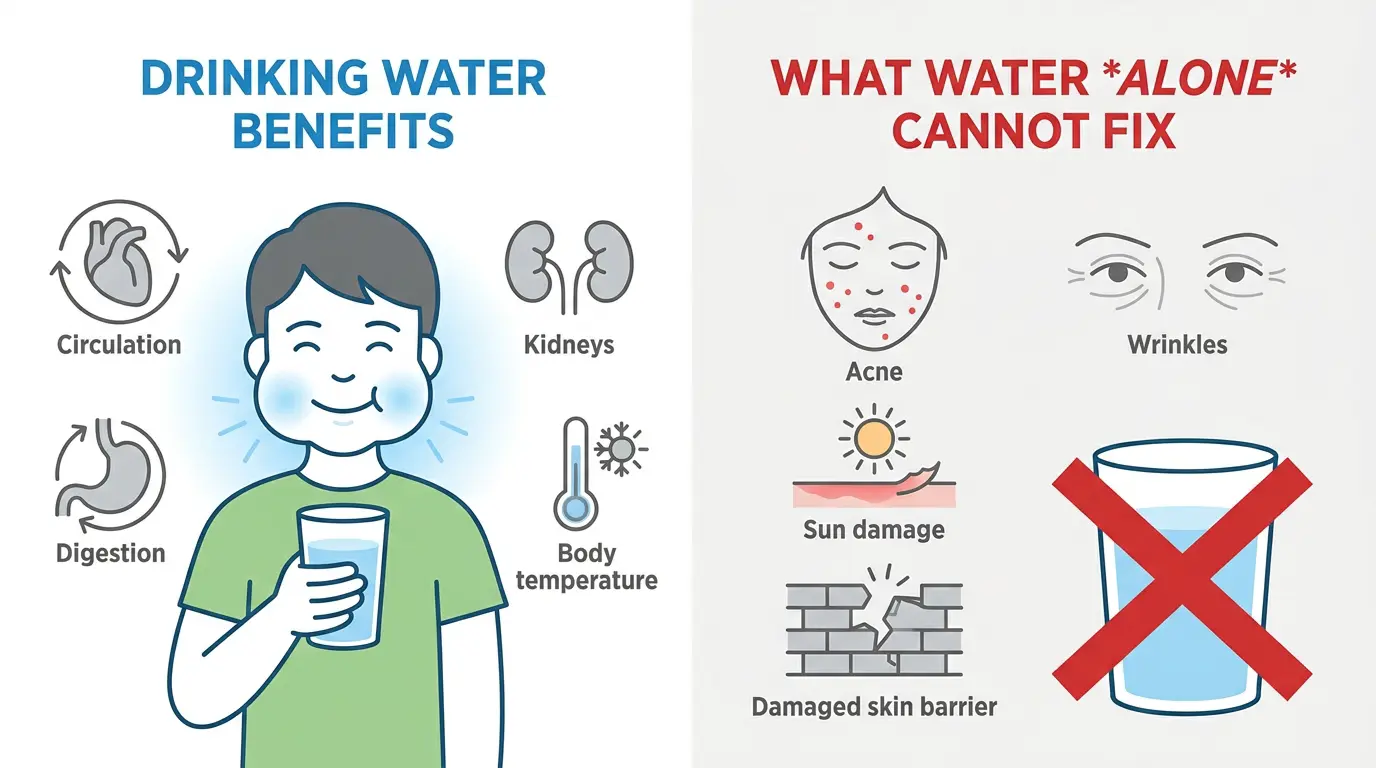
What Water Can Support
Consistent daily fluid intake supports circulation and nutrient delivery to skin cells. A 2015 study found improved skin hydration in participants who increased water intake from a low baseline.
Water also supports body temperature regulation, kidney function, and normal digestion, all of which affect how your skin looks over time. For people who are genuinely underhydrated, improving intake can reduce the tight, dull appearance associated with stratum corneum water loss.
What Water Cannot Fix Alone
Acne is driven by sebum production, C. acnes bacteria, follicle blockage, and inflammation, not dehydration. Wrinkles result from collagen and elastin breakdown, sun damage, and muscle movement, none of which water reverses.
A damaged skin barrier needs ceramide-containing products and gentler cleansing habits, not more glasses of water. Sun damage accumulated over years requires topical retinoids, vitamin C serums, and consistent SPF protection. Water supports general health. It does not replace targeted skincare.
How Much Water Do You Actually Need for Skin Health
There is no single number that guarantees skin benefits. The National Academies of Sciences, Engineering, and Medicine suggest a general daily fluid intake of about 3.7 liters for men and 2.7 liters for women from all sources combined, including food. Roughly 20% of total water intake typically comes from food, particularly fruits and vegetables.
For practical purposes, urine color is a useful real-time signal. Pale yellow generally indicates adequate hydration. Dark yellow, especially consistently throughout the day, suggests you need more fluids.
Fully clear urine throughout the day can mean you are overdrinking, which carries its own risks: excessive water intake in a short window can dilute blood sodium levels, a condition called hyponatremia, which is rare but dangerous.
Not all water sources are equal either; spring water mineral content varies considerably between brands and regions, which affects its overall contribution to hydration.
The goal for skin is not to maximize water intake. It is to stay adequately hydrated so your body, including your skin, can function normally.
Best Foods and Drinks for Skin Hydration
Hydration comes from more than plain water, and the nutrients in food support skin health in ways water alone cannot.
| Source | Skin Hydration Role | Notes |
| Plain water | Primary daily fluid source | Calorie-free, simplest choice |
| Herbal tea | Hydrating variety without caffeine concerns | Avoid added sugar |
| Unsweetened sparkling water | Hydrates similarly to still water | Good for those who struggle with plain water |
| Cucumber, watermelon, oranges | High water content plus antioxidants | Also provides vitamin C for collagen support |
| Fatty fish, walnuts, avocado | Omega-3s and healthy fats support the lipid layer of the skin barrier | Not hydrating per se, but critical for barrier integrity |
| Bell peppers, strawberries, citrus | Vitamin C supports collagen synthesis | Consistent daily intake matters more than any single dose |
Some people reach for vitamin water as a hydration upgrade, but the added sugar in most formulas offsets the nutrient benefit for everyday use. Plain water or water-rich whole foods remain the better default for skin hydration goals.
Collagen production requires adequate vitamin C, zinc, and protein. These come from food, not from drinking more water. If your diet is consistently low in these nutrients, no amount of hydration will compensate for the structural deficit in your skin.
A note on fats specifically: the skin barrier relies on a healthy lipid layer, and diets dominated by inflammatory seed oils can compromise that layer over time, contributing to dryness and increased transepidermal water loss regardless of fluid intake.
Skincare Habits That Work Alongside Good Hydration
Hydration from within works best when paired with habits that protect moisture at the surface. These are the interventions dermatologists point to before recommending anything else.
1. Use a Gentle Cleanser

Strong surfactants and fragrance-heavy cleansers strip the natural oils that hold moisture in the stratum corneum. Switching to a fragrance-free, pH-balanced cleanser is often the single most impactful change for people with dry or easily irritated skin.
The American Academy of Dermatology recommends lukewarm water and a mild cleanser rather than hot water and foaming products for barrier-sensitive skin. If you prefer warm water at the start of your routine, the benefits of hot water internally are well-documented, but hot water topically on skin works differently and tends to strip the barrier rather than support it.
2. Apply Moisturizer Immediately After Washing
Moisturizer applied within two to three minutes of washing helps trap the residual water on the skin surface before it evaporates.
Look for products containing glycerin or hyaluronic acid, which are humectants that draw water into the skin, combined with dimethicone or shea butter, which are occlusives that seal it in. For very dry skin, thicker creams or ointments with ceramides provide better barrier support than lightweight lotions.
3. Wear Sunscreen Every Day
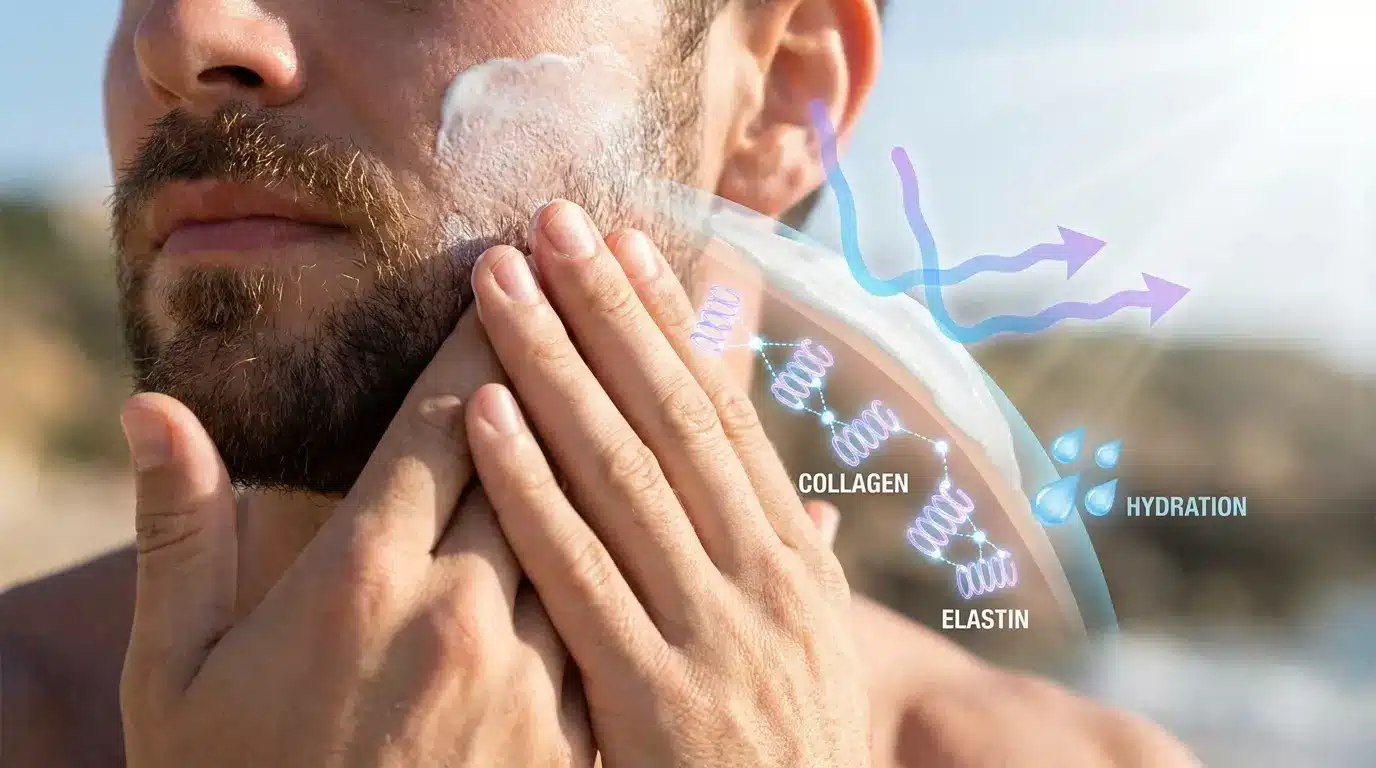
UV exposure degrades collagen and elastin, weakens the skin barrier, and accelerates transepidermal water loss.
Broad-spectrum SPF 30 or higher applied daily does more to preserve healthy-looking skin over the long term than any amount of increased water intake. This is the most evidence-backed skin intervention available.
4. Consider a Humidifier in Dry Environments

Indoor heating in winter and air conditioning in summer both lower ambient humidity, pulling moisture from the stratum corneum even when you are drinking adequate fluids.
A room humidifier set between 40% and 60% relative humidity can meaningfully reduce transepidermal water loss, particularly during sleep.
Signs You May Not Be Drinking Enough Water
These signals are worth paying attention to before focusing exclusively on skincare interventions. Dehydration affects the whole body, and skin changes are often one of the later signs to appear.
- Consistently dark yellow urine, especially in the morning and throughout the day
- Dry mouth or a sticky sensation that persists
- Headaches that improve after drinking fluids
- Fatigue or low energy without an obvious cause
- Constipation or infrequent bowel movements
- Skin that looks dull and feels tight, particularly after light activity or in air-conditioned spaces
If these symptoms are frequent or severe, consult a healthcare provider rather than adjusting fluid intake on your own. Some of these signs overlap with other conditions, including thyroid issues and kidney function changes, that require evaluation rather than more water.
When to See a Dermatologist
Persistent dryness, cracking, or skin that bleeds, burns, or itches without relief from over-the-counter moisturizers warrants a dermatology visit.
The same applies to acne that is leaving scars, rashes that recur without explanation, or skin changes that appear alongside other symptoms like unexplained weight changes or fatigue. These patterns suggest an underlying condition rather than simple dehydration, and water will not resolve them.
Conditions like eczema, contact dermatitis, psoriasis, and rosacea all involve compromised skin barrier function and require clinical treatment. A dermatologist can diagnose the specific cause and recommend targeted interventions beyond general hydration advice.
Frequently Asked Questions
Does drinking water help with skin texture?
It can if dehydration is contributing to dullness or surface tightness. Adequate hydration supports normal stratum corneum function, which affects how light reflects off your skin. But texture problems caused by enlarged pores, acne scarring, or keratosis pilaris need topical treatments, not more water.
Does drinking water help with acne?
Indirectly and modestly. Adequate hydration supports immune function and normal body processes, which may have some effect on the skin environment. However, acne is primarily driven by sebum production, C. acnes bacteria, and inflammation. Water intake does not meaningfully address these root causes. If acne is your concern, see a dermatologist about topical retinoids, benzoyl peroxide, or prescription options.
Does drinking more water reduce wrinkles?
No, unless severe dehydration is making fine lines look more prominent than they otherwise would. Wrinkles caused by sun damage, collagen loss, and repetitive muscle movement are structural changes that water cannot reverse. Topical retinoids and consistent daily sunscreen are the most evidence-backed tools for this.
How much water should I drink for glowing skin?
There is no specific amount tied directly to skin appearance. The general guideline from the National Academies of Sciences is around 2.7 liters per day for women and 3.7 liters for men from all food and fluid sources. For skin, the target is avoiding dehydration, not maximizing intake. If your urine is pale yellow and you feel well, you are likely getting enough.
Is sparkling water as good as still water for skin hydration?
Yes. Unsweetened sparkling water hydrates the body just as effectively as still water. The carbonation does not reduce hydration. Flavored sparkling waters with added sugar or acidic flavorings are a different matter and should not be your primary hydration source.
Does coffee dehydrate your skin?
Moderate coffee intake, roughly two to three cups per day, does not meaningfully dehydrate the body. Studies show that caffeinated beverages still contribute to total daily fluid intake. Very high caffeine consumption may have a mild diuretic effect in some people, but a morning or afternoon cup of coffee is not going to dry out your skin.
Can drinking water remove dark circles under the eyes?
Dehydration can make dark circles look more pronounced by causing the under-eye skin to appear sunken and translucent. Improving hydration may help slightly in that case. But most dark circles are caused by genetics, hyperpigmentation, or thin skin showing underlying blood vessels, none of which respond significantly to fluid intake.
| Note: These FAQ answers reflect the current weight of dermatological research and clinical guidance. Individual responses vary based on skin type, genetics, climate, and baseline hydration habits. |
Final Verdict: Does Drinking Water Help Your Skin?
Healthy-looking skin depends on more than what you drink each day. From what I’ve seen, the best results come when you combine good hydration with smart skincare habits.
If you’re asking, Does drinking water help your skin, the answer is yes, but it works best as part of a bigger picture. Drinking enough water can support normal skin function and help if dehydration is making your skin look dull or tight.
At the same time, moisturizer, sunscreen, gentle cleansing, healthy foods, and a strong skin barrier all play important roles. Knowing this helps you focus on what truly works.
Try these tips, and share your experience or check out my related skincare guides for more help.
Sources
Palma L, Marques LT, Bujan J, Rodrigues LM, “Dietary water affects human skin hydration and biomechanics.” Clinical, Cosmetic and Investigational Dermatology, 2015. https://doi.org/10.2147/CCID.S86822
National Academies of Sciences, Engineering, and Medicine, “Dietary Reference Intakes for Water, Potassium, Sodium, Chloride, and Sulfate.” 2005. https://www.nationalacademies.org
American Academy of Dermatology Association, “Dry Skin: Tips for Managing.” https://www.aad.org/public/everyday-care/skin-care-basics/dry/skin-care-secret-dry-skin
Verdier-Sevrain S, Bonte F, “Skin hydration: a review on its molecular mechanisms.” Journal of Cosmetic Dermatology, 2007. https://doi.org/10.1111/j.1473-2165.2007.00300.x