








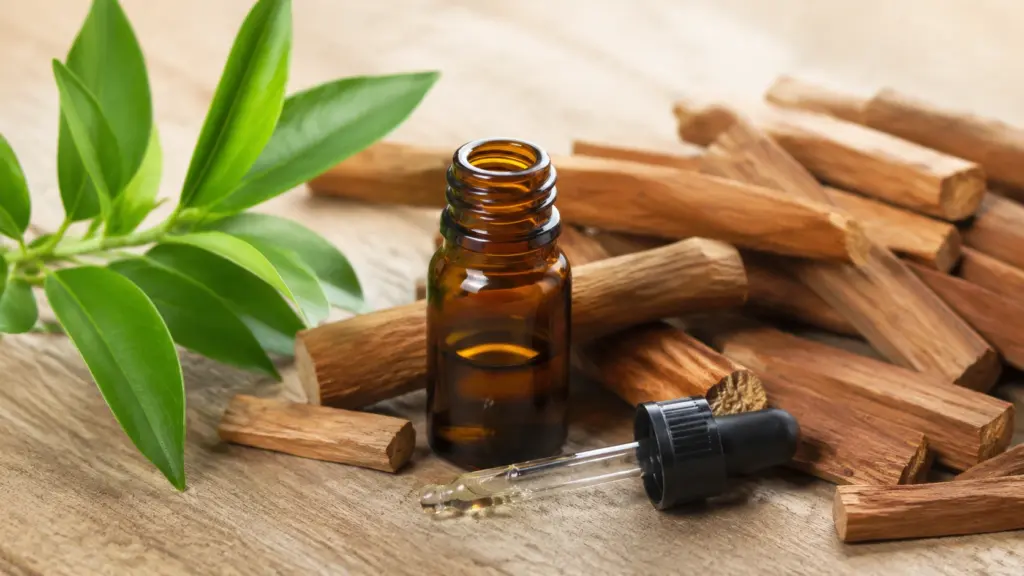

Sandalwood oil carries two primary active compounds, alpha-santalol and beta-santalol, that account for 70 to 90 percent of authentic oil and drive most of its documented skin benefits. Knowing that before you buy makes every other decision easier.
| Common Name | Scientific Name | Active Compounds | Traditional Use | Evidence Level |
| Indian Sandalwood | Santalum album | Alpha-santalol, beta-santalol (70-90%) | Ayurvedic skin treatment, wound healing, anti-inflammatory | Moderate to Strong |
| Australian Sandalwood | Santalum spicatum | Alpha-santalol, farnesol, sesquiterpenes | Skin conditioning, antimicrobial, calming | Preliminary to Moderate |
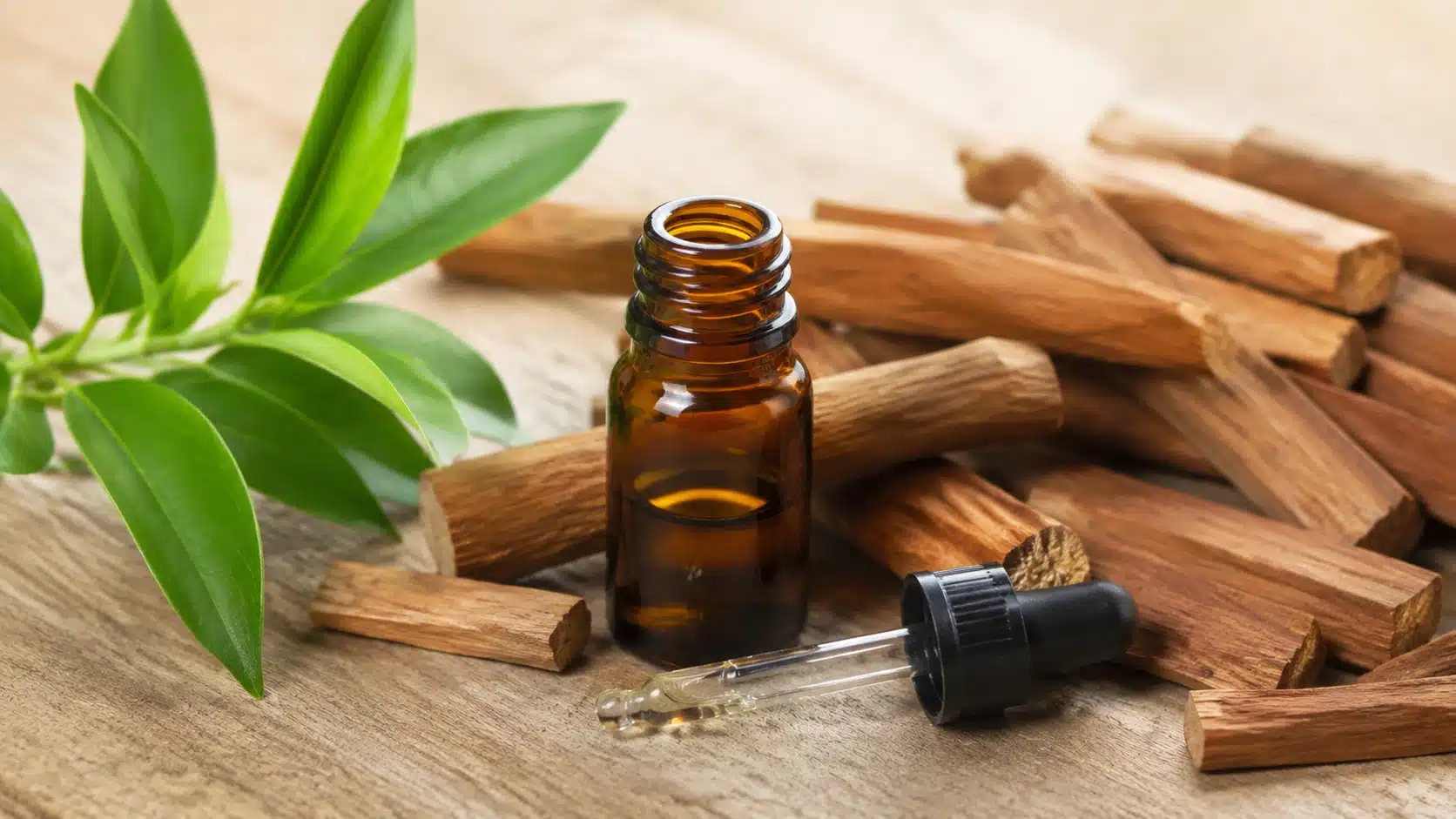
The oil is extracted by steam distillation from the dense heartwood of mature trees, typically 15 to 30 years old. That slow growth is why genuine sandalwood oil is expensive and frequently adulterated.
Indian sandalwood (Santalum album) has the highest alpha-santalol concentration and the strongest skin research behind it.
Australian sandalwood (Santalum spicatum) is more sustainably available and works well for sensitive skin that finds the Indian variety too potent. Both are legitimate options; the key is buying the right one for your skin’s tolerance.
The evidence for how these compounds interact with skin tissue is what separates sandalwood from most other aromatic oils. That chemistry is worth understanding before moving to application.
| Medical Disclaimer: This article is for informational purposes only and does not constitute medical advice, diagnosis, or treatment. The information provided is not a substitute for professional medical consultation. If you have a medical condition, are pregnant, or are taking medications, consult your healthcare provider before making any dietary or supplement changes. Individual results vary. |
The Chemistry of Sandalwood Oil for Skin: What the Active Compounds Actually Do
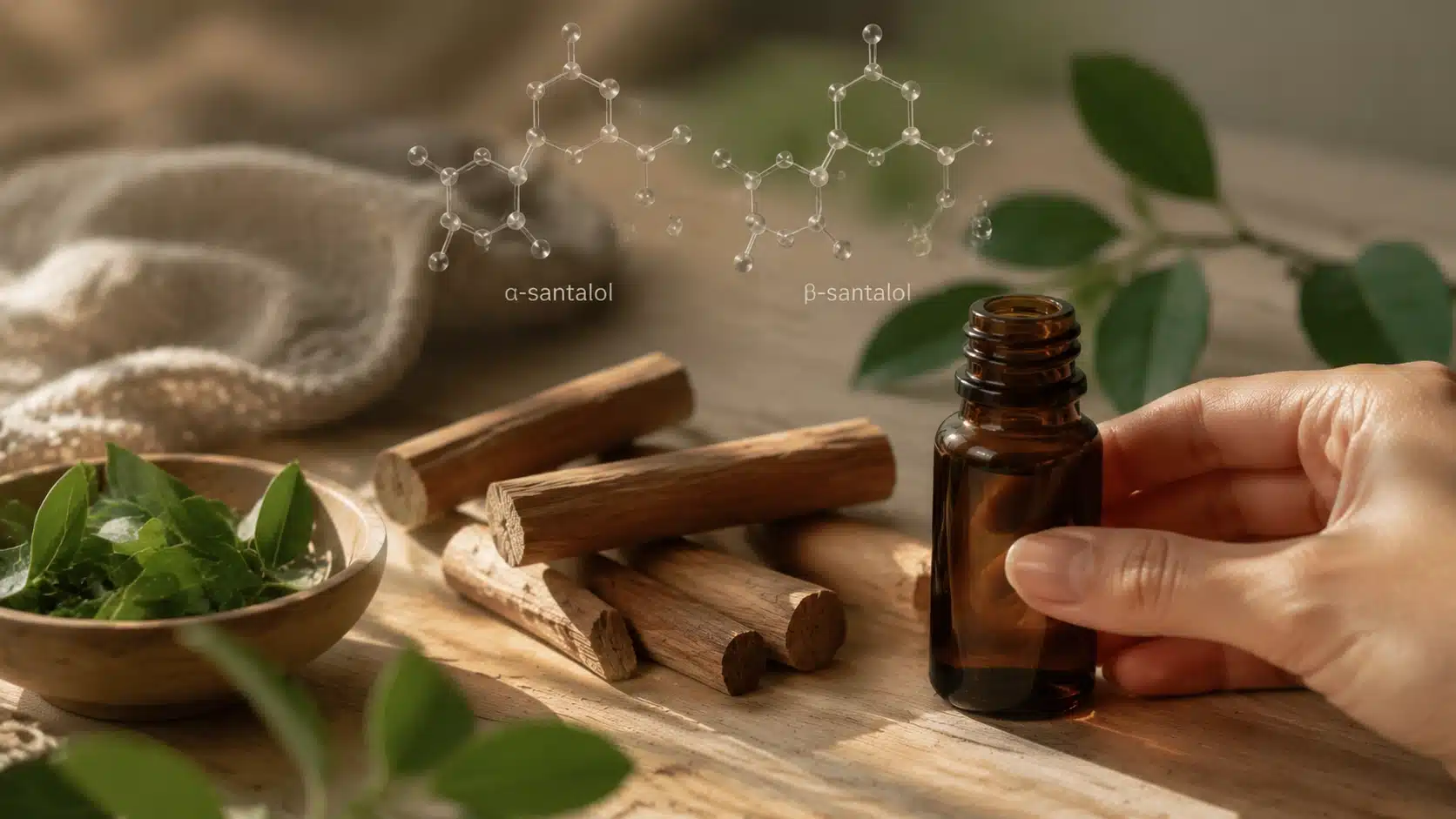
Alpha-santalol is the compound most studied for topical skin use. Research published in the Journal of Clinical and Aesthetic Dermatology (2018) found that Santalum album oil demonstrated significant anti-inflammatory, antimicrobial, and wound-healing activity in controlled studies.
Alpha-santalol works by inhibiting pro-inflammatory enzymes in skin tissue, which is why it produces measurable reductions in redness rather than just masking it.
Beta-santalol provides targeted antibacterial activity. In skin tissue models, it disrupts the environment that supports acne-causing bacteria without broadly disrupting the skin’s microbial ecosystem. That selectivity matters when comparing plant-based antimicrobials.
Lemongrass essential oil acts through a distinct antibacterial mechanism, primarily via citral, which makes it better suited for general surface use than for acne-focused applications, where microbiome preservation is a priority.
Beyond the two primary santalols, the oil also contains sesquiterpenes and other terpenoid compounds that function as emollients, filling in the lipid gaps between skin cells and slowing transepidermal water loss.
A 2021 study in Cosmetics (MDPI) found that Indian sandalwood oil exhibited superior antioxidant capacity compared to vitamin E (alpha-tocopherol) when tested against blue-light- and cigarette-smoke-induced oxidative stress in HaCaT cells.
A follow-up 2022 clinical study involving 22 subjects confirmed a dose-dependent reduction in oxidative stress markers at concentrations as low as 0.1 percent. These are not anecdotal claims. The evidence is specific, and the concentrations tested are achievable in a standard home dilution.
What makes the oil practically useful for skin is its molecular weight. It absorbs without leaving a greasy film and integrates with the skin barrier rather than sitting on top of it. That absorption profile is why so many carrier-oil blends use sandalwood as an active addition rather than a base.
Benefits of Sandalwood Oil for Skin
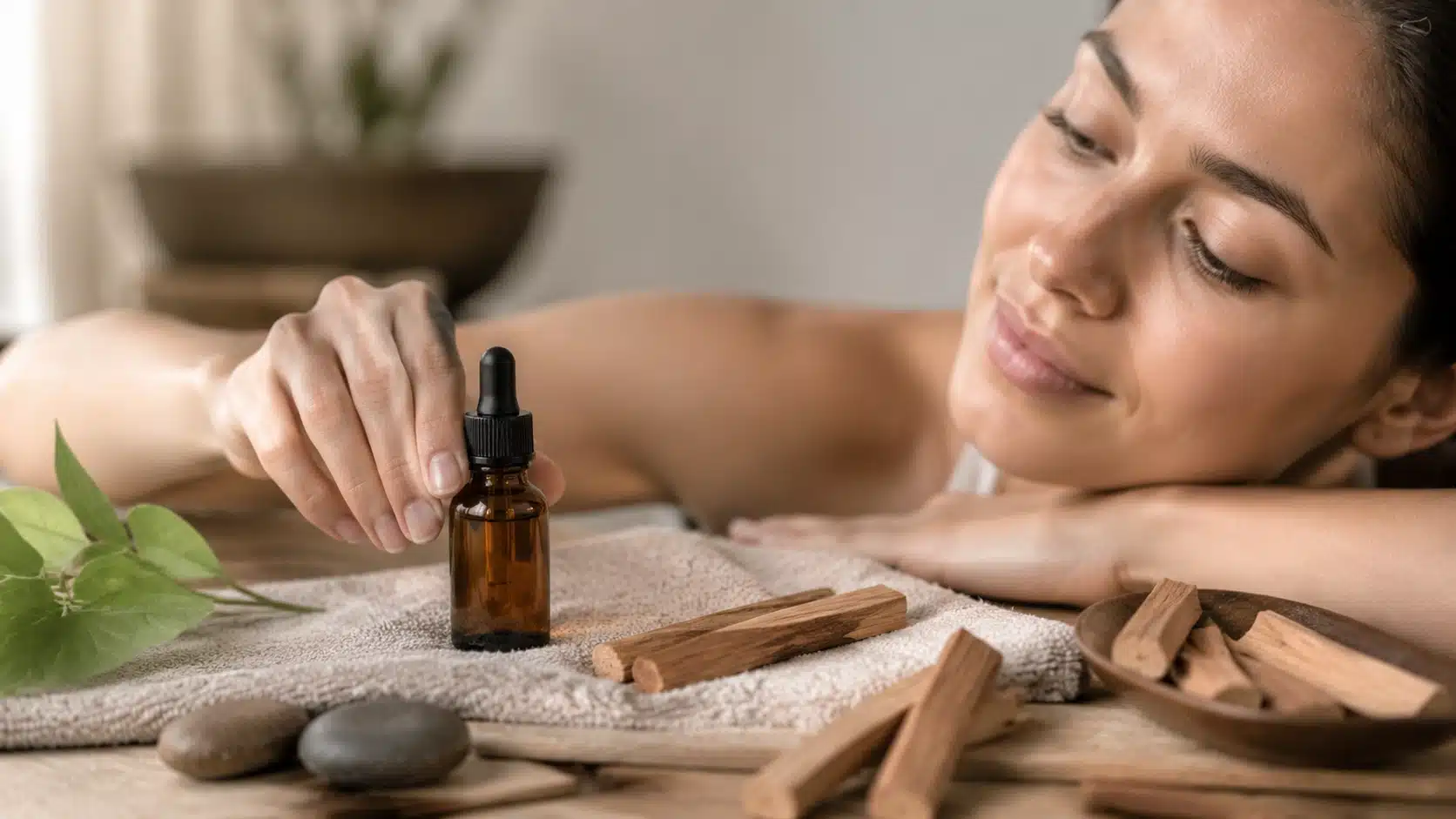
Sandalwood oil addresses several distinct skin concerns through the same core mechanisms. Understanding which benefit applies to your specific concern helps you use it with intention rather than optimism.
1. Reducing Inflammation and Redness
Alpha-santalol’s inhibition of pro-inflammatory enzymes makes it directly applicable to eczema flares, post-sunburn redness, and reactive skin. The relief comes from actual cellular activity in the tissue, not surface-level cooling.
Consistent use over 4 to 6 weeks tends to reduce baseline redness in people whose skin reacts frequently to environmental triggers or product ingredients.
2. Controlling Acne Without Stripping the Barrier
Beta-santalol’s antimicrobial activity targets acne-causing bacteria while leaving the broader skin microbiome intact. That is a meaningful difference from alcohol-based toners and high-acid treatments, which tend to over-strip and trigger compensatory oil production.
Sandalwood’s mild astringent quality tightens pores without the dryness or irritation cycle those actives can create. It is particularly well-suited as a spot treatment for sensitive, acne-prone skin.
3. Supporting Scar Fading and Texture Improvement
The oil’s role in wound healing has been documented in Ayurvedic practice for centuries, and current research on alpha-santalol’s anti-inflammatory action provides a mechanistic explanation. It supports the skin’s natural repair cycle, gradually reducing the visibility of post-acne marks and superficial scars over weeks of consistent use.
Among plant-based oils used for this purpose, helichrysum oil is the other commonly referenced option, though its mechanism centers on diketones rather than sesquiterpenes, making the two oils complementary rather than interchangeable for scar-focused routines.
4. Reinforcing Moisture Retention
The sesquiterpene fraction of sandalwood oil acts as an emollient, filling intercellular lipid gaps and reducing transepidermal water loss. Skin feels measurably softer within a few uses.
Over time, better moisture retention minimizes the appearance of fine lines and supports an overall more even and resilient surface. This is barrier support at the structural level, not temporary surface hydration.
5. Balancing Oil Production in Combination Skin
Applying oil to oily skin seems counterintuitive, but sandalwood’s sebum-regulating effect is fairly well-established in practice. When the skin barrier is compromised or dehydrated, oil glands overproduce sebum as a compensatory response.
Introducing a compatible emollient like sandalwood oil can signal the skin to reduce its own output. The result, for most people, is a more balanced T-zone with less midday shine rather than more.
6. Antioxidant Protection Against Environmental Stressors
The 2022 clinical study referenced above is worth noting here specifically. At concentrations as low as 0.1 percent, Indian sandalwood oil reduced squalene oxidation in human skin exposed to controlled pollution and blue light.
For anyone spending significant time in urban environments or in front of screens, that antioxidant layer is a practical addition to a morning routine, not just a theoretical one.
Each of these benefits operates through the same core biochemistry. The question is how to apply the oil so those mechanisms actually work rather than causing irritation instead.
How to Use Sandalwood Oil for Skin
Every method below starts from the same non-negotiable rule: never apply undiluted sandalwood essential oil directly to facial skin. One undiluted drop on reactive skin can cause contact dermatitis and barrier damage that takes longer to heal than any benefit the oil provides.
Always dilute to 1 to 2 percent, meaning 1 to 2 drops per teaspoon of carrier oil. Before using any method, patch test on your inner arm and wait 24 hours.
| Safety Note: Avoid sandalwood oil on broken skin, open pimples, active rashes, sunburned skin, or freshly exfoliated skin. Do not apply the same night you use high-concentration AHA/BHA exfoliants or prescription retinoids, as combining oil-based ingredients with strong actives can alter absorption rates and increase irritation risk. |
1. Daily Face Oil (Dry, Mature, or Combination Skin)
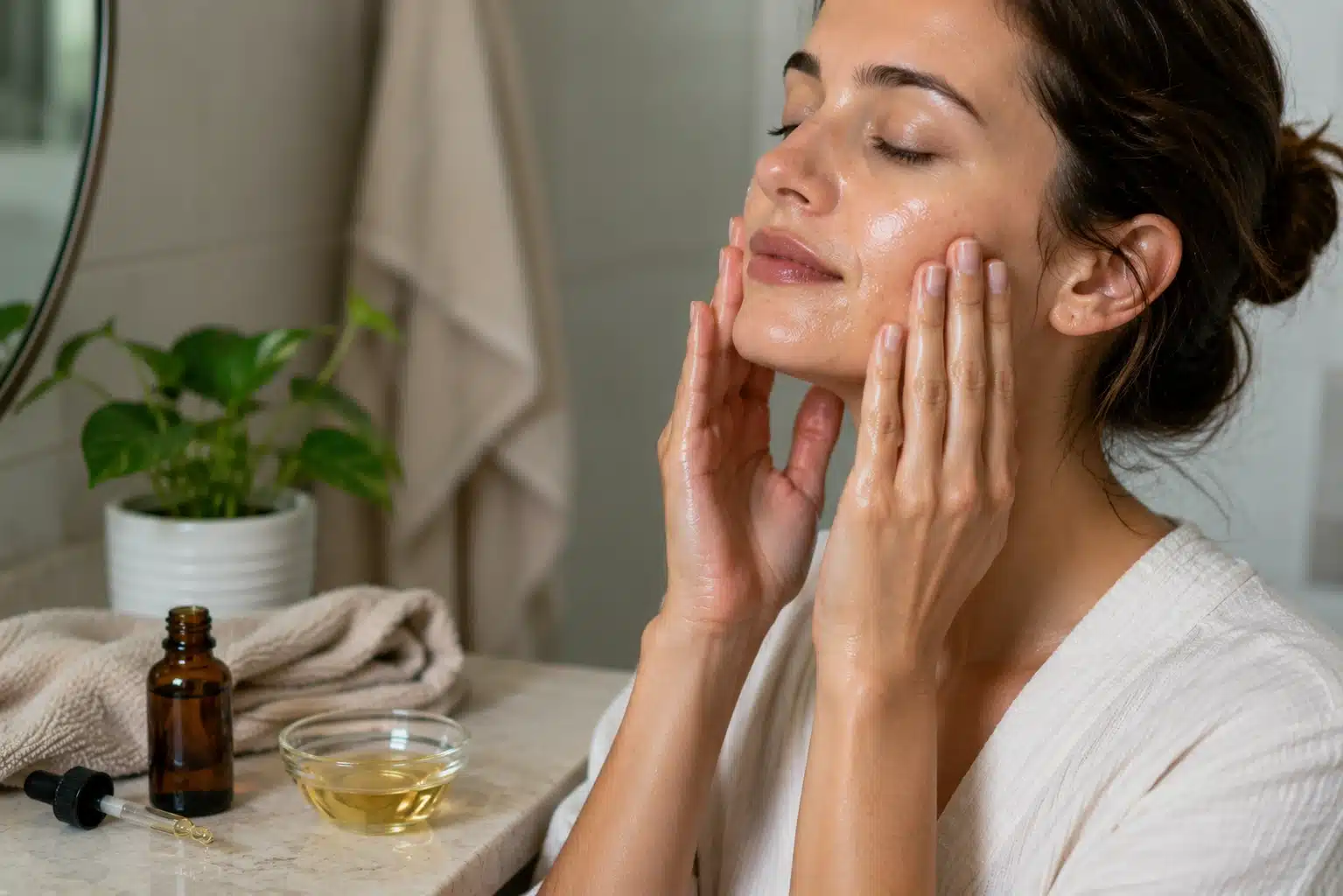
This is the most straightforward method and a good starting point for most skin types.
- Cleanse your face and pat skin dry, leaving it slightly damp.
- Add 1 teaspoon of jojoba, sweet almond, or grapeseed oil to your palm.
- Add 1 drop of sandalwood essential oil.
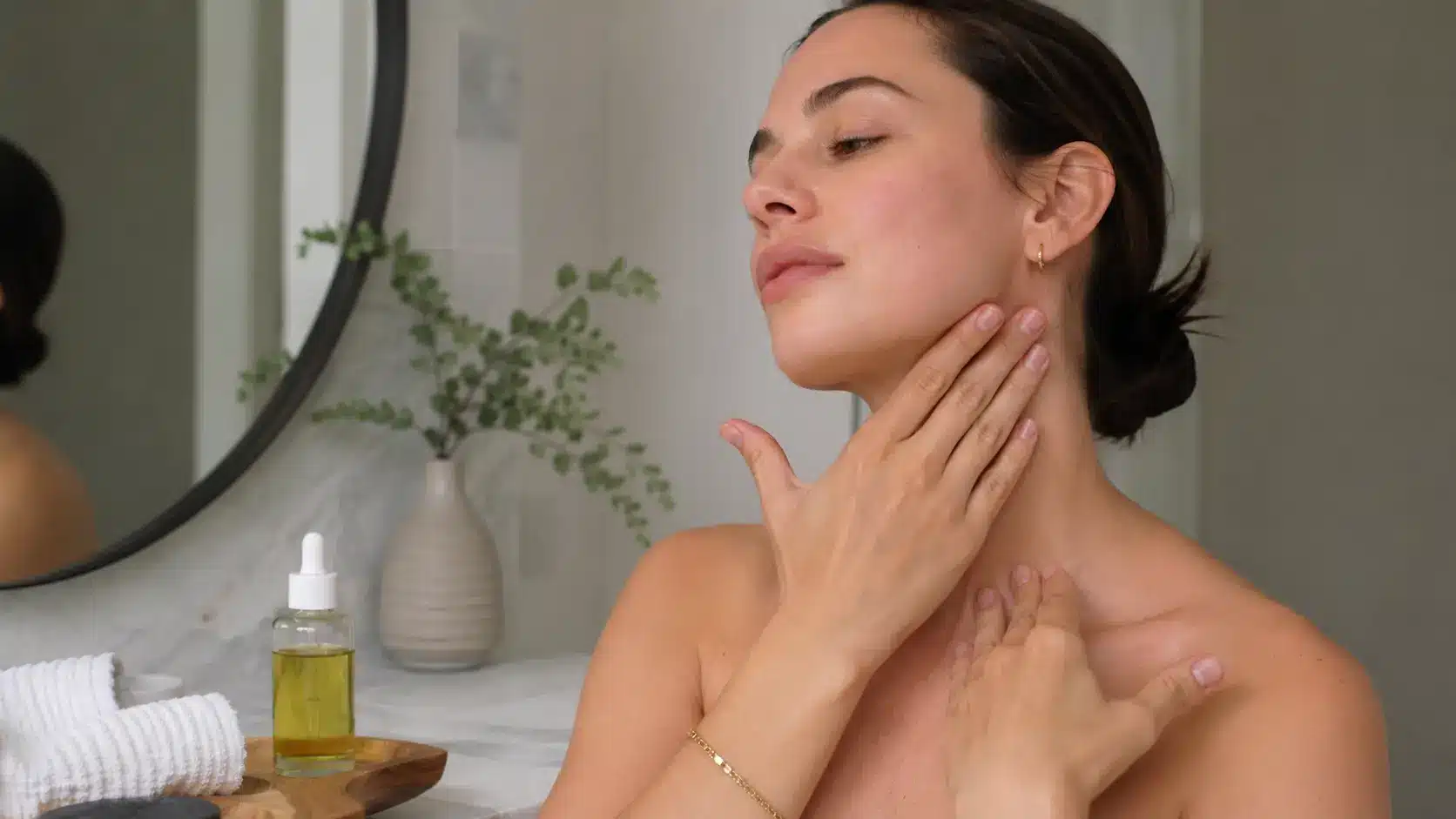
- Warm the blend between your palms and press gently onto face and neck.
- Massage in slow upward circles for 30 to 60 seconds.
- Follow with moisturizer if skin still feels dry. Apply sunscreen if using in the morning.
Start 2 to 3 times per week. Increase frequency only after your skin has shown no reaction over two weeks. Jojoba is widely recommended as a base for face oils, though scalp-focused Ayurvedic oils such as bhringraj oil follow a similar carrier-based preparation principle and are worth understanding if you are also dealing with scalp or hairline inflammation.
2. Rose Water Toner (Normal or Combination Skin)
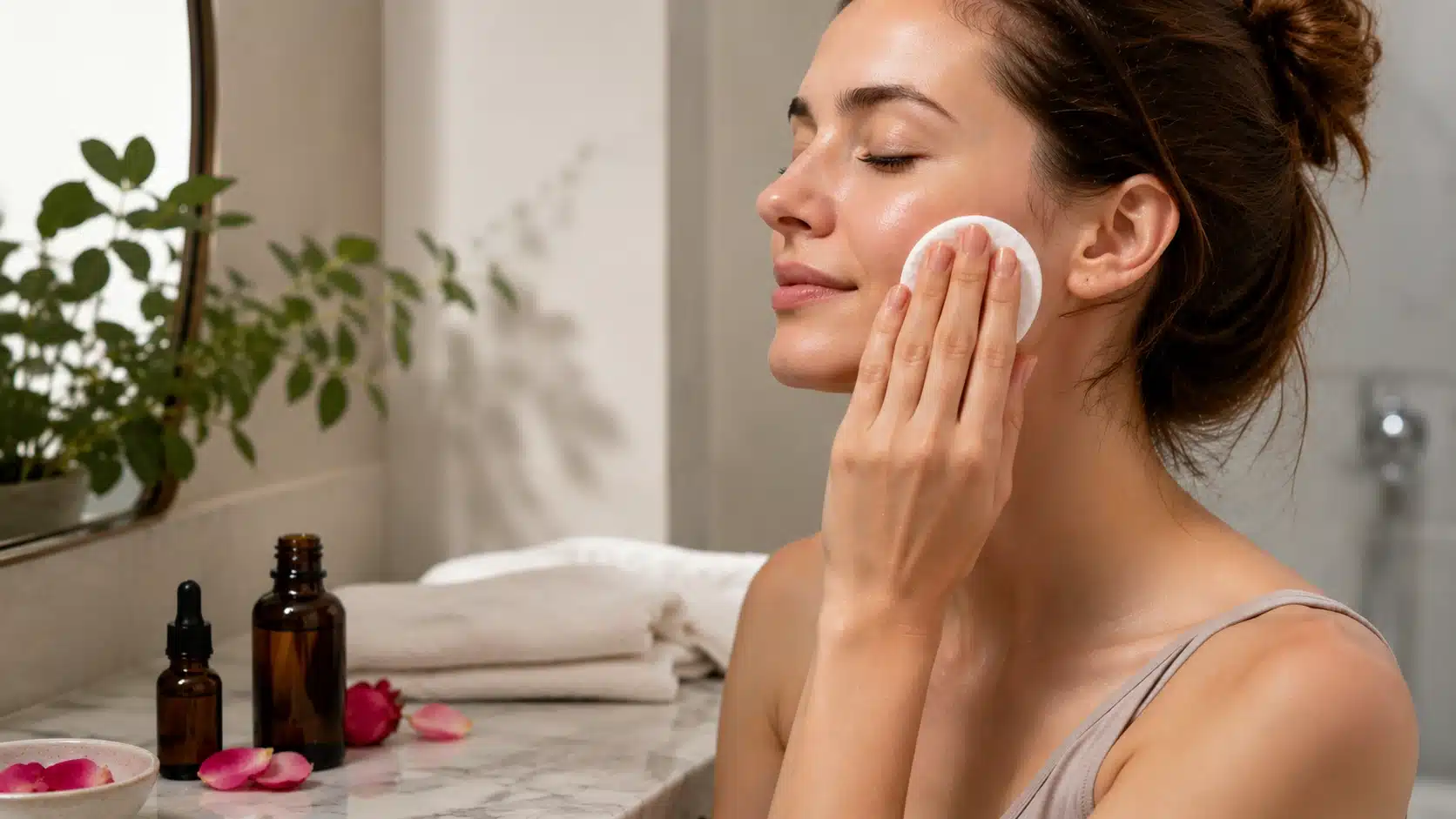
Essential oils do not fully dissolve in water, so this blend requires shaking before every single application. Skipping that step concentrates the oil unevenly and risks a localized reaction.
- Add 3 tablespoons of pure rose water to a clean dark glass bottle.
- Add 1 drop of sandalwood essential oil.
- Seal and shake well.
- After cleansing, shake again and apply a small amount to a cotton pad.
- Sweep gently across the face, avoiding the eyes.
- Wait 20 to 30 seconds, then follow with moisturizer.
Make a fresh batch every few days and store in the refrigerator. Use 2 to 3 times per week maximum.
3. Scar and Fine Line Serum (Night Use)
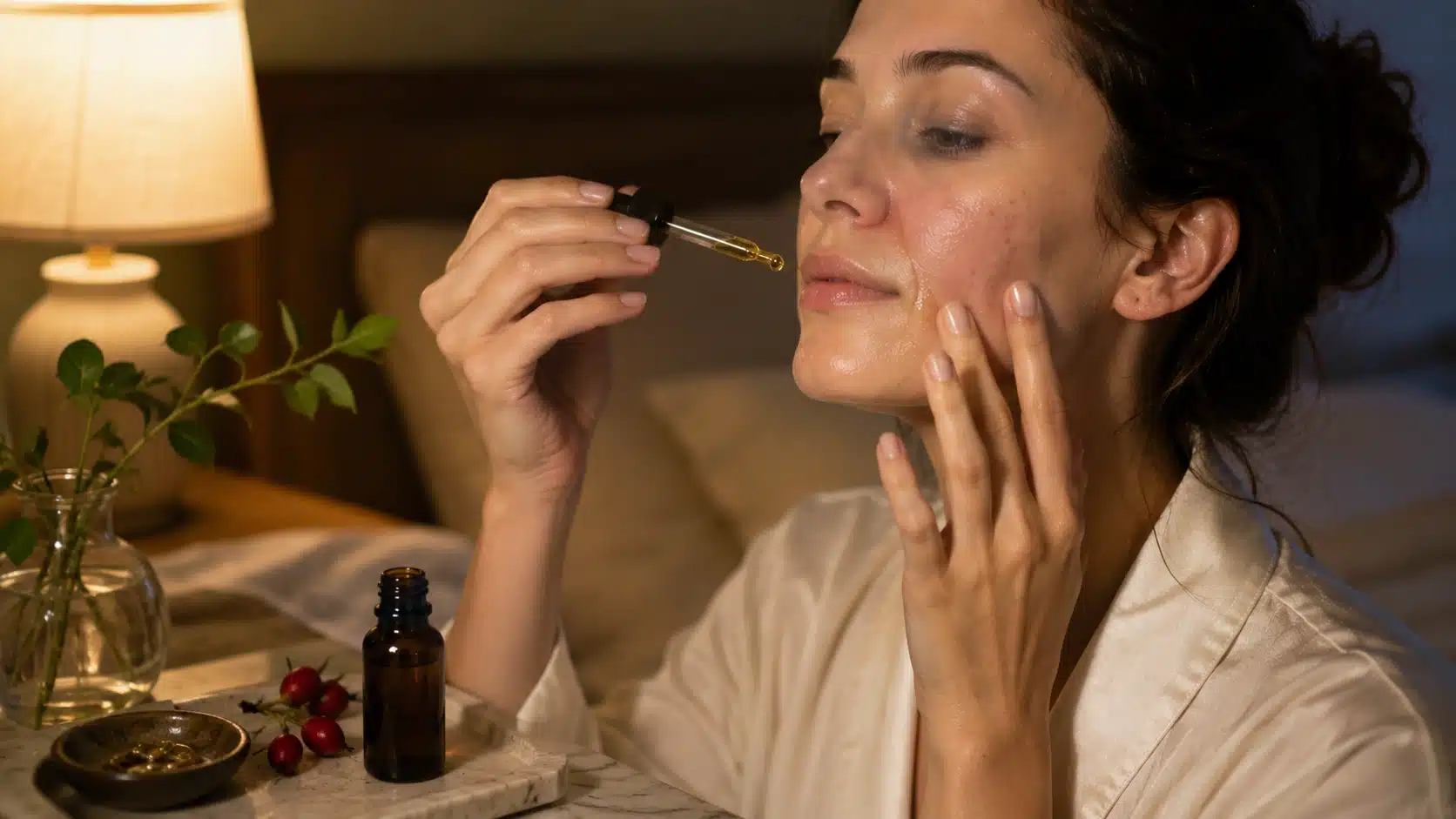
This is the method I would recommend for anyone primarily dealing with post-acne marks or early fine lines. The rosehip addition provides additional vitamin A precursor activity that complements sandalwood’s repair support.
- Combine 1 tablespoon of jojoba oil with 2 drops of sandalwood essential oil in a dark dropper bottle.
- Add a few drops of rosehip oil if your skin tolerates it.
- After cleansing at night, press 2 to 3 drops onto target areas.
- Wait 2 minutes for absorption, then follow with moisturizer if needed.
Use every other night initially. Stop if redness, itching, or increased congestion develops.
4. Acne Spot Treatment (Targeted Use Only)
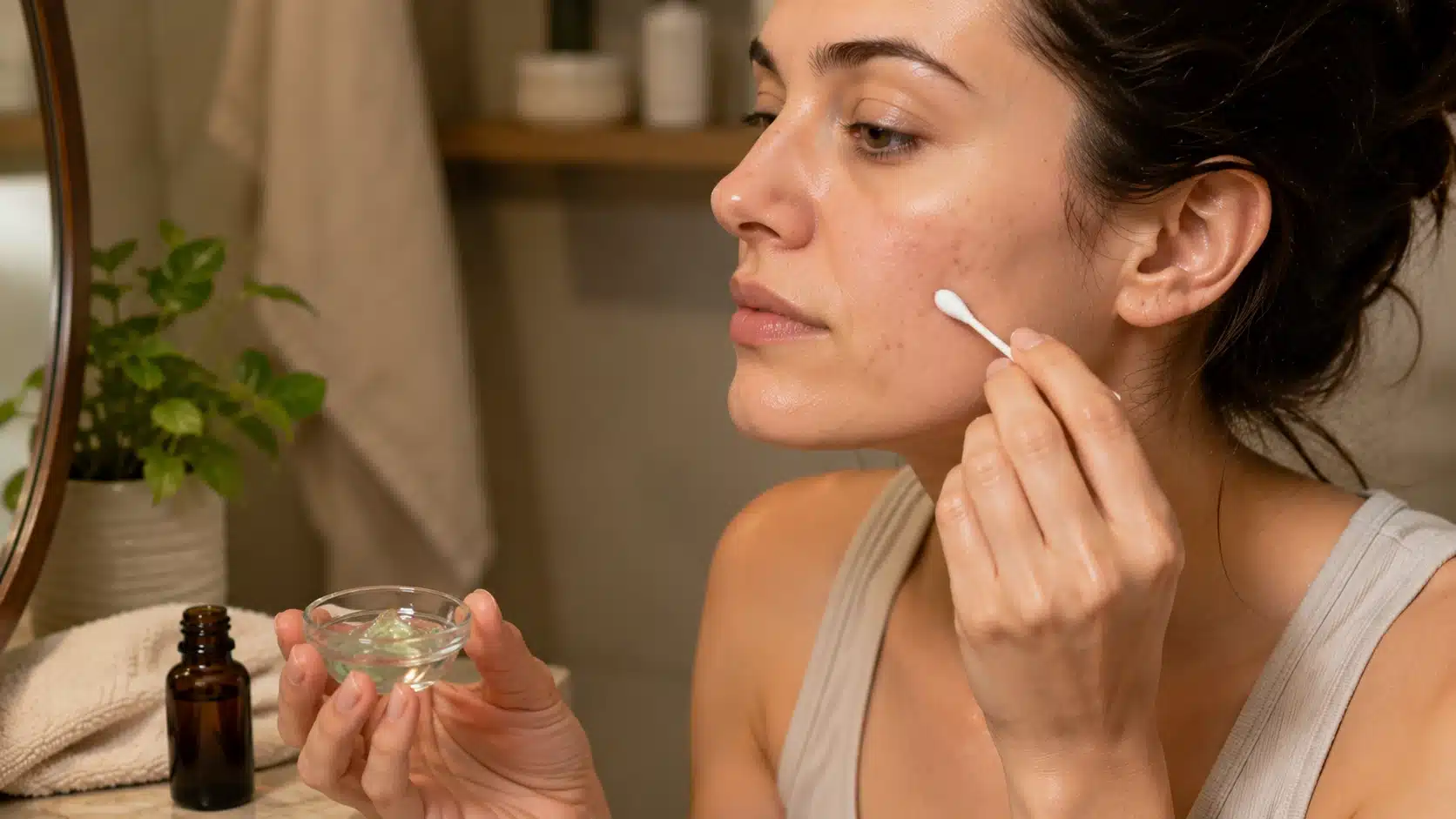
Apply to individual blemishes or marks, not large areas. Aloe vera gel is the most appropriate base here because it is water-based, non-comedogenic, and has its own mild anti-inflammatory action.
- Add half a teaspoon of plain aloe vera gel to a small clean dish.
- Mix in 1 drop of sandalwood essential oil and stir well with a clean cotton swab.
- Dab a small amount directly onto the blemish or mark only.
- Avoid open or bleeding pimples. Leave overnight if no stinging occurs, then rinse in the morning.
5. Weekly Face Mask (Dull or Uneven Skin)
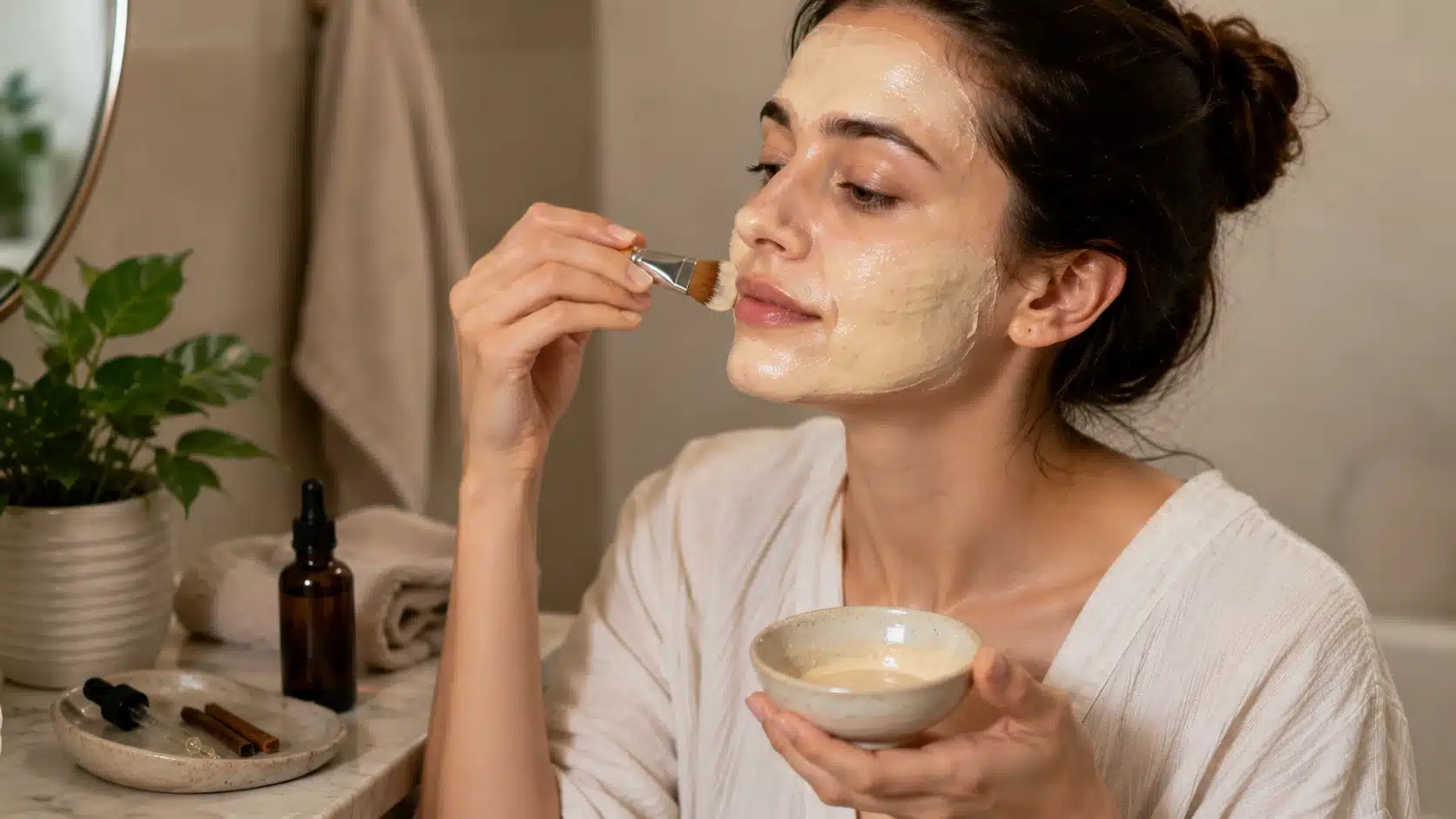
Use this as an occasional treatment, not a daily one. Once a week is enough.
- Mix 1 tablespoon of plain yogurt, honey, or aloe vera gel in a bowl.
- Stir in 1 drop of sandalwood essential oil until smooth.
- Apply a thin layer to cleansed skin, avoiding eyes, lips, and nostrils.
- Leave on for 5 to 10 minutes, then rinse with lukewarm water and moisturize.
Skip this mask if your skin is currently irritated, sunburned, or you have exfoliated within 48 hours.
Day and Night Routine Guide
Building sandalwood oil into a structured routine gives the active compounds time to work consistently. Sporadic use produces sporadic results.
| Time of Day | Method | Primary Benefit |
| Morning | 1 drop mixed into daily moisturizer before sunscreen | Antioxidant protection, hydration, barrier support |
| Night | Diluted serum or spot treatment on cleansed skin | Repair, scar fading, deep nourishment during overnight cell regeneration |
| 2 to 3x weekly | Rose water toner or face mask | Targeted treatment for acne, redness, or uneven texture |
Keep dilution low and introduce one method at a time. Stacking multiple essential oil treatments in the same routine compounds the risk of sensitization without proportionally increasing the benefit.
Safety, Precautions, and Who Should Avoid Sandalwood Oil
Sandalwood oil is among the gentler essential oils for topical use, but gentler does not mean risk-free. The following precautions apply regardless of skin type. Plants with documented anti-inflammatory properties, including plantain leaf, follow the same principle: natural origin does not eliminate the need for caution, patch testing, and appropriate dilution before use on reactive skin.
| Who Can Use Sandalwood Oil for Skin | Who Should Avoid It |
| Dry or dehydrated skin seeking barrier support | Anyone with known sandalwood or tree-resin allergies |
| Redness-prone or sensitive skin needing a calming oil | Skin currently experiencing burning, itching, or active rash |
| Combination or oily skin wanting sebum balance | Open wounds, cuts, or broken skin barriers |
| Post-acne marks and superficial scars | Rosacea-prone skin that reacts to fragranced or plant-based oils |
| Anyone wanting a researched daily botanical oil | Pregnancy: consult a healthcare provider before use |
Allergic contact dermatitis to sandalwood is uncommon but documented. A 24-hour patch test before first use is not optional, especially for anyone with known sensitivities to tree resins, fragrance compounds, or related botanicals. If you have rosacea, test with extra caution because scented oils can trigger flares even when the active compounds are anti-inflammatory in nature.
How to Source Quality Sandalwood Oil
The quality gap between genuine sandalwood essential oil and labeled imposters is significant. Most “sandalwood” products sold at low price points contain synthetic fragrance or heavily diluted oil with no meaningful alpha-santalol content. Here is what to look for before buying.
The label must list a botanical name: either Santalum album for Indian sandalwood or Santalum spicatum for Australian sandalwood. Any product labeled only as “sandalwood fragrance oil” or “sandalwood blend” with no species name contains no active compounds relevant to skin use.
Packaging matters. Genuine essential oil is photosensitive and should be stored in a dark amber or cobalt glass bottle, not plastic or clear glass. A warm, woody, slightly sweet scent with no sharp chemical note is a reasonable indicator of authenticity.
Oils from certified sustainable farms or suppliers using Australian sandalwood reduce environmental impact, since Indian sandalwood is protected in several regions due to decades of over-harvesting.
Check for a GC/MS (gas chromatography/mass spectrometry) report from the supplier if you are purchasing for therapeutic use. Reputable suppliers make these available on request or post them online. A high-quality Indian sandalwood oil should show an alpha-santalol content of at least 40 to 45 percent.
Frequently Asked Questions
Does sandalwood oil really work for dark spots?
It supports the process rather than driving it. Sandalwood oil’s antioxidant compounds protect new skin cells during turnover and its anti-inflammatory action reduces the localized inflammation that can deepen post-acne marks. Consistent use over 4 to 6 weeks produces gradual fading of mild hyperpigmentation. It is not a standalone brightening treatment, but it works well alongside vitamin C or niacinamide without adding irritation.
Is sandalwood oil safe for sensitive skin?
Yes, with proper dilution. Among essential oils with documented skin benefits, sandalwood is one of the better-tolerated options. Keep the concentration at 1 percent or lower, choose Australian sandalwood if you find Indian varieties too strong, and always patch test first. The 2022 clinical study showed measurable antioxidant benefit at concentrations as low as 0.1 percent, which suggests you do not need a high concentration for the oil to be useful.
Can I use sandalwood oil on my face every day?
Daily use is appropriate for most skin types once tolerance is established. Start with 2 to 3 times per week and observe for two weeks before increasing frequency. If no irritation, dryness, or congestion appears, daily use in either morning or evening routine is reasonable. Do not use it on both ends of the day simultaneously when starting out.
What carrier oil works best with sandalwood for acne-prone skin?
Jojoba oil is the most reliable choice. Its molecular structure is close to skin’s own sebum, it is non-comedogenic, and it absorbs well without triggering breakouts. Squalane is a strong second option for the same reasons. Avoid coconut oil if your skin breaks out easily; it sits higher on the comedogenic scale. Rosehip oil can be added in small amounts if post-acne marks are the primary concern, but test it separately before combining with sandalwood.
How do I know if sandalwood oil is real?
Look for the botanical species name on the label, a dark glass bottle, and a GC/MS report from the supplier. Pure Indian sandalwood oil should have a minimum of 40 percent alpha-santalol content. Price is a rough indicator: genuine Santalum album oil in a 10 ml bottle typically costs $20 to $50 depending on sourcing. Below that range, verify the species and test report before assuming quality.
Does sandalwood oil clog pores?
Sandalwood essential oil itself is not comedogenic. The carrier oil you pair it with matters more. Jojoba and squalane are low-risk options. Always dilute correctly and avoid applying heavy oil blends over a full face if you have oily or congestion-prone skin. Spot use on marks and blemishes is lower risk than a full facial application in those cases.
Final Verdict
Sandalwood oil is one of those ingredients that earns its place in a skincare routine once you understand what it actually does and how to use it properly. The benefits for skin are real, backed by research, and accessible without a complicated or expensive routine.
Whether you are dealing with persistent redness, acne marks, dehydrated skin, or just want something that genuinely nourishes without overwhelming your skin, sandalwood oil for skin is worth trying with a few simple tools and consistent practice. The key is always dilution, patience, and giving your skin time to respond.
Start simple, stay consistent, and let the results speak for themselves.
Have you tried sandalwood oil in your routine? What skin concern are you most curious to address with it? Drop your question in the comments and I will do my best to help you figure out the right way to use it.