














A 500-calorie fast day does not break you. A bad plan does.
What I have found is that the difference between a hard-and-fast day and a manageable one has nothing to do with discipline.
It comes down to knowing what to eat, when to eat it, and how to structure the hours in between so hunger never gets the upper hand.
That is exactly what this breaks down. Meal structures that fit real life, food choices that stretch the calorie budget without leaving you empty, and practical habits that keep the day on track from the first meal through to the last.
The Role a 500-Calorie Fast Day Plays in Your Body
Dropping to 500 calories one or two days a week does more than create a calorie deficit. Research links intermittent fasting to improved insulin sensitivity, reduced inflammation, and cellular repair through autophagy, where the body clears out damaged cells.
Weight loss, better blood sugar control, and improved mental clarity are among the most consistently reported benefits. Some studies also connect regular fasting cycles to markers associated with longer, healthier lives.
That said, fasting is not suitable for everyone. Anyone with an existing health condition should speak to a doctor before making significant changes to their eating pattern.
The Core Strategy: Protein, Fiber, and Volume
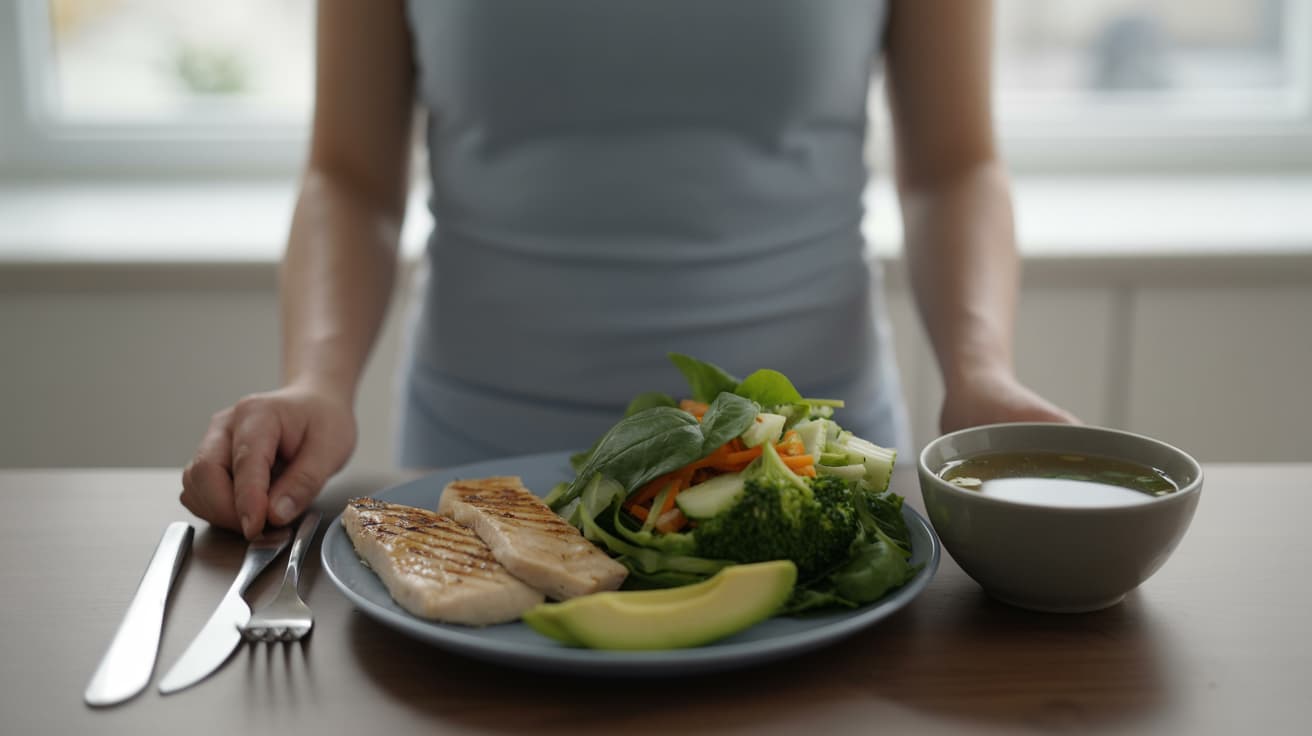
A 500-calorie day only works when those calories are chosen with intention. The single most important principle is maximizing fullness per calorie, and three nutrients make that possible.
Protein leads every meal; it is the most satiating macronutrient and the one most responsible for keeping hunger quiet between eating windows.
Fiber supports it by slowing digestion and sustaining fullness long after the plate is cleared.
Volume, the physical bulk that comes from high-water-content foods like vegetables and broth, fills the stomach in a way that calories alone cannot replicate.
Fat earns its place too, but its calorie density means it supports rather than drives meals on a restricted day, a principle that applies equally to low-calorie food choices outside the home.
How to Structure Your Meals on a 500-Calorie Day
Not everyone eats the same way on a fast day. Two structures work consistently; pick the one that fits how you actually function.
Option A: Two Meals (Most Popular)
This is the structure most people gravitate toward on a fast day, and for good reason. It keeps things simple, preserves a long fasting window, and front-loads protein early. Here is what a typical day looks like:
| Meal | Calories | What to Eat | Fasting Window |
|---|---|---|---|
| Breakfast | ~150–180 cal | Two scrambled eggs + wilted spinach + black coffee | Begin fast after breakfast |
| Dinner | ~320–350 cal | Homemade chicken and vegetable soup with lentils or chickpeas | Break your fast at dinner |
| Total | ~460–530 cal | Two meals across the day | Long fasting window in between |
What I find works best about this structure is how little mental effort it takes to maintain. Two meals, a long gap in between, and the day stays on track without constant calorie checking.
Option B: Three Small Meals
For those who find long fasting windows difficult to manage, spreading meals across the day is a more sustainable approach. Here is how the calories break down across three sittings:
| Meal | Calories | What to Eat | Fasting Window |
|---|---|---|---|
| Breakfast | ~120 cal | Plain low-fat yogurt + handful of berries | Fast until midday |
| Lunch | ~150 cal | Large mixed salad with soft-boiled egg and balsamic vinegar | Short gap before dinner |
| Dinner | ~230 cal | Baked white fish + steamed green beans + cauliflower rice | Fast until the next morning |
| Total | ~500 cal | Three meals across the day | Shorter gaps between eating windows |
Three small, well-built meals keep the day feeling manageable without ever straying over the calorie limit. For anyone who finds hunger harder to ignore, this structure makes the fast day significantly easier to get through.
Option C: One Meal (For Experienced Fasters)
From everything I have looked at, this structure suits people who find multiple meals harder to manage than one well-planned sitting. Here is what the single meal window looks like:
| Meal | Calories | What to Eat | Fasting Window |
|---|---|---|---|
| Single Meal | ~500 cal | Lean protein + non-starchy vegetables + a small portion of complex carbs | Fully fasted for the remainder of the day |
| Total | ~500 cal | One sitting, one decision | One eating window, the rest of the day fasted |
The meal structure matters far less than the consistency behind it. Pick the one that fits how you actually function on a fast day, and the calories will take care of themselves.
Tips for Fast Days Without Falling Apart
A good meal plan only gets you so far. How the hours in between are managed determines whether the day actually holds together.
- Stay busy in the morning: hunger peaks when bored; activity and structure keep the hardest hours manageable
- Drink water consistently: thirst and hunger use the same signal; hydration removes one variable entirely
- Miso soup or black coffee mid-afternoon: takes the edge off the hunger spike before dinner at near-zero cost
- Avoid hard exercise on fast days: energy levels drop, and that is normal; intense workouts belong on eating days
- Keep the endpoint in mind: it is one day and tomorrow eating returns to normal
Hunger on a fast day is predictable. Knowing when it peaks and having a plan for it is usually enough.
Foods That Work Against You on a Fast Day
Five hundred calories is a tight budget. These are the foods that spend it badly, leaving hunger higher than before they were eaten.
| What to Avoid | Why It Makes Things Harder | What It Actually Costs |
|---|---|---|
| High-carb foods | Spikes and crashes in blood sugar quickly | Cravings and hunger return within the hour |
| Processed or diet products | Calorie-dense without any satiety | Restarts hunger without solving it |
| Alcohol | Empty calories lower food inhibitions | One drink derails the rest of the day |
| Large amounts of fruit | Fructose does not suppress hunger | Spike now, stronger hunger shortly after |
| Whole grains | Too calorie-heavy for a tight budget | High spend, low fullness in return |
| Full-fat dairy | Fat content eats the budget fast | Little fullness for a large calorie cost |
| Store-bought soups | Added sugar, higher than expected calories | Hidden costs that quietly break the target |
The pattern is the same across every item: calories spent without fullness returned. On a fast day, that trade-off is one the budget cannot afford, which is exactly where high volume low calorie ingredients earn their place.
Can You Exercise on a 500-Calorie Fast Day?
Yes, but the type of exercise matters. Light to moderate movement is fine on a 500-calorie day. Walking, stretching, or a gentle yoga session all work well. Intense workouts like HIIT or heavy weightlifting are a different story.
With only 500 calories available, the body simply does not have enough fuel to perform and recover properly.
Energy levels tend to dip on fast days, especially in the afternoon. Timing helps. Moving after your first meal gives the body something to work with.
Listen to how you feel. If energy is low, scale back. One lighter training day will not undo progress, but pushing too hard might.
How to Break Your Fast After a 500-Calorie Day
How you eat after a fast day matters just as much as the fast itself. Rushing back into large meals causes discomfort and undoes the progress made. Here is the right way to ease back in:
- Start light. A boiled egg, plain yogurt, or a small bowl of oatmeal gives the digestive system a gentle reintroduction.
- Build around protein, fiber, and healthy fats. This combination stabilizes blood sugar and keeps energy steady through the rest of the day.
- Avoid high-sugar foods first. After a fast day, blood sugar is more sensitive, and a sugar spike hits harder than usual.
- Reintroduce portions gradually. A smaller first meal followed by a regular second meal works better than eating normally straight away.
Taking the first meal back seriously makes the entire fasting cycle more effective. A steady, balanced reintroduction keeps the body on track for the non-fast days ahead.
Potential Risks and Considerations for Fast Days
Fast days work well for many people, but they are not suitable for everyone. Before starting, it is worth understanding where the real risks lie:
- People with diabetes risk unsafe blood sugar drops on very low-calorie diets. A doctor’s clearance is essential before starting.
- Those with a history of eating disorders may find restrictive eating patterns trigger unhealthy behaviors. Professional guidance is strongly recommended.
- Pregnant or breastfeeding women should avoid fast days entirely until cleared by a healthcare provider, as calorie restriction affects both mother and baby.
- People with nutrient deficiencies have little room to meet full nutritional needs on 500 calories. A dietitian can help fill the gaps.
- Those on medication may need food at specific times. A pharmacist or doctor can advise on whether fasting is compatible.
- Anyone experiencing low energy or mood issues should monitor closely. Fasting can intensify fatigue and irritability, and scaling back is always the smarter option.
Paying attention to how the body responds is just as important as following the plan itself. Energy levels, mood, and general well-being are reliable signals that something needs adjusting.
Final Thought
A 500-calorie day does not have to feel like punishment, and I say that because the difference between a hard fast day and a manageable one comes down to preparation, not willpower.
You now have the meal structures, the right foods, the swaps that stretch the budget, and the habits that keep hunger from taking over. None of it is complicated. A 500-calorie fast-day meal plan works when it is built around protein, fiber, and volume, and that is exactly what everything here points to.
Pick one meal structure, try it on your next fast day, and see how it feels different. Drop a comment below and let me know which approach worked best for you.