




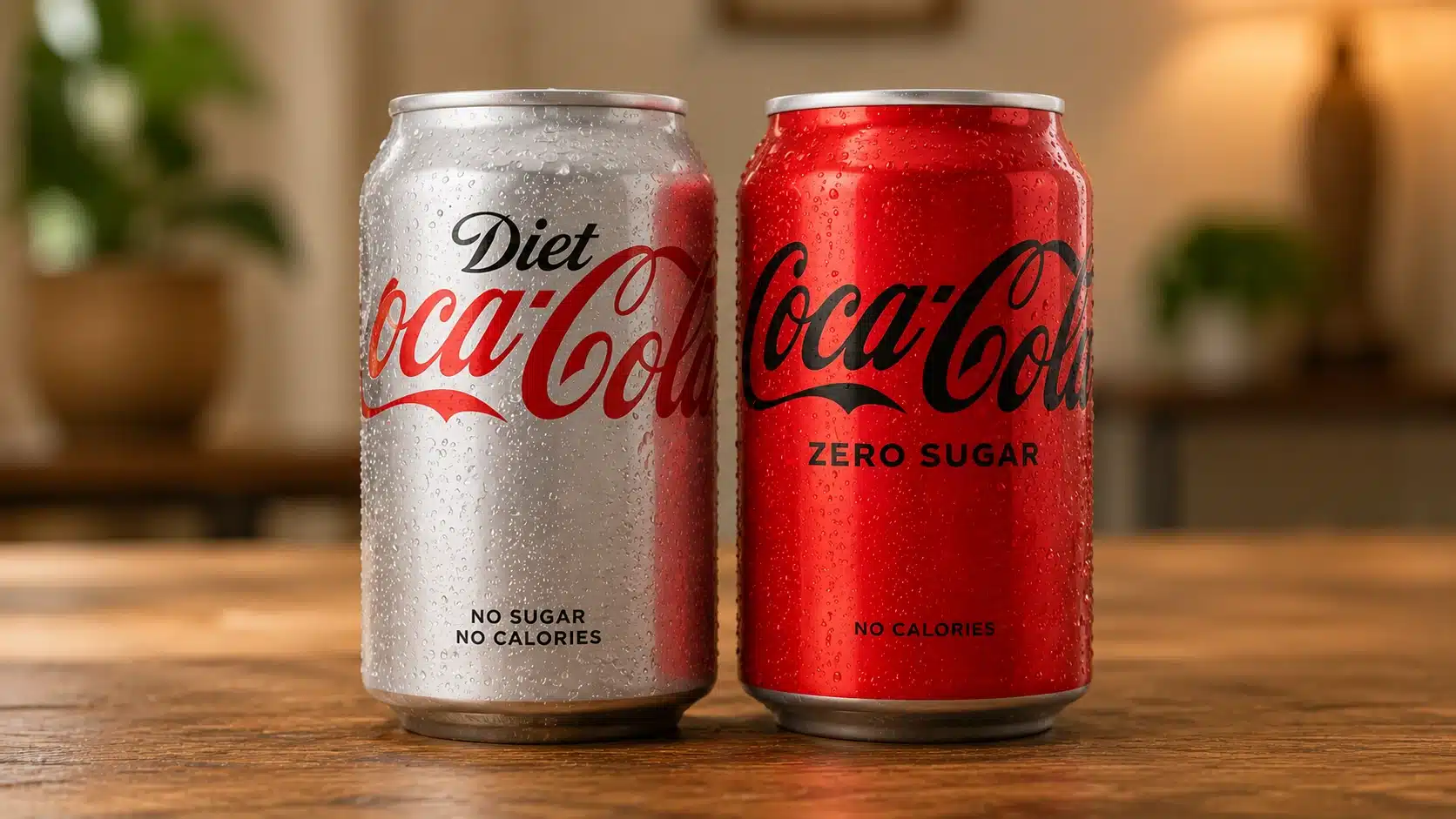







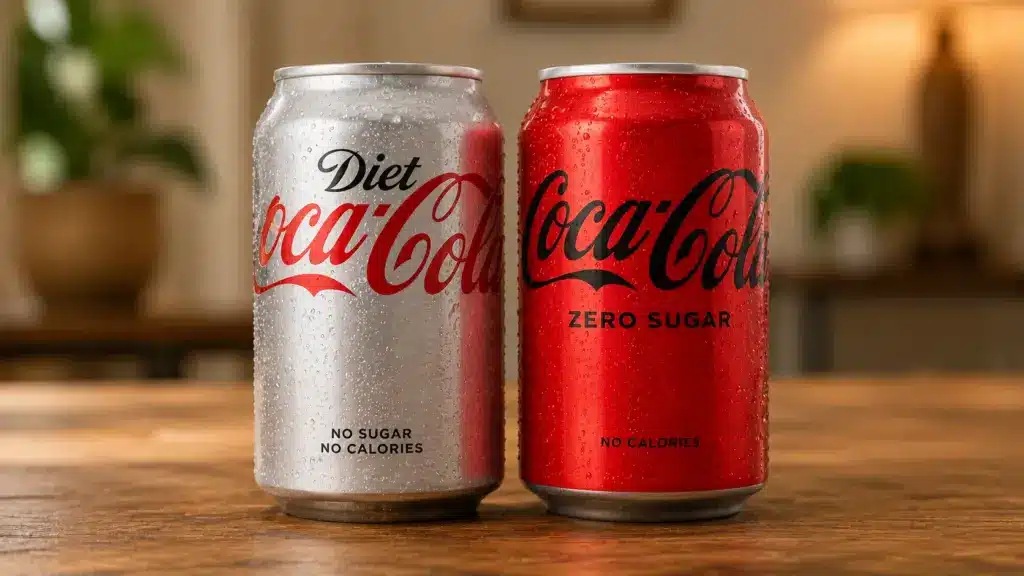

Standing in the soda aisle with two nearly identical cans, it’s easy to assume they’re the same thing with different labels. That’s a reasonable assumption. Both say zero calories. Both say no sugar.
But the longer you look, the more the question lingers: Is there a real difference between diet and zero-sugar soda, or is this just a marketing swap? From my own time spent reading labels and comparing options, the answer is somewhere in between.
There are genuine differences worth knowing, and once you understand them, picking the right one gets a lot easier. This breakdown covers taste, sweeteners, caffeine, health effects, and who each option actually suits.
Diet vs. Zero Sugar: What Each Term Actually Means
“Diet soda” has been around since the 1980s. It was created to offer a calorie-free alternative to regular soda, mostly by swapping out sugar for artificial sweeteners.
“Zero sugar” is the newer label. It came along years later, not because the formula needed fixing, but because the word “diet” had started carrying a dated, weight-loss-specific image that didn’t appeal to younger consumers.
Zero-sugar sodas were created to taste closer to the original, full-sugar versions, using a different sweetener combination to get there. Neither contains sugar. Neither contains calories. But they are not identical products, and the differences matter depending on what you’re looking for in a can.
The Key Differences Between Diet and Zero Sugar Soda

Both options cut sugar entirely, but they are not the same product. The differences go beyond the label, sweetener mixes, taste profiles, and caffeine levels, all of which separate the two in meaningful ways.
1. The Sweeteners Are Not the Same
Diet soda relies almost entirely on aspartame as its primary sweetener. That single-sweetener approach produces a sharp, slightly chemical finish that becomes noticeable toward the end of each sip.
Zero sugar soda combines aspartame with Acesulfame Potassium, commonly called Ace-K. That combination rounds out the sharpness and creates a fuller, more balanced flavor, which is why zero-sugar options tend to taste closer to a regular full-sugar soda.
The contrast becomes clearer when set against natural sweeteners such as honey and maple syrup, which carry calories but interact with the body differently than either artificial option.
2. Taste: Where They Really Pull Apart
Diet Coke was never built to replicate the original. It has its own lighter, crisper flavor profile and was always intended to stand on its own rather than serve as a substitute for regular Coke.
Coke Zero Sugar is specifically designed to match the taste of Coca-Cola Original, as confirmed by Coca-Cola’s own product FAQ. The two are not interchangeable; preference for one rarely crosses over to the other.
3. Caffeine Levels Can Differ
Diet Coke carries roughly 46 mg of caffeine per 12 oz can, making it the higher-caffeine option of the two. For anyone tracking daily caffeine intake, that gap adds up faster than expected across multiple cans.
Coke Zero Sugar sits closer to 34 mg per 12 oz can, noticeably lower than Diet Coke. Caffeine levels also vary across brands, so checking the label on each product is always worth the extra second.
For people who drink soda alongside coffee, the caffeine in each adds up separately from coffee’s caloric load, which shifts depending on what goes into the cup.
A Side-by-Side Comparison at a Glance
Here’s a quick snapshot comparing the two options across key factors like calories, taste, and caffeine. Use this table to see the main differences at a glance before making your choice:
| Feature | Diet Soda | Zero Sugar Soda |
| Calories | Zero | Zero |
| Sugar | None | None |
| Primary sweetener | Aspartame | Aspartame + Ace-K |
| Taste profile | Lighter, distinct flavor | Closer to the original full-sugar |
| Caffeine (Coke comparison) | Higher (~46 mg per 12 oz) | Lower (~34 mg per 12 oz) |
| Blood sugar impact | Minimal short-term | Minimal short-term |
Both options share many similarities, but small differences in taste, sweeteners, and caffeine can influence your choice. Use these details to choose the option that best fits your routine.
Health Effects: Are There Any Real Differences?

Both options remove sugar entirely, but that doesn’t make them identical from a health standpoint. The sweetener combinations, calorie claims, and long-term research tell a more layered story than the labels suggest.
1. Blood Sugar Impact
Neither option spikes blood sugar the way regular soda does, but long-term research on artificial sweeteners remains mixed and inconclusive across most available studies.
- Diet soda, sweetened with aspartame alone, produces no immediate blood sugar response but has drawn more scrutiny in long-term observational studies than zero sugar has
- Zero sugar soda, using an aspartame and Ace-K mix, behaves similarly in short-term blood sugar impact, with no meaningful difference identified in current research
On blood sugar alone, neither product pulls clearly ahead of the other. The short-term picture is comparable; the long-term research simply needs more time to settle.
2. Calories and Weight Management
Both are calorie-free, but that label does not automatically mean either option supports weight loss on its own; broader dietary changes are needed.
- Diet soda reduces calorie intake from beverages when swapped for regular soda, though appetite and craving responses vary considerably from person to person
- Zero-sugar soda offers the same calorie reduction with no added advantage. A 2023 BMJ analysis found that current evidence on non-sugar sweetener intake remains inadequate, and further research is needed to determine the health effects, especially across specific population groups.
Replacing regular soda with either option is a reasonable first step, but neither should carry more weight than that. Water remains the more straightforward choice if cutting calories is the primary goal.
3. Artificial Sweeteners Worth Knowing About
Both products contain aspartame, which remains one of the most studied food additives available and is approved within established daily limits by the FDA and other regulatory bodies.
- Diet soda contains aspartame only; some people report headaches or digestive discomfort with it, making label awareness a reasonable habit regardless of consumption level
- Zero sugar soda adds Ace-K on top of aspartame; the FDA’s page on sweeteners in food confirms both remain approved within acceptable daily intake limits
Neither sweetener raises serious concerns at typical consumption levels. Knowing what’s in the can and staying within a reasonable intake are practical habits worth keeping, regardless of which you prefer.
4. Dental Health
Sugar-free does not mean tooth-safe. Both sodas are acidic and can weaken enamel over time. Carbonation creates carbonic acid. Most colas also contain phosphoric acid. These two are the main sources of enamel damage.
- Diet soda removes sugar, eliminating the risks of cavity-forming bacteria. However, the acidity from carbonation and phosphoric acid remains completely unchanged
- Zero-sugar soda carries identical acidity levels. No meaningful dental advantage exists between the two options at comparable consumption levels
A few habits reduce the risk for both. Drinking through a straw limits direct contact with the enamel. Rinsing with water afterward reduces how long the acid sits. Wait 30 minutes before brushing to avoid scrubbing softened enamel.
Note: Neither option is safer for your teeth. The risk is the same. The protective habits are identical regardless of your choice.
What the Packaging Is Really Selling You?
The word “diet” carries decades of weight-management history that still shapes how people respond to it today. For some buyers, that framing feels familiar and trustworthy.
For others, it feels outdated, restrictive, or simply unappealing, depending on their relationship with that language. Zero sugar sidesteps that entirely by describing what the product actually is rather than implying a lifestyle goal.
It attracts buyers who want a low-calorie option without the cultural weight the word “diet” tends to carry. That said, neither label reflects anything meaningful about actual health outcomes. The name on the can is a marketing decision, not a nutritional one, and should be treated as such.
What Both Options Do to Your Gut
One area drawing more research attention is how artificial sweeteners interact with gut bacteria. A 2025 review published in Diseases found that certain non-nutritive sweeteners may reduce beneficial bacterial strains while allowing less favorable ones to increase.
A Cedars-Sinai study from late 2025 found that aspartame specifically altered microbial diversity in the small intestine, with shifts in circulating inflammatory markers observed alongside those changes.
Findings across studies remain inconsistent, and no sweetener has been conclusively linked to harm at normal intake levels. The lab doses used in most research sit well above what a can or two a day delivers.
Since both diets and zero-sugar sodas use aspartame as their primary sweetener, neither has an advantage here. If gut health is a priority, moderate consumption and label awareness are reasonable habits. This one factor alone doesn’t tip the comparison either way.
How to Read the Label Before You Buy
The nutrition facts panel and ingredient list tell you everything you need to know. Here are five things to check before the can goes in your cart. Here’s how you can avoid buying the wrong soda:
- Check total sugars first: both diet and zero sugar sodas should show 0 g per serving on the nutrition facts panel.
- Scan the ingredients for the sweetener type: aspartame alone signals a traditional diet formula; aspartame plus Ace-K confirms a zero-sugar mix.
- Look up caffeine explicitly: some brands list the mg near nutrition facts, others bury it in the ingredients without a standalone number.
- Don’t assume brand rules carry over: the Diet Coke vs. Coke Zero caffeine gap doesn’t apply to every soda brand on the shelf.
- Watch for sucralose as a third sweetener: Mountain Dew Zero adds it on top of aspartame and Ace-K, making it a different formula entirely.
Thirty seconds on the label saves a lot of guesswork at the register. Once you know the pattern, spotting the difference between any two cans takes no time at all.
How the Major Brands Compare
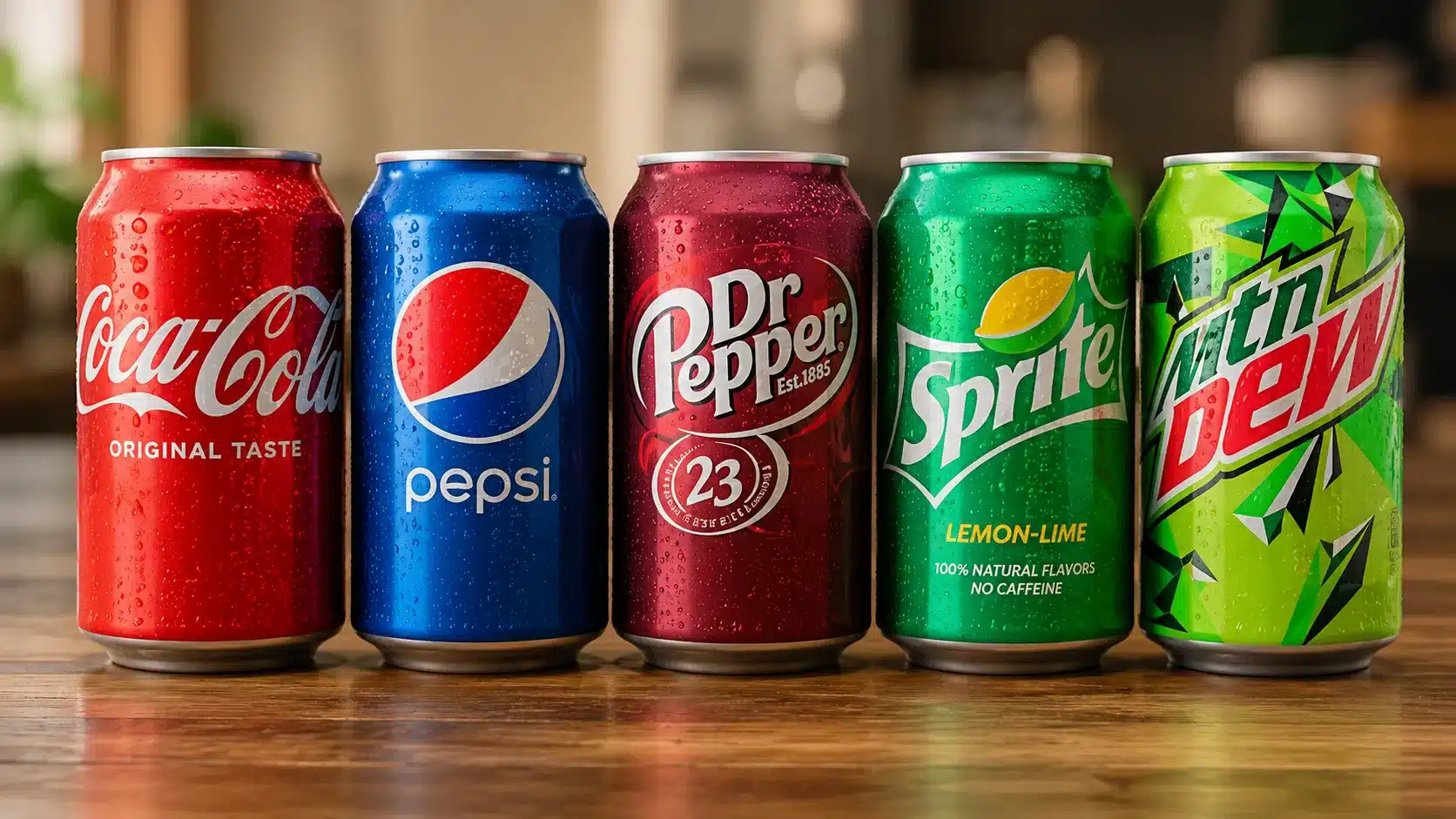
Most people think about diet versus zero sugar in terms of Coke and Pepsi, but the same split runs across nearly every major soda brand on the shelf today. Here’s how different brands make their sodas:
| Brand | Diet Version | Zero Sugar Version | Sweetener Difference |
| Coca-Cola | Diet Coke | Coke Zero Sugar | Diet: aspartame only / Zero: aspartame + Ace-K |
| Pepsi | Diet Pepsi | Pepsi Zero Sugar | Diet: aspartame only / Zero: aspartame + Ace-K |
| Dr. Pepper | Diet Dr. Pepper | Dr. Pepper Zero Sugar | Diet: aspartame only / Zero: aspartame + Ace-K |
| Sprite | Diet Sprite (largely discontinued) | Sprite Zero Sugar | Zero: aspartame + Ace-K |
| Mountain Dew | Diet Mountain Dew | Mountain Dew Zero Sugar | Diet: aspartame / Zero: aspartame + Ace-K + sucralose |
The pattern holds across most major brands: diet versions use aspartame alone, while zero sugar versions layer in Ace-K for a fuller, closer-to-original flavor. Mountain Dew Zero is one exception, adding sucralose to the mixture. When switching brands, it’s worth checking the label rather than assuming the sweetener formula matches what you’re used to.
The Sweetness Craving Loop
One pattern that dietitians flag with both options is the reinforcement of sweet flavor preferences. Artificial sweeteners are often far more potent than table sugar, and regular exposure to that intensity can raise the threshold for what registers as sweet.
Over time, naturally sweet foods like fruit may feel less satisfying, leading to cravings for more sweetened options throughout the day. Zero-sugar sodas are more likely to reinforce this loop than diet sodas, simply because their flavor profiles are engineered to closely replicate full-sugar versions.
If reducing a strong preference for sweet drinks is a longer-term goal, diet soda’s distinct, lighter taste may actually be a more practical stepping stone than a near-identical replica of the original. It’s a small but meaningful difference worth factoring into the choice.
Which One Works Better for You?
Both options are sugar-free and calorie-free, so the decision comes down to your specific situation.
Choose diet soda if you already enjoy its lighter, crisper taste and your routine involves mornings or early afternoons, since its higher caffeine content at around 46 mg works better earlier in the day.
Choose zero-sugar soda if you prefer a flavor closer to regular Coke, or if you need a drink later in the day, as its has 34 mg of caffeine, which is easier to manage toward evening.
If cravings, blood sugar, or medical conditions factor into your choices, either option performs similarly. Always follow your healthcare plan and keep overall intake moderate.
Frequently Asked Questions
Can you drink diet or zero-sugar soda every day?
Daily intake is not ideal. While both are calorie- and sugar-free, regular use can increase exposure to artificial sweeteners and may affect taste preferences. Keeping intake occasional is a more balanced and practical approach.
Do diet and zero-sugar sodas affect hydration?
They do contribute to fluid intake, but they are not the best hydration source. Water remains the most effective option, especially since caffeine and additives in soda are not designed for hydration support.
Can kids or teenagers drink diet or zero-sugar soda?
They can, but it’s better to limit intake. Growing bodies do not need artificial sweeteners regularly, and building habits around water, milk, or other natural drinks supports better long-term health.
Do these sodas interact with medications?
Some people may experience mild interactions, especially if sensitive to caffeine or sweeteners. It’s a good idea to check with a healthcare provider if you regularly take medication and drink these beverages often.
Final Thoughts
The difference between diet soda and zero sugar soda is real but not dramatic. Both are sugar-free, calorie-free, and rely on artificial sweeteners to deliver flavor without the sugar load.
What separates them is the sweetener mix, taste profile, and caffeine content. Neither is a health drink nor a weight-loss shortcut. Both serve as occasional alternatives to regular soda and can fit into a balanced routine with minimal adjustment.
When choosing between them, let taste and caffeine needs lead the decision. Those two factors will point you to the right can faster than any label claim will. Drop a comment below and let us know which one you prefer.