










Egg noodles seem simple, but they can be confusing once you start thinking about health.
You may wonder, are egg noodles healthy, or are they just another refined carb on the plate? I get why that question matters, especially if you are trying to eat better without giving up easy comfort meals.
The answer depends on the serving size, ingredients, and what you add around them.
Here, you’ll learn what egg noodles are made of, how their nutrition compares with pasta, when they may help or hurt your goals, and how you can make them a better fit in everyday meals.
What Egg Noodles Are Made Of
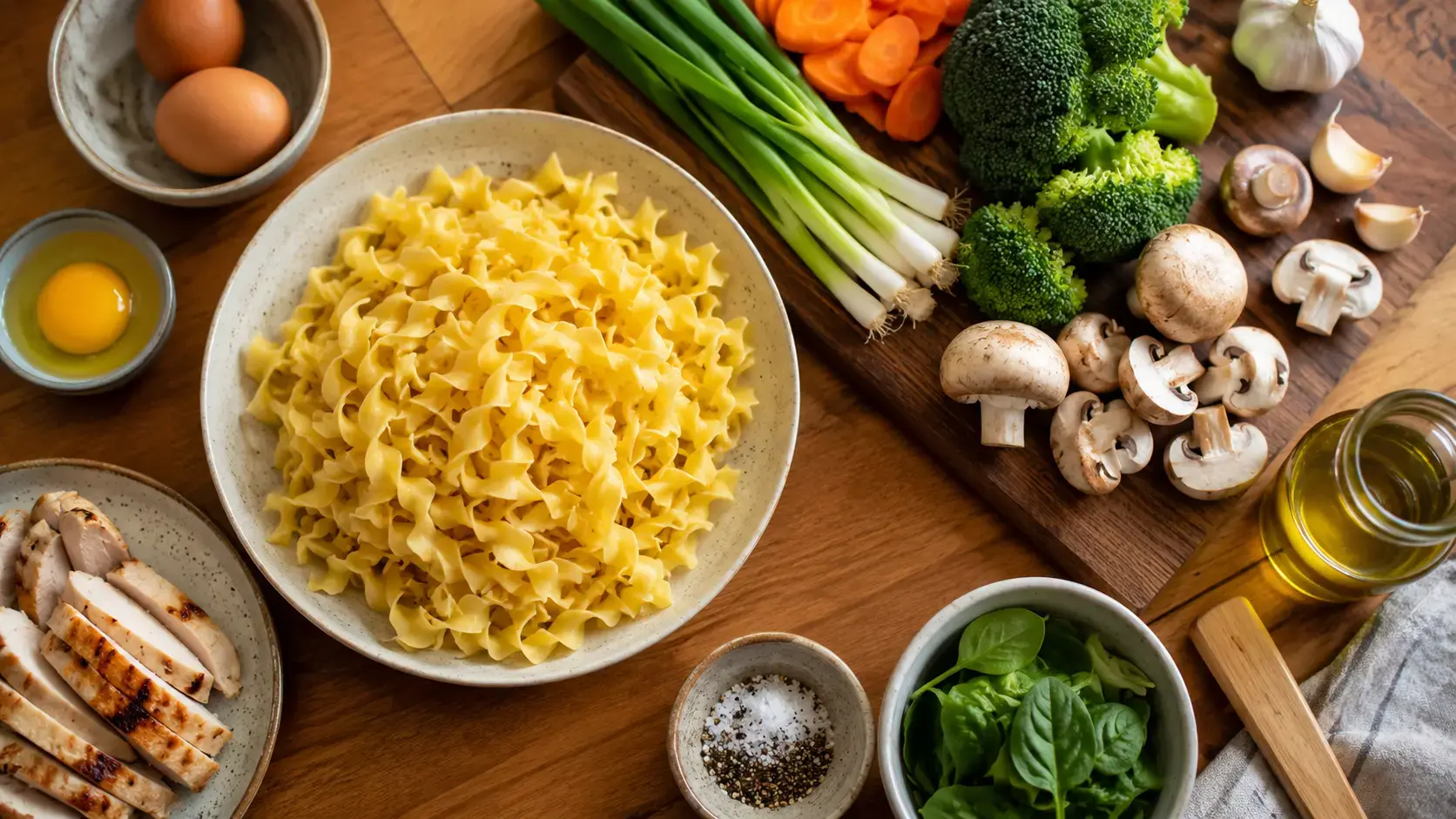
Egg noodles are usually made from wheat flour, eggs, water, and sometimes salt. The eggs give them a richer taste, softer texture, and slightly more protein than some plain noodles.
Most store-bought egg noodles use refined wheat flour, which gives them a smooth, tender texture. Some brands also sell whole-grain versions, which may be a better choice if you want more fiber and a more filling meal.
The egg content matters more than people realize. Traditional recipes use a higher egg-to-flour ratio, which raises both the protein and the fat content compared to budget store brands that use just enough egg to meet the label definition.
When I compare labels at the grocery store, I look for brands that list whole eggs rather than egg yolk solids or dried egg product, since whole eggs provide a broader nutrient profile.
Fresh egg noodles can taste richer and softer, while dried egg noodles are convenient, affordable, and easy to store.
Are Egg Noodles Good for You?
Egg noodles can be healthy when eaten in moderation and balanced with nutrient-dense foods. They provide carbohydrates for energy and usually contain some protein from eggs and wheat flour.
However, most traditional egg noodles are made with refined flour, so they may be lower in fiber than whole-wheat pasta, soba noodles, or legume-based noodles.
They may be a good option if you want:
- A quick source of energy
- A soft, easy-to-digest noodle
- A richer taste than regular pasta
- A base for soups, stir-fries, and protein-rich meals
Their health value improves when they are used as one part of a balanced meal rather than the main focus. The same principle applies to other wheat-based comfort foods like dumplings in a healthy diet, where preparation and pairing matter more than the ingredient itself.
Egg Noodles Nutrition: What Do They Contain?
A typical serving of egg noodles is mostly carbohydrate-based, with moderate protein and usually limited fiber. Their nutrition changes by brand, serving size, and whether they are refined or whole grain.
The figures below are based on a standard 1-cup (160g) cooked serving of enriched egg noodles, which is what most people eat in a bowl of soup or a stir-fry dish.
| Nutrient | Approximate Amount | What It Means |
|---|---|---|
| Calories | 210–230 | Similar to many pasta servings |
| Carbohydrates | Around 40 g | Main source of energy |
| Protein | About 7 g | Slightly higher than some plain noodles |
| Fat | 2–3 g | Comes mostly from eggs |
| Fiber | 1–2 g | Higher in whole-grain versions |
| Key nutrients | Selenium, folate, niacin, and iron | Often from enriched wheat flour |
| Cholesterol | ~46 mg | From the eggs, worth noting for people monitoring dietary cholesterol |
Overall, egg noodles provide energy and some protein, but they are usually low in fiber. For a healthier meal, pair them with vegetables and lean protein.
Egg Noodles vs Pasta: Which is Healthier?
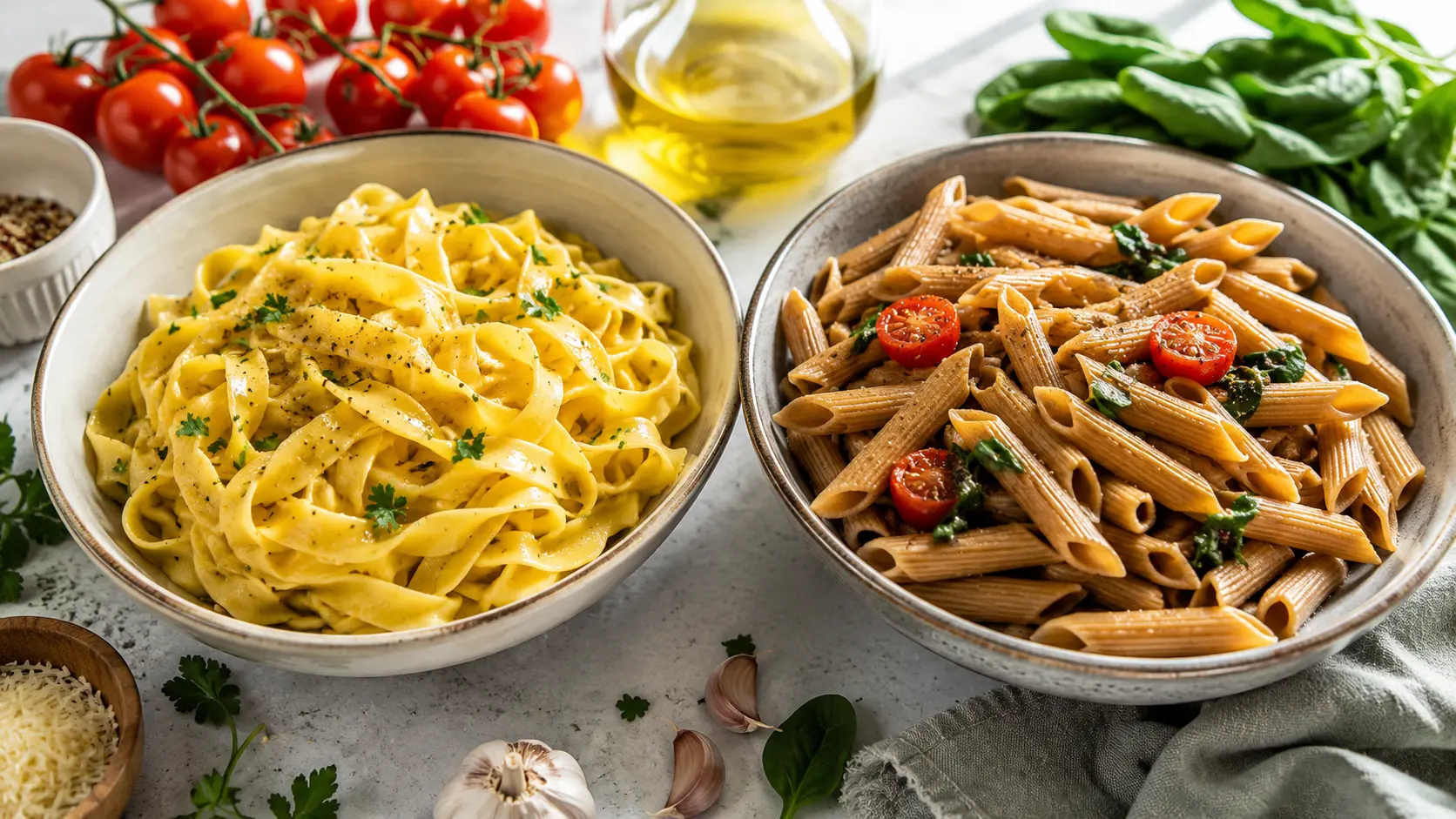
Egg noodles and regular pasta are nutritionally similar in many ways. Both are usually made from wheat, and both are carbohydrate-rich foods.
Egg noodles may have:
- Slightly more protein
- Slightly fatter
- A richer flavor and softer texture
- More cholesterol, depending on the egg content
Regular pasta may have:
- Similar calories and carbohydrates
- Less fat
- Less cholesterol
- More variety, including whole-wheat, chickpea, lentil, and high-protein options
If comparing standard egg noodles with standard refined pasta, neither is dramatically healthier. If comparing egg noodles with whole-grain or legume-based pasta, the whole-grain or legume option usually offers more fiber and may be more filling.
A note on glycemic index: refined egg noodles have a glycemic index of roughly 40–47, which is lower than white rice (GI ~73) and similar to regular spaghetti (GI ~46). The egg content slightly slows digestion compared to plain flour-and-water pasta, which is one reason clients who track blood sugar often tolerate them reasonably well in small portions.
Are Egg Noodles Good for Weight Loss or Blood Sugar Control?
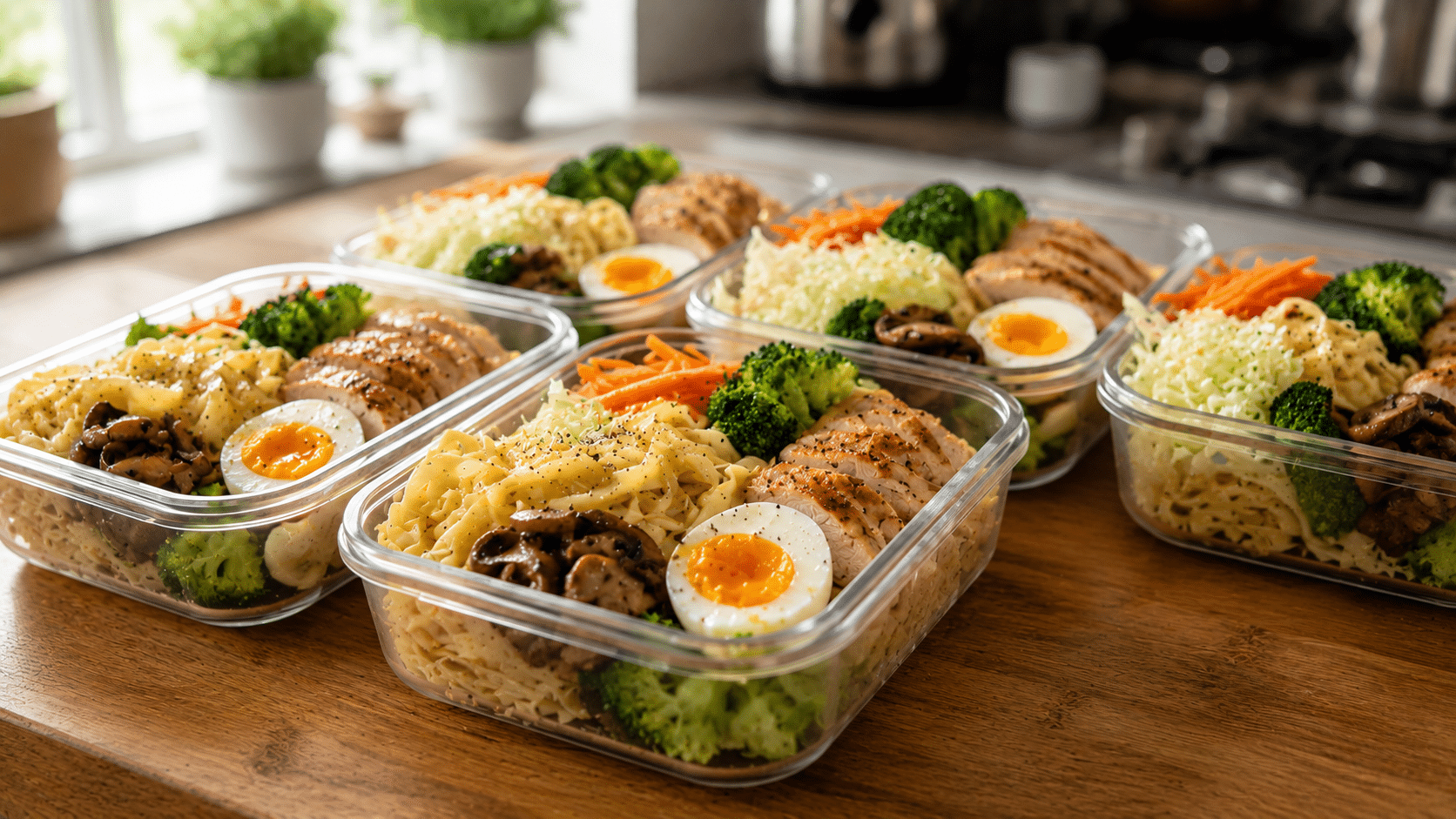
Egg noodles can fit into either goal, but the serving size and the rest of the plate matter most. Since they contain carbohydrates and limited fiber, they work better when paired with protein, vegetables, and a moderate amount of fat.
Weight Loss
Egg noodles can fit into a weight loss plan, but they should not take over the whole plate. Large servings, butter-heavy sauces, cheese, and processed meats can raise calories quickly.
| What Helps | Simple Example |
| Add protein | Chicken, turkey, tofu, shrimp, or eggs |
| Add vegetables | Broccoli, cabbage, spinach, mushrooms, or peas |
| Use lighter sauces | Broth, tomato, garlic, herbs, or light oil-based sauces |
| Control the serving | Use noodles as part of the meal, not the full meal |
| Choose more fiber | Pick whole-grain noodles when available |
In my practice, one of the most common mistakes I see is people eyeballing portions. A full box of egg noodles contains around three to four servings, but most people cook the whole box and eat half of it without realizing it.
I started measuring cooked noodle portions at home too, after noticing the same pattern in myself. A kitchen scale, or even just using a standard measuring cup, makes a genuine difference when you are tracking signs of losing fat.
Blood Sugar
Egg noodles contain carbohydrates, so they can affect blood sugar levels. Refined egg noodles may digest faster than higher fiber foods, especially when eaten alone.
People with diabetes can still eat them, but smaller portions and balanced meals usually work better.
Research supports pairing carbohydrates with protein and fat to reduce the glycemic response.
A 2015 study published in Diabetologia found that eating protein and vegetables before carbohydrates significantly lowered post-meal glucose and insulin levels compared to eating carbohydrates first. This “food order” approach is something I often recommend to clients managing blood sugar who do not want to eliminate noodle dishes entirely.
For a steadier meal, try this simple plate setup:
| Plate Part | Best Options |
| Protein | Chicken, fish, tofu, eggs, beans, or turkey |
| Vegetables | Leafy greens, broccoli, peppers, mushrooms, or zucchini |
| Noodles | A moderate serving of egg noodles |
| Fat | A small amount of olive oil, nuts, seeds, or avocado |
Whole-grain pasta or legume-based pasta may be a better choice when fiber is the main goal. Egg noodles can still work when the meal has enough protein and vegetables.
Are Egg Noodles Good for You During Pregnancy?
This is a question I hear from clients regularly, and it deserves direct attention. Enriched egg noodles contain folate, which supports neural tube development in early pregnancy. The iron in enriched wheat flour also helps meet the higher iron demands during pregnancy.
That said, egg noodles are not a substitute for more nutrient-dense carbohydrate sources. Pregnant women are encouraged to prioritize whole grains, legumes, and a variety of vegetables alongside dishes that include egg noodles.
Safe prenatal movement and nutrition together support overall health during pregnancy far more than any single food choice. The noodles themselves are safe to eat, but the overall quality of the meal matters more than any single ingredient.
Potential Health Benefits of Egg Noodles
Egg noodles can offer some nutritional benefits when eaten in the right portion size and paired with healthier ingredients like vegetables, lean protein, and light sauces.
1. Provide Quick Energy
Egg noodles are high in carbohydrates, which the body breaks down into glucose for energy. This can make them useful for active people, growing children, or anyone who needs a filling meal. They work especially well before or after physical activity when the body needs fuel.
However, because many egg noodles are made with refined flour, they should still be eaten in moderate portions and balanced with fiber-rich vegetables and protein.
2. Add Some Protein
Egg noodles usually contain more protein than plain rice noodles because they are made with eggs and wheat flour. Protein helps support fullness, muscle repair, and overall meal balance. Still, egg noodles are not considered a high-protein food on their own.
To make the meal more nourishing, pair them with chicken, tofu, low-calorie fish, beans, shrimp, or extra eggs, along with vegetables for fiber, vitamins, and minerals.
3. Easy to Prepare and Pair
Egg noodles are quick to cook and easy to include in many meals, from soups and stir-fries to casseroles and broth-based bowls. Their mild flavor works well with vegetables, lean meats, tofu, mushrooms, herbs, and light sauces.
This makes them a practical option for balanced meals when you build the dish carefully. This makes them useful for quick meals when you want something simple but still satisfying.
4. Contain Selenium
Enriched egg noodles provide a meaningful amount of selenium, a trace mineral that supports thyroid function, immune response, and antioxidant activity.
A single cooked cup provides roughly 25–30% of the daily value for selenium. This is one nutritional upside of egg noodles that rarely gets mentioned, and it is a reason I do not dismiss them as nutritionally empty.
5. Support Recovery Meals for Athletes
For clients who train regularly, I sometimes recommend egg noodles as part of a post-workout recovery meal. The combination of fast-digesting carbohydrates and moderate protein helps replenish glycogen and initiate muscle repair.
A simple bowl of chicken broth with egg noodles, cooked chicken, and spinach does the job well without overcomplicating recovery nutrition.
Possible Downsides of Egg Noodles
Egg noodles can fit into a balanced diet, but they do have some drawbacks. Most concerns come from refined flour, low fiber, large portions, and high-sodium packaged versions.
- Low in fiber: Many egg noodles are made with refined flour, so they may not keep you full for long.
- High in carbs: Large portions can add a lot of carbohydrates and calories to the meal.
- May affect blood sugar: Refined egg noodles may raise blood sugar faster than whole-grain options.
- Can be high in sodium: Instant or packaged egg noodles may contain added salt or seasoning.
- Not suitable for everyone: Traditional egg noodles contain wheat and eggs, so they are not gluten-free or egg-free.
Overall, egg noodles are not unhealthy by themselves, but they are best eaten in moderation. Choosing smaller portions and adding vegetables, protein, and lighter sauces can reduce these downsides.
Egg Noodles vs. Other Noodles
Egg noodles are versatile and filling, but they are not always the most nutrient-dense option. The healthiest choice depends on your fiber, protein, gluten, and calorie needs.
| Noodle Type | Main Ingredient | Best For | Protein (per cooked cup) | Fiber (per cooked cup) |
|---|---|---|---|---|
| Egg noodles | Wheat flour and eggs | Soups, stir-fries, comfort meals | ~7 g | ~2 g |
| Whole-wheat pasta | Whole-wheat flour | Weight management and better digestion | ~7 g | ~4 g |
| Chickpea or lentil pasta | Legume flour | High-protein or high-fiber meals | ~13–14 g | ~5–8 g |
| Rice noodles | Rice flour and water | Gluten-free diets and Asian-style dishes | ~2 g | ~1 g |
| Soba noodles | Buckwheat flour, sometimes wheat | Nutritious noodle bowls and soups | ~6 g | ~1–2 g |
| Shirataki noodles | Konjac glucomannan | Very low-calorie meals, blood sugar management | ~0 g | ~1–2 g soluble fiber |
Overall, egg noodles are versatile, but other noodles may be better when fiber or protein is your main priority. If you follow a vegetarian Mediterranean diet, legume-based pasta will typically serve you better nutritionally than standard egg noodles.
The Healthiest Ways to Eat Egg Noodles
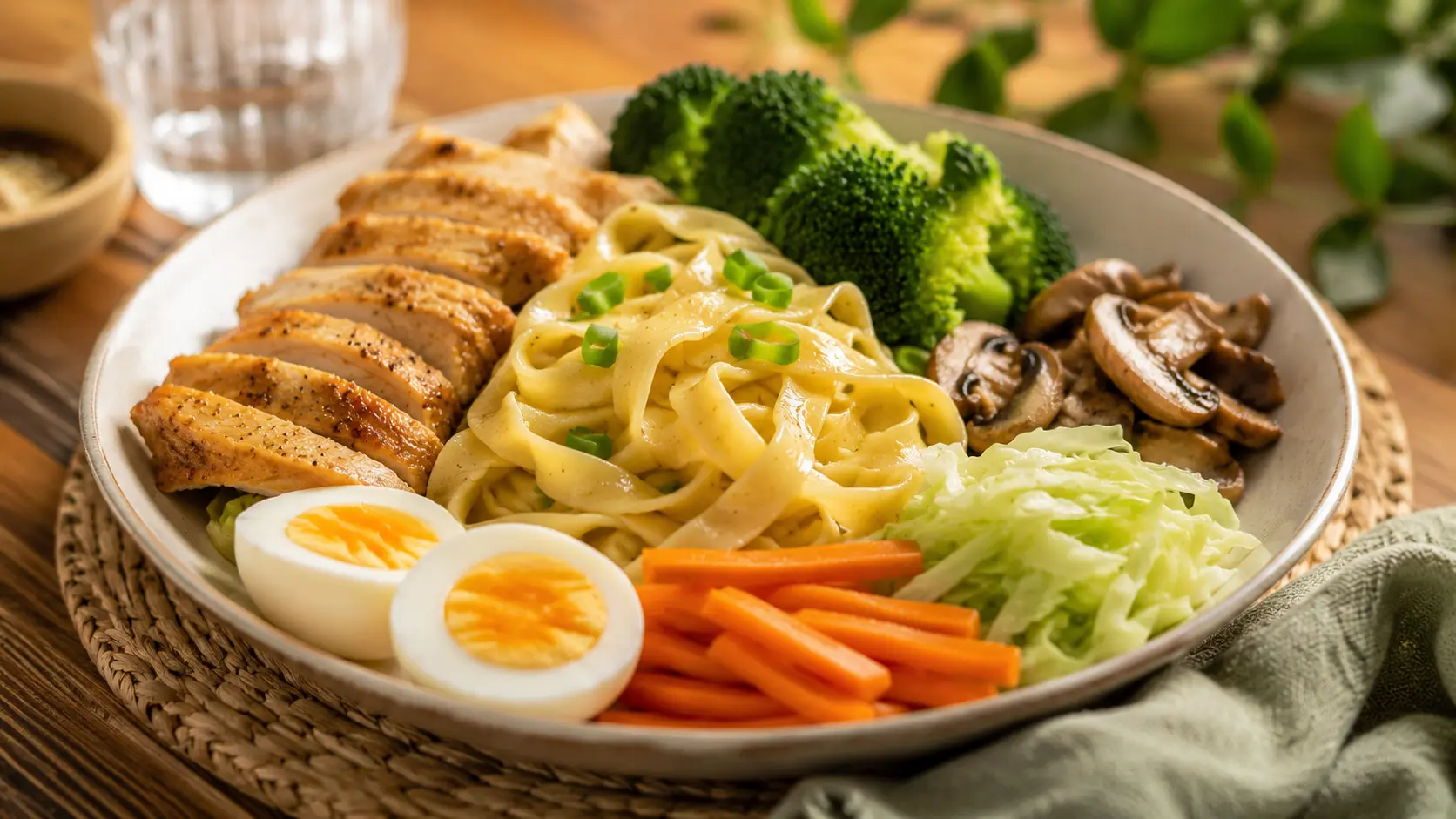
Egg noodles work well in meals that feel filling without becoming too heavy. Instead of thinking only about calories, focus on how the dish is built.
You can use them in:
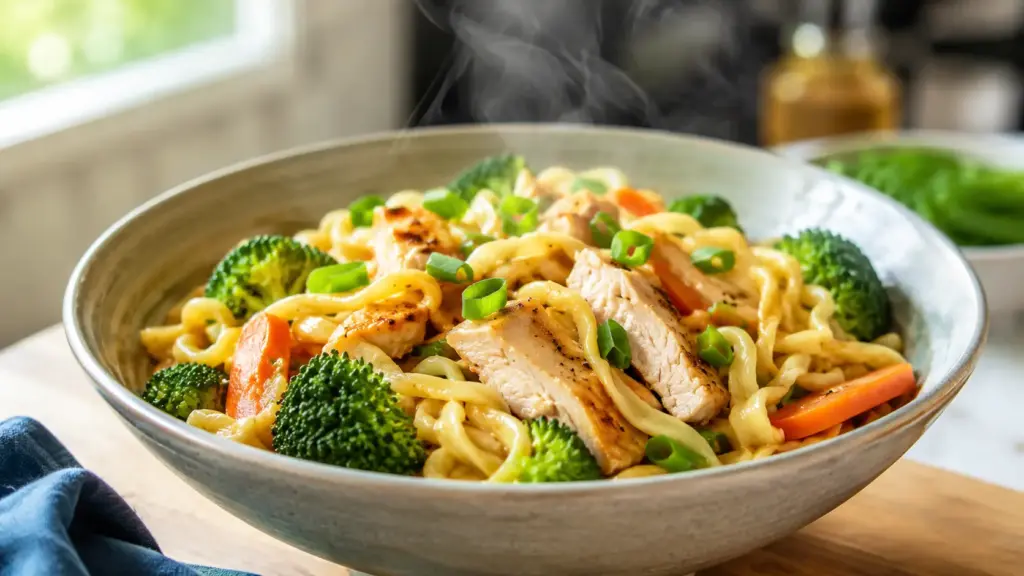
- Chicken noodle soup with extra vegetables
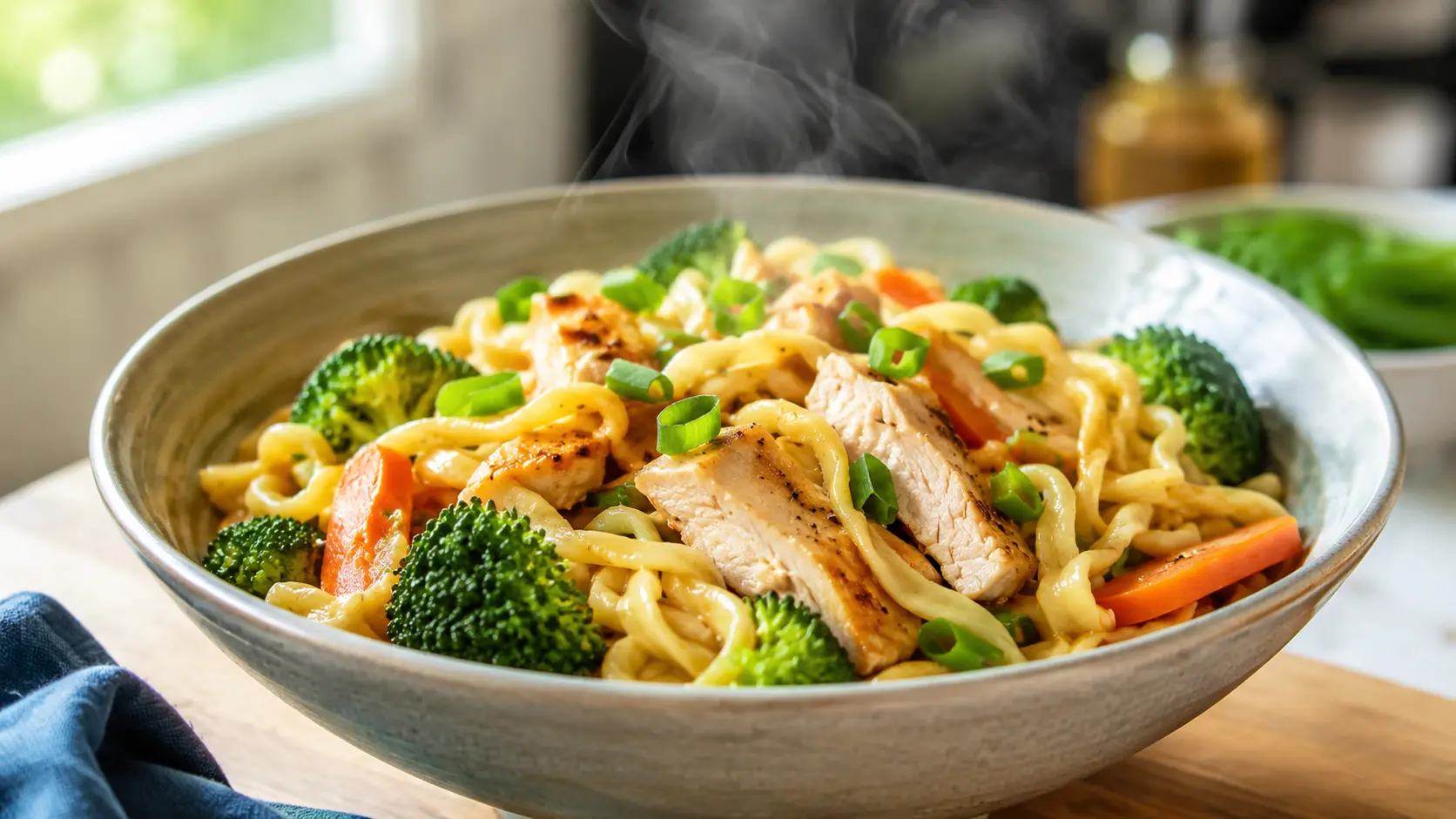
- Stir fry with cabbage, carrots, mushrooms, and shrimp
- Light skillet meals with turkey and spinach
- Broth-based bowls with tofu and greens
- Simple pasta-style dishes with tomato, garlic, and herbs
Heavy cream sauces and large amounts of cheese can make the meal much richer. Lighter sauces made with broth, olive oil, garlic, herbs, or tomato usually keep the dish easier to balance.
One recipe combination I keep coming back to: thin egg noodles in a light miso broth with shredded rotisserie chicken, shredded napa cabbage, sliced scallions, and a soft-boiled egg. It takes about 15 minutes, it is deeply satisfying, and the protein-to-noodle ratio is actually good. The miso adds gut-friendly fermented compounds on top of the other nutrients.
Frozen vegetables are useful for quick meals. I keep peas and broccoli on hand because they cook fast and make simple noodle dishes feel more complete.
What to Look for When Buying Egg Noodles
Food labels can tell you more than front-of-package claims, so check the nutrition panel before buying egg noodles. Look at the fiber content, sodium levels, ingredient list, serving size, and protein content.
Higher fiber and protein can make the noodles more filling, while lower sodium is usually better for regular meals. Whole-grain egg noodles may be worth choosing when available because they often provide more fiber than refined versions.
Also, compare fresh and dry noodles based on your needs. Fresh refrigerated noodles may taste richer and softer, while dry noodles usually last longer and cost less.
Some simple-looking brands can still contain more sodium than expected, so comparing labels helps you choose a healthier option.
Frequently Asked Questions
Are egg noodles easy to digest?
Egg noodles are usually easy to digest for many people because they are soft and often low in fiber. However, they may not suit everyone. People with gluten sensitivity, egg allergy, or certain digestive issues may need another noodle option.
Can you eat egg noodles every day?
You can eat egg noodles often, but eating them every day may limit variety. Since many versions are low in fiber, it helps to rotate them with whole grains, beans, vegetables, and other nutrient-rich carbohydrate foods.
Are egg noodles healthier boiled or fried?
Boiled egg noodles are usually healthier because they do not need extra oil. Fried egg noodles can contain more calories and fat, especially when cooked with rich sauces, butter, or processed meats. The cooking method changes the meal’s health value.
Do egg noodles have more calories after cooking?
Cooking egg noodles does not add calories by itself. They absorb water, so the cooked portion weighs more, but the calories from the dry noodles stay the same. Calories increase only when you add oil, butter, sauces, or toppings.
Can egg noodles be part of a low-sodium diet?
Plain egg noodles may fit a low-sodium diet, depending on the brand. Packaged, instant, or flavored versions can contain more sodium than expected. Check the nutrition label and choose plain noodles if you are watching your sodium intake.
Are egg noodles better for soup or stir-fry?
Egg noodles work well in both soup and stir-fry. Softer noodles are great for soups, while thicker noodles hold up better in stir-fries. The healthier choice depends more on the broth, sauce, oil, vegetables, and protein you use.
Final Thoughts
Egg noodles can work in your diet, but they are best treated as one part of the meal, not the whole plate.
If you came here asking, ” Are egg noodles healthy, the honest answer is yes, sometimes. They give you energy, some protein, and a soft, satisfying texture, but many versions are low in fiber and easy to overeat.
I’d focus on smaller portions, better pairings, and labels with more fiber and less sodium. You can also compare them with whole-wheat, lentil, chickpea, or soba noodles when your goal is more nutrition.
Try these tips next time you cook egg noodles, and share what works best for you.