




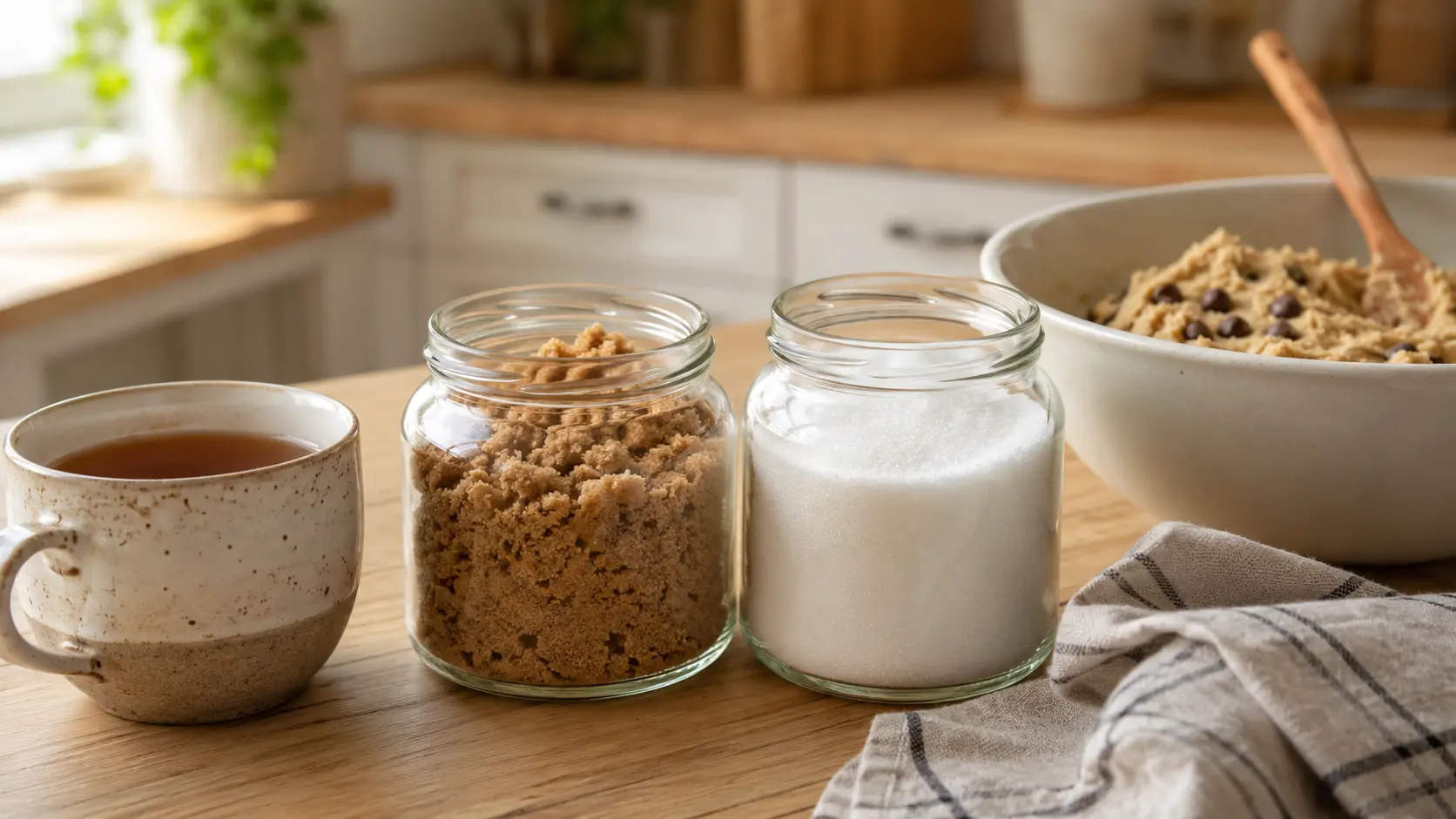









Grabbing brown sugar instead of white sugar felt like the smarter choice to me for a long time.
It looked more natural and less processed, so I assumed it had a clear health edge. But once I checked the nutrition facts and started looking into carbs in foods, the difference was smaller than expected.
So, is brown sugar healthier than white sugar, and is brown sugar healthy enough to use as a better daily sweetener?
This blog compares both sugars by nutrition, blood sugar impact, and health effects. It also answers what is the healthiest sugar if you want a better option for daily use.
I kept the answer practical, so you can choose based on facts instead of color, habit, or package claims.
Is Brown Sugar Healthier Than White Sugar?
No, brown sugar is not much healthier than white sugar.
Brown sugar may look like the better choice because it has a darker color and a softer feel. That comes from molasses, which changes how it tastes and behaves in recipes.
But those changes do not create a major health difference. Brown sugar and white sugar are both added sugars, and your body handles them in very similar ways.
This does not mean brown sugar is “bad” on its own. It simply means it should not be treated as a healthier swap for white sugar.
If you are choosing between the two for health, there is no clear winner. The better choice depends more on how much sugar you use and how often you use it.
What Is Brown Sugar?
Brown sugar is a sweetener made from refined sugar and molasses.
Most store-bought brown sugar starts as white sugar. Then molasses is added back in to give it color, moisture, and flavor. Since sugar is a concentrated carbohydrate, it also helps to understand how it compares with high-carb fruits when planning your daily intake.
Light brown sugar has less molasses and a milder taste. Dark brown sugar has more molasses and a stronger taste.
Brown sugar feels slightly moist because molasses holds water. That is why it can clump more than white sugar.
Note: Brown sugar is not the same as raw sugar, turbinado sugar, or muscovado sugar. Most commercial brown sugar is refined sugar with molasses added back in.
What Is White Sugar?
White sugar is the everyday table sugar used in drinks, baked goods, desserts, sauces, and many packaged foods.
It usually comes from sugarcane or sugar beets. During processing, the sweet juice from the plant is cleaned, boiled, and crystallized until it forms white sugar crystals.
The molasses is removed during this process, which gives white sugar its lighter color and plain sweet taste.
Because it has a neutral flavor, white sugar works well in recipes where you do not want extra color, moisture, or a caramel-like taste.
Brown Sugar vs White Sugar: Nutritional Comparison
Brown sugar and white sugar look different, but their nutritional values are very close. This table shows the main differences clearly.
| Nutrition Point | Brown Sugar | White Sugar |
| Calories | About 15 calories per teaspoon | About 16 calories per teaspoon |
| Carbohydrates | About 4 grams per teaspoon | About 4.2 grams per teaspoon |
| Glycemic index | Around 64 | Around 65 |
| Minerals | Has tiny traces of calcium, potassium, and iron from molasses | Has almost no minerals after refining |
| Vitamins | Does not provide useful vitamins in a normal serving | Does not provide useful vitamins in a normal serving |
| Fiber | No dietary fiber | No dietary fiber |
| Protein and fat | No useful protein or fat | No useful protein or fat |
Brown sugar has a small edge in trace minerals, but the amount is too low to make it a healthier daily choice.
Health Impact: Are They Equally Harmful?
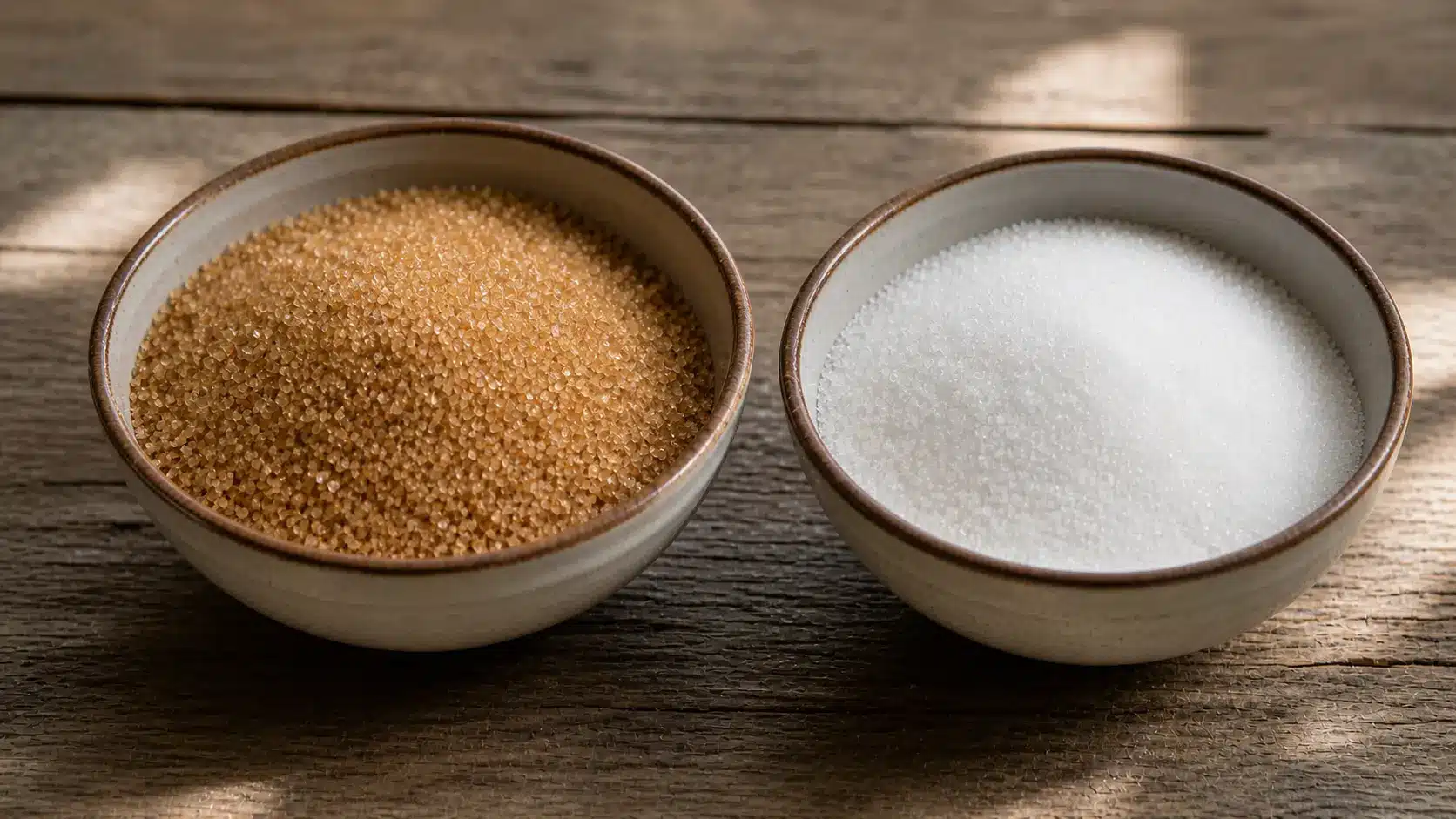
Brown sugar and white sugar affect the body in similar ways because both are forms of sucrose.
Once you eat them, your body breaks them down into glucose and fructose. That means the health impact is mostly tied to total added sugar intake, not the color of the sugar.
1. Blood Sugar and Insulin
Brown Sugar: Raises blood glucose quickly, like most sugars. Frequent spikes push the body to release insulin repeatedly, which may make blood sugar harder to manage over time.
White Sugar: Behaves the same way, raising blood glucose quickly. Regular intake can lead to repeated insulin responses, which may affect energy levels and blood sugar control over time.
2. Heart Health
Brown Sugar: Counts as added sugar, so high intake may affect heart health. The small amount of molasses does not remove this concern.
White Sugar: Carries the same concern when eaten often or in large amounts. Sweet drinks, desserts, packaged snacks, and sauces can add up quickly in a daily diet.
3. Weight Gain
Brown Sugar: Adds calories without much fullness. Since it has no useful fiber, protein, or fat, it is digested quickly and may leave you wanting more food later.
White Sugar: Works much the same way. It adds quick calories but does not help you stay full, which can make overeating easier when intake is high.
4. Dental Health
Brown Sugar: Feeds bacteria in the mouth. These bacteria produce acid, which can wear down tooth enamel and raise cavity risk over time.
White Sugar: Affects teeth in the same way. Frequent sugar exposure matters more than the type of sugar, especially when sweets or sugary drinks are consumed often.
5. Liver Health
Brown Sugar: Contains fructose, which the liver has to process. A small amount is not usually the issue, but high intake over time can place more strain on the liver.
White Sugar: Also contains fructose and carries the same concern. The bigger issue is total added sugar intake, especially from sweet drinks and frequent desserts.
What Is the Healthiest Sugar?
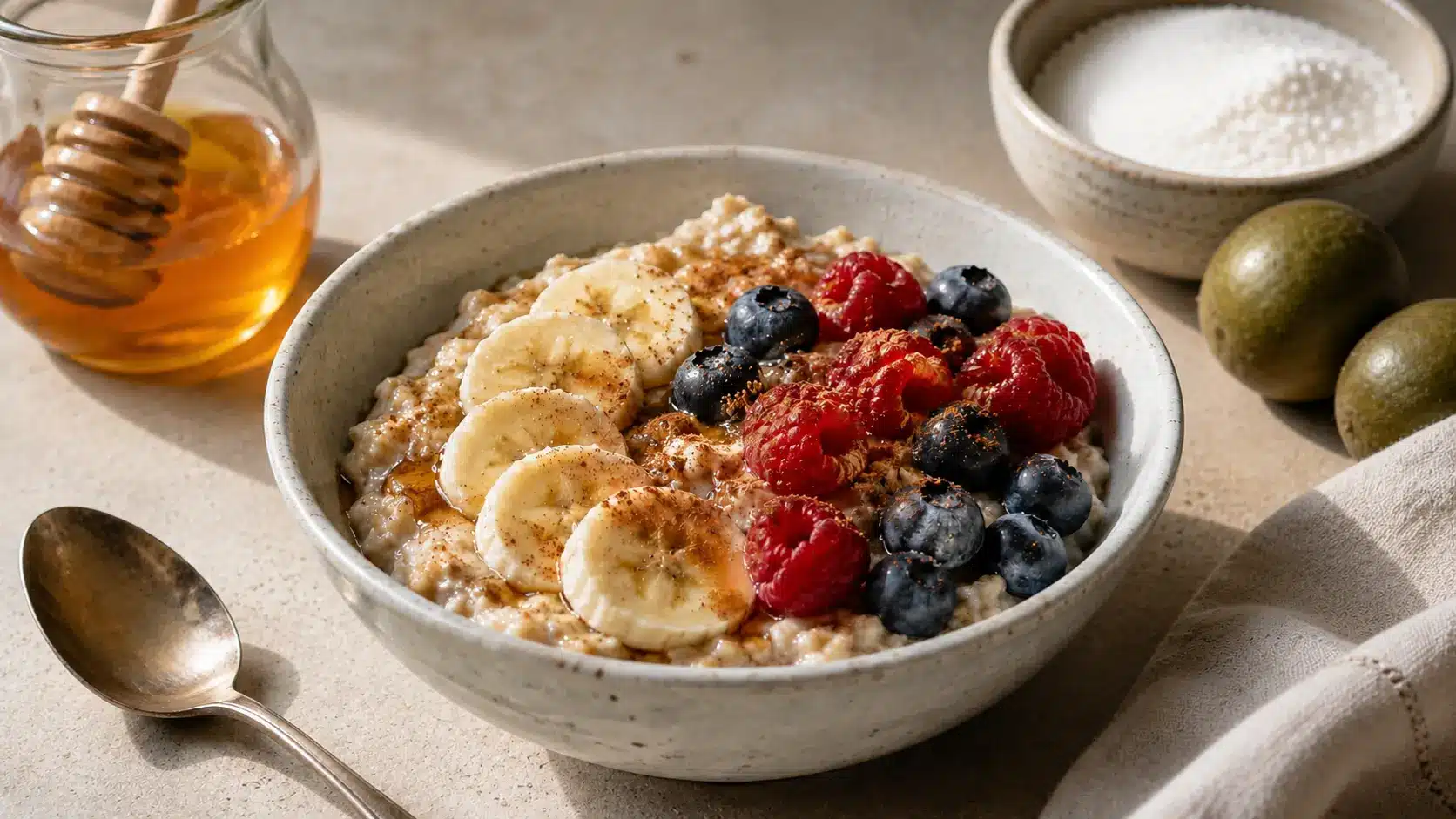
The healthiest approach is usually to use less added sugar, no matter which sweetener you choose.
- Serving size matters: A small amount used now and then is different from adding sweeteners to drinks, snacks, and meals every day.
- Frequency matters: Sugar becomes more of a concern when it shows up often across your routine, not just in one food.
- Labels matter: Packaged foods can contain added sugar even when they do not taste very sweet.
- Whole foods help: Naturally sweet foods with fiber and water can be a better daily choice than spooned sweeteners.
Common Sweeteners and Sugar Alternatives
Here is how common sweeteners and sugar alternatives compare.
| Sweetener | Best For | What to Know |
| Stevia | Cutting calories | Stevia has no calories and does not raise blood glucose. It tastes very sweet, so only a small amount is needed. |
| Monk fruit | Low-calorie sweetness | Monk fruit has no calories and does not raise blood glucose. Some products mix it with erythritol for a smoother taste. |
| Erythritol | Sugar-like taste | Erythritol is a sugar alcohol with very low calories. It has little effect on blood glucose, but some people may notice stomach discomfort. |
| Coconut sugar | Closer sugar swap | Coconut sugar has a lower glycemic index than white sugar, but it still has calories and carbs. |
| Raw honey | Stronger flavor | Raw honey may have small amounts of antioxidants and minerals, but it still raises blood sugar. |
| Pure maple syrup | Baking and toppings | Maple syrup has small mineral traces, but it still counts as added sugar. |
For daily health, using less added sugar matters more than finding a perfect sweetener.
Frequently Asked Questions
Does brown sugar have molasses naturally?
Most commercial brown sugar does not keep its molasses naturally. It is usually refined sugar with molasses added back in. That is why it has a darker color, softer feel, and richer taste.
Is organic brown sugar better than regular brown sugar?
Organic brown sugar may be made under different farming rules, but it is still sugar. The organic label does not change its main nutrition value or make it a strong health choice.
Can brown sugar be part of a balanced diet?
Yes, brown sugar can fit in small amounts. The key is how often you use it and how much you add. A small serving matters less than frequent intake across many foods and drinks.
Should you cut out all added sugar?
Not everyone needs to remove added sugar completely. A more realistic goal is to reduce it where it shows up often, such as sweet drinks, desserts, sauces, and packaged snacks.
How can you use less sugar without making food taste bland?
Start with small changes. Use less sugar in drinks, add cinnamon or vanilla for flavor, and choose fruit when it fits the meal. These steps can help your taste adjust over time.
Final Verdict
Brown sugar and white sugar are more alike than most people expect.
If you came here asking, “Is brown sugar healthier than white sugar?” the honest answer is no, not in a meaningful way. The small differences in calories, blood sugar impact, and nutrients are not enough to make brown sugar a stronger health choice.
I would choose brown sugar for taste, texture, or a mild caramel note, not because it is healthier. White sugar works better when you want cleaner, simpler sweetness.
So, for daily health, the real difference comes from using less added sugar overall, not switching from one type to another.