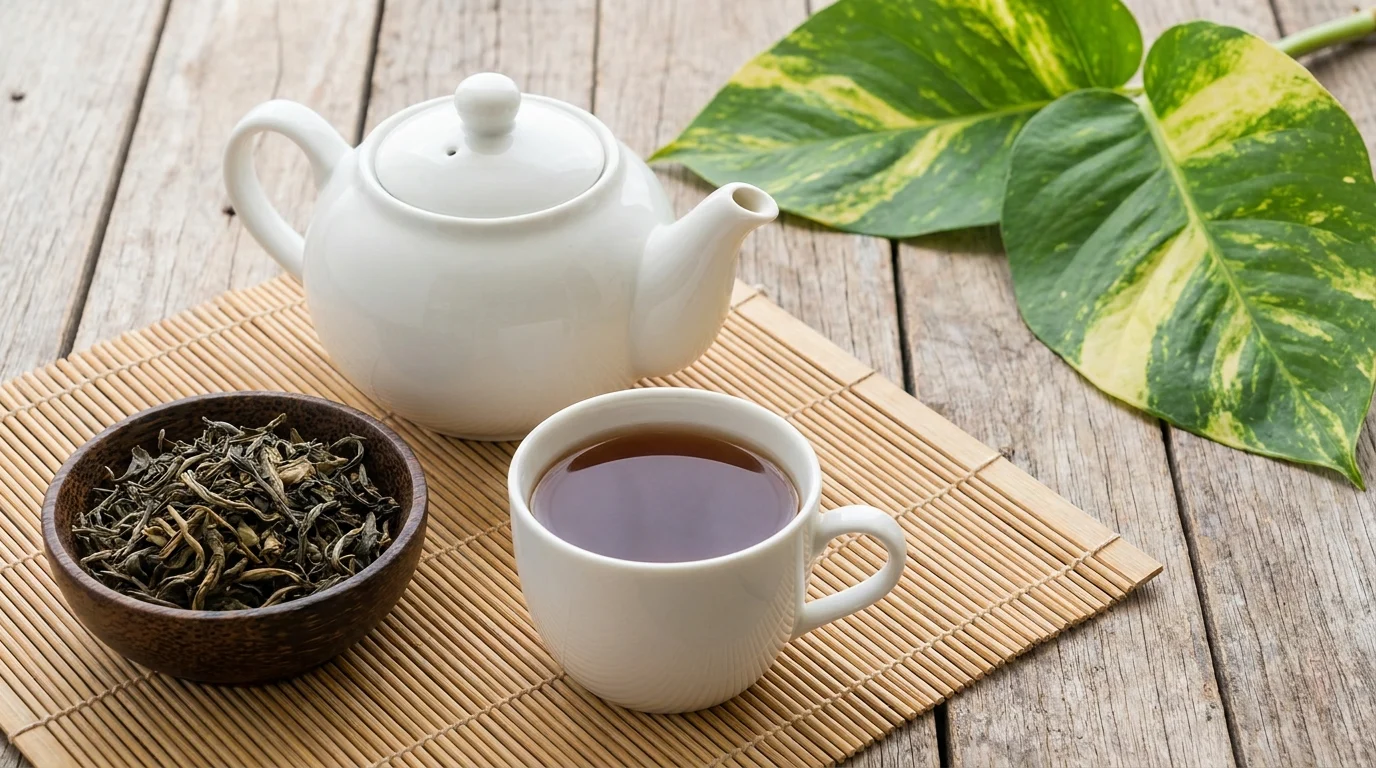















There is something deeply comforting about wrapping both hands around a warm mug when your throat feels like sandpaper. That scratchy, raw feeling, the kind that makes swallowing painful and talking an effort, can knock your whole day sideways.
My go-to has always been tea, and over time, that habit has turned into a fairly strong opinion about which ones actually help and which ones just taste nice.
The best tea for a sore throat is not just any warm drink; it is one that targets your specific symptoms, whether they are swelling, dryness, congestion, or a stubborn cough. Let’s get to the full, covered breakdown of solid options, ranked by what they do, plus exactly how to get the most out of each one.
Does Tea Help With a Sore Throat?
he short answer is yes, and not just because warm liquids feel good. When you sip warm tea, the heat helps relax inflamed throat muscles, the steam loosens congestion, and the specific plant compounds in herbal teas work on the tissue itself.
Certain herbs contain mucilage, which coats and protects the raw throat lining. Others carry anti-inflammatory compounds that reduce swelling at the source. Some have mild antimicrobial properties.
A clinical study published in PMC found that a herbal tea containing demulcent herbs, licorice root, slippery elm, and marshmallow root, provided more pain relief than a placebo tea in patients with acute pharyngitis, meaningfully.
Tea is not a medical treatment, but the evidence for it as a symptom-support tool is real and worth taking seriously.
If you want to deepen your herbal tea practice beyond illness relief, the Ayurvedic herbal drinks cover warming spice blends and seasonal teas worth exploring year-round.
Types of Tea That Soothe a Sore Throat
Not every sore throat feels the same, and not every tea works the same way. Here are options worth knowing, each one suited to a specific kind of throat discomfort.
1. Ginger Tea

Ginger contains two active compounds, gingerols and shogaols, that are well-documented for reducing inflammation.
When your throat is visibly swollen and tender to the touch, ginger tea works on the root cause rather than just masking the discomfort. It also settles nausea, which sometimes accompanies a bad cold or viral infection.
Best for: Inflamed, swollen throat tissue
How to brew it: Slice 6 to 8 thin rounds of fresh ginger root. Steep in just-boiled water for 10 minutes with the cup covered. Fresh root is significantly stronger than a tea bag, and the difference is noticeable.
Pro tip: Add a small pinch of black pepper to your cup. Piperine, the compound in black pepper, increases the body’s absorption of the anti-inflammatory compounds in ginger. Most people skip this step, and it makes a real difference.
2. Chamomile Tea
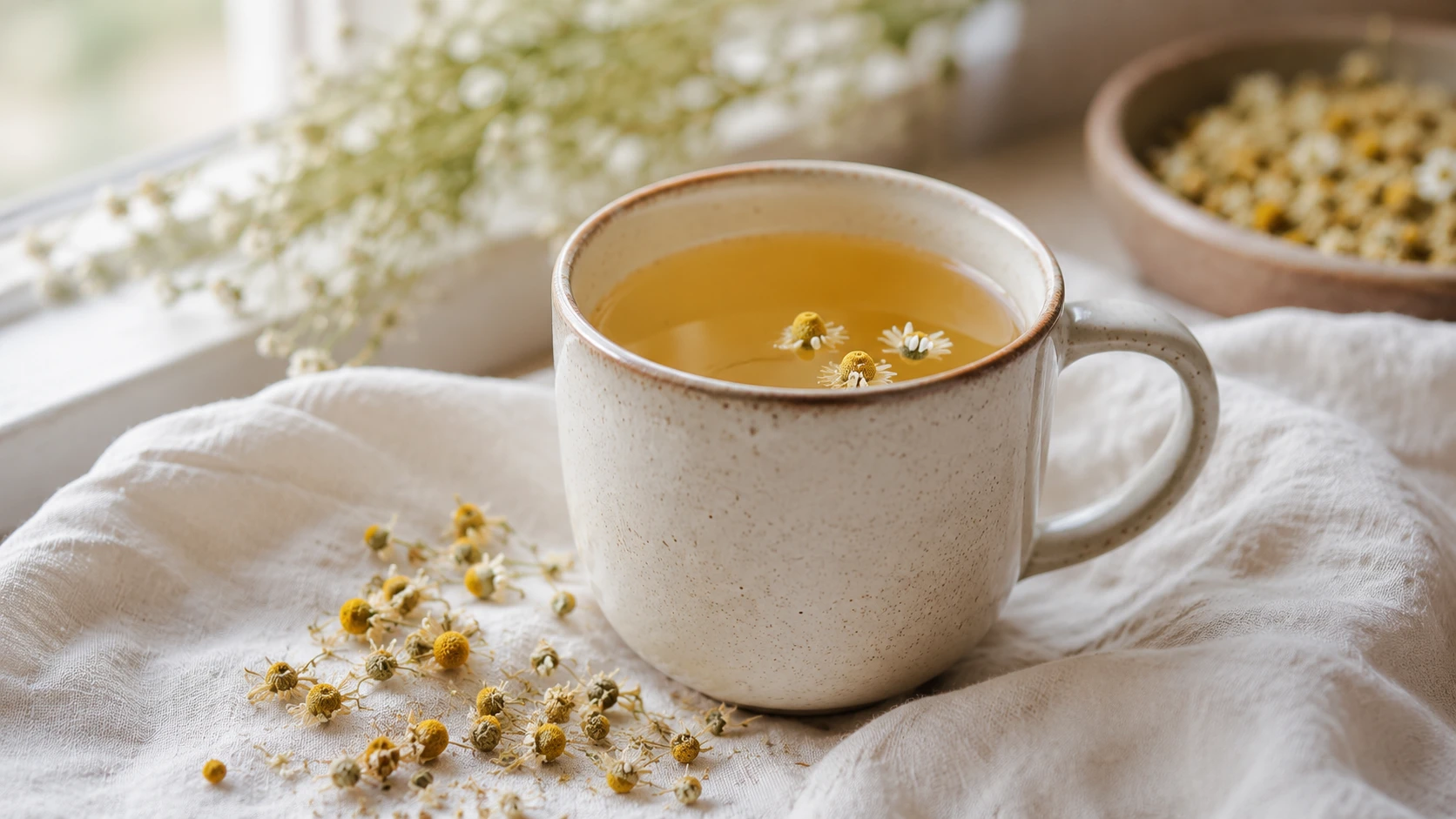
Chamomile is the one most people already have in their cupboard, and there is a good reason it has stayed popular for this long. It contains apigenin, an antioxidant that reduces inflammation and helps relax the muscles in and around the throat. It is gentle, naturally caffeine-free, and one of the better options when you want something that does double duty, calming both your throat and your nervous system at the same time.
Best for: General soreness, nighttime use, stress-related throat tension
How to brew it: Steep covered for 8 to 10 minutes. Keeping the lid on traps the volatile oils that carry most of chamomile’s active properties, a detail that gets overlooked constantly.
Pro tip: A few drops of lavender honey stirred in make this a genuinely useful bedtime drink when a sore throat keeps you awake.
3. Licorice Root Tea
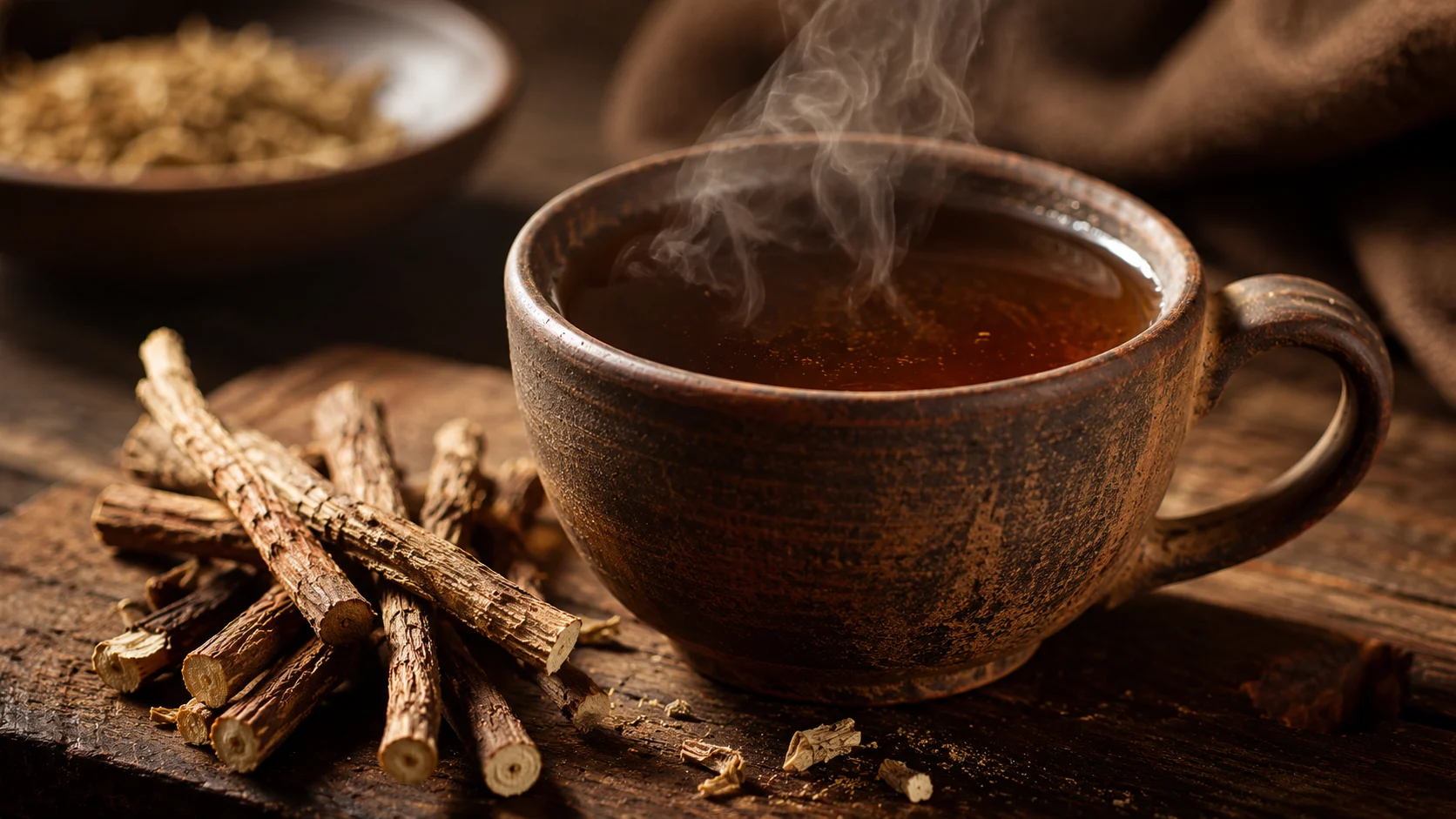
Licorice root works differently from most throat teas. Rather than reducing inflammation systemically, it acts as a demulcent, forming a soothing, protective layer directly over irritated mucous membranes.
That coating effect is what makes it particularly useful for throats that feel scraped raw after repeated coughing.
Research on herbal infusions for pharyngitis found licorice root had the lowest minimum inhibitory concentration against Streptococcus pyogenes among 13 herbs tested, suggesting real antimicrobial potential alongside its soothing properties.
Best for: Scratchy, raw, post-cough throat irritation
How to brew it: Steep a licorice root tea bag or loose dried root for 5 to 7 minutes. The natural sweetness means you rarely need to add anything.
Important note: Licorice root is not suitable for people with high blood pressure or during pregnancy. Limit use to a few days at a time.
4. Slippery Elm Tea
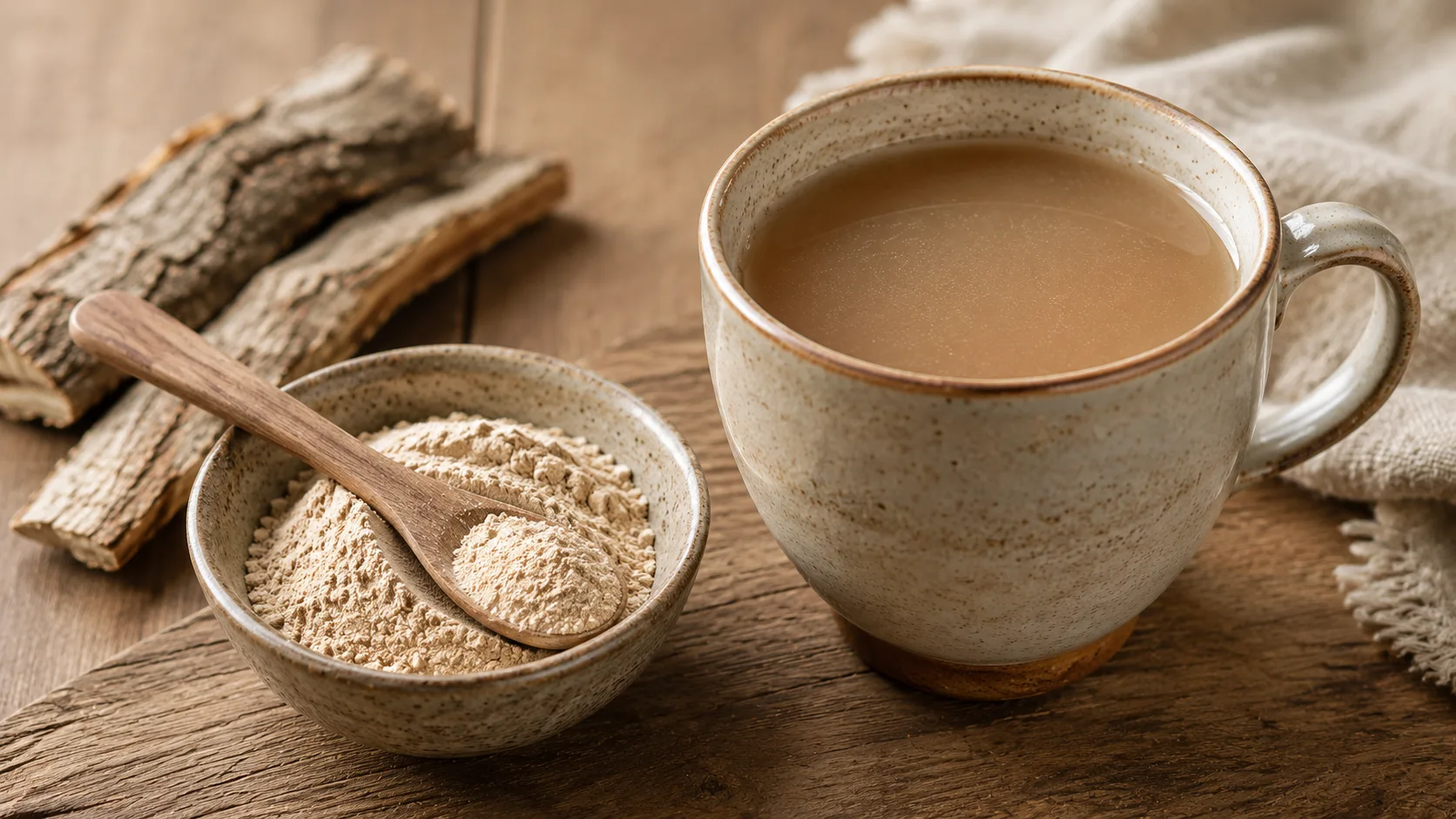
Slippery elm is one of the most clinically referenced herbs for supporting the throat and digestive mucous membranes, yet it rarely appears on mainstream lists.
The inner bark contains mucilage, a gel-forming substance that, when mixed with water, creates a thick, protective coating over raw throat tissue. Think of it as a natural barrier between the inflamed surface and anything that might irritate it further.
Best for: Dry, stripped, or raw throat tissue; recovery after illness
How to brew it: Mix one teaspoon of slippery elm powder into warm (not boiling) water and stir well. The powder form produces a thicker, more coating effect than a tea bag.
Pro tip: This is hands down one of the most underrated options on this list. If your throat feels like the skin has been rubbed off, slippery elm is what you want, not chamomile.
5. Peppermint Tea
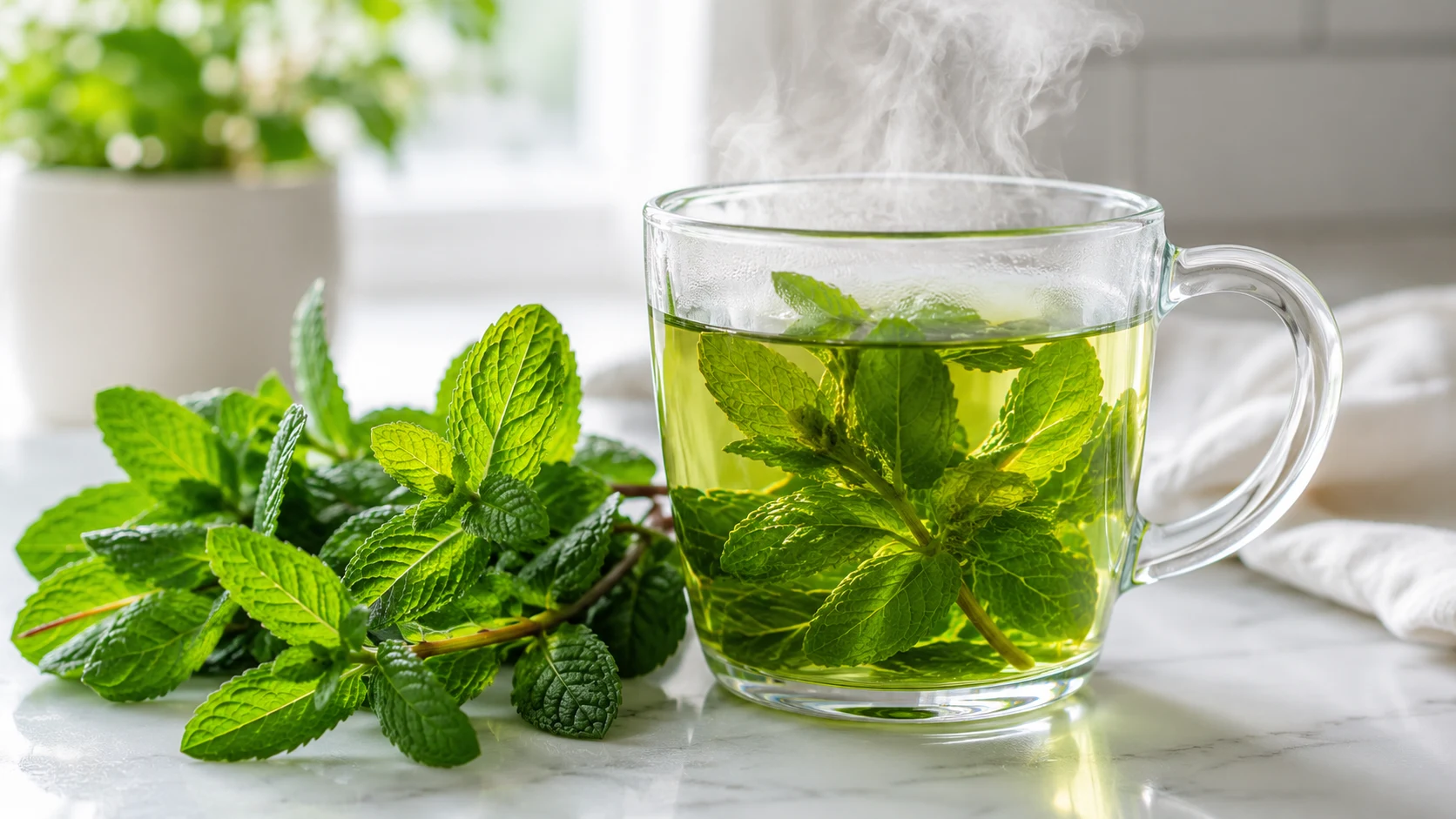
The menthol in peppermint creates a cooling, numbing sensation that temporarily reduces pain perception in the throat. It also works as a natural expectorant, helping thin and clear mucus, which is useful when congestion is part of the picture.
Best for: Congestion-related throat discomfort, sinus pressure, throat tightness
How to brew it: Steep peppermint leaves or a tea bag for 7 to 10 minutes. Before drinking, hold the cup a few inches from your face and inhale slowly. The steam alone provides meaningful decongestant relief.
Important note: Avoid giving peppermint tea to young children. Menthol can interfere with breathing in small kids and should be kept to adult use only.
6. Turmeric Tea
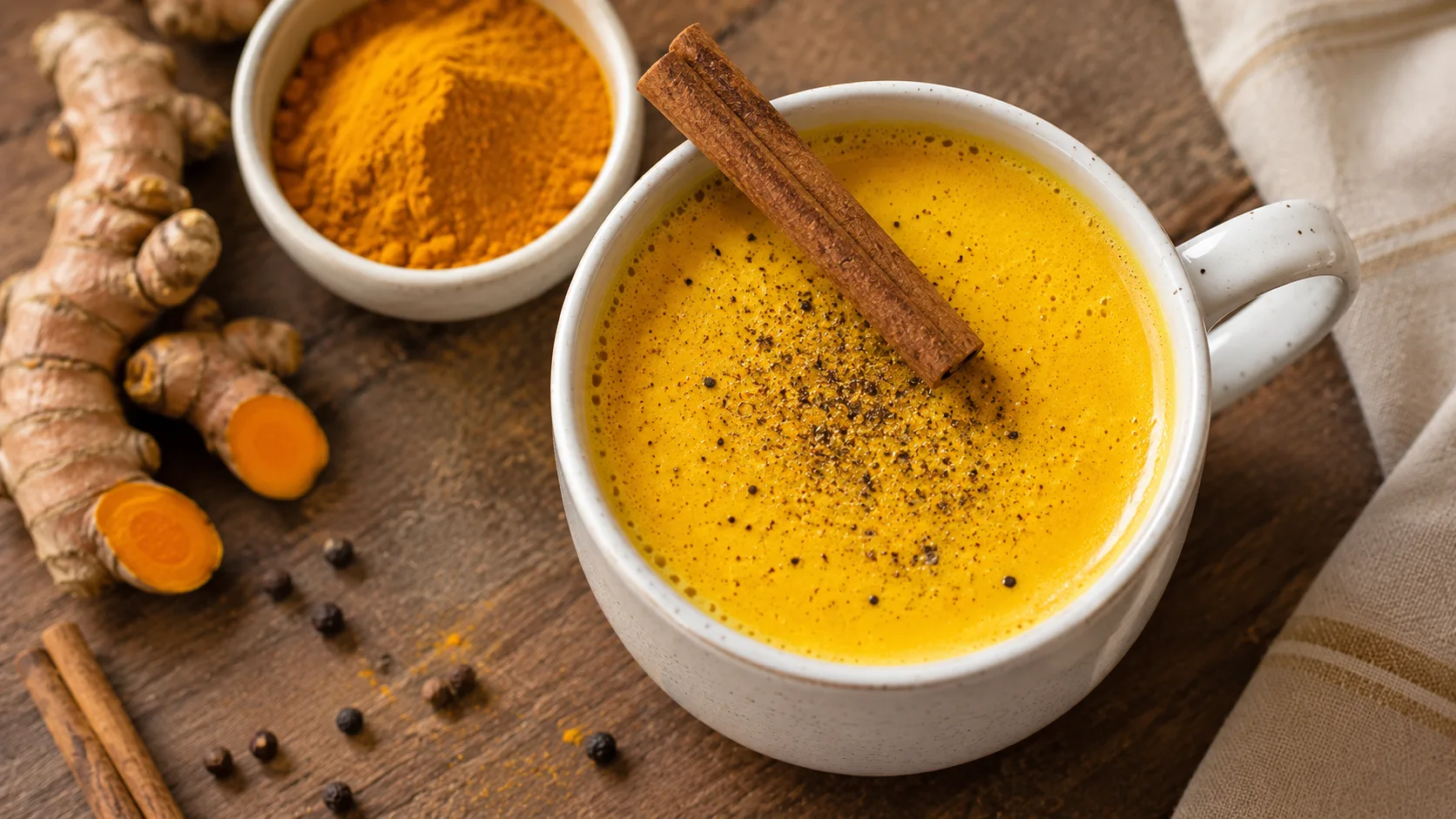
Curcumin, the active compound in turmeric, is among the most studied natural anti-inflammatory agents. Unlike herbs that coat the surface of the throat, turmeric works at a cellular level, reducing inflammatory signaling in the affected tissue.
For persistent or deep throat pain that has not responded to gentler options, it is worth reaching for. Turmeric in Ayurveda goes deeper into the herb’s history and its role in balancing the doshas, including its traditional use for coughs and respiratory complaints.
Best for: Persistent throat pain, deep inflammation, post-viral recovery
How to brew it: Stir half a teaspoon of turmeric powder into warm water or warm milk. Add a small amount of coconut oil and a pinch of black pepper, both of which significantly increase curcumin absorption.
Pro tip: Golden milk (turmeric, warm milk, honey, and black pepper) is a more palatable version of this for those who find turmeric tea too earthy on its own.
7. Marshmallow Root Tea
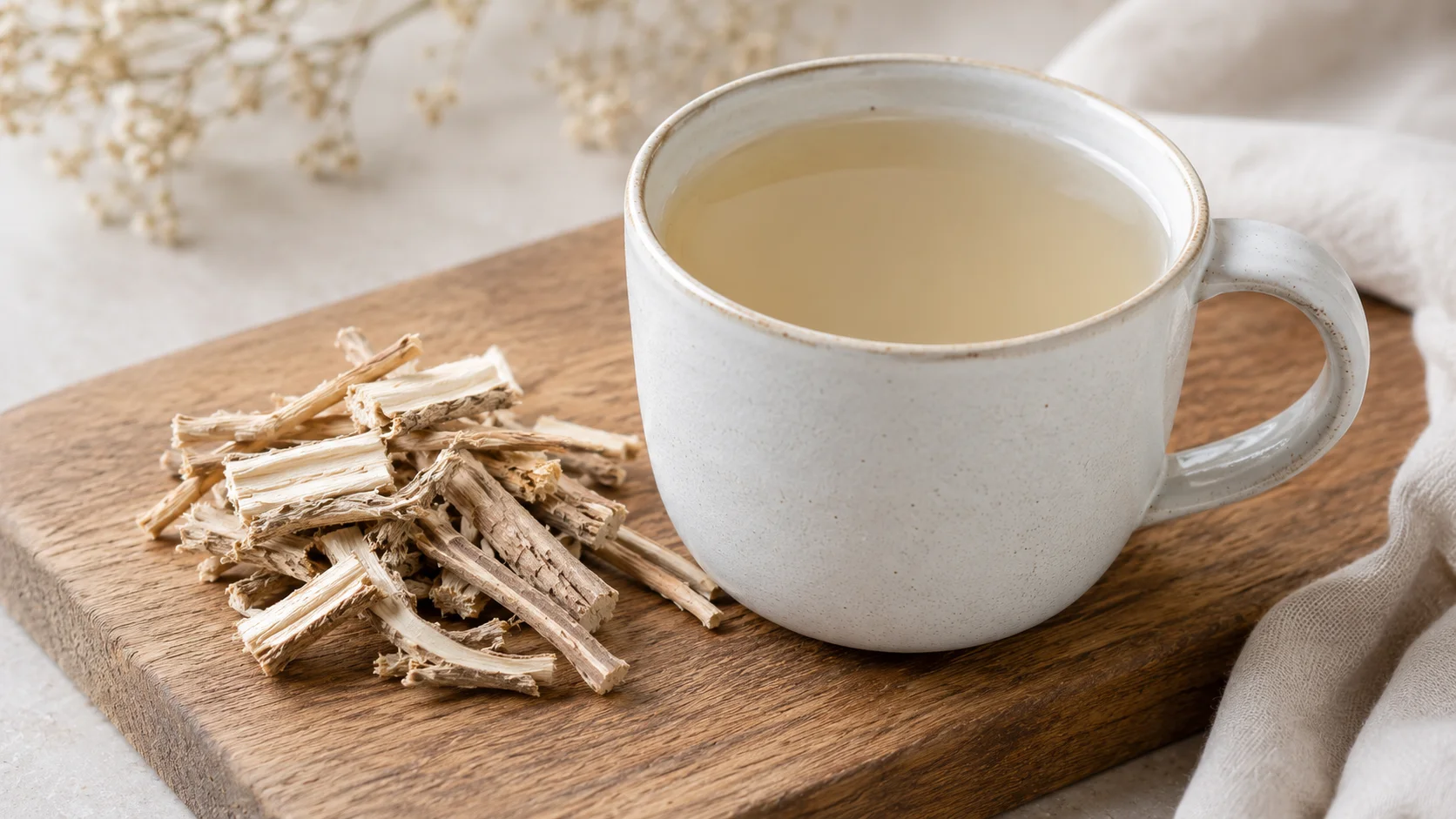
Marshmallow root is another demulcent herb, high in mucilage, similar to slippery elm, but with a slightly lighter texture and milder taste. It coats irritated throat tissue and reduces the friction that makes swallowing painful, particularly when post-nasal drip constantly re-irritates the back of the throat.
Best for: Dry coughs, constant throat irritation from post-nasal drip, a scratchy feeling that will not quit
How to brew it: Marshmallow root actually releases more mucilage during cold steeping than during hot water steeping. Add one tablespoon of dried marshmallow root to a cup of cold water and let it sit for 4 to 8 hours. Strain and drink at room temperature or warm it gently before serving.
Pro tip: Most people have never tried the cold-steep method, and it works noticeably better than the hot version for coating the throat.
8. Green Tea
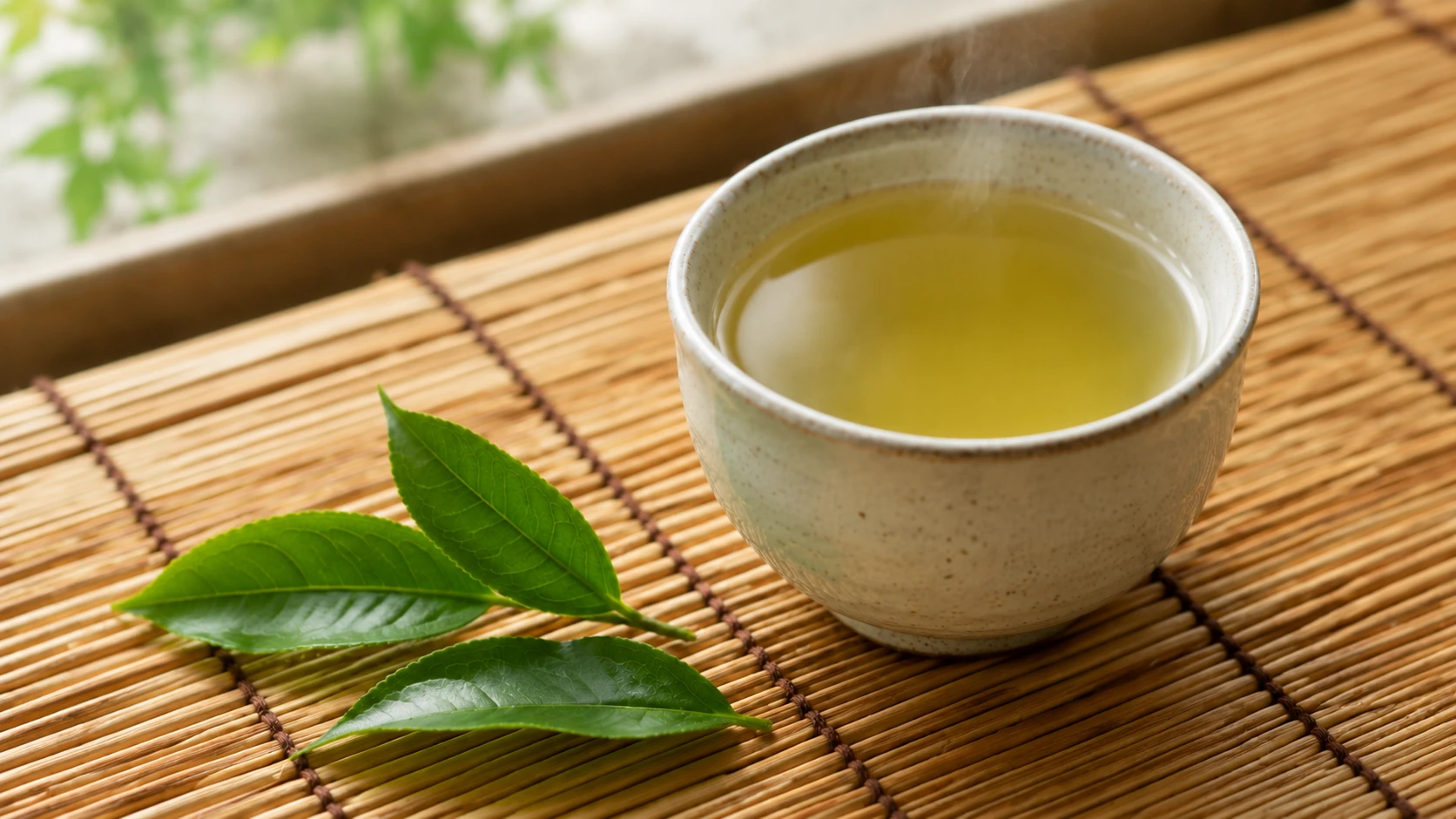
Green tea is rich in EGCG (epigallocatechin gallate), a powerful antioxidant compound with both anti-inflammatory and antimicrobial properties. Where most herbal teas soothe symptoms from the outside, green tea supports your immune system’s ability to deal with whatever caused the sore throat in the first place. It contains moderate caffeine, which makes it a better daytime option.
Best for: Immune support during early illness, mild throat soreness
How to brew it: Steep at 160 to 180 degrees Fahrenheit rather than boiling. Boiling water makes green tea bitter and degrades some of the antioxidant content. A thermometer is worth using if you drink green tea regularly.
Pro tip: Matcha is a powdered, concentrated form of green tea that delivers a stronger dose of EGCG per cup. If you have it on hand, it is a more potent choice than a standard green tea bag.
9. Horehound Tea
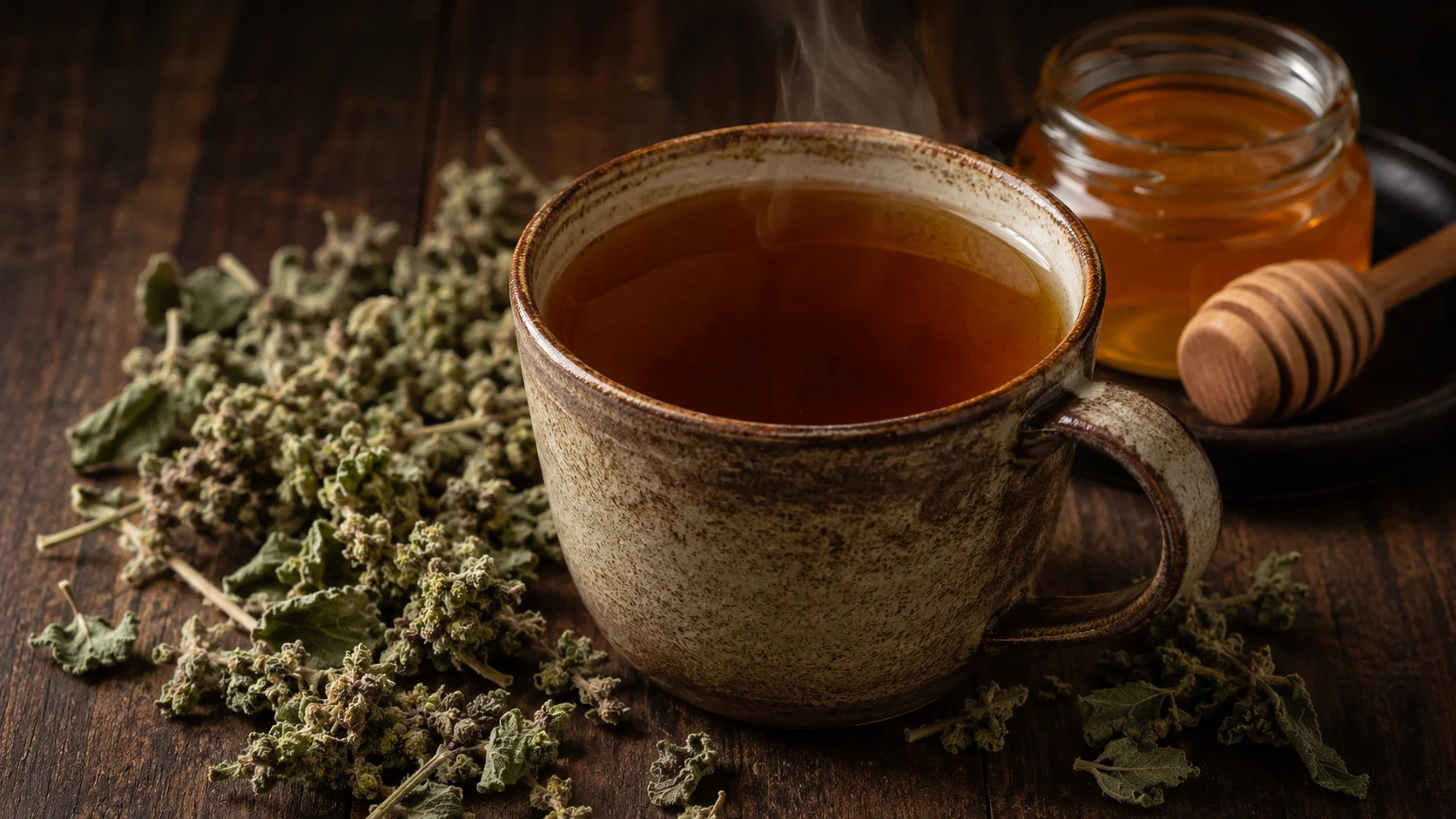
Horehound is a traditional herbal remedy that has largely fallen off modern lists despite being genuinely useful. It works as a natural expectorant, helping loosen and move mucus that has settled in the throat and chest. For a sore throat accompanied by a deep, persistent cough, horehound addresses both issues at once.
Best for: Sore throat with a productive cough, mucus buildup in the throat and chest
How to brew it: Steep dried horehound herb for 10 minutes. It has a noticeably bitter, earthy flavor, so raw honey helps considerably here.
Pro tip: Check the ingredients label on herbal blends marketed for throat comfort or respiratory support. Horehound appears in more of them than people realize, quietly doing useful work in the background.
10. Cinnamon Tea

Cinnamon contains cinnamaldehyde, a compound shown to carry both antimicrobial and anti-inflammatory properties. It also promotes circulation to the affected area, which supports the body’s natural healing process. As a warm, aromatic drink, it is one of the more pleasant options on this list, and that matters when you are unwell and your appetite for anything is low.
Best for: Early-stage sore throat, cold-related discomfort, general warming relief
How to brew it: Steep one whole cinnamon stick in just-boiled water for 10 to 15 minutes. The stick extracts slowly and produces a cleaner, smoother flavor than ground cinnamon stirred in.
Pro tip: Combining cinnamon with fresh ginger and raw honey in the same cup creates a triple-action drink that hits inflammation, warmth, and throat coating at the same time. It is one of my personal favorites when symptoms first appear.
11. Echinacea Tea
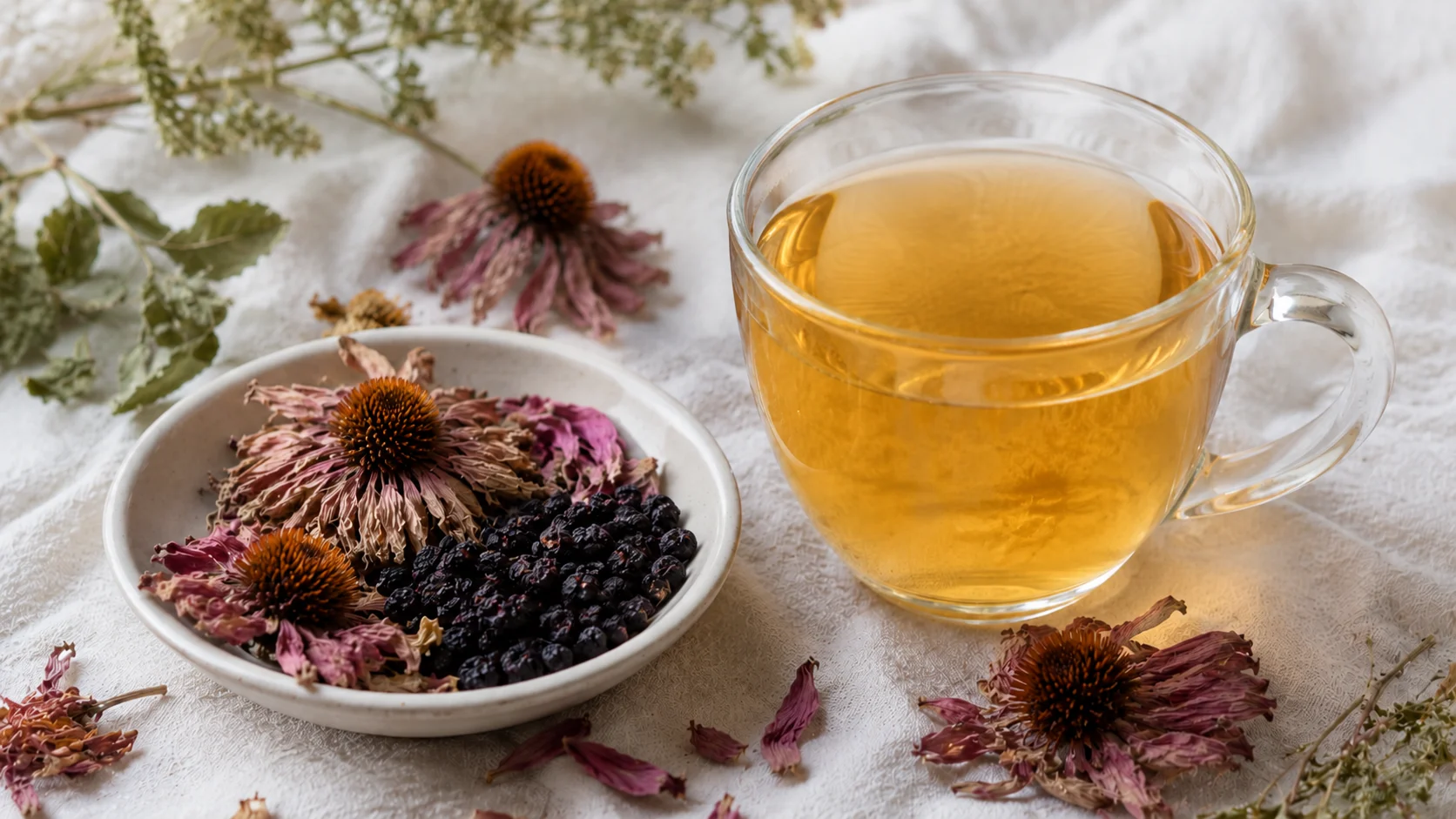
Echinacea is best known for its immune-modulating properties. It does not directly treat a sore throat, but may shorten the duration of the illness that causes it. Some research suggests it can reduce throat inflammation when used within the first 24 to 48 hours of symptom onset. Timing matters with echinacea: it works best as an early intervention, not a late-stage remedy.
Best for: Preventive use or early illness onset, immune support
How to brew it: Steep for 10 to 15 minutes to fully extract the active compounds. Echinacea tea is best used short-term, a week or two at most, rather than as a daily habit.
Pro tip: Look for a blend that combines echinacea with elderberry. The two work through complementary mechanisms and together provide broader immune support than either does alone.
12. Lemon Ginger Tea
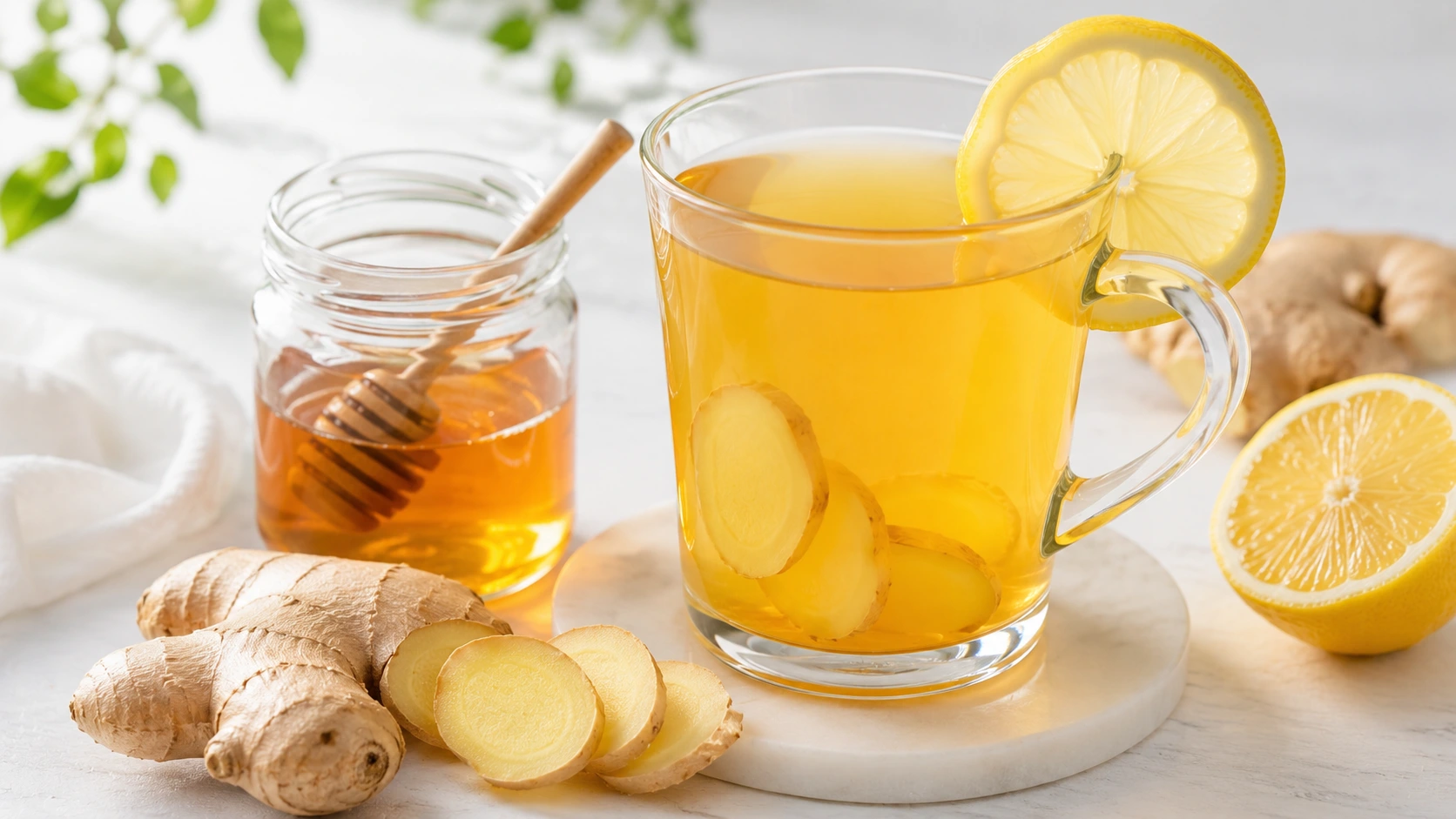
Chai is a multi-herb option in a single cup. A traditional spiced chai contains ginger, cinnamon, cardamom, cloves, and black pepper, each of which brings something to sore throat relief. Cardamom has antimicrobial properties that are rarely mentioned but well-documented.
Cloves contain eugenol, a natural analgesic compound that helps with pain. When you drink a well-made chai, you are effectively drinking a formula of sore throat herbs.
For those who want to have Ayurvedic spiced tea year-round, not just during illness, the herbal tea for energy covers tulsi chai, adaptogenic blends, and other warming drinks from the same tradition.
Best for: Comfort-driven throat relief, cold-weather illness, when you want one drink to do many things
How to brew it: For an evening option without the caffeine, use rooibos as your base instead of black tea. All the spice benefits carry through without disrupting sleep.
Pro tip: Make your own spice mix and control what goes in. Store-bought chai blends vary wildly in their spice ratios. Heavier on ginger and cardamom is where you want to be for maximum throat benefit.
13. Chai Tea

Chai is a multi-herb option in a single cup. A traditional spiced chai contains ginger, cinnamon, cardamom, cloves, and black pepper, each of which brings something to sore throat relief. Cardamom has antimicrobial properties that are rarely mentioned but well-documented. Cloves contain eugenol, a natural analgesic compound that helps with pain. When you drink a well-made chai, you are effectively drinking a formula of sore throat herbs.
Best for: Comfort-driven throat relief, cold-weather illness, when you want one drink to do many things
How to brew it: For an evening option without the caffeine, use rooibos as your base instead of black tea. All the spice benefits carry through without disrupting sleep.
Pro tip: Make your own spice mix and control what goes in. Store-bought chai blends vary wildly in their spice ratios. Heavier on ginger and cardamom is where you want to be for maximum throat benefit.
The Best Add-Ins to Make Any Throat Tea More Effective
Four simple ingredients can turn a decent cup of tea into something that works noticeably harder. Each one targets a different aspect of throat discomfort, so mix and match based on what you have:
| Add-In | What It Does | How to Use It | Best Paired With |
| Raw Honey | Coats the throat, suppresses coughs naturally, and carries antimicrobial properties. Raw varieties are more potent than processed. | Stir in after the tea cools slightly. Above 140°F, some beneficial properties break down. | Any tea on this list |
| Fresh Lemon Juice | Cuts through mucus and delivers Vitamin C for immune support. | Add after steeping, not during. Always use fresh, not bottled. | Ginger, chamomile, echinacea |
| Black Pepper (pinch) | Increases absorption of anti-inflammatory compounds, particularly curcumin in turmeric and gingerols in ginger. | A small pinch is enough. The taste is barely noticeable. | Turmeric tea, ginger tea |
| Cayenne Pepper (tiny pinch) | Capsaicin temporarily numbs throat pain at the surface level. | Use very sparingly. Too much adds irritation rather than reducing it. | Lemon ginger tea |
None of these requires much effort, and most are already in your kitchen. Even one of them, particularly raw honey, makes a meaningful difference to how the tea feels going down.
How to Brew for Maximum Relief
Most of the benefits from throat tea come down to how you make it. These four habits are simple, often skipped, and genuinely change what ends up in your cup.
- Cover your cup while steeping. Volatile compounds account for most of the medicinal benefits and escape with the steam. A small plate on top of your mug is enough to keep them in.
- Drink warm, not scalding. Very hot liquids can inflame already irritated tissue. Let your tea cool for a minute or two before sipping.
- Sip slowly throughout the day. A steady intake of warmth and active compounds works better than downing one large cup at once. Treat it as a continuous habit, not a single dose.
- Steep longer than you think. The range of eight to twelve minutes is where most plant compounds are fully extracted. Most people pull their tea bag out far too early.
Getting these details right takes about thirty extra seconds per cup. Over the course of a full day of consistent sipping, those small adjustments add up to noticeably better relief, with no extra ingredients required.
Which Tea Should You Choose Based on Your Symptoms?
Sore throats are not all the same, and the wrong tea for your specific symptom is just a warm drink. Match what you feel to what actually addresses it. Here’s what your symptoms mean:
| Your Symptom | Best Tea Choice | Why It Works |
| Raw, scraped feeling | Slippery Elm or Marshmallow Root | Both are demulcent herbs that coat and protect raw throat tissue with a gel-like layer of mucilage. |
| Swollen, inflamed throat | Ginger or Turmeric | Gingerols and curcumin act at the cellular level to reduce inflammatory signaling in affected tissues. |
| Throat and congestion together | Peppermint or Lemon Ginger | Menthol and fresh lemon cut through mucus while also addressing the underlying throat irritation. |
| Dry, persistent cough | Horehound or Marshmallow Root | Horehound loosens mucus as an expectorant; marshmallow root soothes the friction that triggers coughing. |
| At night, I cannot sleep | Chamomile | Apigenin relaxes throat muscles and calms the nervous system without any caffeine to disrupt sleep. |
| First sign of illness | Echinacea or Green Tea | Both support the immune response early, before symptoms have a chance to fully settle in. |
| General warmth and comfort | Chai or Cinnamon | Multiple warming spices in a single cup, each carrying mild anti-inflammatory or antimicrobial properties. |
If your symptoms overlap, which they often do, start with the tea that addresses your most uncomfortable symptom first. Lemon ginger with raw honey covers the widest range and is a reliable starting point when you are unsure.
When Tea Is Not Enough: Signs to See a Doctor
Tea is genuinely useful for symptom support, but it has clear limits. See a doctor if your sore throat lasts more than five to seven days without improvement, or if it returns frequently.
Other signs that need medical attention include a fever above 103°F, difficulty swallowing or breathing, white patches or pus on the tonsils, and significant swelling of the neck or jaw.
These symptoms may indicate strep throat or another bacterial infection that requires proper treatment. Tea relieves surface discomfort and supports recovery.
It does not diagnose or treat the underlying cause, and should never replace professional medical advice when symptoms are serious.
Frequently Asked Questions
What is the single best tea to drink when you first notice a sore throat?
The best tea to reach for at the first sign of a sore throat is ginger or echinacea. Ginger reduces inflammation quickly, while echinacea boosts the immune system. If you want an all-in-one option, lemon ginger tea with raw honey supports inflammation, mucus, and immune health.
Is hot tea or warm tea better for a sore throat?
Warm tea is better than hot tea. Scalding liquids can irritate the inflamed throat tissue. Warm tea, between 140 to 160°F, provides soothing relief and preserves beneficial plant compounds. Allowing tea to cool for a few minutes after steeping is ideal for comfort.
Can I drink tea for a sore throat if I think it might be strep?
Tea helps soothe discomfort but cannot treat strep throat, which is a bacterial infection needing antibiotics. If symptoms include severe pain, fever over 101°F, or white patches on the tonsils, seek medical care for proper diagnosis and treatment, as tea is a supportive remedy.
How many cups of throat tea should I drink per day when I am sick?
Two to four cups spread throughout the day is effective for consistent warmth and therapeutic compounds. Avoid drinking all at once. For herbs like licorice root or echinacea, limit to one or two cups daily to prevent overuse, and choose gentler options like chamomile for the rest.
Does adding honey to tea actually help, or is it just for taste?
Honey provides therapeutic benefits beyond sweetness. It coats the throat, reducing irritation, and has antimicrobial properties. Honey is also shown to suppress coughs. For maximum effect, add honey once the tea has cooled slightly, as high heat can degrade its beneficial enzymes.
Final Thoughts
Thirteen options sound like a lot, but the decision is simpler than it looks. Match the tea to the symptom, brew it properly, add raw honey if you have it, and drink it consistently throughout the day rather than in one sitting.
Slippery elm and marshmallow root are the underrated picks for anyone dealing with a truly raw throat. Ginger and turmeric are the ones to reach for when inflammation is the core problem. Chamomile does the quiet work of getting you through the night.
And if you want one drink that covers the most ground at once, a well-made lemon ginger tea with raw honey is hard to beat. Keep a few of these on hand, because sore throats have a way of showing up without much warning.
Drop a comment below and let me know which one worked best for you.