



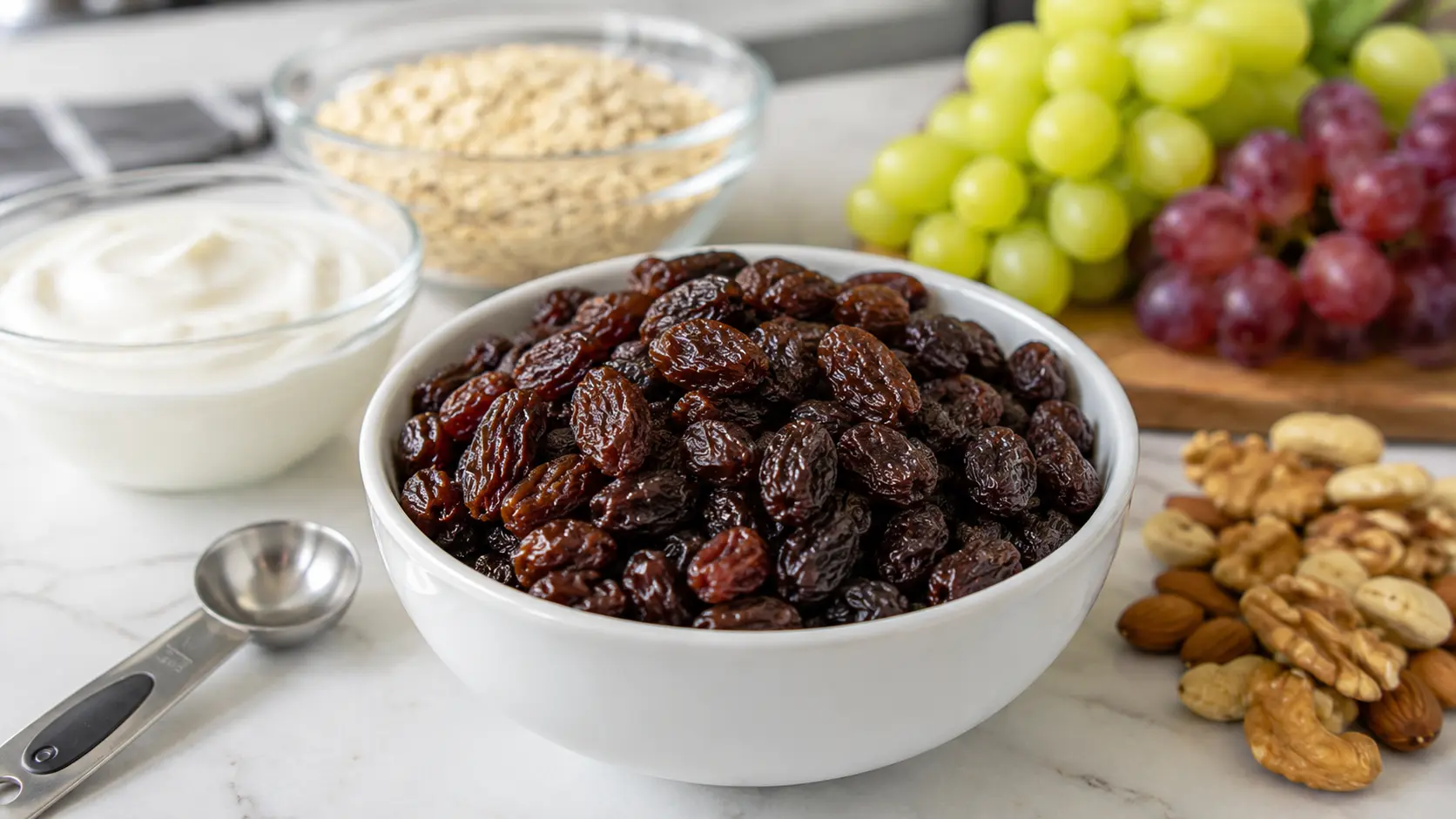









Raisins look innocent until you check the nutrition label. If you have ever wondered if these tiny snacks actually help your body or just pack on extra carbs, you are not alone.
Many people find the health benefits of raisins confusing because they are so concentrated. I know how easy it is to accidentally eat a whole box while thinking you are being healthy.
To clear things up, I have broken down exactly what these dried grapes offer your body. You will learn the specific nutrients they provide, how they impact your blood sugar, and the best ways to enjoy them without overdoing the calories.
Raisins Nutrition Facts
Raisins are small, but they are nutrient-dense dried fruits. A ¼-cup serving, or about 40 grams, provides natural carbohydrates, fiber, and minerals that may support energy, digestion, and daily wellness.
| Nutrient | Approx. Amount in ¼ Cup Raisins |
|---|---|
| Calories | 120 calories |
| Carbohydrates | 32 g |
| Natural Sugars | 26 g |
| Fiber | 2 g |
| Protein | 1 g |
| Fat | 0 g |
| Potassium | 300 mg |
| Iron | 1 mg |
| Calcium | 25 mg |
Because raisins are dried, their calories and natural sugars are more concentrated than those of fresh grapes. Keeping the serving near ¼ cup daily helps you enjoy the benefits without overdoing sugar or calories.
Are Raisins Good for You?
Yes, raisins are good for you when eaten in moderation. They provide natural sweetness along with fiber, potassium, iron, and plant compounds called phenolics. A research review in the National Library of Medicine states that raisins contain fiber and phytochemicals, while studies report a low-to-moderate glycemic index despite their natural sugar content.
Still, portion size matters. Because raisins are dried grapes, their water is removed, and their sugar, calories, and carbohydrates become concentrated.
A small handful can support energy and nutrient intake, but eating straight from the box can quickly add extra sugar and calories. For a balanced snack, pair raisins with nuts, seeds, plain yogurt, or oatmeal to make them more filling.
Top Health Benefits of Raisins
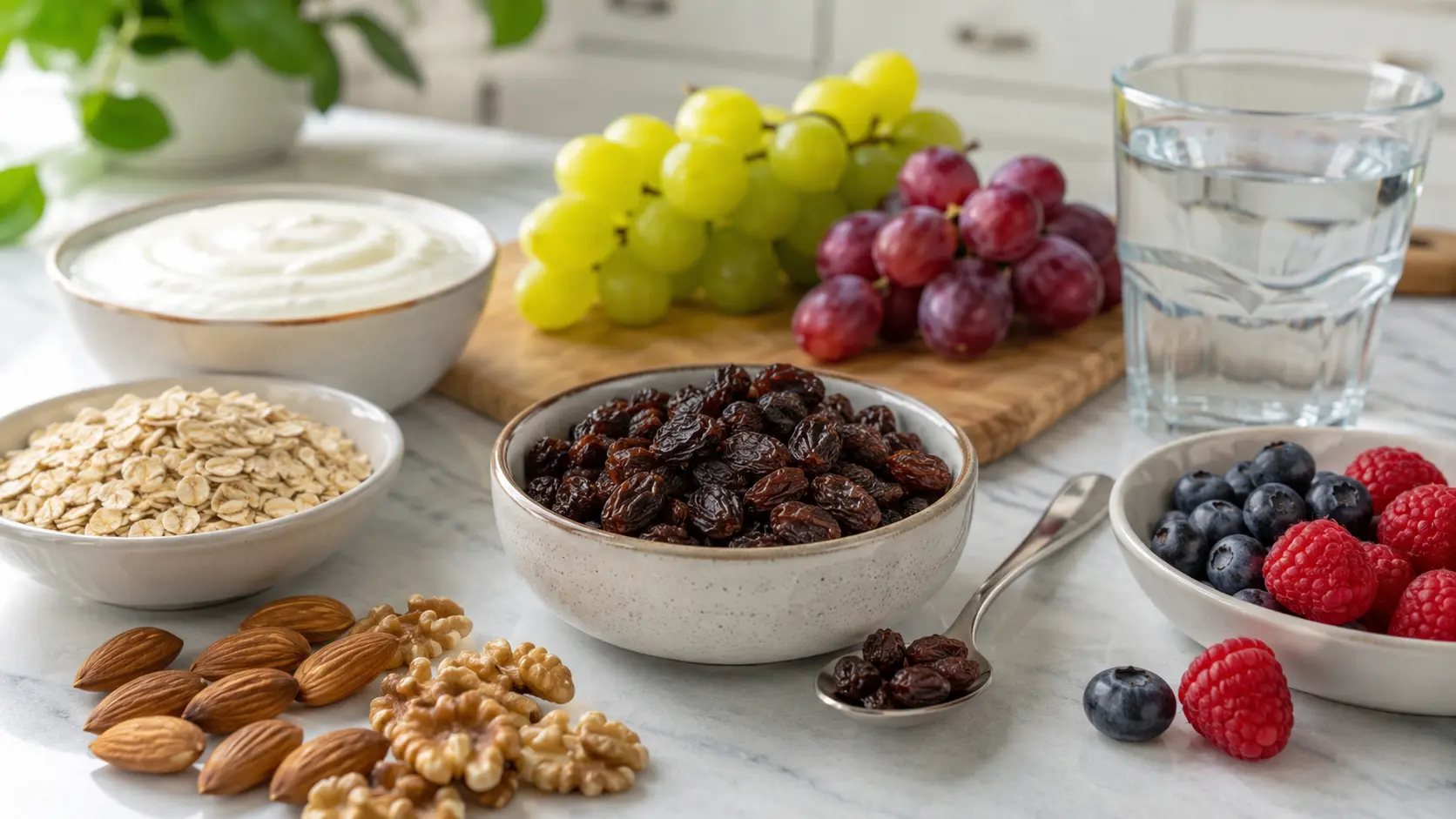
I look at raisins as a practical whole-food addition rather than a superfood. Raisins benefits come from fiber, minerals, antioxidants, and quick-release carbohydrates.
I often recommend adding them to meals rather than eating them alone, because combining raisins with protein, healthy fat, or whole grains creates a more balanced and satisfying snack.
1. May Support Digestive Health
Raisins contain dietary fiber, which helps support smoother digestion and regular bowel movements. Their natural fiber adds bulk to the stool and may help the digestive system work more comfortably. They are easy to add to oatmeal, yogurt, cereal, or trail mix without much preparation.
Raisins also contain tartaric acid, a naturally occurring organic acid that research suggests may function as a prebiotic, supporting the growth of beneficial gut bacteria.
A study published in the Journal of Medicinal Food found that raisin consumption improved markers of gut health, including stool frequency and consistency, in healthy adults.
I typically recommend them as one fiber source within a varied diet, not a standalone solution for digestive health concerns.
2. May Help Maintain Energy Levels
Raisins are rich in natural carbohydrates, making them a quick and convenient energy source. Because they are dried, their natural sugars are concentrated into a small serving, which can be useful before walking, hiking, workouts, or busy workdays.
In my own experience working with active clients, I suggest raisins as a pre-exercise snack about 30 to 45 minutes before moderate activity. They are portable, require no refrigeration, and provide rapid fuel without the processed ingredients in many commercial energy snacks. For steadier energy, pair them with a protein source such as nuts, seeds, or peanut butter rather than eating them on their own.
3. May Support Heart Health
Raisins provide potassium and fiber, two nutrients often linked with heart-conscious eating patterns. Potassium helps support normal fluid balance, while fiber may help improve overall diet quality.
A study in the Postgraduate Medicine journal found that eating raisins three times per day significantly reduced postprandial blood pressure compared to eating other common processed snacks.
Replacing candy, cookies, or heavily processed snacks with a small portion of raisins is a realistic step toward better snack quality, even if raisins are not a treatment for cardiovascular disease on their own.
4. May Support Bone Health
Raisins contain small amounts of calcium, potassium, and boron, nutrients that may play a role in supporting healthy bones. While raisins are not a major calcium source, they can still contribute to a bone-supportive diet when combined with foods rich in calcium, vitamin D, magnesium, and protein.
They may be especially useful as a natural snack instead of low-nutrient sweets. For strong bones, raisins should be paired with regular strength training, sunlight exposure, and balanced nutrition.
5. May Provide Antioxidant Support
Raisins contain plant compounds and antioxidants that help protect cells from oxidative stress. These antioxidants are one reason raisins still offer nutritional value even though they are naturally sweet.
Antioxidants support general wellness by helping the body manage everyday damage caused by normal metabolism and environmental exposure. However, avoid making claims that raisins prevent aging, cancer, or chronic disease. A better approach is to present raisins as one antioxidant-containing food within a varied, colorful diet.
6. May Help Satisfy Sweet Cravings Naturally
Raisins can help satisfy sweet cravings in a more nutrient-dense way than candy or refined desserts. They provide natural sweetness along with fiber, potassium, iron, and antioxidants.
Adding a small amount to oatmeal, yogurt, homemade trail mix, or salads can make meals feel more enjoyable without relying on added sugar. Portion control still matters because raisins are calorie-dense. A small handful is usually enough to enjoy their sweetness without overdoing natural sugar or calories.
7. May Support Iron Intake
Raisins provide a small amount of iron, a mineral needed for healthy red blood cell production and oxygen transport. They are not the highest iron food, but they contribute to daily intake, particularly useful alongside other plant-based iron sources like legumes
Pairing raisins with vitamin C-rich foods, such as oranges, strawberries, kiwi, or bell peppers, may support better absorption of plant-based iron. Raisins should not be promoted as a treatment for anemia or iron deficiency.
8. May Be Useful for Active People
Raisins are portable, shelf-stable, and naturally rich in carbohydrates, making them useful for people with active lifestyles. They can provide quick fuel before workouts, hikes, sports, cycling, or long walks.
Unlike many packaged energy snacks, plain raisins usually contain one simple ingredient. They are also lightweight and easy to keep in a gym bag, lunchbox, or travel pouch. For better balance, active people can pair raisins with protein or healthy fats after exercise.
9. May Support Healthy Weight Management
Raisins can fit into a weight management plan when eaten in measured portions. Their fiber and natural sweetness may help make snacks more satisfying, especially when paired with protein-rich foods like Greek yogurt, cottage cheese, nuts, or seeds.
However, eating directly from a large box can quickly add extra calories. The best approach is to portion raisins into a small bowl or snack pack. They should support, not replace, balanced meals and mindful eating habits.
10. May Support Better Snack Choices
Raisins can be a better snack choice than many ultra-processed sweet foods because they offer nutrients along with sweetness. They are easy to use in lunchboxes, oatmeal, salads, rice dishes, homemade granola, and trail mix. Their long shelf life also makes them convenient for busy households.
Choosing plain raisins instead of sugary snacks may improve overall diet quality. Still, chocolate-covered or yogurt-coated raisins should be treated more like dessert than an everyday health snack.
11. May Support Potassium Intake
Raisins contain potassium, an important mineral that helps support fluid balance, muscle function, and normal nerve signaling. Many people do not get enough potassium-rich foods, so adding raisins in moderation can contribute to daily intake. They work well with other potassium-containing foods such as bananas, potatoes, beans, spinach, and yogurt.
People with kidney disease or potassium restrictions should speak with a healthcare provider before eating raisins regularly, because too much potassium may not be appropriate for them.
Are Soaked Raisins Better Than Dry Raisins?
Soaking raisins overnight in water is a practice rooted in Ayurvedic tradition, and it has practical nutritional logic behind it as well. When raisins are soaked, the skin softens, and some of the tannins that inhibit nutrient absorption are reduced. The water also absorbs some of the natural sugars, which can slightly lower the sugar concentration per bite.
From a dietitian’s perspective, soaked raisins are easier to digest for people with sensitive stomachs, and the soaking water itself contains water-soluble vitamins and minerals that leach out of the raisin. Drinking the water along with the raisins means you retain those nutrients rather than losing them.
That said, the nutritional difference between soaked and dry raisins is modest. The more meaningful factors are still portion size and what you pair them with. If soaking makes them easier to eat or helps you control portions, it is a worthwhile habit. If you prefer dry raisins and tolerate them fine, there is no compelling reason to change.
Best practice: Soak 10 to 15 raisins in ½ cup of water overnight. Eat them on an empty stomach in the morning with the soaking water if you follow an Ayurvedic-influenced routine, or simply add them to your breakfast bowl.
Raisins vs. Other Dried Fruits: How Do They Compare?
Raisins are one of the most affordable and widely available dried fruits, but they are not always the most nutritious option, depending on your goal. Here is how they compare to other common dried fruits by nutrient profile per 1-ounce serving.
| Dried Fruit | Calories | Fiber (g) | Sugar (g) | Iron (mg) | Potassium (mg) | Best For |
|---|---|---|---|---|---|---|
| Raisins | 85 | 1 | 18 | 0.6 | 212 | Energy, iron, potassium |
| Dates (Medjool) | 67 | 1.5 | 15 | 0.3 | 168 | Quick energy, magnesium |
| Figs | 71 | 2 | 14 | 0.6 | 232 | Calcium, fiber |
| Prunes | 67 | 1.9 | 11 | 0.4 | 235 | Digestive health, sorbitol |
| Apricots | 67 | 2 | 13 | 0.8 | 259 | Vitamin A, potassium |
Raisins are competitive in iron and potassium, but prunes and figs offer more fiber per ounce. If digestive support is your primary goal, prunes are a better choice. If bone health or calcium matters more, figs edge ahead. Raisins remain the best all-around option for portable energy and affordability.
How Many Raisins Should You Eat Per Day?
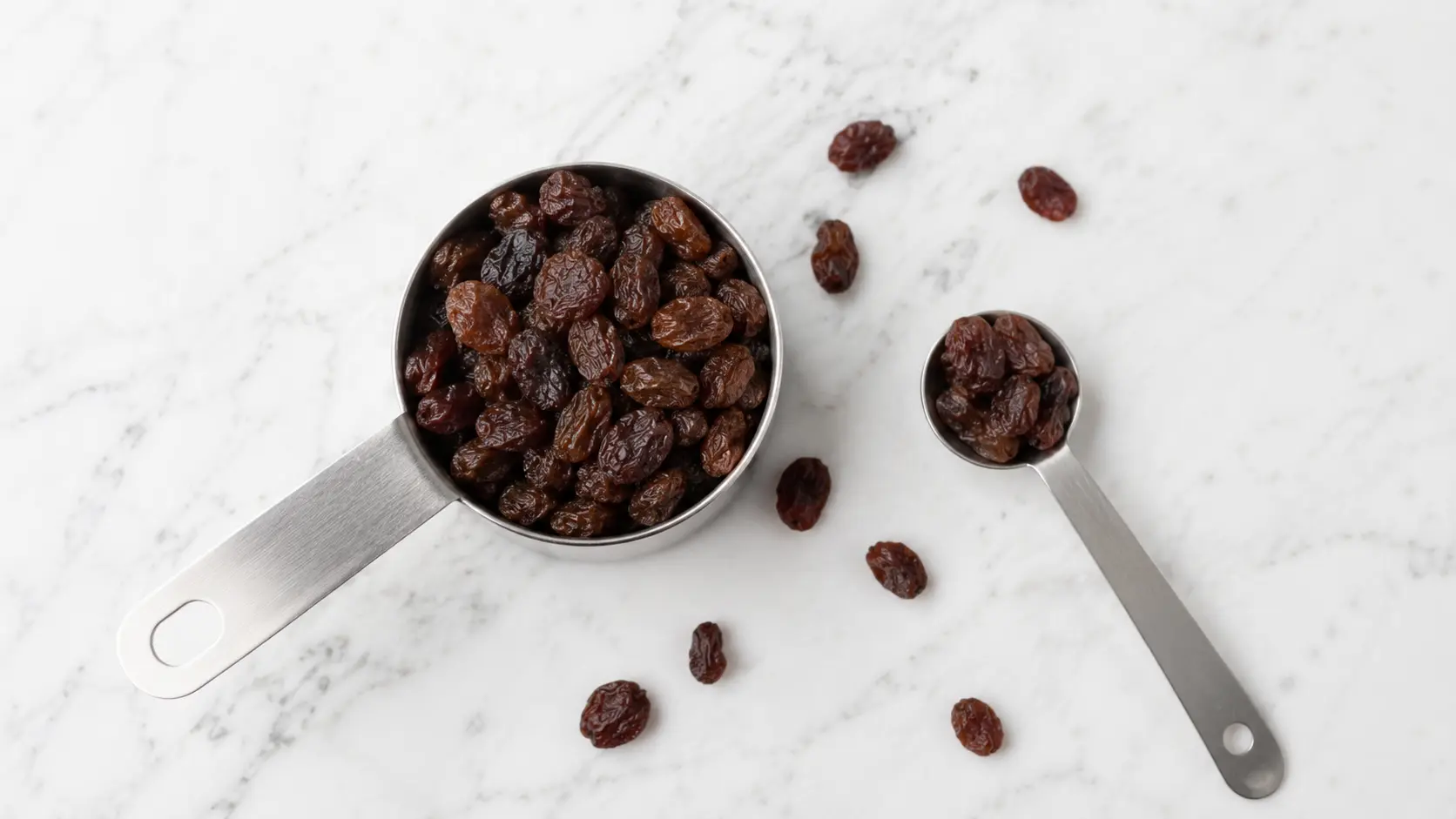
For most healthy adults, 1 to 2 tablespoons of raisins per day is a practical daily amount. This gives you natural sweetness, fiber, potassium, iron, and antioxidants without adding too much sugar or calories.
A larger ¼ cup serving can fit into a balanced diet occasionally, but may be more than needed every day, particularly for people managing blood sugar, weight, or carbohydrate intake.
I ask clients to measure raisins before eating rather than snacking directly from a box or bag. A ¼ cup serving looks deceptively small once it is in a bowl, but it is about 120 calories and 26 grams of sugar.
Pairing that serving with a handful of almonds or a cup of plain yogurt dramatically changes how satisfied you feel and how the sugars are absorbed.
Best Ways to Eat Raisins
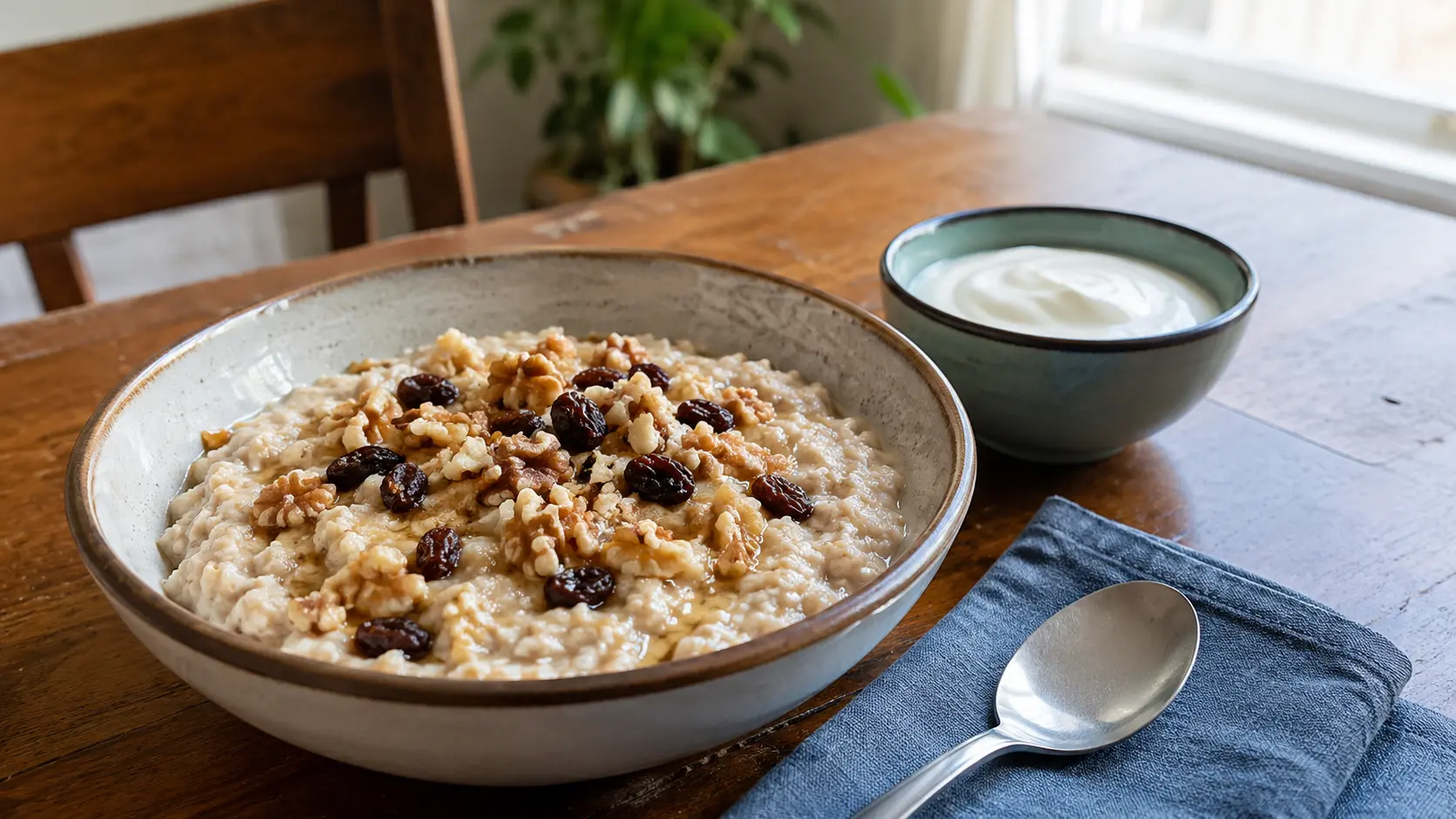
Raisins are easy to add to everyday meals and snacks. Pairing them with protein, fiber, or healthy fats makes them more filling and balanced.
- Add raisins to oatmeal with cinnamon for natural sweetness.
- Mix raisins with nuts or seeds for a balanced snack.
- Stir raisins into plain Greek yogurt for extra texture.
- Add raisins to salads or grain bowls for sweetness.
- Use raisins in a homemade trail mix for quick energy.
- Pair raisins with peanut butter on toast.
- Add raisins to roasted carrots or rice dishes.
These simple serving ideas make it easier to enjoy the health benefits of raisins without eating too much sugar or calories at once.
Raisins vs. Grapes: Which Is Healthier?
I would not say raisins or grapes are always healthier than the other. They serve different purposes. Grapes are better when you want hydration, volume, and fewer calories per bite.
Raisins are better when you need a shelf-stable, portable, energy-dense snack. For everyday snacking, grapes may feel more filling because of their water content. For hiking, travel, lunchboxes, or quick energy, raisins are more practical. The healthier choice depends on your goal.
| Factor | Grapes | Raisins |
|---|---|---|
| Water content | High | Low |
| Calories per bite | Lower | Higher |
| Natural sugar concentration | Lower | Higher |
| Shelf life | Shorter | Longer |
| Portability | Moderate | Excellent |
| Best for | Hydration, volume | Quick energy, shelf-stable snack |
Grapes are better for hydration and volume, while raisins are better for quick energy, travel, and longer storage. Portion size matters more with raisins.
Who Should Eat Raisins Carefully? Possible Side Effects
Raisins are healthy for many people, but large portions may cause problems for those with blood sugar, digestion, weight, or kidney-related concerns.
- Have diabetes or blood sugar concerns.
- Follow a low-sugar or calorie-controlled diet.
- Are trying to lose weight.
- Have digestive sensitivity to dried fruit.
- Need to limit potassium for kidney-related reasons.
- Give raisins to small children, as they can be sticky and may pose a choking risk.
- Notice gas, bloating, or stomach discomfort after eating dried fruit.
- Struggle with sticky residue on teeth after sweet snacks.
- Feel less hungry for balanced meals after eating too many raisins.
Eating raisins in small portions helps reduce these risks. Drink water afterward, avoid mindless snacking, and keep brushing and flossing regularly.
Can You Eat Raisins During Pregnancy?
Raisins are generally considered safe and beneficial during pregnancy in moderate amounts. They provide iron, which supports healthy blood production during a time when iron needs increase significantly. They also offer folate, calcium, and quick-release energy that can help with pregnancy fatigue.
The main consideration during pregnancy is blood sugar management. Raisins are high in natural sugars, and blood sugar regulation becomes more important during pregnancy due to the risk of gestational diabetes.
Pairing raisins with a protein source, limiting portions to 1 tablespoon at a time, and spacing intake throughout the day are practical strategies to enjoy the nutritional benefits without blood sugar spikes.
Always discuss dietary choices with your obstetric care provider, especially if you have been screened for gestational diabetes or have a history of blood sugar concerns.
Frequently Asked Questions
Do raisins contain gluten or common allergens naturally?
Plain raisins are naturally gluten-free and not a major common allergen. However, flavored raisins, trail mixes, or coated varieties may contain wheat, dairy, nuts, or soy from added ingredients or shared processing equipment.
Are organic raisins better than regular raisins?
Organic raisins may reduce exposure to certain pesticide residues, but both organic and regular raisins can fit into a healthy diet. The bigger priority is choosing plain raisins without added sugar, coatings, or unnecessary oils.
Why do some raisins contain sulfur dioxide?
Sulfur dioxide is sometimes used to preserve color, especially in golden raisins. Some people with sulfite sensitivity or asthma may react to it, so checking labels is helpful if you are sensitive.
Can raisins go bad after the package is opened?
Yes, raisins can dry out, harden, ferment, or grow mold if stored poorly. Keep them sealed in a cool, dry place, and discard them if they smell sour, look moldy, or taste unusual.
Final Verdict
Think of raisins as a powerful tool for your pantry rather than a bottomless snack. I find they work best when you use them to add a burst of flavor to more filling foods.
You now understand the health benefits of raisins and how to balance their high sugar content with fiber and protein.
If you stir them into morning oats or use them for a pre-run energy boost, these dried fruits offer real value in small doses. Keeping your portions mindful ensures you get the antioxidants and minerals without the sugar crash.
I would love to hear your favorite way to use them. Leave a comment below with your best raisin recipe.