








If you have searched for how to shrink pores naturally, you have probably seen everything from ice cubes to lemon juice.
I get why it feels confusing. Some tips can make pores look cleaner, while others only irritate the skin and make the texture worse.
My goal is to separate useful advice from claims that sound better than they are.
You will see what pores really are, why they look larger, which natural steps help, which home remedies are only temporary, and which ones are worth skipping. By the end, how to shrink pores should feel less mysterious and more realistic.
The Truth About Shrinking Pores Naturally
Pores cannot be erased, sealed, or permanently closed. They are normal openings in the skin, and your skin needs them to release oil and sweat.
When people talk about shrinking pores, they usually mean making pores look smaller. That can happen when the skin looks cleaner, smoother, less oily, and less irritated.
Natural care can help with appearance, but it has limits. It cannot change your genetic pore size or remove deeper skin damage. Any product or remedy that promises poreless skin is being misleading.
The honest goal is not perfect skin. It is skin that looks clearer, calmer, and better cared for without harsh tricks or false promises.
What Actually Helps Pores Look Smaller Naturally
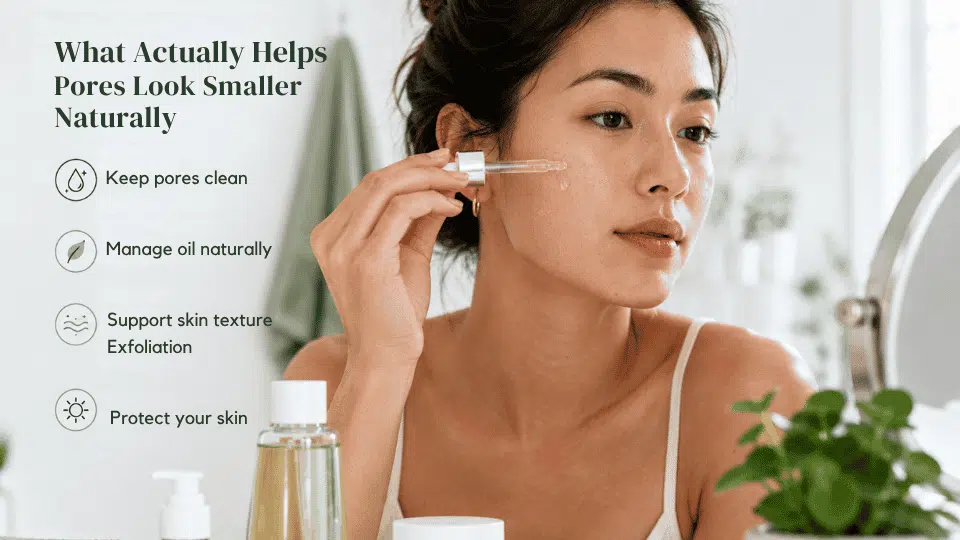
These steps do not change your natural pore size. They help with oil, buildup, irritation, and rough texture, which are the things you can improve.
1. Cleanse Gently, Not Aggressively
Cleansing helps remove sweat, oil, sunscreen, makeup, and daily dirt that can collect around pores, making them look more obvious.
Wash once in the morning and once at night with lukewarm water and a gentle cleanser. Do not scrub or chase a tight, squeaky-clean feeling.
Washing more often will not shrink pores faster. It can strip the skin, trigger irritation, and make the texture look rougher.
2. Choose Lightweight, Non-Comedogenic Skincare
Heavy creams, thick balms, and pore-clogging products can sit on the skin, making pores appear more congested.
Choose formulas labeled non-comedogenic, oil-free, water-based, gel-based, or lightweight. This matters more if your skin is oily or acne-prone.
Natural oils are not automatically better for pores. Some feel too rich and trap buildup, while others can genuinely support the skin barrier when used correctly. The best rosehip oils for skin are a good example of how the right oil choice matters for facial care.
3. Exfoliate Carefully to Clear Buildup
Gentle exfoliation helps remove dead skin cells that accumulate around pore openings, making skin look dull or uneven.
Mild AHAs, BHAs, lactic acid, mandelic acid, or salicylic acid can help, depending on your skin type. Start once or twice weekly before increasing.
Avoid harsh scrubs, sugar scrubs, and daily exfoliation. The goal is smoother skin, not scraping pores clean or forcing instant results.
4. Use Clay Masks for Oil, Not Permanent Shrinking
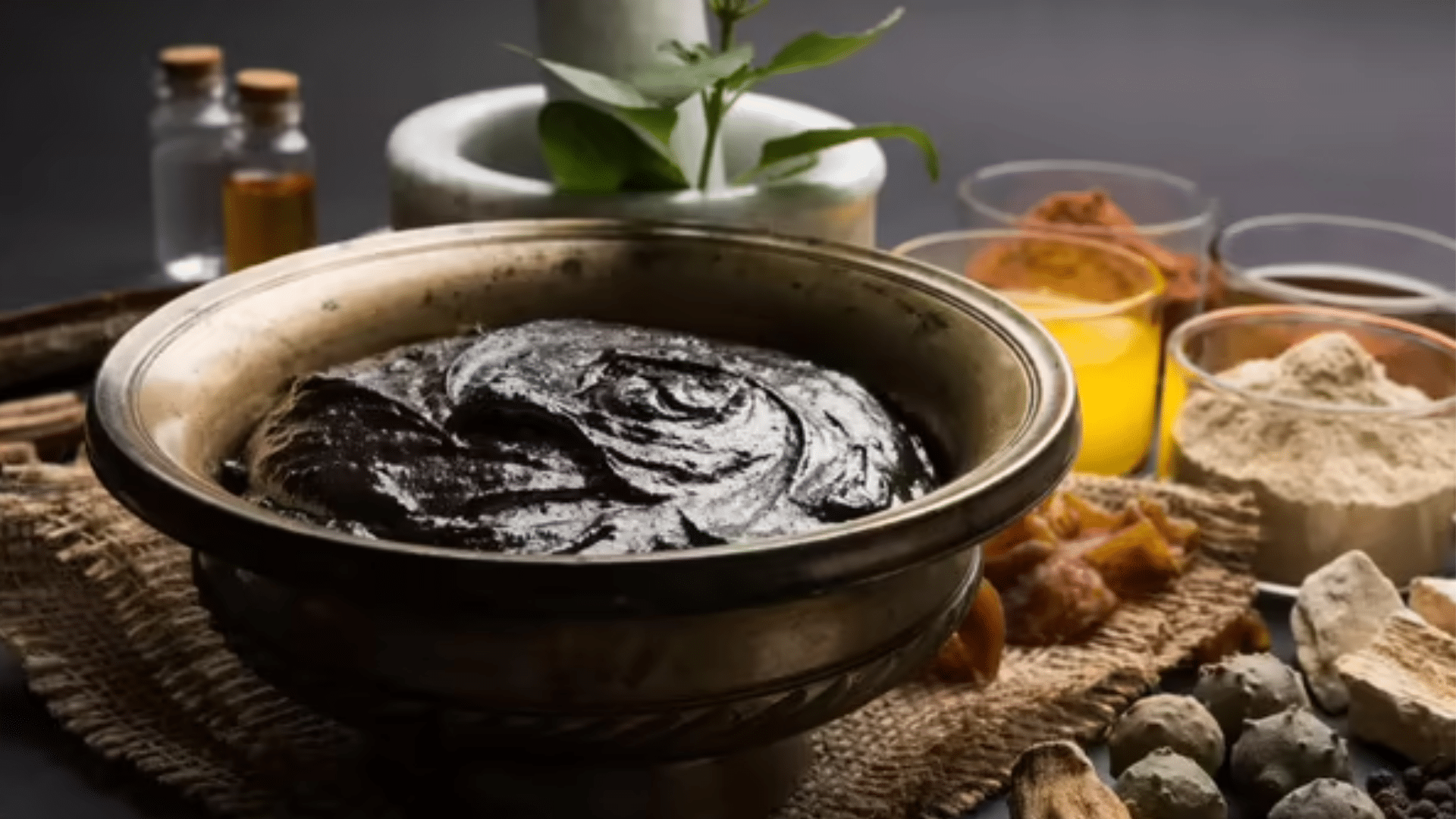
Clay masks can temporarily absorb excess oil and make pores look cleaner. Kaolin clay is usually gentler, while bentonite clay can feel stronger on oily skin.
Use clay once a week, or twice if your skin is very oily and tolerates it. If you prefer a DIY approach, this Ayurvedic clay mask uses bentonite clay and rose water as a simple weekly treatment.
Do not let the mask become painfully dry or cracked. Clay does not permanently tighten pores, and overuse can dry or irritate skin.
5. Keep Skin Moisturized, Even If It Is Oily
Oily skin still needs moisture. When skin is dehydrated, irritated, or barrier-damaged, texture can look rougher, and pores may seem more noticeable.
Use a lightweight moisturizer with ingredients like glycerin, hyaluronic acid, aloe, panthenol, or ceramides. Gel creams and light lotions usually work well for oily skin.
Skipping moisturizer may feel matte for a while, but it can leave the skin less balanced over time.
6. Wear Sunscreen to Protect Skin Firmness
Sunscreen will not shrink pores overnight, but it can help prevent them from appearing larger over time. UV exposure can weaken collagen and elastin, which support the skin around pores.
When skin loses firmness, pores may look looser or more stretched. Use broad-spectrum SPF 30 or higher every morning. A matte, gel, or lightweight sunscreen can work better if shine makes your pores more noticeable.
Quick Overview: Natural Ways to Make Pores Look Smaller
| Method | Best For | How Often | Quick Note |
|---|---|---|---|
| Cold compress or ice wrap | Puffiness, oily skin, pre-makeup prep | As needed | Gives a short-term, tighter look. Never apply ice directly. |
| Gentle cleansing | Oil, sweat, sunscreen, makeup buildup | Morning and night | Keeps pores cleaner without stripping skin. |
| Aloe vera gel | Warm, sensitive, or irritated skin | Daily or every other day | Calms and lightly hydrates skin. |
| Oatmeal and honey mask | Dry, rough, or sensitive skin | Once weekly | Soothes skin and softens rough texture. |
| Green tea toner | Midday shine and oiliness | 3–4 times weekly | Helps skin feel fresh, but the results are temporary. |
| Cucumber mask | Puffy or warm-feeling skin | 2–3 times weekly | Gives a cooling effect, not real pore shrinking. |
| Warm steam and cleanse | Clogged-looking pores | Once weekly | Softens buildup before cleansing. Avoid too much heat. |
| Ground oat exfoliation | Dullness and mild buildup | Once weekly | Use very gentle pressure. Do not scrub hard. |
| Lightweight moisturizer | Oily, dry, or unbalanced skin | Morning and night | Helps keep the skin barrier balanced. |
| Daily sunscreen | Sun damage and aging support | Every morning | Protects skin firmness over time. |
| Night makeup removal | Makeup, sunscreen, sweat, oil | Every night | Prevents buildup from sitting in pores overnight. |
| Clean pillowcases and brushes | Acne-prone or oily skin | Weekly | Reduces oil, dirt, and bacteria transfer. |
These methods can support smoother-looking skin, but they do not permanently shrink pores. Choose two or three that match your skin type and use them consistently.
Why Pores Look Bigger Than Usual
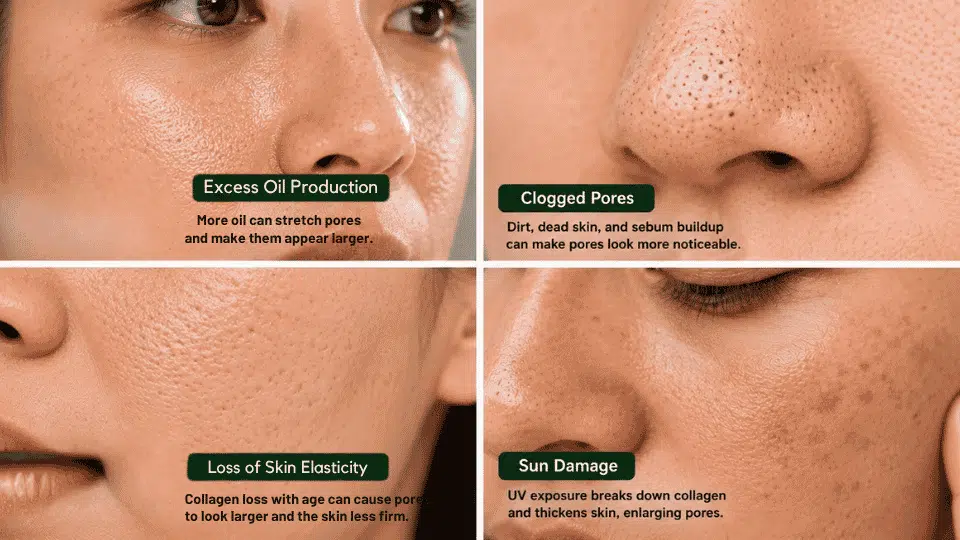
Before choosing any remedy, it helps to know what makes pores look larger. Different causes need different care, and not every cause is fixable at home.
- Genetics: Some people naturally have more visible pores.
- Excess oil: Oil can collect in pores, making them appear wider.
- Dead skin buildup: Trapped skin cells can make pores look rough or clogged.
- Blackheads and sebaceous filaments: These can make pores look dotted or darker.
- Sun damage: Skin can lose firmness, making pores appear looser.
- Aging: Less elasticity can make pores appear more stretched.
- Harsh skincare: Scrubbing, over-washing, and irritation can worsen texture.
- Comedogenic products: Heavy products may increase congestion.
The best pore care is not about attacking the skin. It is about understanding what makes pores look more noticeable.
A Simple Routine for Smaller-Looking Pores
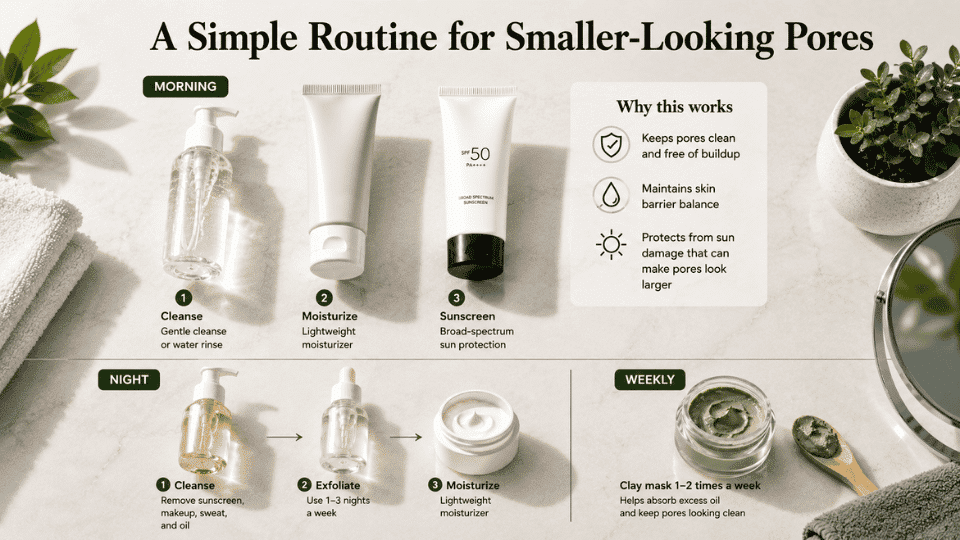
A proper routine works best when the daily steps stay simple, and stronger steps are spaced out. This keeps the skin clear without overloading it with too many actives.
Morning and Night Routine
In the morning, rinse or cleanse gently, then use a lightweight moisturizer and broad-spectrum sunscreen. If your skin gets shiny, use a light mattifying product instead of layering heavy products.
At night, cleanse properly to remove sunscreen, makeup, sweat, and oil. Use an exfoliant only on selected nights, not daily. Finish with a lightweight moisturizer so the skin does not feel stripped.
Weekly Schedule
| Day | Focus | Routine |
|---|---|---|
| Monday | Keep skin calm | Cleanse, moisturize, and use sunscreen in the morning. At night, cleanse and moisturize only. |
| Tuesday | Gentle exfoliation | Use a mild exfoliant at night after cleansing, then apply moisturizer. Skip if your skin feels dry or sensitive. |
| Wednesday | Barrier rest | Keep the routine simple with cleanser, moisturizer, and sunscreen. Avoid masks or exfoliants. |
| Thursday | Second exfoliant night | Use an exfoliant only if your skin handled Tuesday well. If not, cleanse and moisturize only. |
| Friday | Light hydration | Use aloe vera or a lightweight moisturizer to keep skin calm and balanced. |
| Saturday | Oil control | Use a clay mask after cleansing, then rinse before it fully dries, and follow with moisturizer. |
| Sunday | Reset night | Cleanse, moisturize, and let your skin rest before starting the next week. |
Natural Pore Remedies: What Is Real and What Is Misleading
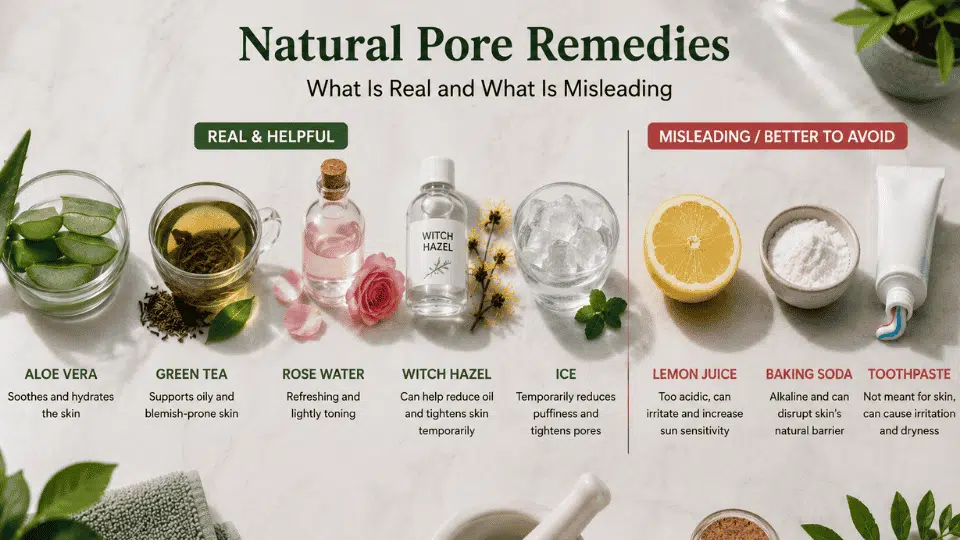
Natural remedies are popular because they feel simple and safe. Still, a remedy can be natural and irritating at the same time, so it helps to separate gentle support from risky claims.
Helpful, But Limited
- Aloe vera can soothe and hydrate the skin, especially if your barrier feels stressed. It may make skin look calmer, but it will not close pores.
To use aloe vera, apply a thin layer of plain, fragrance-free aloe gel after cleansing. Let it absorb for a few minutes, then follow with a light moisturizer if your skin needs it.
Aloe vera can help when skin feels warm, oily, or slightly irritated. It works best as a calming support step, not as a pore-shrinking treatment. - Green tea may support oily or irritated-looking skin when used in gentle formulas. If you want a deeper look at how antioxidant-rich ingredients work on skin clarity and glow, glutathione is another ingredient worth understanding alongside green tea.
- Rose water can feel refreshing and lightly toning. The effect is temporary, and it should not be treated as a real fix for enlarged pores.
Temporary Effects Only
- Ice may briefly reduce puffiness and make skin look tighter. It does not shrink pores, and it should never be applied directly to the skin.
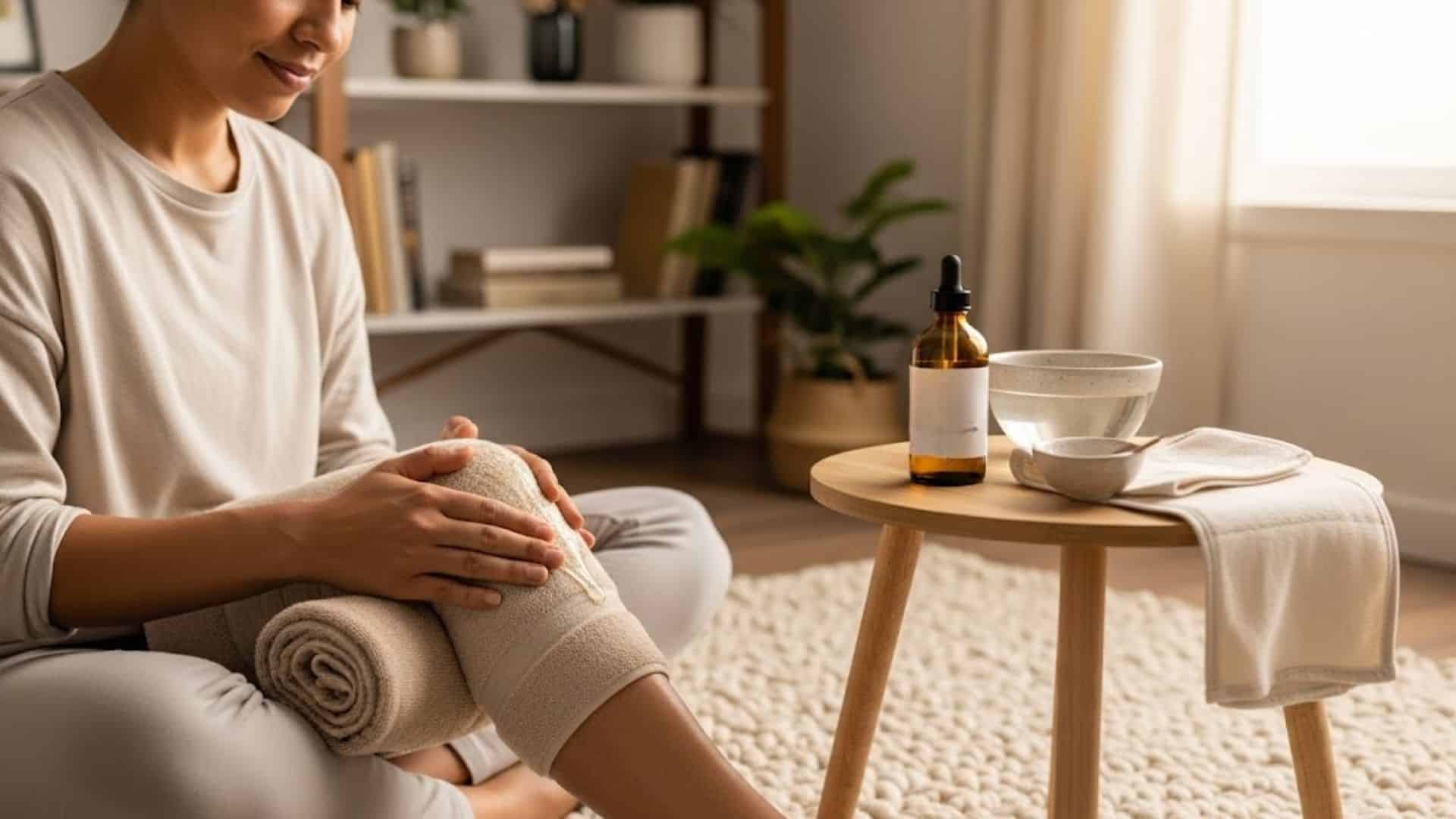
If you use ice, never rub it directly on your face. Wrap 1 or 2 ice cubes in a clean cotton cloth and press it gently on oily or puffy areas for 15 to 30 seconds.
This can make skin look tighter for a short time, especially before makeup or an event. It does not shrink pores permanently, and you should stop if your skin feels numb, red, or painful. - Witch hazel can create a tight feeling, but that does not mean pores are shrinking. Alcohol-based versions can dry or irritate the skin, so they need caution.
- Steam may soften surface debris before cleansing, but it does not open, close, or shrink pores. Too much heat can irritate sensitive or redness-prone skin.
Better to Avoid
- Lemon juice is too harsh for facial skin. It can irritate the barrier and increase sensitivity to sunlight.
- Baking soda can disrupt the skin’s natural pH, leaving the face dry, tight, or irritated.
- Toothpaste is made for teeth, not facial skin. It can burn, sting, or trigger irritation, especially around the nose and cheeks.
Natural skincare should still respect the skin barrier. If a remedy stings, burns, or leaves skin tight, it is not helping.
What Not to Do When Trying to Shrink Pores
Many poor mistakes come from trying to force fast results. The problem is that aggressive methods often irritate the skin, which can make pores look even more noticeable.
- Do not scrub harder: Hard scrubbing does not reduce pore size. It can cause redness, irritation, and a rougher texture. If your skin feels raw, tight, or shiny after scrubbing, your routine is too harsh.
- Do not squeeze every pore: Squeezing may remove some debris, but it can also cause inflammation, scarring, broken capillaries, or larger-looking pores. Stubborn blackheads are better handled with gentle exfoliation or professional extraction.
- Do not trust overnight pore-shrinking claims: Overnight products may blur, mattify, or temporarily tighten the skin. They do not permanently shrink pores. Claims that promise poreless skin in one night are usually marketing, not skin science.
- Do not use harsh DIY hacks: Lemon juice, baking soda, toothpaste, and rough scrubs are common DIY suggestions, but they can irritate the skin and damage the barrier. Natural does not always mean safe.
The safest approach is to avoid anything that burns, stings, or leaves your skin feeling stripped. Smaller-looking pores come from consistency, not punishment.
Diet & Lifestyle Habits That Can Affect Pore Appearance
Diet and lifestyle will not erase pores, but they can affect how oily, clogged, or irritated your skin looks.
| Habit | What to Do | Why It Helps |
|---|---|---|
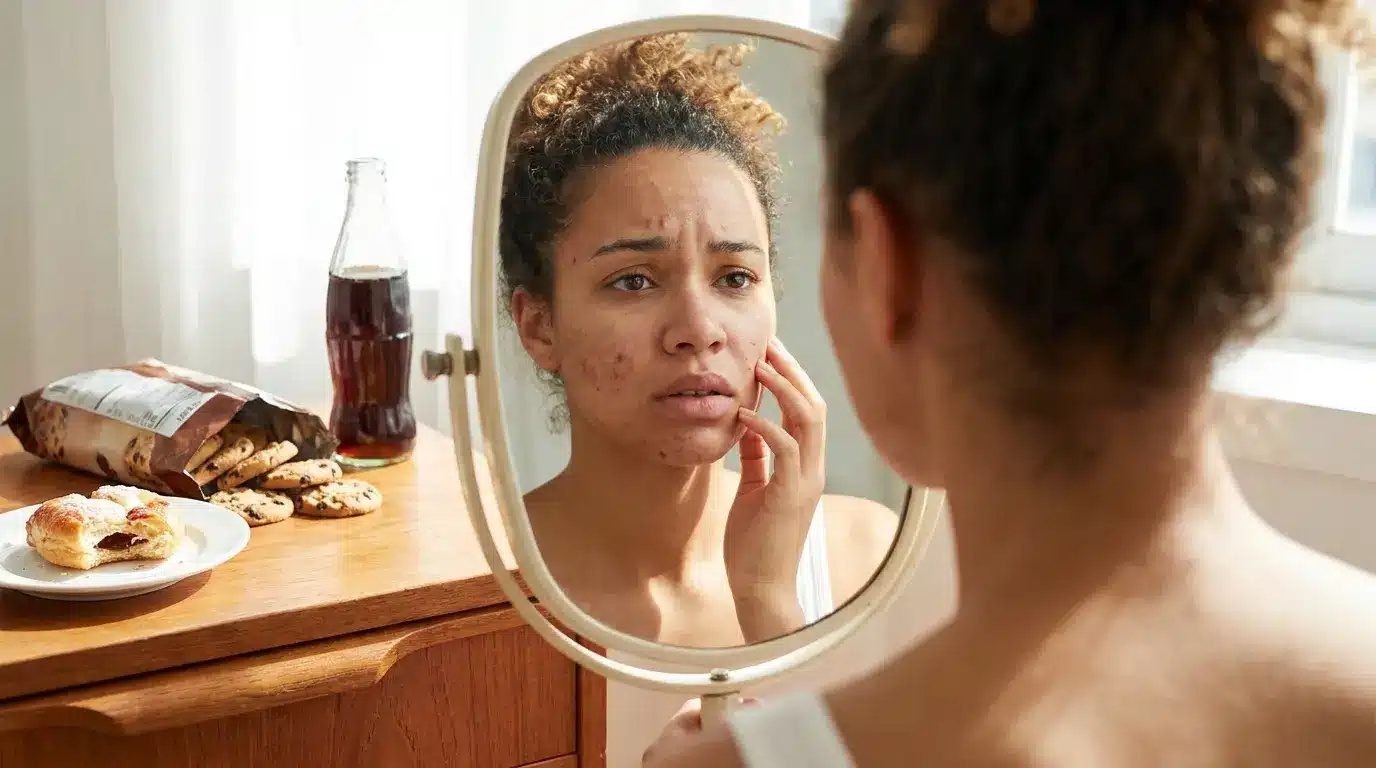
| Food choices | Limit sugary drinks, fried foods, packaged snacks, and high-sugar foods if they trigger breakouts. | These foods may make oiliness or acne worse for some people. |
| Skin-supporting foods | Add fruits, vegetables, lentils, beans, nuts, seeds, berries, and green tea. | These support overall skin health. |
| Hydration | Drink enough water and eat water-rich foods like cucumber, watermelon, and oranges. | Hydrated skin often looks smoother and less dull. |
| Sleep | Try to sleep well and keep a steady routine. | Poor sleep may make skin look dull, oily, or more reactive. |
| Stress | Manage stress with walking, exercise, breathing, or rest. | Stress can affect oil production and breakouts. |
| Workout care | Cleanse your face after sweating. | Sweat, oil, and dirt can clog pores if left on the skin. |
| Clean surfaces | Wash pillowcases, makeup brushes, and wipe phone screens often. | These surfaces can transfer oil, sweat, and bacteria back to your face. |
These habits will not change your natural pore size, but they can help reduce the buildup and irritation that make pores look more visible.
When Natural Methods Are Not Enough
Natural methods can help when pores appear larger due to oil, buildup, or a mild uneven texture.
They may not be enough when the concern is connected to deeper skin changes, such as acne scarring, deep blackheads, severe oiliness, sun damage, age-related laxity, thickened texture, or persistent congestion that does not improve with a steady routine.
In those cases, professional options may be more suitable.
A dermatologist may discuss prescription retinoids, chemical peels, professional extractions, microneedling, laser treatments, or radiofrequency treatments, depending on your skin type and concern.
This is not professional medical advice. Every skin case is different, and the safest option is to consult a qualified dermatologist or doctor before starting treatments, especially if your skin is sensitive, acne-prone, irritated, or already using prescription products.
Frequently Asked Questions
Do pores get larger with age?
Pores can look larger with age because the skin slowly loses firmness and support. Sun damage can make this more noticeable. Daily sunscreen, gentle skincare, hydration, and avoiding harsh scrubs can help your skin look smoother over time.
Why are my pores more visible on my nose?
Pores often look more visible on the nose because this area usually produces more oil. Sebaceous filaments are also common there, and they can make pores look dotted or darker even when the skin is clean.
Can makeup make pores look bigger?
Yes, heavy or poorly removed makeup can settle into the texture, making pores look more obvious. Use lightweight, non-comedogenic formulas, remove makeup fully at night, and avoid layering too many mattifying products.
Are pore strips good for large pores?
Pore strips may remove some surface debris, but they do not address the underlying cause of large pores. Frequent use can irritate skin, especially around the nose, so they should not replace gentle care.
Why do my pores look worse after skincare?
Pores can look worse if a product is too heavy, drying, irritating, or layered with too many actives. Pause new products, return to a simple routine, and reintroduce items one at a time.
Conclusion
Learning how to shrink pores naturally starts with letting go of the idea of poreless skin.
The real work is reducing the things that make pores stand out: congestion, excess shine, irritation, rough texture, and long-term skin damage.
This blog explained what helps, what only gives a temporary effect, which DIY claims can mislead readers, and when expert care makes sense.
My advice is to choose steady, barrier-friendly skincare over harsh fixes. If you have tried to shrink pores safely, read a related skincare post, or have any insights, feel free to comment and share your experience to help others.