












Are you tired of staring at a bathroom shelf full of products that promise the world but leave your face red, dry, or broken out? Navigating the endless cycle of trending ingredients can feel completely overwhelming.
I know how frustrating it is to guess what your skin needs, only to end up aggravating it.
Implementing Ayurvedic skin care offers a meaningful, gentler way to understand your unique patterns. By matching your daily routine to your body’s specific signals, you can stop experimenting blindly.
This guide breaks down the traditional dosha patterns, highlights purposeful botanical ingredients, and helps you build a mindful morning and night routine that works harmoniously with modern essentials.
Disclaimer: This article is for informational and educational purposes only. It does not constitute medical advice and should not replace consultation with a qualified healthcare provider. Skin conditions including acne, eczema, rosacea, psoriasis, and melasma should be evaluated by a dermatologist. Always consult a doctor before making significant changes to your skin care routine or health practices.
| Dosha Relevance | Vata (dry, dehydrated), Pitta (reactive, redness-prone), Kapha (oily, congested) — all doshas addressed |
| Best Season to Start | Any season, adjust product weight and ingredients as weather shifts (richer in winter, lighter in summer) |
| Best Time of Day | Morning: protect and balance. Evening: cleanse, nourish, and support recovery. |
| Contraindications | Active skin conditions (rosacea, cystic acne, eczema flares) require medical care alongside or instead of these practices. Patch-test all herbal ingredients. Avoid DIY turmeric, citrus, or essential oil mixes on sensitized skin. |
Know About Ayurvedic Skin Care
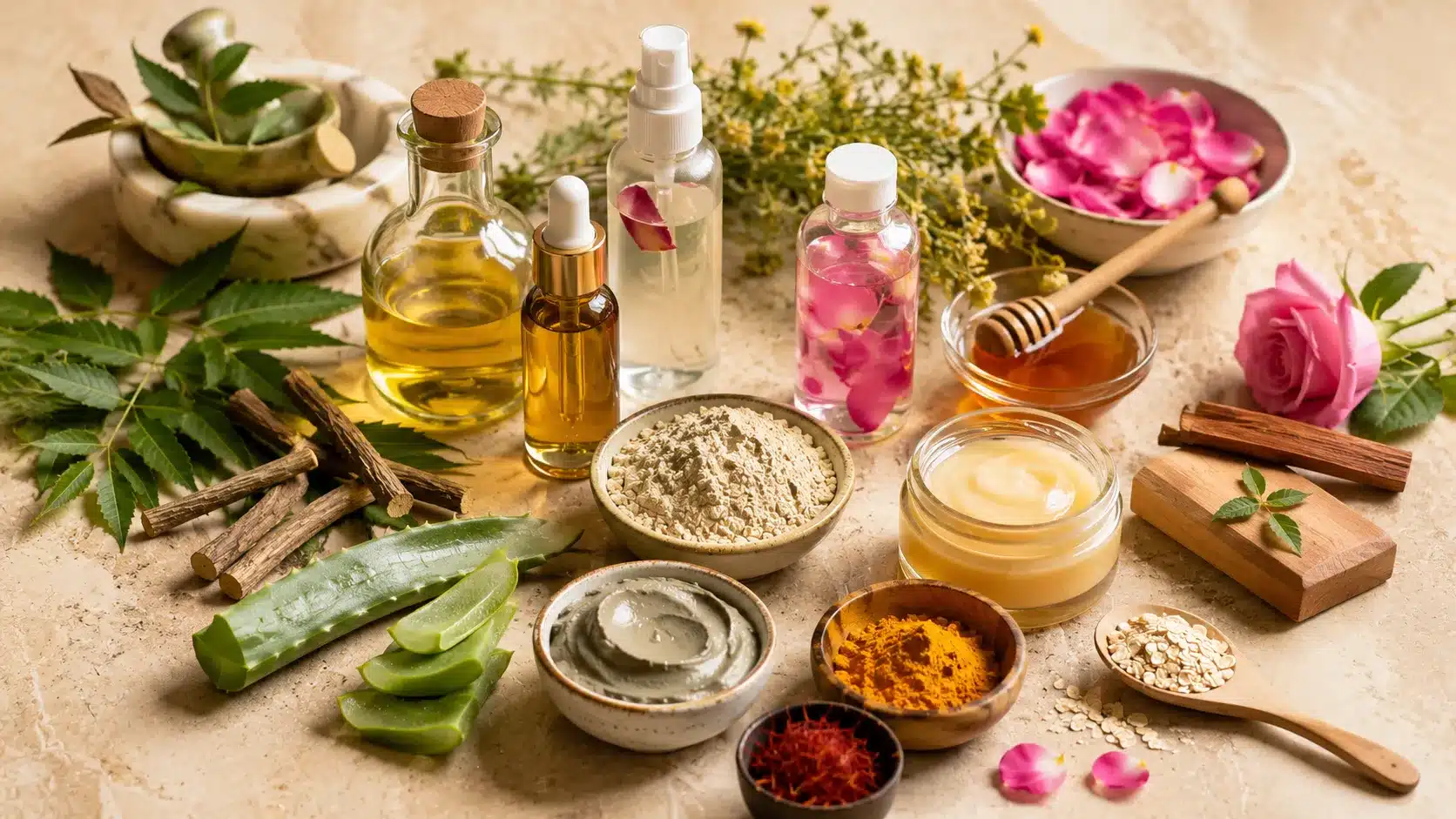
Ayurvedic skin care is a holistic beauty approach rooted in Ayurveda, the traditional wellness system of India. It uses herbs, oils, floral waters, cleansing powders, massage, diet, sleep, and seasonal habits to support healthier-looking skin.
The main idea is simple: your skin is not separate from the rest of your body. Dryness, redness, oiliness, dullness, breakouts, and sensitivity may be influenced by stress, digestion, climate, sleep, hormones, and daily habits.
Ayurvedic skin care often includes:
- Herbal powders
- Facial oils
- Ubtan cleansers
- Clay masks
- Floral waters
- Gentle massage
- Dosha-based product choices
- Food and lifestyle habits
This does not mean you need to replace your whole routine. Ayurvedic principles can work alongside modern basics like cleanser, moisturizer, and sunscreen.
How Ayurveda Understands Skin: The Dosha Framework

Ayurveda organizes body-mind patterns into three doshas: Vata, Pitta, and Kapha. In skin care, these are not skin types in the dermatological sense. They are functional patterns, tendencies your skin has under different conditions, and they shift with age, stress, seasons, and diet.
Understanding your dominant pattern helps you stop buying products for an imaginary ideal skin type and start choosing ingredients for what your skin is actually doing right now.
| Dosha Pattern | Common Skin Signs | What Skin May Need | Routine Focus |
|---|---|---|---|
| Vata | Dry, rough, tight, flaky, easily dehydrated | More comfort, moisture, and protection | Gentle cleansing, richer moisture, less exfoliation |
| Pitta | Red, warm, reactive, easily irritated, breakout-prone | Cooling and calming care | Less friction, fewer strong actives, soothing products |
| Kapha | Oily, thick, dull, congested, blackhead-prone | Lightness and pore balance | Mild cleansing, light moisture, weekly clay or honey mask |
| Mixed Dosha | Dry in some areas, oily or reactive in others | Flexible routine by area | Adjust product amount by zone and season |
One note before moving forward: your dosha pattern is a useful compass, not a diagnosis. If your skin is persistently red, painful, or severely broken out, please see a dermatologist. The dosha framework is a tool for personalization — it does not replace medical evaluation.
For a deeper look at Pitta-specific skin concerns and how to soothe reactive, redness-prone skin with Ayurvedic oils and herbal care, see our full guide on Pitta skincare routines and recipes.
Benefits of Ayurvedic Skin Care

Ayurvedic skin care may support your skin when the routine matches your concern and the ingredients are used with care. Many herbs used in Ayurveda contain plant compounds with antioxidant, soothing, or antimicrobial effects, but they should not be treated as medical cures.
1. Supports a More Personalized Routine
Ayurvedic skin care helps you look beyond basic labels like dry, oily, or combination. It encourages you to notice patterns such as dryness after travel, redness during heat, breakouts during stress, or dullness during seasonal change.
This makes your routine feel more intentional. Instead of buying every trending product, you choose ingredients based on what your skin is showing right now.
2. Encourages Gentle, Consistent Care
Many Ayurvedic routines focus on gentle cleansing, facial oils, floral waters, and massage instead of harsh scrubs or stripping cleansers. This can help people simplify their routine and avoid over-exfoliation.
A calmer routine is especially useful for skin that feels tight, reactive, or easily irritated. Consistency matters more than using many strong products at once.
3. May Help Dry Skin Feel More Nourished
Vata-type skin often feels dry, rough, thin, or easily dehydrated. Ayurvedic routines for this pattern usually focus on nourishing oils, creamy textures, and reduced exfoliation.
Ingredients like sesame oil, almond oil, oat flour, aloe vera, and richer moisturizers may help the skin feel softer and less tight. Dry skin still needs barrier support, so moisturizer and sunscreen remain important.
4. May Help Calm Heat and Redness
Pitta-type skin may feel warm, red, flushed, or reactive. Cooling ingredients such as aloe vera, rose water, sandalwood, licorice, and vetiver are often used in Ayurveda to calm the feel of overheated skin.
These ingredients may help mild redness or irritation feel more comfortable. However, persistent redness, burning, rosacea, or painful inflammation should not be managed with home care alone.
5. May Support Oily or Congested Skin
Kapha-type skin may look oily, thick, dull, or congested. Ayurvedic routines for this pattern often use lighter textures, neem, turmeric, honey, multani mitti, or mild ubtan powders.
The goal is to refresh and clarify the skin without stripping the barrier. Heavy oils may worsen clogged pores for some people, so oily or acne-prone skin should be patch tested carefully.
6. Promotes Facial Massage and Relaxation
Ayurvedic beauty rituals often include a gentle facial massage. When done with clean hands and the right product, a massage may help the skin feel relaxed and temporarily more refreshed.
It can also make the routine feel calmer and more consistent. Avoid strong pressure, pulling, or massage over inflamed acne, rashes, infections, or irritated areas.
7. Encourages Seasonal Skin Care
Ayurveda encourages adapting routines to the seasons. Skin may feel drier in winter, more irritated in summer, and oilier in humid weather. This seasonal awareness helps prevent using the same products all year when your skin clearly needs something different.
For example, dry months may need richer moisture, while hot weather may call for lighter gels and cooling mists.
8. May Help With Dullness and Uneven-Looking Tone
Ingredients such as turmeric, saffron, licorice, manjistha, and sandalwood are often used in Ayurveda to promote radiance and a brighter-looking skin. These may support a more refreshed appearance when used carefully.
Still, sunscreen is the most important step for preventing dark spots from worsening. No oil, herb, or mask can replace daily UV protection.
The Science Behind Ayurvedic Skin Care Ingredients
Ayurvedic skin care is grounded in centuries of traditional use, but many of its key botanicals have also attracted modern research interest.
A 2024 review in the Journal of Cosmetic Dermatology noted that Ayurvedic ingredients, including turmeric, neem, and centella asiatica, show measurable antioxidant and anti-inflammatory activity in laboratory studies, while also emphasizing that large-scale human clinical trials are still limited.
That is the honest picture: the plant compounds are real, the traditional evidence base is substantial, and the modern clinical research is promising but incomplete.
What this means practically: Ayurvedic ingredients can support your skin in meaningful ways, but they work best as a thoughtful complement to your routine, not as replacements for sunscreen, barrier support, or medical treatment when your skin genuinely needs it.
The table below covers the most commonly used Ayurvedic skin care ingredients, what they are traditionally used for, and which skin patterns tend to tolerate them well:
| Ingredient | Common Use in Skin Care | Best For |
|---|---|---|
| Aloe vera | Cooling and hydrating | Redness, sun-exposed skin, light hydration |
| Rose water | Refreshing and soothing | Sensitive or warm-feeling skin |
| Neem | Clarifying | Oily or acne-prone skin |
| Turmeric | Brightening and calming | Dullness, uneven-looking tone |
| Sandalwood | Cooling and soothing | Warm or reactive skin |
| Manjistha | Traditional complexion herb | Dull or uneven-looking skin |
| Licorice | Brightening support | Dark spots and redness-prone skin |
| Saffron | Radiance-focused formulas | Glow and luxury skin care |
| Sesame oil | Nourishing massage oil | Dry or Vata-type skin |
| Coconut oil | Rich, cooling oil | Body care or very dry areas |
| Multani mitti | Clay cleansing | Oily or congested skin |
Natural” does not automatically mean safe or mild. Turmeric, citrus oils, essential oils, and concentrated herbal extracts can all irritate reactive skin. Always patch test a new product on a small area, ideally the inner arm, and wait 24 hours before applying it to your full face.
To learn more about the traditional uses and active compounds in these plants, our guide to the best Ayurvedic herbs for health and healing covers neem, turmeric, and a dozen others in detail.
Ayurvedic Skin Care Routine by Dosha
A daily Ayurvedic routine should stay simple. Pick the routine based on your current skin signs, then choose ingredients that support that pattern.
| Skin Type or Concern | Morning Routine | Night Routine | Weekly Care | Ingredients That May Fit |
|---|---|---|---|---|
| Dry Vata Skin | Gentle cleanse, rose water, moisturizer, sunscreen | Cleanse, light facial oil, cream | Oat flour mask | Sesame oil, oat flour, aloe, rosehip oil |
| Sensitive Pitta Skin | Mild cleanse, rose water, light cream, sunscreen | Cleanse, aloe, or calming cream | Cooling mask | Aloe vera, rose water, sandalwood |
| Oily Kapha Skin | Gel cleanse, light moisturizer, sunscreen | Cleanse, light serum or gel cream | Clay or honey mask | Neem, honey, multani mitti |
| Dull Skin | Cleanse, hydrating toner, sunscreen | Cleanse, moisturizer, optional oil | Mild powder mask | Saffron, turmeric, manjistha |
| Acne-Prone Skin | Gentle cleanse, light moisturizer, sunscreen | Cleanse, acne-safe moisture | Clay only if tolerated | Neem, turmeric, honey |
Sunscreen should be your last morning step. Ayurvedic oils and herbs can support the skin, but they do not protect against UV damage.
Tip: Treat sunscreen as your last morning step. Ayurvedic oils and herbs can support your skin, but SPF helps protect the results you are working for.
Ayurvedic Morning and Night Skin Care Routine
A simple Ayurvedic routine should protect your skin during the day and help it recover at night without overwhelming it.
Morning Routine

Morning care should focus on gentle cleansing, light hydration, and sun protection. Keep products simple so your skin feels calm, not overloaded.
- Cleanse gently: Use a mild cleanser or soft herbal cleanser. Avoid harsh scrubbing, especially if your skin feels dry or reactive.
- Apply a calming mist or toner: Use rose water, aloe mist, or hydrating toner to refresh the skin and add light moisture.
- Use a moisturizer or light facial oil: Choose a richer formula for dry skin, and a lightweight gel or lotion for oily or acne-prone skin.
- Massage lightly for 30 to 60 seconds: Use soft upward strokes without pulling. Skip the massage if you have active acne, rash, or irritation.
- Finish with sunscreen: Apply broad-spectrum sunscreen every morning. Ayurvedic herbs and oils do not protect against UV damage.
This morning routine helps prepare the skin for the day while keeping Ayurvedic care balanced with modern sun protection.
Night Routine

Night care should remove buildup, calm the skin, and support the barrier while you sleep. Avoid using too many active products.
- Remove sunscreen and makeup: Clean skin helps reduce buildup, clogged pores, and irritation before sleep.
- Cleanse without stripping: Use a gentle cleanser that removes dirt and oil without leaving skin tight or dry.
- Apply aloe, rose water, or calming serum: Choose soothing products if your skin feels warm, red, dry, or irritated.
- Use facial oil only if tolerated: Dry skin may like a few drops of oil. Oily or acne-prone skin should use caution.
- Seal with moisturizer: Moisturizer helps support the skin barrier and prevents overnight dryness.
- Avoid strong DIY masks overnight: Do not sleep with turmeric, lemon, clay, essential oils, or harsh herbal mixes on your face.
Tip: If you use retinoids, AHAs, or BHAs as part of your modern skin care routine, keep those on their own nights rather than layering them with Ayurvedic masks or multiple herbal oils. Too many actives at once leads to the same reactive, stripped skin you’re trying to move away from.
Ayurvedic Skin Care Products and Brands to Explore
Ayurvedic skin care products serve different purposes, from cleansing and moisturizing to brightening and weekly care. Choose the product type first, then compare brands.
| Product or Brand Type | Main Purpose | Best Fit | What to Check |
|---|---|---|---|
| Ubtan or cleansing powder | Gentle cleansing and mild exfoliation | Normal, oily, or dull skin | Texture, herbs, fragrance, scrub level |
| Facial oil | Moisture support and massage | Dry or dull skin | Base oil, essential oils, heaviness |
| Kumkumadi oil | Brighter-looking skin and moisture | Dry, dull, uneven-looking skin | Saffron, oil base, fragrance load |
| Clay mask | Oil control and pore care | Oily or congested skin | Clay type and drying effect |
| Hydrosol or floral water | Light toning and a cooling feel | Sensitive or warm skin | Fragrance, preservatives, skin reaction |
| Balms or ghee creams | Rich moisture and comfort | Very dry skin | Texture and pore-clogging risk |
| Banyan Botanicals | Herbs, oils, balms, body care | Basic herbal self-care | Ingredient list and product purpose |
| Paavani Ayurveda | Dosha-focused skin care | Vata, Pitta, Kapha routines | Skin type match and fragrance |
| Auromere | Soaps, lotions, oils, face washes | Budget-friendly daily care | Formula strength and sensitivity risk |
| Urban Veda | Ayurveda-inspired modern formulas | Dry, oily, sensitive, balanced skin | Skin-type range and actives |
| Forest Essentials | Premium Ayurveda-based beauty | Luxury oils, mists, creams | Fragrance load and price |
| Kama Ayurveda | Classic oils and body care | Kumkumadi and traditional formulas | Oil-based and skin tolerance |
| Shankara | Facial oils and skin care | Oil-based facial care | Heaviness and essential oils |
Do not choose by trend or brand name alone. Match the product to your skin concern, read the full ingredient list, and patch test before regular use.
How to Choose an Ayurvedic Skin Care Brand
The Ayurvedic beauty market ranges from authentic, well-sourced formulations to products that use the word “Ayurvedic” as marketing shorthand for “natural.” Before buying, check these against any brand you are considering:
- The full ingredient list is clearly visible, not just highlighted botanical names
- Fragrance and essential oils are disclosed by name (not hidden under “parfum”)
- The product is clearly matched to a skin type or concern
- Patch-test guidance is included
- Claims are realistic, no promises to “cure” acne, reverse aging, or “detoxify” the skin
- Sensitive-skin formulations are available (a brand that only sells high-fragrance products is not built for reactive skin)
- Samples or return policy options exist before committing to a full-size product
Brands worth researching by category: Banyan Botanicals for herbs and oils; Paavani Ayurveda for dosha-matched formulations; Forest Essentials for premium oils and mists (high fragrance load, check before buying for reactive skin); Kama Ayurveda for traditional oil formulations, including Kumkumadi; Urban Veda for Ayurveda-inspired modern formulas across skin types.
The herbs themselves, neem, turmeric, and their interactions with different doshas, are explained in our overview of turmeric in Ayurveda and the broader Ayurvedic herbal guide. Reading these alongside product ingredient lists helps you evaluate what you are actually getting.
Can You Use Ayurvedic Skin Care With Modern Skin Care Products?

Yes, Ayurvedic skin care can fit with modern skin care. The key is to keep the routine simple and avoid mixing too many strong products at once.
Use this order as a safe base:
- Cleanser
- Treatment product, if you use one
- Moisturizer or facial oil
- Sunscreen in the morning
Be careful when using Ayurvedic masks with retinoids, AHAs, BHAs, benzoyl peroxide, or strong acne products. Too many active steps can lead to dryness, peeling, redness, or burning.
The FDA says products that claim to treat or prevent disease may be regulated as drugs rather than simple cosmetics. That is why acne, eczema, psoriasis, rosacea, and other painful irritations should not be treated solely with skin care products.
Mistakes To Avoid With Ayurvedic Skin Care
Before you add new oils, herbs, or masks to your routine, it helps to know what can irritate your skin or make concerns worse.
Using Heavy Oils on Clogged Skin: Facial oils can help dry skin, but they may feel too rich for oily or clogged skin. If you get blackheads easily, start with lighter products and patch test before using oil on the full face.
Using Too Many Herbs at Once: A long DIY mask can irritate your skin. Keep home remedies simple with two or three ingredients. If your skin burns, stings, or turns red, rinse it off and stop using that mix.
Skipping Patch Tests: Natural ingredients can still cause reactions. Test a new oil, mask, powder, or cream on a small area first. Wait at least 24 hours before using it on your whole face.
Replacing Medical Care With Skin Products:Acne, eczema, psoriasis, rosacea, and other painful irritations may require professional care. Ayurvedic skin care can support comfort, but it should not replace medical treatment when your skin needs it.
Forgetting Sunscreen:Kumkumadi oil, saffron, turmeric, and other brightening products cannot protect the skin from UV damage. If uneven tone or aging signs are concerns, sunscreen should remain part of your morning routine.
Once you know what to avoid, comparing product types becomes easier, so you don’t buy more than your skin needs.
Frequently Asked Questions
How long does Ayurvedic skin care take to show results?
Most people need several weeks to get used to a new routine. Dryness or tightness may feel better sooner, but uneven tone, clogged pores, and texture usually take longer. Track your skin weekly instead of changing products every few days.
Is Ayurvedic skin care safe for sensitive skin?
It can be, but only if the formula is mild and patch-tested. Sensitive skin may react to herbs, fragrance, essential oils, clays, or strong DIY masks. Start with simple products, avoid rough scrubs, and stop anything that burns or stings.
Are Ayurvedic skin care products FDA-approved in the US?
Most cosmetic skin care products do not need FDA approval before sale, except for color additives. The FDA still regulates cosmetics after they enter the market. If a product claims to treat a disease or change skin function, it may fall under drug rules.
Can men use Ayurvedic skin care?
Yes. Ayurvedic skin care is based on skin needs, not gender. Dry skin may need more moisture, oily skin may need lighter care, and shaving irritation may need calming products. The same patch testing and sunscreen rules still apply.
Should you use Ayurvedic products every day?
Some products can be used daily, such as gentle cleansers, moisturizers, rose water, and light oils. Strong masks, clay, scrubs, and turmeric mixes should be used less often. Your skin type should decide how often each product belongs in your routine.
Final Thoughts
Shifting toward an intentional, personalized routine shouldn’t feel like a chore.
Listening to what your skin is telling you right now, whether it is begging for cooling relief or deep hydration, helps you choose botanical ingredients that honor your body’s natural balance.
Embracing Ayurvedic skin care is all about stepping away from harsh, fast-acting trends and giving your skin the steady, gentle care it deserves.
Have you ever tried traditional face oils, Ubtans, or cooling floral waters in your own daily beauty ritual? Drop a comment below and share what worked best for your skin type.
Sources
Singh, G. et al., “Ayurvedic Ingredients in Dermatology: A Call for Research.” Journal of Cosmetic Dermatology, 2024. https://onlinelibrary.wiley.com/doi/10.1111/jocd.16673