












| Medical Disclaimer: This article is for informational purposes only and does not constitute medical advice, diagnosis, or treatment. The information provided is not a substitute for professional medical consultation. If you have a medical condition, are pregnant, or are taking medications, consult your healthcare provider before making any dietary or supplement changes. Individual results vary. |
Black seed oil contains thymoquinone, a compound studied for its antioxidant and anti-inflammatory activity, and that is the reason it shows up in both skin care and wellness supplements.
Pressed from the seeds of Nigella sativa, the oil has been used in traditional medicine across the Middle East and South Asia for centuries.
I’d call it a genuinely useful herb with a real research base and real limits; not every claim you’ll read online holds up, and knowing which ones do makes it easier to use wisely.
What Black Seed Oil Actually Contains
The active profile of black seed oil explains why it attracts so much research attention. The main compound is thymoquinone, which accounts for roughly 30 to 48 percent of the volatile oil in Nigella sativa seeds.
Beyond thymoquinone, the oil is rich in linoleic acid (an omega-6 fatty acid), oleic acid, and palmitic acid, the fatty acid trio that gives it its skin-softening properties.
You’ll also find plant sterols, tocopherols, and other antioxidant compounds that contribute to its overall activity.
| Active Component | What It Does | Where It Shows Up |
|---|---|---|
| Thymoquinone (30–48%) | Antioxidant and anti-inflammatory activity; studied for skin and metabolic effects | Skin comfort, blood sugar, and immune support |
| Linoleic acid (omega-6) | Supports the skin barrier and reduces transepidermal water loss | Dry skin, acne-prone skin |
| Oleic acid | Penetrates skin easily; aids moisture retention | Dry patches, scalp care |
| Plant sterols and tocopherols | Antioxidant support helps protect against oxidative stress | Skin aging, daily wellness |
Product quality makes a real difference here. Cold-pressed, unrefined oil retains the highest thymoquinone concentration. Heat-processed or heavily refined versions lose a significant portion of that active content before they even reach the label.
Black Seed Oil Benefits for Skin
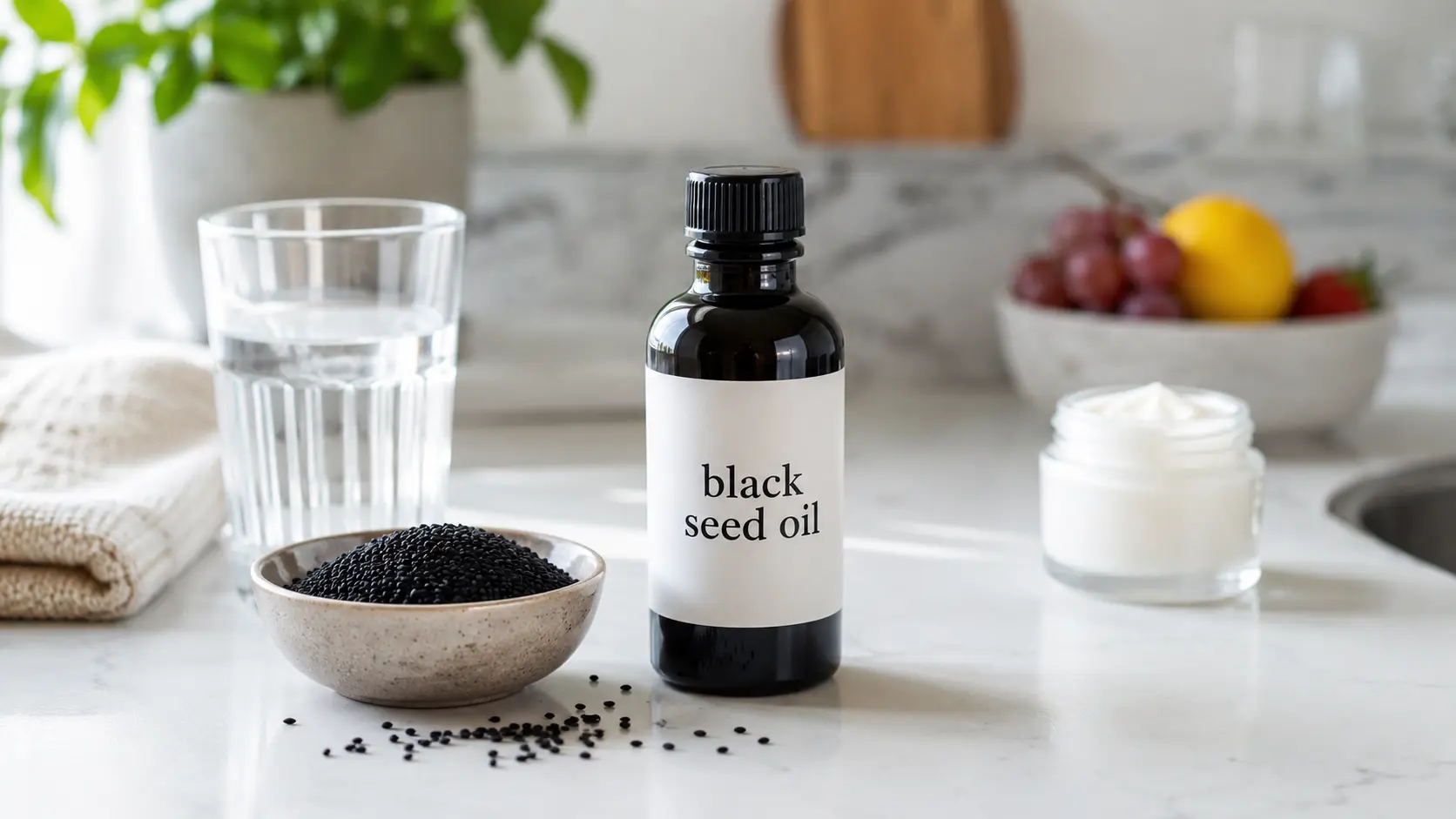
Most people come to black seed oil for skin first. The research here is more developed than for oral use, though still preliminary in many areas. Here is what the evidence actually says, section by section.
1. Acne-Prone Skin
This is one of the better-studied topical uses. Thymoquinone has documented antibacterial activity against Staphylococcus aureus and other acne-linked bacteria, and the oil’s anti-inflammatory compounds help calm the redness that makes breakouts look worse.
A 2020 randomized double-blind clinical trial published in Phytotherapy Research found that a topical gel containing black seed extract used twice daily for 60 days reduced acne severity by 78 percent and significantly lowered the number of active lesions compared to a control group.
That said, acne has multiple causes; hormonal shifts, clogged pores, stress, and product sensitivity all play a role. I’d use this as a support tool, not a standalone treatment. If you are dealing with cystic or deeply painful acne that needs a dermatologist, not an oil.
2. Dry Skin and Barrier Repair
Black seed oil’s linoleic and oleic acid content make it a practical choice for dry skin. Linoleic acid supports the skin barrier by reducing transepidermal water loss, which is the main reason dry skin feels tight and rough.
The oil does not add moisture on its own; it seals it in. For best results, apply moisturizer first on slightly damp skin, then press a small amount of the oil over the top. This layering method is the same reason it works for other fatty-acid-rich face oils, too, and the principle applies across the category.
3. Redness and Skin Irritation
Thymoquinone’s anti-inflammatory activity is the reason black seed oil gets attention for red or reactive skin.
A review indexed by the U.S. National Library of Medicine looked at randomized controlled trials of Nigella sativa for skin conditions and found encouraging results for comfort and visible redness, though the reviewers noted that trial quality varied.
Patch test behind the ear before applying it to your face, and wait 24 hours. Stop immediately if burning or swelling appears.
4. Eczema and Psoriasis-Prone Skin
An Iranian randomized controlled trial found Nigella sativa oil to be comparable to Betamethasone cream in improving quality of life scores and reducing the severity of hand eczema.
A systematic review and meta-analysis of RCTs found that Nigella sativa in combined oral and topical forms reduced psoriasis symptoms and improved skin lesions across multiple trials.
Neither study should be read as a reason to replace prescribed treatment, but for calmer periods and as a complement to a dermatologist’s plan, the oil may offer comfort on unbroken skin.
5. Wound Healing and Collagen Support
Thymoquinone may stimulate collagen synthesis and support tissue regeneration. Animal studies show it accelerates wound closure and reduces scar formation through its antibacterial and antioxidant mechanisms.
This makes black seed oil a reasonable option for minor cuts, superficial scrapes, or post-blemish marks, not for deep wounds, infected skin, or anything that requires medical attention.
Black Seed Oil Scalp and Hair Benefits
The same properties that calm inflamed skin translate to the scalp. Black seed oil’s anti-inflammatory and antifungal activity helps reduce dandruff and dry scalp irritation, and its fatty acid content softens the hair shaft.
A 2020 review highlighted a pilot study in which daily use of a Nigella sativa extract lotion for three months significantly increased hair density and thickness in people with telogen effluvium, a form of stress-related hair loss.
I want to be clear about what that means practically: it is not a proven regrowth treatment for genetic hair loss, and sudden or patchy hair loss always needs a proper medical evaluation. For general scalp dryness and rough hair texture, though, it is a reasonable pre-shampoo treatment.
Massage a small amount into dry scalp areas, leave it for 20 to 30 minutes, then wash well. If you find the smell too strong on its own, mixing it with a lighter plant oil before applying is a common approach.
carrier oil options for scalp use cover which bases dilute most comfortably without clogging follicles.
Oral Use: Digestion, Inflammation, and Metabolic Health
Taking black seed oil by mouth is a different category from applying one drop to your skin.
A supplement affects the whole body, and the evidence here, while encouraging, needs more weight behind it before strong recommendations are possible.
1. Digestive Comfort
Black seed oil has been used traditionally for gut discomfort, bloating, and sluggish digestion. Its anti-inflammatory and mild antimicrobial properties are thought to support a balanced gut environment, though clinical trials specifically on digestion are limited.
If gut health is your main concern, it is worth knowing that plantain leaf, which has its own documented soothing and anti-inflammatory properties, is another plant-based option some people use alongside gut-support protocols. Plantain leaf’s digestive benefits are covered in detail in the herb guide.
2. Blood Sugar and Lipid Balance
A meta-analysis of 11 randomized controlled trials indexed by the U.S. National Library of Medicine found that Nigella sativa supplementation produced statistically significant reductions in fasting blood glucose, post-meal blood glucose, and HbA1c in people with type 2 diabetes, along with modest improvements in LDL cholesterol and triglycerides.
The typical dose used in these trials was 1 to 2 grams of black seed oil or powder daily for 8 to 12 weeks.
This is promising, but it does not make it a replacement for prescribed medication. If you manage diabetes, blood pressure, or cholesterol with medication, talk to your clinician before adding this as a supplement.
Thymoquinone can enhance the effect of blood-thinning medications and may potentiate insulin, meaning blood sugar could drop further than expected.
3. Inflammation and Antioxidant Support
Oxidative stress sits at the center of many chronic conditions. A 2025 review published in PMC confirmed thymoquinone’s free-radical-scavenging activity and its role in reducing markers of systemic inflammation.
For daily wellness purposes, black seed oil is a credible antioxidant source, but it works best alongside fundamentals: adequate sleep, whole food nutrition, sun protection, and any prescribed care your doctor has recommended.
How to Use Black Seed Oil: Topical and Oral
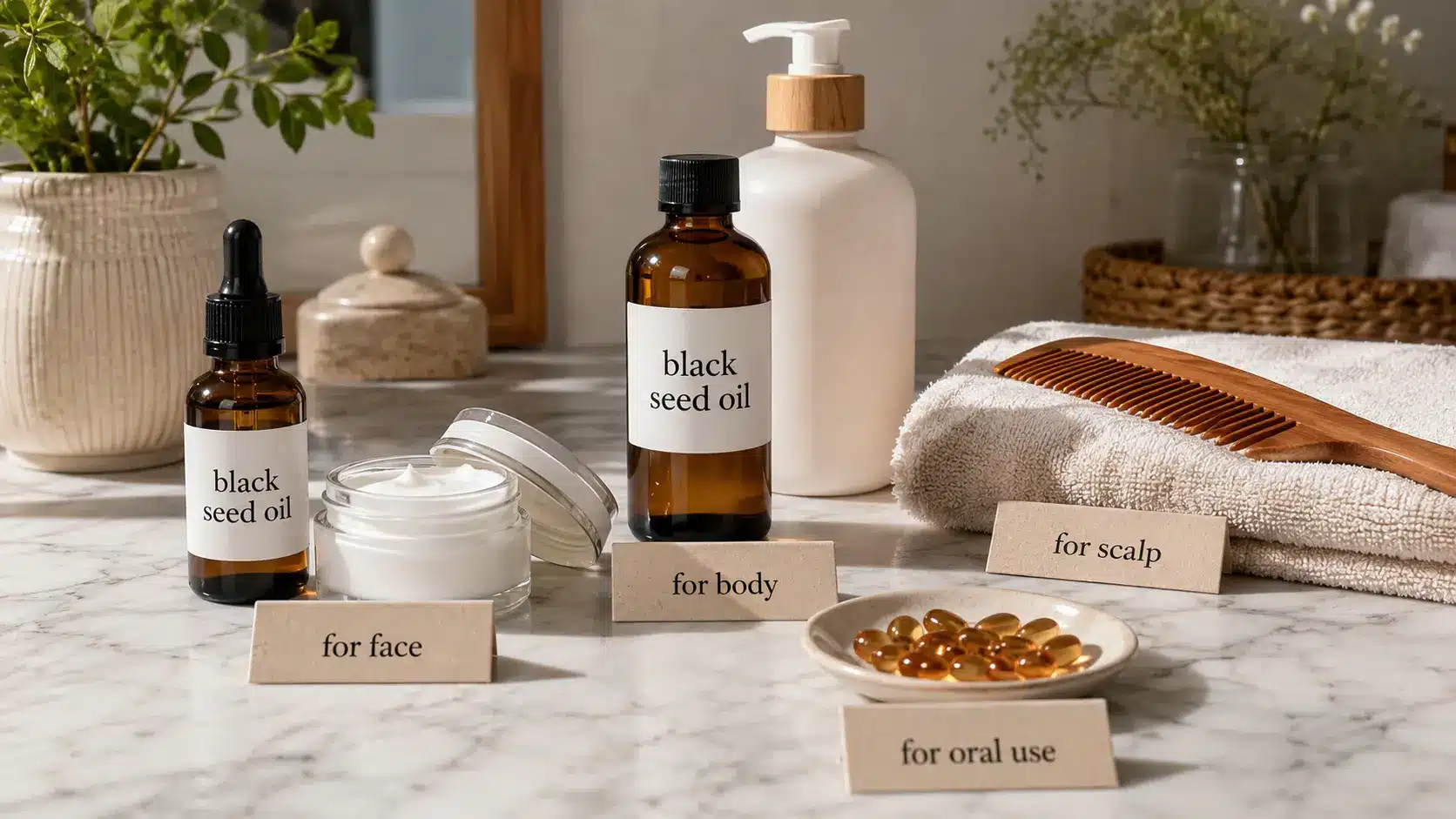
| Use | Method | Timing | Safety Note |
|---|---|---|---|
| Face | 1 drop mixed into moisturizer | Evening | Patch test first. Stop if burning, itching, or breakout worsens. |
| Body, dry patches | A small amount of pressed-over body lotion on damp skin | After bathing | Avoid open cuts, infected skin, or active rashes. |
| Scalp pre-treatment | Massaged into dry scalp, left 20–30 minutes, then washed out | Before shampooing | Not a proven regrowth treatment. Sudden hair loss needs medical review. |
| Oral supplement | 1–2 g daily of food-grade oil or capsule, with food | With a meal | Consult a clinician first if on medication or managing a health condition. |
One thing I always say about potent plant oils: small is the right starting point. A rich oil like this can provoke a reaction in skin that would have no trouble with a gentler moisturizer, so do not skip the patch test even if you have used similar oils before.
Side Effects and Who Should Be Careful
Black seed oil is generally well tolerated in healthy adults when used topically or taken at moderate oral doses for up to three months.
That said, a case series indexed by the U.S. National Library of Medicine documented severe contact dermatitis from topical Nigella sativa oil, a reminder that “natural” does not mean universally safe.
| Safety Note: Avoid black seed oil if you are pregnant; thymoquinone has shown uterine-stimulating effects in animal studies. People on blood thinners, diabetes medications, or antihypertensives should speak with their doctor before oral use. Stop topical use immediately if burning, swelling, or rash develops. |
Possible side effects by route of use:
- Topical: contact dermatitis, redness, itching, burning, increased breakouts in some skin types
- Oral: nausea, upset stomach, low blood sugar, low blood pressure, potential interaction with blood-thinning or diabetes medication
- Both routes: allergic reaction, though severe reactions are rare
How to Choose a Quality Product

The label is where most purchases go wrong. Nigella sativa seed oil should be the only or first ingredient listed.
Cold-pressed and unrefined are the markers that tell you the thymoquinone content is closer to intact. Dark glass packaging matters because the oil oxidizes in UV light.
For facial use specifically, fragrance-free is non-negotiable; added perfume is a common trigger for the very irritation you’re trying to calm.
For oral use, look for a product labeled food-grade with third-party testing, a clear lot number, and a realistic expiration date.
Avoid any product that uses broad cure language or doesn’t specify the extraction method. Slow-promising, simple-label oils are almost always the better choice.
Frequently Asked Questions
Can I apply black seed oil directly to my face?
Yes, but always dilute it first. Mix one drop into your regular moisturizer rather than applying it neat. Undiluted black seed oil is potent enough to cause irritation on sensitive skin.
Start with two to three evenings a week and patch test on your inner arm or behind your ear for 24 hours before applying it to your face.
Does black seed oil help with acne?
It may. The strongest clinical evidence comes from a 2020 study showing a 78 percent reduction in acne severity with twice-daily topical black seed extract over 60 days.
The antibacterial and anti-inflammatory activity of thymoquinone is the likely mechanism. That said, it works best for mild-to-moderate, surface-level blemishes, not deep cystic acne, which needs a dermatologist.
How long does it take to see results on the skin?
Most people notice a difference in skin texture and moisture within two to four weeks of consistent use.
For acne, the clinical trial showing significant results ran for 60 days. Give it at least that long before deciding whether it is working for your skin.
Is black seed oil safe to take every day?
At doses of 1 to 2 grams daily, black seed oil appears safe for up to three months in healthy adults based on current studies.
Beyond three months, the safety data gets thinner. If you want to continue after that window, take a break or check with your healthcare provider first.
Does black seed oil interact with medications?
Yes, this is the most important safety consideration for oral use.
Thymoquinone can enhance the effects of blood-thinning medications like warfarin, lower blood pressure independently (which adds up when combined with antihypertensive drugs), and potentiate insulin, creating a hypoglycemia risk.
If you take any of these, speak with your doctor before starting them.
Can black seed oil help with hair loss?
There is early evidence that it may help with certain types of hair loss, particularly telogen effluvium, a stress-related shedding pattern. A three-month study using a Nigella sativa lotion showed measurable improvements in hair density and thickness.
For androgenic alopecia (genetic hair loss), the evidence is weaker. Sudden or patchy hair loss needs medical investigation regardless of what you apply to your scalp.
What is the difference between black seed oil and black cumin seed oil?
They are the same thing. Both names refer to oil pressed from Nigella sativa seeds. You may also see it called kalonji oil or nigella oil.
The scientific name on the label, Nigella sativa seed oil, is the most reliable way to confirm you are getting the right product, regardless of the common name used.
Final Verdict
Black seed oil for skin may be worth trying if your goal is softer dry areas, calmer-looking redness, acne-prone skin support, or scalp comfort. Black cumin seed oil may also interest you for digestion, inflammation support, and daily wellness, but oral use needs extra caution.
I’d start with one patch test, use only a tiny amount, and watch how your skin or body responds. Choose cold-pressed Nigella sativa oil with a simple ingredient list and no fragrance for face use.
If you take medicine or have a health condition, speak with a healthcare professional first. Start carefully and choose quality before you buy.
Sources:
- U.S. National Library of Medicine. “Therapeutic Effects of Nigella sativa on Skin Disease: A Systematic Review and Meta-Analysis of Randomized Controlled Trials.” PMC9744621. https://pmc.ncbi.nlm.nih.gov/articles/PMC9744621/
- U.S. National Library of Medicine. “Contact Dermatitis from Topical Nigella sativa Oil, Case Series.” PMC6143038. https://pmc.ncbi.nlm.nih.gov/articles/PMC6143038/
- PubMed. “The Effect of a Hydrogel Made by Nigella sativa L. on Acne Vulgaris: A Randomized Double-Blind Clinical Trial.” 2020. https://pubmed.ncbi.nlm.nih.gov/32548864/
- Wiley Online Library. “Comparison of Therapeutic Effect of Topical Nigella with Betamethasone and Eucerin in Hand Eczema.” 2013. https://onlinelibrary.wiley.com/doi/abs/10.1111/jdv.12033
- U.S. National Library of Medicine. “Nigella sativa Supplementation Improves Cardiometabolic Indicators in Prediabetes and Type 2 Diabetes, Meta-Analysis.” PMC9403837. https://www.ncbi.nlm.nih.gov/pmc/articles/PMC9403837/
- PMC. “Functional, Nutraceutical, and Pharmacological Properties of Black Seed.” 2025. https://pmc.ncbi.nlm.nih.gov/articles/PMC12365395/
- SCIRP. “Evaluation of a Therapeutic Alternative for Telogen Effluvium, Nigella sativa Pilot Study.” 2013. https://www.scirp.org/journal/paperinformation?paperid=35882