








If you’ve ever battled a stubborn breakout before a big day, dealt with an itchy scalp that just won’t quit, or struggled with nail fungus that keeps coming back, you know how frustrating it can be.
I’ve been using tea tree oil for years in my own skin and hair care routines, and I’ve also looked into what dermatologists and herbal experts say about it.
Tea tree oil is one of nature’s most versatile remedies, but it’s also highly concentrated. Using it the wrong way can cause irritation instead of relief.
In this guide, you’ll learn how to choose the right carrier oil, mix tea tree oil safely, follow easy DIY recipes, and avoid the common mistakes that keep people from getting results.
What is Tea Tree Oil and Why is it So Popular?
Tea tree oil is a natural essential oil made from the leaves of the Melaleuca alternifolia plant. This plant is native to Australia and has been used for centuries by Indigenous communities. It’s now known around the world for its many healing properties.
Tea tree oil is powerful because it has antibacterial properties that help kill germs that cause infections. Antifungal effects help treat things like athlete’s foot and nail fungus.
Anti-inflammatory action soothes redness, swelling, and irritation. Antiseptic qualities help clean wounds and stop infections.
That’s why it’s often used in skin care, hair care, and even household cleaning. It’s a go-to oil for natural healing and everyday problems.
Why You Must Dilute Tea Tree Oil Before Use
Tea tree oil is strong and effective, but using it the wrong way can harm your skin. That’s why it’s important to always mix it with a carrier oil before applying.
Tea tree oil contains a powerful compound called terpinen-4-ol. This ingredient helps fight bacteria and fungus, but it’s also very concentrated. On its own, it can be too harsh for most skin types.
Using undiluted tea tree oil can lead to:
- Burning or stinging sensations
- Dryness or flaking
- Redness and irritation, especially on sensitive skin
Taking this simple step of dilution makes tea tree oil much safer and more comfortable to use, without losing its benefits.
Best Carrier Oils for Tea Tree Oil
 ” width=”1920″ height=”1080″ />
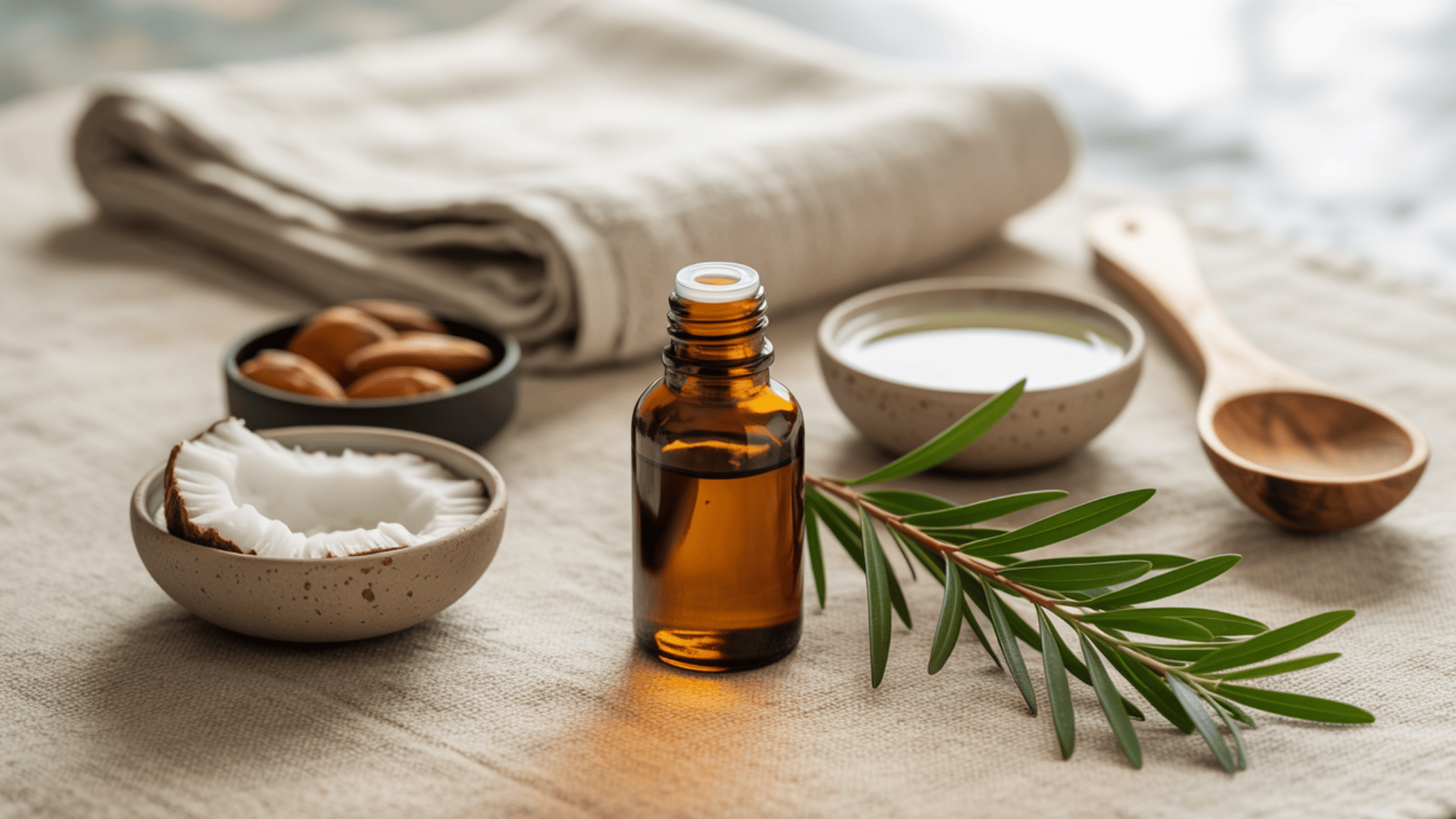
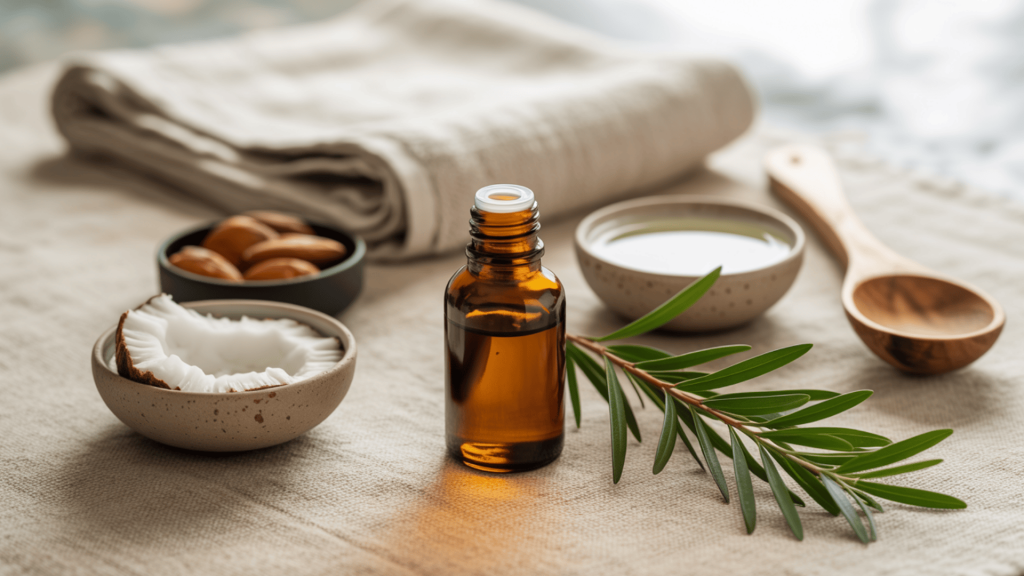
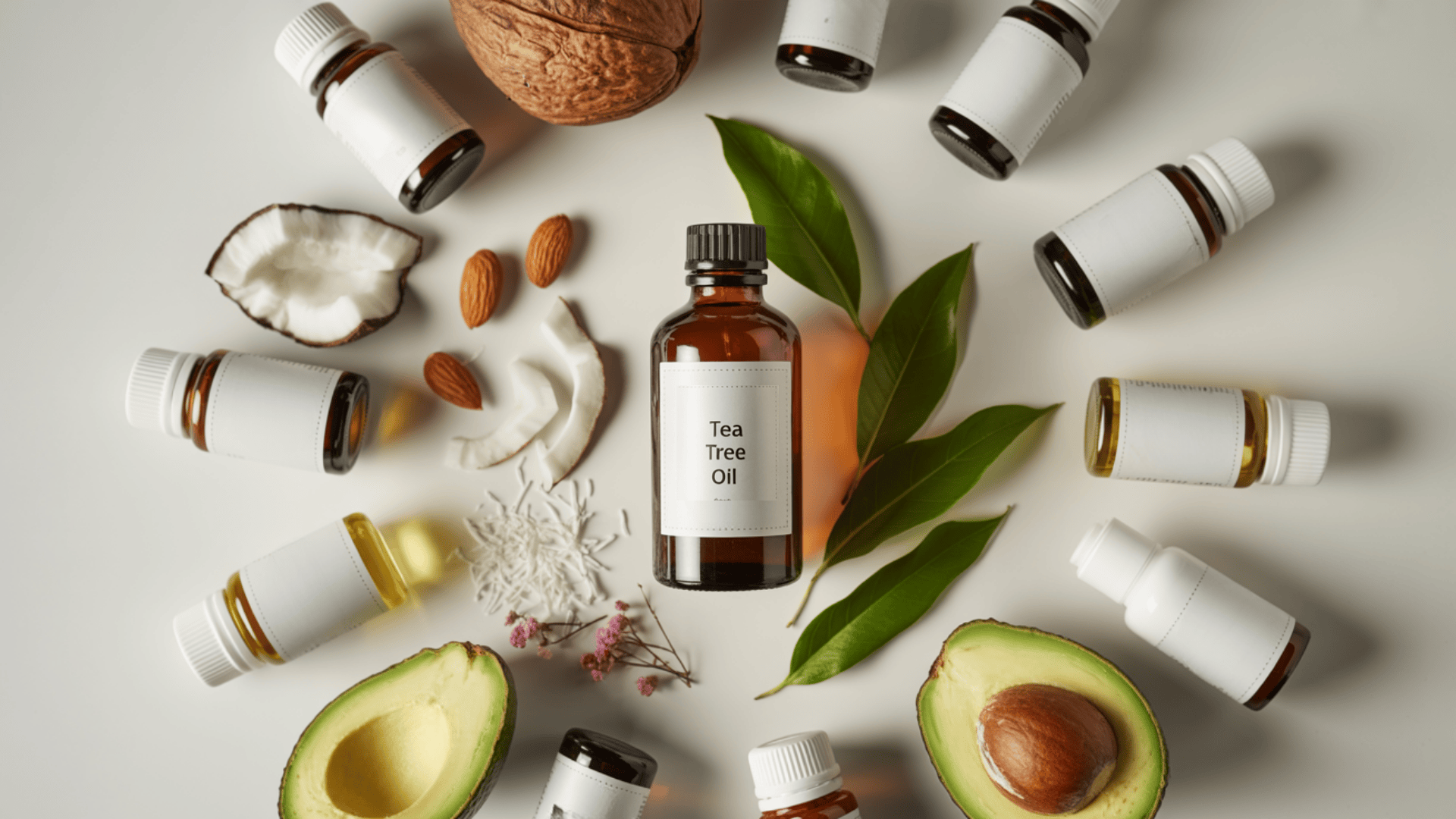
The right carrier oil helps tea tree oil work better and keeps your skin safe. Choosing the best one depends on your skin type and how you plan to use it.
For Oily or Acne-Prone Skin
If you have oily or acne-prone skin, you’ll want a carrier oil that’s lightweight and won’t clog your pores. These oils help balance sebum, calm breakouts, and keep skin clear.
- Jojoba oil- Mimics your skin’s natural oils and helps control excess shine.
- Grapeseed oil- Absorbs quickly and has antioxidant properties that fight acne-causing bacteria.
- Rosehip oil- It contains vitamin A and may help fade acne scars and even out skin tone.
For Dry or Sensitive Skin
Dry or sensitive skin needs extra moisture and gentle ingredients. These oils are rich and soothing, making them ideal for calming irritation and locking in hydration.
- Almond oil- Lightly moisturizing and safe for most skin types, even babies.
- Avocado oil- Thick and deeply nourishing, ideal for flaky or rough skin.
- Argan oil- Full of vitamin E and fatty acids that help repair and soften sensitive skin.
For Hair & Scalp
Tea tree oil works best on the scalp when paired with a hydrating, nutrient-rich base. These carrier oils support scalp health and improve the texture and strength of your hair.
- Coconut oil- Moisturizes and adds shine while helping to reduce flakes.
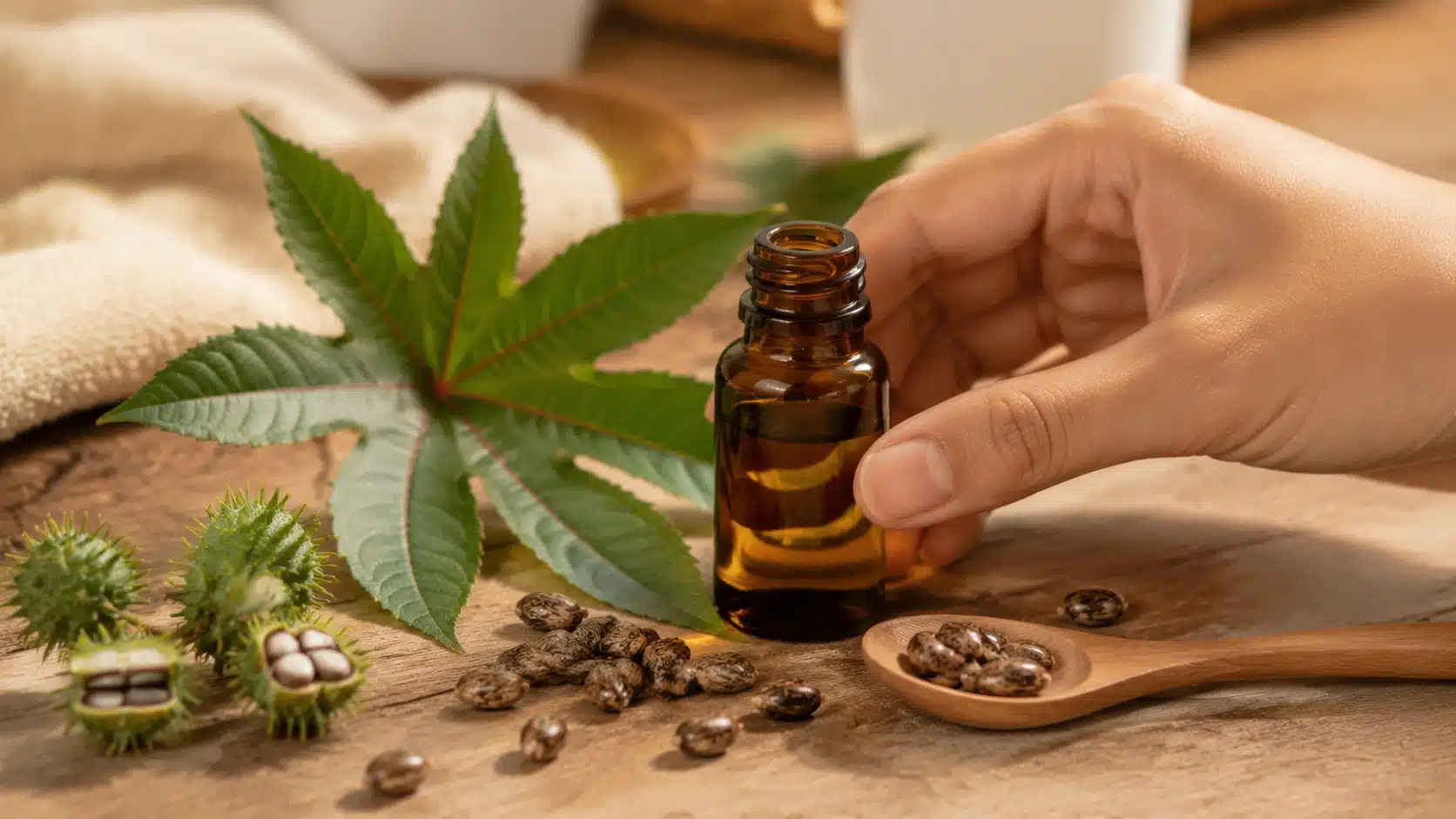
- Castor oil- Thick and rich, often used to boost hair growth and thickness.
- Olive oil- Helps soften the scalp, reduce itchiness, and make hair smoother.
For Fungal Infections
Tea tree oil is known for fighting fungus, but pairing it with the right base can improve how it works. These oils and gels are perfect for treating fungal issues on feet, nails, or skin.
- Sesame oil- Naturally antifungal and penetrates the skin easily.
- Neem oil- Strong herbal oil with antifungal and antibacterial effects.
- Aloe vera gel (non-oil)- While not an oil, it blends well and soothes itchy, irritated skin.
Choosing the right carrier oil makes tea tree oil safer and more effective. Match the oil to your skin type or concern to get the best results.
How to Safely Mix Tea Tree Oil with Carrier Oils
Tea tree oil should always be diluted before it touches your skin, scalp, or nails. Follow these guidelines:
Dilution Ratios
- Face: 1–2 drops tea tree oil + 1 teaspoon carrier oil (1–2% dilution)
- Scalp or body: 3–5 drops tea tree oil + 1 teaspoon carrier oil (up to 5% dilution)
- Nail or spot treatments: 1 drop tea tree oil + 3–4 drops carrier oil
Patch Testing
- Mix the tea tree oil with your chosen carrier oil.
- Apply a small amount to your inner arm.
- Wait 24 hours and check for redness, itching, or irritation before using it more widely.
Storage Tips
- Keep your blend in a dark glass bottle to protect it from light.
- Store in a cool, dry place away from heat and sunlight.
- Optional: Refrigerate in warmer months to extend freshness.
Easy DIY Recipes Using Tea Tree Oil
 ” width=”1920″ height=”1080″ />
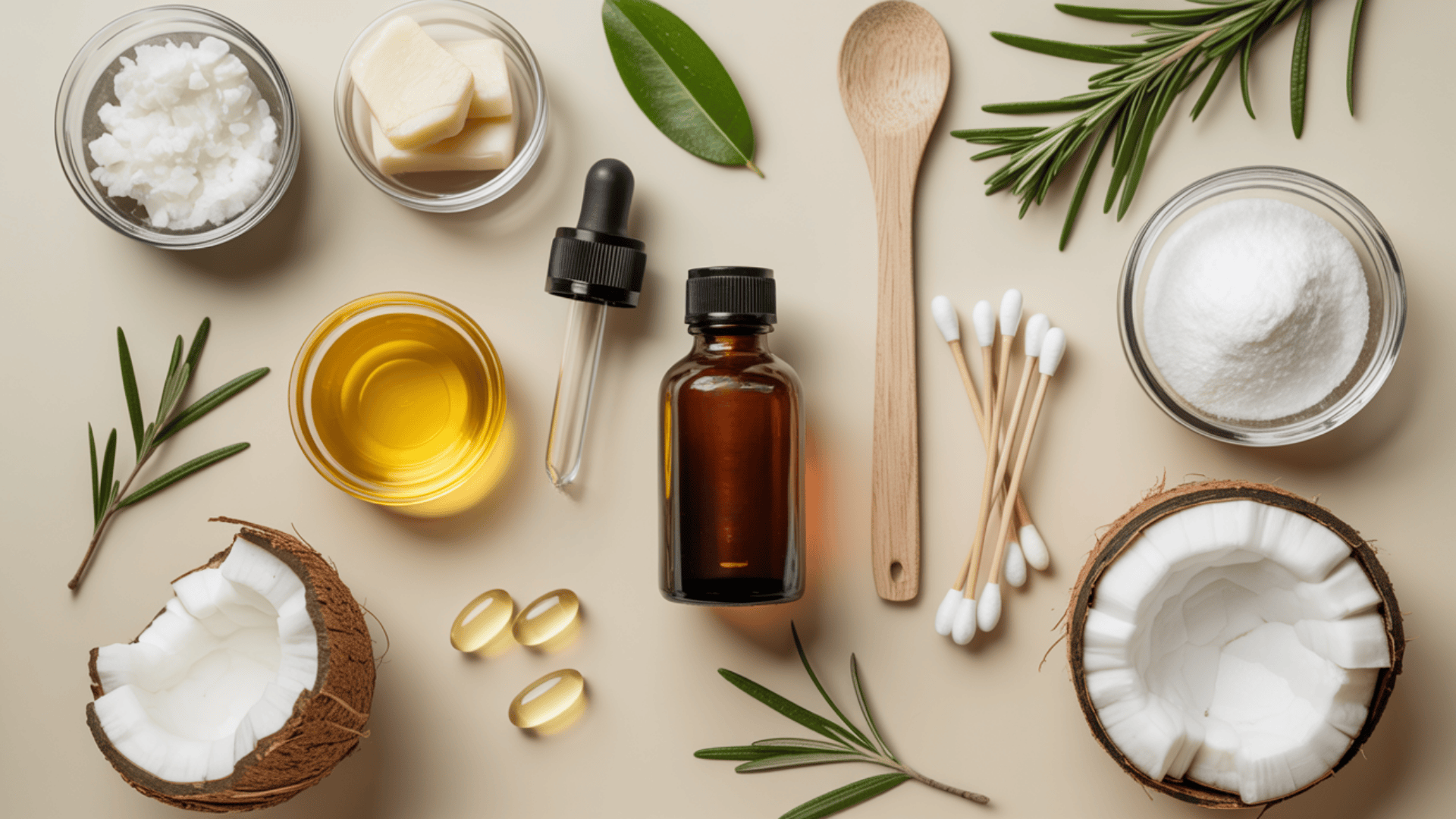
Mixing tea tree oil at home is simple and budget-friendly. These easy recipes can help with acne, scalp care, nail fungus, and body odor using just a few ingredients.
1. Acne Spot Treatment
This blend targets pimples and blemishes without drying out your skin.
What you need:
- 1 drop of tea tree oil
- 3 drops of jojoba oil
How to use: Mix the oils in your palm. Dab directly onto blemishes using a cotton swab. Use once a day after cleansing.
2. Dandruff Relief Hair Oil
This blend helps soothe your scalp and reduce flakes over time.
What you need:
- 3 drops of tea tree oil
- 1 tablespoon coconut oil
- 2 drops rosemary essential oil
How to use: Massage into your scalp and leave it on for 30 minutes. Wash with a gentle shampoo. Use 2–3 times a week.
3. Nail Fungus Serum
This mix can help clear up yellow, thick nails and keep the skin around them healthy.
What you need:
- 2 drops of tea tree oil
- 1 teaspoon sesame oil
- 1 capsule of vitamin E (or a few drops of oil)
How to use: Apply to clean nails and cuticles once or twice daily. Let it absorb fully before covering your feet or hands.
4. Natural Deodorant Blend
This blend fights odor naturally and keeps your underarms fresh.
What you need:
- 2 drops of tea tree oil
- 1 tablespoon shea butter
- ½ teaspoon baking soda
How to use: Melt the shea butter, then mix in tea tree oil and baking soda. Let it cool and apply a small amount under your arms daily.
Each of these recipes uses simple, natural ingredients, and just a little tea tree oil goes a long way. Always store leftovers in a clean jar and use within a few weeks.
Common Mistakes to Avoid When Using Tea Tree Oil
Even though tea tree oil is natural, it’s still potent, and misuse can cause more harm than good.
- Using it undiluted: Skipping dilution can lead to burning, stinging, or peeling skin. Even a single undiluted application can trigger irritation.
- Applying to broken skin: Open cuts or raw acne spots absorb the oil too quickly, increasing the risk of pain and delayed healing.
- Skipping a patch test: Everyone’s skin reacts differently. Testing on a small patch of skin first helps you avoid a full-blown reaction.
- Starting too strong: Beginning with high concentrations may overwhelm your skin’s tolerance. Start mild, then adjust gradually.
- Improper storage: Leaving your tea tree oil blend in direct sunlight or heat breaks down its active compounds. Store it in a dark glass bottle in a cool place for best results.
Avoiding these mistakes means you’ll get results faster and with fewer side effects.
Conclusion
Tea tree oil can be one of the most effective natural tools in your skin, scalp, and nail care routine, but only if you use it correctly.
By diluting it with the right carrier oil, following safe mixing ratios, and avoiding common pitfalls, you can make the most of its antibacterial and antifungal benefits.
I’ve seen firsthand how just a few drops, used the right way, can help calm breakouts, soothe an itchy scalp, or improve nail health. Start small, see how your skin responds, and adjust from there.
If you want more tips on natural oils and DIY care, my other guides walk you through simple, effective methods that keep your routine safe and results-driven.