








Saffron has been sitting in spice cabinets and beauty rituals for centuries, but lately it keeps appearing in serums, face oils, and brightening creams at every price point.
The interest makes sense. It is one of the few plant ingredients where traditional use and emerging research are actually pointing in the same direction.
The problem is that the claims around it vary wildly. Some are grounded in real science. Others are stretched well past what the current evidence supports. If you have been curious about saffron benefits for skin but are not sure what is real and what is marketing, you are in the right place.
I’ll cover what saffron is, what the science actually says, skin benefits worth knowing, how to apply it safely, and what to look for in a product.
What Saffron Is and Why Skin Care Uses It
Saffron comes from the dried stigmas of the Crocus sativus flower. Each flower produces only three stigmas, which is why real saffron remains one of the most expensive ingredients by weight in both cooking and skin care.
In skin care, the value comes not from the color or the scent but from its plant compounds.
The three most studied are crocin, crocetin, and safranal. These are carotenoid-derived compounds with antioxidant and anti-inflammatory activity that researchers have been examining in the context of skin resilience, repair, and tone. Saffron also contains flavonoids and kaempferol, which add to its overall antioxidant profile.
One thing worth saying clearly before the benefit section: saffron is not a cure for acne, melasma, eczema, or aging.
It is a plant-based ingredient that may support skin when used in the right formula, at safe amounts, and with realistic expectations. Sunscreen is still needed every morning regardless of any saffron use.
Here is a quick reference before moving into the science:
- Main compounds: Crocin, crocetin, safranal, flavonoids, carotenoids
- Main skin uses: Tone support, dullness, redness, oxidative stress, post-blemish care
- Best approach: Part of a gentle, consistent routine rather than a stand-alone fix
- Important limit: Saffron does not replace SPF, barrier care, or medical treatment
With the ingredient clear, the next step is understanding what the research actually shows before getting into the individual benefits.
What the Research Actually Shows About Saffron and Skin
The science behind saffron for skin sits at different levels of strength depending on the benefit. Some findings come from lab models, others from small human trials or review papers. Knowing the difference helps you set the right expectations before using it.
- Antioxidant Activity and Skin Resilience: A 2023 study in the Journal of Herbal Medicine examined saffron extract in human dermal fibroblasts and positioned it as a cosmetic ingredient of interest for its antioxidant and anti-inflammatory properties, supporting its use in products targeting dullness and oxidative stress.
- Dermoprotective Effects and Key Compounds: A mini review published on Europe PMC identifies crocin, crocetin, and safranal as the compounds most relevant to skin and connects them to antioxidant, antimicrobial, depigmenting, and repair-supporting activity, organizing the evidence by compound rather than by marketing claim.
- Wound Repair Pathways: Research reviewed on PMC examined Crocus sativus extracts in the context of skin recovery signals, suggesting certain saffron compounds interact with repair pathways in skin tissue, which explains why saffron appears in post-blemish and recovery-focused formulas.
- UV Stress and Skin Protection Interest: Saffron’s carotenoid compounds, particularly crocin and crocetin, have been studied for their activity against UV-related oxidative stress in skin cells, making them relevant to formulas marketed for daily environmental protection, though saffron does not function as or replace a broad-spectrum SPF.
- Anti-Inflammatory Activity in Skin Research: Multiple review papers consistently identify anti-inflammatory activity as one of saffron’s most documented skin-relevant properties, linking safranal and crocin to reduced inflammatory signaling in skin models, which supports the use of saffron in formulas targeting reactive or redness-prone skin.
- What the Research Does Not Prove: No large-scale human clinical trial currently confirms that topical saffron removes wrinkles, clears acne, treats melasma, or replaces prescription skin care. The evidence is early, often formula-dependent, and should be used to evaluate product claims rather than accept them at face value.
With the evidence placed honestly, the benefit section below stays connected to what the research actually measures rather than what product labels claim it can do.
Saffron Benefits for Skin Worth Knowing
The benefits of saffron for skin work best when the formula is right, the skin type fits, and the application is consistent. Each benefit below is connected to a specific plant compound or research area, so the claim stays trackable.
1. Defends Skin Against Oxidative Stress
Crocin, crocetin, and related saffron compounds are studied for antioxidant activity.
Antioxidants help reduce damage from unstable molecules linked with pollution, UV-related stress, and visible skin fatigue. Saffron alone will not stop aging, but it may support a routine focused on skin comfort and dullness.
If you are looking for other antioxidant-rich botanicals alongside it, ashwagandha skin benefits cover a similar anti-inflammatory and oxidative stress territory worth knowing about.
2. Calm the Visible Look of Redness
Saffron’s anti-inflammatory activity is one reason it appears in skin research. This may matter for skin that looks stressed, warm, or reactive. Still, burning, peeling, or inflamed skin needs barrier care first.
If redness is frequent or painful, a dermatologist should check it before trying new home treatments.
3. Support a More Even-Looking Tone
Saffron is discussed in the review literature for depigmenting and tyrosinase-related activity. That makes it interesting for uneven-looking tone, dark spots, and post-blemish marks.
For anyone targeting stubborn discoloration more directly, glutathione for dark spots is another well-researched option that works through complementary pigment-reducing pathways. Either way, daily SPF matters for dark spot control.
4. Offers Antimicrobial Support for Acne-Prone Skin
Saffron has antimicrobial and anti-inflammatory properties, which may be useful in skin care made for redness, blemish marks, or stressed-looking skin.
Acne has many causes, including oil, clogged pores, bacteria, hormones, and inflammation. Saffron can be supportive, but it should not replace proven acne care or medical advice.
5. Skin Looks Fresher and Less Fatigued
Saffron may help dull-looking skin through antioxidant support, tone-related activity, and gentle topical use.
Many DIY saffron masks also feel helpful because carriers like honey, yogurt, rose water, or oils add softness and comfort. The carrier matters as much as the saffron itself.
6. Support Skin Repair Pathways
Saffron compounds are being studied in repair-related pathways, including wound research models. That does not make saffron a home wound treatment.
Do not apply saffron to cuts, burns, infections, or open skin. In a normal routine, think of it as support for healthy-looking skin, not a medical repair product.
7. Provides Early Support Against Visible Aging Signs
Oxidative stress and inflammation are linked with visible skin aging. Saffron may support a routine aimed at fine lines, tired-looking skin, and uneven texture. Still, sunscreen, moisturizer, and proven actives such as retinoids have stronger human evidence for aging concerns than saffron alone.
These saffron benefits for skin sound promising, but the way saffron is used matters. A gentle method can support the skin, while a harsh DIY mix can cause dryness, stinging, or breakouts.
How to Apply Saffron on Skin Safely
Saffron should always be used in small amounts with a skin-friendly carrier. The goal is to support the skin without causing dryness, staining, or barrier irritation from mixing it with ingredients that are too harsh for your skin type.
Before trying any method below, keep these habits in place:
| Safety Habit | What to Do |
| Start small | Use 2 to 4 strands or a low-concentration saffron product first |
| Patch test every time | Apply to the jawline or inner arm 24 hours before full-face use |
| Use a carrier | Mix with honey, yogurt, milk, aloe, rose water, or plain moisturizer |
| Skip harsh combos | Avoid lemon juice, baking soda, and physical scrubs for the same use |
| Use sunscreen | Saffron does not provide UV protection, even with UV-related research interest |
| Avoid broken skin | Skip cuts, burns, active infections, and painful open blemishes |
| Watch for staining | Strong saffron mixes can leave a temporary yellow tint on skin or fabric |
With these basics in place, here are the most practical application methods to try.
Simple Ways to Use Saffron for Skin at Home
Each method below uses a carrier that suits a different skin type. Pick the one that fits your skin and start with a short contact time to see how your skin responds.
1. Saffron and Rose Water Toner
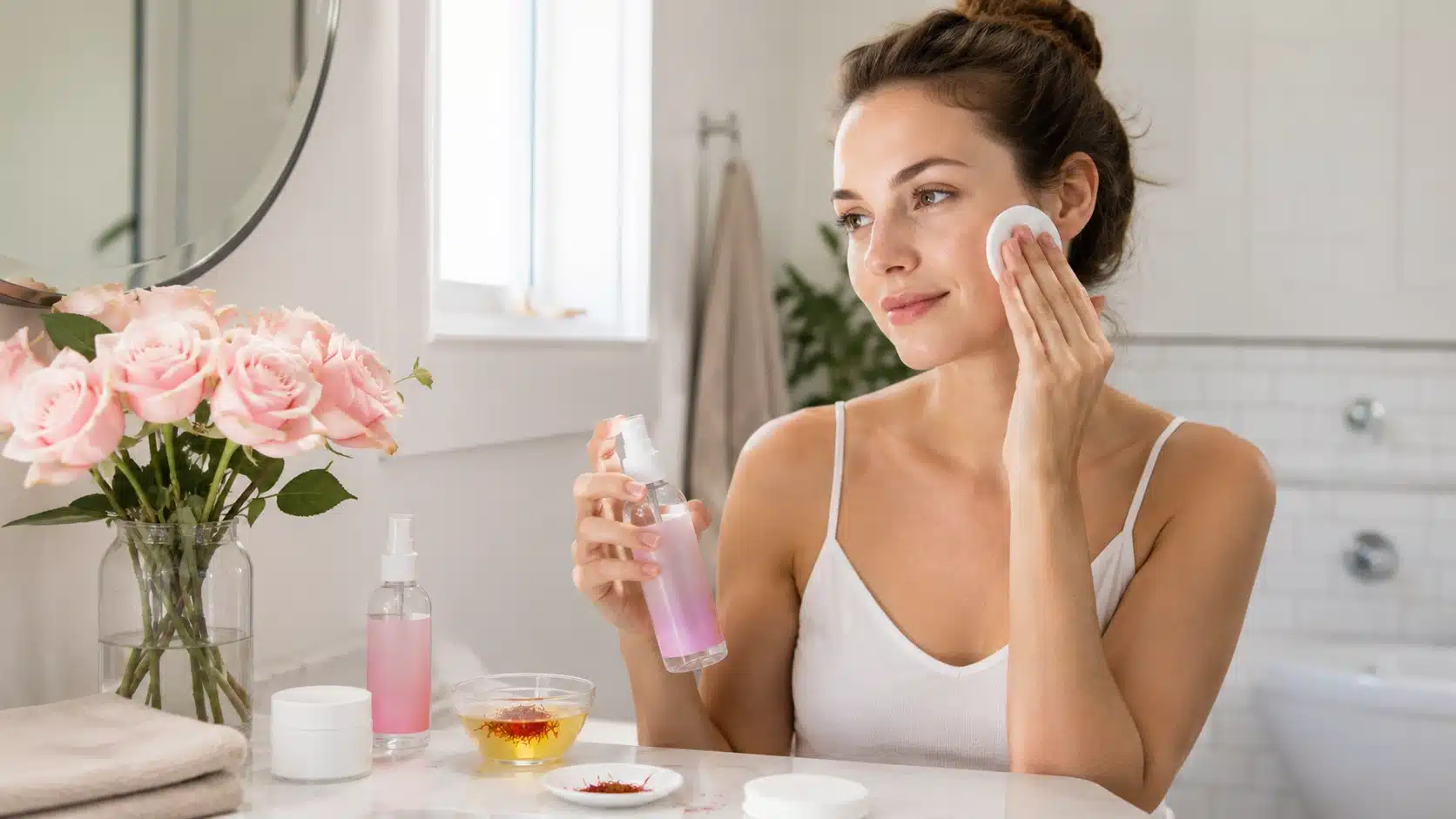
- Step 1: Soak 2 to 3 saffron strands in two tablespoons of rose water for 20 to 30 minutes
- Step 2: Wait until the water turns a light gold color
- Step 3: Apply it with clean fingers or a cotton pad after cleansing
- Step 4: Follow with your regular moisturizer to keep the skin comfortable
- Step 5: Skip this method if rose water or fragrance ingredients cause redness or stinging
Best for: Normal, combination, or tired-looking skin.
Why people like it: This method feels light and refreshing without making the skin greasy.
How often to use: Start with 2 to 3 times a week.
What to expect: Skin may look fresher and feel more hydrated after use.
Extra tip: Keep the mixture in the fridge and make small batches so it stays fresh.
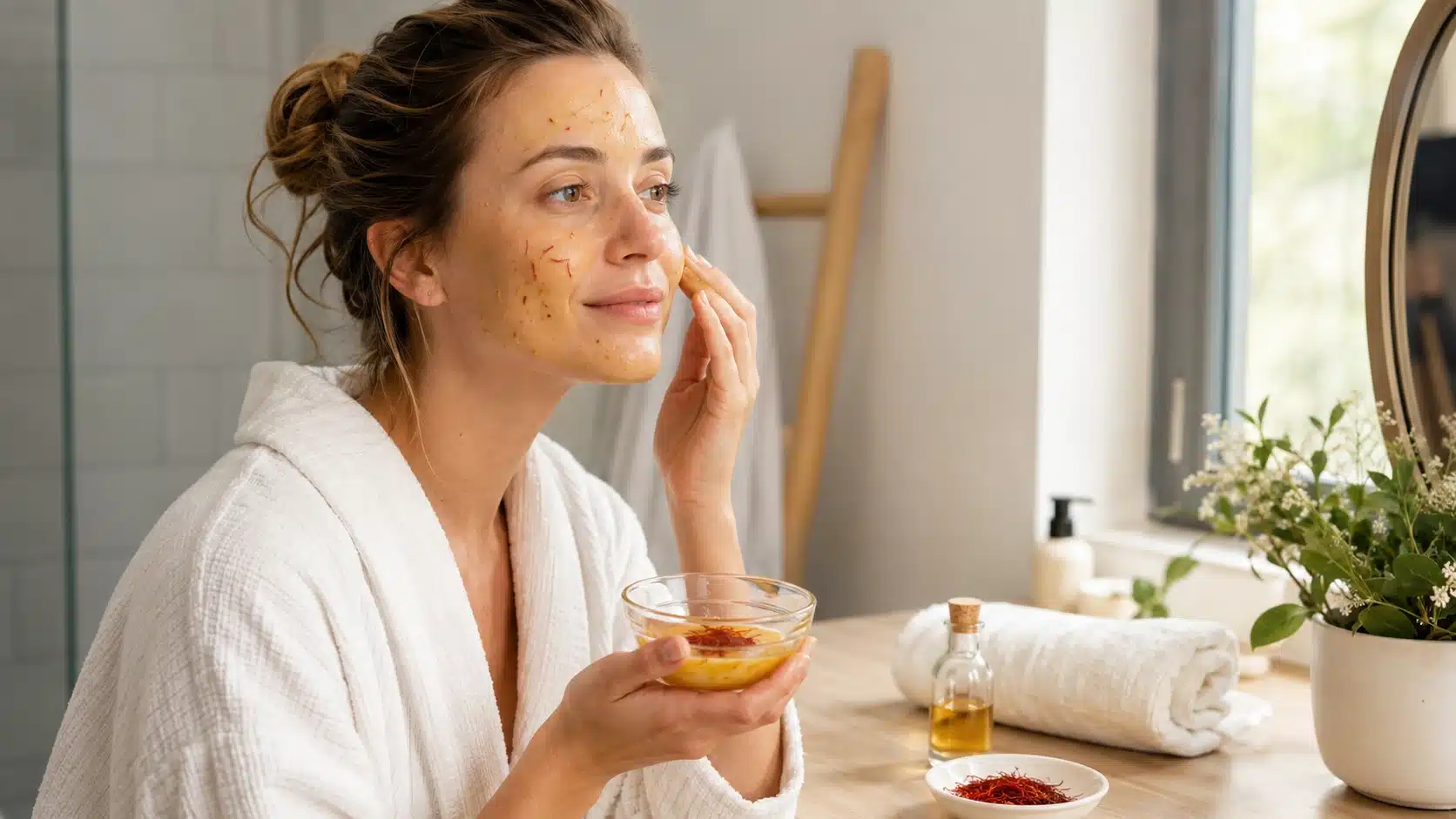
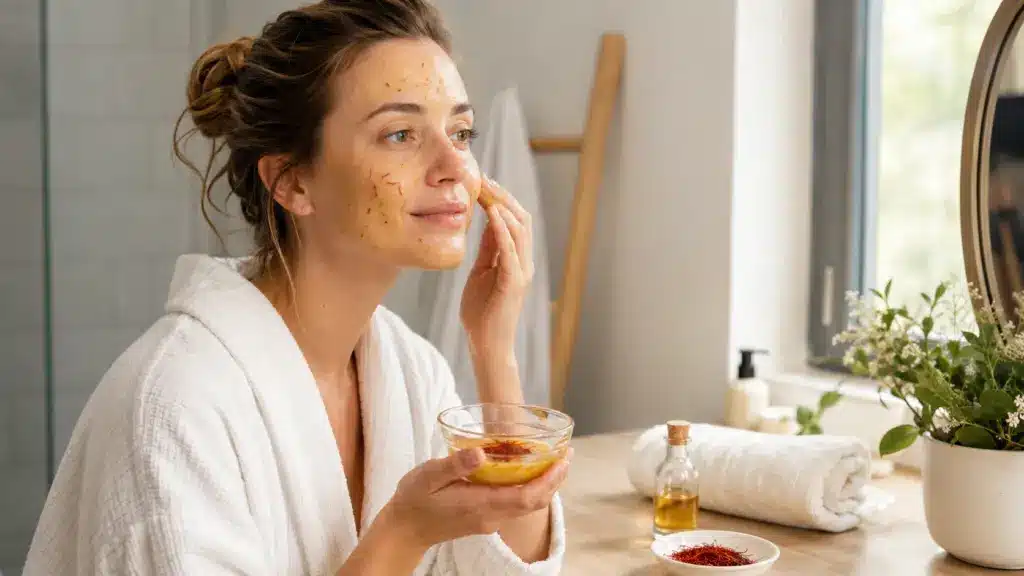
2. Saffron and Honey Face Mask
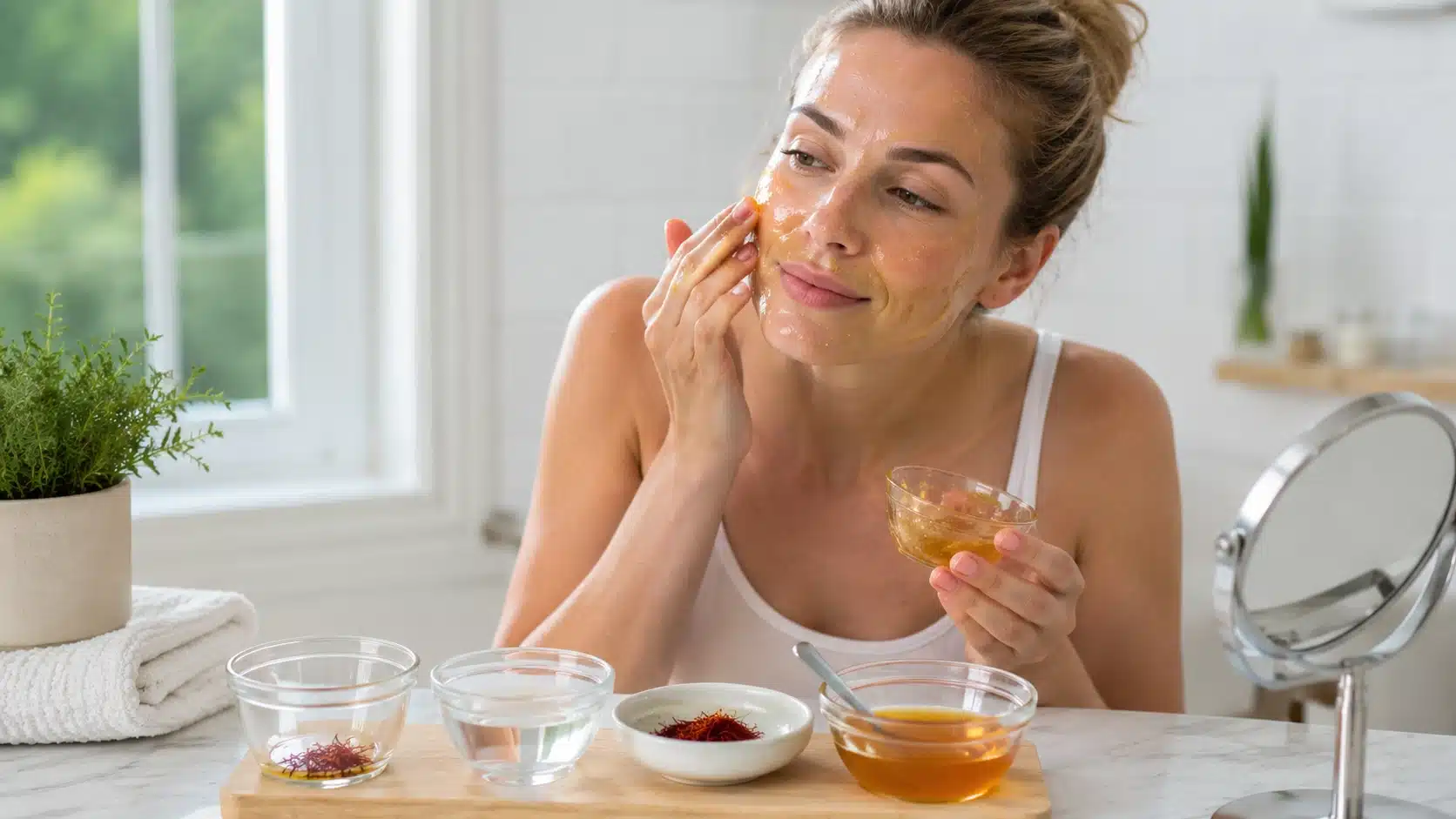
- Step 1: Soak 2 to 3 saffron strands in a small amount of warm water
- Step 2: Mix the saffron water into one teaspoon of raw honey
- Step 3: Apply a thin layer across the face for about 10 minutes
- Step 4: Rinse with lukewarm water, then pat your skin dry
- Step 5: Avoid this method if honey triggers breakouts or leaves your skin congested
Best for: Dry or rough-feeling skin.
Why people like it: Honey helps the skin feel soft and comfortable after rinsing.
How often to use: Once a week is enough for most people.
What to expect: Skin may feel smoother and less dry right away.
Extra tip: Use only a thin layer since thick layers can feel sticky and hard to wash off.
3. Saffron and Yogurt Mask
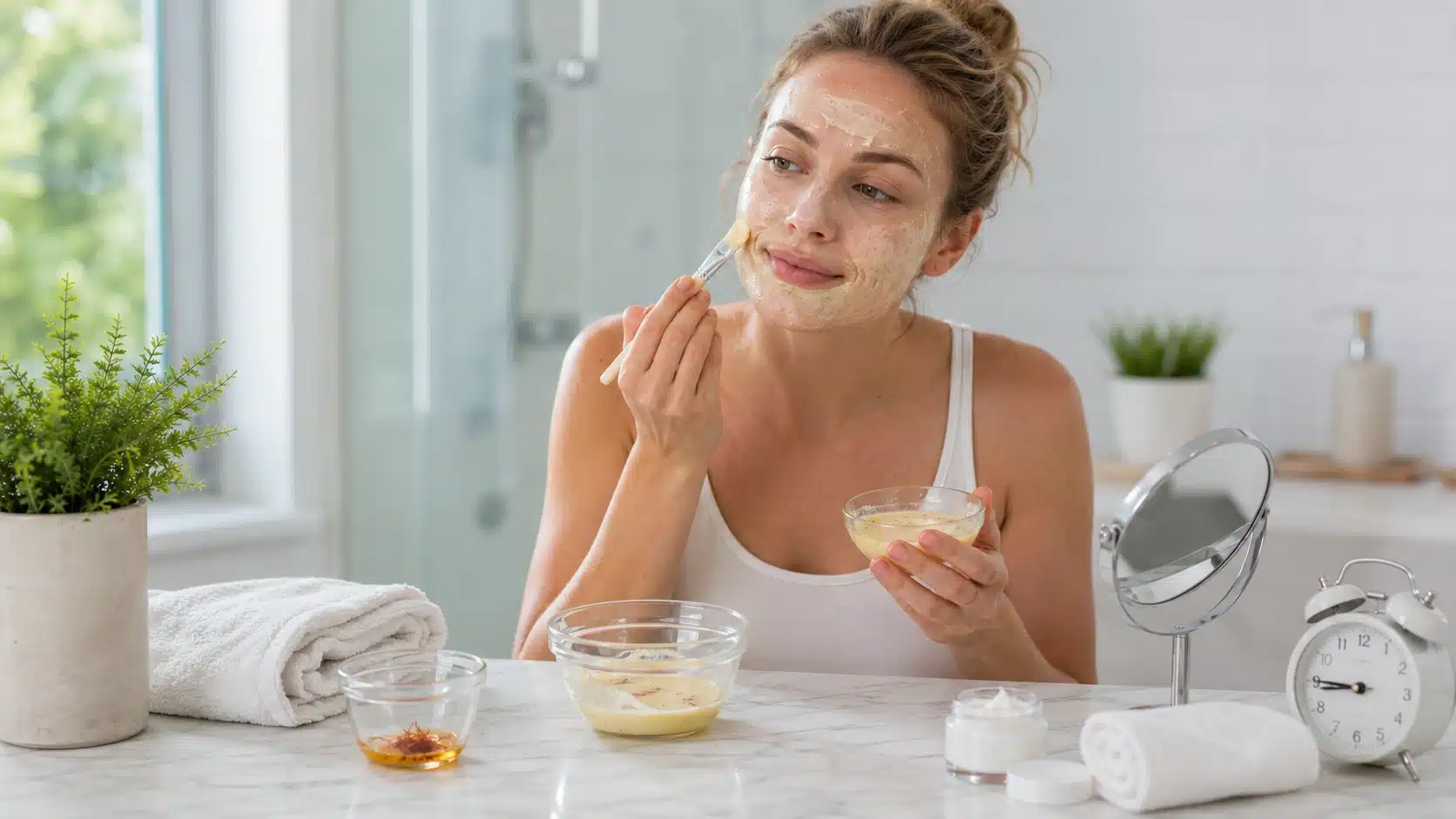
- Step 1: Mix saffron-infused water with one teaspoon of plain, unsweetened yogurt
- Step 2: Apply a thin layer to clean skin
- Step 3: Leave it on for 5 to 10 minutes only
- Step 4: Rinse well, then apply a gentle moisturizer
- Step 5: Start with less time if your skin is sensitive or barrier-compromised
Best for: Dull skin that needs a quick refresh.
Why people like it: Yogurt gives a mild smoothing effect and can leave skin feeling softer.
How often to use: Once a week or every 10 days.
What to expect: Skin may appear brighter and feel cleaner after rinsing.
Extra tip: Do not leave it on too long, especially if your skin is sensitive.
4. Saffron Infused Into Facial Oil or Moisturizer
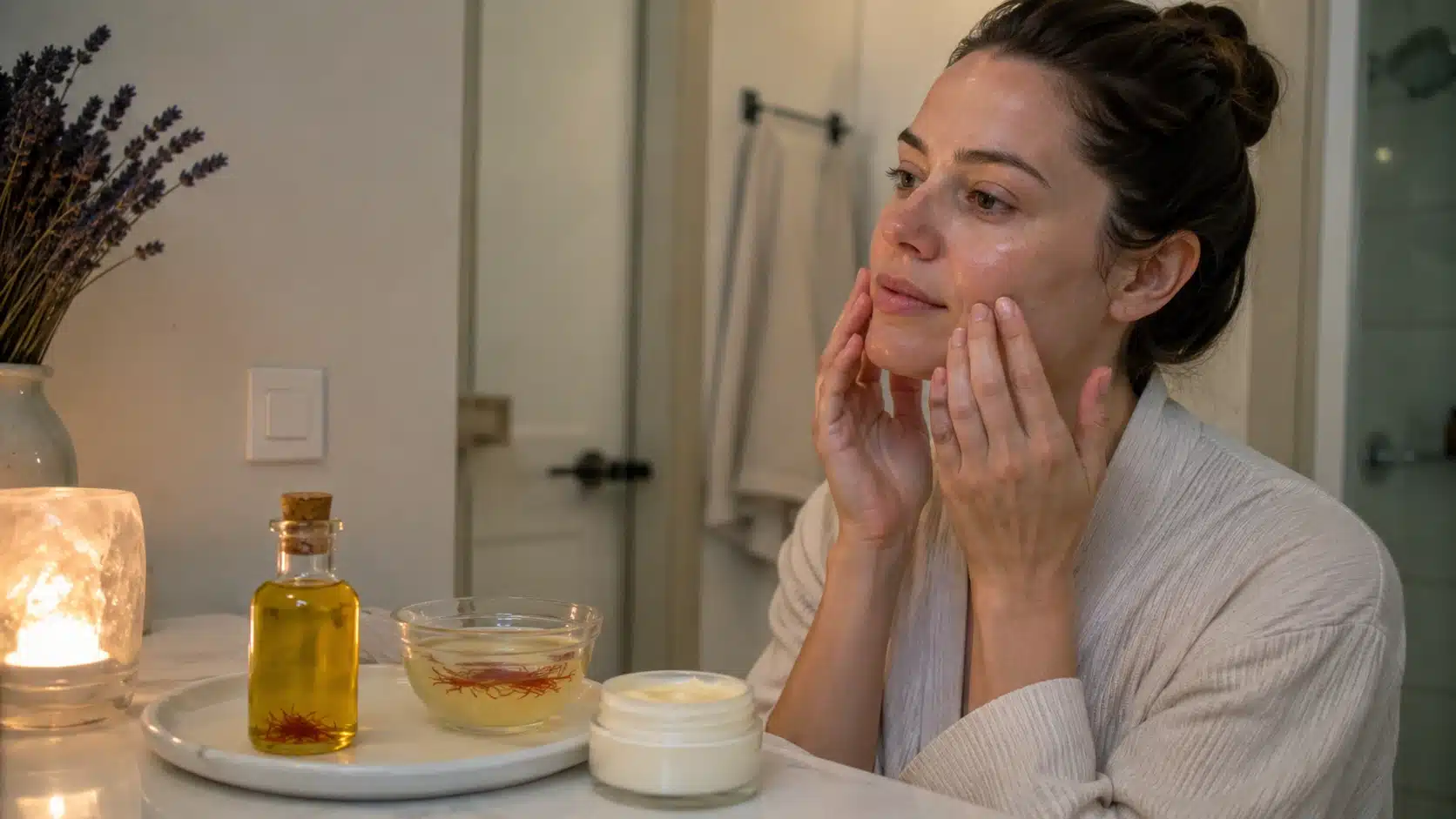
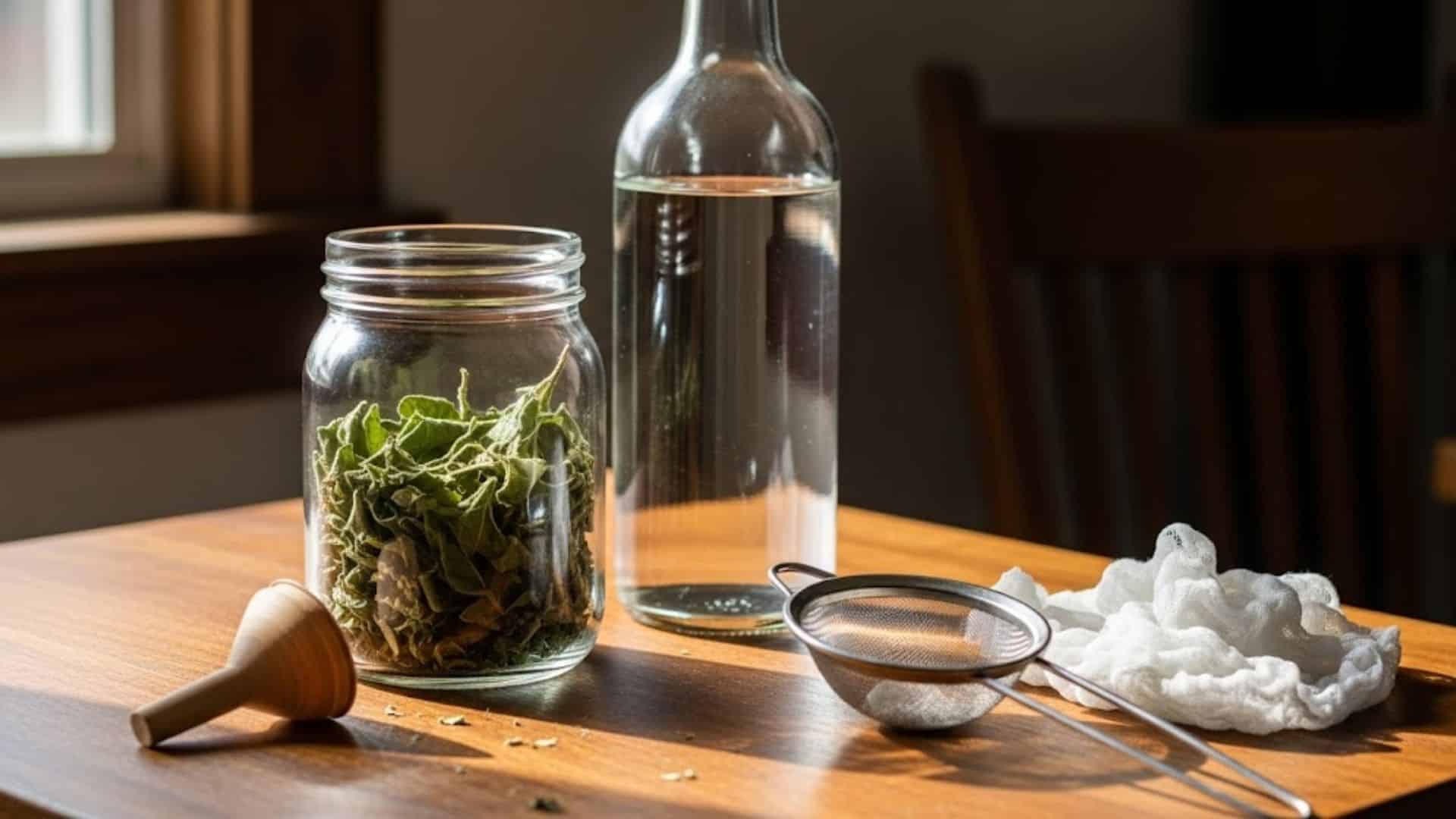
- Step 1: Steep 2 to 3 saffron strands in jojoba or sweet almond oil overnight
- Step 2: Use a small amount of the infused oil in your evening routine
- Step 3: You can also mix saffron-infused water into your regular moisturizer
- Step 4: Apply lightly and avoid heavy layers
- Step 5: Skip extra oils if your skin is oily, clogged, or acne-prone. If you are deciding between carrier oil options, rosehip oil for facial care is worth considering as a lightweight base for sensitive and aging-prone skin.
Best for: Dry or dehydrated skin.
Why people like it: This method adds extra nourishment and works well in an evening routine.
How often to use: Start with 1 to 2 nights a week.
What to expect: Skin may feel softer and more comfortable overnight.
Extra tip: Use only a few drops to avoid a heavy or greasy feel.
5. Formulated Saffron Product Instead of DIY
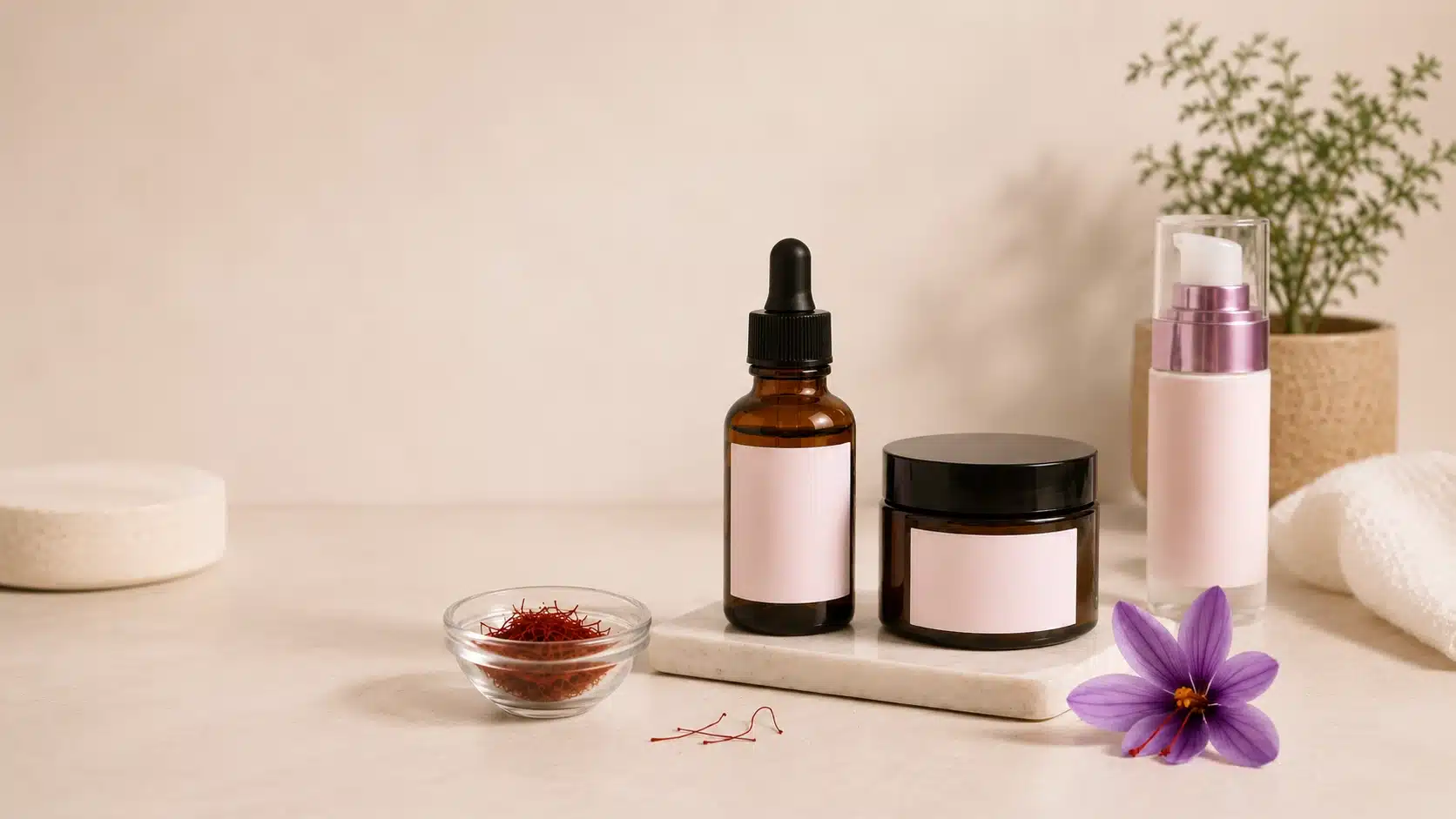
- Step 1: Look for Crocus sativus extract or saffron extract on the label
- Step 2: Check whether the extract appears in the first half of the ingredient list
- Step 3: Choose low-fragrance formulas if your skin reacts easily
- Step 4: Pick packaging that protects the formula from light and air
- Step 5: Avoid products that promise to cure acne, melasma, dark spots, or aging
Best for: People who want a simpler and more consistent option.
Why people like it: Ready-made products are easier to use and often have a smoother texture.
How often to use: Follow the instructions on the product label.
What to expect: Skin care products with saffron may support glow and hydration over time.
Extra tip: Choose fragrance-free or low-fragrance formulas if your skin reacts easily.
Start with one method at a time, patch test first, and stop if your skin burns, itches, or breaks out. A calm, steady routine is safer than using saffron in too many ways at once.
|
Quick tips to apply after any saffron method:
|
Who Should Be Careful With Saffron on Skin
Natural ingredients can still irritate specific skin types, especially when used in concentrated DIY forms or mixed with other active ingredients. Here is who should slow down before adding saffron to a routine:
- Sensitive or reactive skin: Start with the rose water toner method at a lower strand count and a short contact time before trying masks
- Acne-prone skin: Avoid heavy oil carriers and thick masks that sit on the skin for extended periods
- Rosacea-prone skin: Heat, strong fragrance, and long masking time can all trigger flares, so keep any saffron use minimal and watch the skin closely
- Pregnancy: Topical use in small amounts is generally considered low risk, but oral saffron supplementation during pregnancy should only happen under medical supervision
- Allergy history: Anyone with known plant, spice, or Crocus-family allergies should do an extended patch test and stop immediately if any reaction appears
- Post-procedure skin: If you have had a recent chemical peel, laser, or injectable treatment, follow your provider’s aftercare instructions before introducing any new ingredient, including saffron
Safety keeps the routine useful. The final section brings saffron back to realistic skin support instead of miracle claims.
Frequently Asked Questions About Saffron for Skin
How long does it take to see results from saffron on the skin?
Saffron is not a fast-acting ingredient. Most people who use it consistently, through a serum, oil, or weekly mask, report noticing small changes in skin tone and dullness after four to six weeks of regular use. Results depend heavily on the formula, the carrier used, and how often it is applied.
Skin that is already calm and well-moisturized tends to respond more visibly than skin dealing with active inflammation or barrier damage. Setting a realistic timeline of six to eight weeks before judging results is a reasonable approach.
Can saffron replace vitamin C in a brightening routine?
Saffron and vitamin C target skin tone through different pathways, so replacing one with the other is not quite the right way to think about it.
Vitamin C has a larger body of human clinical trial data for brightening and antioxidant support, while saffron’s depigmenting and antioxidant evidence comes primarily from lab models and smaller reviews.
Saffron can be a useful complementary ingredient for people who find vitamin C too irritating, but it does not carry the same strength of evidence as a direct substitute. If your skin tolerates both, using them in separate steps can offer more coverage across different skin-tone pathways.
Is DIY saffron safer than buying a formulated product?
Neither is automatically safer; the method and concentration matter more than whether something is homemade or purchased. DIY saffron mixes give you control over the carrier and strand count, but they also carry risks from inconsistent concentration, contamination, and pairing saffron with harsh ingredients like undiluted lemon juice.
Formulated products from reputable brands are more stable and predictable, but some include fragrances or fillers that irritate sensitive skin. The safest approach in either case is a patch test, a simple carrier, and a reasonable contact time.
Can saffron be used every day on the face?
Daily use is possible but not always necessary, especially when starting out. Beginning with two to three times per week gives skin time to adjust and makes it easier to spot any early reaction.
The rose water toner method is the gentlest option for more frequent use, while masks with yogurt or honey are better kept to once or twice a week.
If your skin remains calm and comfortable after several weeks, you can gradually increase frequency based on how your skin responds. Formulated saffron serums are often designed for daily use and typically carry a lower irritation risk than concentrated DIY mixes.
Is saffron effective for dark skin tones?
Saffron’s depigmenting activity works through tyrosinase inhibition, which is relevant across all skin tones. However, deeper skin tones are often more prone to post-inflammatory hyperpigmentation, which means any ingredient that causes irritation can worsen discoloration rather than reduce it.
Starting slowly with a gentle carrier, keeping contact time short, and always following with SPF is especially important for anyone dealing with persistent dark spots on medium to deep skin.
Saffron alone is not strong enough to treat melasma or deep hyperpigmentation; for those concerns, a visit to a dermatologist before starting any new ingredient is worthwhile.
Wrap up
Saffron benefits for skin are real, but they work within limits that are worth respecting. The antioxidant and anti-inflammatory compounds in Crocus sativus give it a logical place in a routine aimed at dullness, uneven tone, post-blemish support, and early aging care. The benefits of saffron for skin build gradually with consistent, safe use rather than appearing overnight after one mask.
Start with a patch test, choose a carrier that suits your skin type, keep application simple, and pair it with sunscreen and a good moisturizer. If a product’s claims sound too strong for what the research supports, treat that as a reason to look more carefully at the label.
Have you used saffron on your skin before, or are you thinking about trying it for the first time? Drop your skin type and question in the comments below.