









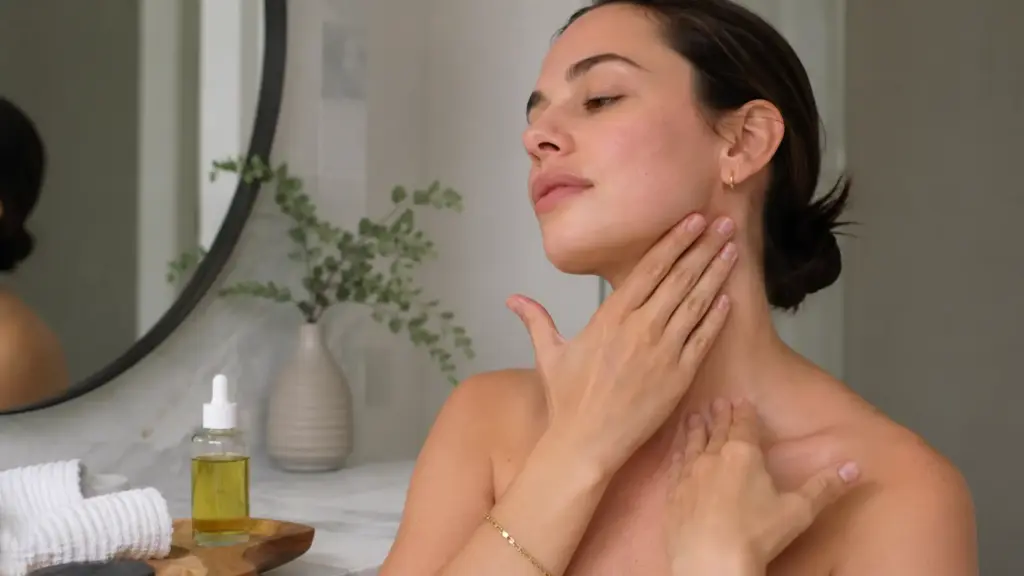

Your face can look puffy even when you slept well. Sometimes the fix is not another cream, but a few quiet minutes with your hands.
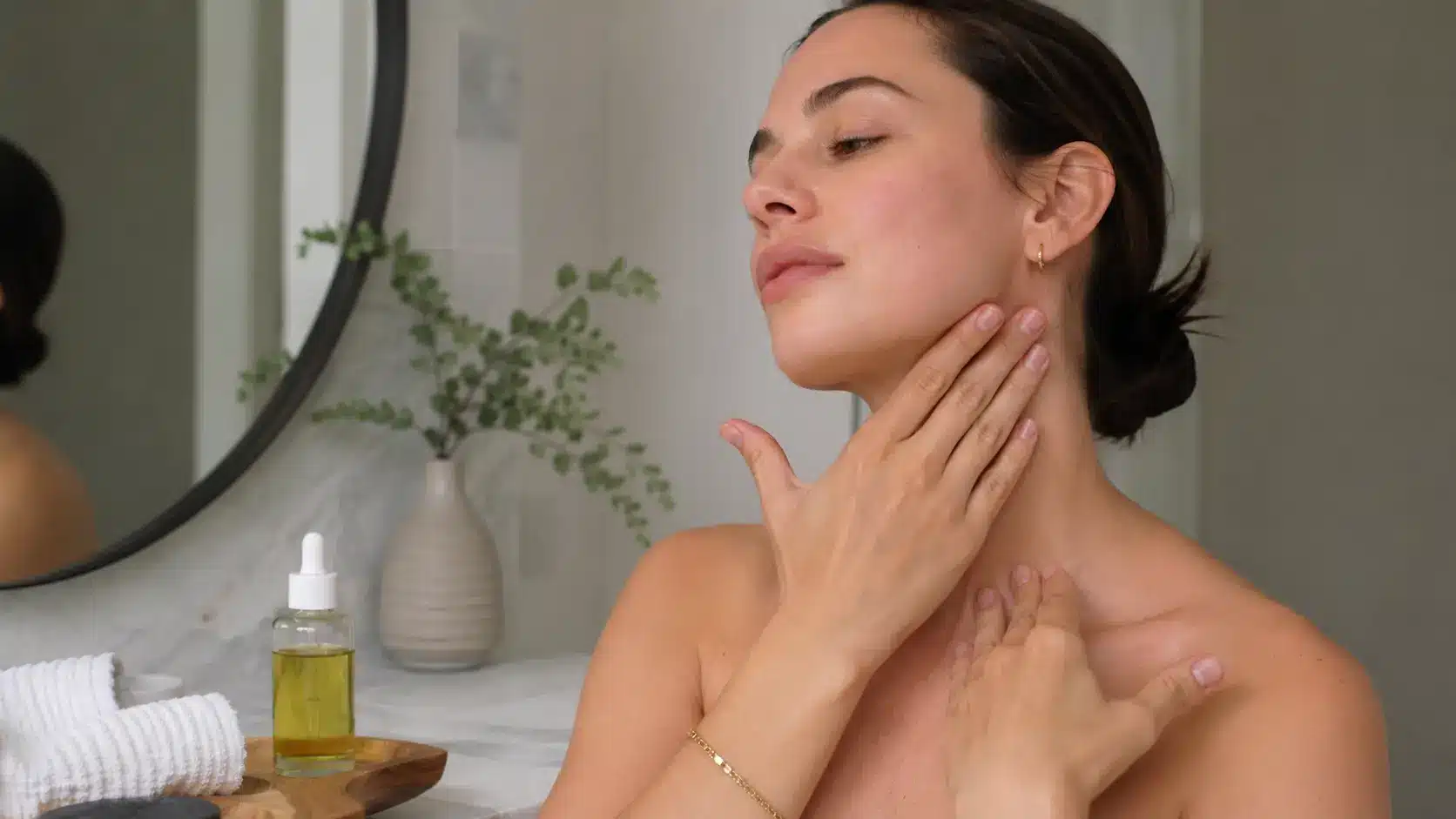
A facial lymphatic drainage massage uses soft, slow motion to move extra fluid from the face toward the neck and collarbone area. This matters because many people press too hard or start in the wrong place, then wonder why the skin feels red or tight.
I like this routine because it is simple, takes only a few minutes, and requires little setup.
You will learn a lymphatic drainage massage routine for the face that starts at the neck, moves through the face, and finishes at the collarbone.
The information below is for education only. Ask a qualified provider before trying facial massage if you have swelling from a health condition, recent facial work, skin irritation, or any medical concern.
Before You Start the Massage
Clean hands, clean skin, and enough product to let your fingers glide without dragging. A facial oil, serum, gel cream, or regular moisturizer all work. The product matters less than the slip it provides.
Your hands are completely sufficient. Tools can support the routine once you understand how light the pressure should be, but they are not a requirement at the start.
Timing: Morning tends to work better for overnight puffiness. Evening suits people who carry jaw tension by the end of the day. Two to three times a week for around five minutes is enough.
One note before starting: if swelling is linked to a health condition, recent facial treatment, active skin irritation, or any medical concern, check with a provider before adding self-massage.
Step-by-Step Facial Lymphatic Drainage Massage
The routine below follows a set order so that each area leads into the next. Keep each pass slow, soft, and short. Your skin should feel calm the whole time.
Step 1: Neck
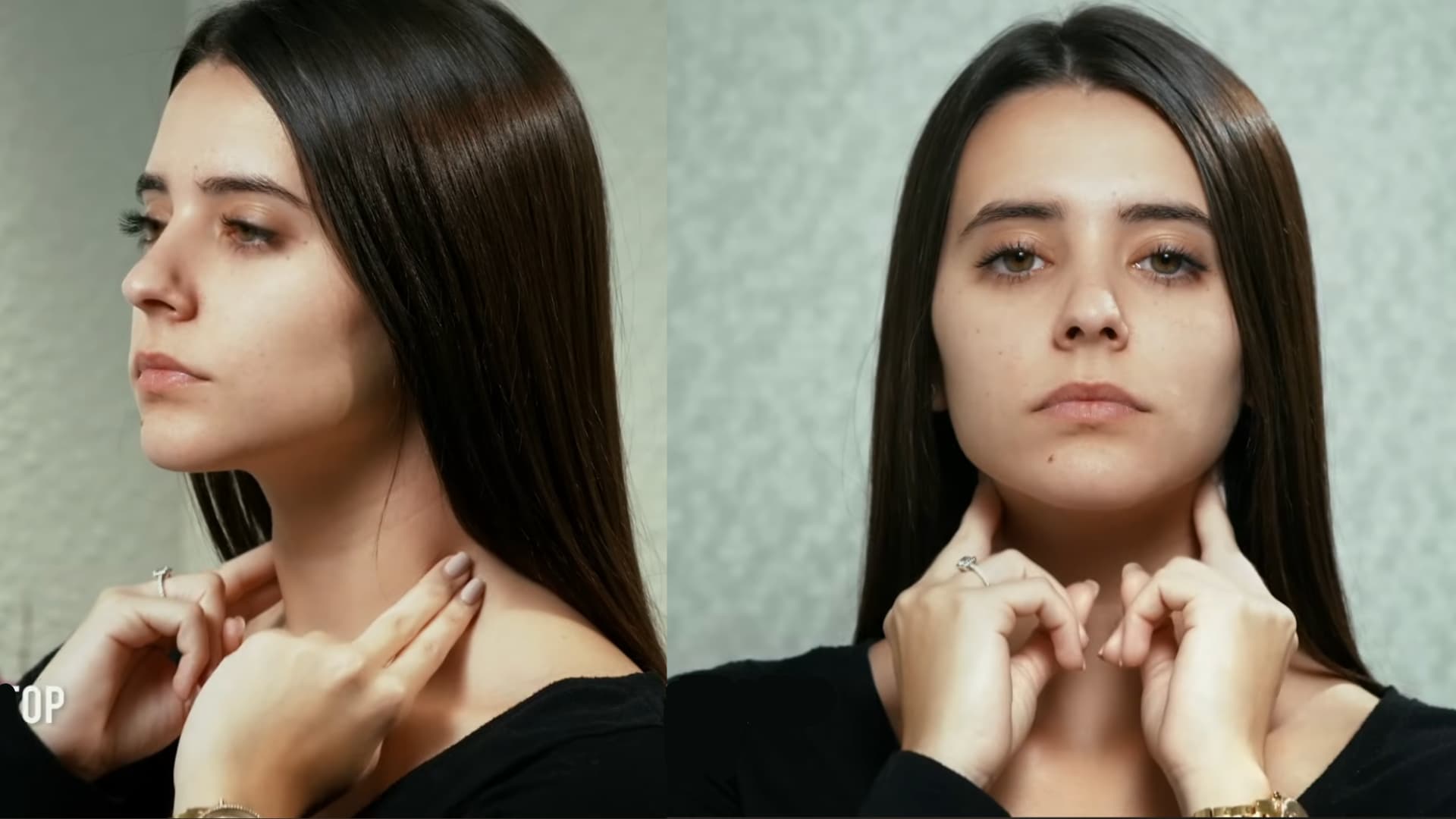
Starting at the neck is not optional; it clears the path before anything moves down from the face. This is also why keeping the neck relaxed matters so much before you begin. Without this step first, the fluid has nowhere to drain toward.
- Place fingers just beneath each ear and make a soft, slow “J” motion three times
- Move to the middle of the neck and repeat
- Move to the base of the neck and repeat
- Finish at the collarbone with the same motion three times
Step 2: Chin and Jaw
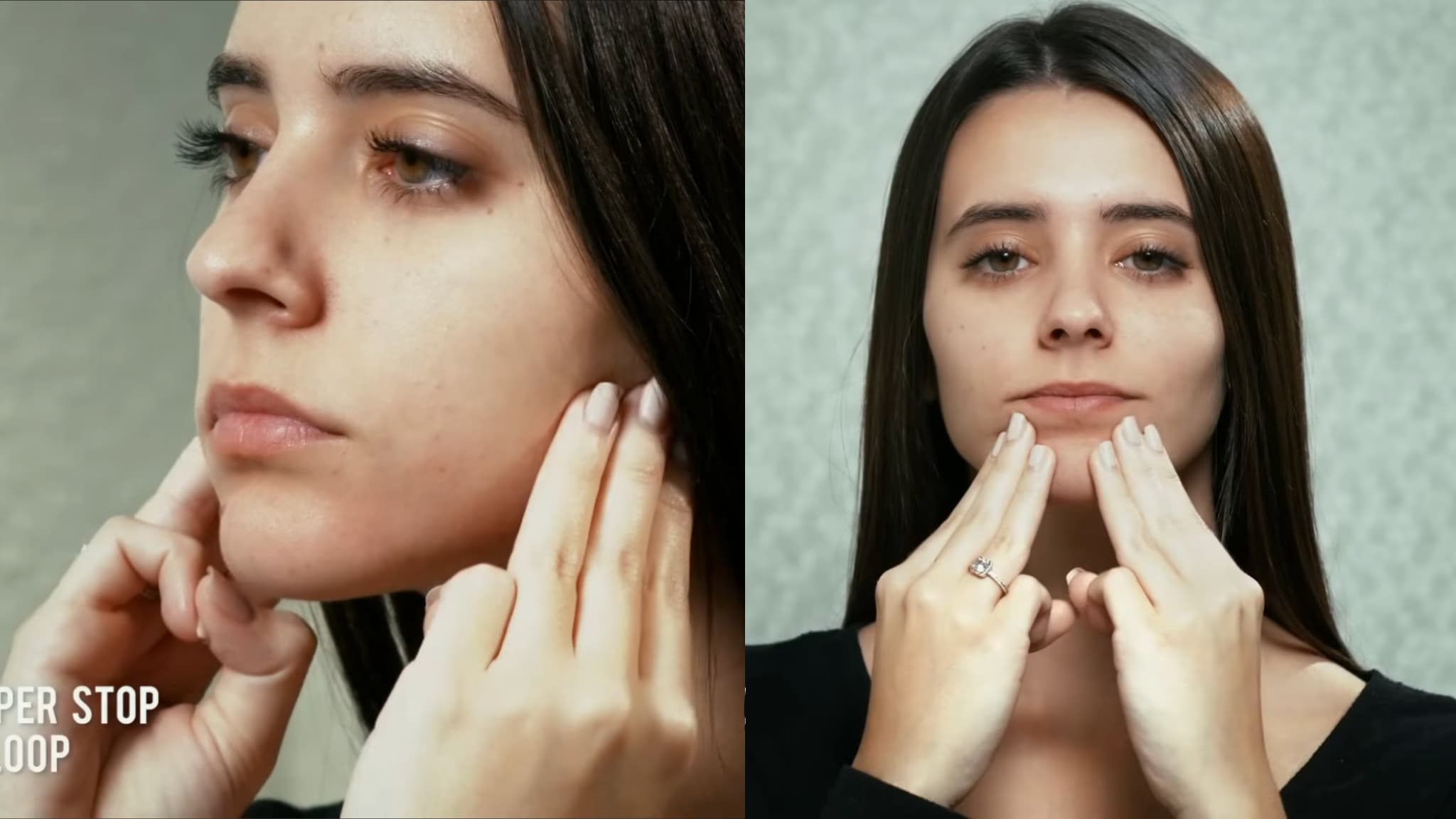
This is where most people unconsciously hold tension, so keeping the touch lighter than feels natural makes a real difference here.
- Using the middle three fingers, place them under the chin and near the corner of the mouth
- Make the soft “J” motion three times, then shift to the end of the jawline and repeat
- Return beneath the ears, travel down the neck, and finish at the collarbone
Step 3: Under-Eye Area
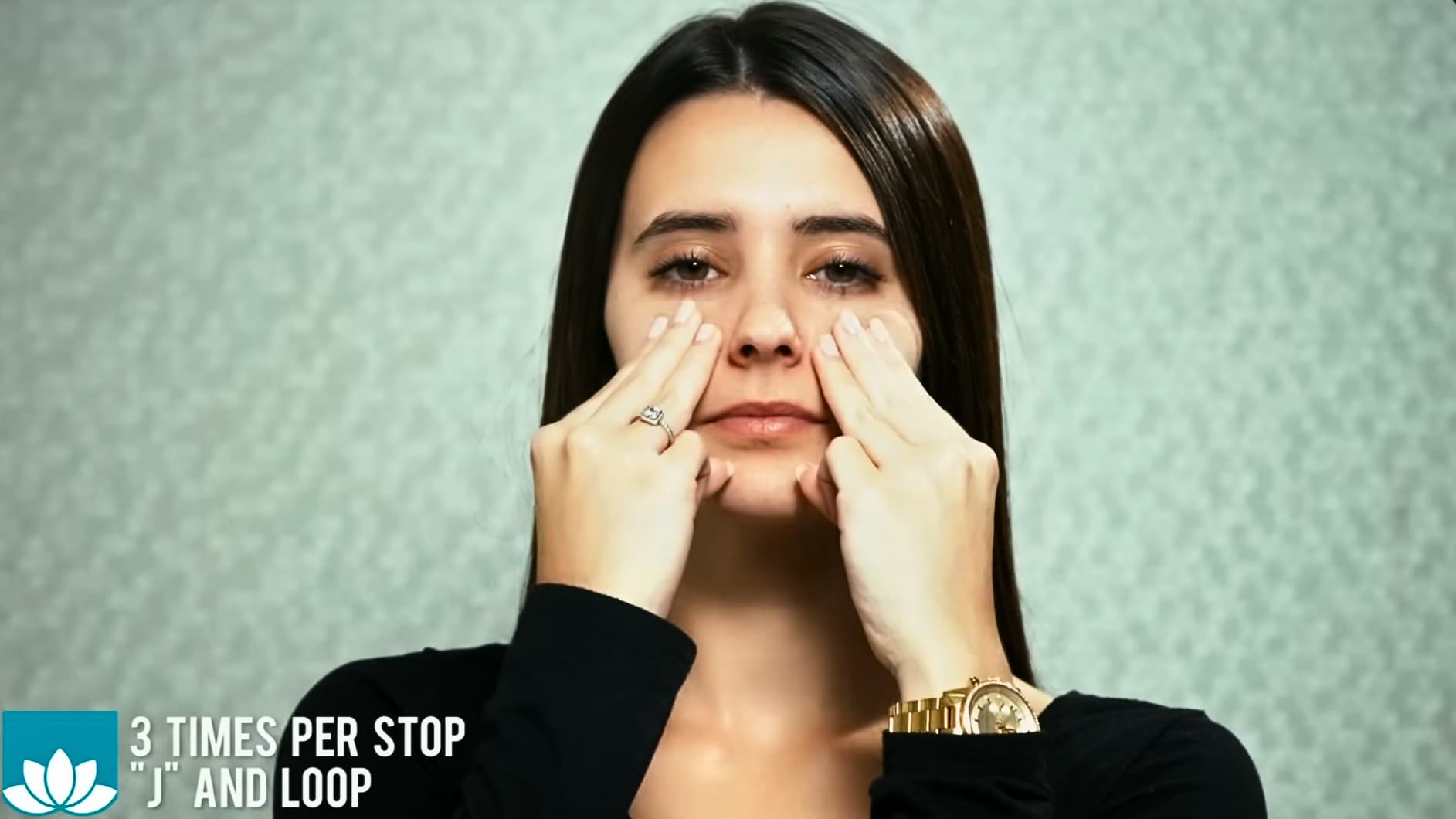
The skin here is thinner than anywhere else on the face. If fingers catch or pull at any point, add more product before continuing.
- Place fingers just beneath the eye, close to the nose bridge, and use a very soft “J” motion three times
- Move outward along the cheekbone toward the outer eye corner and repeat
- Continue toward the ear, then drain back down through the jaw, neck, and collarbone
Step 4: Forehead
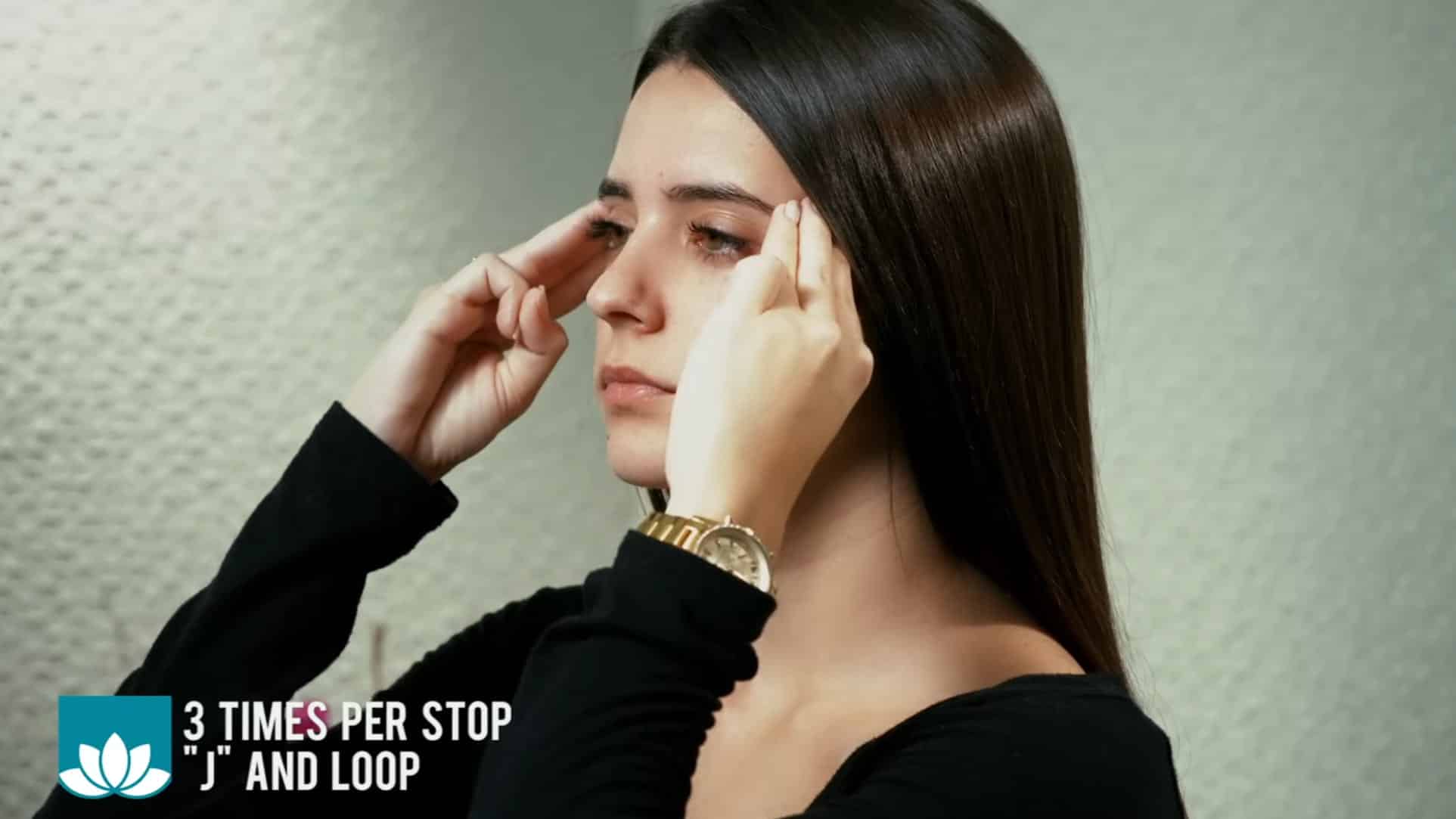
A small amount of warmth is normal here. Tightness, tenderness, or redness that lingers is a signal to stop and rest the skin for a day or two.
- Place fingers just above the eyebrows and use the same slow “J” motion three times
- Move outward toward the temples and repeat
- Bring the movement down in front of the ears, underneath them, and finish at the collarbone
Step 5: End at the Collarbone
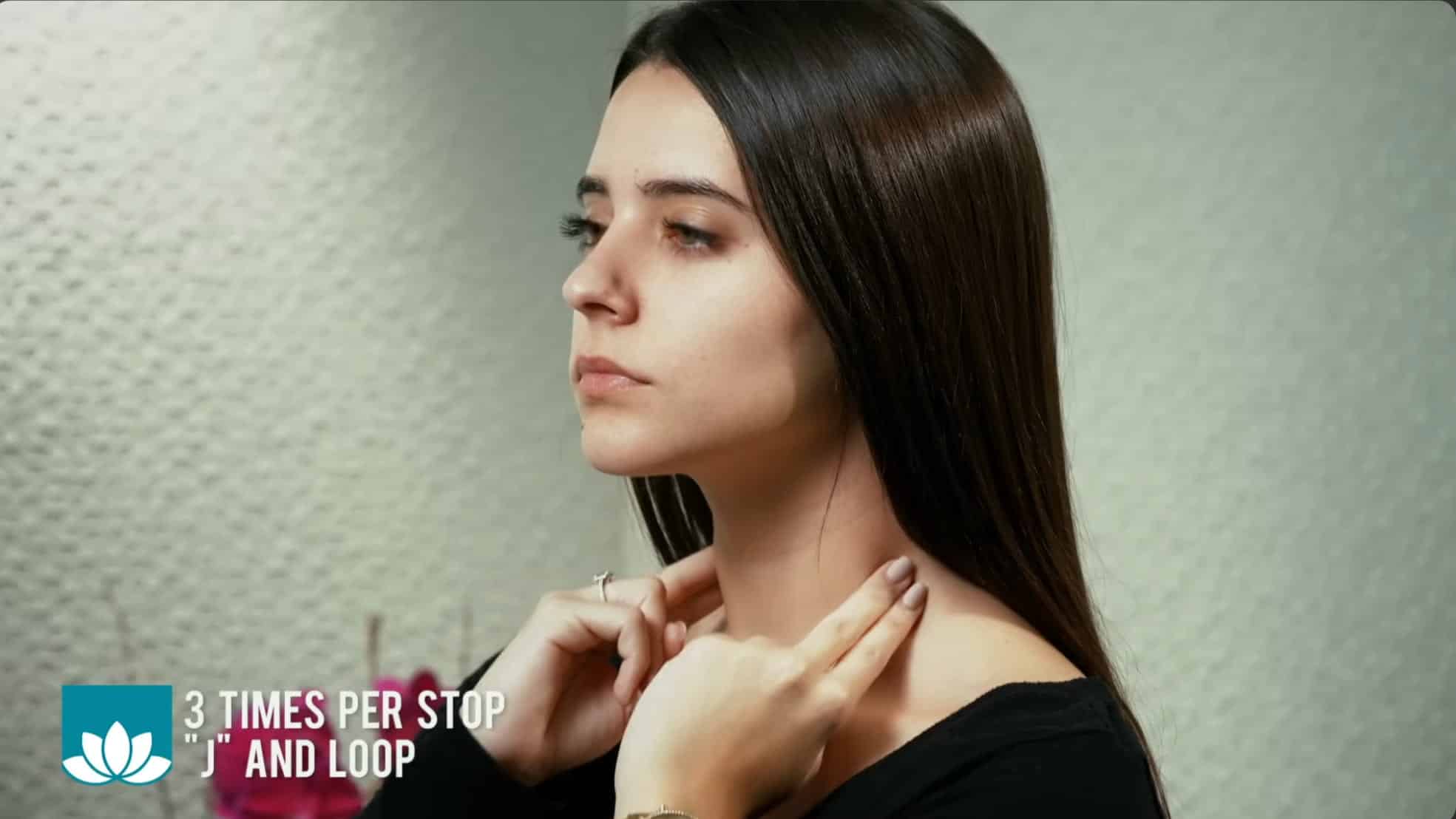
Every section of this routine ends here because this is where the lymphatic system drains. Closing the routine here is what makes the earlier steps count.
- Return fingers to the collarbone
- Apply light pressure and repeat the “J” motion three times
- Pause and notice how the skin feels before deciding whether to repeat the sequence
If anything feels painful, stinging, bruised, or more irritated after the massage, stop and give your skin a break.
Watch the video below for a quick visual reference before you start the step-by-step routine.
Do You Need a Tool?
You do not need a tool to do this routine well. Your hands are enough, especially when you are learning how light the pressure should feel.
Tools can still be useful, but they should not make the massage feel stronger or rougher. If you use one, keep the same rule in mind: glide, do not scrape. For those drawn to gua sha specifically, how it moves fluid and tension through facial tissue is worth understanding before adding it here.
| Option | Best For | Pressure | Tip |
|---|---|---|---|
| Hands | Beginners and daily use | Very light | Best control |
| Face roller | Morning puffiness | Light | Roll outward, then down |
| Gua sha | Slow cheek and jaw work | Light to medium | Keep the tool flat |
| Chilled spoon | Under-eye cooling | Very light | Do not press hard |
| Silicone brush | Surface massage | Very light | Clean after each use |
If your skin turns sore, red, or tender after using a tool, go back to your hands and shorten the routine.
What Results Can You Expect?
Results vary, but most changes from facial lymphatic drainage massage are short-term and linked to puffiness, not permanent reshaping.
Skin can look fresher after the routine, though this is mostly tied to gentler touch and less puffiness, and what you eat throughout the day quietly shapes how much that shows. Use this as a simple way to set expectations before you start.
| What You May Notice | When It May Show | How Long It May Last | What to Know |
|---|---|---|---|
| Less morning puffiness | Within a few minutes | A few hours | Most likely, puffiness comes from sleep, salt, or mild fluid buildup |
| Softer under-eye swelling | 5 to 10 minutes | Short-term | Works best with very light pressure and enough slip |
| Slightly clearer jawline | After one short routine | Temporary | This comes from reduced puffiness, not fat loss |
| More relaxed facial tension | During or after the routine | A few hours | Common around the jaw, brow, and temples |
| Fresher-looking skin | After the routine | Short-term | Often linked to gentle touch, better product spread, and less puffiness |
This routine will not remove fat, change bone structure, or replace medical care for ongoing swelling. If puffiness keeps coming back or appears suddenly on one side, ask a provider before massaging the area.
Common Mistakes That Quietly Undo Results
Having watched many people pick up this routine and then wonder why it is not working, I have found the patterns come up most often.
- Starting on the face before the neck. The neck needs to be open first. Starting on the cheeks or forehead without preparing the drainage path is the single most common mistake.
- Pressing too hard. Firmer does not mean faster results. It usually means irritated skin and temporarily worse puffiness.
- Rushing the strokes. Fast movement does not give tissue time to respond. Slow and deliberate is what makes the “J” motion effective.
- Skipping product. Dry fingers drag skin rather than glide over it. Using a cleansing oil beforehand provides enough slip without disrupting the massage motion. Any amount of friction works against the goal.
- Massaging over active breakouts, sunburn, rash, or broken skin. Skip those areas entirely until they have healed.
- Massaging one-sided swelling that appeared suddenly. Asymmetric swelling that feels warm, firm, or painful should be evaluated by a provider first.
- Returning too soon after facial treatments. Filler, Botox, laser, chemical peels, and surgery all need provider-cleared timing before any massage is added.
Frequently Asked Questions
Does facial lymphatic drainage massage help with sinus pressure or headaches?
The gentle motion around the forehead and temples can offer some relief from tension, and the neck work may support mild sinus drainage. It is not a treatment for sinus conditions, but many people find it provides noticeable relief in that area when used consistently.
How is this different from a regular face massage?
A regular facial massage often targets muscle tension using firmer, kneading strokes. Lymphatic drainage uses feather-light pressure the move fluid toward drainage points. The two serve different purposes; one is more about relaxation and circulation, and the other is about clearing fluid buildup.
Can this routine be done during pregnancy?
Gentle self-massage on the face is generally considered low-risk, but pregnancy brings its own fluid changes and sensitivities. It is worth a quick conversation with a midwife or doctor before adding it to a regular routine, particularly if swelling has been a concern.
Is it normal for one side of the face to respond differently from the other?
Yes, and it is more common than most people expect. Sleeping on one side, habitual jaw clenching, or even how you hold your phone can create asymmetry in puffiness. Working both sides with equal attention usually helps even things out over time.
Can someone with rosacea use this technique?
Rosacea-prone skin benefits from extra caution here. The touch should be even lighter than usual, and anything that produces warmth or redness should be stopped immediately.
Many people with rosacea find the routine helpful when done with care, but a dermatologist or esthetician familiar with the condition is the right person to advise on whether it suits a particular skin presentation.
Final Thoughts
Facial lymphatic drainage massage should feel calm, light, and easy to repeat. You do not need a long routine or a shelf full of tools.
Start at the neck, move through the chin and jaw, under-eye area, and forehead, then bring everything back down to the collarbone. That path matters more than speed.
A lymphatic drainage massage face routine can be a small reset when puffiness makes you feel unlike yourself. Keep the pressure soft, skip irritated skin, and listen to how your face responds.
Try it for one week, notice what changes, and share your questions or results in the comments.