



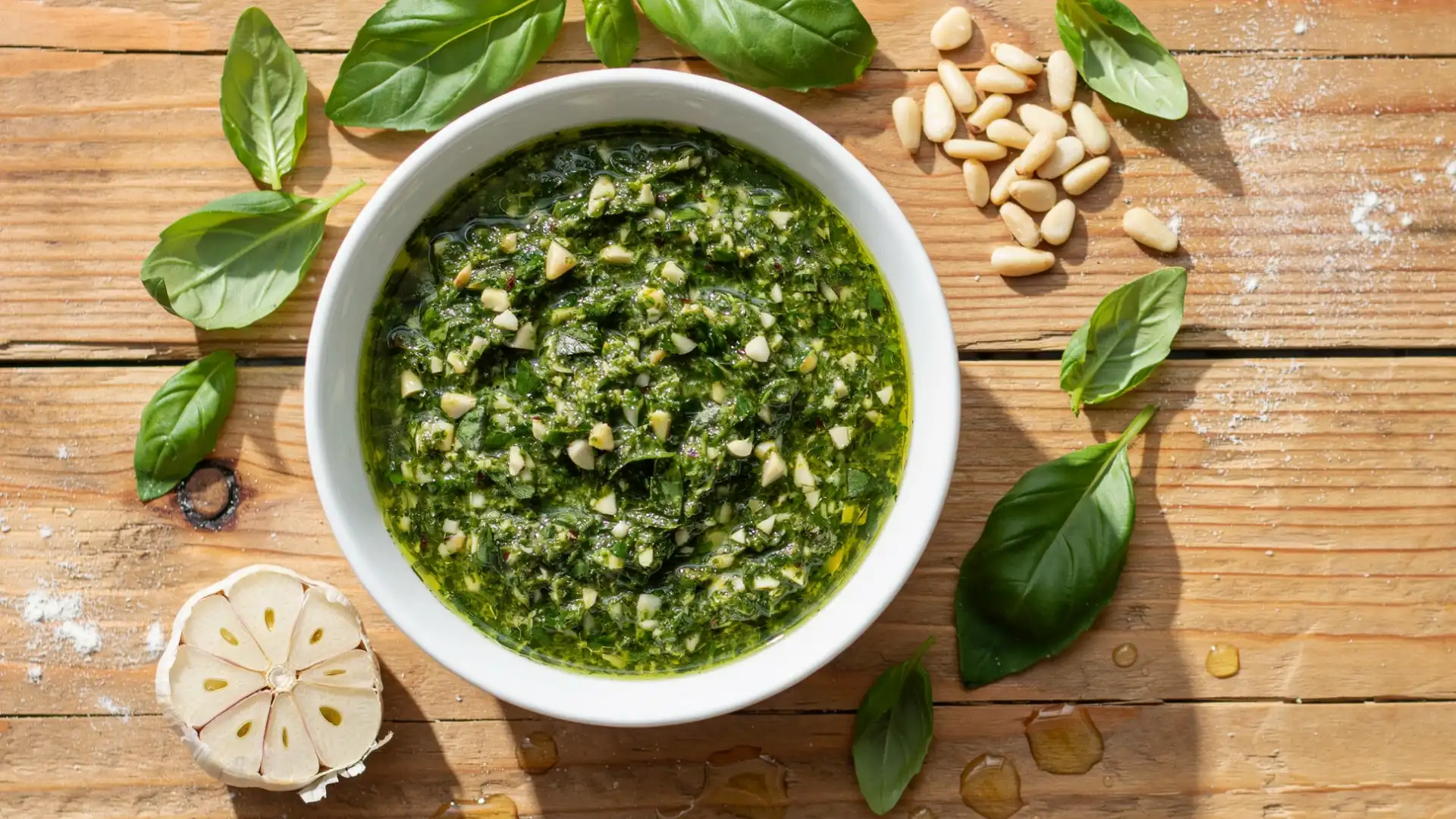







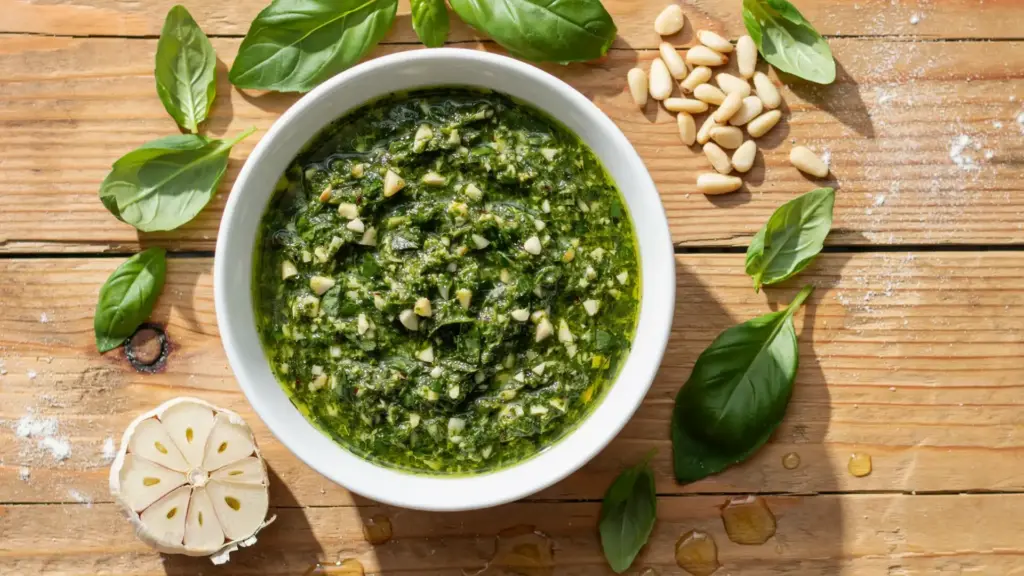

A spoonful of green sauce shouldn’t feel like a moral dilemma. Pesto seems to appear on both the healthy fat list and the watch out for this list, depending on who you consult. So, which is it?
I’ve stirred enough pesto into pasta to know the answer isn’t simple, and it isn’t complicated either.
Basil, olive oil, pine nuts, garlic, and cheese each pull weight in their own way, and the calorie count reflects that.
This blog covers what’s actually in the jar, what it does once it hits your plate, and how much really matters.
What is Pesto?
Pesto is an uncooked Italian sauce made by crushing or grinding fresh ingredients into a smooth, thick paste.
The name traces back to Genoa, Italy, from the word pestare, meaning to pound or crush.
Cooks once made it entirely by hand, using a mortar and pestle.
Classic pesto alla Genovese sticks to five ingredients: basil, pine nuts, garlic, olive oil, and Parmesan. Modern versions stretch far past that formula. Kale pesto swaps in extra greens.
Sun-dried tomato pesto adds tang. Wild garlic pesto shows up each spring as a seasonal twist.
So pesto isn’t one fixed sauce. It’s a whole family of green (and not-so-green) possibilities.
What is Pesto Made of, and Why Do the Ingredients Matter?
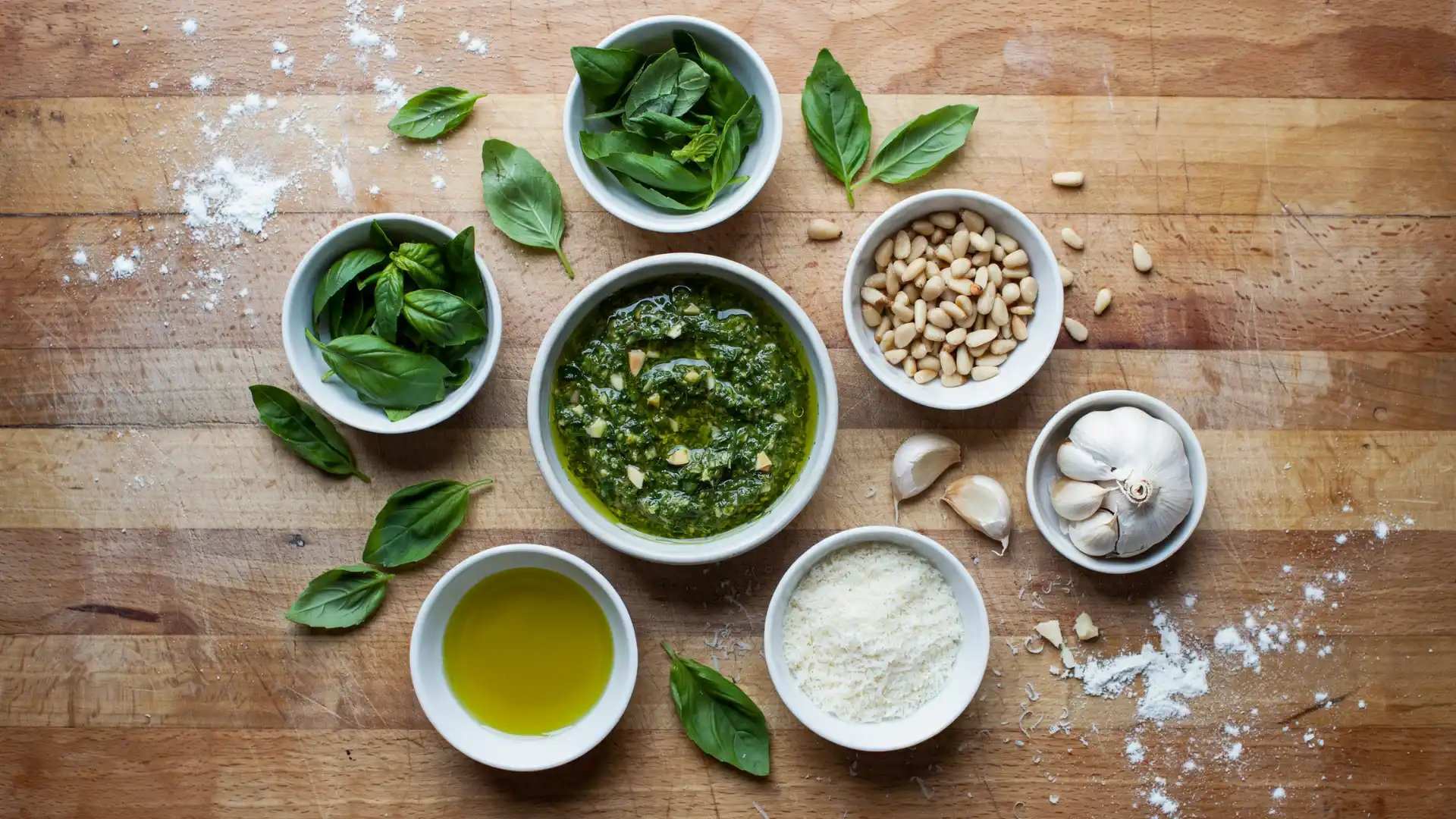
Pesto’s flavor comes from a small handful of fresh, uncomplicated ingredients.
Each ingredient contributes to pesto’s distinctive taste and texture, creating its rich, herby profile.
- Basil: Gives color, flavor, vitamin K, and plant compounds, though the amount per serving is small.
- Olive oil: Supplies most of pesto’s fat and calories, mainly as monounsaturated fat.
- Pine nuts: Add unsaturated fat, protein, and minerals; walnuts or cashews shift the numbers slightly.
- Parmesan: Adds protein, calcium, saturated fat, and sodium, depending on type and amount.
- Garlic: Brings strong flavor and plant compounds, with almost no calories per serving.
- Salt and extras: Commercial jars may add oils, preservatives, or extra salt. Check the label, not assumptions.
Walnuts or cashews often replace pine nuts. Kale can stand in for basil. Nutritional yeast swaps in for cheese in vegan versions. Pesto adapts easily to different diets. Making it is simple.
Blend basil, nuts, and garlic first. Stream in the olive oil while blending. Fold in the cheese last.
Just blend for a few minutes; no cooking needed.
Is Pesto Healthy? A Complete Nutrition Breakdown
A single tablespoon of pesto runs about 80 to 100 calories.
A ¼ cup serving, closer to what people actually use on a full plate of pasta, adds up to roughly 260 calories.
The macro split leans heavily toward fat, thanks to olive oil, nuts, and cheese.
Carbs stay low, and protein sits at a moderate level from the cheese and nuts:
How to Read a Pesto Nutrition Label
Prices and marketing can look similar, but the label tells the real story if you know what to check.
- Ingredients are listed by quantity, so olive oil should appear before cheaper seed or vegetable oils.
- Check the actual milligrams, not just the percent daily value, since sodium adds up fast across servings.
- Shorter ingredient lists usually mean fewer fillers and a fresher product.
- Some labels list tiny serving sizes to appear lower in calories, so check the per-100g value for a fair comparison.
Note: A quick label check indicates whether a jar is homemade or heavily processed.
Is Pesto Fattening, or is It Just High in Calories?
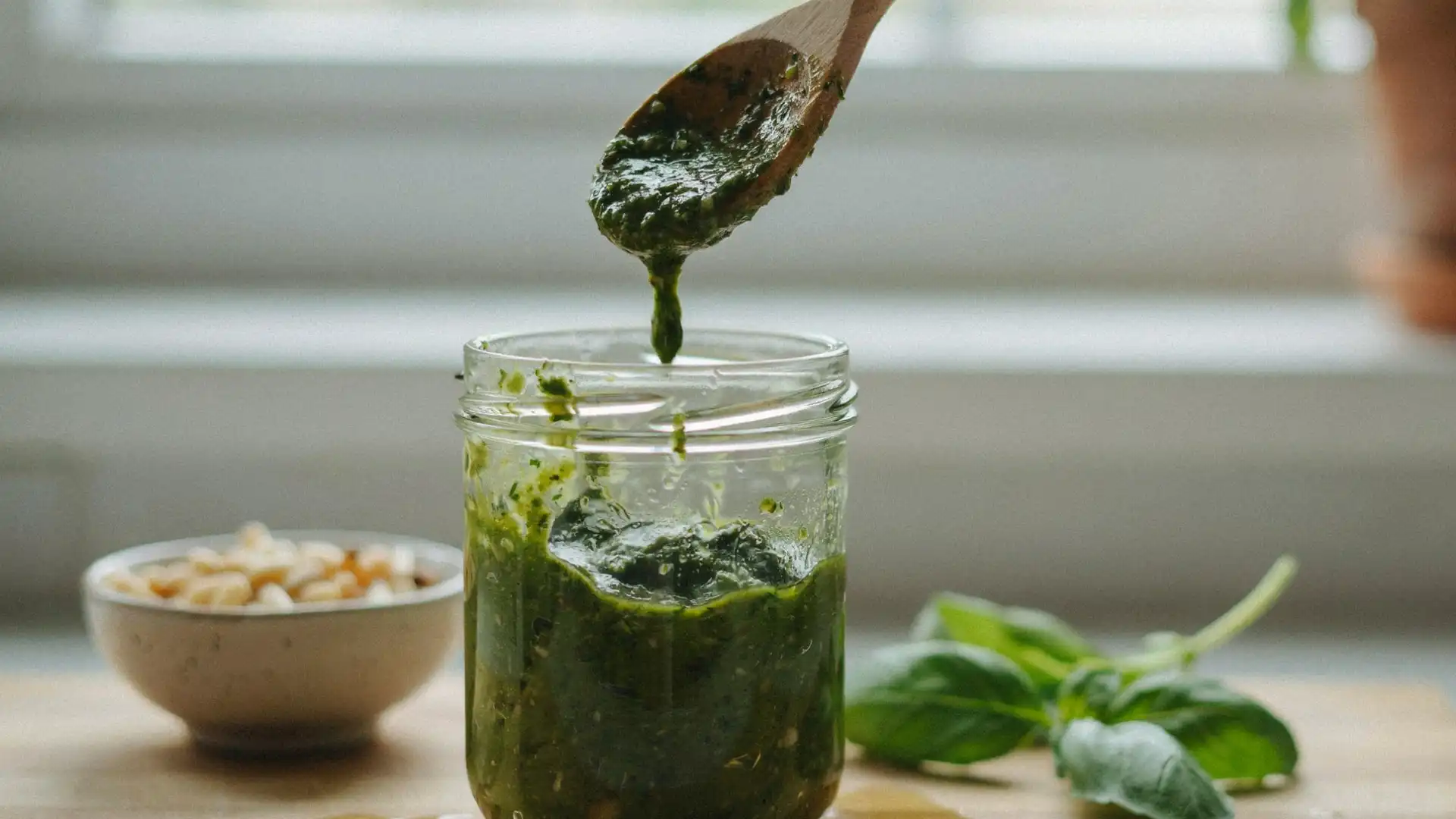
Pesto is often labeled fattening because it’s rich and calorie-dense, but fat content alone isn’t the whole story.
What’s important is portion size, how often you eat it, and how it fits into your daily intake.
Does High Fat Mean Weight Gain?
Pesto’s fat content often gets blamed for weight gain, but that assumption misses how weight actually works.
Its fat is mostly unsaturated, like in olive oil and nuts, and behaves differently than saturated or trans fats. A calorie-dense food isn’t automatically fattening; context, frequency, and overall diet matter more.
For those trying to gain weight, pesto can be a useful, nutrient-dense tool rather than something to avoid:
How to use it for weight gain:
- Add an extra tablespoon or two to meals to increase calorie intake without adding bulk.
- Pair it with calorie-dense bases like whole grain pasta or bread for a bigger calorie boost.
- Use it as a marinade on protein sources like chicken or salmon to add both flavor and healthy fats.
- Stir it into scrambled eggs or grain bowls for an easy, calorie-rich addition to any meal.
Weight gain occurs when calorie intake exceeds expenditure, regardless of source. Unsaturated fats in pesto still contain 9 calories per gram, contributing to a surplus like other calorie-dense foods.
Pesto’s Role in Calorie Balance and Weight Loss
Pesto can fit comfortably into a weight loss plan, but only when portion size stays in check.
Since pesto is calorie-dense, small amounts go a long way in adding flavor without derailing a calorie deficit.
The key is treating it as a seasoning rather than a main component of the meal, and pairing it with lighter, lower-calorie bases so the overall dish stays balanced.
How to use it for weight loss:
- Stick to one to two tablespoons per serving as a flavor enhancer, not a sauce base.
- Pair pesto with lighter bases like zucchini noodles or grilled vegetables instead of heavy pasta.
- Rely on the satiety from healthy fats to curb overeating later in the day.
- Measure servings instead of eyeballing them to avoid accidental overuse.
Diets higher in monounsaturated fats, like olive oil, can support satiety and healthy weight management better than low-fat diets, as long as total calorie intake stays within a deficit needed for weight loss.
Pesto vs. Other Popular Sauces
Pesto is often compared to other pasta and dip sauces, and comparing the numbers helps show where it its.
Pesto and Alfredo are similar in calories and fat content, but pesto’s fat is mainly unsaturated, whereas Alfredo’s fat comes primarily from saturated sources like cream and butter.
Marinara wins by a wide margin on both calories and fat, though it offers less overall nutrient density.
Ranch runs high in fat too, and store-bought versions often carry more preservatives than homemade pesto
Note: No sauce is automatically the healthiest. Pesto has more nutrients per calorie than Alfredo or ranch, but portion size determines its place in a balanced meal.
Health Benefits of Pesto’s Core Ingredients
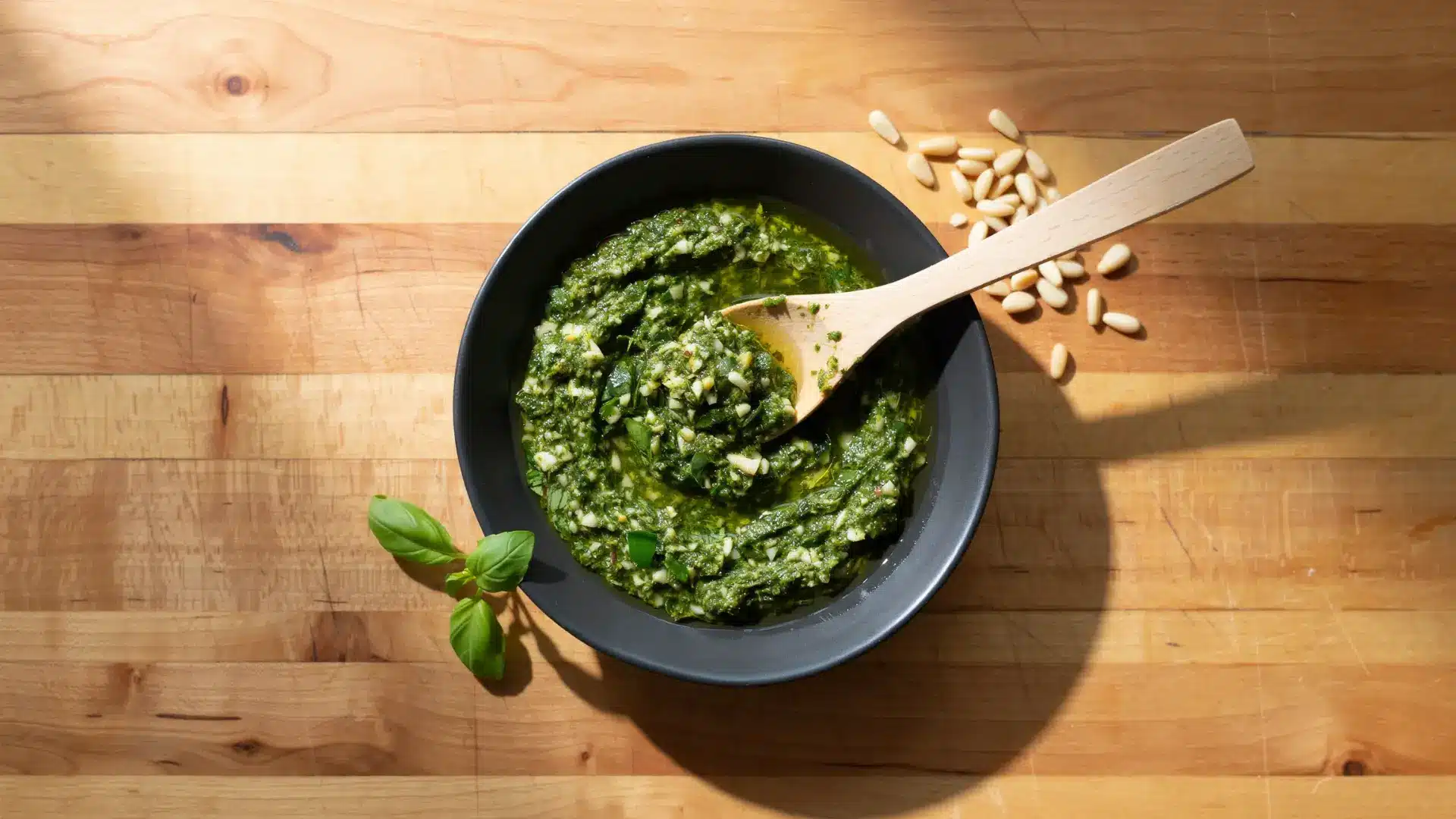
Pesto’s nutrients are derived from its ingredients, each contributing to health.
1. Boosts Heart Health
Extra-virgin olive oil, pesto’s base ingredient, is rich in monounsaturated fats linked to lower LDL cholesterol and reduced heart disease risk.
Garlic adds to this effect, with plant compounds shown to help lower blood pressure and cholesterol too.
Together, these two ingredients make pesto a genuine contributor to cardiovascular health, echoing the same benefits tied to the Mediterranean diet.
2. Fights Cellular Damage
Several of pesto’s ingredients are rich in antioxidants, compounds that help protect cells from oxidative stress linked to aging and chronic disease.
Fresh basil, olive oil, and nuts like pine nuts or walnuts all contribute their own antioxidant properties.
This combined effect turns a simple sauce into a genuine source of protective, cell-supporting nutrients.
3. Reduces Inflammation
Chronic inflammation is linked to a range of health issues, and pesto’s ingredients offer some natural defense.
Basil and garlic both carry anti-inflammatory plant compounds, while the healthy fats in olive oil and nuts help block the production of inflammation-promoting substances in the body.
This makes pesto more functional than flavorful alone.
4. Delivers Essential Nutrients and Minerals
Beyond fats and antioxidants, pesto supplies a range of vitamins and minerals often overlooked.
Nuts contribute magnesium and zinc, Parmesan adds calcium and protein, and basil provides vitamin K to support the body’s healing processes.
Together, these nutrients round out pesto’s profile as more than just a rich, high-fat sauce.
Ingredient-to-Benefit Quick Reference:
| Ingredient | Main Benefit |
|---|---|
| Extra-Virgin Olive Oil | Heart health, monounsaturated fats |
| Basil | Antioxidants, vitamin K |
| Garlic | Lower blood pressure, anti-inflammatory |
| Pine Nuts / Walnuts | Minerals, healthy fats, anti-inflammatory |
| Parmesan | Calcium, protein |
Key Takeaway: Pesto isn’t just a flavorful sauce; it’s a concentrated mix of heart-healthy fats, antioxidants, and minerals, making every ingredient count toward its overall nutritional value.
Potential Downsides and Who Should Be Cautious
Pesto offers genuine benefits, but there are a few considerations to keep in mind.
Commercial pesto often has over 200mg sodium per tablespoon, which can add up quickly for those managing blood pressure. Traditional recipes rely on pine nuts.
Walnuts or cashews are common substitutes. All three carry allergy risk for anyone with nut sensitivities.
Parmesan cheese makes pesto unsuitable for dairy-free diets, unless a vegan version replaces it.
Pesto is also calorie-dense. Portions add up fast when used generously.
Serving size is crucial along with ingredients. Those managing blood pressure, nut allergies, or dairy intolerance should check labels or opt for homemade for better control.
Where to Use Pesto?
Pesto goes far beyond pasta. It fits into meals in more ways than most people realize.
Spread it on sandwiches and wraps for an instant flavor boost. Stir it into soups to add richness without extra cream. Use it as a marinade for chicken or fish, or dollop it over roasted vegetables before serving.
It also works well as a pizza base, or as a lighter swap for mayonnaise in dips and dressings.
The way you use pesto is just as important as its ingredients.
Each spoonful quickly accumulates as it is incorporated into every part of a meal.
How Pesto Fits Different Diets
Pesto isn’t a one-diet food. Its simple ingredients make it versatile, fitting easily into various eating styles.
The main point is understanding which version aligns best with your objectives.
| Diet Type | Fits Because | Watch For |
|---|---|---|
| Keto / Low-Carb | ~1–2g net carbs per tbsp | Portion size for fat intake |
| Mediterranean | Olive oil, basil, garlic base | None major |
| Vegan | Swap nutritional yeast for cheese | Check label for dairy |
| Low-Sodium | Fully controllable at home | Store-bought sodium levels |
A little planning turns pesto into a diet-friendly staple, not a diet buster.
No matter the diet, pesto can earn its place on the plate. Just match the version and portion to your specific goals.
Healthy Pesto Recipe Worth Trying
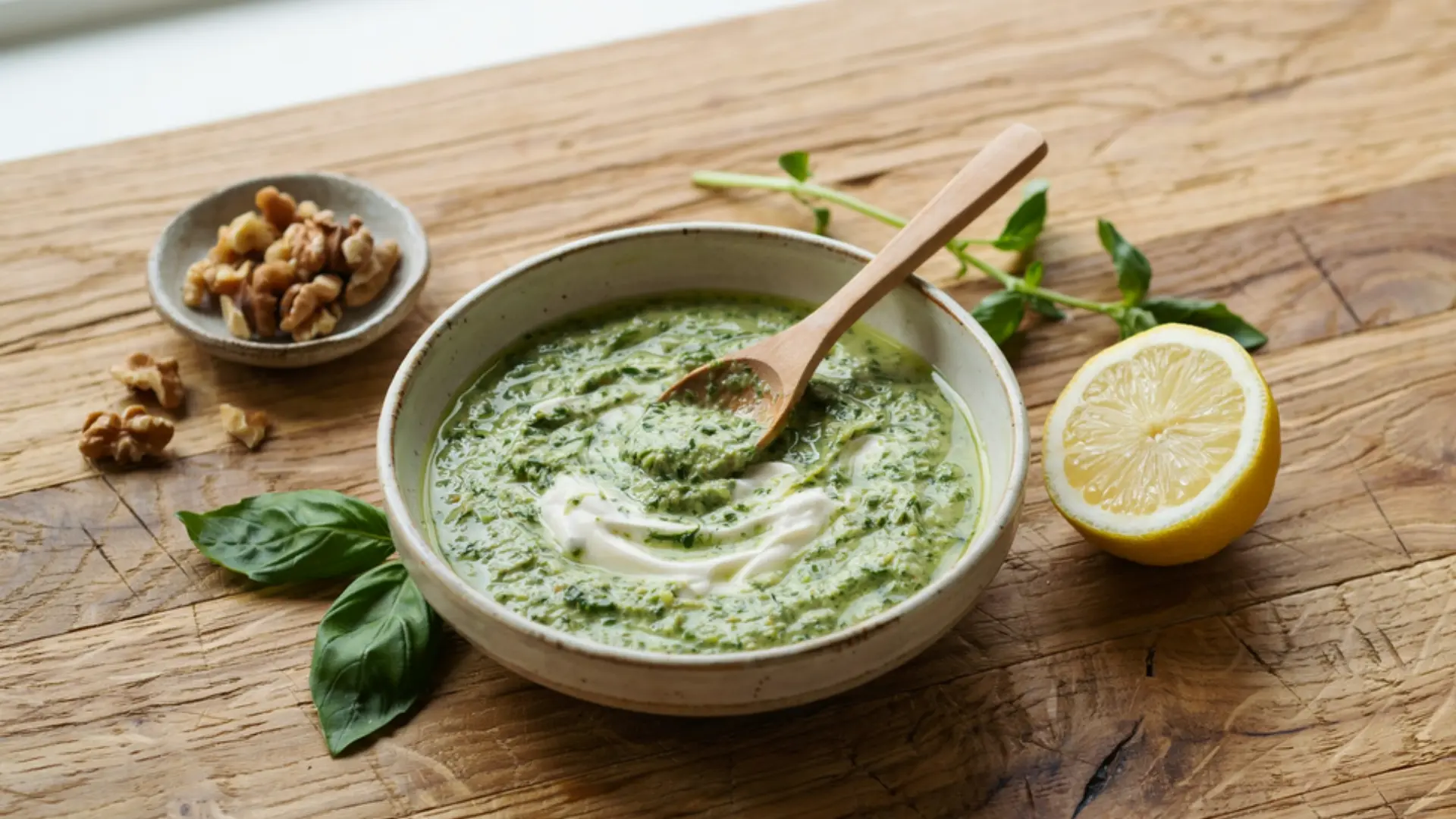
This version retains flavor while reducing calories, making it suitable for low-sodium diets or portion control.
Ingredients:
- 2 cups fresh basil leaves
- 2 tablespoons extra-virgin olive oil
- 2 tablespoons Greek yogurt (or low-sodium vegetable broth)
- 1 tablespoon walnuts or pine nuts (or skip for a nut-free version)
- 2 garlic cloves
- 2 tablespoons grated Parmesan
- Juice of half a lemon
- Salt and pepper to taste
Method:
- Add basil, garlic, and nuts to a food processor and pulse until finely chopped.
- Stream in the olive oil and Greek yogurt while blending until smooth.
- Fold in the Parmesan and lemon juice, then season with salt and pepper.
- Store in an airtight container and use within 3–4 days.
Note: Replacing oil with Greek yogurt lowers fat content while maintaining pesto’s creamy texture.
Store-Bought vs. Homemade Pesto Nutrition Differences
Homemade pesto lets you control the ingredients, helping you align with your nutrition goals.
Store-bought is convenient, but check labels to match homemade quality.
| Factor | Store-Bought | Homemade |
|---|---|---|
| Oil quality | Often cheaper vegetable or seed oils | Extra-virgin olive oil, your choice |
| Sodium | Higher, often 200mg+ per tablespoon | Fully adjustable to taste |
| Preservatives | Common for shelf stability | None needed |
| Cheese amount | Fixed by the manufacturer | Controlled by you |
| Shelf life | Longer, due to additives | Shorter, best used fresh |
| Cost per serving | Lower upfront cost | Slightly higher, but better ingredients |
Not all pesto is created equal, and the difference often comes down to where it’s made.
Tips to Make Pesto Healthier
A few clever substitutions allow you to enjoy the same flavor while improving nutrition.
- Mix in spinach, kale, or arugula to boost fiber and nutrients without much extra fat.
- Replace part of the oil with Greek yogurt for a creamy texture with fewer calories.
- Use less Parmesan than a traditional recipe calls for, or try a stronger-flavored cheese in smaller amounts.
- Stick with extra-virgin olive oil instead of cheaper blended oils for better fat quality.
- Homemade pesto lets you control sodium directly, instead of relying on store-bought levels.
These minor modifications preserve the flavor of pesto while making it more suitable for daily meals.
Summing It Up!
Pesto isn’t purely healthy or purely fattening. It varies based on ingredients and portion size. Homemade with quality olive oil, fresh basil, and controlled servings provides heart-healthy and antioxidant benefits.
Store-bought jars can work too, as long as you check the label for sodium and oil quality.
The real answer to “is pesto healthy” comes down to ingredients, preparation, and portion size, not the sauce itself.
Ready to put this into practice?
Try the lightened homemade recipe for your next meal or save it for a quick, flavorful dinner addition.
Frequently Asked Questions (FAQ’s)
1. How Many Calories Are in One Tablespoon of Pesto?
One tablespoon of pesto contains roughly 80 to 100 calories, mostly from fat. This can vary depending on the recipe or brand, especially between homemade and store-bought versions.
2. Is Pesto Healthier Than Tomato Sauce or Alfredo?
Pesto is healthier than Alfredo, which is higher in saturated fat and calories. Compared to tomato sauce, pesto has more healthy fats but fewer carbs, making it a solid middle ground.
3. Can I Eat Pesto Every Day And Still Lose Weight?
Yes, if portions stay small and fit within your daily calorie needs. One to two tablespoons daily works well, but larger amounts can add up quickly and slow weight loss progress.
4. Is Store-Bought Pesto As Healthy As Homemade?
Not always. Store-bought versions often use cheaper oils and higher sodium levels. Homemade pesto lets you control ingredient quality, making it generally the healthier option when time allows.
5. Does Pesto Raise Cholesterol?
No, pesto’s fat is mostly unsaturated, which can actually support healthy cholesterol levels. The main concern is sodium and calorie content, not cholesterol, especially in commercial varieties.