




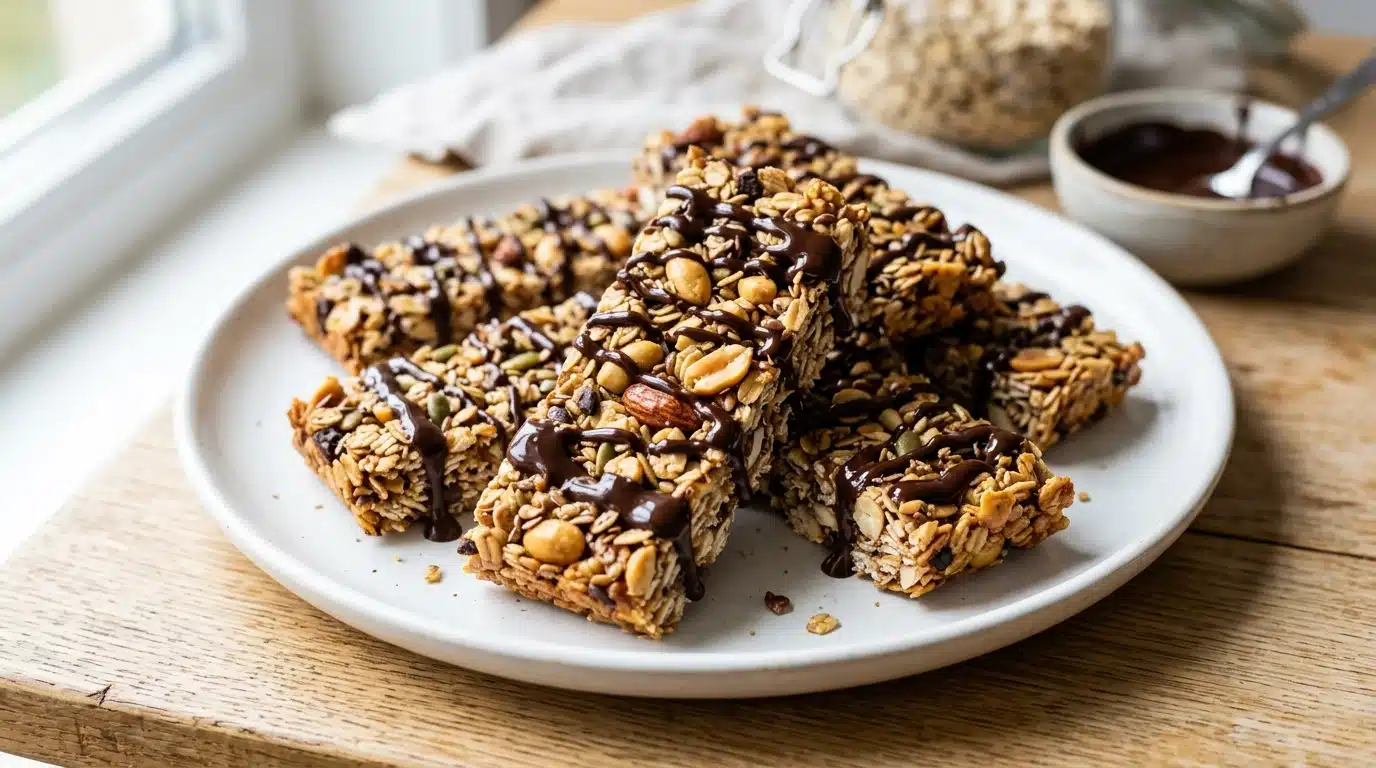









Choose a granola bar from a gas station shelf, and it appears harmless: simply oats with a touch of sweetness.
Many people wonder if granola bars are healthy, often without checking the label. Some bars truly provide nourishment, while others hide sugar, oil, and fillers under the guise of health foods.
Truth lies between marketing and molecules.
This blog covers are granola bars healthy or not, finds their ingredients, analyzes how sugar and processing impact their quality, and identifies the brands that truly deliver.
Are Granola Bars Healthy?
It varies depending on the contents of the wrapper.
Some granola bars pack oats, nuts, and seeds with barely any added sugar. Others hide candy-level sweetness behind a wholesome label. Read the ingredient list before the marketing copy.
Whole grains near the top? Good sign. Sugar, syrup, or chocolate chips leading the pack? Not so much.
Fiber and protein matter too; they keep you full longer instead of crashing an hour later.
So the healthiest bars exist, but you’ll need to pick carefully, not grab the first shiny box on the shelf.
Granola Bar Nutrition at a Glance
Here’s what a typical granola bar looks like on paper, compared to what a genuinely balanced one should offer.
| Nutrient | Average Store-Bought Bar | What a Healthier Bar Looks Like |
|---|---|---|
| Calories | 120–200 per bar | 120–180 per bar |
| Sugar | 8–15g (often added sugars) | Under 6g, mostly natural |
| Fiber | 1–3g | 3g or more |
| Protein | 2–4g | 5g or more |
| Fat | 4–8g | 4–8g (mostly unsaturated) |
| Sodium | 60–140mg | Under 100mg |
The key difference between a mediocre and a good snack bar is more fiber and protein, with less added sugar. Use this table in the snack aisle as a cheat sheet to read between marketing lines.
What is Actually in a Granola Bar?

Ingredients often do not align with what is advertised on the front of the box. Here’s what usually makes the cut:
- Binders: Honey, brown rice syrup, or molasses hold everything together.
- Dried fruit: Raisins, cranberries, or dates for natural sweetness.
- Oils: Canola or sunflower oil for texture and shelf life.
- Puffed grains or rice: Added for crunch without much nutrition.
- Preservatives: Things like tocopherols to keep bars fresh longer.
- Flavorings: Vanilla extract or cinnamon for taste.
- Salt: Balances out the sweetness.
Granola Bars and Sugar: How Much is Too Much?
Sugar content varies greatly across different brands.
A single bar can hold anywhere from 4 grams to 15 grams, sometimes more. That gap matters.
The American Heart Association suggests capping added sugar at 25 grams a day for women and 36 grams for men. One granola bar shouldn’t eat up half that budget.
Check where sugar sits on the ingredient list; closer to the top means more of it.
Multiple sugar aliases, like corn syrup and cane juice, can stack up fast without looking obvious.
A bar with 6 grams or less of added sugar fits comfortably into a balanced diet without derailing it.
Are Granola Bars Highly Processed?
Bars made with rolled oats, nuts, and a simple binder stay close to whole food territory.
Others undergo extensive processing; refined flours, artificial flavors, and preservatives extend shelf life but remove nutrients. Techniques like extrusion and puffing for crunchiness often destroy natural fiber.
A quick test is to count ingredients: five or fewer, mostly recognizable, indicates minimal processing.
Ten-plus with unpronounceable additives points toward heavy processing.
Reading labels always provides better information than trusting packaging claims.
What Makes a Granola Bar Actually Healthy?
Some indicators distinguish a truly nutritious bar from a fancy candy alternative. Keep an eye out for these traits:
- Whole grains first: Oats or whole wheat should lead the ingredient list.
- Protein content: At least 4-5 grams to support satiety.
- Fiber count: 3 grams or more helps with digestion and fullness.
- Healthy fats: Nuts or seeds instead of hydrogenated oils.
- Short ingredient list: Fewer components mean less hidden sugar or filler.
- No artificial colors: Naturally sourced ingredients only.
- Portion size: Calorie count that fits a snack, not a meal.
How to Read a Granola Bar Nutrition Label
Start with serving size; some bars list nutrition for half a bar, which skews the numbers.
Scan calories, then added sugars versus total sugars. Total fat matters less than fat type below.
Sodium creeps up in bars marketed as savory or protein-packed. Check the percent daily value column for a quick gut check on how one bar fits into a full day’s intake. Ingredients still tell more than numbers alone.
Combining both provides a comprehensive view rather than just a partial one.
Granola Bars vs. Other Snack Bars
Not every bar on the shelf serves the same purpose. Here’s how they stack up:
| Bar Type | Primary Focus | Best For |
|---|---|---|
| Granola Bar | Grains, light snacking | Quick energy between meals |
| Protein Bar | Muscle recovery, satiety | Post-workout or meal gaps |
| Energy Bar | Fast-digesting carbs | Endurance activities, hiking |
| Meal Replacement Bar | Balanced macros, calorie density | Substituting an actual meal |
Are Granola Bars Good for Weight Loss or Weight Management?
Depends on portion control and ingredient quality.
A bar loaded with dried fruit and sugar can pack 250+ calories, undermining any deficit goal.
Lower-calorie versions with high fiber and protein keep hunger at bay longer, reducing the urge to snack again soon after. Timing plays a role too; eating one between meals curbs overeating at the next sitting.
Pairing a bar with water, protein, or a Gala apple with fiber and vitamin C can slow digestion.
Weight management comes down to overall calorie balance, not one snack choice.
Granola bars can be included, but only as part of a larger plan.
When Granola Bars Are a Smart Snack and When They Aren’t
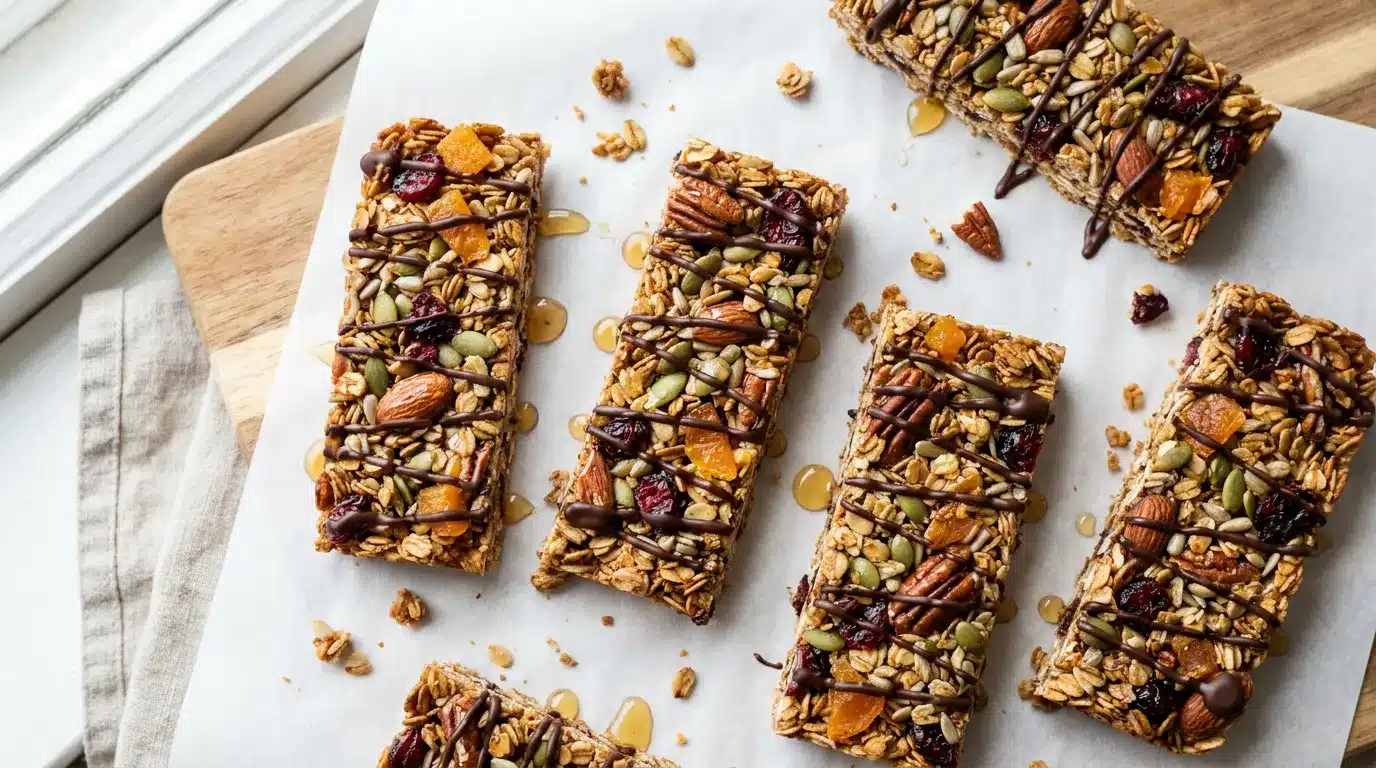
Context determines if a granola bar is beneficial or detrimental. On lighter snacking days, swapping in a roasted makhana snack is a low-sugar alternative worth keeping in rotation. Here’s the explanation:
1. Before a workout: Quick carbs digest fast and fuel muscles without weighing down the stomach.
A bar 30-45 minutes before exercise works better than a heavy meal. Energy stays steady through the session.
2. During travel: Fresh food isn’t always within reach at airports or long drives. A bar tucked in a bag prevents impulsive vending machine grabs. Shelf-stable options make hunger manageable on the go.
3. Paired with fruit or yogurt: Combining a bar with protein or fresh produce rounds out a mini-meal. Blood sugar rises more slowly this way. Fullness lasts longer than eating the bar alone.
4. As a dessert substitute: Reaching for a bar after already eating enough calories adds unnecessary sugar.
The body doesn’t need extra fuel at that point. It just adds to the day’s total intake.
5. Replacing breakfast or lunch regularly: A bar lacks the volume and nutrients of an actual meal.
Relying on it daily leaves gaps in protein, vitamins, and minerals. Occasional use works; regular substitution doesn’t.
How to Choose a Healthier Granola Bar at the Store
Skip the front label entirely; it’s built to sell, not inform. Flip straight to ingredients and nutrition facts instead.
Compare two or three brands side by side rather than grabbing the first one within reach.
Prices don’t always reflect quality, so don’t assume expensive means better.
Look for shorter shelf life too; it often signals fewer preservatives. Bulk bins or store brands sometimes beat pricier packaged options on ingredient simplicity. Store aisles reward patience over speed.
Spending a few extra minutes comparing labels now can help save calories and sugar later.
Store-Bought vs. Homemade
Store-bought bars are convenient, but homemade bars are more nutritious. Here’s a side-by-side comparison.
| Factor | Store-Bought | Homemade |
|---|---|---|
| Sugar Control | Fixed, often high | Fully adjustable |
| Ingredient Quality | Varies, often processed | Whole, recognizable ingredients |
| Cost | Higher per bar | Lower per batch |
| Shelf Life | Long | Shorter, needs storage |
| Convenience | Grab and go | Requires prep time |
| Customization | None | Total control (nuts, sweetener, add-ins) |
For comfort and shelf life, store-bought bars are fine. For control over sugar and elements, homemade bars excel.
Can You Make Healthier Granola Bars at Home?
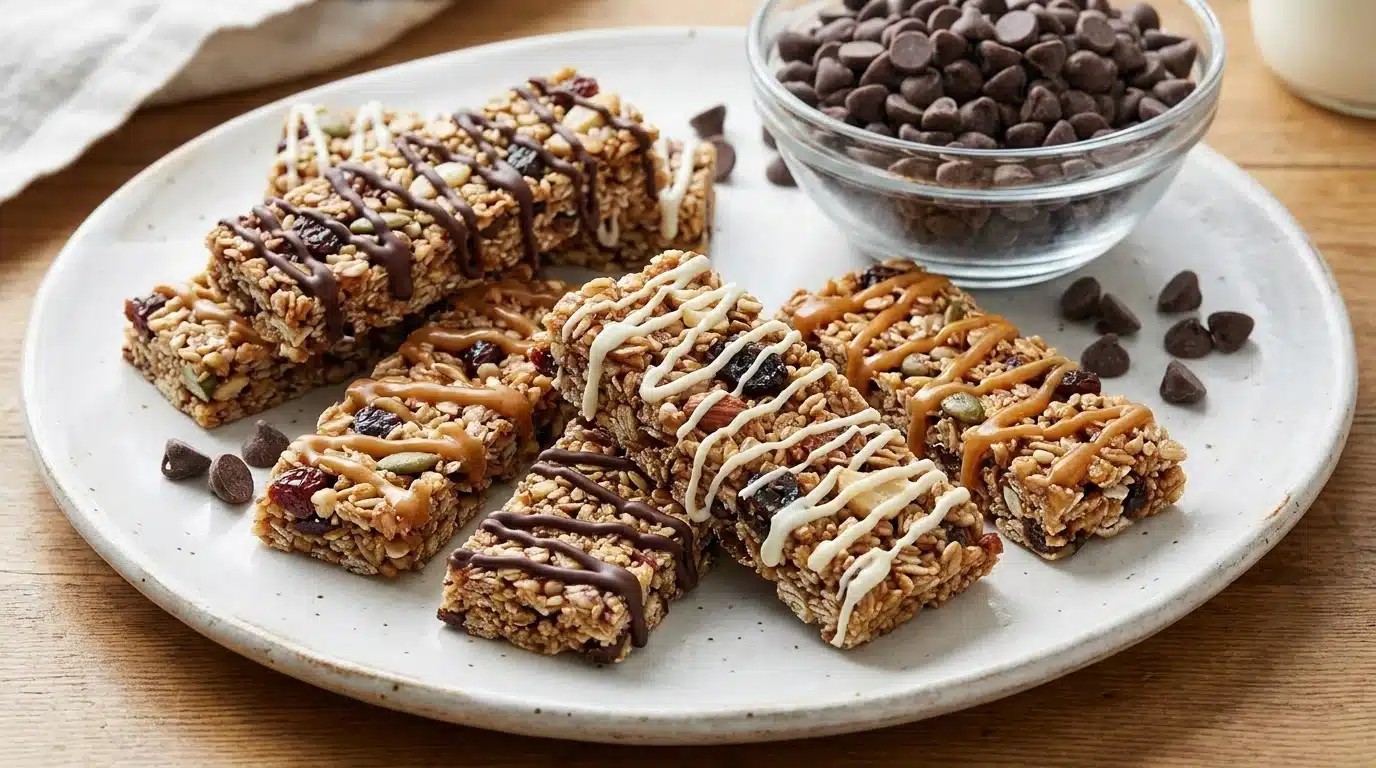
Homemade versions give you complete control. Here are some important benefits to consider:
- Ingredient control: Swap refined sugar for mashed banana or a small amount of honey.
- No preservatives: Fresh batches skip the chemicals needed for long shelf life.
- Custom add-ins: Mix in seeds, dark chocolate chunks, or unsweetened coconut.
- Cost savings: Bulk oats and nuts cost less than pre-packaged boxes over time.
- Batch freezing: Stored properly, homemade bars stay fresh for weeks without additives.
How to Choose the Healthiest Bars: Brands and Nutrition
Numbers reveal the true story more effectively than any promotional claim. Here’s a comparative view:
| Brand/Bar | Calories | Sugar | Protein | Fiber |
|---|---|---|---|---|
| Larabar Dark Chocolate Almond | 200 | 7g | 5g | 4g |
| KIND Nut-Based Bars | ~180 | 5-6g | 5-6g | 3g |
| Quaker Chewy Dipps Chocolate Chip | 140 | 13g | 1g | 1g |
| Kodiak Protein Bars | ~190 | 6-8g | 12g | 5g |
Who Should Pay Extra Attention to Granola Bar Ingredients?
This section covers health conditions like diabetes and celiac disease. It’s for informational purposes only, not medical advice. Consult a doctor or dietitian for personalized guidance.
Diabetics need to watch sugar spikes closely, since blood glucose reacts fast to hidden syrups.
People with nut allergies should check for cross-contamination warnings, not just the main ingredient list. Parents buying for kids should check sodium and sugar levels, as children’s bars tend to be sweeter.
Those with celiac disease must verify gluten-free labels because oats can have cross-contact risk.
Athletes tracking macros benefit from comparing protein-to-carb ratios across brands.
Reading labels matters more for these groups than for casual snackers.
End Note!
Granola bars aren’t necessarily unhealthy, nor are they automatically healthy just because they include oats.
Whether are granola bars healthy comes down to one habit: reading past the front label every time.
Sugar grams, protein counts, and ingredient order tell the real story, not clever branding. Some bars deserve a spot in your bag; others belong back on the shelf.
Small daily choices influence long-term health more than any snack.
Trust your judgment over marketing, and check labels instead of guessing.
Frequently Asked Questions (FAQ’s)
1. Is It Okay to Eat a Granola Bar Every Day?
Yes, if you pick low-sugar, high-fiber options and watch portion sizes alongside your overall daily diet.
2. Do Granola Bars Count as Junk Food?
Whole-grain, low-sugar bars stay closer to real food, unlike cheap, syrup-loaded versions.
3. Which is Healthier: Oatmeal or Granola?
Plain oatmeal usually wins, since it skips added sugars and oils that granola often carries for crunch and flavor.
4. What is a Healthy Snack Instead of Granola Bars?
Try raw almonds with an apple for fiber, protein, and natural sweetness without processed additives.
5. Is 200 Calories Too Much for a Granola Bar?
Not inherently; context matters more, since 200 calories with solid protein and fiber beats 150 empty ones easily.