



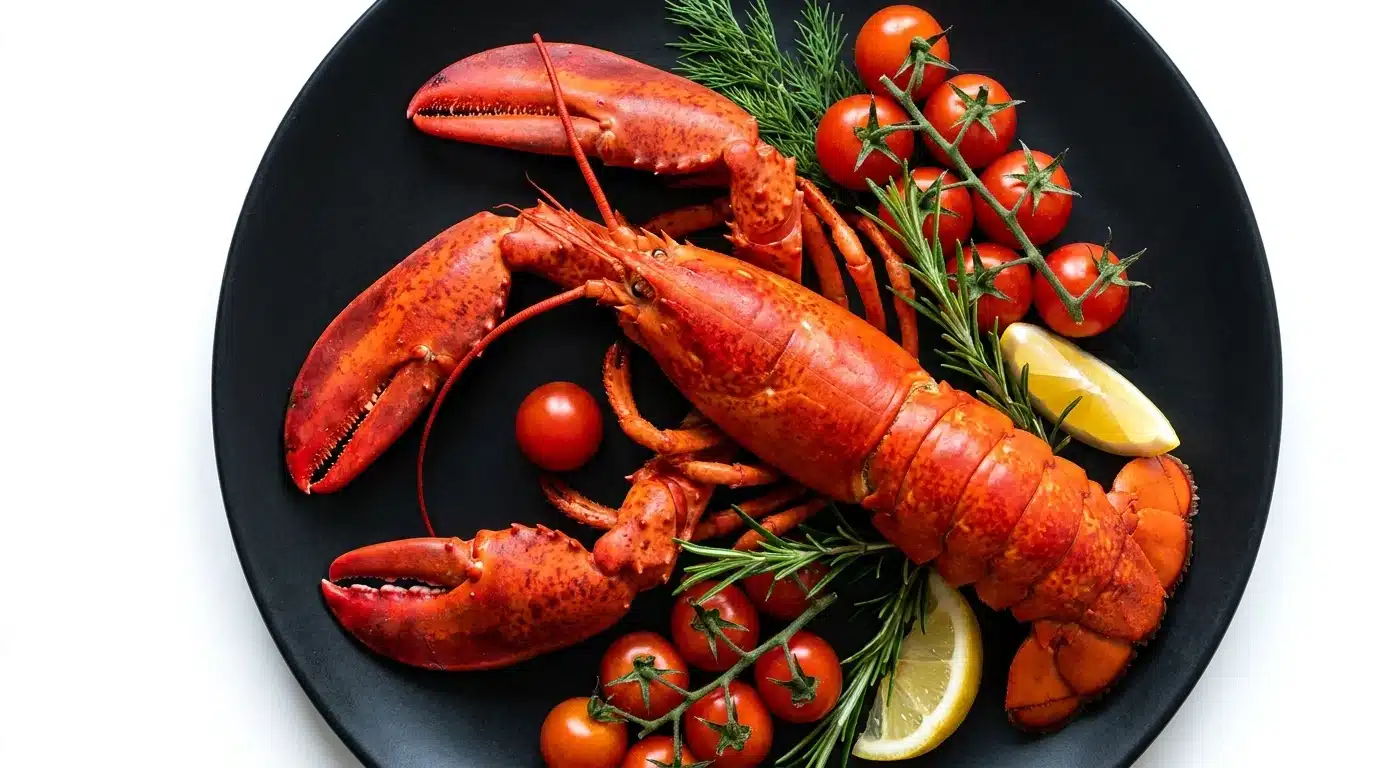









That rich, buttery lobster bite feels indulgent, but there’s an unexpected element beneath all that richness.
Lobster nutrition tells a completely different story than the price tag and prestige usually suggest.
Questions like “Does lobster have iron?” or “How much protein is in lobster?” rarely cross minds until the bill arrives and curiosity kicks in.
In my seafood nutrition work, those who doubt shellfish can rival red meat are usually surprised by the numbers.
This ocean delicacy carries more nutritional weight than its reputation lets on, and the details ahead could change how often it lands on the dinner table.
Lobster Nutrition Facts at a Glance
Lobster is frequently regarded as a luxury rather than something to scrutinize for nutrition, yet a small piece of meat packs in a lot. It’s lean, protein-rich, and loaded with minerals like zinc and selenium.
One serving even delivers omega-3s, though not as much as salmon offers.
Calories stay low, but cholesterol runs higher, and sodium can spike fast depending on how it’s cooked.
| Nutrient | Amount (3 oz cooked) |
|---|---|
| Calories | 90 |
| Protein | 19g |
| Fat | 1g |
| Carbohydrates | 0g |
| Cholesterol | Less than 70mg |
Is Lobster Healthy?
Yes, lobster definitely belongs on a healthy plate.
It provides a strong amount of vitamin B12, essential for nerve health and energy levels.
Copper and phosphorus round out its mineral profile, aiding bone strength and metabolism.
People watching their weight benefit from its low-fat content; however, moderation is key. Shellfish allergies are common, and although mercury levels are lower than in large fish, they are not zero.
Butter and salt often added during cooking can undo lobster’s natural benefits fast.
Choose steaming or grilling over frying. Pair it with vegetables instead of heavy sauces.
Overall, lobster is a suitable addition to a balanced and varied diet.
Nutritional Value of Lobster Types
Not all lobster is nutritionally identical, since different species carry slightly different numbers per serving.
| Lobster Type | Calories (100g) | Protein (100g) | Fat (100g) | Cholesterol (100g) |
|---|---|---|---|---|
| American (Maine) Lobster | 89 | 19g | 0.9g | 95mg |
| Spiny (Rock) Lobster | 112 | 20.5g | 1.5g | 70mg |
| European Lobster | 90 | 19g | 1g | 95mg |
| Slipper Lobster | 98 | 18g | 1.2g | 80mg |
Price and availability often matter more than these small nutritional gaps when choosing between types, so taste preference and budget can safely guide the decision instead.
What a Cooked 100-Gram Serving Includes: Lobster Nutrition

Lobster carries a full nutritional lineup worth understanding one nutrient at a time.
1. How Much Protein in Lobster?
Cooked lobster delivers about 19 grams of protein per 100 grams.
A full medium-sized lobster provides closer to 56 grams total. It qualifies as a complete protein, containing all nine essential amino acids, placing it alongside eggs and dairy. This is a strong choice for muscle repair and recovery.
Athletes and older adults benefit most, since protein needs rise with age and activity.
A claw-and-tail combo covers nearly a third of daily protein goals.
2. Calories in a Serving
A 100-gram serving of cooked lobster holds roughly 89 calories, making it one of the lighter protein sources around.
Lobster’s calories are mainly from lean protein, so it remains below beef or butter-heavy dishes.
This low density fits comfortably into most eating plans. A whole lobster, shell removed, still lands under 300 calories, leaving room for rice, salad, or roasted vegetables without exceeding daily limits.
3. Does Lobster Have Iron?
Iron sits at around 0.3 milligrams per 100-gram serving, covering only a small slice of daily needs. Lobster’s copper content runs far higher, though, helping the body absorb and use iron more efficiently.
It won’t replace red meat as a primary iron source, but still adds value.
Pairing lobster with iron-rich sides like spinach or lentils closes the gap.
Vitamin C from citrus boosts absorption further.
4. Carbohydrate Levels in Lobster
Cooked lobster has 0 grams of carbs per 100 grams, making it a very clean protein source.
This makes it a natural fit for keto, low-carb, or diabetic-friendly plans without modifications. Anyone watching blood sugar can eat lobster freely, since it carries zero impact on either measurement.
The zero-carb profile holds true whether steamed, grilled, or boiled. Sauces and breading, not the meat, add carbs.
5. Fat Content Worth Knowing
Fat stays under 1 gram per 100 grams in cooked lobster, keeping it firmly in lean territory.
Most of that small amount is unsaturated fat, the kind linked to heart health. This puts lobster ahead of red meat and many chicken cuts, especially when it’s cooked without butter or cream sauces.
Trace omega-3s also show up, supporting heart and brain function.
The way you cook the meat is more important than the type of meat.
6. Fiber Levels in Lobster
Dietary fiber is 0 grams per 100 grams, like most animal foods, since fiber only comes from plants.
This doesn’t reduce lobster’s value, but other meal parts must provide fiber.
Vegetables, legumes, or whole grains served alongside help round out digestion.
A side of steamed broccoli or a whole-grain roll closes that gap easily, without changing lobster’s preparation.
7. Vitamins Packed Into Lobster
Vitamin B12 is notable, providing approximately 2.6 micrograms per 100 grams, which exceeds a full day’s recommended intake in a single serving.
Smaller amounts of Vitamin A and Vitamin E also appear, tied to eye health and cell protection.
B12 plays a lead role in nerve function and red blood cell production.
Vitamin E acts as an antioxidant, protecting cells from everyday damage and rounding out the profile.
Lobster, Cholesterol, and Heart Health: What to Know
Cholesterol numbers in lobster often raise eyebrows, but the full picture tells a different story.
- A 100-gram serving has about 95-145 mg cholesterol, depending on size and cooking.
- Dietary cholesterol affects blood cholesterol less than once thought.
- Saturated fat drives LDL levels up far more than shellfish cholesterol does.
- The American Heart Association still lists lobster as an acceptable choice within a balanced eating pattern.
- Doctors generally advise limiting lobster to a few servings per week for anyone with existing heart conditions.
- Steaming or boiling without added fat keeps the cholesterol-to-benefit ratio favorable.
- Combining lobster with fiber-rich vegetables helps offset its cholesterol load over the course of a meal.
This is for informational purposes only; consult a licensed doctor or registered dietitian before making dietary changes for a heart condition.
Potential Health Benefits and Drawbacks of Eating Lobster

Lobster provides benefits, but it may not suit every diet, as each perk comes with a trade-off.
This is for informational purposes only; consult a licensed doctor or registered dietitian before making dietary changes for a heart condition.
1. Supports Heart Health
Lobster’s lean profile and unsaturated fat content support cardiovascular health.
Omega-3s help reduce inflammation and support healthy blood vessels over time.
Selenium adds another layer of protection, guarding cells from oxidative stress linked to heart disease.
Eaten grilled or steamed, lobster fits well into heart-conscious diets.
Since cholesterol levels are high, it is vital for individuals with heart conditions to practice portion control.
2. Boosts Immune Function
Zinc plays a starring role here, helping the body fight infections and heal wounds faster. Selenium works alongside it, strengthening immune response and reducing cellular damage.
Together, these minerals give the immune system real backup during cold and flu season.
Regular seafood eaters often show stronger immune markers than those who skip it entirely.
Shellfish allergies are widespread and can cause serious immune responses.
3. Strengthens Brain and Nerve Function
Vitamin B12 fuels nerve signaling and helps prevent cognitive decline as people age.
Copper supports neurotransmitter production, keeping communication between brain cells sharp and efficient.
Lobster’s mineral density gives the nervous system steady support without excess calories. Older adults especially benefit, since B12 absorption naturally drops with age. Drawback:
Pregnant women should limit shellfish intake due to mercury and consult a healthcare professional.
4. Promotes Bone and Dental Strength
Phosphorus and calcium work together to keep bones dense and teeth resistant to decay.
Copper adds structural support, aiding collagen formation throughout connective tissue. Regular lobster consumption steadily supports skeletal maintenance, especially after age forty.
Pairing it with vitamin D sources improves absorption even further.
Sodium levels rise rapidly when lobster is boiled in salted water or accompanied by heavy butter.
5. Aids Weight Management
Low-fat and zero carbohydrates make lobster a satisfying choice for anyone trimming calories.
Protein helps suppress hunger longer than carb-heavy meals, reducing the urge to snack between meals.
Selenium and zinc also support metabolic function, keeping energy steady throughout the day.
Swapping red meat for lobster cuts saturated fat without sacrificing satisfaction.
Cost and preparation time frequently lead people to choose less healthy, quicker options.
Lobster Nutrition Can Change With How You Prepare It
The same lobster can turn from a lean protein win into a calorie trap, depending entirely on how it hits the pan.
- Steaming or boiling in plain water keeps calories, fat, and sodium closest to lobster’s natural nutritional profile.
- Grilling adds smoky flavor without extra fat, as long as marinades stay light and oil-free.
- Butter-poached or drawn-butter preparations can double or triple the fat content in a single sitting.
- Fried lobster absorbs oil during cooking, pushing calorie and fat counts well past baked or steamed versions.
- Bisques and cream-based lobster dishes add heavy amounts of saturated fat and calories from dairy.
- Salted water or pre-seasoned butter can increase sodium levels well beyond the meat’s natural amount.
- Squeezing fresh lemon or using herb-based seasoning adds flavor without altering lobster’s core nutrition.
Who Should Be Careful With Lobster?
Shellfish allergies rank as the top concern, and reactions can escalate to anaphylaxis without warning.
Gout sufferers face a genuine risk too, since purines in shellfish can spark painful flare-ups within hours.
Anyone with iodine sensitivity or thyroid issues should consult a doctor first, as shellfish contains iodine naturally.
People on blood thinners should seek medical advice since vitamin K in lobster dishes can affect their medication.
Those with digestive sensitivities may find lobster’s rich texture, especially in butter-heavy dishes, hard to tolerate.
When uncertain, consulting a doctor quickly provides clarity.
How Much Lobster Should You Eat?
Portion size depends on activity level and overall diet goals.
Most nutrition guidelines suggest 3 to 4 ounces of cooked lobster meat as a standard single serving.
It’s approximately the size of a deck of cards or a small lobster tail.
Active adults or those focused on muscle building can safely go up to 6 ounces without issue. Two to three seafood servings per week fits most general health recommendations, according to dietary guidelines.
Special occasions calling for a whole lobster feast are fine now and then.
Balance stays key, though, so pairing lobster with vegetables and whole grains rounds out the plate well.
Lobster Nutrition vs. Other Popular Seafood
Comparing lobster to other popular seafood items provides better context for its numbers.
Anyone who has run protein bowl comparisons for raw fish will recognize a similar pattern here: protein and fat vary more between species than most people expect.
Here’s how lobster stacks up against other seafood favorites, nutrient for nutrient.
| Seafood (100g cooked) | Calories | Protein | Fat | Cholesterol | Omega-3 |
|---|---|---|---|---|---|
| Lobster | 89 | 19g | 0.9g | 95mg | Low |
| Shrimp | 99 | 24g | 0.3g | 189mg | Low |
| Crab | 97 | 19g | 1.5g | 78mg | Moderate |
| Salmon | 208 | 20g | 13g | 55mg | High |
| Tuna | 132 | 28g | 1g | 38mg | Moderate |
| Tilapia | 128 | 26g | 3g | 57mg | Low |
This comparison makes it clear why lobster earns its spot as a lean, protein-dense choice on any dinner table.
How to Build a Balanced Meal With Lobster
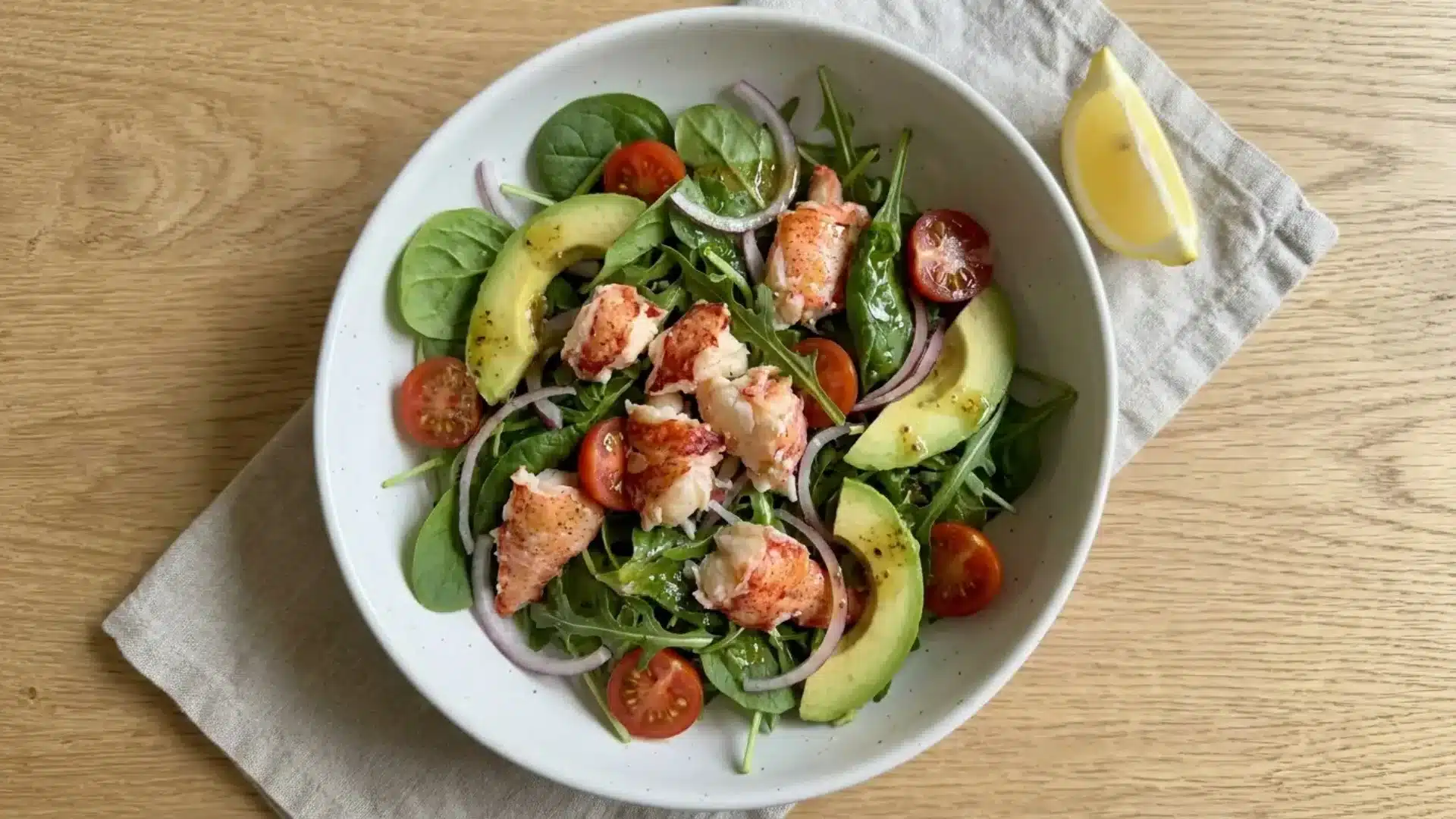
A great lobster meal comes down to what surrounds the star ingredient on the plate.
- Add a whole grain like quinoa, brown rice, or a whole-wheat roll for fiber and sustained energy.
- Roasted or steamed vegetables like asparagus or zucchini add vitamins and minerals that lobster lacks.
- A leafy green salad with olive oil dressing adds healthy fats without tipping the meal into heavy territory.
- Fresh herbs like dill, chives, or tarragon boost flavor without adding sodium or extra calories.
- A citrus-based squeeze, like lemon or lime, brightens the dish while aiding mineral absorption from the meal.
- Swapping melted butter for a light olive oil drizzle keeps saturated fat and calories in check.
- Corn on the cob or a light potato side adds satisfying carbs without overwhelming the plate’s balance.
Frequently Asked Questions (FAQ’s)
1. Is Lobster Safe During Pregnancy?
Cooked lobster is usually safe during pregnancy in moderation, but avoid raw or undercooked lobster.
2. Can Dogs Eat Lobster?
Small amounts of cooked lobster are safe for dogs, but avoid butter, seasonings, and shells.
3. Does Lobster Taste Different from Crab?
Lobster has a firmer, sweeter meat compared to crab, which tends to be flakier with a slightly more delicate flavor.
4. How Long Does Cooked Lobster Last in the Fridge?
Cooked lobster stays fresh in the refrigerator for about three to four days when stored in an airtight container.
End Note!
What started as curiosity about a luxury dinner item ends with a clear nutritional case for lobster.
Lobster nutrition rivals most menu options, regardless of luxury status. In my experience, the biggest shift happens once people stop pairing it with butter by default and start treating it like the lean protein it actually is.
Have you found a lighter way to prepare lobster that still feels indulgent?
Share your successful tips in the comments below.