















A medium sweet potato contains roughly 26–30 grams of carbohydrates, but the impact those carbs have on your blood sugar depends almost entirely on how you cook it.
Boil it, and the glycemic index stays low. Bake it at high heat, and the GI can climb above 90, putting it on par with white rice.[1]
This article covers what’s actually in sweet potatoes, how fiber affects their digestion, and what the research says about their role in eye health, heart health, and sustained energy.
How Many Carbs are in a Sweet Potato?
On average, 100 grams of cooked sweet potato contains about 20–21 grams of carbohydrates. A medium sweet potato provides around 26–30 grams, and a full cup of mashed sweet potato can reach close to 40 grams, depending on preparation.
Most of the carbs in sweet potato come from starch, a complex carbohydrate the body converts into glucose for energy.
Sweet potatoes also contain dietary fiber, which slows digestion and blunts the blood sugar response.
Because fiber bypasses digestion in the small intestine, some people subtract it from total carbs to get a “net carb” figure, though this calculation is more relevant for those following strict low-carbohydrate diets than for general nutrition planning.
Nutritional Overview (Per 100g Cooked Sweet Potato)
| Nutrient | Amount (per 100g) |
|---|---|
| Calories | ~90 kcal |
| Carbohydrates | ~20–21g |
| Fiber | ~3g |
| Protein | ~2g |
| Fat | ~0.1g |
| Vitamin A (as beta-carotene) | Over 100% daily value |
| Vitamin C | Moderate amount |
| Potassium | ~337mg |
How Cooking Methods Change the Glycemic Index of Sweet Potatoes
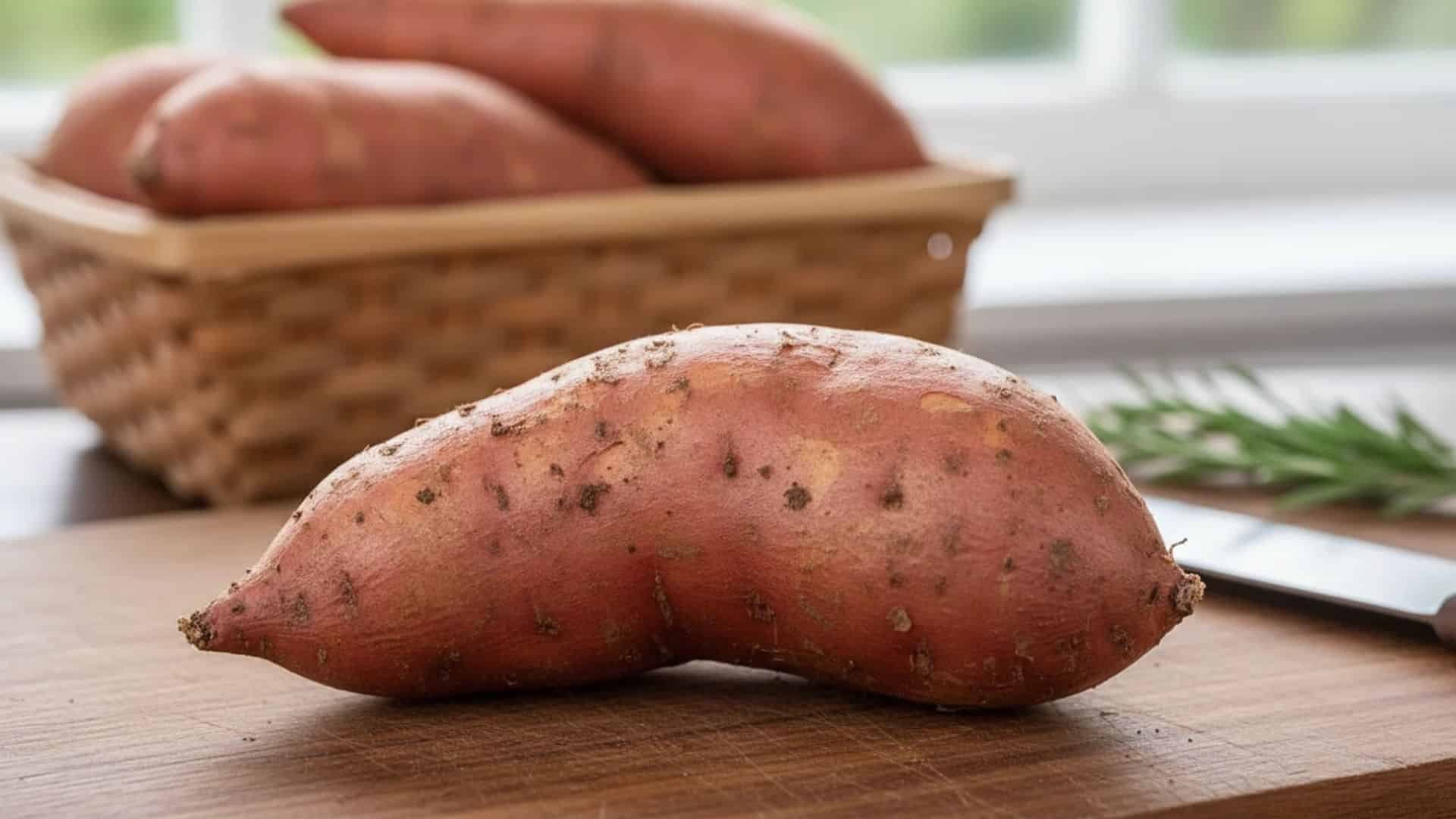
The glycemic index (GI) measures how quickly a food raises blood sugar, using a scale of 0 to 100. Sweet potatoes have one of the widest GI ranges of any common food, and cooking method is the main reason why.
A study testing ten sweet potato cultivars found that boiling produced the lowest GI values (41–50), while baking reached 82–94 and roasting came in at 79–93.[1]
Boiling preserves some resistant starch and alters the starch structure in a way that slows glucose absorption.
Baking and roasting, by contrast, break down resistant starch and convert more of the starch into rapidly digestible forms.
Even boiling time makes a difference; sweet potatoes boiled for 30 minutes have a GI around 46, while those boiled for only 8 minutes sit closer to 61.
For anyone managing blood sugar or diabetes, cooking method is a meaningful variable. Boiled or steamed sweet potatoes consistently produce a lower glycemic response than baked or roasted ones.
Consult a registered dietitian or healthcare provider for personalized guidance on how sweet potatoes fit your specific dietary needs.
How Sweet Potato Fiber Affects Digestion and Gut Health
Sweet potatoes provide roughly 3 grams of fiber per 100g cooked. This fiber adds bulk to stool and serves as a substrate for fermentation by gut bacteria.
A 2018 meta-analysis of randomized controlled trials found that dietary fiber intervention significantly increased the abundance of Bifidobacterium and Lactobacillus, two genera associated with digestive health and reduced constipation.[2]
These effects are not specific to sweet potato fiber, but sweet potatoes are a practical whole-food source for increasing daily intake alongside other vegetables and legumes.
Beta-Carotene in Sweet Potatoes and Eye Health
Sweet potatoes are one of the richest dietary sources of beta-carotene, the pigment responsible for their orange color.
The body converts beta-carotene into vitamin A, which supports the cornea, helps maintain night vision, and protects mucous membranes.
Vitamin A deficiency is a leading cause of preventable blindness in children globally, and orange-fleshed sweet potato varieties have been studied as an intervention crop in sub-Saharan Africa, where most varieties contain 3,000–16,000 µg of beta-carotene per 100g.[3]
Beta-carotene is a precursor to vitamin A and supports multiple biological processes related to vision.[4]
That said, the relationship between dietary beta-carotene, vitamin A status, and eye disease risk is complex and depends on factors including overall diet, genetics, and baseline nutritional status.
Eating sweet potatoes regularly as part of a varied diet is a reasonable strategy for maintaining adequate vitamin A intake, but it is not a treatment for eye disease.
Potassium from Sweet Potatoes and Cardiovascular Health
Sweet potatoes provide moderate amounts of potassium, around 337mg per 100g cooked. Potassium helps regulate blood pressure by counteracting the sodium-retaining effects of aldosterone in the kidneys.
A meta-analysis of 15 randomized controlled trials found that potassium supplementation reduced systolic blood pressure by an average of 4.7 mmHg and diastolic blood pressure by 3.5 mmHg in non-medicated patients, with stronger effects in those with hypertension.[5]
Dietary potassium from whole foods like sweet potatoes contributes toward this effect as part of a broader eating pattern.
Sweet Potato vs. Other Carbohydrate Sources
Here’s how sweet potatoes compare with other common carbohydrate foods in terms of carbs, fiber, and glycemic index:
| Food | Carbs (per 100g) | Fiber (per 100g) | GI Range | Notes |
|---|---|---|---|---|
| Sweet Potato (boiled) | ~21g | ~3g | 41–50 | Rich in beta-carotene and potassium |
| Sweet Potato (baked) | ~21g | ~3g | 82–94 | Same food; very different GI due to heat |
| White Potato (boiled) | ~17g | ~2g | 50–80 | Lower carbs but less beta-carotene |
| Quinoa (cooked) | ~21g | ~2.8g | ~53 | Also provides ~8g protein per serving |
| Oats (dry) | ~66g | ~10g | ~55 | Highest fiber; measured dry weight inflates carbs |
| Butternut Squash | ~12g | ~2g | ~51 | Lower calorie option |
| Chickpeas (cooked) | ~27g | ~7.6g | ~28 | High fiber and plant protein |
How to Get the Most from Sweet Potato Carbs in Your Meals
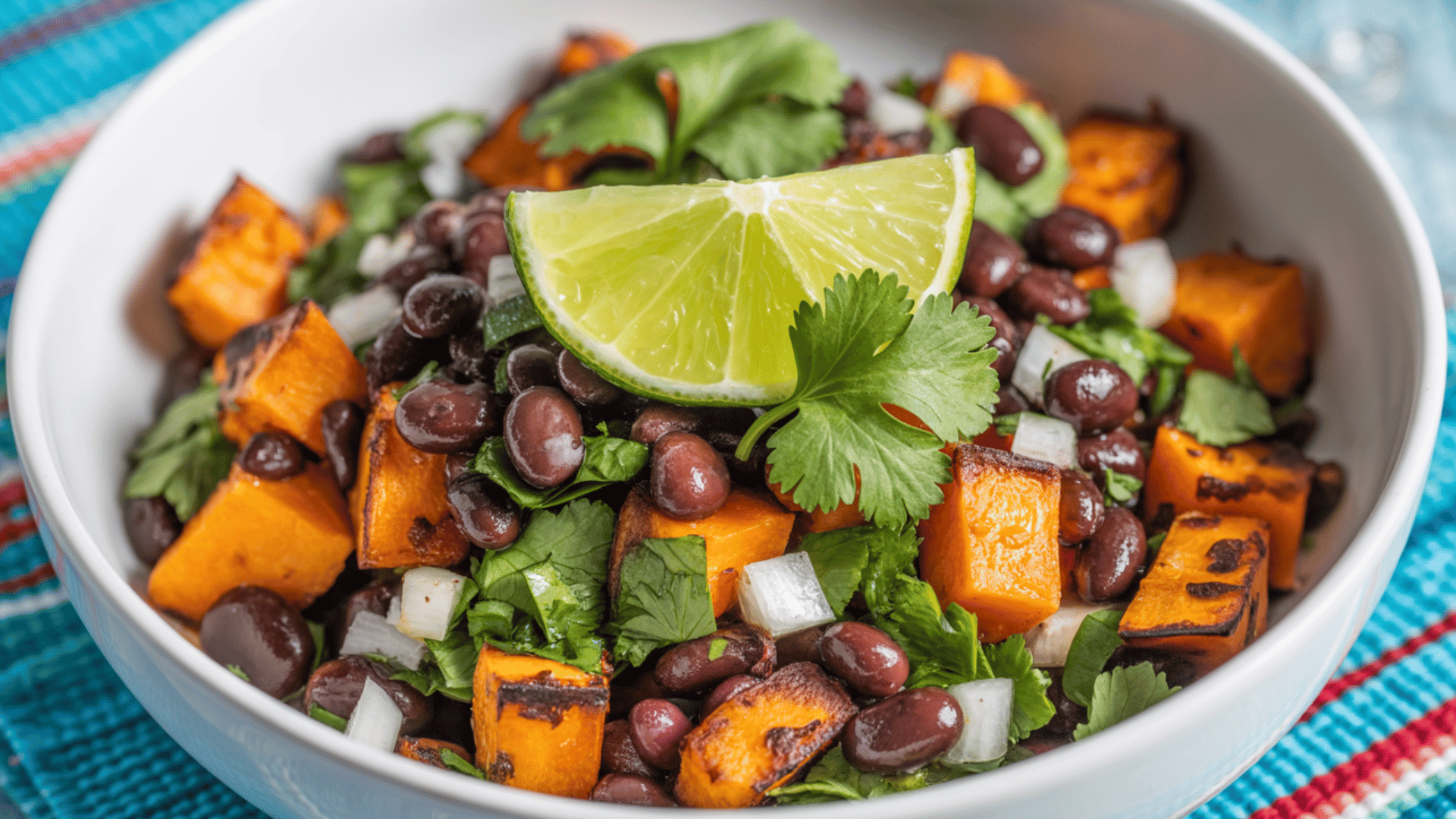
A few practical notes on preparation:
- Boil or steam for the lowest glycemic impact. This consistently produces the lowest GI values. Longer boiling times (30 minutes or more) lower the GI further than quick cooking.[1]
- Pair with protein and fat to slow absorption further. Eating sweet potatoes alongside chicken, fish, eggs, or legumes, or with a small amount of olive oil or avocado, slows carbohydrate absorption and reduces the overall glycemic response of the meal.
- Include roasted versions mindfully. Roasted sweet potatoes are still nutritious, but their glycemic index is significantly higher than boiled. This matters more for those monitoring blood sugar closely.
- Eat them with vegetables. Combining sweet potato with non-starchy vegetables increases fiber intake and helps round out the meal’s nutrient density.
Conclusion
Sweet potatoes are a nutrient-dense whole food, but the carbs in sweet potato behave very differently depending on how you cook them.
Boiled sweet potato has a low GI and provides meaningful amounts of fiber, potassium, and beta-carotene. Baked or roasted versions deliver the same vitamins but with a substantially higher glycemic response.
If blood sugar is a concern, cooking method matters as much as portion size.
If you have diabetes or are managing insulin sensitivity, work with a healthcare provider or dietitian to determine how sweet potatoes fit your individual plan.
References
- Bahado-Singh, P. S., Riley, C. K., Wheatley, A. O., & Lowe, H. I. C. (2011). Relationship between processing method and the glycemic indices of ten sweet potato (Ipomoea batatas) cultivars commonly consumed in Jamaica. Journal of Nutrition and Metabolism, 2011, 584784. https://doi.org/10.1155/2011/584784↑
- Baxter, N. T., Schmidt, A. W., Venkataraman, A., Kim, K. S., Waldron, C., Martens, E. C., & Sonnenburg, J. L. (2019). Dynamics of human gut microbiota and short-chain fatty acids in response to dietary interventions with three fermentable fibers. mBio, 10(1), e02566–18. As cited in: Dahl, W. J., et al. (2019). Dietary fiber intervention on gut microbiota composition in healthy adults: a systematic review and meta-analysis. American Journal of Clinical Nutrition, 107(6), 965–983. https://doi.org/10.1093/ajcn/nqy041↑
- Laurie, S. M., Faber, M., & Claasen, N. (2015). Incorporating orange-fleshed sweet potato into the South African diet as a strategy to address vitamin A deficiency. International Journal for Vitamin and Nutrition Research, 85(1–2), 67–84. https://doi.org/10.1024/0300-9831/a000218↑
- Eggersdorfer, M., & Wyss, A. (2018). Carotenoids in human nutrition and health. Archives of Biochemistry and Biophysics, 652, 18–26. https://doi.org/10.1016/j.abb.2018.06.001↑
- Binia, A., Jaeger, J., Hu, Y., Singh, A., & Zimmermann, D. (2015). Daily potassium intake and sodium-to-potassium ratio in the reduction of blood pressure: a meta-analysis of randomized controlled trials. Journal of Hypertension, 33(8), 1509–1520. https://doi.org/10.1097/HJH.0000000000000611↑