










| Medical Disclaimer: This article is for informational purposes only and does not constitute medical advice, diagnosis, or treatment. The information provided is not a substitute for professional medical consultation. If you have a medical condition, are pregnant, or are taking medications, consult your healthcare provider before making any dietary or supplement changes. Individual results vary. |
| Condition / Goal | L4-L5 disc pain relief and spinal stability |
| Primary Mechanism | Reducing disc pressure, calming nerve irritation, and building core and glute support |
| Evidence Level | Well-studied, physical therapy is first-line treatment for lumbar disc conditions |
| Who It’s For | Adults with L4-L5 disc bulge, herniated disc, or sciatica with manageable symptoms |
| Who Should Avoid | Anyone with bladder or bowel changes, severe leg weakness, foot drop, or undiagnosed injury, get evaluated first |
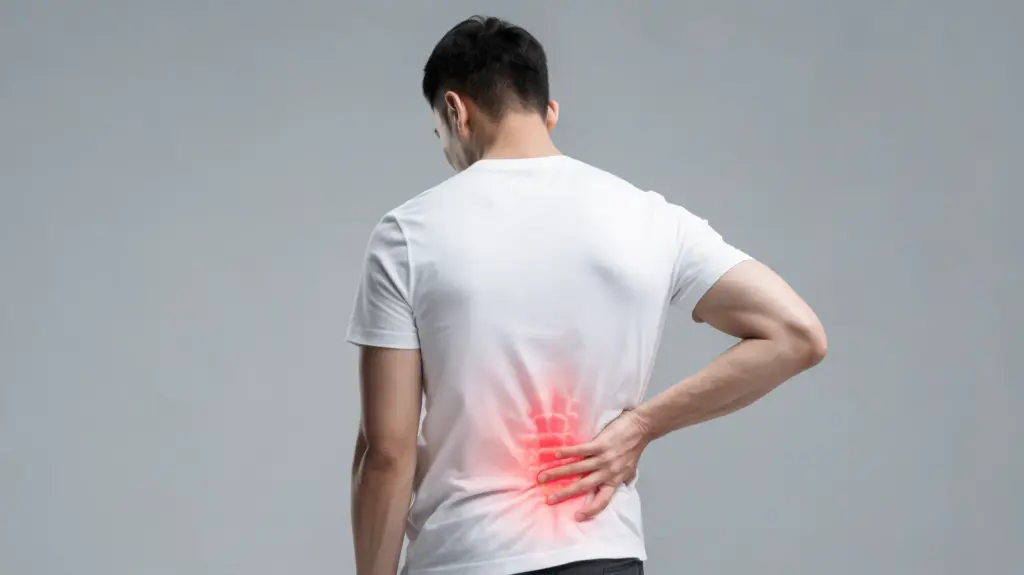
If your lower back stiffens every time you sit, bend, or lift, and the pain sometimes travels into your leg, the L4-L5 disc is one of the most common culprits.
L4-L5 pain relief exercises work by reducing pressure on the disc, calming nearby nerve irritation, and building the core and glute support your lower back needs to stop compensating.
The key is matching the exercise to your specific issue. A disc bulge, herniated disc, and sciatica each respond to different approaches, and the wrong one can make symptoms worse before they get better.
This blog covers exercises across all three categories: a symptom-based selection guide, a 7-day plan, and the daily habits that support long-term relief.
What is Happening at the L4-L5 Disc
L4 and L5 are the fourth and fifth bones in your lumbar spine, sitting just above your pelvis. The disc between them functions as a shock absorber, distributing pressure when you stand, walk, bend, and lift. It handles more load than almost any other disc in the spine. That is why the L4-L5 level is involved in a large percentage of lower back pain diagnoses.
When repeated bending, prolonged sitting, poor posture, weak core muscles, heavy lifting, aging, or injury puts sustained pressure on this disc, two things can happen: the disc can bulge outward, or the inner gel-like material can push through a tear in the outer layer.
Either way, the disc may press on the nerve roots that run through the L4-L5 space. Those nerves supply the hips, thighs, calves, feet, and toes, which explains why L4-L5 pain rarely stays in the lower back alone.
Three Types of L4-L5 Disc Issues and How They Feel
Knowing which type you are dealing with changes which exercises are safe and which could aggravate symptoms.
1. L4-L5 Disc Bulge
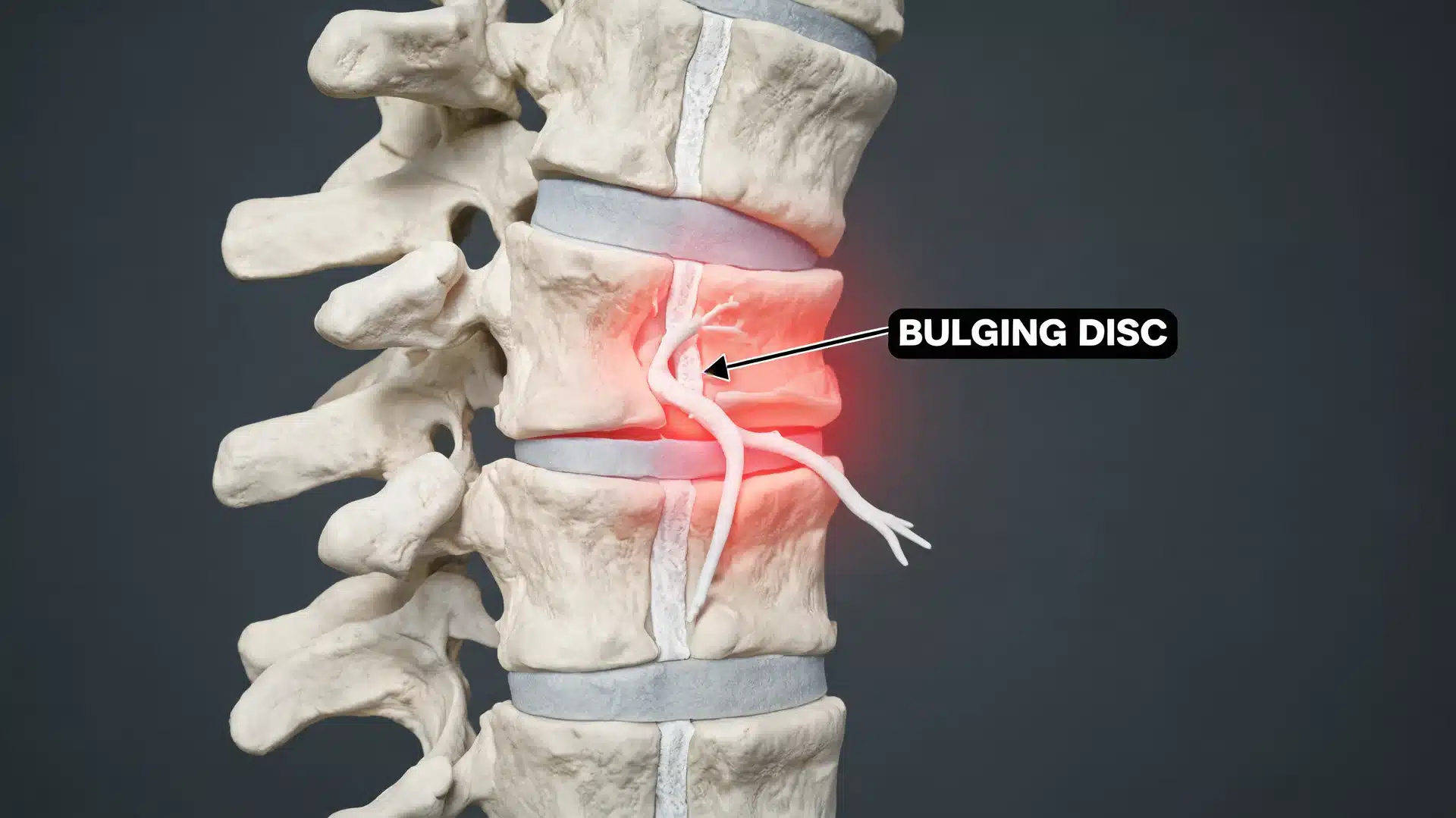
A disc bulge means the outer wall of the disc is still intact, but the disc has spread beyond its normal boundary under pressure. Think of pressing a filled water balloon flat. The edges push out, but nothing has broken. A bulge may cause only local lower back pain, but it can press on a nerve if the bulge is positioned near one.
Common symptoms: dull lower backache, stiffness after sitting, pain that worsens with bending or lifting, mild buttock or leg ache if a nerve is involved. Symptoms often come and go.
2. L4-L5 Herniated Disc
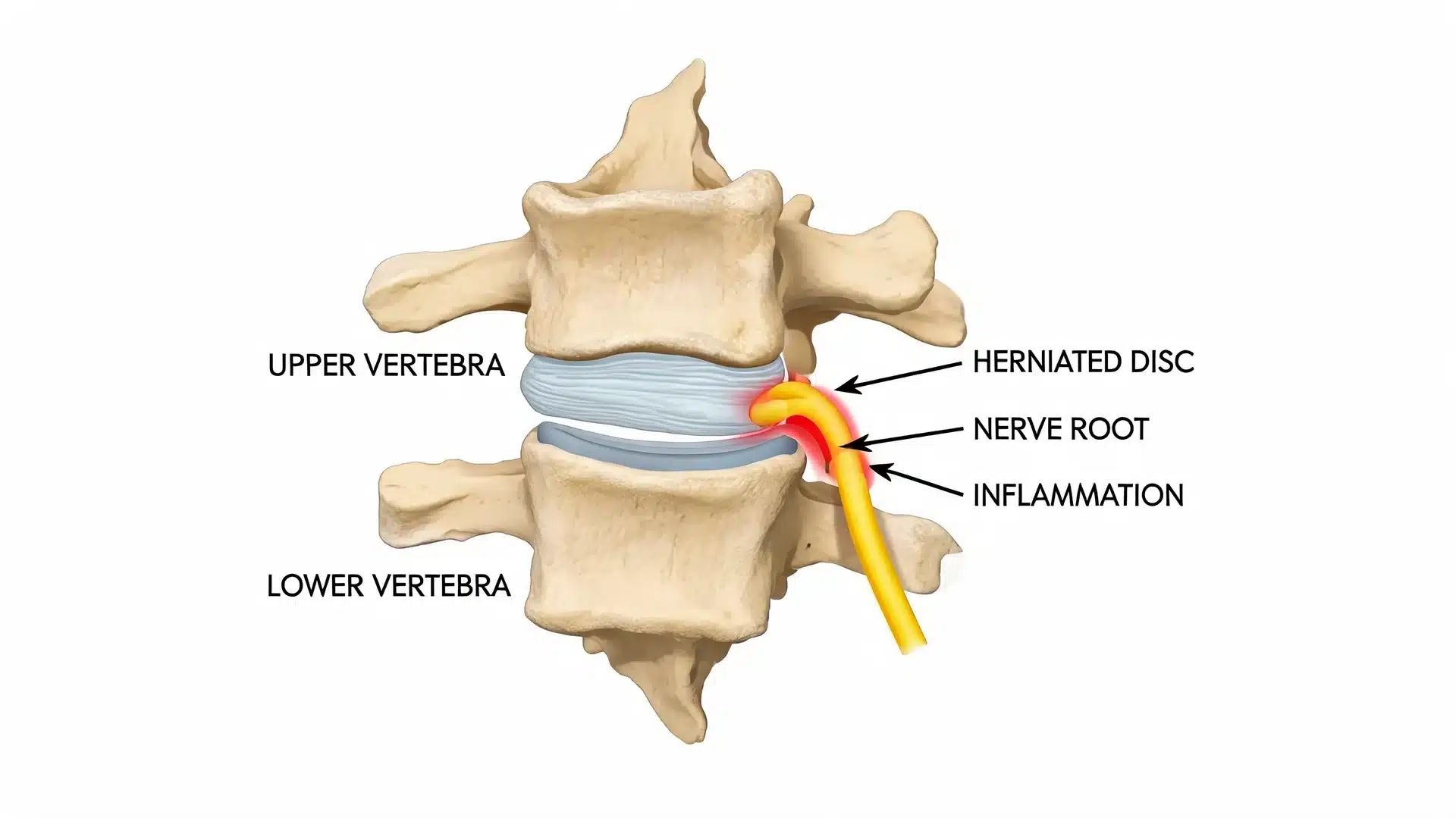
A herniated disc is more significant than a bulge because the inner nucleus pushes through a tear in the outer ring. That leaked material is chemically irritating to nerve tissue, which is why herniated disc pain tends to feel sharper and more intense. The nerve involvement is also more direct. Pain can travel into the buttock, leg, or foot and often worsens with sitting, coughing, sneezing, or bending forward.
Common symptoms: sharp lower back pain, burning or shooting pain into the leg or foot, tingling, numbness, leg or foot weakness, pain worse with sitting.
3. Sciatica From L4-L5
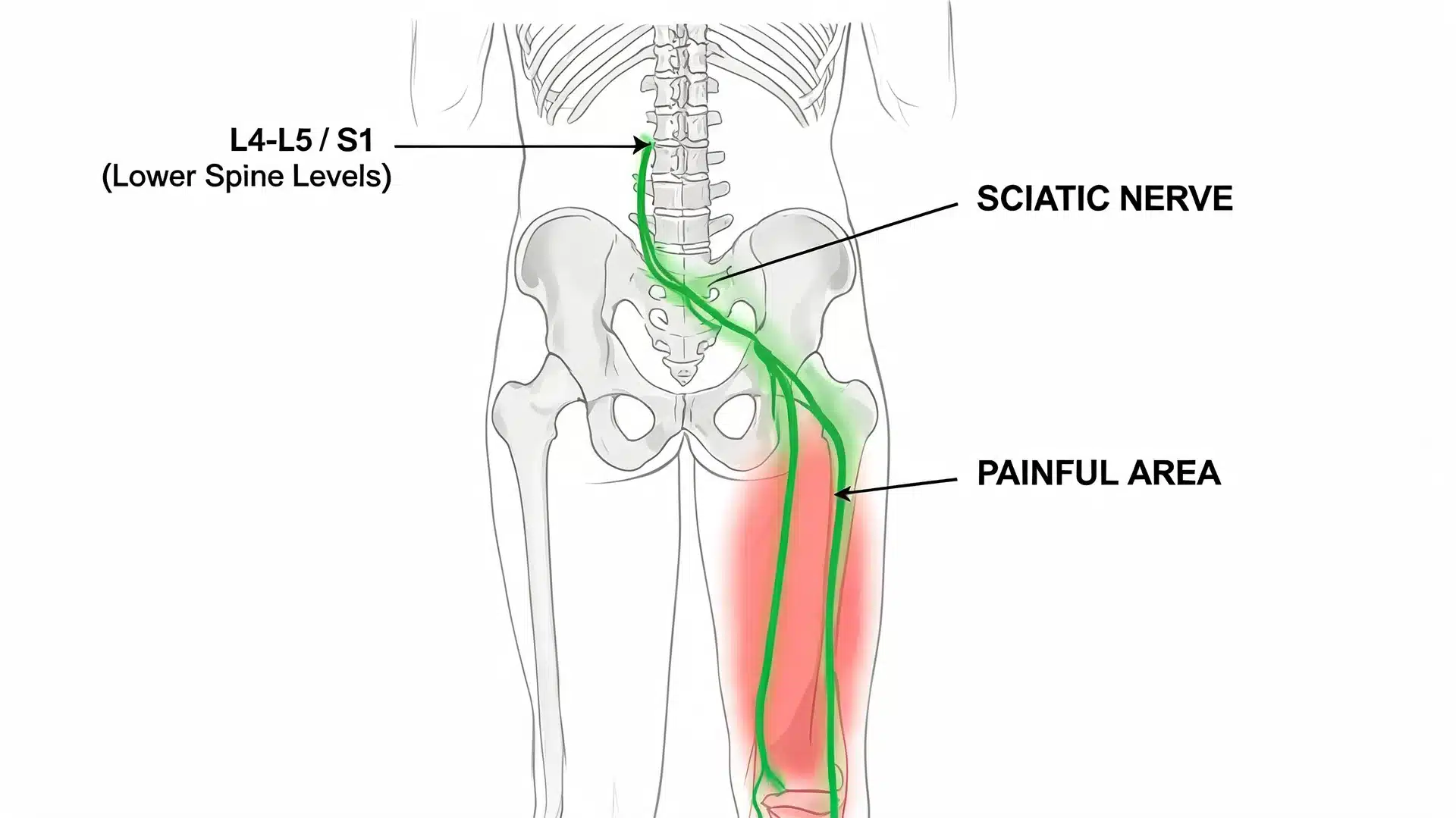
Sciatica is not a separate diagnosis from a disc issue. It is what happens when the disc problem irritates the sciatic nerve root at the L4-L5 level. The pain follows the nerve path: lower back to buttock to thigh to calf to foot. It can feel burning, electric, or shooting. Because the nerve itself is sensitized, aggressive stretching or pushing through pain almost always backfires.
Common symptoms: one-sided leg pain, burning or shooting sensation, tingling or numbness in the leg or foot, pain worse with sitting, weakness when lifting the foot or big toe.
| Clinical Note: A disc bulge typically responds to gentle mobility and progressive stability work. A herniated disc needs nerve-calming, extension-friendly movement first. Sciatica requires the most conservative approach — small, controlled exercises that reduce nerve tension rather than stretch through it. If you are unsure which applies to you, get a diagnosis before starting. |
Exercises for L4-L5 Disc Bulge Pain Relief
The goal with a disc bulge is to reduce pressure on the disc and build support around it. Start with two or three exercises and track how your body responds over the first 24 to 48 hours. Stop any move that sends pain down your leg or produces a sharp response in your lower back.
Exercise 1: Pelvic Tilts
Pelvic tilts are the starting point for most lumbar disc rehabilitation. They teach you to control your pelvis, reduce lumbar compression in the sitting position, and gently mobilize the lower spine without loading it.
Research on lumbar stabilization programs consistently includes this exercise in the foundational phase.
How to do it:
- Lie on your back with your knees bent and feet flat on the floor.
- Relax your shoulders and breathe steadily.
- Gently flatten your lower back into the floor by contracting your lower abdominals.
- Hold for one second, then release to a neutral spine.
- Keep the movement small and controlled.
Reps: 10 to 15 slow reps. Stop if: pain sharpens or spreads into your leg.
Exercise 2: Cat-Cow Stretch
Cat-cow moves the lumbar spine through gentle flexion and extension without any axial load. It reduces stiffness, improves segmental mobility, and helps normalize movement patterns that become guarded during a pain flare. The key is keeping the range small at first.
How to do it:
- Start on your hands and knees, hands under shoulders, knees under hips.
- Slowly round your back upward and let your head drop gently.
- Then lower your belly toward the floor and allow a soft arch.
- Move only as far as feels comfortable in both directions.
Reps: 8 to 10 slow reps. Stop if leg pain increases or either end of the movement feels sharp.
Exercise 3: Prone on Elbows
For disc-related pain that responds to extension, lying prone on the elbows shifts the load slightly toward the posterior disc and can reduce anterior nerve pressure.
McKenzie-based rehabilitation uses this position in the early phase for patients who centralize symptoms with extension. If this position moves your pain away from your leg and closer to your back, that is the response you are looking for.
How to do it:
- Lie on your stomach on a firm mat.
- Place your elbows under your shoulders.
- Prop your upper body gently, keeping hips and legs flat on the floor.
- Let your lower back settle into the position without forcing an arch.
- Breathe steadily and hold.
Duration: 30 to 60 seconds. Stop if: pain moves farther down your leg or numbness increases.
Exercise 4: Bird Dog
Bird dog is one of the most researched core stability exercises in lumbar rehabilitation. It activates the multifidus and transverse abdominis simultaneously without producing high disc compression.
A 2016 review in the Journal of Orthopedic and Sports Physical Therapy confirmed its role in lumbar stabilization. Start with small limb movements and prioritize level hips over height.
How to do it:
- Start on your hands and knees.
- Keep your back flat and gently engage your lower belly.
- Extend one arm forward and the opposite leg backward.
- Hold for one second with hips level, then return slowly.
- Repeat on the other side.
Reps: 6 to 10 on each side. Stop if: your back arches, twists, or starts to ache.
Exercise 5: Glute Bridge
Weak glutes are a consistent finding in patients with chronic lower back pain. When the gluteus maximus is underactive, the lumbar extensors compensate, increasing L4-L5 disc load during hip extension movements.
Glute bridges address this directly with low disc compression. The gluteus medius plays an equally important role in stabilizing the pelvis during this movement, if your hips drop to one side during the bridge, that is a sign the hip stabilizing muscles need separate attention. Keep the height modest and the squeeze deliberate.
How to do it:
- Lie on your back with knees bent, feet flat and hip-width apart.
- Relax your shoulders and arms.
- Squeeze your glutes gently, then lift your hips slowly.
- Pause at the top without arching your lower back.
- Lower with control.
Reps: 8 to 12 slow reps. Stop if: pain shifts into your lower back or travels down your leg.
Exercises for L4-L5 Herniated Disc Pain Relief
A herniated disc requires a more conservative starting point than a simple bulge. The disc material irritates the nerve chemically and mechanically, so the priority in the first phase is calming the area. These exercises should feel manageable, not challenging. If an exercise increases leg pain, back off immediately.
Exercise 6: Prone Lying
Prone lying is a passive position that reduces nerve tension for many people with acute herniated disc pain. It places the lumbar spine in a mild extension position, which can move disc material away from the posterior nerve roots. It is not an exercise in the traditional sense. It is a position you use to manage an acute flare before more active work is possible.
How to do it:
- Lie face down on a firm mat.
- Rest your arms beside you or near your head, whichever is comfortable.
- Place a pillow under your hips if lying completely flat causes discomfort.
- Breathe slowly and let your body relax into the surface.
Duration: 1 to 3 minutes. Stop if: leg pain worsens or tingling increases.
Exercise 7: Prone Press-Ups
Prone press-ups build on prone lying by adding gentle active extension. The goal is not a full push-up. Your hips stay on the floor throughout. The movement uses your arms to extend the upper lumbar segments slightly, which can help centralize symptoms in extension-responders. Move only within a completely pain-free range.
How to do it:
- Lie on your stomach with hands under your shoulders.
- Keep your hips and pelvis pressed to the floor.
- Press your chest up gently.
- Keep your lower body and legs relaxed.
- Pause briefly, then lower slowly.
Reps: 5 to 10 slow reps. Stop if: pain moves farther into your leg or sharpens.
Exercise 8: Standing Back Extensions
Standing back extensions are a practical option when getting to the floor is difficult, or when sitting and bending forward dominate your day and your symptoms respond better to extension. Keep the movement small and avoid throwing your head back. This is a gentle lumbar decompression, not a yoga pose.
How to do it:
- Stand with feet hip-width apart and hands supporting your lower back.
- Keep your knees slightly soft.
- Lean gently backward with your upper body.
- Return to standing slowly.
Reps: 5 to 8 slow reps. Stop if: sharp pain starts or leg pain increases.
Exercise 9: Modified Bird Dog
This version moves one leg at a time rather than the opposite arm and leg simultaneously. It reduces the rotational demand on the spine, making it more appropriate when the herniation is irritated and full bird dog creates too much muscular demand. It still activates the lumbar multifidus and challenges hip extension control.
How to do it:
- Start on your hands and knees, hands under shoulders, knees under hips.
- Gently engage your lower belly.
- Slowly extend one leg behind you, keeping hips level.
- Bring the leg back with control.
- Repeat on the other side.
Reps: 6 on each side. Stop if: you cannot hold back position, or lower back pain increases.
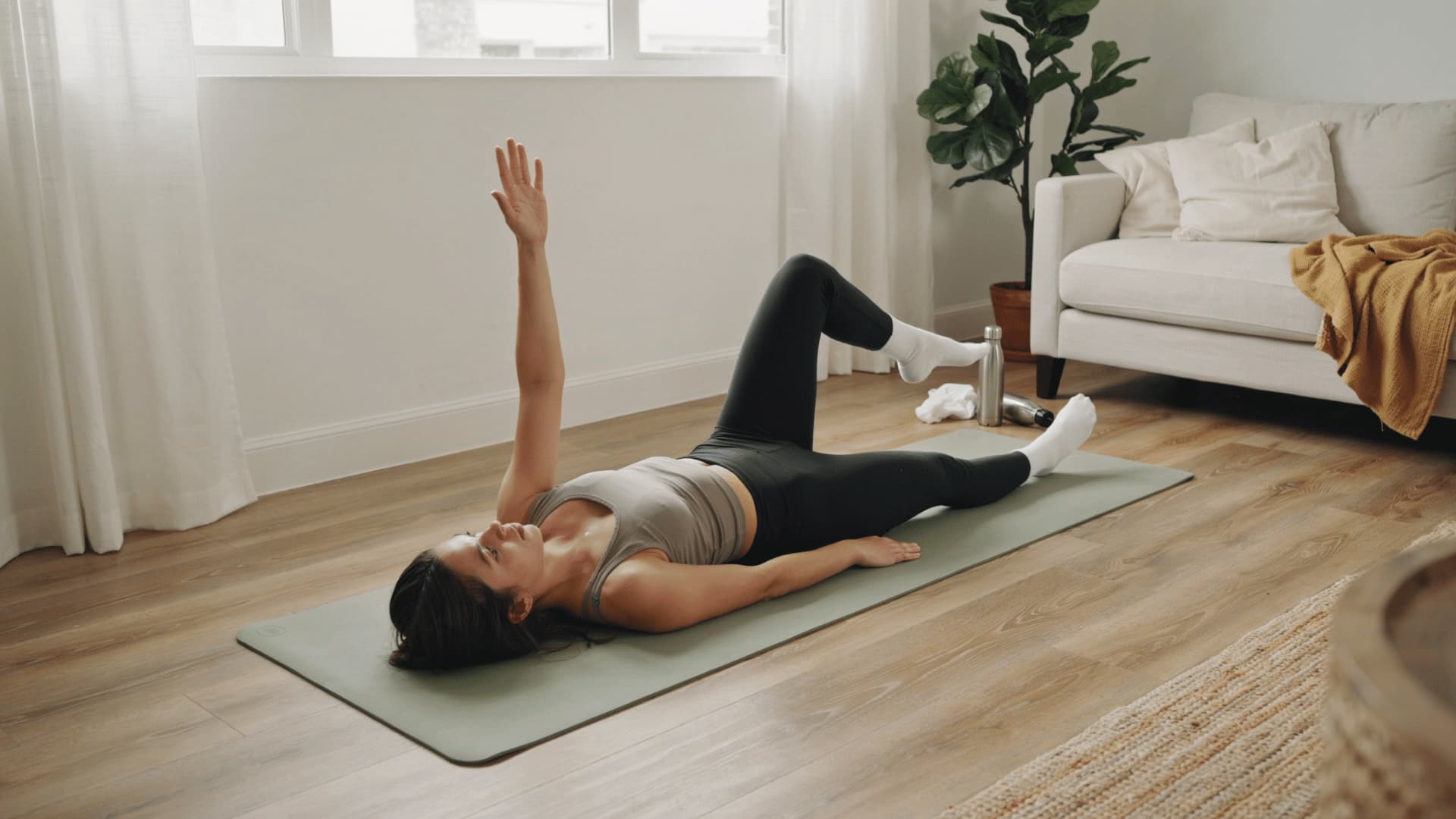
Exercise 10: Heel Slides
Heel slides activate the deep lower abdominal stabilizers without loading the spine. They are useful in the early phase of herniated disc rehabilitation when you need core engagement but cannot tolerate any axial loading. The movement should be slow enough that your back does not shift at all during the slide.
How to do it:
- Lie on your back with both knees bent, feet flat.
- Gently engage your lower belly.
- Slowly slide one heel away from your body until the leg is nearly straight.
- Slide it back slowly without losing back position.
- Repeat on the other side.
Reps: 8 on each side. Stop if: back pain increases or symptoms travel into your leg.
Best Exercises for L4-L5 Sciatica Pain Relief
Sciatica from L4-L5 requires the most conservative approach. The sciatic nerve is already sensitized, and aggressive stretching increases neural tension rather than reducing it. The goal is small, controlled movements that allow the nerve to move more freely, calm compression at the L4-L5 level, and maintain walking tolerance. For people whose sciatica responds well to movement, yoga poses for sciatica organized by symptom severity can complement the exercises below.
Exercise 11: Sciatic Nerve Glide
A nerve glide is not a stretch. It moves the nerve through its normal anatomical path to reduce adhesion and improve neural mobility. When the sciatic nerve is sensitized, static stretching that pulls the nerve to end-range actually increases mechanosensitivity. A glide keeps the movement within a comfortable range and uses momentum rather than sustained tension.
How to do it:
- Sit tall on a chair with both feet on the floor.
- Slowly straighten one knee and gently pull your toes toward you.
- Pause briefly, then return your foot back to the floor slowly.
- Keep your back upright and avoid slumping.
Reps: 8 to 10 on each side. Stop if: strong burning or shooting pain starts.
Exercise 12: Knee-to-Chest Stretch
Knee-to-chest reduces lumbar compression and can decompress the posterior elements of the L4-L5 segment. It is most useful when the lower back or glute feels tight between nerve glides, and when sciatica symptoms are in a calmer phase rather than an acute flare. Pull gently with your hands and stop at the first mild tension.
How to do it:
- Lie on your back with both knees bent.
- Bring one knee slowly toward your chest and hold it gently.
- Keep your shoulders relaxed.
- Lower slowly and repeat on the other side.
Duration: 15 to 20 seconds each side. Stop if: leg pain increases or moves farther down.
Exercise 13: Figure-4 Stretch
Tight piriformis and deep external rotators can compress the sciatic nerve in the hip, adding to the pain from the L4-L5 source. The figure-4 stretch addresses the piriformis specifically. Keep the range gentle and stop at the first mild hip or buttock sensation. This is not a stretch to push through.
How to do it:
- Lie on your back with both knees bent.
- Cross one ankle over the opposite knee.
- Hold the back of your thigh and gently draw it toward your chest.
- Stop at the first mild stretch and hold.
- Lower slowly and switch sides.
Duration: 15 to 30 seconds each side. Stop if: symptoms travel farther down the leg.
Exercise 14: Glute Bridge
Strong glutes reduce the demand on the lumbar extensors and help maintain hip positioning during walking, which directly affects sciatic nerve tension. People with chronic sciatica consistently show gluteus maximus inhibition on the affected side. Glute bridges address this without nerve loading.
How to do it:
- Lie on your back with knees bent and feet flat, hip-width apart.
- Squeeze your glutes and lift your hips slowly.
- Pause briefly at the top without arching your back.
- Lower with control.
Reps: 8 to 12 slow reps. Stop if: pain shoots into your leg or shifts to your lower back.
Exercise 15: Walking
Walking may be the most evidence-supported activity for lumbar disc conditions. It keeps the spine mobile without axial compression loading, improves disc hydration through cyclical loading and unloading, and reduces the movement avoidance that worsens deconditioning in chronic sciatica.
Understanding your cardio recovery rate can help you gauge whether your walking pace is appropriate without overtaxing the system. Start on flat ground and stop before symptoms escalate. Five to ten minutes of pain-free walking is more useful than a 30-minute walk that finishes in a flare.
How to do it:
- Walk on a flat surface at a relaxed, easy pace.
- Take shorter steps if longer strides trigger leg pain.
- Keep your shoulders loose and avoid leaning forward.
- Avoid hills until symptoms are more stable.
Duration: Start with 5 to 15 minutes. Stop if: pain worsens with each minute or travels farther down your leg.
How to Choose the Right L4-L5 Exercise for Your Symptoms
The symptom pattern matters more than the diagnosis name when selecting exercises. Use this table as a starting guide, and always stop any movement that sends pain farther down your leg.
| Symptoms | Start With | Avoid |
|---|---|---|
| Pain mostly in the lower back | Pelvic tilts, cat-cow, bird dog, glute bridge, walking | Heavy lifting, deep forward bending |
| Pain travels down the leg | Sciatic nerve glides, prone lying, prone on elbows, short walks | Aggressive hamstring stretches, toe touches |
| Sitting makes pain worse | Standing back extensions, walking breaks, prone on elbows, glute bridges | Long sitting without breaks |
| Bending forward makes pain worse | Gentle extension-based moves if symptoms centralize | Sit-ups, deep hamstring stretches |
| Arching back makes pain worse | Pelvic tilts, heel slides, bird dog, walking | Forced press-ups, deep back bends |
The right exercise should feel controlled and should not increase leg pain, numbness, or tingling. If symptoms feel worse the morning after a session, reduce the repetitions or choose a more conservative exercise from the same category.
Daily Habits That Support L4-L5 Pain Relief
Exercises work better when the rest of your day stops working against them. The L4-L5 disc is under load for most of your waking hours, so the way you sit, sleep, and move matters as much as any specific exercise.
Poor spinal alignment during long hours at a screen is a common driver of cumulative disc stress; the same forward head posture that strains the neck also shifts loading patterns down through the thoracic and lumbar spine.
- Support your lumbar curve when sitting: A small rolled towel or lumbar cushion helps maintain the inward curve at L4-L5, reducing posterior disc pressure.
- Stand every 30 minutes: Disc pressure is highest during prolonged sitting. Short breaks reduce accumulated load more than any single stretch.
- Avoid slumping: Slouching flattens the lumbar curve and increases posterior disc stress directly at L4-L5.
- Sleep with a pillow between your knees: Side sleeping with knee support reduces lumbar rotation overnight. On your back, a pillow under the knees decreases hip flexor tension on the spine.
- Lift with your legs: Keep weight close to your body, bend at the hips and knees, and avoid twisting while lifting. Twisting under load is one of the most consistent mechanisms of L4-L5 disc injury.
- Walk on flat ground: Hills and uneven terrain increase lateral loading on the lumbar spine before your symptoms are stable enough to handle it.
- Stop before symptoms escalate: The most common mistake in disc rehab is pushing through early warning signs. Stop any activity when leg pain or tingling starts to build.
7-Day L4-L5 Pain Relief Exercise Plan
This plan starts conservatively and adds load only when the previous phase has felt manageable. Do not advance to the next phase if symptoms are still spiking from the current one.
| Days | Focus | Exercises | Tip |
|---|---|---|---|
| Day 1 to 2 | Calm the area | Pelvic tilts, prone lying, short walking, deep breathing | Keep sessions under 10 minutes. The goal is zero symptom increase. |
| Day 3 to 4 | Add movement | Cat-cow, prone on elbows, sciatic nerve glides, glute bridge | Move slowly. Avoid end-range positions and forced stretching. |
| Day 5 to 7 | Add stability | Bird dog, heel slides, glute bridge, walking increased to 15 minutes | Control matters more than effort. Stop if the previous day’s exercises caused a next-morning flare. |
After day seven, keep the exercises that consistently feel helpful and drop the ones that trigger symptoms. Progress in disc rehabilitation is measured in weeks, not days.
When to See a Doctor or Physiotherapist

These exercises are appropriate for manageable symptoms. Some signs indicate that self-directed exercise is not enough, or that working through symptoms could cause harm.
Get evaluated promptly if you notice any of the following:
- Pain that has not improved after two to four weeks of regular, appropriate exercise
- Leg weakness that is getting worse
- Difficulty lifting the front of your foot (foot drop)
- Numbness in the groin or inner thigh
- Any change in bladder or bowel control — this is an emergency; seek care immediately
- Severe leg weakness
- Back pain that started after an injury
- Fever with back pain
- Symptoms that keep returning every few weeks despite doing the right exercises
A physiotherapist can assess your nerve tension, strength, reflexes, and movement patterns and provide a plan specific to your presentation rather than a general one. Most people with L4-L5 disc conditions improve with conservative care. About 90% of cases resolve without surgery when managed correctly.
Frequently Asked Questions
Is walking good for L4-L5 pain?
Yes, walking is one of the most consistently supported activities for lumbar disc conditions. It maintains spinal mobility, improves disc hydration through cyclical loading, and counters the deconditioning that worsens chronic back pain. The key is starting short: five to fifteen minutes on flat ground, stopping before symptoms build, and gradually increasing duration as tolerance improves.
How long does L4-L5 compression take to heal?
Mild disc bulges with only local back pain often improve within four to eight weeks with appropriate exercise and activity modification. Herniated discs with nerve involvement typically take three to six months. Sciatica from L4-L5 can resolve fully in the same window, though some cases take longer depending on nerve irritation severity. If symptoms are worsening after four weeks of correct management, get evaluated.
What are the first signs of L4-L5 compression?
Early signs are usually lower back stiffness or aching that gets worse after prolonged sitting, bending, or lifting. As compression develops, tingling or numbness can appear in the buttock, thigh, calf, or foot. Weakness when lifting the foot or big toe, or pain that travels down one leg, indicates the nerve is involved and warrants medical assessment before starting an exercise program.
What sleeping position helps L4-L5 pain?
Side sleeping with a pillow between the knees is generally the most comfortable position, as it reduces rotational stress on the lumbar spine. On your back, placing a pillow under the knees reduces hip flexor tension that pulls on the lower back. Avoid sleeping in any position where leg pain or tingling increases through the night.
Do L4-L5 disc issues affect the bowels?
Typically, no. L4 and L5 supply the legs and feet, not the bowel. However, severe compression of the cauda equina, the bundle of nerve roots below the spinal cord, can affect bladder and bowel control. If you experience any change in bladder or bowel function, groin numbness, or sudden severe leg weakness, seek emergency medical care immediately. This is cauda equina syndrome and requires urgent evaluation.
Final Thoughts
Managing L4-L5 disc pain is not about a single quick fix, but about how you move and support your spine every day.
The L4-L5 pain relief exercises you’ve seen here work by reducing disc pressure, calming nerve irritation, and building core and glute support for stability.
I want you to choose movements based on your symptoms, start small, and avoid anything that increases leg pain or tingling.
Consistency matters more than intensity, so simple walking, gentle stability work, and controlled mobility can make a real difference over time.
I encourage you to try the L4-L5 pain relief exercises, notice how your body responds, and adjust your routine as needed, then share what works for you.