







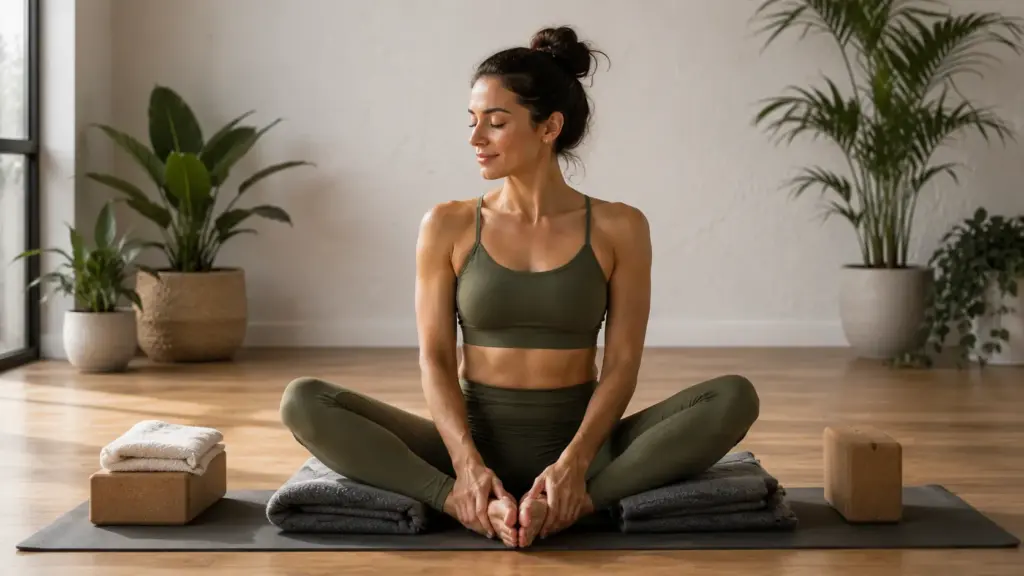
| Difficulty | Beginner to intermediate |
| Duration | 30 to 75 minutes per session |
| Props Needed | Mat, blanket, pillow, or bolster; blocks optional but helpful |
| Best Time | Evening for sleep and stress relief; morning for gentle mobility |
| Avoid If | Hypermobility, recent joint surgery, active nerve injury, or severe osteoporosis without medical guidance |
Most people try yin yoga expecting a gentle stretch class. What they actually get stops them in their tracks. You hold one pose for three to five minutes, barely move, and somehow leave feeling like a different person.
Yin yoga benefits have been building a serious following among runners, office workers, anxious sleepers, and people who thought yoga was not for them.
The practice is quiet and slow, but what it does to your connective tissue, nervous system, and mental state is anything but small.
If you have been curious about yin yoga but are not sure it is worth the time, here is exactly what the practice offers and how to use it well.
Why Yin Yoga Feels Different Than Other Styles
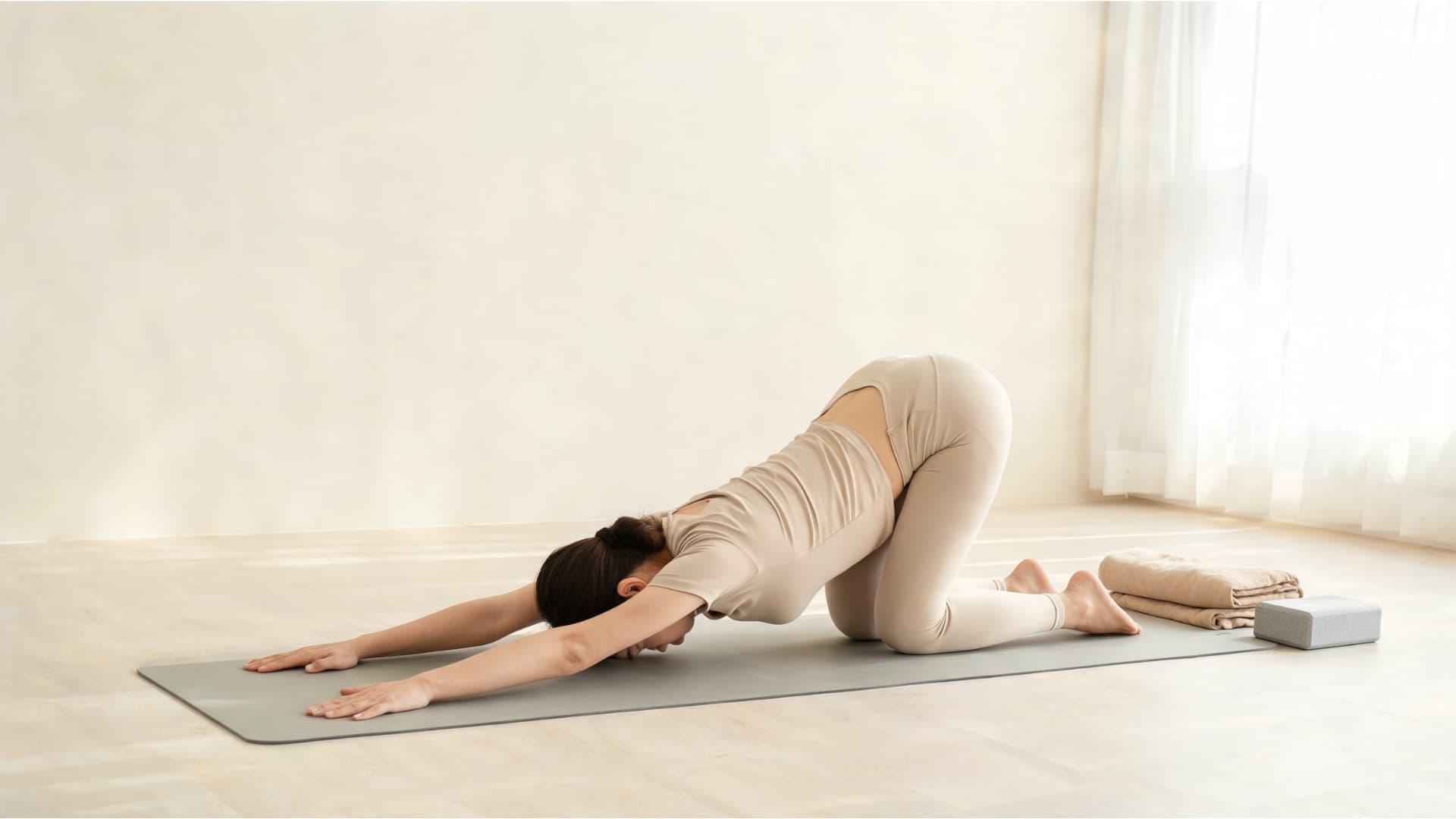
Most yoga styles focus on movement, strength, balance, or flow. Yin yoga slows everything down. By holding passive poses for 3 to 5 minutes , it works into fascia, ligaments, joints, and deep connective tissue .
This matters because muscles respond quickly, but connective tissue takes longer to soften. Yin yoga uses gentle, steady pressure instead of quick stretching or effort.
It also supports the nervous system. Long, quiet holds may help the body move toward a calmer state, where breathing slows, tension eases, and the stress response starts to settle.
That is why yin yoga can feel deeper than it looks. It is not just stretching. It is a practice of slowing down, listening to the body, and releasing tension without force.
Physical Benefits of Yin Yoga
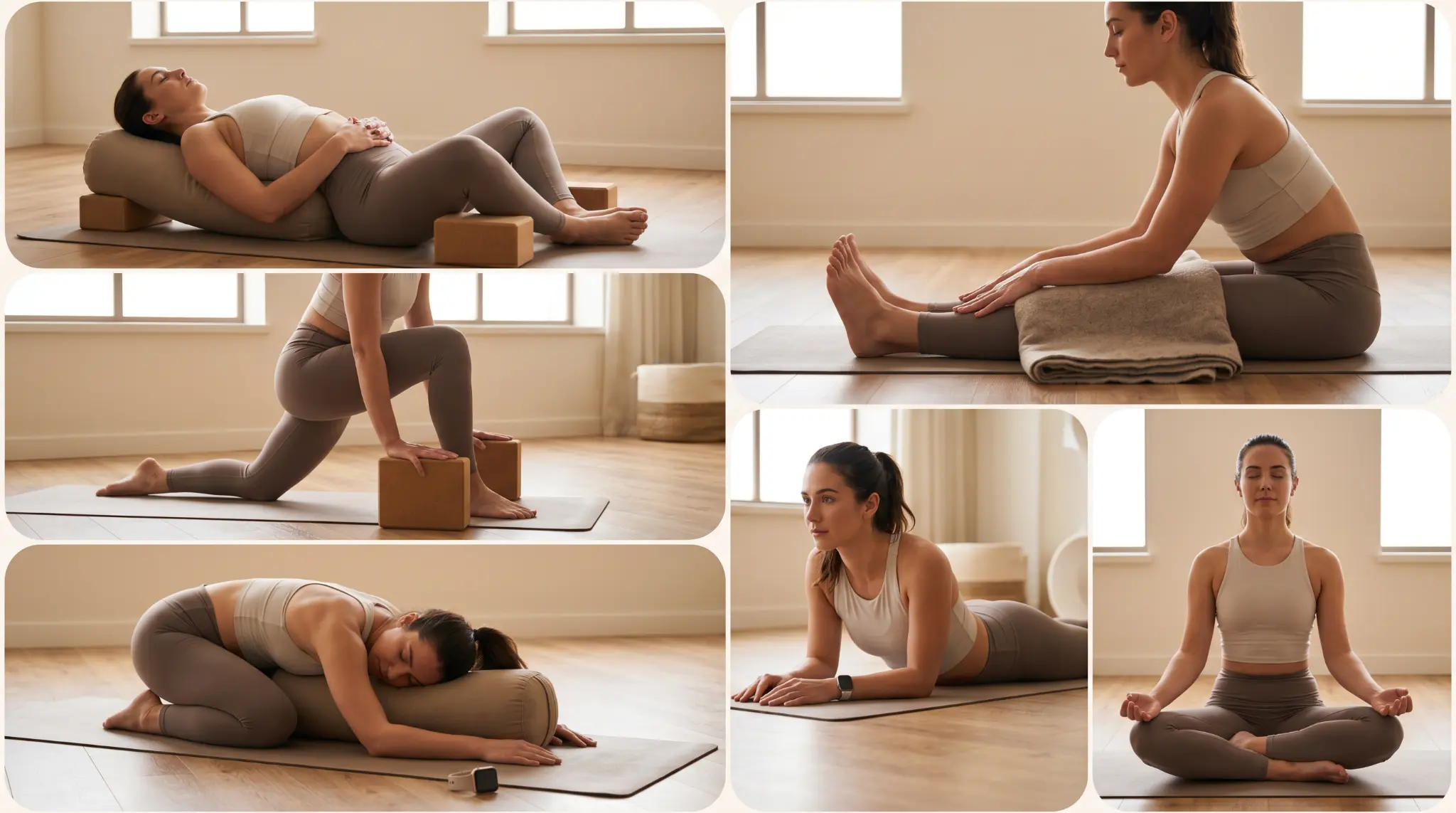
Yin yoga supports the body through slow, steady holds that give deeper tissues time to respond. Instead of chasing intensity, the practice helps you build flexibility, ease stiffness, support recovery, and notice where your body holds tension.
1. Deeper Flexibility
Yin yoga helps improve flexibility by holding poses long enough for the deeper tissues around your joints to respond. Instead of moving quickly in and out of a stretch, you stay in one shape for several minutes and give the body time to soften.
This can be especially helpful for tight hips, hamstrings, lower back, spine, shoulders, and inner thighs. These areas often become stiff from sitting, training, stress, or repeated movement patterns.
The key is not to force the stretch. Yin yoga works best when you find a mild edge, use support when needed, and let the body open slowly over time.
2. Fascia Release
Fascia is the continuous web of connective tissue that wraps every muscle, organ, and joint in the body. When it becomes dehydrated, compressed, or restricted from sitting, repetitive movement, or chronic tension, the result is a general feeling of heaviness and tightness that stretching alone rarely fixes.
Yin yoga’s sustained holds apply gentle compressive or tensile load directly into fascial layers.
Over time, this encourages better hydration of the tissue and a reduction in restrictions that make movement feel labored.
People who work desk jobs and people who train hard often notice the most immediate difference here, because both groups develop significant fascial restriction in the hips, thoracic spine, and shoulders.
3. Better Joint Mobility
Yin yoga works around joints rather than through muscles, which makes it one of the most effective practices for improving range of motion at the hip, spine, shoulder, and ankle.
The goal is not maximum depth. It is a gradual, safe expansion of the range available at each joint through consistent practice.
Improved joint mobility translates into everyday movement. Bending, twisting, reaching, and walking all feel easier when the connective tissue around your joints is hydrated and not chronically restricted.
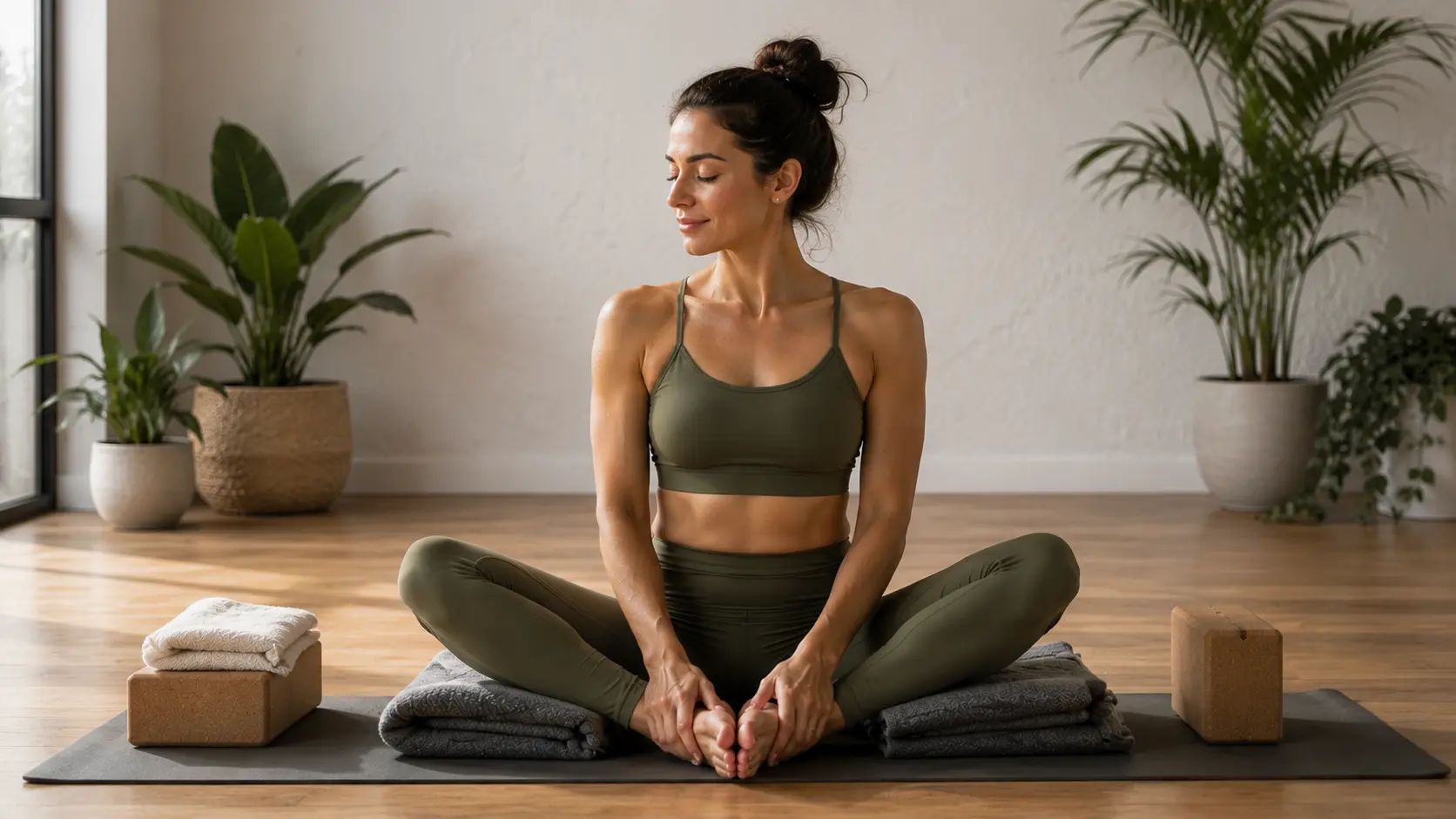
For anyone dealing with hip stiffness in particular, poses like dragon, sleeping swan, or supported butterfly deliver targeted joint work that active yoga styles do not replicate.
Adding targeted hip stretches on non-yin days can reinforce those mobility gains between sessions.
4. Recovery Support
Yin yoga is not cardio or strength training, but it can support recovery from harder workouts. Runners, lifters, cyclists, swimmers, and people who do fast yoga may find that yin helps the body unwind without adding more strain.
Because the practice is slow and low-impact, it can fit well on rest days or after active training. It gives tight areas time to release and helps the nervous system shift out of a high-effort state.
This is where yin yoga can be especially useful. It helps you keep moving well without feeling like every workout has to be intense.
5. Light Calorie Burn and Weight Support
Yin yoga does burn calories, but not many compared with active styles like vinyasa, power yoga, or hot yoga. Most people burn about 100 to 180 calories in a 60-minute yin yoga class.
Shorter sessions usually burn less:
- 20 minutes may burn around 35 to 60 calories.
- 30 minutes may burn around 50 to 90 calories.
- 45 minutes may burn around 75 to 135 calories.
- 60 minutes may burn around 100 to 180 calories.
These numbers are only estimates. Your actual calorie burn depends on body weight, class length, pace, and how much support you use with props.
Yin yoga is not the best choice for direct fat loss or visible muscle tone. For those goals, pair it with walking, cardio, active yoga, or strength training. Its bigger value is that it may support weight goals indirectly by helping with stress, sleep, recovery, and consistency.
6. Improved Posture and Body Awareness
Slow holds give you time to notice where you carry tension. You may start to feel tight shoulders, clenched hips, a stiff back, shallow breathing, or a tight jaw before those patterns build up.
That awareness matters. Once you notice how your body holds stress, you can respond sooner instead of waiting until the tension turns into pain or stiffness.
Over time, yin yoga can help you feel more connected to your body. You learn what tightness feels like, what safe discomfort feels like, and when your body needs support instead of more effort.
Mental and Emotional Benefits of Yin Yoga
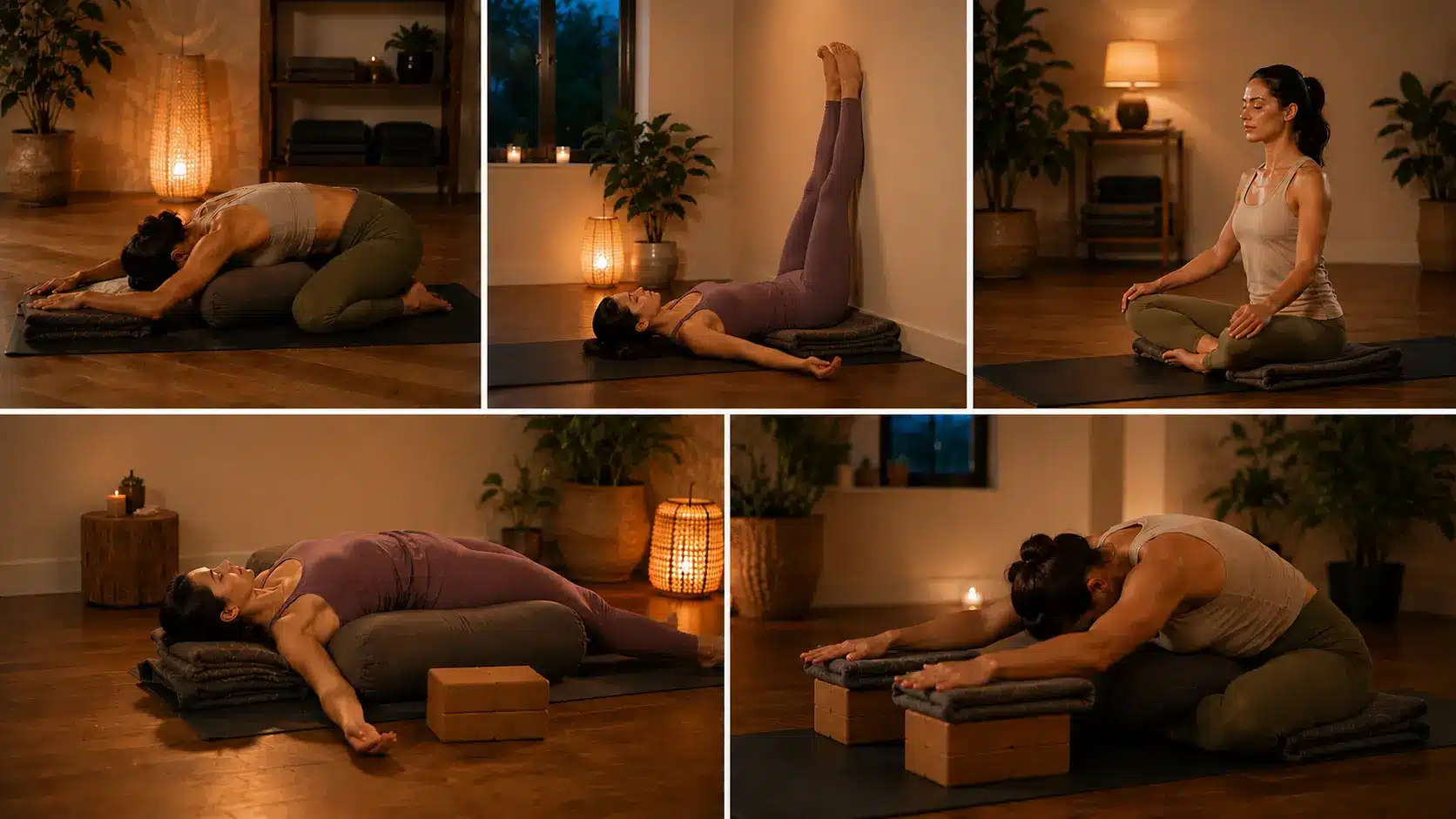
These mental and emotional benefits are what make yin yoga feel different from a regular stretch routine. The practice gives you space to slow down, breathe, and notice what your body and mind need before you push forward again.
1. Stress Relief Through Parasympathetic Activation
Yin yoga reliably produces a shift from sympathetic to parasympathetic nervous system dominance. In practical terms, that means your breathing deepens, your heart rate drops, your muscles release their resting tension, and the cortisol-driven alertness that most people carry through the day begins to quiet.
This is not relaxation by suggestion. It is a physiological response to long, slow, supported holds paired with deliberate breathing.
People who describe feeling restless or wired most of the time often find yin yoga the most effective tool they have encountered for resetting that baseline. Even a 20-minute evening session produces measurable nervous system calming for most practitioners.
2. Sleep Quality
Yin yoga as an evening practice consistently helps with sleep onset and sleep quality. The parasympathetic shift described above is exactly what the body needs in the 60 to 90 minutes before bed.
Poses like legs-up-the-wall, reclined butterfly, and child’s pose actively downregulate the nervous system and lower cortisol, making it easier to fall asleep and harder to wake in the middle of the night.
For people who struggle to mentally switch off at night, yin yoga provides a structured transition between the active day and sleep.
Even 15 to 20 minutes of quiet floor work is enough to signal the body that it is safe to slow down. Pairing this with easy beginner meditation poses at the end of a yin session creates a complete wind-down routine that genuinely affects sleep architecture.
3. A Quieter, Less Reactive Mind
Yin yoga can feel like meditation with support from the body. Instead of trying to clear your mind, you focus on breath, sensation, and stillness.
This makes it easier for many people who find seated meditation difficult. The pose gives your attention somewhere to land, while the stillness teaches you not to react to every feeling right away.
Over time, this can help you become less reactive and more aware of what is happening in your body and mind.
4. Emotional Release
Some people feel emotional during or after yin yoga, especially in long hip, chest, or shoulder openers. This does not happen to everyone, and it does not need to happen for the practice to work.
For some people, the stillness creates space to notice feelings that usually get pushed aside. A pose may bring up sadness, relief, frustration, or a sudden sense of calm.
The best approach is to keep the experience simple. You do not have to analyze it. Breathe, soften where you can, and come out of the pose if it feels too strong.
5. More Patience and Self-Trust
Yin yoga teaches you to stay with mild discomfort without forcing or rushing. That is a skill most people do not practice often.
You learn to ask: Is this a safe stretch? Do I need a prop? Am I pushing too hard? Can I stay calm here?
Over time, that builds self-trust. The practice becomes less about how deep you can go and more about how well you can listen to your body.
What People Say About Yin Yoga Online
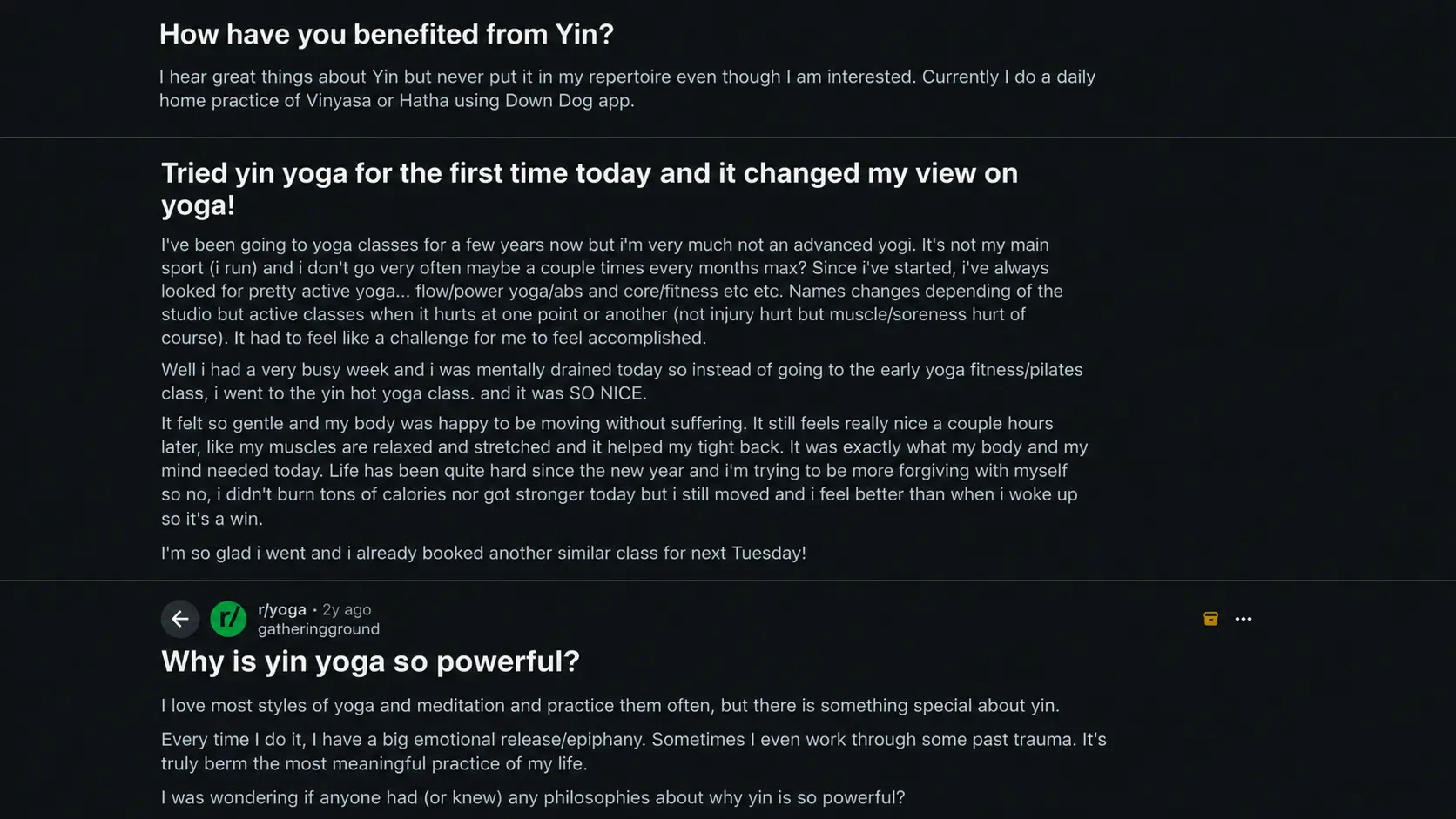
Online discussions show that many people value yin yoga for more than stretching. In a Reddit thread on how people have benefited from yin yoga , users mention better flexibility, deeper sleep, calmer breathing, and more patience.
Another Reddit discussion on why yin yoga feels so powerful focuses on the mental side. Many people describe yin as meditative because the long holds make them slow down and sit with discomfort instead of rushing through it.
A first-time experience shared on Reddit, “Tried yin yoga for the first time today”, also shows a common reaction: yin may not feel like a hard workout, but it can leave the body looser and the mind calmer.
A Mumsnet thread asking whether yin yoga has real benefits gives a more balanced view. Some people love it for stress, sleep, and flexibility, while others find it too slow.
That mix is helpful. Yin yoga is not for everyone, but people who enjoy it often keep coming back for flexibility, recovery, sleep, stress relief, and mental calm.
Yin Yoga vs. Other Yoga Styles
Understanding where yin yoga fits relative to other practices makes it much easier to use correctly. It is not a replacement for active yoga. It is a complement to it.
| Style | Primary Target | Best Use Case |
|---|---|---|
| Yin yoga | Fascia, ligaments, joints, connective tissue | Flexibility, recovery, stress relief, sleep |
| Restorative yoga | The full nervous system rests with props | Burnout, exhaustion, deep fatigue recovery |
| Hatha yoga | Basic posture, strength, and alignment | Beginners, general mobility, balanced practice |
| Vinyasa yoga | Muscular endurance, flow, and cardiovascular | Stamina, strength, active movement |
| Power yoga | Muscle activation, speed, calorie output | Calorie burn, strength building, sweat |
Yin yoga sits at the slow, connective-tissue end of the spectrum. It is not better or worse than more active styles. It fills a gap they leave.
If you practice vinyasa three times a week and never add yin, your muscles are trained, but your fascia and joints are not. Understanding how yoga timing around workouts affects outcomes can help you slot yin into a weekly routine without disrupting what is already working.
Who Can Benefit Most From Yin Yoga?
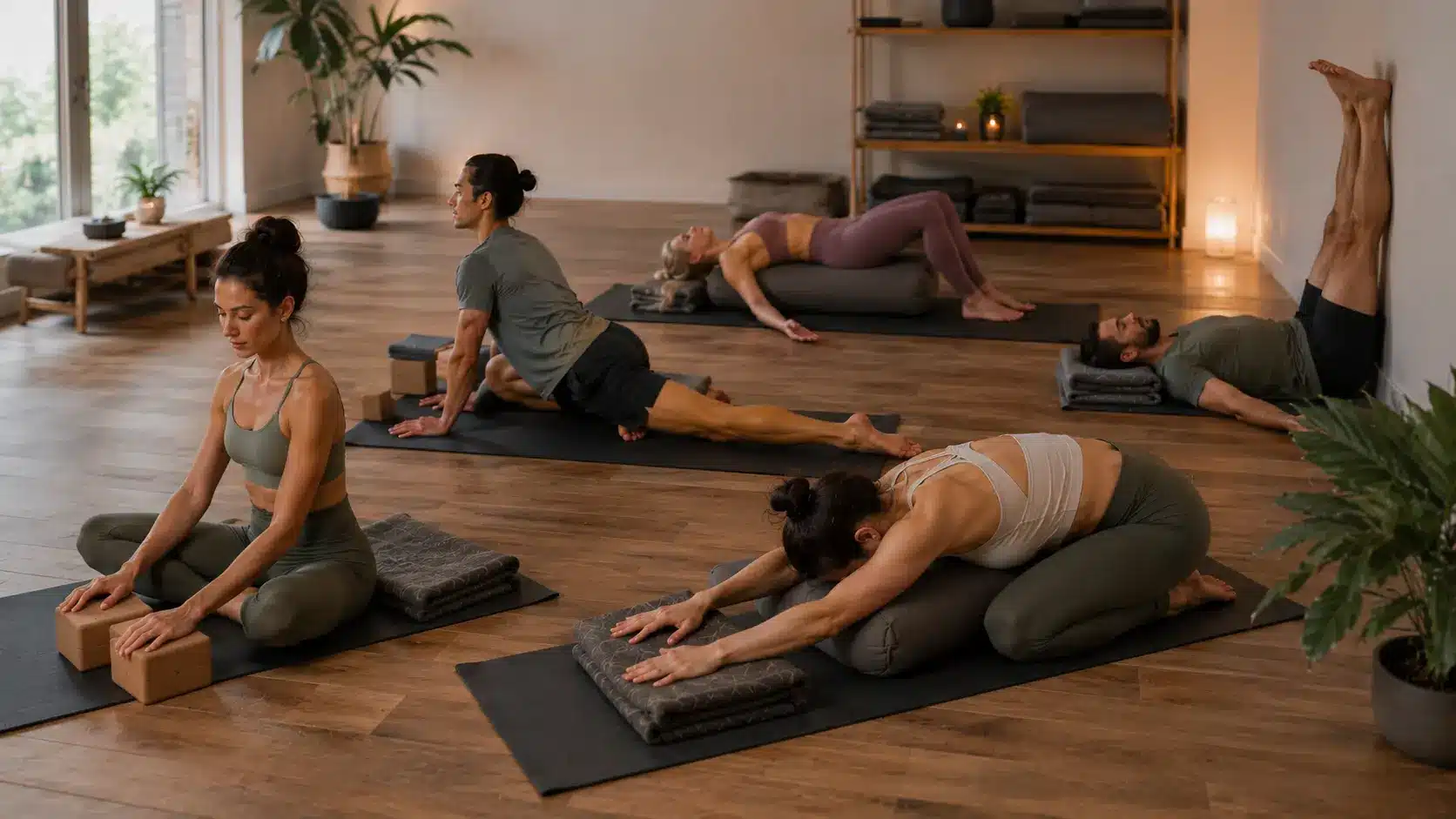
Yin yoga can work well for many people because it is slow, low-impact, and easy to modify with props.
- Beginners: The slow pace makes it easier to learn poses without rushing.
- Office workers: It can help ease tight hips, stiff backs, rounded shoulders, and screen-related tension.
- Athletes: It can support recovery from running, lifting, cycling, or fast-paced yoga.
- People with stress or poor sleep: The long holds and slow breathing can help the body settle.
- People who dislike intense yoga: Yin offers a quieter way to build flexibility and body awareness.
Yin yoga is especially useful for people who want a slower practice that supports flexibility, recovery, stress relief, and better body awareness without adding more pressure to the body.
How Often Should You Practice Yin Yoga
For most people, 1 to 3 yin yoga sessions per week are a good place to start. Even one weekly session can help if you stay consistent.
Daily yin yoga can be okay when the practice is gentle, but avoid pushing the same areas deeply every day. Rotate your focus between hips, spine, shoulders, hamstrings, and rest-based poses.
| Goal | How Often | Best Approach |
|---|---|---|
| Beginner routine | 1 session per week | Use props and keep holds shorter |
| Flexibility and stress relief | 2 to 3 sessions per week | Rotate focus areas each session |
| Active fitness support | 1 to 3 sessions per week | Pair with strength, walking, cycling, or active yoga |
| Daily gentle practice | 10 to 20 minutes most days | Keep it light and avoid deep holds in the same area daily |
The best routine is the one you can repeat without forcing it. Start small, notice how your body feels, and adjust your practice as your flexibility, recovery, and stress levels change.
Who Should Be Careful With Yin Yoga?
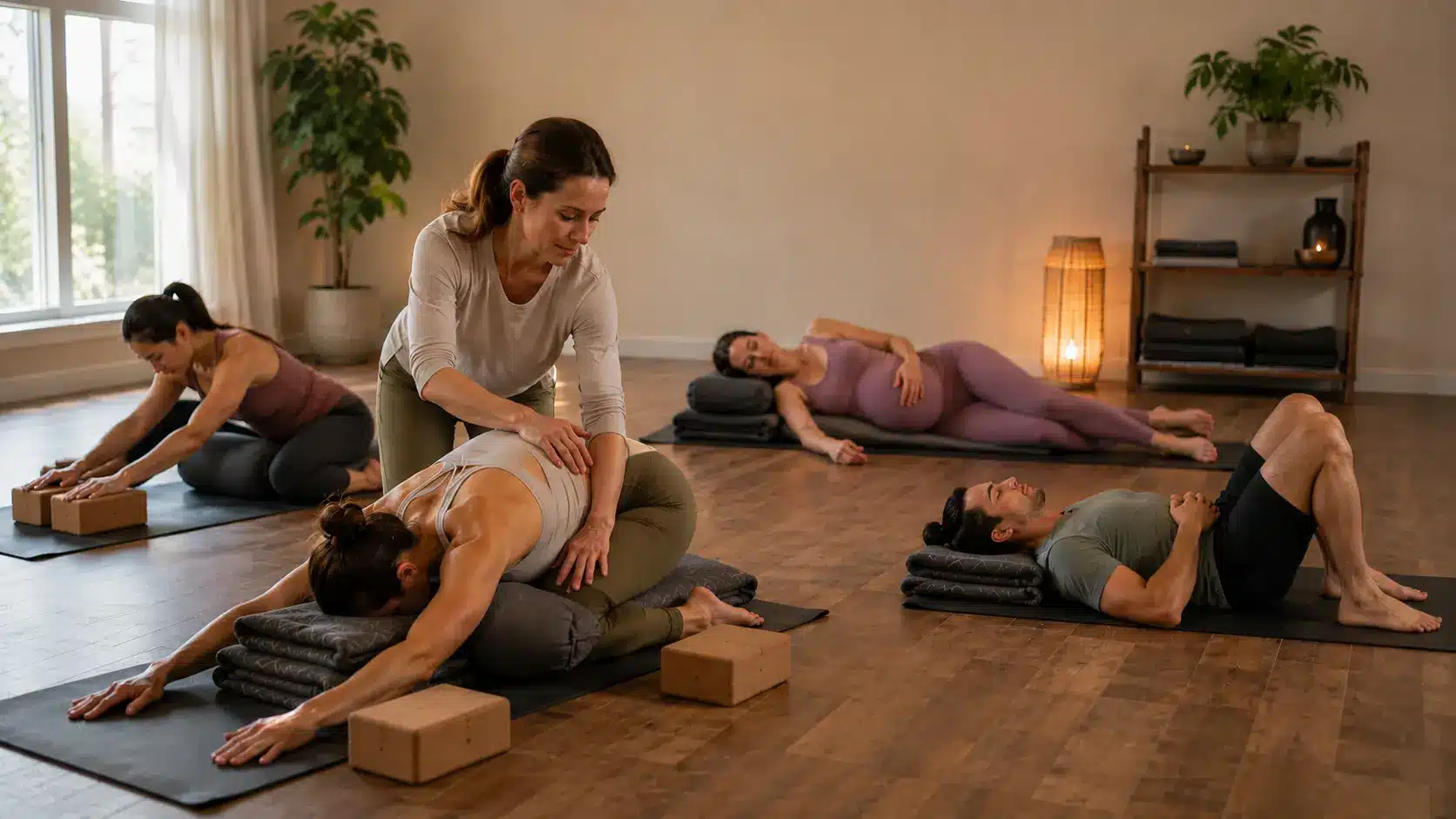
Yin yoga is gentle for most people, but it is not risk-free. Some people should modify poses or speak with a qualified provider before starting.
- People with hypermobility or Ehlers-Danlos syndrome: Avoid pushing into your full range. Focus on stability, support, and gentle holds.
- People with osteoporosis: Avoid deep forward folds and rounded spine positions. Choose poses that keep the spine long and supported.
- Pregnant people: Some poses may place pressure on the belly or stretch already-loose ligaments too much. Work with a prenatal-trained yoga teacher.
- People recovering from joint surgery or nerve injuries: Get medical guidance first. The right pose can help, but the wrong timing or angle can make symptoms worse.
- Anyone who feels sharp pain, tingling, or numbness: Stop right away. These signs may mean a nerve or joint is being irritated.
A safe yin yoga stretch should feel like mild pressure, a dull ache, or a gentle pull. It should not feel sharp, burning, electric, or painful.
Common Mistakes That Reduce the Benefits of Yin Yoga
Small mistakes can make yin yoga less helpful or even uncomfortable.
- Going too deep too fast: Let the body soften slowly instead of forcing the pose.
- Skipping props: Use blocks, pillows, bolsters, or blankets when a pose feels strained.
- Holding through pain: Yin yoga should create sensation, not sharp pain.
- Expecting instant results: Flexibility and fascia changes take consistent practice over weeks.
- Coming out of poses too quickly: Move slowly so your joints and tissues can adjust.
- Comparing yourself to others: Your range of motion does not need to look like anyone else’s.
- Using yin as your only workout: Yin supports flexibility, stress relief, and recovery, but it does not replace strength training, cardio, or active movement.
Frequently Asked Questions
Does Yin Yoga Burn Calories?
Yes, Yin yoga burns calories, but at a much lower rate than more active yoga styles. Because poses are held for several minutes with minimal movement, the calorie burn is modest.
Even so, Yin yoga supports overall wellness by reducing stress, improving flexibility, and encouraging recovery, all of which can contribute to a healthy lifestyle.
How long does it take to see results from yin yoga?
Nervous system and stress-related effects are often noticeable after a single session. Flexibility and connective tissue changes take consistent practice over six to twelve weeks. Joint mobility improvements are typically visible around the four-to-six-week mark for people practicing two or more times per week.
What props do you need for yin yoga?
A mat, one firm blanket, and two pillows cover most poses for most people. Yoga blocks and a bolster provide more precise support for tight hips, stiff knees, and restricted shoulders and are worth adding if you practice regularly.
Can yin yoga help with back pain?
Yin yoga can reduce back tightness from prolonged sitting and general stiffness effectively. Poses targeting the hip flexors, thoracic spine, and hamstrings often produce significant relief.
Avoid yin if you have sharp, shooting, or radiating back pain; that requires medical evaluation before adding any spinal loading. For specific structural issues, dedicated yoga stretches for back pain offer more targeted progressions.
Is yin yoga good for anxiety?
Yes. The parasympathetic activation produced by long passive holds and slow breathing directly counteracts the physiological state associated with anxiety. Regular practice trains the nervous system to access calmer states more readily, both on and off the mat.
Can you do yin yoga every day?
Daily yin yoga is safe when the practice stays gentle and you rotate focus areas rather than pushing the same joints deeply each day. Most people benefit from at least one or two full rest days per week regardless of practice type.
What is the best time of day for yin yoga?
Evening is the most effective time for stress relief and sleep improvement. Morning yin works well for gentle joint mobility before activity. The best time is the one you can commit to consistently, because regularity produces more benefit than timing optimization.
Does yin yoga count as exercise?
Yin yoga is a movement practice with measurable physical benefits, but it does not function as cardiovascular exercise or strength training. It burns modest calories and produces no meaningful muscular overload. Its value is in connective tissue health, flexibility, nervous system regulation, and recovery support.
Final Takeaway
Most people come to yin yoga for one thing tight hips, bad sleep, a stress they cannot shake and stay because it gives them something harder to name.
The yin yoga benefits that show up over months of practice can be easy to notice: better flexibility, a calmer nervous system, improved sleep, deeper recovery, and a body you understand more clearly.
You do not need to already be flexible, calm, or experienced. You need a mat, a little patience, and a few minutes of stillness.
Start with one session this week and pay attention to what shifts. Then come back and tell us what you noticed.