



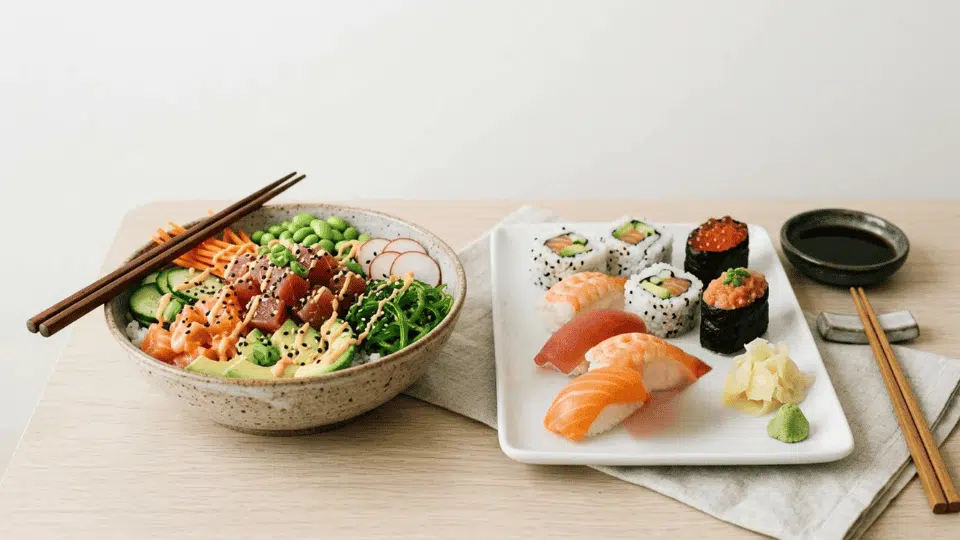









Raw fish has never been more popular; poke bowls and sushi have taken the food world by storm, appearing on menus everywhere from casual cafes to fine dining restaurants.
But as a dietitian, one question I get asked surprisingly often is: when it comes to poke vs sushi safety, which dish is actually safer to eat?
Both are undeniably delicious, but the caloric side of poke is equally worth understanding before your next meal.
This blog covers the key risks of eating raw fish, how restaurants handle safety behind the scenes, what makes these two dishes different, and the simple habits that keep every bite enjoyable. Let’s get into it.
Raw Fish in Poke and Sushi
Raw fish has been a cornerstone of both Hawaiian and Japanese cuisine for centuries. In poke, tuna and salmon are cubed and seasoned with soy sauce, sesame oil, and seaweed. In sushi, the same fish appears as nigiri, sashimi, or maki rolls.
Both dishes celebrate the fish’s natural flavour, a quality that cooking would simply diminish. Raw fish retains more omega-3 fatty acids, lean protein, and delicate flavour than its cooked counterpart.
Together, these two dishes have brought the tradition of eating raw fish to dining tables across the world, appreciated for both their taste and nutritional value. Today, poke bowls and sushi are among the most widely enjoyed dishes in both casual and fine dining settings.
Why Raw Fish Can Be Risky
As a dietitian, understanding the risks of consuming raw fish helps you make smarter, more informed choices every time you order.
- Parasites: Fish like tuna and salmon can carry Anisakis worms or tapeworms. Proper freezing usually eliminates these, but inconsistent handling leaves the risk open.
- Bacteria: Harmful bacteria, including Salmonella, Vibrio, and Listeria, can multiply rapidly when fish isn’t stored or handled at the proper temperatures.
- Toxins: Large fish like tuna gradually accumulate mercury, making frequent consumption concerning. Certain fish also carry ciguatera toxins that neither cooking nor freezing can remove.
- Cross-Contamination: Raw fish coming into contact with other ingredients, unwashed surfaces, or improper utensils can rapidly introduce harmful bacteria. Knowing your fish choices matters just as much as handling.
- Freshness: The older the fish, the higher the risk. Fish deteriorates quickly, and consuming fish past its prime significantly increases your chances of foodborne illness.
Raw fish can absolutely be enjoyed safely; knowing these risks simply helps you choose wisely and eat with confidence.
Poke vs Sushi Safety: Which One Is Riskier?
Both poke and sushi feature raw fish, so understanding their safety differences is something I always encourage before choosing between them.
| Poke | Sushi | |
|---|---|---|
| Preparation | Fish is marinated and may sit longer, increasing the bacterial growth risk | Fish is sliced fresh and served quickly, reducing exposure time |
| Contamination Risk | Cubed fish contacts more ingredients, raising cross-contamination chances | Sushi chefs are trained in careful, precise fish handling |
| Fish Handling | Handling standards can vary depending on the restaurant or supplier | Sushi-grade fish often undergoes strict freezing procedures to eliminate parasites |
| Overall Risk | Moderate if not handled and stored correctly | Lower when prepared by trained professionals using quality fish |
Ultimately, both dishes carry similar risks when poorly prepared; proper sourcing, freezing, and storage are the real deciding factors for safety.
How Restaurants Make Raw Fish Safer
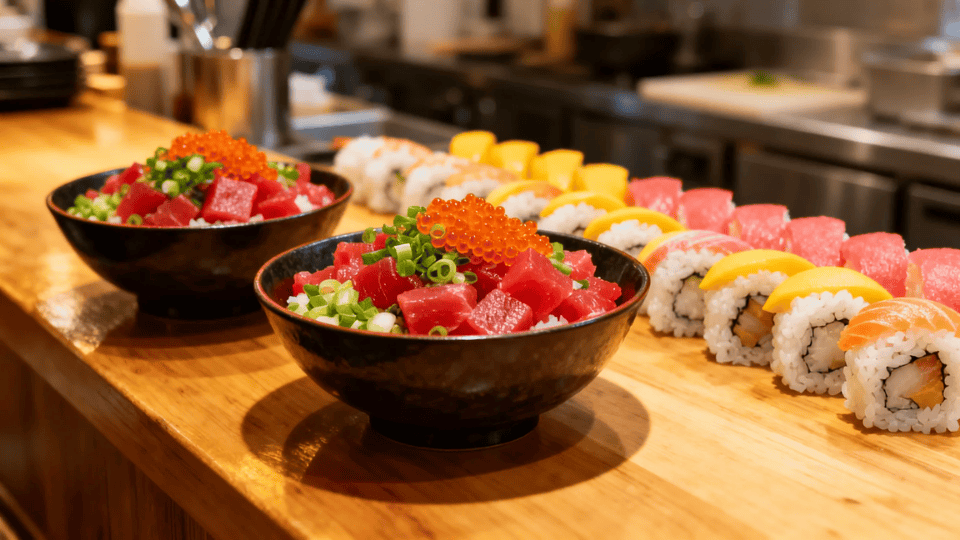
Reputable restaurants follow strict safety protocols to make raw fish as safe as possible, and knowing these steps genuinely helps you make better dining choices.
The FDA recommends freezing fish intended for raw consumption to −20°F (−29°C) for at least seven days, which effectively eliminates harmful parasites.
You may also notice fish labelled as sushi-grade on menus, meaning it has been deemed suitable for raw consumption; however, as a dietitian, I always remind people that this label alone doesn’t guarantee complete safety, as freshness and handling still play a huge role.
Proper cold storage is equally critical, as fish must remain below 40°F (4°C) throughout transport, storage, and preparation to prevent dangerous bacterial growth at every stage.
Tips for Eating Poke or Sushi Safely
Enjoying raw fish safely really comes down to a few mindful habits. These simple tips make a genuine difference every single time.
- Choose reputable restaurants: Maintain high hygiene standards and clearly prioritise the use of fresh, high-quality fish.
- Avoid raw seafood buffets: Fish sits out for extended periods, significantly increasing the risk of bacterial growth.
- Eat promptly after preparation: Raw fish sitting at room temperature for too long becomes a food safety concern quickly.
- Trust your senses: Fresh fish should always smell clean and have a firm, appealing texture.
- Refrigerate leftovers immediately: Rather than leaving them out, as bacteria multiply rapidly at room temperature.
As a dietitian, following these straightforward habits means you can confidently enjoy both poke and sushi without unnecessary worry.
Final Thoughts
When it comes to poke vs sushi safety, both dishes carry similar risks that largely come down to how carefully the fish is handled, stored, and prepared.
Throughout this blog, we have covered everything from parasites and bacteria to how reputable restaurants take extra precautions to keep things safe.
As a dietitian, my biggest takeaway is simple, knowledge is your best tool at the dinner table. Fresh ingredients, proper freezing, and choosing the right restaurant make all the difference.
If you fall into a higher-risk group, avoiding raw fish altogether is always a sensible choice. Have thoughts or questions about raw fish safety? Drop them in the comments below, I would love to hear from you.