













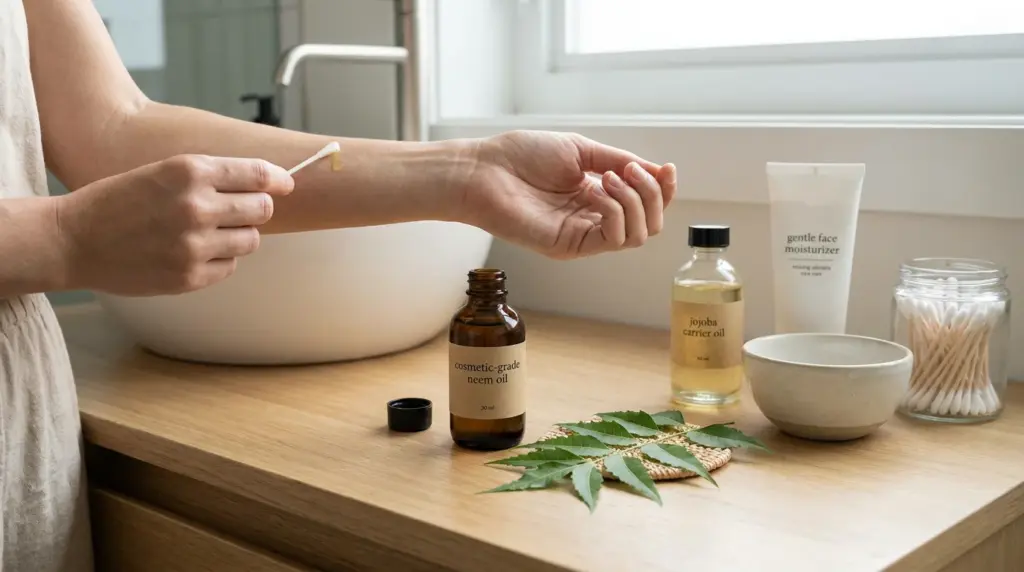

Neem oil’s main active compound, azadirachtin, is well studied as an insecticide, but the fatty acids in cold-pressed neem oil, particularly oleic acid and linoleic acid, are what make it worth considering for mild skin concerns.
Whether it lives up to the hype circulating in every skincare video right now depends a great deal on how you use it, and on what you are actually trying to treat.
I have spent years looking at herbs through the lens of what they actually contain and what the evidence says. Neem oil is one of those plant-based ingredients that has real properties worth knowing, and real limits people consistently overlook. Here is the honest breakdown.
| Common Name | Scientific Name | Active Compounds | Traditional Use | Evidence Level |
| Neem | Azadirachta indica | Azadirachtin, oleic acid, linoleic acid, nimbidin, nimbin | Ayurvedic skin care, wound support, and anti-inflammatory topical use | Preliminary (topical use); stronger evidence for agricultural applications |
The profile above sets the right expectations before you buy anything. Cosmetic-grade neem oil pressed from neem seeds is what you want for skin. Garden-grade neem oil is a different product formulated for pest control; it does not belong on your face.
This article is for informational purposes only and does not constitute medical advice, diagnosis, or treatment. The information provided is not a substitute for professional medical consultation. If you have a medical condition, are pregnant, or are taking medications, consult your healthcare provider before making any changes to your skincare routine. Individual results vary.
Neem Oil Benefits for Skin: What It May Actually Do
If you have been reading about neem oil benefits for skin and finding a mix of big claims and vague ones, that reflects where the research actually sits. The evidence for topical neem oil is preliminary.
That does not mean it is useless; it means you need to understand the specific, limited ways it may help before deciding whether to add it to your routine.
1. Support for Mild Acne-Prone Skin
The nimbidin and nimbin compounds in neem oil have demonstrated antimicrobial activity in laboratory settings, which is the basis for its use on acne-prone skin.
Diluted and applied as a spot treatment, not spread across the whole face, it may help calm mild surface-level breakouts. Cystic acne, hormonal breakouts, and deep pimples are beyond what any plant oil can realistically address.
If that is what you are dealing with, a dermatologist visit will get you further faster than months of natural remedies.
| Safety Note: Neem oil is not a treatment for infected skin, spreading rashes, or active eczema flares. Using it on broken or infected skin can delay proper medical care and make things worse. If your skin is warm to the touch, oozing, or spreading, see a dermatologist rather than trying a home remedy first. |
2. Softening Dry and Rough Skin
Oleic acid and linoleic acid, two of neem oil’s main fatty acids, are emollients. They work by sitting on the surface of the skin and reducing moisture loss from the outer layer.
Over time, consistent diluted use may soften dry or rough patches, particularly on the body where skin tends to be less reactive than the face. This is not dramatically different from what other fatty-acid-rich oils do; neem just adds the antimicrobial component on top.
3. Mild Support for Reactive Skin
Some people with mildly stressed or reactive skin find neem oil helpful when used sparingly alongside a plain moisturizer.
The anti-inflammatory properties attributed to nimbidin are the likely mechanism, though human clinical trials on this specific use are limited. Pairing it with a gentle, fragrance-free moisturizer rather than using it alone tends to produce better results for this skin type.
That said, if your skin reacts frequently to plant-based oils, neem oil is not a safe assumption. It is potent enough that sensitive skin may react to it even when diluted correctly.
How to Use Neem Oil for Skin Safely
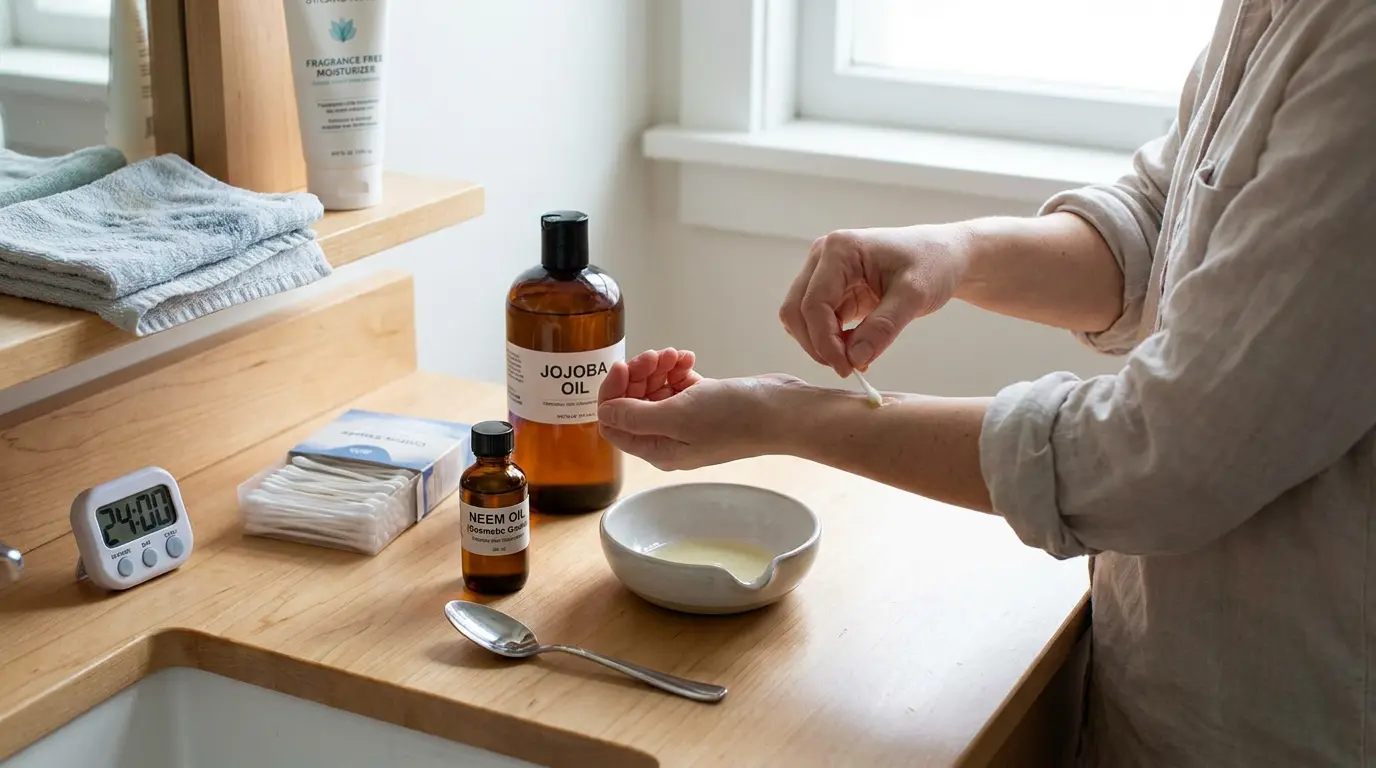
The preparation and application method matter more with neem oil than with most plant oils. It is heavy, concentrated, and has a strong earthy smell that catches people off guard.
Using it without the right approach is the fastest route to irritation, which is why most bad experiences with neem oil come down to skipping one of the steps below.
Step 1: Always Dilute First
Neem oil should never be applied directly to the skin. Mix 1 drop of neem oil into 1 teaspoon of a carrier oil before it touches your face or body.
The best carrier oils for this purpose are jojoba, sunflower, and grapeseed, all lightweight, non-comedogenic options that work well with neem’s heavier consistency. If you have a nut allergy, avoid almond oil as a carrier.
Jojoba tends to be the most forgiving starting point because it mimics the skin’s natural sebum, absorbs without greasiness, and pairs well with most carrier oils for sensitive skin.
Step 2: Patch Test, Not Optional
Apply the diluted mixture to your inner arm and wait a full 24 hours before putting it anywhere near your face. Redness, itching, burning, bumps, or swelling mean stop; your skin is telling you this ingredient is not a good fit.
Skipping this step and going straight to your face is the single most common reason people end up with an unexpected reaction.
Step 3: Start Small and Build Slowly
Once the patch test clears, apply it to one small area of the face first rather than going all over. Leave it on for 20 to 30 minutes, then rinse with lukewarm water. Use the timeline below to build frequency without overwhelming your skin:
| Timeline | How to Use It | What to Watch |
|---|---|---|
| Week 1 | Patch test on the inner arm only | Redness, itching, burning |
| Week 2 | Apply once to a small area of the face | Dryness, bumps, soreness |
| Week 3 | Use 1 to 2 times if the skin stays calm | Delayed irritation |
| Week 4 onward | Maintain the lowest helpful frequency | Stop immediately if irritation starts |
Do not use neem oil on the same night as retinol, benzoyl peroxide, strong acids, or physical scrubs. The combination is more likely to irritate than help.
Neem Oil by Skin Type: Matching the Approach to Your Skin
The same oil can feel genuinely supportive for one person and completely wrong for another.
Skin type changes, which application method makes sense, and how often you should use it. Use this table as a starting point, but your skin’s actual response is always the better guide:
| Skin Type | Best Use | How Often | Main Caution |
|---|---|---|---|
| Acne-prone | Diluted spot treatment on small areas only | 1 to 2 times weekly | Avoid full-face application |
| Dry | A small amount mixed into a plain, gentle moisturizer | 1 to 2 times weekly | Do not apply to cracked or bleeding skin |
| Oily | Small targeted areas where skin tolerates heavier oils | Once weekly to start | May feel greasy or clog pores |
| Sensitive | Very weak dilution, patch test only before any facial use | Patch test first; proceed cautiously | Skin may react even to diluted amounts |
| Eczema-prone | Consult a dermatologist before adding to your routine | Only if approved by a provider | Avoid during active flares entirely |
If you have eczema-prone skin and are looking for natural options, calendula and colloidal oatmeal tend to have a gentler track record than heavier oils. Both are among the gentler herbs for eczema precisely because they calm rather than occlude.
Neem Oil Side Effects, Risks, and Who Should Avoid It

Neem oil’s potency is exactly what makes it interesting, and exactly what makes it worth approaching carefully. Most side effects occur when it is used undiluted, applied too frequently, or used on already-irritated skin.
Signs to Watch for After Applying
- Redness, stinging, or itching shortly after application
- Dryness, tight feeling, or new small bumps on the skin
- Rash, hives, or visible swelling in the application area
These signs mean stop use immediately. They are not something to push through and see if the skin adjusts.
Who Should Avoid Neem Oil or Check with a Doctor First
- Babies, young children, and anyone who is pregnant or breastfeeding
- Anyone with a known neem allergy or frequent reactions to plant-based oils
- People with open wounds, infected rashes, or severe eczema flares
- Anyone currently using prescription skin creams or topical medications
Stop Use Immediately If You Notice
- Burning, swelling, hives, or blistering on the skin
- A rash that spreads beyond where you applied it
- Eye irritation, unusual skin warmth, or pain that persists for more than a day or two
| Important: Neem oil is for external use only. It should never be swallowed under any circumstances. Ingestion of neem oil has been associated with serious adverse effects, particularly in children. |
How to Choose and Pair Neem Oil in Your Skincare Routine
Sourcing and pairing matter more with neem oil than with gentler plant oils because its potency changes significantly depending on the grade and production method.
A few things worth checking before you buy:
| Area | What to Do | What to Avoid |
|---|---|---|
| Neem oil type | Choose cosmetic-grade neem oil only | Never use garden-grade neem oil on your face |
| Oil quality | Look for cold-pressed oils with minimal added ingredients | Avoid added fragrance if your skin is sensitive |
| Storage | Keep in a cool, dark place | Do not use oil that smells rancid |
| Safe pairing | Mix with a plain carrier oil or unfragranced moisturizer | Do not layer multiple new products at once |
| Strong actives | Use retinol, acids, and vitamin C on separate nights | Do not combine these with neem oil |
| Harsh products | Keep the rest of your routine simple and gentle | Avoid scrubs, essential oil mixes, and fragranced creams on the same day |
If your skin does not tolerate heavier oils, cold-pressed rosehip is worth looking at instead. It carries a lighter fatty acid profile and works well as a facial oil for acne-prone skin that finds neem too occlusive.
Common Mistakes That Lead to Bad Results With Neem Oil
Most frustrating experiences with neem oil are preventable. These are the four mistakes I see most consistently:
- Skipping dilution: Applying neem oil straight to skin is the fastest route to redness and irritation. It is potent enough that even a small amount undiluted can overwhelm sensitive or dry skin.
- Bypassing the patch test: Without it, you have no advance warning of how your skin will react. The test takes 24 hours, and almost no effort; the face recovery from a bad reaction takes considerably longer.
- Starting with daily use: Building frequency too quickly overloads the skin before it has had time to adapt. Starting slow is not about being cautious; it is about getting results without triggering irritation.
- Using garden-grade instead of cosmetic-grade: These are different products with different formulations. Garden neem oil is not made for skin contact. Always check the label before buying.
| Note: Neem’s traditional Ayurvedic use extended well beyond oil; neem leaf in Ayurveda has its own history in skin and blood-purifying preparations that are distinct from what the cold-pressed seed oil does, and the two are not interchangeable. |
Frequently Asked Questions About Neem Oil for Skin
Can Neem Oil Clog Pores?
It can, particularly for oily and acne-prone skin. Neem oil is a heavy, thick oil, and using it all over the face rather than as a targeted spot treatment significantly increases the risk of clogged pores and greasy buildup. Start with spot use only, and stop if you notice more congestion within the first two weeks.
Can You Use Neem Oil on Your Face Every Day?
Not initially. Daily use before your skin has adjusted is a reliable way to cause irritation rather than improvement. Most people who see positive results use neem oil one to two times per week, long-term. Daily use is not necessary for the oil to be effective.
Does Neem Oil Help With Acne Scars?
Probably not in any meaningful way. Neem oil’s fatty acids may soften the skin’s surface texture over time, but deep acne scarring and post-inflammatory hyperpigmentation require targeted clinical treatments, vitamin C serums, retinoids, or in-office procedures, not plant oils. Rosehip oil, which contains natural retinoids, has a stronger case for scar support than neem oil does.
Can Neem Oil Be Used on the Scalp?
Yes, in diluted form. Apply to a small area of scalp first, leave on briefly, then rinse thoroughly. Avoid using it on broken, bleeding, or infected scalp skin. The strong smell can linger, so rinsing well matters.
Is Neem Oil Safe During Pregnancy?
Topical use during pregnancy has not been well studied. Out of caution, pregnant and breastfeeding people should consult a healthcare provider before using neem oil in any form.
Can You Leave Neem Oil on Overnight?
I would not recommend it, especially during the initial weeks. Leaving a potent oil on overnight increases the exposure time before your skin has established a baseline tolerance. Starting with a 20 to 30-minute application and rinsing off gives you better control over how your skin responds.
Final Verdict
My verdict on neem oil for skin: worth trying if you are dealing with mild acne-prone or dry skin and want a plant-based option, with the specific conditions that you always dilute it (1 drop to 1 teaspoon of carrier oil), always patch test first, and never skip the slow build-up period.
The nimbidin and oleic acid content give it a reasonable mechanism for the mild benefits it is associated with.
But skip it if your skin is sensitive, reactive, eczema-prone, or dealing with anything infected or spreading, neem oil has no useful role there, and using it risks delaying treatment that would actually help.
If you want to start somewhere, try a 1-drop dilution in jojoba oil applied as a once-weekly spot treatment for two weeks, and let your skin tell you the rest.
Sources
National Center for Biotechnology Information, “Pharmacological activities of Azadirachta indica (neem).” PubMed. https://pubmed.ncbi.nlm.nih.gov/
American Botanical Council, Neem monograph references. https://abc.herbalgram.org/
National Library of Medicine, “Nimbidin: Anti-inflammatory properties.” https://www.ncbi.nlm.nih.gov/pmc/