











Is aloe vera good for your face, or is it just hype? With so many face gels, creams, and masks on store shelves, it is easy to feel overwhelmed by the options.
Your face is not the place to guess, especially if you deal with unexpected dryness, redness, or shaving irritation. I want to help you make sense of this popular plant.
You will learn exactly what aloe gel does, when it can irritate your skin, and how to choose a gentle product.
By the end, you will know where aloe fits into your routine so you can make confident skincare choices without any second-guessing.
Disclaimer: This article is for informational and educational purposes only. It does not constitute medical advice and should not replace consultation with a qualified healthcare provider. Always consult a doctor before making changes to your skincare routine, especially if you have a diagnosed skin condition, are pregnant, or are taking medications.
Understanding Aloe Vera
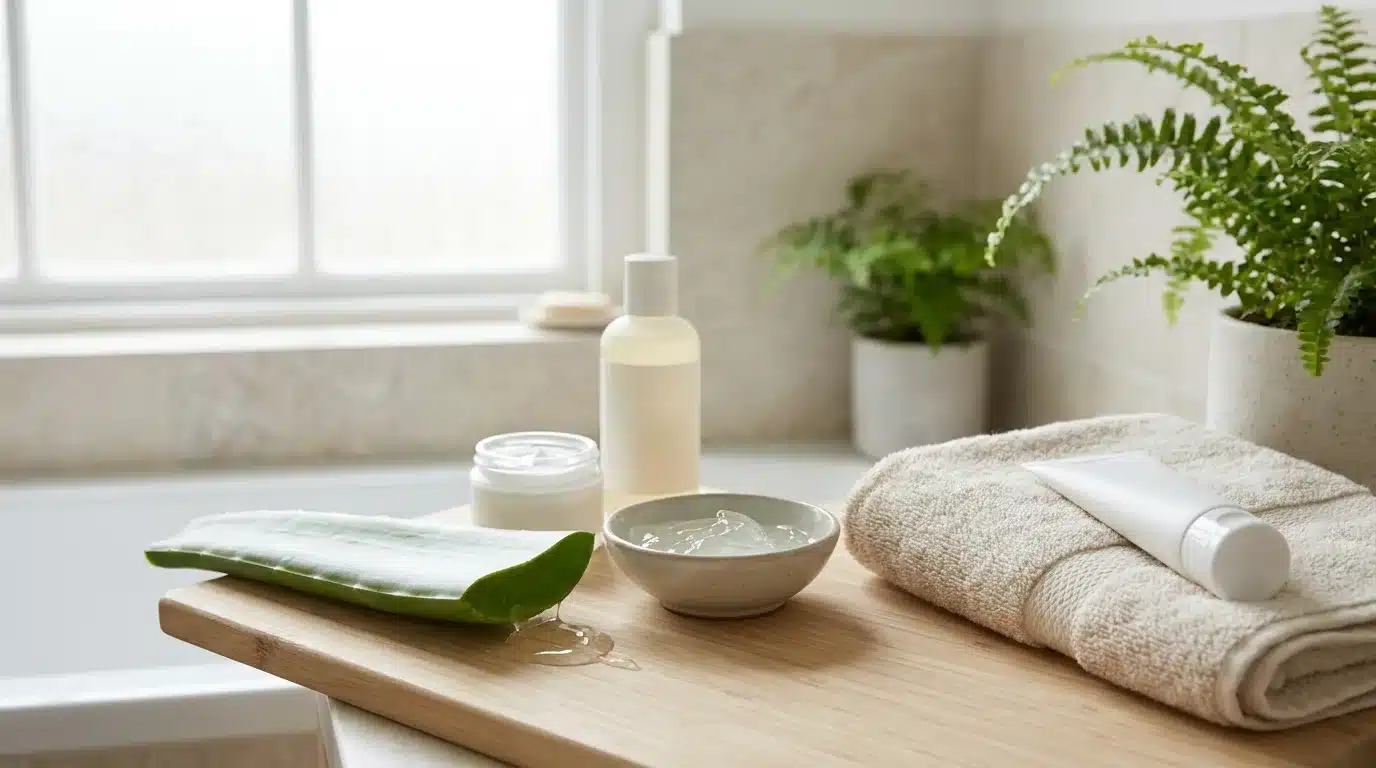
Aloe vera is a succulent plant known for its thick, green leaves and clear inner gel. This gel is the part most often used in skincare because it is water-rich and contains plant compounds that may help hydrate, cool, and soothe the skin.
Aloe vera is commonly used in facial gels, moisturizers, masks, and after-sun skin care products. Traditionally, it has also been used for wound healing, burn relief, and skin comfort in Egyptian, Ayurvedic, and traditional Chinese medicine.
Its place in plant-based skin healing stretches back thousands of years across multiple cultures, a history it shares with other Ayurvedic herbs like manjistha for skin, which has been used similarly for inflammation and tone.
| Common Name | Scientific Name | Key Active Compounds | Traditional Use | Evidence Level (Topical) |
|---|---|---|---|---|
| Aloe Vera | Aloe barbadensis Miller | Acemannan, aloin, aloesin, anthraquinones, polyphenols, vitamins C and E | Wound healing, burn relief, skin soothing, used across Egyptian, Ayurvedic, and traditional Chinese medicine | Moderate for hydration, minor burns, and wound support; preliminary for acne, aging, and hyperpigmentation |
It is important to know the difference between aloe vera gel and aloe latex. The gel comes from the inner part of the leaf and is usually the part used on the face. Aloe latex is a yellow substance found just under the leaf skin and may irritate facial skin, so it should be avoided.
Is Aloe Vera Good for Your Face?
Yes, aloe vera can be good for your face if your skin tolerates it well. It has a lightweight, cooling gel texture that may help hydrate the skin, calm mild redness, soothe irritation, and comfort skin after sun exposure.
This makes it especially useful for oily, combination, or sensitive-feeling skin that does not like heavy creams. However, aloe vera is not a cure for acne, dark spots, wrinkles, or serious skin conditions.
It should be used as a gentle supporting ingredient, not a replacement for sunscreen, moisturizer, acne treatment, or dermatologist-recommended care.
Always patch test first, and stop using it if your skin becomes itchy, red, tight, or irritated.
Benefits of Aloe Vera on Face
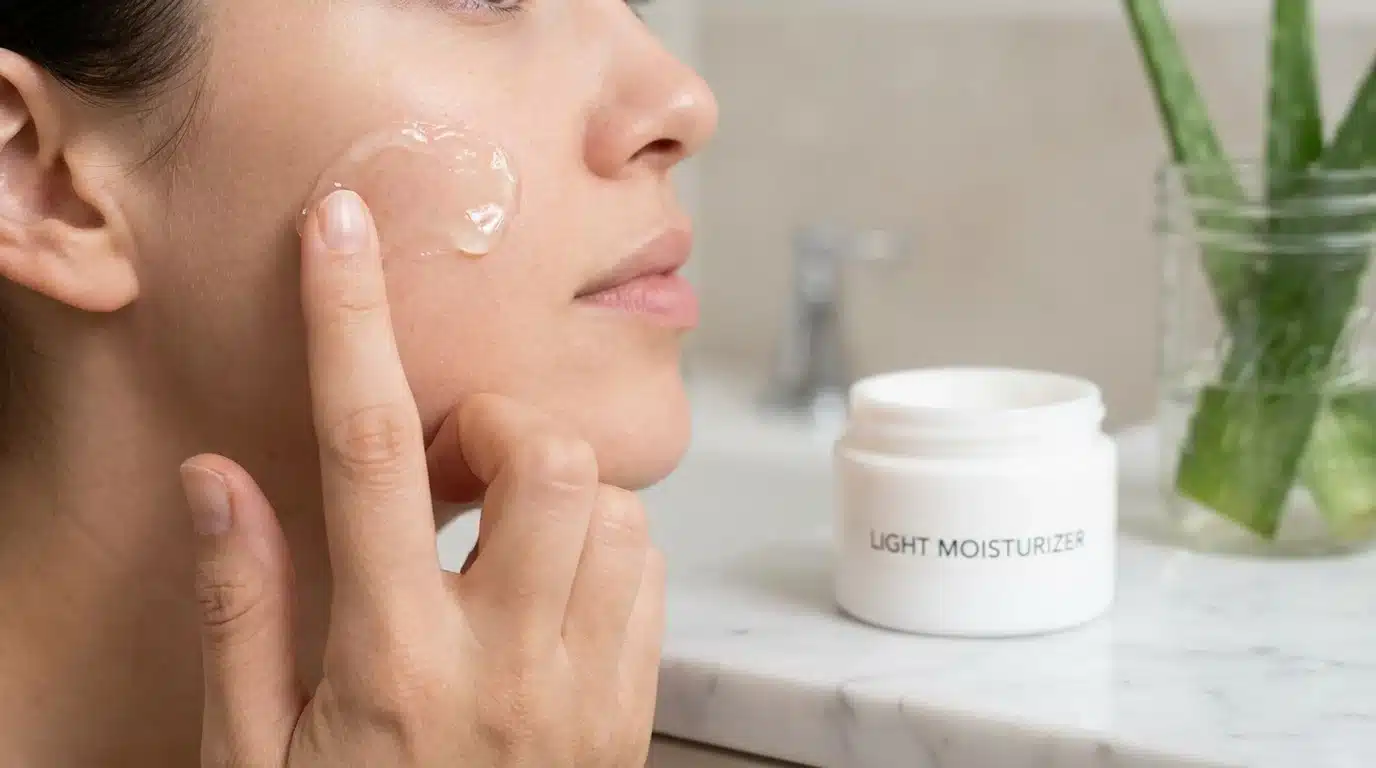
The benefits of aloe vera for face care are mostly about how your skin feels after use. It is often used when skin feels dry, tight, warm, rough, or irritated. I’d keep it in the “skin comfort” category rather than treating it like a full treatment for every concern.
1. Light Hydration Without Heaviness
Aloe vera gel works well as a first-step hydrator, particularly for oily or combination skin that finds rich creams uncomfortable. Acemannan draws moisture to the surface and holds it there long enough to make the skin feel soft and refreshed.
For very dry skin, aloe alone is not enough; it functions as a humectant, not an occlusive, so moisture still evaporates without a heavier moisturizer on top. The practical approach for dry skin: apply a thin layer of fragrance-free aloe gel, then follow immediately with a moisturizer containing ceramides or glycerin before the aloe fully dries.
2. Calming Redness and Irritated Skin
The cooling sensation of aloe gel is partly physical (the water evaporating from the gel surface), and partly chemical, aloesin and certain polyphenols have documented anti-inflammatory effects on skin tissue. A 2014 review in the Indian Journal of Dermatology noted that aloe vera gel reduced redness markers in several small clinical trials on reactive skin.
For temporary redness caused by dryness, heat, friction, or post-shaving irritation, it is a well-supported choice. Chronic redness from rosacea or persistent inflammatory conditions is a different matter; those need a dermatologist, not a home remedy.
3. Post-Sun Comfort
This is one of aloe vera’s clearest applications. The American Academy of Dermatology recommends aloe vera as part of sunburn aftercare specifically because of its cooling and anti-inflammatory properties.
A chilled fragrance-free aloe gel on mildly sun-exposed skin can reduce surface heat, tightness, and peeling. That said, it does not repair UV-damaged DNA or prevent tanning; those claims go beyond what the evidence supports. Severe sunburn with blistering, fever, or significant pain needs medical attention, not home treatment.
4. Supporting Skin Barrier Recovery
Acemannan helps the stratum corneum (the outermost skin layer) maintain hydration, and preliminary research suggests it may support wound closure and cell regeneration at a basic level.
After procedures like threading, waxing, or minor abrasion, a clean aloe vera gel can help the skin feel more comfortable and heal with less visible irritation. Avoid using it on open cuts, infected skin, or immediately post-laser — in those cases, stick with what your provider recommends.
5. Soothing Acne-Prone Skin
Aloe vera does not treat acne at the root; it does not unclog pores the way salicylic acid does or kill acne bacteria the way benzoyl peroxide does. What it can do is reduce the surface irritation and dryness that acne treatments often cause.
Applying a thin, non-comedogenic aloe gel after a retinoid or an acid treatment can reduce peeling, stinging, and tightness without interfering with the active ingredient. There is preliminary evidence for aloe vera supporting mild acne management in conjunction with other treatments, not as a standalone approach.
6. Pre-Makeup Skin Prep
Applied in a very thin layer and allowed to dry fully, aloe vera gel creates a smooth, light surface that helps foundation sit more evenly. This works particularly well for skin that patches under powder formulas. Use too much, and it will pill or cause products to slide.
One to two pumps, spread across the full face, left to absorb for three to five minutes, that is the right amount for most people. If you are also working on improving overall radiance, the tips covered in skin glow improvement pair well with an aloe-first hydration step.
How to Use Aloe Vera on Your Face Safely
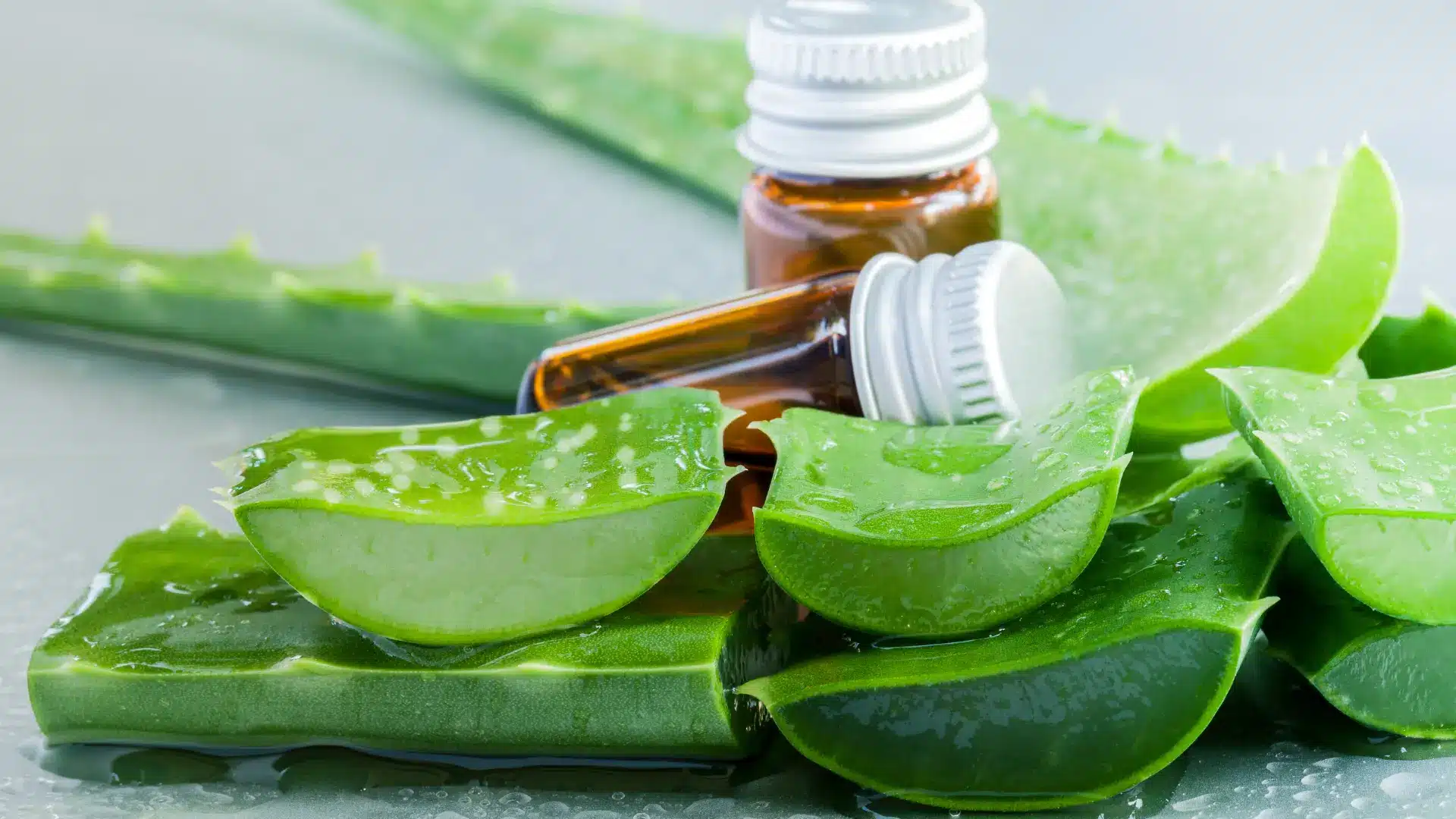
Aloe vera should be introduced slowly, especially on sensitive or acne-prone skin. Choose a fragrance-free, alcohol-free gel made for facial use.
Step 1: Use a fragrance-free, alcohol-free aloe vera gel made for facial skin. Avoid gels with strong perfume, artificial colors, drying alcohols, or unnecessary additives.
Step 2: Apply a small amount behind your ear or along your jawline. Wait 24 hours. Do not use it on your face if you notice redness, itching, burning, swelling, or rash.
Step 3: Wash your face with a mild cleanser to remove sweat, oil, dirt, or makeup. Aloe vera works best on clean skin.
Step 4: Take a small amount of aloe vera gel and spread a thin, even layer over your face. Avoid the eyes, lips, and broken or irritated skin.
Step 5: Allow the gel to absorb fully for a few minutes. Do not apply too much, as excess aloe can feel sticky or tight.
Step 6: If your skin feels dry, apply moisturizer after aloe vera. Aloe adds light hydration, but moisturizer helps seal it into the skin.
Step 7: If you apply aloe vera during the day, finish with broad-spectrum sunscreen. Aloe vera does not protect your skin from UV damage.
Step 8: Use aloe vera 2 to 3 times per week at first. If your skin stays calm, you can increase gradually. Stop using it if irritation appears.
Can You Leave Aloe Vera on Your Face Overnight?
Yes, for most skin types, leaving a thin layer of fragrance-free aloe vera on the face overnight is fine. It can help maintain hydration while you sleep and reduce redness from any daytime irritation.
Very dry skin types should follow it with a heavier moisturizer to prevent the gel from drawing more water out of the skin as it evaporates during the night.
If you notice stickiness, tightness, or any itching, rinse it off and switch to daytime-only use until you understand how your skin responds. For the under-eye area specifically, aloe vera is not the right choice; the alternatives covered in under-eye wrinkle remedies are better suited to that delicate zone.
Side Effects of Aloe Vera on the Face
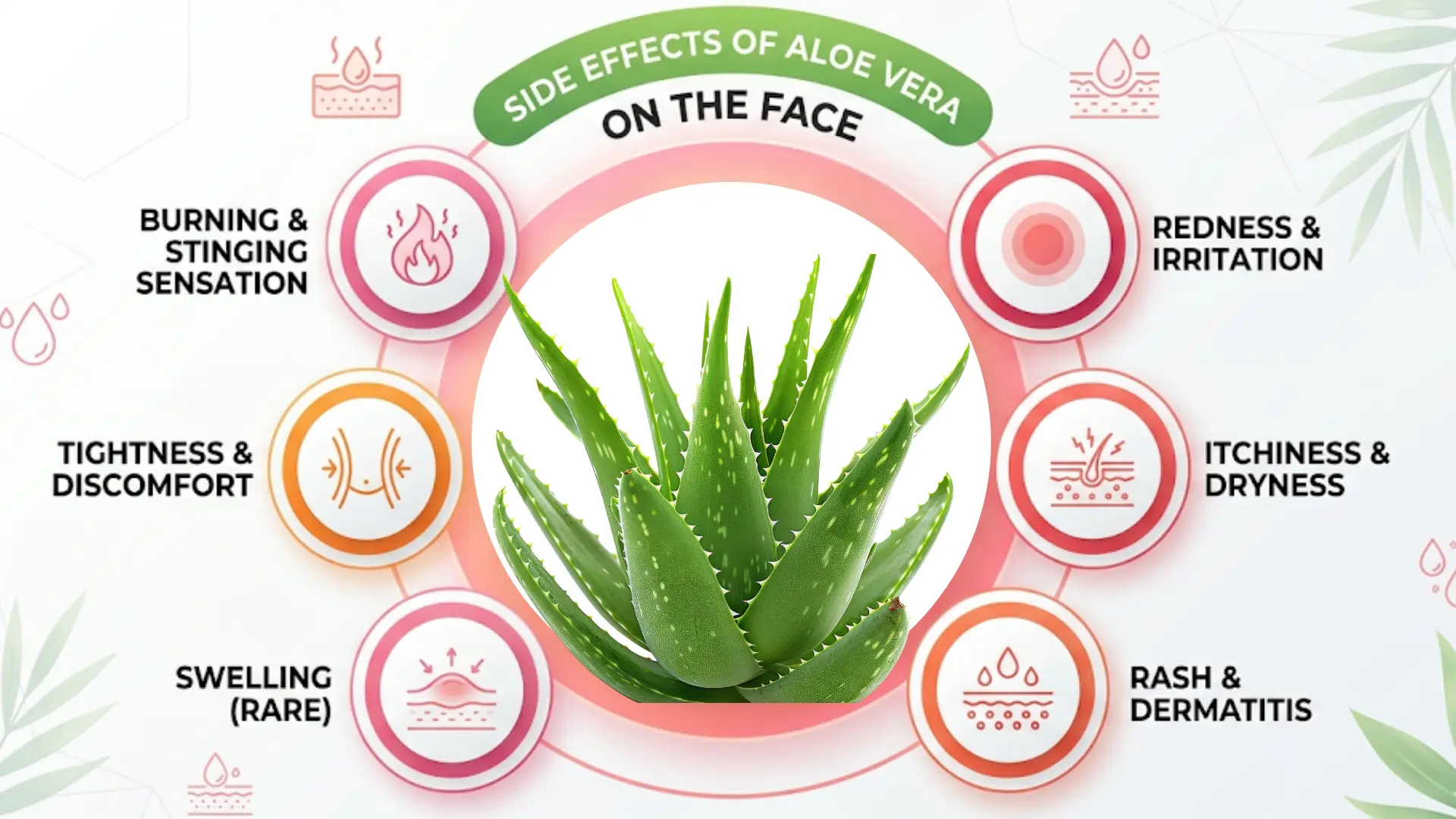
Aloe vera is gentle for many people, but sensitive, allergy-prone, or damaged skin may react. Patch testing helps prevent irritation before full-face use.
- Burning, stinging, itching, or redness after application.
- Rash, dryness, tightness, or contact dermatitis.
- Swelling in rare allergic reactions.
- Very sensitive skin or known aloe allergy.
- Active eczema flare-ups or rosacea-prone skin.
- Open wounds, infected skin, or severe blistering sunburn.
- Recent cosmetic procedures, peels, lasers, or prescription treatments are causing peeling.
Stop using aloe vera if irritation appears. Seek medical help for facial swelling, breathing trouble, severe rash, or symptoms that keep getting worse.
What Type of Aloe Vera Gel Is Best for Face?
The best aloe vera gel for the face is gentle, simple, and made for skin use. Avoid strong fragrance, drying alcohol, bright dyes, or unnecessary additives.
| Feature | Why It Matters |
|---|---|
| Fragrance-free | Reduces irritation risk |
| Alcohol-free | Helps avoid dryness or stinging |
| Clear or lightly colored gel | Fewer unnecessary dyes |
| Short ingredient list | Easier for sensitive skin |
| Skin-tested product | More reliable than raw gel |
| Non-comedogenic label | Better for acne-prone skin |
Choose a product that feels light, clean, and comfortable on your skin. Stop using it if your face feels itchy, tight, red, or irritated.
When to See a Dermatologist Instead of Using Aloe Vera

Aloe vera can help with mild skin comfort, but it is not the right answer for every facial concern. Some symptoms need proper medical care, especially when pain, swelling, infection signs, or long-term irritation show up. I’d avoid guessing when skin keeps getting worse.
Here are the signs that mean aloe vera should not be your next step:
- Severe sunburn: See a doctor if you have blisters, fever, chills, nausea, pus, swelling, or severe pain after sun exposure.
- Painful acne: Aloe is not enough when acne feels deep, cystic, sore, or starts leaving dark marks or scars behind.
- Ongoing irritation: Get care if redness, rash, peeling, swelling, or burning keep coming back after simple skin care changes.
- Possible infection: Do not rely on aloe if skin looks swollen, warm, painful, leaking pus, or spreading quickly across your face.
Fresh Aloe Vera vs. Store-Bought Aloe Gel for Face
Fresh aloe can sound more natural, but I’d compare it with store-bought gel before choosing. Your best option depends on prep time, skin comfort, ingredient needs, and use frequency.
| Point | Fresh Aloe Vera Gel | Store Bought Aloe Gel |
|---|---|---|
| Main use | Fewer added ingredients | Quick, ready use |
| Prep needed | Needs washing, trimming, draining, scooping, and rinsing | No plant prep needed before use |
| Storage | Spoils fast after cutting | More stable and lasts longer |
| Ingredient concern | Must be cleaned well before first use | May contain fragrance, alcohol, dyes, or fillers |
| Best choice for | People who can prep it carefully | People who want an easier daily use |
| Safe prep reminder | Clean, rinse, then test | Check the label, then test before face use |
I’d choose fresh aloe only when you have time to prep it well. For daily use, store-bought gel often feels easier, but the ingredient list still matters.
Frequently Asked Questions
Can aloe vera be applied around the eyes?
Aloe vera should not be applied too close to the eyes. The skin there is delicate, and gel may cause stinging or watering. Keep aloe on the outer face area and rinse immediately if it gets into your eyes.
Does aloe vera make skin photosensitive?
Aloe vera itself is not usually considered photosensitizing, but it also does not protect against sunlight. If you use it in the morning, apply sunscreen afterward because UV exposure can still cause tanning, dark spots, and sun damage.
Can aloe vera help after facial threading or waxing?
Aloe vera may help cool mild redness after threading or waxing, but only if the skin is not cut, bleeding, or severely irritated. Use a clean, fragrance-free gel and avoid makeup or harsh products for several hours afterward.
Can aloe vera be used on the lips?
Aloe vera can be used carefully on the outer lips if they feel dry, but avoid swallowing it. For very cracked, bleeding, or peeling lips, a plain lip balm or petrolatum-based product usually protects better than aloe gel alone.
Can men use aloe vera after shaving their faces?
Yes, aloe vera can be useful after shaving because it feels cooling and lightweight. Apply a thin layer after rinsing the face. Avoid gels with alcohol or fragrance because they may sting freshly shaved skin.
Wrapping Up
Finding the right balance in your skincare routine takes a little patience, but your skin will thank you for it. I have covered exactly how this plant works, from its cooling benefits to the critical steps for safe application.
Ultimately, understanding if aloe vera is good for your face comes down to your unique skin type and how carefully you choose your products.
It serves as an excellent tool for light hydration and soothing irritation, provided you avoid harsh additives and prioritize patch testing.
Try these tips during your next routine, listen to how your skin responds, and leave a comment below to share what worked best for you.