















| Common Name | Scientific Name | Active Compounds | Traditional Use | Evidence Level |
| Castor Oil | Ricinus communis | Ricinoleic acid (85-95%), oleic acid, linoleic acid | Skin moisturization, wound care, anti-inflammatory topical in Ayurvedic and African herbal traditions | Moderate (growing peer-reviewed support; 2026 NIH narrative review confirmed antimicrobial, anti-inflammatory, and skin-penetration-enhancing activity) |
The honest answer is somewhere in the middle, and that middle ground is actually worth understanding. Castor oil on face has legitimate, research-backed uses for facial skin.
It also has real limitations that most viral posts conveniently leave out. Between the overclaiming and the outright dismissal, there is a practical, useful ingredient that works well when you know what it is actually doing and how to use it correctly.
This post covers the science, the benefits that hold up, the limitations that most posts skip over, how to apply it safely for your skin type, what side effects to watch for, and how to store it properly.
Everything here is grounded in research and clinical experience, nothing more.
| Disclaimer: This article is for informational and educational purposes only. It does not constitute medical advice and should not replace consultation with a qualified healthcare provider. Always consult a doctor before making changes to your skincare routine, especially if you have a diagnosed skin condition, are pregnant, or are taking medications. |
What Castor Oil Actually is (And Why It Works the Way It Does)
Using castor oil on face is one of the more evidence-backed plant-based skincare habits you can build, and it sits in a genuinely useful middle ground that most social media posts miss entirely.
A 2026 narrative review published by the National Institutes of Health confirmed castor oil’s antimicrobial, anti-inflammatory, and skin-penetration-enhancing activity across multiple topical applications. That is a solid foundation. What it does not do is relax muscles, erase deep wrinkles, or replace clinical treatment for chronic skin conditions.
Castor oil is not an essential oil, a serum, or a synthetic active. It is a cold-pressed vegetable oil from the seeds of Ricinus communis, a shrub native to northeastern Africa and India.
What makes it distinct from almost every other facial oil is its fatty acid profile: 85 to 95 percent of castor oil is ricinoleic acid, a hydroxyl fatty acid that no other common plant oil contains in meaningful concentration. That single compound explains everything about how castor oil behaves on skin.
| Property | Detail |
| Source | Seeds of Ricinus communis |
| Primary Compound | Ricinoleic acid (85 to 95% of composition) |
| Extraction Method | Cold-pressed, hexane-free for skincare use |
| Texture | Thick and viscous, heavier than most facial oils |
| Color | Pale yellow with a mild, slightly nutty scent |
| Shelf Life | 12 to 18 months when stored correctly |
For facial use, the label needs to say cold-pressed, organic, and hexane-free. USP grade indicates pharmaceutical purity and is the cleanest option.
Anything labeled simply “castor oil” without extraction detail, or with a sharp chemical smell, has likely been refined in ways that reduce its ricinoleic acid activity. Now that we know what we are working with, here is what the compound actually does on the skin.
The Science Behind Castor Oil on Face: What Ricinoleic Acid Does
Ricinoleic acid works through three distinct mechanisms on facial skin, and understanding them helps you use castor oil correctly rather than guessing at what it might do.
The first is its occlusive and humectant action. Ricinoleic acid is a hydroxyl fatty acid, which means it carries a hydroxyl group that binds water molecules. This gives castor oil a dual property that most facial oils lack: it forms a barrier that slows transepidermal water loss while simultaneously attracting water toward the skin’s outer layers.
Applied over a slightly damp face, it traps existing moisture underneath and pulls additional hydration to the surface, which is why dry and dehydrated skin responds so noticeably within the first few days of consistent use. Staying hydrated internally supports this process too, and drinking enough water works alongside topical oils rather than replacing them.
The second mechanism is anti-inflammatory pathway inhibition. Ricinoleic acid inhibits prostaglandin synthesis, the same cellular pathway that drives inflammatory responses in skin. This is not surface-level soothing but mechanistic action at the cellular level, which is why castor oil produces measurable effects on eczema flares, inflamed cystic acne, and post-procedure redness.
The 2026 NIH narrative review specifically confirmed this anti-inflammatory activity across multiple topical applications. For persistent eczema-prone skin, plant-based anti-inflammatories tend to work best when layered rather than used in isolation.
The third is antimicrobial activity. Ricinoleic acid disrupts bacterial cell membranes, giving castor oil documented action against acne-causing bacteria like Cutibacterium acnes, without stripping the skin barrier or disrupting the acid mantle the way benzoyl peroxide or salicylic acid can.
Turmeric and acne research follows a similar prostaglandin-inhibiting pathway, making it another compound worth knowing about for sensitive, reactive skin that cannot tolerate stronger pharmaceutical actives.
Those three mechanisms are the foundation of every legitimate benefit castor oil delivers on the face. The next section runs through each use case and what you can realistically expect from each.
Castor Oil Benefits for Face: What the Evidence Actually Supports

1. Sealing Moisture Into Dry and Dehydrated Skin
This is castor oil’s most consistent and best-supported benefit. Its occlusive barrier slows transepidermal water loss overnight, keeping existing moisture in the skin rather than allowing it to evaporate.
It does not add water on its own, but holding onto what is already there is precisely what depleted skin needs. Results in skin softness and texture are typically noticeable within three to five days of consistent use when the oil is applied over slightly damp skin.
2. Calming Inflamed Skin and Reducing Redness
Because ricinoleic acid works at the prostaglandin synthesis level rather than just at the surface, it is useful for active inflammation: eczema patches, irritated dry areas, and inflamed cystic acne respond well.
A 2022 research review found that castor oil has genuine anti-inflammatory and antimicrobial properties that can decrease pimple size and calm surrounding redness without barrier disruption.
If you are using it for this purpose, keep it diluted and targeted to the inflamed area. Forehead bumps and congestion often respond to this kind of targeted, low-irritation approach better than to aggressive cleansing.
3. Reducing the Visible Appearance of Fine Lines
The “nature’s Botox” claim requires a clear correction: castor oil does not relax muscles or alter skin structure. What it does is hydrate and plump the skin by reinforcing the moisture barrier, which makes dehydration lines and surface-level fine lines appear less prominent.
The effect is hydration-driven and real, but it requires consistency. One application does not produce lasting results. Two to three weeks of regular nightly use is the minimum before you can evaluate whether it is working.
4. Antibacterial Action Without Barrier Damage
For acne-prone skin that reacts badly to strong actives, a diluted castor oil spot treatment addresses the bacterial component of breakouts without the dryness and peeling associated with benzoyl peroxide.
This is a trade-off: the antibacterial action is gentler and slower, but it avoids the secondary inflammation that aggressive actives cause on reactive skin. Minimizing pore appearance is a related concern for many acne-prone skin types, and consistent oil management is part of that picture too.
5. Conditioning Lashes and Brows
Applied nightly to the lash line and brow bone with a clean mascara wand, castor oil conditions the hair shaft and supports the follicle beneath through direct lubrication. This is one of the most consistently reported and visually trackable uses.
In my experience studying plant-based oils, the lash and brow application is where castor oil delivers the most reliable visible result: fuller, more defined lashes and brows are typically noticeable within three to four weeks of nightly use. The key is using a very small amount and keeping the oil away from the eye itself.
6. Oil Cleansing
Because ricinoleic acid binds readily to other lipids, castor oil attracts oil-based impurities, makeup residue, and excess sebum when massaged into dry skin. Removed with a warm damp cloth, it lifts surface buildup without disrupting the acid mantle.
Understanding how cleansing oils work in general helps you dilute and remove castor oil correctly, which is the step most people skip and then blame the oil for the congestion that follows.
Knowing which benefit applies to your skin concern determines how and how often you use it. The method section below maps each use case to a specific application approach.
How to Use Castor Oil on Face: Four Methods Matched to Skin Concerns
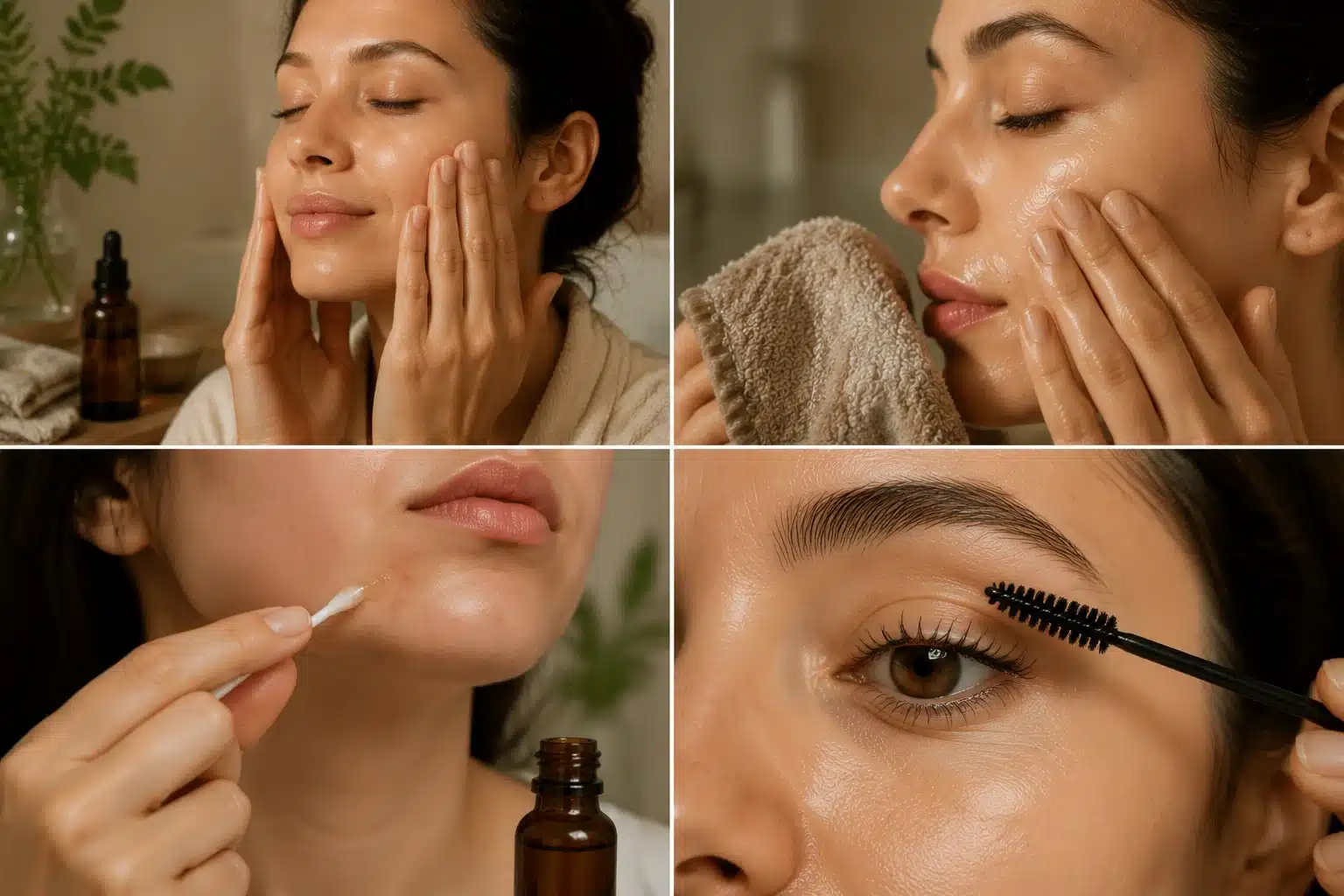
| Before any method: Always start with a clean face. Apply to slightly damp skin where possible. For general facial use, dilute one part castor oil with two to three parts jojoba, almond, or rosehip oil before application. |
1. Overnight Moisture Treatment (Best for Dry, Mature, or Dehydrated Skin)
This method works best for skin that feels tight, rough, or flaky. With consistent use, texture typically improves within a few days and plumpness within two to three weeks.
- Cleanse your face and pat it dry, leaving the skin slightly damp.
- Mix 1 drop of castor oil with 2 to 3 drops of jojoba oil in your palm.
- Rub your palms together to warm the blend.
- Press the oil gently onto your face and neck rather than rubbing harshly.
- Massage in slow upward motions until the blend feels evenly spread.
- Apply a light moisturizer on top if your skin still feels tight.
- Start with 3 to 4 nights a week and adjust based on how your skin responds.
| Application Tip: Do not apply castor oil undiluted across the full face, especially if your skin clogs easily. A small amount diluted goes a long way. Increase frequency only if your skin stays calm after two weeks. |
2. Oil Cleanser (Best for Removing Makeup and Sunscreen)
Suitable for dry, normal, and sensitive skin. Your skin should feel clean and soft after cleansing. Thorough removal is essential to prevent residue-driven congestion.
- Apply 4 to 5 drops of diluted castor oil to dry skin before wetting your face.
- Massage gently in circular motions for about 60 seconds.
- Focus on areas with makeup, sunscreen, or extra buildup.
- Wet a clean washcloth with warm water and press it over your face for a few seconds.
- Wipe the oil away using gentle outward strokes.
- Follow with a mild water-based cleanser if your skin still feels oily.
- Use this as the first step of your evening cleansing routine.
| Safety Note: Rinse or wipe the oil off fully after cleansing. Leftover castor oil can feel heavy on the skin and may lead to clogged pores, especially around the nose, chin, and forehead. |
3. Spot Treatment for Acne or Dry Patches (Best for Targeted Inflammation)
This method is designed for small, specific areas only: inflamed pimples, dry patches, or post-acne redness. Not for full-face use on oily or acne-prone skin. Reduced redness is typically visible within two to three days of careful application.
- Cleanse your face and make sure the target area is dry.
- Take a very small amount of diluted castor oil on a clean cotton swab or fingertip.
- Dab it directly onto the blemish, red area, or dry patch.
- Do not spread it across nearby skin unless that area also needs treatment.
- Leave it on overnight.
- Cleanse your face normally the next morning.
- Repeat only on the target area until the redness or dryness resolves.
| Important: Do not apply castor oil to open pimples, cuts, scratched skin, or active rashes. Its occlusive barrier traps bacteria against raw tissue and can slow healing or worsen infection. |
4. Lash and Brow Conditioner (Best for Thinning or Sparse Lashes and Brows)
One of the simplest, lowest-risk applications of castor oil on the face. Nightly use for three to four weeks typically produces visible improvement in lash and brow definition.
- Use a clean mascara wand or cotton swab.
- Dip it lightly into castor oil, then remove any excess before applying.
- Brush a small amount through the lashes from root to tip.
- Apply a light layer over the brows in the direction of hair growth.
- Avoid getting the oil inside your eyes.
- Leave it on overnight.
- Remove it in the morning with your regular cleanser or micellar water.
| Safety Note: Use only a tiny amount near the eyes. Too much oil can blur vision or transfer into the eyes during sleep, causing temporary irritation. |
Start with the method that matches your skin concern. Use it consistently for two to three weeks before evaluating results, and check how your skin responds before increasing frequency.
Is Castor Oil Right for Your Skin Type?
Castor oil’s occlusive weight and comedogenic potential make it genuinely excellent for some skin types and genuinely problematic for others. The difference comes down to how you use it, not whether you use it at all.
| Skin Type | How to Use It | What to Expect |
| Dry or dehydrated | Overnight treatment, diluted with jojoba or almond oil | Softer, plumper skin within days |
| Oily or acne-prone | Spot treatment only, diluted 1:3 with jojoba | Targeted calming without added congestion |
| Combination | Diluted, applied to dry zones only, avoid the T-zone | Balanced moisture without shine |
| Sensitive | Patch test first, keep concentration at 1% or lower | Calming effect with careful, infrequent use |
| Mature or aging | Overnight blend with rosehip oil, applied to fine-line areas | Improved hydration and reduced line appearance |
No skin type is fully incompatible with castor oil, but oily and combination types need the most restraint. Applying a heavy occlusive over large areas of skin that is already producing excess sebum works against you.
Targeted use, meaning spot treatment or lash application only, is the version that works for these skin types without the congestion risk. If you are looking for complementary plant-based oils to blend with castor oil, rosehip oil pairs especially well for mature skin, while sesame oil is worth considering for dry skin types with an Ayurvedic background.
Side Effects and Limitations: What to Know Before You Start

Castor oil is well-tolerated by most people, but there are specific ways it causes problems, and knowing them in advance helps you avoid the most common mistakes.
- Comedogenicity in Oily and Acne-Prone Skin: Castor oil’s high viscosity and comedogenic rating mean that applying it undiluted across an oily face increases the risk of congestion, blackheads, and breakouts. A dilution ratio of 1 part castor oil to 3 parts jojoba or rosehip oil significantly lowers this risk while still delivering the anti-inflammatory and moisture-sealing benefits.
- Ricinoleic Acid Sensitivity: While ricinoleic acid is anti-inflammatory at typical concentrations, it can cause contact dermatitis, stinging, or redness in people with sensitivities to fatty acid-rich oils or the castor plant family (Euphorbiaceae). A 24-hour patch test on the inner forearm before any facial application is essential, not optional. The 2026 Cureus narrative review noted rare but documented cases of allergic contact dermatitis from castor oil use.
- Overuse and Skin Regulation Disruption: Because castor oil forms such a strong occlusive seal, applying too much too frequently can interfere with the skin’s overnight repair process. Starting at 2 to 3 applications per week gives the skin time to adjust and gives you a clearer read on how it is responding before you increase frequency.
- Never Apply to Broken or Open Skin: Castor oil’s occlusive properties trap everything beneath the barrier it creates. On open wounds, popped blemishes, or active rashes, that means trapping bacteria against raw tissue, which can worsen infection and slow healing. Keep it strictly to intact skin.
- Oxidized Oil Causes Irritation, Not Benefit: Rancid or oxidized castor oil applied to the face triggers inflammation and sensitivity rather than calming it. If your castor oil smells sour, sharp, or noticeably different from its original mild nutty scent, discard it and replace it. This is not an edge case: oxidation happens faster than most people expect when the oil is stored near heat or light.
These are the specific conditions under which most people who give up on castor oil run into problems. Getting them right from the beginning makes the difference between an ingredient that works and one that sits unused.
How to Store Castor Oil So It Stays Effective
Castor oil’s ricinoleic acid content breaks down with heat, light, and air exposure. Because oxidized oil irritates rather than benefits, storage directly affects how well it works on the face.
- Use dark glass bottles only. Clear plastic or glass allows light to degrade the fatty acids. Amber or dark glass protects the active content between uses.
- Store away from heat sources. Bathroom surfaces near hot showers, windowsills, and counters near stoves all shorten shelf life. A cool cabinet or drawer is the right storage spot.
- Seal tightly after every use. Air exposure accelerates oxidation. Leaving the cap loose even briefly, over time, adds up.
- Check the smell regularly. Fresh castor oil has a mild, slightly nutty scent. A sour, sharp, or rancid smell means it has oxidized and should be replaced.
- Keep the main bottle pure. If blending with a carrier oil for regular use, mix small batches in a separate bottle rather than diluting the whole supply.
- Refrigeration extends shelf life. Optional but useful in warm climates. The oil thickens when cold but returns to normal consistency at room temperature within a few minutes.
- Use within 12 to 18 months. Even with good storage, the fatty acids degrade past this point and the oil loses both potency and skin compatibility.
One practical habit that helps: keep castor oil next to whatever you use every night, whether that is your cleanser or your toothbrush. Out of sight tends to mean out of use, and an oil you forget to apply is an oil that oxidizes without working for you.
If you are interested in exploring other plant-based oils with documented skin benefits, neem oil is worth reading about for its antimicrobial profile, and black seed oil covers similar anti-inflammatory territory with different active compounds. For general oil-based skincare principles, the oil cleansing guide on this site is a good companion read.
Frequently Asked Questions About Castor Oil on Face
What happens if you apply castor oil on your face every day?
For dry skin types, daily diluted use is generally fine and supports consistent moisture retention. For oily or combination skin, daily application increases congestion risk. Start at 2 to 3 times per week regardless of skin type, assess how your skin responds, and move to daily use only if there is no irritation or breakout activity after two weeks.
Can you leave castor oil on your face overnight?
Yes, and overnight is the most effective application window. The skin’s repair cycle is most active during sleep, and castor oil’s occlusive barrier supports that process by keeping moisture in and environmental stressors out. Dilute before applying, use sparingly, and cleanse properly in the morning to remove any residue.
Does castor oil help with dark spots on face?
The evidence here is limited. One small 2024 study published in the Journal of Cosmetic Dermatology found that a castor oil cream improved the appearance of infraorbital hyperpigmentation. However, castor oil is not a first-line treatment for dark spots. Its anti-inflammatory properties may help prevent post-inflammatory hyperpigmentation from getting worse, but dedicated brightening actives like niacinamide or vitamin C have substantially more clinical evidence for dark spot reduction.
Does castor oil clog pores?
It can, particularly on oily and acne-prone skin when used undiluted or over a large area. Castor oil has a relatively high comedogenic rating. Diluted at a 1:3 ratio with jojoba and used only on dry skin zones or as a spot treatment, the congestion risk is significantly reduced. If you see new blackheads or breakouts within two weeks of starting use, the concentration is too high for your skin type.
How long does it take for castor oil to work on face skin?
For moisture and texture improvement in dry skin, noticeable softness typically appears within three to five days. For fine line reduction through hydration, two to three weeks of consistent nightly use is the minimum. For lash and brow conditioning, three to four weeks. Spot treatment for acne inflammation can reduce visible redness within two to three days when applied carefully to an intact pimple.
Is castor oil safe during pregnancy for facial use?
Topical use of castor oil on the face is generally considered low risk during pregnancy. Oral castor oil and large-scale body application are a different matter entirely. If you are pregnant or breastfeeding, check with your healthcare provider before adding any new topical oil to your routine, particularly around the abdomen.
Why does castor oil sometimes cause breakouts?
Breakouts after applying castor oil are almost always the result of using it undiluted, applying too much across a large area, or using it on congestion-prone skin without adequate dilution. The oil’s thickness traps sebum and bacteria inside pores when it is not properly diluted or when it is not fully removed after oil cleansing. Switching to a diluted spot treatment and ensuring thorough cleansing in the morning typically resolves the issue.
Final Verdict
Castor oil on face delivers real results when it is matched to the right skin concern and used in the right way. The moisture-sealing, anti-inflammatory, and antibacterial properties are grounded in solid research, and the lash and brow conditioning use is one of the most reliably visible results you can get from a single ingredient at this price point.
Where castor oil falls short is as an all-purpose, apply-everywhere solution. Thick oils on oily skin need careful handling, and the “nature’s Botox” framing sets expectations that hydration alone cannot fully meet. Understanding what it does mechanically helps you use it precisely rather than hopefully.
If you are trying castor oil benefits for the first time, start with the spot treatment or lash application. Small area, low risk, and the results are easy to track before committing to a full facial routine.
What skin concern are you hoping castor oil might help with? Drop it in the comments and I will give you a specific recommendation based on your skin type.
Sources
Girdler, K., Cabatu, A., Olds, H., Potts, G.A., “Use of Castor Oil in Dermatology: A Narrative Review.” Cureus, 2026. https://pmc.ncbi.nlm.nih.gov/articles/PMC12978418
Healthline, “Castor Oil for Face: Acne and Skin,” reviewed 2024. https://www.healthline.com/health/castor-oil-for-face
GoodRx Health, “Castor Oil for Skin: Benefits and Tips for Use,” 2026. https://www.goodrx.com/health-topic/dermatology/castor-oil-for-skin
Medical News Today, “Castor oil: Benefits, use, and side effects,” updated 2024. https://www.medicalnewstoday.com/articles/319844
Parvizi, M.M., et al., “Efficacy of castor oil cream in treating infraorbital hyperpigmentation.” Journal of Cosmetic Dermatology, 2024.