



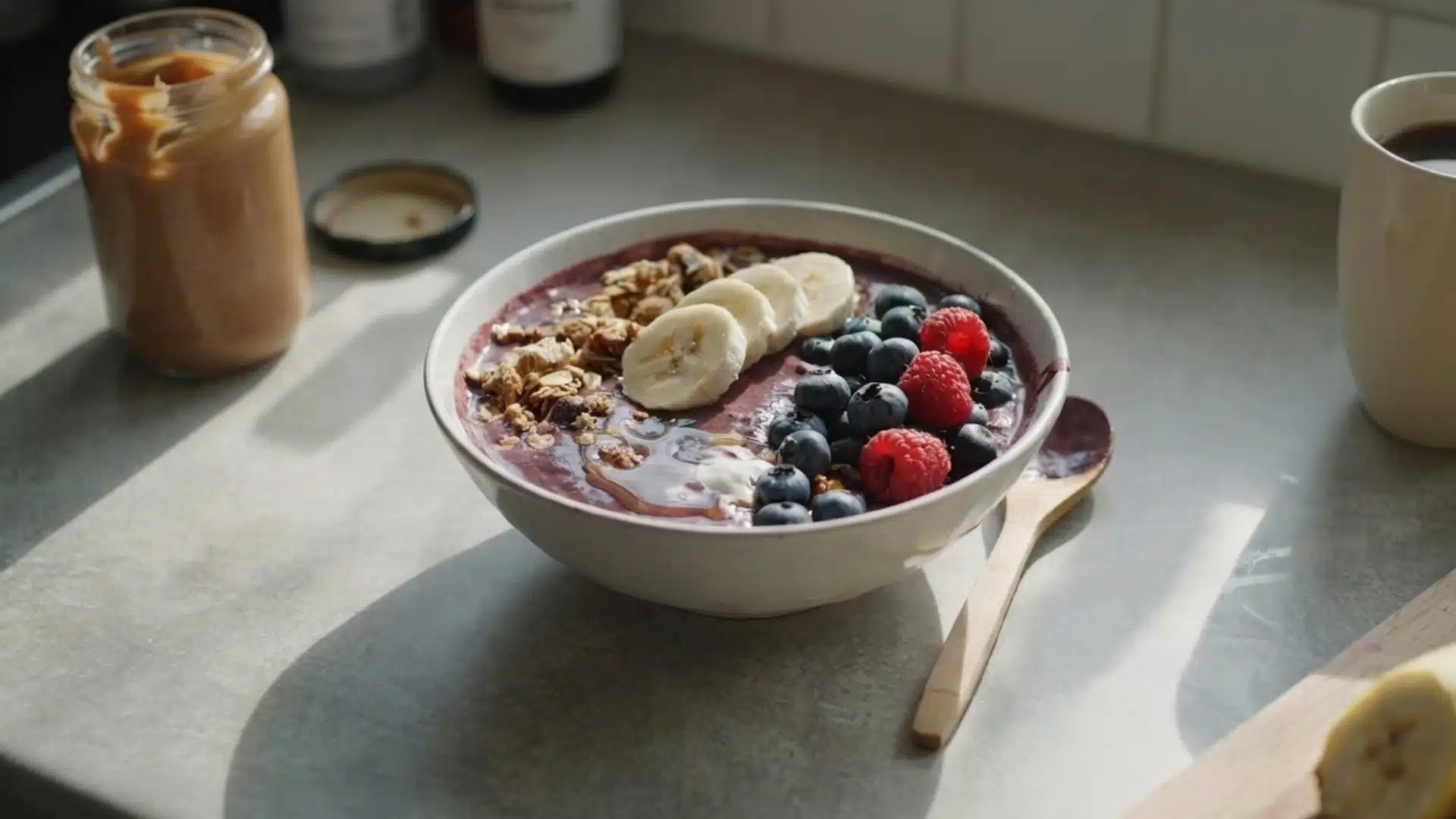










Purple bowls are now common in wellness posts, often featuring berries and granola as edible art.
Scrolling past many, a question emerges: are acai bowls healthy or just Instagram bait?
The truth lies between a smoothie and a sundae, depending on the ingredients. Some versions genuinely nourish the body with fiber and antioxidants. Others sneak in enough sugar to rival dessert menus.
This blog explains where acai bowls succeed, fail, and how to create one that genuinely earns its healthy reputation.
Are Acai Bowls Healthy?
Acai bowls look like health food royalty. Purple, pretty, and plastered across every wellness feed.
But peel back the granola and things get complicated. Real acai berries pack antioxidants and fiber, sure.
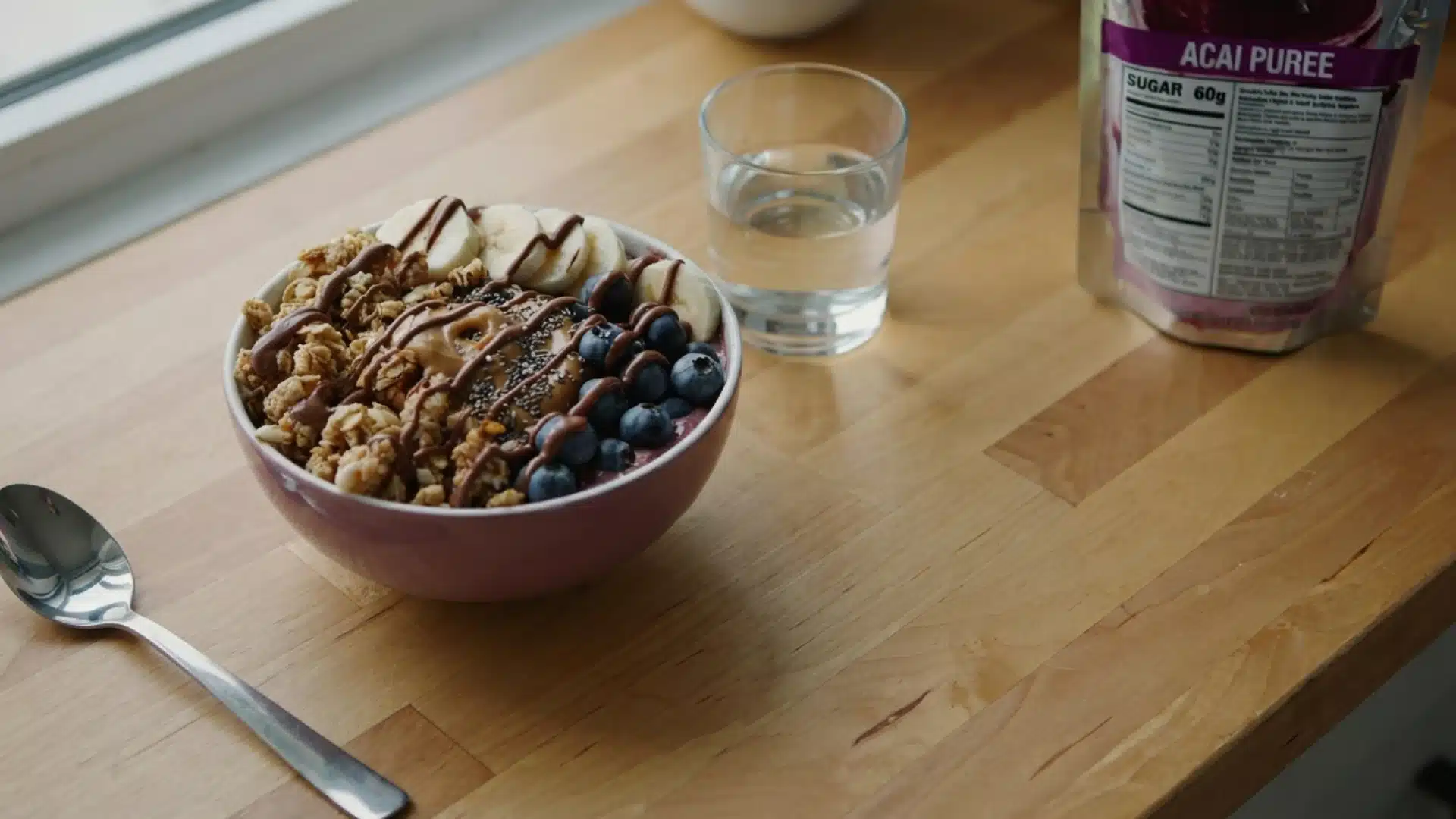
Yet most bowls at cafes drown that benefit in sugary purees, syrup, and candy-like toppings. One bowl can hit 500-plus calories and 60 grams of sugar before you add a single granola cluster.
So, are acai bowls healthy? The answer isn’t yes or no.
It all hinges on what’s really inside the bowl, and that’s where the interest lies.
How an Acai Bowl is Made: Breaking Down Every Ingredient
Every bowl starts with a base, and that base decides everything else.
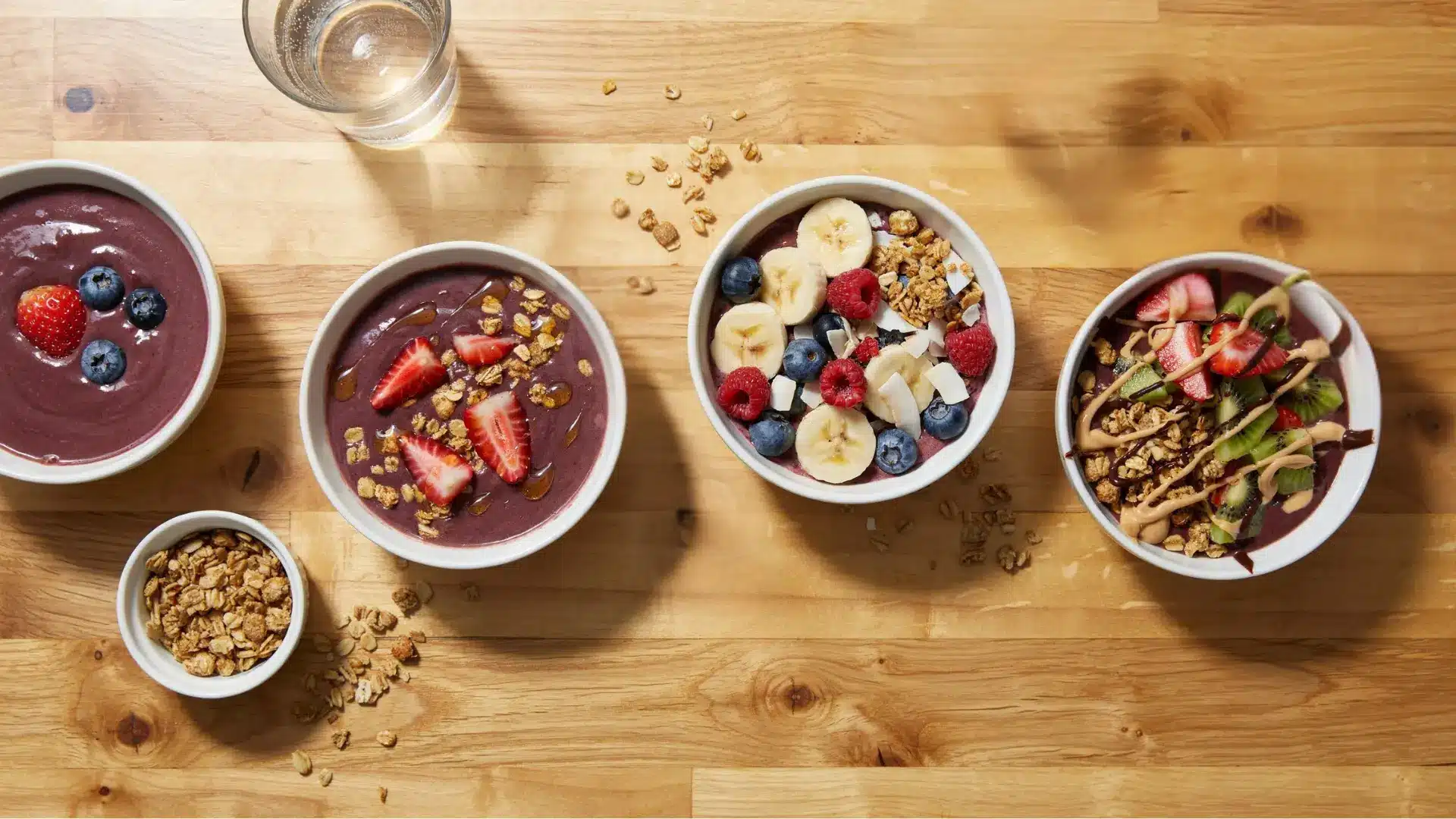
- Frozen acai puree forms the foundation, blended thick like soft-serve.
- Bananas or berries add natural sweetness and creaminess.
- A splash of liquid almond milk, juice, or coconut water helps the blend move.
- Granola goes on top for crunch and texture.
- Fresh fruit slices add color and a hit of vitamins.
- Nut butter drizzles bring protein and healthy fats.
- Honey or agave often finishes things off for extra sweetness.
- Seeds like chia or hemp sometimes join for a nutritional boost.
Acai Nutrition Explained: What Makes the Berry Different?
Remove the hype, and the berry genuinely offers significant nutritional value.
Why Store-Bought Acai Bowls Can Be Surprisingly High in Sugar
Cafes seldom offer plain acai; instead, they serve dessert that looks like breakfast.
Pre-made purees often contain added sugar before anything else goes in.
Then toppings pile on: chocolate chips, sweetened coconut flakes, drizzled syrups, candy pieces.
A single bowl can quietly cross 60-80 grams of sugar, rivaling a slice of cake. Portion sizes make it worse. Large bowls mean large sugar loads, even with “healthy” branding on the cup.
Reading nutrition labels matters here, since menu descriptions rarely mention actual sugar content.
Something that appears refreshing on Instagram may actually contain a high sugar level.
Calories in Acai Bowls: What Changes the Nutrition the Most?
Calories can fluctuate greatly based on a few subtle choices you might not even realize you’re making.
- Bowl size at cafes often doubles or triples a standard serving.
- Nut butter drizzles add healthy fat but stack calories fast.
- Multiple granola scoops turn a light base into a heavy meal.
- Dried fruit adds concentrated sugar and calories in small servings.
- Sweetened purees versus plain acai create a major calorie gap.
- Coconut flakes and chocolate toppings quietly push totals higher.
- Juice blends instead of water or milk add a hidden calorie load.
- Extra scoops of protein powder or supplements shift totals further.
Health Benefits You Can Actually Expect from an Acai Bowl
Besides the hype, acai bowls provide genuine, quantifiable benefits.
1. Antioxidant Support for Cell Health
Acai berries carry high levels of anthocyanins, the pigment behind their deep purple color.
These compounds fight oxidative stress in the body. Oxidative stress speeds up aging and cell damage over time. Regularly eating antioxidant-rich foods may help reduce that damage.
Acai ranks among the higher antioxidant fruits available, alongside blueberries and blackberries.
This makes a well-built bowl a genuinely useful addition to a balanced diet, not just a trendy purple treat.
2. Heart Health Benefits from Healthy Fats
Acai contains monounsaturated fats like olive oil, supporting healthy cholesterol levels with regular consumption.
Pairing acai with nut butter or seeds adds even more heart-friendly fat.
Fiber in the berry also plays a role, helping manage cholesterol absorption in the gut.
Together, these elements make acai a reasonable choice for anyone watching cardiovascular health, provided the bowl skips excessive added sugar and syrup-heavy toppings.
3. Are Acai Bowls Good for Weight Loss?
It depends on what goes into the bowl. Plain acai, modest fruit, and light toppings can support weight loss through fiber and fullness. Fiber slows digestion and curbs overeating later.
Problems start when granola, honey, and nut butter get piled on without limits.
A bowl meant to aid weight loss can easily become calorie-dense instead.
Portion control and straightforward toppings truly set this apart.
4. Are Acai Bowls Good for Blood Sugar?
Plain acai has a low glycemic impact, meaning it raises blood sugar slowly.
Fiber content helps slow sugar absorption further.
Trouble arises with sweetened purees, honey drizzles, and dried fruit, which spike blood sugar quickly. For diabetics or anyone managing glucose, ingredient choice matters more than the berry itself.
A carefully built bowl can fit into a blood-sugar-friendly diet without much difficulty.
5. Skin Health from Antioxidant Compounds
Acai’s antioxidant content extends benefits to skin health as well.
Free radical damage contributes to fine lines and dull skin over time. Anthocyanins and vitamin
A in acai helps counter damage from within. Hydration from fruit toppings offers additional support. Though no food changes skin overnight, regularly eating acai may improve skin resilience over time.
How Do Acai Bowls Fit Different Diets?
Acai bowls adapt well across eating patterns, but depend on how they’re built.
| Diet Type | Watch Out For | Best Swap |
|---|---|---|
| Vegan | Honey as a sweetener | Maple syrup or no sweetener |
| Gluten-Free | Wheat-based granola | Certified gluten-free granola or seeds |
| Keto / Low-Carb | Natural sugar in acai and fruit | Small portion with nuts and seeds only |
| Diabetic-Friendly | Added sugars and large portions | Unsweetened base plus protein topping |
Most restrictions trace back to toppings rather than the acai base itself.
Building the bowl with the right swaps makes it workable across nearly every diet except strict keto.
Essential Drawbacks of Acai Bowls
Acai bowls carry real downsides beyond sugar content alone.
Price tops the list, since fresh acai isn’t cheap, and cafe markups push costs higher.
Frozen acai also has a short shelf life once thawed, limiting how long homemade batches stay fresh.
Sourcing matters too; acai grows almost exclusively in the Amazon, raising questions around sustainability and supply chains. Texture bothers some eaters, as the berry itself tastes earthy and slightly bitter without sweeteners.
Digestive discomfort can occur in people sensitive to fiber-heavy foods eaten in large amounts.
None of these drawbacks are dealbreakers, but they’re worth knowing before building a routine around acai.
Who Benefits from Acai Bowls and Who Should Limit Intake?
Not everyone responds to acai bowls the same way, and that’s worth knowing before diving in.
- Active individuals benefit from the quick energy and antioxidant boost.
- People focused on heart health gain from the healthy fat content.
- Those managing weight should watch portion sizes and toppings closely.
- Diabetics need to monitor sweetened purees and added sugar carefully.
- People with fructose intolerance may experience digestive discomfort from acai.
- Anyone with nut allergies should skip almond milk or nut butter versions.
- Those on low-calorie diets should avoid large, topping-heavy bowls.
- People with kidney concerns should moderate potassium-rich fruit toppings.
- Athletes recovering from workouts can benefit from added protein boosts.
When Acai Bowls Become Less Healthy
Acai bowls lose their health halo fast when toppings take over.
Double granola scoops, chocolate drizzle, and candy pieces turn a fruit bowl into dessert. Skipping protein makes matters worse, since sugar hits without anything to slow it down.
Blood sugar spikes, then crashes an hour later, leaving hunger right behind it.
Homemade vs Store-Bought Acai Bowls: Which is Better?
Control over ingredients makes one option clearly stronger for everyday health.
| Factor | Homemade | Store-Bought |
|---|---|---|
| Sugar Control | Full control, adjust to taste | Often pre-sweetened, hard to reduce |
| Portion Size | Set your own serving | Frequently oversized |
| Cost | Cheaper per bowl | Pricier, especially at cafes |
| Ingredient Quality | Choose fresh, whole toppings | Depends on shop, sometimes processed |
| Convenience | Requires prep time | Ready in minutes |
| Customization | Easy to swap or limit toppings | Limited to menu options |
| Freshness | Made immediately before eating | May sit prepped for a while |
| Consistency | Varies by your own skill | Standardized recipe each time |
How to Build a Truly Healthy Acai Bowl
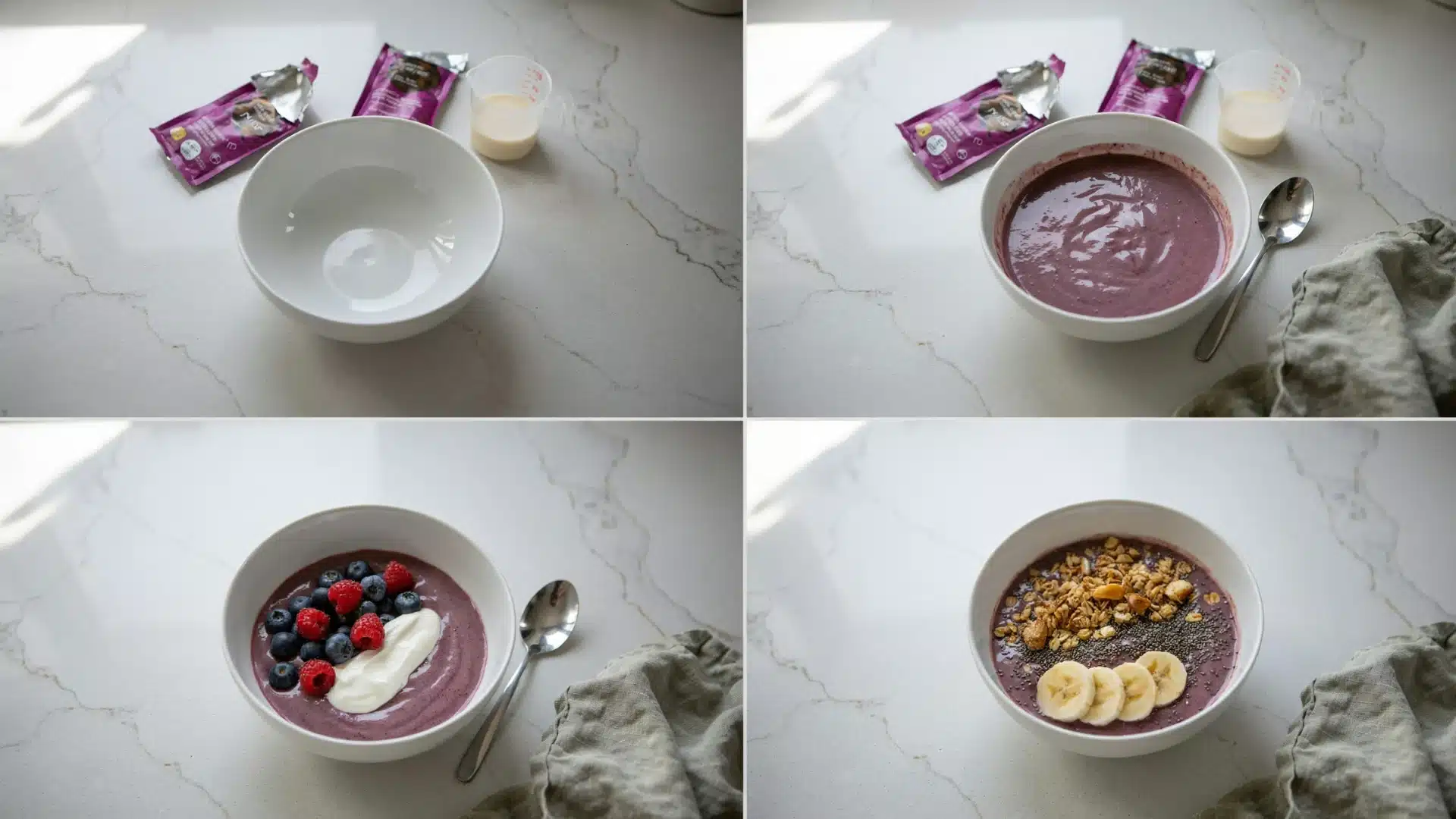
Creating a truly healthy bowl requires a few smart substitutions rather than a total overhaul.
- Step 1: Start with plain, unsweetened acai puree as the base.
- Step 2: Blend it with half a banana for natural creaminess.
- Step 3: Use unsweetened almond milk or water, not juice, to thin it.
- Step 4: Add a scoop of protein powder or Greek yogurt for staying power.
- Step 5: Top with fresh berries instead of dried fruit.
- Step 6: Sprinkle a small handful of granola, not a heaping scoop.
- Step 7: Add a spoonful of nut butter for healthy fat.
- Step 8: Skip honey, syrup, or chocolate drizzle entirely.
- Step 9: Toss on chia or hemp seeds for extra fiber and omega-3s.
Best Healthy Toppings: Ranked by Nutrition Value
Not all toppings carry equal nutritional weight.
Chia seeds top the list, packing fiber, omega-3s, and plant protein into a tiny spoonful. Hemp seeds follow close behind, offering protein without added sugar.
Fresh berries rank high too, delivering vitamins with minimal calorie cost.
Unsweetened coconut flakes add texture and healthy fat, sparingly. Sliced almonds provide crunch and vitamin E.
Plain Greek yogurt dollops boost protein significantly.
Cacao nibs provide antioxidants without the sugar of chocolate chips. Bee pollen is useful but easy to overdo, so it ranks lower. Granola sits at the bottom, valuable only in small, controlled amounts.
Healthy Acai Bowl Ideas for Different Nutrition Goals
Different goals call for different bowl setups.
For muscle building, blend acai with Greek yogurt and add a scoop of collagen or whey.
For weight management, keep the base small and skip granola entirely, leaning on cucumber or celery-adjacent light fruits instead. For gut health, layer in flaxseed and a probiotic yogurt base.
For energy before workouts, pair acai with oats and a banana for slow-release carbs.
For anti-inflammatory goals, load up on blueberries, walnuts, and a sprinkle of turmeric.
Each version maintains a simple base while adjusting toppings to align with the actual goal.
Common Mistakes People Make When Eating Acai Bowls
Most errors happen at the topping stage, not the base.
Piling on multiple sweet toppings turns a fruit bowl into dessert without anyone noticing.
Skipping protein leaves the bowl unbalanced, causing hunger soon after eating. Choosing sweetened puree over plain acai adds sugar before toppings. Oversized cafe portions double intake unknowingly.
Treating the bowl as a snack while eating cafe-sized portions leads to unintended overeating.
Ignoring nutrition labels on packaged purees hides real sugar counts.
Small awareness at each step prevents most of these slip-ups entirely.
How to Read Nutrition Labels When Buying Frozen Acai Packs
Frozen packs hide a lot behind the word “acai” on the front label.
- Check the ingredients list first, not the front packaging claims.
- Look for “unsweetened” clearly stated near the top of the ingredients.
- Scan for added sugars listed under names like cane sugar or syrup.
- Compare grams of sugar per serving across different brands.
- Check serving size, since packs often contain two or three servings.
- Avoid packs listing “acai blend” instead of pure acai puree.
- Check for artificial flavors or preservatives hidden in fine print.
Acai Bowl vs. Cereal vs. Muffin
Acai bowls compare favorably to common breakfast options per 100g, and the numbers clearly show this.
These figures are per 100 grams, not per full serving, since portion sizes vary so widely across all three.
Cereal appears lower in sugar, as milk adds weight without much sugar, diluting the total; a full bowl typically contains 20-25 grams. The muffin has more calories and sugar but less fiber than an acai bowl or cereal.
Frequently Asked Questions (FAQ’s)
1. Is Acai Bowl Good for Weight Loss?
Yes, if built with plain acai, light fruit, and controlled portions instead of heavy toppings.
2. How Often Should I Eat Acai Bowls?
Two to three times weekly works well, keeping portions moderate and toppings balanced with protein and fiber.
3. Is Acai Good for Fatty Liver?
Acai’s antioxidants may support liver health, but sugary bowls can worsen fatty liver over time.
4. Are Acai Bowls a Healthy Breakfast?
Yes, when balanced with protein and modest portions; skip syrup and excess granola for real morning fuel.
5. Is 500 Calories a Lot for an Acai Bowl?
It depends on goals, but 500 calories often signals oversized portions or excessive, calorie-dense toppings.
Bottom Line
Acai bowls vary widely, from healthy options to those loaded with sugar.
The ingredients always determine the result.
A base built on plain puree, modest fruit, and smart toppings delivers real nutritional value. Load it with syrup, candy, and oversized portions, and that value disappears fast. So, are acai bowls healthy?
Only when built with intention rather than habit. Read labels, control portions, and choose toppings deliberately.
That’s the difference between a bowl that supports your goals and one that quietly works against them.
Small daily choices collectively determine the overall outcome.