



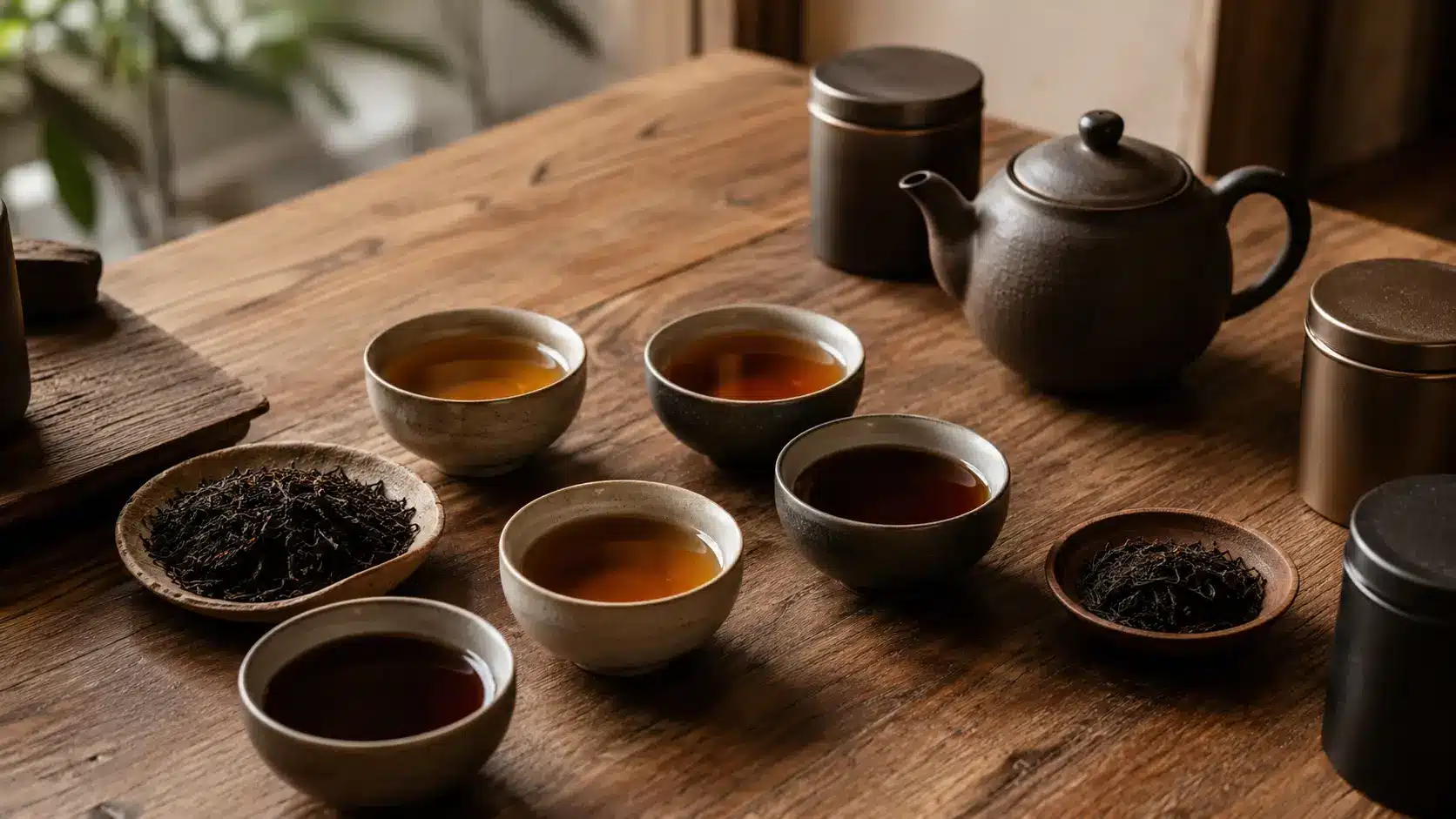







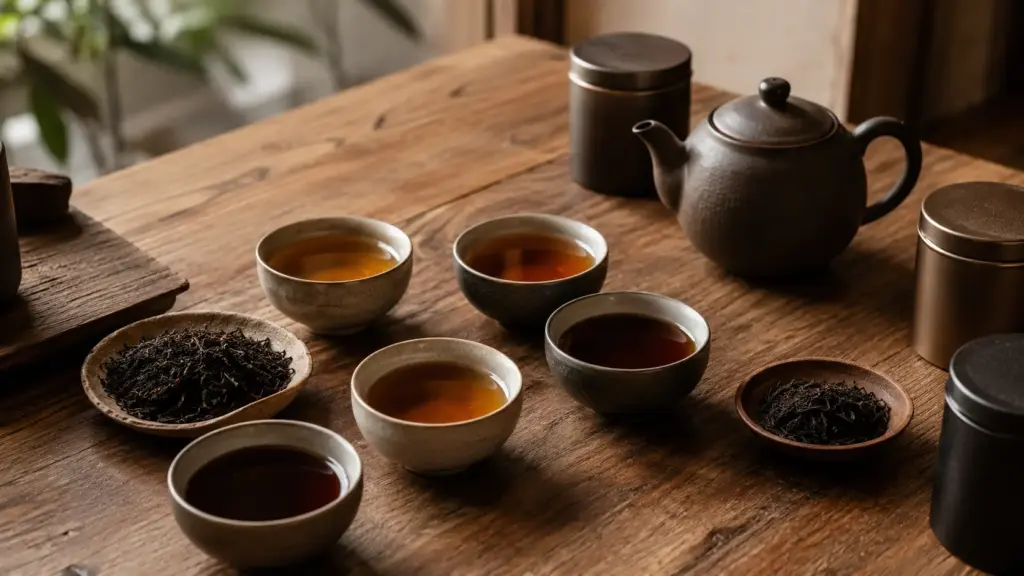

Black tea looks simple until you stand in front of a shelf full of names you barely know.
Assam sounds bold. Darjeeling feels light. Ceylon, Keemun, Earl Grey, and Nilgiri all promise something different, but the labels rarely explain enough. That is where most people get stuck.
Black tea is not one flavor. It can taste malty, smoky, fruity, brisk, smooth, or citrusy, depending on where it grows and how the leaves are processed.
I still remember tasting Assam and Darjeeling on the same day and realizing they felt like two different drinks. Once you understand the main types, choosing the right cup becomes much easier.
This article is for informational purposes only and does not constitute medical advice. If you have a health condition affected by caffeine, tannins, or stimulants, consult your healthcare provider before making changes to your tea intake.
What Is Black Tea?
Black tea comes from the Camellia sinensis plant, the same plant used for green, white, and oolong tea. The main difference is how the leaves are handled after picking.
Black tea leaves go through full oxidation. This means the rolled leaves react with air, which darkens them and gives the tea a fuller taste.
That process is the main reason black tea usually feels deeper than green or white tea.
The final cup can change based on where the tea grows, when it is picked, and how the leaves are processed. This is why black tea comes in many varieties, each with its own origin and drinking style.
| Tea Type | Origin | Flavor Profile | Best Served | Caffeine Level |
| Assam | India | Malty, bold, full-bodied | With milk | High (50–90 mg/8 oz) |
| Darjeeling | India | Fruity, floral, muscatel | Plain | Moderate (40–70 mg/8 oz) |
| Ceylon | Sri Lanka | Bright, clean, citrus-like | Hot or iced | Moderate (50–90 mg/8 oz) |
| Keemun | China | Smooth, cocoa-like, mellow | Plain | Moderate (25–50 mg/8 oz) |
| Yunnan (Dian Hong) | China | Sweet, earthy, honey-like | Plain | Moderate–High (40–70 mg/8 oz) |
| Lapsang Souchong | China | Smoky, pine, savory | Plain or with savory food | Low–Moderate (25–45 mg/8 oz) |
| Nilgiri | India | Bright, smooth, fresh | Iced or cold brew | Moderate (50–80 mg/8 oz) |
| English Breakfast | Blend | Bold, brisk, reliable | With milk or sugar | High (60–90 mg/8 oz) |
| Irish Breakfast | Blend (Assam-heavy) | Rich, malty, strong | With milk | High (70–100 mg/8 oz) |
| Earl Grey | Blend + bergamot oil | Citrusy, fragrant, bright | Plain or with lemon | Moderate (40–70 mg/8 oz) |
| Masala Chai | India (spiced blend) | Spiced, warm, bold | With milk | Moderate–High (50–80 mg/8 oz) |
| Russian Caravan | China blend | Smooth, lightly smoky, mellow | Plain or with savory snacks | Moderate (30–60 mg/8 oz) |
What are the Types of Black Tea?
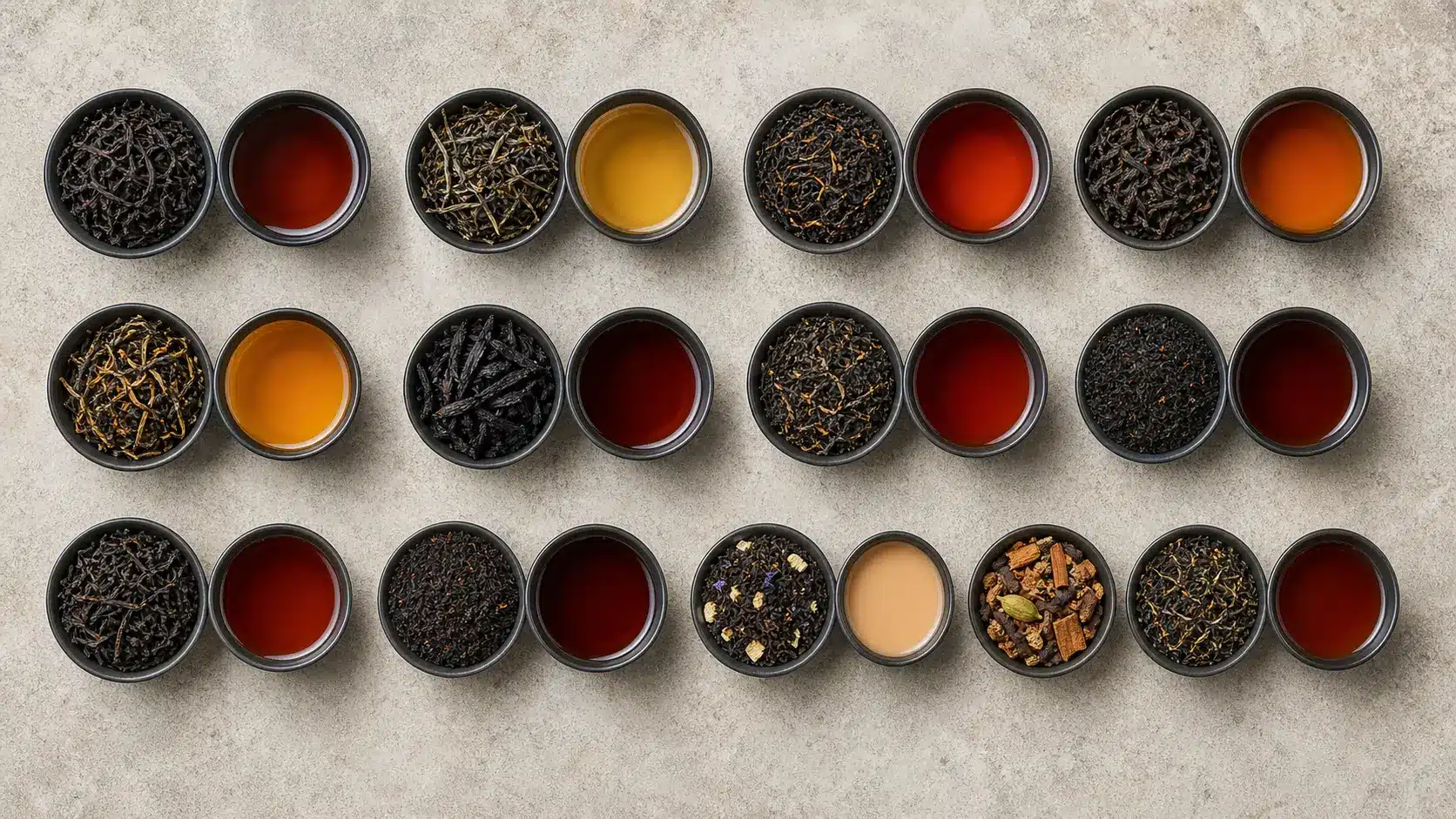
Black tea types are often grouped by origin, flavor, and drinking style. Some come from one region, while others combine leaves from different places for a steady cup.
1. Assam Black Tea
Assam black tea comes from the Assam region of India. It is known for its bold body, malty taste, and strong finish, making it one of the most common choices for morning tea.
Flavor: Malty, brisk, rich, and full-bodied, with a slightly sharp finish.
Best For: Milk tea, breakfast tea, strong daily tea, and spiced tea.
Who It’s For: People who like a deep black tea that can hold milk, sugar, or spices without tasting weak.
It is a good choice when you want a firm, warm cup that feels filling and steady.
2. Darjeeling Black Tea
Darjeeling black tea grows in the Himalayan foothills of India. It has a lighter body than Assam and is often known for its fruity, floral, and grape-like notes.
Flavor: Light, fruity, floral, and sometimes muscatel, which means grape-like.
Best For: Plain tea, afternoon tea, light snacks, and slower sipping.
Who It’s For: People who want black tea with a softer body and a brighter taste.
It works well when you want a lighter black tea that still has a clear flavor.
3. Ceylon Black Tea
Ceylon black tea comes from Sri Lanka. It has a clean, bright taste and can vary from crisp to fuller-bodied based on where it grows.
Flavor: Bright, brisk, clean, and sometimes citrus-like.
Best For: Iced tea, lemon tea, plain tea, and daily drinking.
Who It’s For: People who want a balanced black tea that works hot, cold, plain, or with lemon.
It is a useful tea to keep at home because it fits many drinking styles.
4. Keemun Black Tea
Keemun black tea comes from China, mainly from Anhui province. It has a smooth body and a softer taste than many strong breakfast teas.
Flavor: Smooth, mellow, cocoa-like, lightly smoky, and sometimes fruity.
Best For: Plain tea, quiet afternoon drinking, and low-bitterness cups.
Who It’s For: People who want black tea with depth but do not like harsh or very brisk tea.
It is a good middle choice when Assam feels too strong, and Darjeeling feels too light.
5. Yunnan Black Tea
Yunnan black tea comes from China and is often sold as Dian Hong. Many versions contain golden tips, which are young tea buds that turn golden during processing.
Flavor: Sweet, earthy, smooth, rich, and sometimes honey-like or chocolate-like.
Best For: Plain tea, slow morning tea, and cups that do not need much sugar.
Who It’s For: People who want a full black tea with natural sweetness and a rounded finish.
It is a strong pick when you want richness without a harsh taste.
6. Lapsang Souchong
Lapsang Souchong is a Chinese black tea known for its smoky smell. Traditional versions are dried over pine wood fires, which gives the tea a campfire-like note.
Flavor: Smoky, bold, pine-like, and savory.
Best For: Savory food, grilled food, smoked cheese, and bold tea moments.
Who It’s For: People who want a black tea that tastes very different from standard breakfast tea.
It is best to try a small amount first because its smoky taste can be strong.
7. Nilgiri Black Tea
Nilgiri black tea grows in southern India. It has a smooth, clean taste and usually feels lighter than Assam.
Flavor: Bright, smooth, clean, and fresh, with a lighter body.
Best For: Iced tea, cold brew, lemon tea, and easy daily drinking.
Who It’s For: People who want an Indian black tea without heavy malt notes.
It is a smart choice when you want black tea that stays pleasant after cooling.
8. English Breakfast Tea
English Breakfast tea is made from several black teas, often including Assam, Ceylon, or Kenyan tea. It is made to taste bold, steady, and easy to drink with milk.
Flavor: Bold, brisk, full, and simple enough for daily use.
Best For: Breakfast, milk tea, sugar, toast, and everyday drinking.
Who It’s For: Beginners or regular tea drinkers who want a familiar black tea that works well with milk.
It is one of the easiest black teas to start with because it feels clear and reliable.
9. Irish Breakfast Tea
Irish Breakfast tea is usually stronger than English Breakfast tea. It often contains more Assam, which gives the cup a deeper malty taste.
Flavor: Rich, malty, full-bodied, and stronger than many standard breakfast teas.
Best For: Strong morning tea, milk tea, hearty breakfasts, and a deeper flavor.
Who It’s For: People who find English Breakfast too mild and want a bolder cup.
It works best with milk because milk softens its strong body without hiding the tea.
10. Earl Grey Tea
Earl Grey is black tea flavored with bergamot oil. Bergamot is a citrus fruit, so the tea has a clear citrus smell and taste.
Flavor: Citrusy, fragrant, bright, and lightly sharp.
Best For: Afternoon tea, plain tea, lemon tea, and light snacks.
Who It’s For: People who want black tea with a fresh citrus note instead of a plain taste.
If caffeine intake matters to you, it is worth comparing the base teas used across Earl Grey brands, since caffeine levels vary significantly depending on whether the base is a robust Assam blend or a lighter Chinese tea.
For a more detailed look at caffeine in tea versus coffee, the difference is more nuanced than most people expect.
11. Masala Chai
Masala chai uses black tea with spices such as cardamom, ginger, cinnamon, clove, and black pepper. Assam is often used because it holds up well with milk and spices.
Flavor: Spiced, warm, rich, and bold.
Best For: Milk tea, cold weather, sweet snacks, and spiced drinks.
Who It’s For: People who want black tea with warmth, depth, and spice.
The cinnamon and cardamom in masala chai do more than add flavor. Both spices have documented effects on blood sugar regulation, though the amounts in a typical cup are modest.
12. Russian Caravan
Russian Caravan is a black tea mix that often includes Chinese teas such as Keemun and a small amount of smoky tea. It gives a smoother, smokier taste than straight Lapsang Souchong.
Flavor: Smooth, deep, lightly smoky, and mellow.
Best For: Plain tea, evening tea, savory snacks, and mild smoky flavor.
Who It’s For: People who want a smoky note without a strong campfire taste.
It gives you a gentle, smoky cup with a smooth finish.
How to Tell Black Tea Types Apart
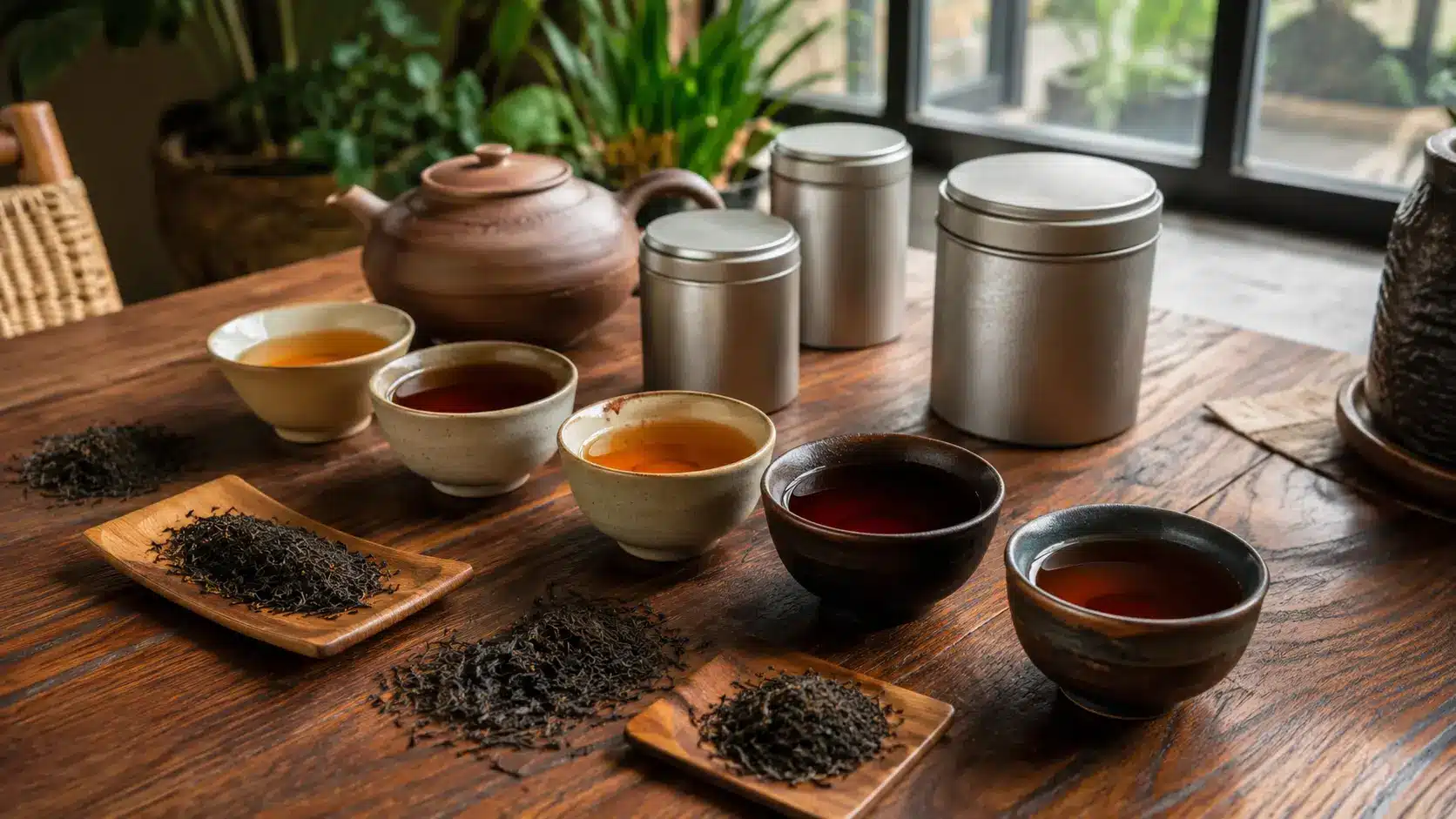
The easiest way to tell black tea types apart is to focus on four simple clues: origin, aroma, body, and finish. You do not need fancy tasting words. You need to notice what stands out in the cup.
- Origin: This tells you where the tea comes from. Indian teas often feel fuller. Chinese teas often taste softer. Sri Lankan teas often feel brighter and cleaner.
- Aroma: This is what you smell before you sip. Smoky teas stand out quickly. Citrus-flavored teas smell fresh. Fruity or floral teas usually feel lighter on the nose.
- Body: This means how heavy the tea feels in your mouth. A full-bodied tea feels thicker. A lighter tea feels cleaner and easier to sip.
- Finish: This is what stays after you swallow. Some teas leave dryness. Some leave sweetness. Others leave smoke, fruit, or a crisp edge.
When I compare teas, I write one short note for each cup, such as smooth, sharp, smoky, sweet, or firm. That small habit helps you understand the tea without overthinking it.
How to Choose the Right Black Tea for Your Goals
Choosing between the types of black tea is straightforward once you map the flavor to what you already drink or enjoy. Start with the category that fits your current habits, then move outward from there.
| If You Currently Like | Start With | Why It Fits |
| Strong coffee | Assam or Irish Breakfast | Both have the body and depth to feel like a real morning drink. If you are stepping down from coffee, knowing how tea caffeine compares to coffee will set realistic expectations. |
| Lighter drinks | Darjeeling or Nilgiri | These feel less heavy than breakfast teas and work well plain. |
| Citrus notes | Earl Grey or Ceylon | Earl Grey has bergamot oil; Ceylon tastes bright and clean even without added citrus. |
| Smooth, rounded flavors | Keemun or Yunnan | Both feel softer and less brisk than most breakfast teas. |
| Smoky food or drinks | Russian Caravan | It delivers a light smoke without the intensity of full Lapsang Souchong. |
| Spiced drinks | Masala chai | Uses Assam as a base with spices; works well with milk and holds flavor well. If you enjoy spiced teas for their health properties, certain teas are also useful for throat health, depending on the spice blend. |
One practical note: buy small samples before committing to a full pack. Tea taste is personal enough that a 50g sampler tells you far more than any description, including this one.
Simple Brewing Tips for Comparing Black Tea
Brewing matters because the same tea can taste smooth or bitter depending on how you make it. If you are comparing black tea types, keep the method steady.
- Use the same amount each time: One level teaspoon of loose leaf per 8 oz of water gives each variety a fair comparison point.
- Keep steep time steady: Three to five minutes covers most black teas. Lighter varieties like Darjeeling perform better at the shorter end. Robust teas like Assam and Irish Breakfast can tolerate four to five minutes without going bitter.
- Use water just off the boil: Black tea is one of the few tea categories that genuinely benefits from near-boiling water (around 200 to 212°F). Using water that is too cool produces a flat, underwhelming cup.
- Taste the tea plain first: Add milk, lemon, sugar, or spices only after you have tasted the base. Adding milk to Darjeeling before tasting it plain will mask the muscatel note entirely.
- If the cup tastes harsh, reduce steep time: Adding sugar is a fix for bitterness but not for over-extraction. Shortening the steep by 30 to 60 seconds is the correct adjustment.
- If the cup tastes thin, use more tea, not more steep time: Over-steeped weak tea produces bitterness without added body. More tea leaves are the right fix for a low-flavor cup.
These small brewing habits keep your comparison fair and help each black tea type show its own character.
Frequently Asked Questions
How should black tea be stored after opening?
Keep black tea in a sealed tin, jar, or opaque pouch away from heat, light, moisture, and strong kitchen smells. Tea leaves are hygroscopic, meaning they absorb moisture and odors from the surrounding environment, which degrades the aromatic compounds quickly.
Smaller containers work better than large ones once the original packaging is opened because they limit air exposure after each use.
What does orange pekoe mean on a black tea label?
Orange pekoe is a grading term that refers to leaf size and sorting, not flavor. It describes whole, unbroken tea leaves of a specific size rather than fannings or dust, which are the smaller particles found in most commercial tea bags.
The word “orange” likely traces back to the Dutch House of Orange and the colonial-era Dutch East India Company, not to any citrus flavor. Seeing “orange pekoe” on a label tells you about leaf grade, not taste quality.
Is Earl Grey always made with the same black tea base?
No. Earl Grey producers use different base teas depending on the brand’s target flavor profile. Some use Ceylon for a bright, lighter cup. Others use Chinese black teas like Keemun for a smoother, more mellow bergamot experience.
A few premium versions use Darjeeling as the base. This is why two Earl Greys from different brands can taste noticeably different even though both use bergamot oil as the flavoring agent.
Why do some types of black tea cost significantly more than others?
Price reflects origin, harvest timing, leaf grade, processing method, and estate reputation. First-flush Darjeeling, picked during a narrow spring window, costs more than standard Assam because it is harvested once per year in limited quantities and requires skilled hand-picking.
Mass-market breakfast blends use machine-harvested, broken-grade leaves from multiple regions, which brings costs down considerably. Higher price does not always mean better for your specific taste preference, but it generally signals better raw material quality and more careful processing.
Can black tea be used in cooking?
Yes. Black tea works well in marinades for meat and poultry, poaching liquids for eggs or fruit, simple syrups for desserts and cocktails, and baked goods where a slightly bitter, tannin-forward note adds depth.
Assam is a useful cooking tea because its robust flavor survives heat and other ingredients without disappearing. Lapsang Souchong works well in savory applications like smoky BBQ sauces or braises where smoked flavor is the goal.
What is the difference between flavored black tea and scented black tea?
Flavored black tea has added ingredients mixed directly into or onto the tea leaves: essential oils, dried fruit pieces, flower petals, or synthetic flavoring. Scented black tea gains its aroma through contact with fragrant materials during drying or storage, without those materials remaining in the final product.
Traditional jasmine tea is a scented tea: fresh jasmine blossoms are layered with tea leaves overnight, then removed before packing. Earl Grey with bergamot oil added is technically a flavored tea. The category boundary is about process, not quality.
Does black tea have health benefits worth knowing about?
Black tea contains theaflavins and thearubigins, polyphenol compounds produced during oxidation that have been studied for antioxidant and cardiovascular effects.
A 2012 review published in the European Journal of Clinical Nutrition found that regular black tea consumption was associated with modest improvements in LDL cholesterol levels.
Black tea also contains L-theanine, an amino acid that works alongside caffeine to produce a more even alertness than caffeine alone.
Closing Thoughts
Black tea is easier to enjoy when you stop chasing the “best” option and start noticing what fits your taste.
A good cup should match how you like to drink tea, not what a label suggests.
I’ve found that small tastings help more than buying a large pack too soon, especially when the names still feel new. Start with one type, give it your full attention, and notice what feels pleasant or too much.
After a few cups, your own pattern becomes clearer. That is the real value of learning black tea types: you can choose with confidence instead of guessing.