




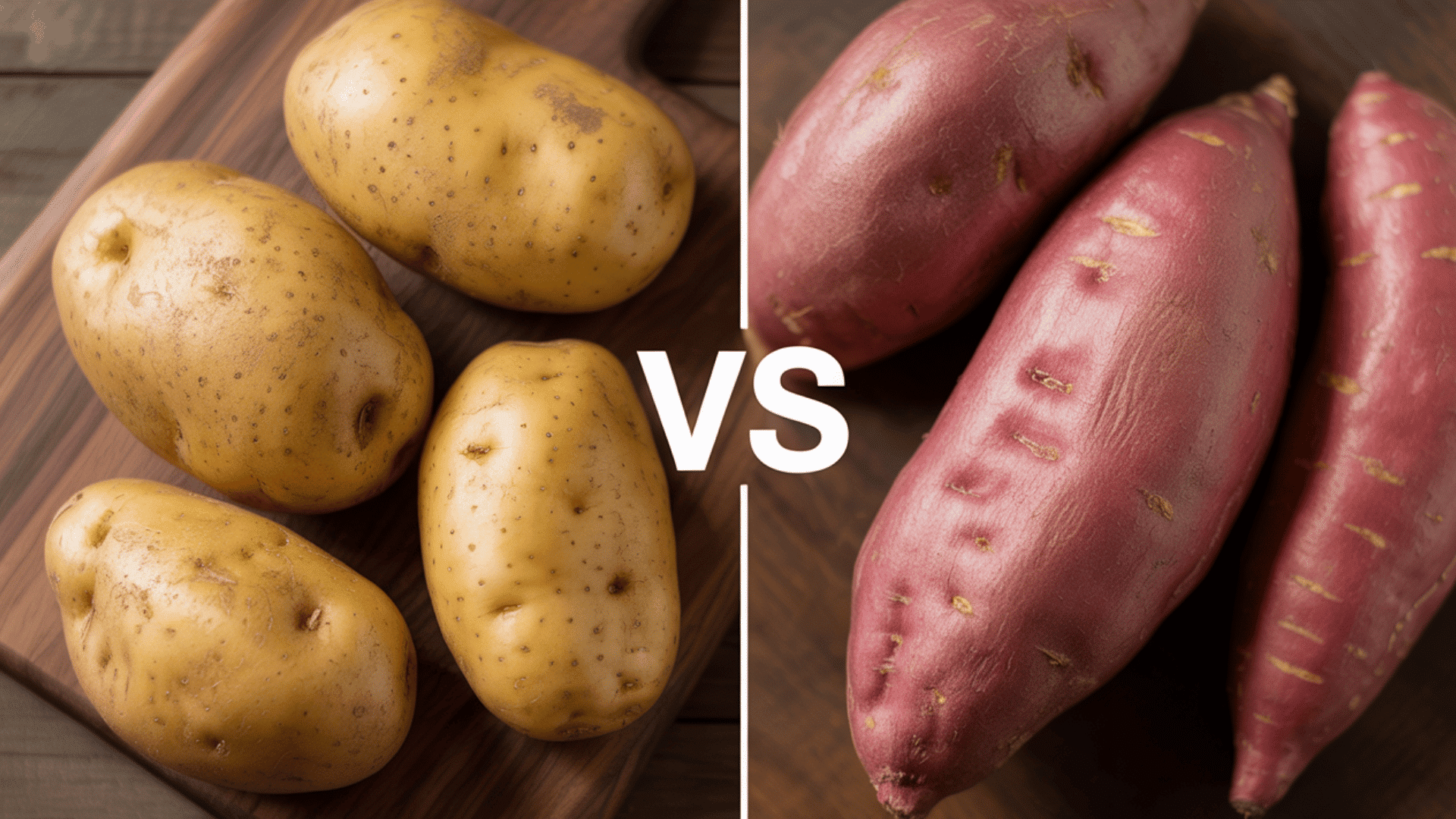









Pick up a sweet potato in one hand and a regular potato in the other. Now, which one do you put in your cart? As a registered dietitian with over years of experience, this is the question I get asked more than almost any other; and the answer might surprise you.
Both are filling, delicious, and more nutritious than most people give them credit for.
But when clients start asking about carbs in sweet potato vs potato, I know exactly where the confusion comes from, especially for those managing blood sugar or working toward weight loss.
Here is what I always tell them – neither potato is the enemy. Let me break down exactly how they compare so you can choose with confidence.
Carbs in Sweet Potatoes
A medium-sized sweet potato, roughly 5 inches long, contains about 24 grams of carbohydrates, with approximately 7 grams coming from natural sugars.
Sweet potatoes have a glycemic index of around 63, which places them firmly in the medium range on a scale where values under 55 are considered low, 56–69 are medium, and 70 or above are high.
This moderate GI means your body breaks down these carbs gradually rather than all at once. As a result, sweet potatoes prevent sudden blood sugar spikes and deliver slow-burning, steady energy that keeps you feeling balanced, focused, and satisfied for hours after eating.
Carbs in Regular Potatoes
A medium white potato contains approximately 37 grams of carbohydrates, with only 2 grams derived from natural sugars, significantly less than sweet potatoes.
When baked, white potatoes carry a notably high glycemic index of around 85, meaning those carbohydrates enter your bloodstream relatively quickly, causing a faster rise in blood sugar levels.
However, the cooking method plays a crucial role in changing this outcome. Boiling white potatoes lowers their GI considerably, to a much friendlier range of 50–60.
So while regular potatoes contain more total carbs, choosing the right preparation method makes them a perfectly reasonable and nutritious carb option within any balanced diet.
Nutritional Comparison: Sweet Potatoes vs. Regular Potatoes
Both potatoes deliver impressive nutrition, but they shine in different areas. Here’s how they stack up side by side:
| Nutrient | Sweet Potato (medium) | Regular Potato (medium) |
|---|---|---|
| Calories | 112 | 163 |
| Carbohydrates | 24g | 37g |
| Protein | 2g | 4g |
| Fat | 0g | 0g |
| Fiber | 4g | 4g |
| Vitamin A | 400%+ daily value | Minimal |
| Vitamin C | Good amount | Good amount |
| Vitamin B6 | Moderate | High |
| Potassium | 542mg | 926mg |
| Beta-carotene | Very high | Low |
Sweet potatoes win for vitamin A and beta-carotene, making them excellent for eye health and immune support.
Regular potatoes lead the way in potassium and protein, supporting heart health and muscle function. Both are nutritious choices that fit into healthy eating plans
Health Benefits of Sweet Potatoes vs. Regular Potatoes

Both potatoes offer unique health advantages that can support your wellness goals. Understanding these benefits helps you choose the right option for your specific needs:
1. Blood Sugar Management
Sweet potatoes keep blood sugar steady due to their lower glycemic index and higher fiber content. This is especially helpful for people with diabetes or those avoiding energy crashes.
Regular potatoes can still work for blood sugar management when eaten with protein or healthy fats. Cooling cooked potatoes creates resistant starch, which significantly lowers their glycemic impact.
2. Weight Loss and Satiety
Sweet potatoes are better for weight loss because their fiber helps you feel full longer, reducing snack cravings. The natural sweetness satisfies sugar cravings without added calories with a lower glycemic index.
Regular potatoes work well, too, when boiled and cooled, as the resistant starch formation aids satiety and reduces calorie absorption for effective weight management.
3. Nutrient Density
Sweet potatoes pack more nutrients per calorie overall. Their beta-carotene acts as an antioxidant, helping protect cells from damage and inflammation.
Regular potatoes are a good source of potassium, which supports heart health and helps lower blood pressure. Both potatoes provide vitamin C, which supports immune function and overall wellness.
Which Potato is Better for Your Diet?

Choosing between sweet and regular potatoes depends on your specific health goals and dietary needs.
1. Low-Carb and Keto Diets
Neither potato is ideal for keto, but sweet potatoes are the better pick. They digest more slowly, cause a gentler rise in blood sugar, and offer more fiber, making them easier to manage on a flexible low-carb plan.
A small portion occasionally is workable without derailing your goals. Regular potatoes, however, hit the system faster and harder, making them a poor fit for strict low-carb or keto diets altogether.
2. Weight Loss
Sweet potatoes are the better choice for weight loss; their higher fiber content keeps you fuller longer, prevents blood sugar spikes, and curbs cravings.
Regular potatoes can still support fat loss when boiled and cooled, as they develop resistant starch that limits calorie absorption.
Whichever you choose, stick to half- to one-cup servings and pair with protein and vegetables for balanced, satisfying meals that actually support your goals.
3. Diabetes Management
Sweet potatoes, with a lower glycemic index (63 vs. 85) and higher fiber content, slow glucose absorption and prevent blood sugar spikes, making them the stronger choice for diabetes management.
Regular potatoes, while higher on the GI scale, can still fit into a diabetic diet when boiled or cooled to create resistant starch. Pairing small portions of either variety with protein, healthy fats, and vegetables helps minimize the overall glucose response.
4. Vegetarian and Vegan Diets
Both potatoes are excellent plant-based staples, providing essential carbohydrates, fiber, and micronutrients without animal products.
Sweet potatoes offer exceptional vitamin A (over 400% daily value) and antioxidants, while regular potatoes deliver more potassium for heart health. Both provide 4 grams of plant-based fiber for digestive wellness.
Best Ways to Prepare Sweet Potatoes and Regular Potatoes
The way you cook potatoes significantly affects their nutritional value.
| Method | How to Prepare | Key Benefit |
|---|---|---|
| Baking | Pierce with a fork, bake at 400°F for 45–60 minutes | Concentrates flavor, easy, and hands-free |
| Boiling | Simmer chunks in cold water for 15–20 minutes | Keeps GI lower, preserves water-soluble vitamins |
| Steaming | Steam chunks over boiling water for 15–20 minutes | Retains the most nutrients, keeps texture firm |
| Roasting | Toss with minimal oil, roast at 425°F for 25–35 minutes | Enhances flavor while maintaining nutritional value |
| Cooling After Cooking | Boil or steam, then refrigerate for a few hours | Creates resistant starch, reduces blood sugar impact |
| Air Frying | Toss with 1 tsp oil, air fry at 400°F for 15–20 minutes | Keeps GI lower than baking for sweet potatoes; far healthier than deep frying |
For the healthiest results, choose boiling, steaming, or the cooling method. These techniques preserve the most nutrients and minimize the impact on your blood sugar levels.
Summing Up
After researching and comparing these two nutritious vegetables, I’ve found that there’s no single “winner.”
My search revealed that sweet potatoes excel at managing blood sugar and supporting weight-loss goals due to their lower glycemic index and impressive vitamin A content.
Regular potatoes shine when you need sustained energy and heart-healthy potassium.
Through my research, I learned that there is no discussion on carbs in sweet potato vs potato; most people can enjoy both types in moderation.
Now it’s your turn! Try preparing both sweet potatoes and regular potatoes using the healthy cooking methods we discussed.