



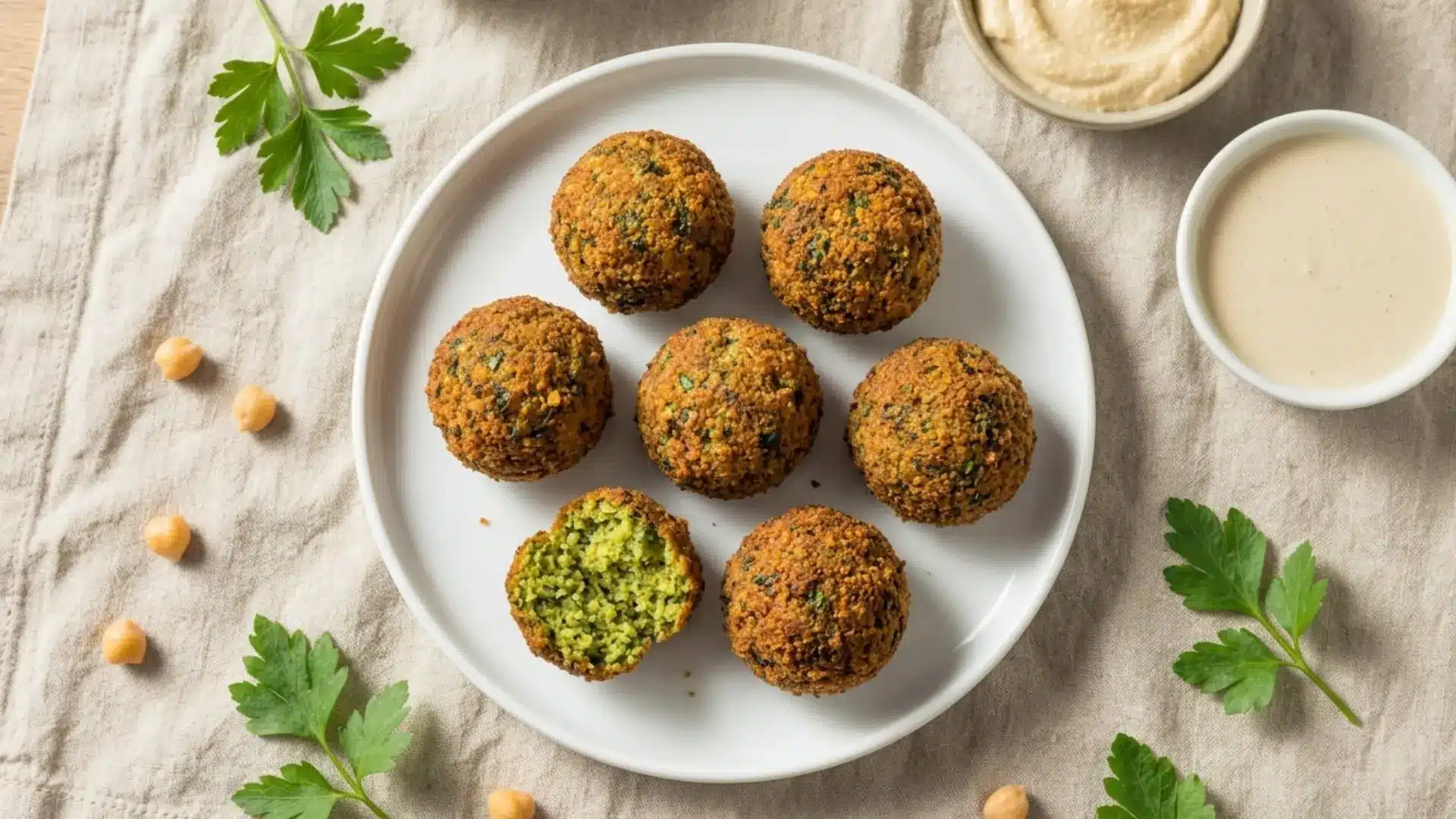








Fried food and health are rarely linked, but falafel challenges that notion.
Beneath its crispy exterior lies a core packed with nutrients, mainly chickpeas.
Street vendors have known this for decades, tucking golden balls into pita bread across cities worldwide.
Yet questions linger. How many calories hide in that crunch? Does frying cancel out the benefits? Chickpeas reveal that falafel’s worth extends beyond being merely a fried snack.
This blog details each nutrient that appears on the plate, one by one.
Falafel Nutrition Facts at a Glance
One serving packs plant protein, fiber, and iron without meat. Chickpeas provide folate and magnesium.
A falafel ball has about 55-60 calories, 2g protein, and 3g fiber.
Sodium climbs fast when store-bought mixes or heavy seasoning enter the picture.
Enjoy falafel with tahini or yogurt sauce to boost calcium and healthy fats.
Is falafel healthy?
Falafel maintains its healthy reputation when prepared properly.
Chickpeas bring plant protein, iron, and folate to the plate, and those nutrients don’t disappear during cooking.
Baking or air-frying keeps saturated fat lower than deep-frying does.
Whole ingredients like garlic, parsley, and cumin add antioxidants without extra calories.
Falafel fits vegetarian, vegan, and Mediterranean eating patterns without much adjustment. Sodium and portion size matter most, since sauces and store-bought mixes can push numbers higher than expected.
Homemade falafel gives more control over oil and salt.
Eaten in moderation, alongside vegetables and whole grains, falafel supports a balanced diet without much guilt.
Carbs, Fat, Fiber, Vitamins, and Minerals: Falafel Nutrition

Falafel provides more than protein and calories, transforming chickpeas into a tasty, nutrient-rich snack.
1. How Many Calories Are in Falafel?
Serving size changes the math quickly. Three falafel balls, roughly the size of golf balls, land near 170-180 calories.
Stuff them into a pita with hummus and salad, and the plate climbs past 400 calories.
Add tahini sauce, and another 100 calories join the mix.
Restaurant portions often run larger than homemade ones, so calorie counts swing depending on where the meal comes from. A falafel wrap from a food cart differs from a falafel platter at a sit-down restaurant.
Portion control matters more than the falafel itself.
While tracking apps are helpful, reading ingredient labels on store-bought mixes offers a clearer understanding.
2. How Much Protein in Falafel?
Falafel nutrition holds up here better than expected for a fried snack.
A standard serving of six balls delivers around 13 grams of protein, all from chickpeas. No animal source needed.
That number rivals a serving of chicken or fish, making falafel a smart meat substitute. Chickpeas have a complete amino acid profile, and pairing falafel with pita, hummus, or tahini enhances it.
Protein density this high is rare for a plant-based food, fried or not.
3. Does Falafel Have Good Carbs?
Falafel carries good carbs, thanks to fiber and slow-digesting starch from chickpeas.
A standard serving holds around 32 grams of carbohydrates, and much of that is fiber rather than sugar.
Chickpeas sit low on the glycemic index, so those carbs release slowly instead of spiking blood sugar.
That slow breakdown keeps hunger away longer than most fried snacks manage. Subtract the fiber, and net carbs settle closer to 26 grams, keeping falafel reasonable for anyone watching carb intake closely.
4. Is Falafel High in Fat?
Falafel can run high in fat, though frying deserves most of the blame, not the chickpeas.
A standard serving holds around 18 grams of fat, mostly absorbed from oil during frying.
Baking or air-frying cuts that number nearly in half, without sacrificing much flavor or texture. Chickpeas themselves carry minimal natural fat, so extra grams on the label trace back to cooking method.
Choosing baked falafel over fried remains one of the simplest ways to lower fat, without giving up the dish.
5. Vitamins and Minerals in Falafel
Falafel provides protein, fiber, vitamins, and minerals.
- Iron: Around two milligrams per serving, mostly coming from the chickpeas rather than the herbs or oil.
- Folate: Almost ninety micrograms per serving, one of the highest among street foods.
- Manganese and phosphorus: Approximately 1 mg and 180 mg, mainly in the chickpea base.
- B vitamins: Small amounts of B6 and pantothenic acid, largely retained even after frying.
- Zinc: About one milligram per serving, present thanks to the chickpeas used in the mix.
Health Benefits of Eating Falafel
Falafel does more than fill a plate. Chickpeas support heart health by helping lower LDL cholesterol over time.
Steady blood sugar levels follow naturally from the fiber and protein working together.
Digestion improves too, since fiber keeps things moving through the gut smoothly.
Magnesium and potassium in chickpeas help regulate blood pressure.
Plant-based eaters gain a reliable iron source, something often harder to find outside meat. Falafel also supports weight management, since protein and fiber both extend fullness between meals.
Swapping red meat for falafel a few times a week can shift overall diet quality in a noticeably positive direction.
Potential Downsides of Falafel
Falafel isn’t without drawbacks. Frying oil often gets reused at restaurants, raising trans fat exposure over time.
Portion sizes at food carts and restaurants tend to run larger than home servings, adding hidden calories fast.
Chickpeas can trigger bloating or gas in people with sensitive digestion. Store-bought falafel mixes sometimes pack preservatives and excess sodium into the ingredient list.
Cross-contamination with gluten is possible if fried in shared oil with breaded items.
Anyone with legume allergies should avoid falafel since chickpeas are the main ingredient.
Falafel vs. Other Popular Protein Foods
Numbers reveal the story better than opinions. Here’s how falafel compares to other protein sources.
Is Falafel Good for Weight Loss and Other Diets?
Falafel can fit into a weight loss plan, depending on how it’s prepared.
Baked or air-fried versions cut calories compared to deep-fried ones. Protein and fiber curb appetite, reducing snacking. Portion control matters, as pita, sauces, and sides add up quickly.
Falafel suits vegetarian and vegan diets naturally, given its plant-based core.
Mediterranean diet followers often include it as a staple protein source.
Keto dieters should approach with caution, since carb content runs higher than most keto-friendly proteins allow.
How to Make Falafel Healthier
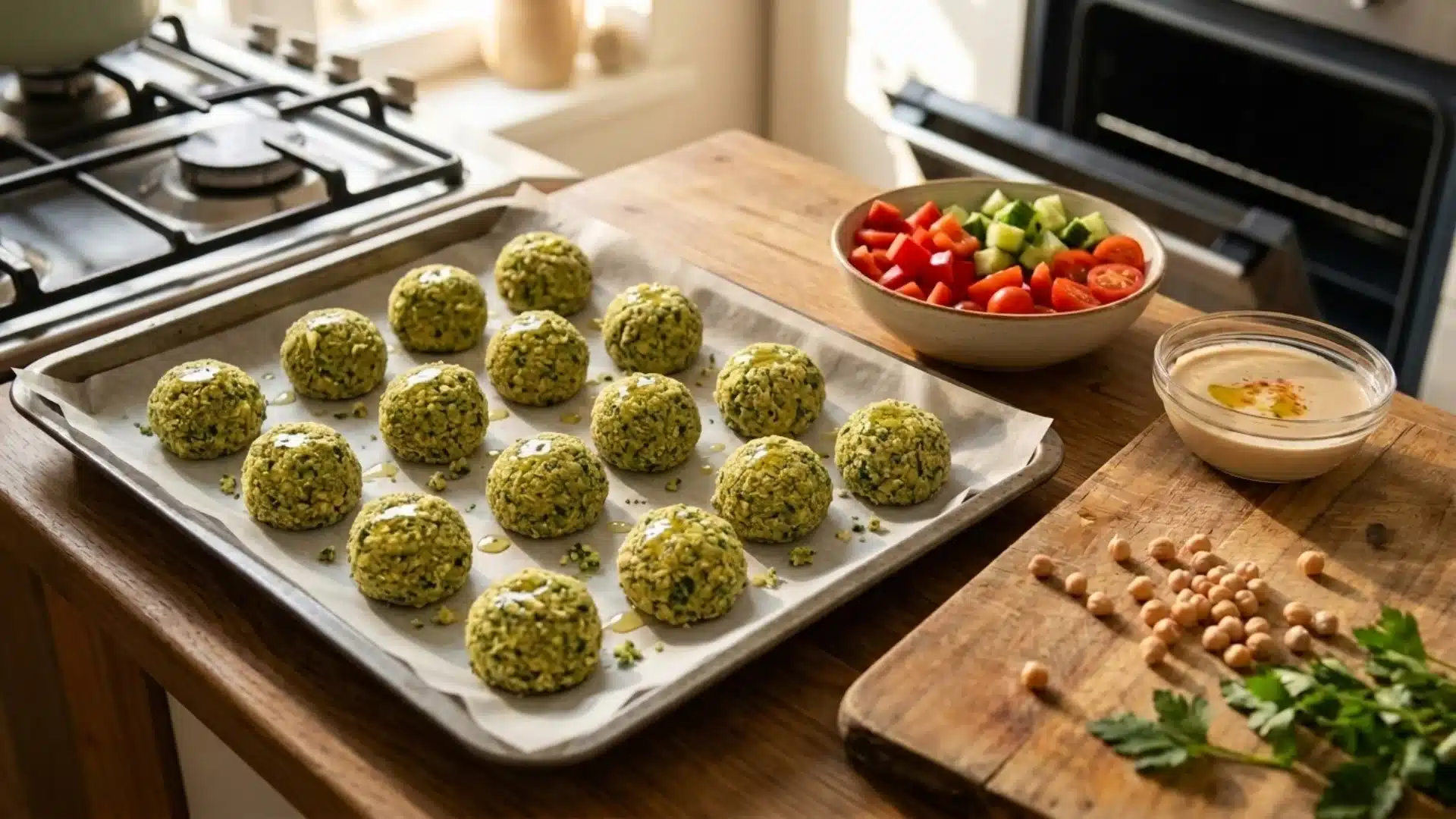
A few simple swaps can make falafel healthier without losing its flavor.
- Bake instead of fry: Cuts fat content significantly while keeping the texture mostly intact.
- Choose a bowl over pita: Skips the extra carbs and calories that bread adds to the meal.
- Go light on sauces: Tahini and heavy dressings can quietly stack up calories fast.
- Add extra vegetables: Balances out the meal and adds volume without adding many calories.
- Watch portion size: Even baked falafel can add up quickly when servings run large.
Homemade vs. Restaurant vs. Frozen Falafel Nutrition
Where falafel comes from changes what ends up on the plate. Here’s how the three versions compare.
| Type | Calories (per serving) | Sodium | Oil used | Control over ingredients |
|---|---|---|---|---|
| Homemade | Lowest | Adjustable | Chosen by cook | Full control |
| Restaurant | Highest | Often heavy | Reused frying oil | No control |
| Frozen/store-bought | Moderate | Elevated | Pre-added | Limited, label-dependent |
Frequently Asked Questions
1. How Much Protein is in 4 Balls of Falafel?
Four falafel balls deliver roughly 9 grams of protein, since a six-ball serving averages around 13 grams total.
2. Which is Healthier: Chicken or Falafel?
Chicken offers more protein with less fat, but falafel provides fiber and plant nutrients chicken lacks.
3. Is Falafel Anti-Inflammatory?
Chickpeas, garlic, and parsley have antioxidants that may reduce inflammation, but frying oil can diminish those benefits.
4. Is Falafel Considered Junk Food?
Falafel isn’t junk food by nature, but deep-frying and heavy sauces can push it closer to indulgent territory.
5. Are Hummus and Falafel the Same Thing?
Hummus is a chickpea spread, while falafel is fried chickpea patties; both use chickpeas.
Wrap Up!
Falafel nutrition holds up well across protein, fiber, and a solid range of vitamins and minerals.
It becomes a genuinely balanced choice rather than merely another fried snack.
Knowing how much protein is in falafel makes it easier to fit into a regular diet without second-guessing the choice, whether it lands in a bowl, a wrap, or straight off the tray.
Drop a comment below with the falafel swap from this list worth trying first.