















You wake up, turn your head, and your neck says, “Absolutely not.” That sharp, locked-up feeling on one side is frustrating, especially when you have a full day ahead.
I have been there, and the first instinct is usually to twist it harder or try to crack it yourself. That tends to make things worse.
Good news: a neck crick is usually a muscle spasm or joint stiffness, not serious. It responds well to simple, proper care. Knowing how to safely eliminate a neck crick helps you recover faster and avoid prolonging it.
In this post, I walk you through what a crick actually is, what causes it, the safest way to treat it at home, stretches that actually help, and the clear signs that mean it is time to call a doctor.
| Disclaimer: This is for informational purposes only and not medical advice. Consult a healthcare provider before changing treatment. If numbness, tingling, weakness, or neck pain occur after an injury, seek medical attention before home care. |
What Is a Crick in the Neck and What Does It Feel Like?
A crick in the neck describes sudden stiffness, soreness, or limited motion, not a medical diagnosis. It usually happens when irritated muscles, small joints, or soft tissues tighten to protect the area.
This muscle guarding can make the neck feel stuck, painful, or uneven without indicating that a bone is out of place or a nerve is damaged.
Common symptoms of a crick in the neck:
- One-sided neck pain: Pain often sits on one side and may spread toward the upper shoulder
- Trouble turning your head: Looking left, right, up, or down may feel stiff or painful
- Tight or stuck feeling: The neck may feel like it will not move freely
- Mild shoulder ache: The upper shoulder or base of the skull may feel sore
- Pain after sleep or posture strain: Symptoms often start after waking up or sitting too long
- Relief with gentle movement: Mild motion may make the neck feel a little less stiff
A typical neck crick feels local, stiff, and movement-based. If pain spreads into your arm, causes numbness or weakness, follows an injury, or comes with fever or a severe headache, it is safer to get medical help before trying home care.
What Causes a Crick in the Neck?

Most neck cricks trace back to one simple pattern: the neck stayed in a strained position for too long, or reacted to a sudden load. The muscle tightens to guard the area, restricting movement, and the limited movement makes everything feel more locked up.
| Cause | What Happens | Main Clue |
| Sleeping awkwardly | Neck stays bent or rotated for hours | Pain starts after waking |
| Low or high pillow | The neck loses its neutral position overnight | Morning stiffness that loosens slowly |
| Forward-head desk posture | The head sits forward for long periods, loading the neck, the same mechanics behind tech neck and upper back strain | Aches build during or after work |
| Sudden sharp movement | Joints or muscles get irritated quickly | Pain starts almost immediately |
| Stress and tension | Shoulders and neck stay raised and tight | Tight jaw, raised shoulders |
| Cold air on the neck | Muscles tighten more in cold or drafty air | Stiffness after AC or a window breeze |
According to MedlinePlus, neck pain and spasms are often related to posture, overuse, or prolonged sitting in one position, which aligns with these common causes.
Most of these causes are completely avoidable once you know what to look for. But right now, if the crick is already there, causes are less important than relief. The next section is where to focus first: a safe, step-by-step treatment plan you can start today.
How To Relieve A Crick In Your Neck With 4 Guided Stretches
These four stretches come from Dr. Rowe at SpineCare and target the exact muscles that cause a neck crick. Try all four and focus on whichever gives the most relief. Move slowly, stop before pain, and build gradually with each repetition.
Type 1: Use Moose Hands to Release the Tight Spot
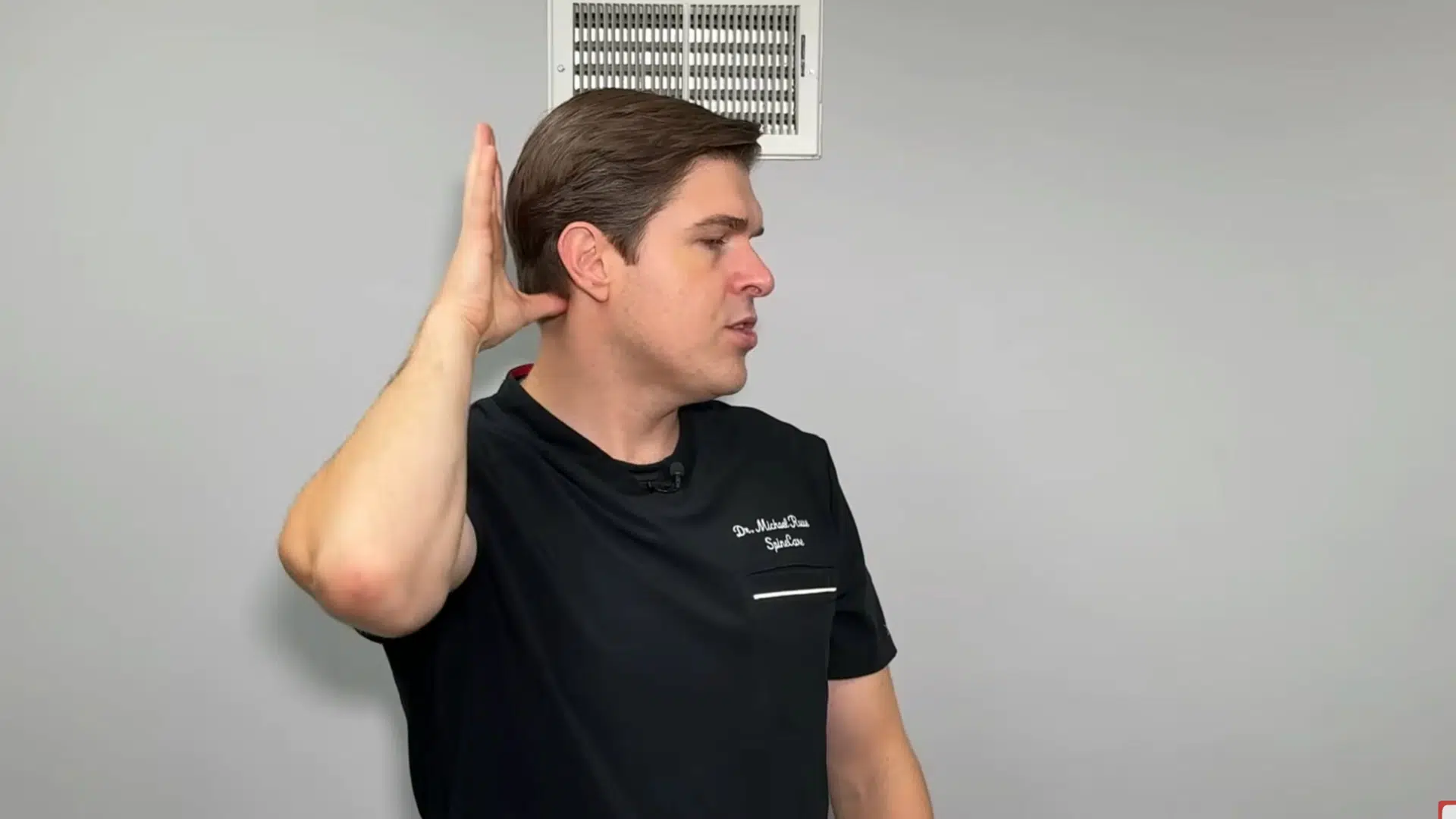
Press your thumb into the tight spot on the side of your neck and apply gentle circular pressure for 5 seconds. Release, then slowly turn your head a little further in the painful direction.
Repeat the press-and-turn cycle several times until the range of motion improves. For stubborn spots, add a light vibrating motion with your hand.
Type 2: Try the Edge of Bed Method to Decompress the Neck
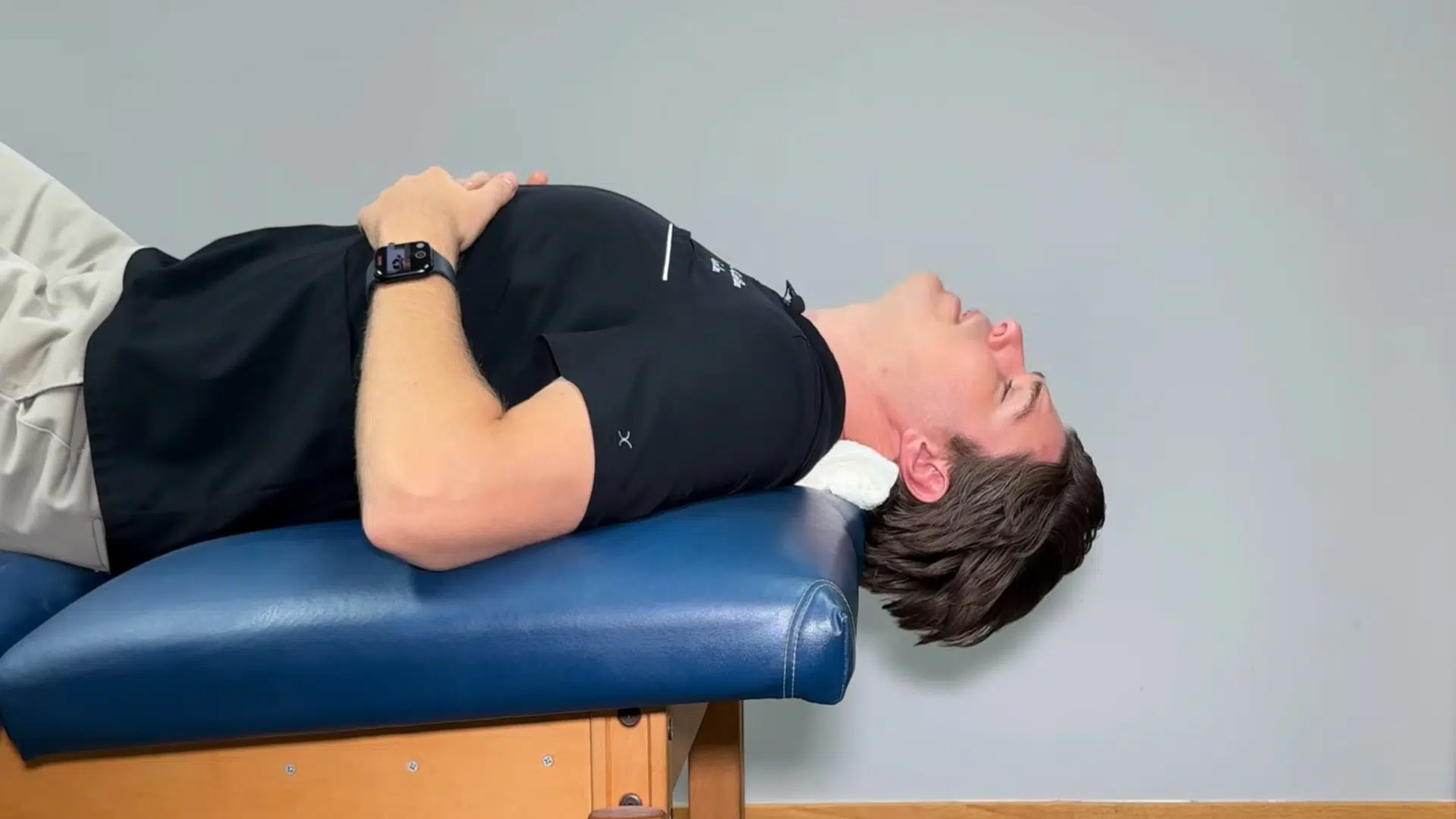
Lie on your back with your shoulders at the edge of the bed and let your head fall off naturally. Gravity does the work, decompressing the neck joints. Hold for 30 seconds to two minutes.
Once loose, slowly add movement in the painful direction, ear-to-shoulder tilt, or chin tuck while in position, holding 30 seconds each.
Type 3: Work Through the Trifecta Stretch for Deep Muscle Relief
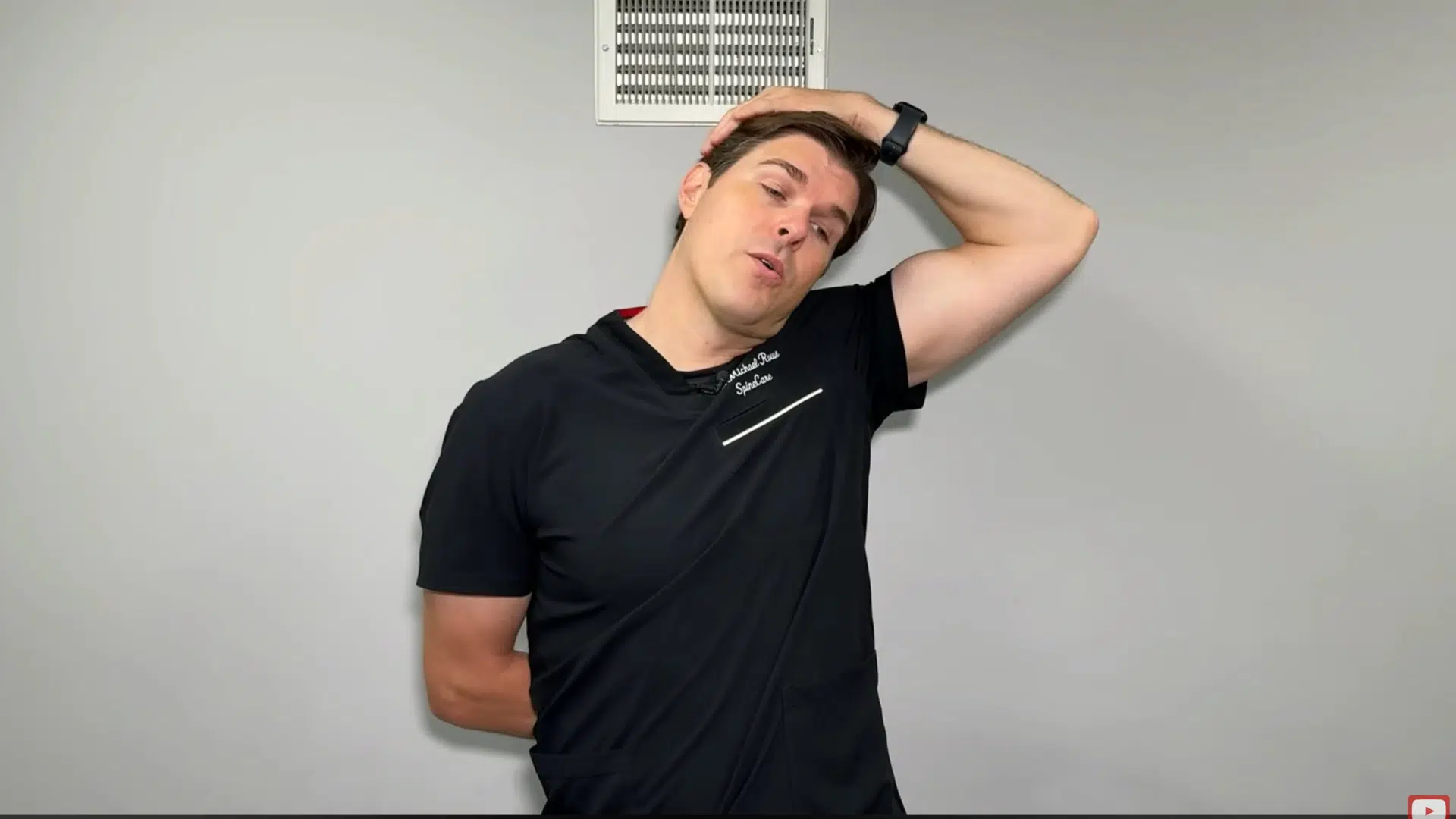
This targets three muscles in one sequence. Stand or sit with your sore-side arm bent behind your lower back throughout.
- Upper Trapezius: Hook the opposite hand on your head, tilt your ear toward the shoulder, then slowly turn your chin upward. Hold for 20 seconds, repeat 2 to 3 times.
- Sternocleidomastoid: Without using your hand, tilt your ear toward the shoulder and let it fall slightly backward off the shoulder, like off a cliff. Press your opposite palm gently on your collarbone to deepen it. Hold 20 seconds on each side.
- Levator Scapulae: Rotate your head to look over the opposite shoulder, hook the back of your head with one hand, and pull your chin down toward your armpit. Hold for 20 seconds, then repeat 2 to 3 times on each side.
Type 4: Use the Towel Method to Guide Your Head Back Into Full Range
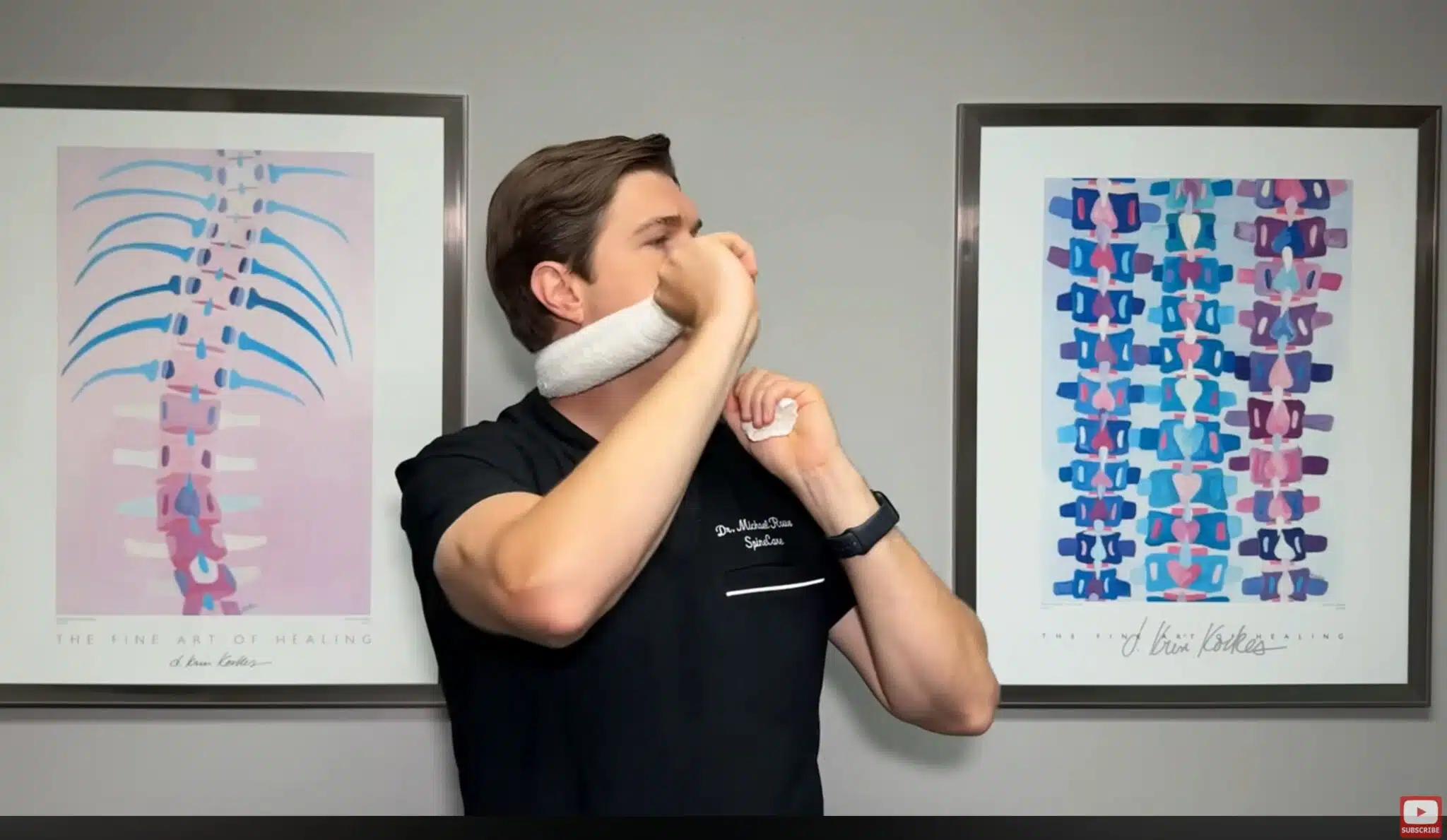
Roll a medium towel and place it at the top of your neck below the skull. Pull both ends forward for firm pressure. Anchor the side you want to turn toward, raise the other end toward the ceiling, then sweep that hand slowly across your head to guide the turn.
Stop just before discomfort, hold 3 to 5 seconds, and repeat until the range improves. Reposition the towel lower on the neck and repeat.
A few careful stretches done consistently can make a real difference within the first day or two. That said, some very common habits completely cancel out this progress. The next section covers what not to do, which is just as important as knowing what to do.
How Do You Treat A Crick In The Neck At Home?
The safest way to treat a neck crick is to calm the irritation first, then gently restore movement. Forcing it, cracking it, or jumping straight into aggressive stretches can worsen the guarding. Here is the order that actually works.
1. Ice or Heat Therapy

Ice and heat are not interchangeable. Ice works best in the first 24 hours when the tissue is freshly irritated. Heat takes over once the sharpness settles and stiffness becomes the main problem. Using the wrong one at the wrong time can slow things down rather than speed them up.
Apply an ice pack wrapped in a thin towel for 15 minutes at a time during the first day. After that, switch to a heating pad or a warm shower for 15 to 20 minutes to relax tight muscles and restore blood flow to the area. Heat should feel soothing. If it feels uncomfortable, stop.
2. Over-the-Counter Pain Medication

When pain is sharp enough to limit basic movement, OTC medication can take the edge off while the neck begins to settle. It is a support tool, not a fix on its own, and works best alongside ice, heat, and gentle movement rather than as a standalone solution.
Use OTC Pain Relief Safely:
- NSAIDs like ibuprofen or naproxen can reduce swelling and discomfort.
- Acetaminophen can help relieve pain, but it does not reduce inflammation.
- These medicines are not suitable for everyone. Check with a clinician first if you have stomach issues, kidney concerns, pregnancy, blood thinners, or other health conditions.
3. Light Massage

Gentle pressure over the side of the neck, upper shoulder, and base of the skull can reduce muscle guarding and improve circulation to the tightest areas. If you want to go further, structured neck massage strokes work well once the sharpest pain has settled.
The goal is to soften the tension, not dig into it. Light circular pressure for a few seconds at a time is enough to make a noticeable difference.
How to do:
- Massage only the outer muscles along the side and back of your neck.
- Use your fingertips with light, slow circular pressure.
- Stay away from the front of the neck, where major blood vessels and sensitive soft tissue sit.
- Keep the pressure comfortable. If it feels sharp, intense, or strange, stop.
4. Supportive Posture

How you hold your neck throughout the day matters as much as any treatment you apply. A neck that is already irritated gets worse when it has to hold a strained position for hours, whether at a desk, on a couch, or while sleeping. Posture is part of recovery, not just prevention.
How to do:
- Keep your head level with your spine while sitting and standing.
- Avoid letting your head drift forward toward a screen.
- When resting, use a pillow that keeps your head neutral, not tilted up or dropped down.
How Can You Stop a Neck Crick From Coming Back?
After the pain eases, prevention comes down to habits rather than major lifestyle overhauls. Your neck responds well to support, regular movement, and fewer long stretches in the same position. None of this is complicated, but it does require some consistency.
- Raise your screen: Keep your monitor or phone close to eye level so your head does not drift forward for hours at a time.
- Take movement breaks: Every 30 to 60 minutes, turn your head gently and roll your shoulders. Even 30 seconds of movement helps interrupt the buildup of tension, and keeping up a consistent full-body stretching routine makes this habit much easier to maintain over the long term.
- Check your pillow height: A pillow that is too flat or too thick is a common culprit. Getting your sleep position and pillow setup right is one of the most effective things you can do to stop it coming back.
- Loosen your shoulders: Tight shoulders pull on the levator scapulae and upper trapezius, both of which are closely connected to neck cricks. Consciously dropping your shoulders a few times a day matters more than it sounds.
- Bring the phone up: Phone-neck, or looking down at a screen for long periods, puts heavy strain on the neck. The fix is simple: raise the phone rather than dropping your head.
- Keep warm after exercise or sweating: Cold air on already fatigued muscles can tighten them quickly. Cover your neck after a workout or when sitting near air conditioning.
Prevention does not need to be perfect to work. A few small, consistent changes can significantly reduce the chance of waking up like that again. Now for the questions readers most commonly have that the main sections did not fully cover.
When Should You See a Doctor for a Neck Crick?

Most neck cricks improve in a few days with home care, but some need medical attention. Contact a healthcare professional if the pain feels different, worsens, or spreads beyond the neck. Pain radiating into the shoulder, arm, or hand may indicate nerve issues.
Numbness, tingling, weakness, poor grip, or difficulty using the arm should also be checked. Severe or unusual headaches with neck stiffness require prompt care, especially if accompanied by intense pain.
Fever with neck pain isn’t typical for a simple crick. Seek evaluation if pain follows a fall, injury, car accident, or impact; avoid self-treatment until a professional rules out serious issues. If no improvement after days or if symptoms worsen, consult a doctor or physical therapist.
Frequently Asked Questions
Can stress cause a crick in your neck?
Yes. Stress keeps the shoulders, jaw, and neck muscles in a contracted state for extended periods. That sustained tension can make the neck stiff or painful, especially after sleep or long desk sessions. Gentle movement, heat, relaxed breathing, and posture awareness can all help reduce stress-related neck tightness over time.
Is it safe to crack your own neck?
Occasional self-cracking from natural movement is generally low-risk, but deliberately forcing a neck crack when muscles are already in spasm can irritate the joints and soft tissues. It may feel relieving briefly, but it often restarts the guarding cycle. Gentle movement and heat are safer and more effective options for a crick.
How long does a neck crick usually last?
A mild neck crick often improves significantly within one to two days with consistent home care. More stubborn cases may take up to a week. If pain is severe, spreading into the arm, or has not improved after several days of proper self-care, it is worth seeking advice from a healthcare provider or physical therapist.
Should I exercise normally with a crick in my neck?
Light walking and gentle daily movement are usually fine, but avoid heavy lifting, hard gym workouts, or any activity that loads the neck. If exercising causes pain to increase or any sensation to move into your arm or hand, stop and rest. Return to full activity gradually once the crick has fully settled.
Why does my neck crick keep coming back in the same spot?
Recurring cricks in the same spot usually point to a repeated strain pattern such as a poor sleeping position, a screen that sits too low, prolonged forward-head posture, or chronic shoulder tension. The crick itself is not the main problem. The habit that keeps triggering it is. Addressing the root cause is what stops the cycle.
Final Thoughts
My honest answer: yes, in the vast majority of cases, and faster than most people expect.
A neck crick is a muscle spasm and protective response, not a structural injury, and responds well to ice in 24 hours, heat after, the trifecta stretch for levator scapulae, and maintaining neutral posture.
What I would tell anyone asking me this question is to stop trying to force it and start trying to calm it. The Moose Hands technique, or the trifecta stretch targeting the levator scapulae, is where I would start.
Do both tonight. Check your pillow height before you sleep, because whatever position caused the crick will repeat if you do not address it.