















After a decade of helping clients navigate dietary choices, I’ve watched almond flour transform from a niche ingredient into a mainstream baking staple.
I’ve seen countless people adopt it as their go-to “healthy” flour, and I understand why. It’s gluten-free, low-carb, and appears to be perfect for blood sugar management.
But is almond flour healthy in the long run? Many people also confuse low-carb foods with being completely carb-free, which is not always true, as explained in gluten-free carbs.
But here’s what concerns me: recent research reveals potential issues many enthusiasts never consider, inflammation from omega-6 imbalance, kidney stone risks from oxalates, and digestive distress from enzyme inhibitors.
I’ll share what nutritional science really tells us about almond flour’s benefits, legitimate concerns, who should approach it cautiously, and which alternatives might better serve your body’s unique needs.
Understanding of Almond Flour
Almond flour is simply ground almonds with their skins removed (blanched) and milled into a fine powder.
It’s become more common in diets that skip gluten or try to keep carbs low, like some paleo and low‑carb plans, because it’s a grain‑free option that still makes bread, pancakes, cookies, and other baked foods soft and tasty.
People often choose it to replace wheat flour in recipes for that reason. Compared with wheat or coconut flour, almond flour has more fat, more fiber, and far fewer carbs, so it can help people feel full longer.
Some research also shows nuts like almonds can be part of a heart‑healthy diet when eaten in balanced ways; see what the National Library of Medicine has to say on it.
Is Almond Flour Healthy?
Almond flour can be a healthy choice for many people, but it depends on how often and how much you use it.
It is low in carbs, rich in healthy fats, and helps keep blood sugar stable, which makes it useful for people with diabetes or those avoiding gluten. When comparing it with other foods, it also helps to understand how options like lentil carbs fit into a balanced diet.
At the same time, it is not ideal for everyone. High omega-6 fats, oxalates, and digestion issues can become a concern if it is used daily or in large amounts, especially for people with kidney problems or sensitive digestion.
In my experience, almond flour works best when used in moderation, not as your only flour. Mixing it with other flours often gives a better balance for both nutrition and digestion.
The Health Benefits of Almond Flour
While almond flour has gained popularity as a healthier baking alternative, the science reveals a more complex picture. Let’s examine the evidence-based benefits that make it stand out:
1. Nutrient-Rich and Low in Carbs
Almond flour packs impressive nutrition into every serving. Rich in vitamin E, magnesium, and heart-healthy monounsaturated fats, it provides significantly more protein and fiber than wheat flour while containing just 6 grams of carbohydrates per quarter cup.
This nutrient-dense food supports cardiovascular health, helps maintain stable blood sugar levels, and is a perfect choice for those with celiac disease or gluten intolerance seeking nutritious alternatives.
2. Potential Heart Health Benefits
The monounsaturated fats in almond flour may support cardiovascular wellness by helping lower LDL (“bad”) cholesterol levels. Research from institutions including Harvard T.H.
Chan School of Public Health suggests that regular almond consumption can reduce heart disease risk by up to 30% when substituted for saturated fats, while also improving blood flow and reducing inflammation.
3. Blood Sugar and Diabetes Control
With a glycemic index of approximately 1-5, almond flour causes minimal blood sugar spikes compared to wheat flour’s GI of 71. A Purdue University study found that almond flour significantly reduced blood glucose levels in adults with impaired glucose tolerance.
Its high fiber content slows sugar absorption, while the low net carb profile makes it ideal for keto and low-carb diets focused on metabolic health
Health Concerns Related to Almond Flour

Despite its nutritional benefits, almond flour isn’t without potential drawbacks. Understanding these concerns helps you make informed decisions about including it in your diet.
1. High Omega-6 and Inflammation
Almond flour contains high levels of omega-6 fatty acids, which may promote chronic inflammation when consumed without adequate omega-3 balance. The typical Western diet already maintains a problematic 15:1 omega-6-to-omega-3 ratio, rather than the ideal 4:1.
Regular almond flour consumption can further skew this balance, potentially elevating inflammatory markers associated with heart disease, arthritis, and autoimmune conditions. This imbalance matters more than many realize.
2. The Risk of Oxalates in Almond Flour
Almond flour’s high oxalate content (122-469 mg per 100g) poses significant risks for susceptible individuals. These compounds bind with calcium to form calcium oxalate crystals, the primary component of kidney stones.
People with existing kidney problems, inflammatory bowel disease, or a history of stones face the greatest danger. Additionally, excessive oxalates may interfere with the absorption of minerals, particularly calcium, magnesium, and iron, though debate continues over the impact of dietary oxalates versus genetic and hydration factors.
3. Toxins in Almonds
Raw almonds naturally contain cyanogenic glycosides, compounds that release small amounts of hydrogen cyanide during digestion. Fortunately, sweet almonds used for commercial flour contain low levels of these compounds, and the blanching process further reduces them.
Only consuming extremely large quantities of bitter almonds poses a genuine toxicity risk, presenting symptoms like headaches, nausea, and breathing difficulties. For typical consumption levels, this remains a negligible concern worth understanding but not fearing.
4. Digestive Issues Due to Enzyme Inhibitors
Almond flour contains enzyme inhibitors and phytic acid that can trigger uncomfortable digestive symptoms. These antinutrients interfere with digestive enzymes, leading to bloating, gas, cramping, and a feeling of heaviness after consumption.
They also bind essential minerals like zinc and iron, reducing bioavailability and potentially leading to nutrient malabsorption over time. Simple preparation methods can help: soak almonds 8-12 hours before grinding, start with small 1/4 cup servings, and pair with probiotic-rich foods like yogurt to support digestion
Community Opinions and Personal Experiences
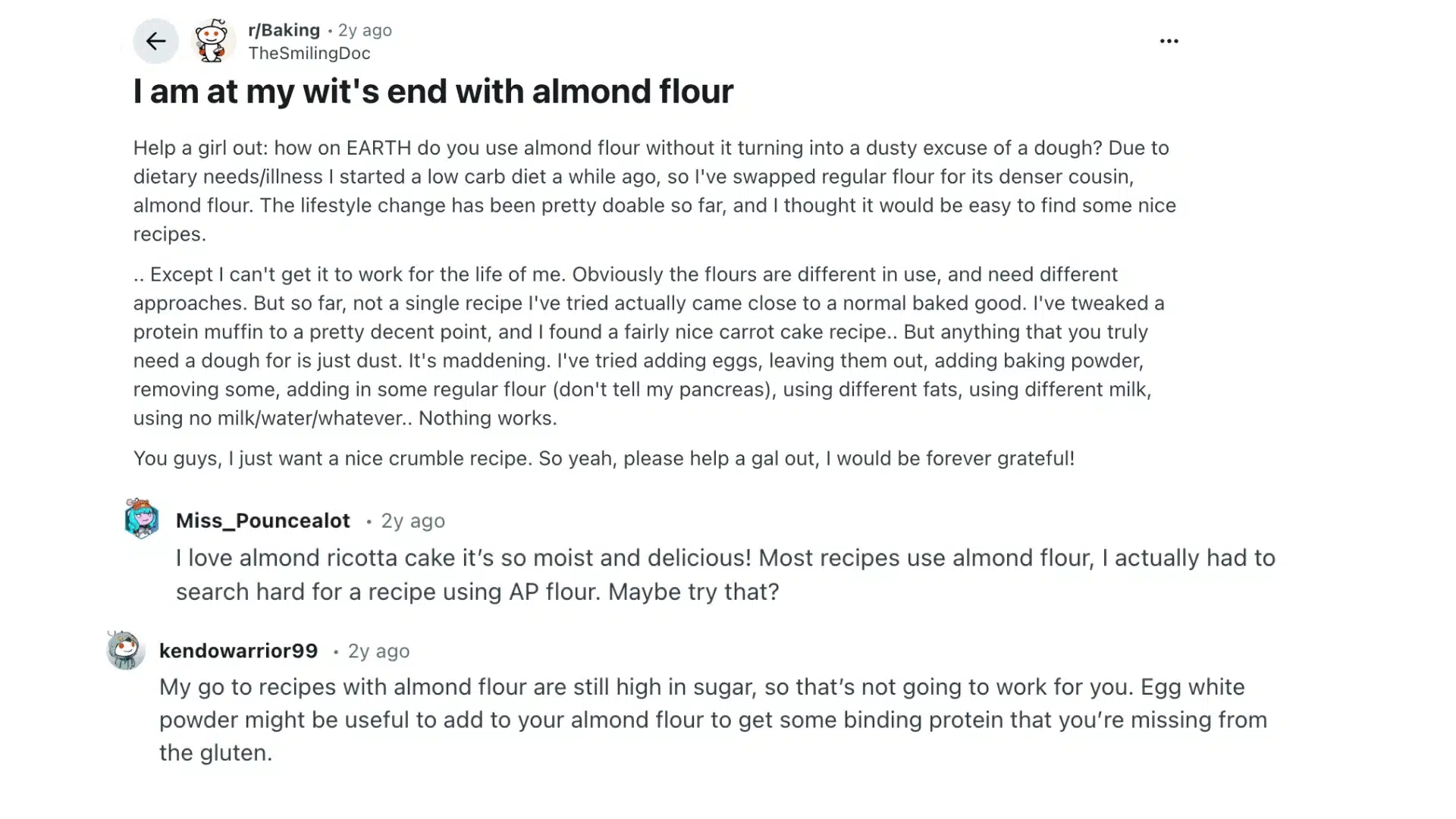
Real-world experiences from Reddit communities paint a complex picture of almond flour’s impact on everyday health.
While many users enthusiastically report significant weight management success , improved blood sugar stability , and enhanced satiety that keeps them satisfied longer than wheat-based products, others share cautionary tales worth heeding.
Common complaints include unintended weight gain from calorie-dense overconsumption , persistent digestive issues like bloating and gas that only resolved after elimination, and baking frustrations with its tricky texture.
Cost concerns also dominate discussions, with budget-conscious bakers questioning whether the premium price justifies the benefits. As a frustrated user, I have to say, look at this Reddit post, almond flour’s performance always matches its health halo, reminding us that individual experiences vary dramatically.
Who Should Avoid Almond Flour?
Almond flour works well for many people, but it is not the best choice for everyone.
Some people may need to limit or avoid it completely:
- People with kidney stones: Almond flour is high in oxalates, which may increase the risk of stone formation.
- Those with digestive issues: If you often deal with bloating or gas, almond flour may make symptoms worse.
- People with nut allergies: This one is obvious, but even small amounts can trigger reactions.
- Those already high in omega-6 intake: If your diet is heavy in processed oils, adding almond flour daily may not help your overall balance.
If you fall into any of these groups, it’s better to use it occasionally or look at other flour options.
Comparisons With Other Flours
Understanding how almond flour compares to popular alternatives helps you make smarter choices for your health goals and baking needs. Here’s what you need to know:
| Nutrient (per 1/4 cup) | Almond Flour | Coconut Flour | Oat Flour | Wheat Flour |
|---|---|---|---|---|
| Calories | 160 | 60 | 120 | 110 |
| Carbohydrates | 6g | 8g | 21g | 24g |
| Protein | 6g | 2g | 4g | 3g |
| Fat | 14g | 2g | 2g | 0.5g |
| Fiber | 3g | 5g | 3g | 1g |
| Glycemic Index | 1-5 (Very Low) | 45 (Low) | 25 (Low) | 71 (High) |
| Gluten | None | None | None* | Yes |
| Blood Sugar Impact | Minimal | Moderate | Low | High spikes |
| Substitution Ratio | 1:1 (denser texture) | 1:4 (highly absorbent) | 1:1 by weight | 1:1 standard |
Each flour offers distinct nutritional profiles and baking characteristics. Your choice should align with your specific dietary needs, blood sugar management goals, and recipe requirements.
Is Almond Flour Healthy For Daily Use?
Almond flour can be part of a healthy diet, but using it every day is not always ideal.
In my experience, the biggest issue is quantity. Since it is calorie-dense and high in fats, it’s easy to overuse without noticing. This can lead to unwanted weight gain or digestive discomfort over time.
For most people:
- Small amounts, a few times a week, are fine
- Daily use should be moderate, not excessive
- Mixing it with other flours often works better
If you enjoy baking regularly, try not to rely on almond flour as your only option.
Frequently Asked Questions
Is almond flour healthier than wheat flour?
Almond flour is lower in carbs and higher in healthy fats, protein, and fiber than wheat flour. It may support better blood sugar control, but it is also more calorie-dense and not always ideal for daily use.
Can almond flour cause inflammation?
Almond flour contains omega-6 fats, which may contribute to inflammation if your diet already lacks an omega-3 balance. This usually becomes a concern with frequent, high intake rather than occasional use.
Is almond flour bad for the kidneys?
Almond flour is high in oxalates, which may increase the risk of kidney stones in some people. Those with a history of stones or kidney issues should limit intake and stay mindful of portion sizes.
How much almond flour is safe per day?
For most people, around 1/4 cup in a day is a reasonable amount. It’s best not to rely on it daily and instead rotate with other flours to maintain better nutritional balance.
Wrap Up
While almond flour offers genuine benefits, stable blood sugar, heart-healthy fats, valuable nutrients, the concerns about omega-6 overload, high oxalates, and digestive issues are equally valid.
When people ask, is almond flour healthy, the answer isn’t one-size-fits-all. For most people, occasional use poses minimal risk, but daily consumption may be problematic, especially with kidney issues, inflammatory conditions, or digestive sensitivities.
I want to hear from you. What’s been your experience with almond flour? Have you noticed any benefits or concerns? Which flour alternatives work best in your kitchen?
Drop your thoughts in the comments below. Your real-world experience helps our community make informed choices. And if you’re dealing with unexplained symptoms, consider consulting a healthcare provider before making any major dietary changes.