











Rice sits on more dinner plates than almost any other food, yet basmati earns its own spotlight for a reason.
The long grain, that aroma drifting from the pot, that fluffy texture on the fork- none of it happens by accident.
So is basmati rice healthy, or is the hype just marketing dressed up in fragrance?
The answer lives somewhere between science and simple food logic.
This blog breaks down what basmati actually offers your body, where it falls short, and how to use it smartly across meals, diets, and daily habits, without the usual grain-shaming or blanket praise.
Disclaimer: This blog offers general nutrition info and isn’t a substitute for medical or dietary advice. Consult a healthcare professional or dietitian about diabetes, weight, or any prescribed diet.
Is Basmati Rice Healthy?
Basmati rice originated in the Indian subcontinent and has been cultivated for centuries in the Himalayan foothills.
Its name comes from Sanskrit, meaning fragrant one, a nod to its signature aroma.
Yes, basmati rice is healthy when eaten in sensible portions. It supplies energy, B vitamins, and trace minerals in every serving. Brown basmati adds fiber; white basmati offers a lighter, faster-digesting option.
Neither version is harmful on its own. Basmati fits into most everyday diets without concern.
Moderation, not elimination, is what determines whether it supports your health over time.
What Makes Basmati Rice Different from Other Types of Rice?
Basmati owes its aroma to a natural compound called 2-acetyl-1-pyrroline, found in far higher concentrations here than in most other rice varieties. This compound forms during grain development, not during cooking.
Its grains also elongate significantly when cooked, often stretching to nearly twice their raw length.
Most rice varieties expand in width instead.
Traditional aging, sometimes for a year or longer, reduces moisture and firms up the grain structure.
This aging step is unique to basmati and influences its texture, fluffiness, and grain separation.
Basmati Rice Nutrition Breakdown: Per Cooked Cup
The nutritional profile of basmati rice varies by type, processing method, enrichment, and preparation.
However, white basmati is primarily a carbohydrate source and can also provide several B vitamins and minerals.
| Nutrient | Amount |
|---|---|
| Calories | 210 |
| Carbohydrates | 45.6 grams |
| Protein | 4.4 grams |
| Total fat | 0.5 grams |
| Dietary fiber | 0.7 grams |
| Sodium | 399 mg |
| Folate | 24% of the Daily Value |
| Selenium | 22% of the Daily Value |
| Thiamine | 22% of the Daily Value |
| Niacin | 15% of the Daily Value |
| Copper | 12% of the Daily Value |
| Iron | 11% of the Daily Value |
| Vitamin B6 | 9% of the Daily Value |
| Zinc | 7% of the Daily Value |
| Phosphorus | 6% of the Daily Value |
| Magnesium | 5% of the Daily Value |
Science-Backed Basmati Rice Benefits
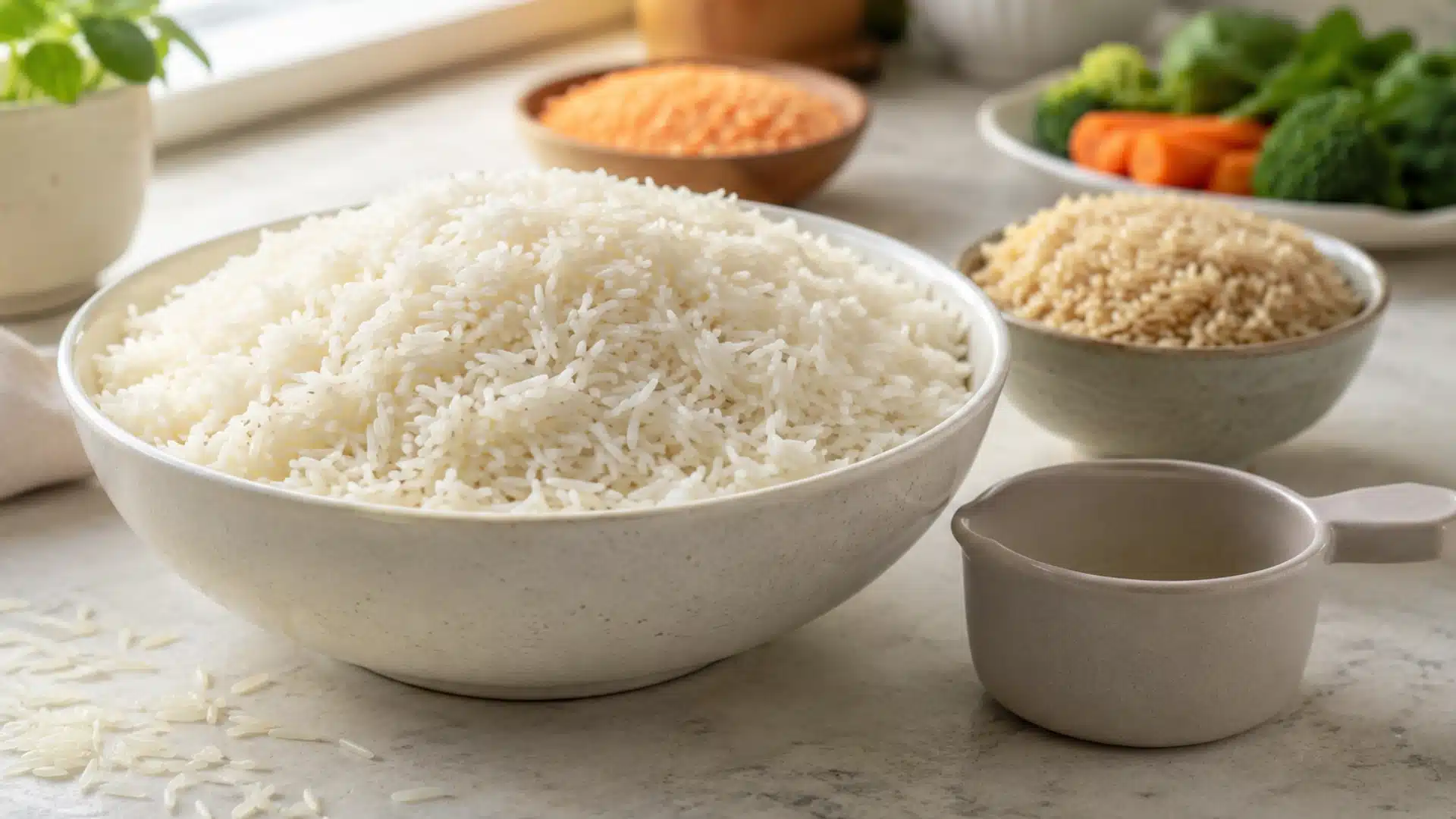
Research points to several specific ways basmati rice supports the body beyond basic energy.
1. Supports Heart Function
Basmati provides magnesium and potassium, especially in the brown variety.
Magnesium helps regulate heart rhythm. Potassium supports healthy blood pressure.
Studies on whole grains link regular intake to lower cardiovascular risk.
This effect comes from the overall dietary pattern, not basmati alone. Pairing it with vegetables and lean protein strengthens this benefit further. Individual results still vary by health status.
2. Aids Brain and Nerve Function
Thiamine, or vitamin B1, is one of basmati’s standout nutrients.
One cup covers roughly 22% of your daily need. Thiamine helps convert food into usable energy for brain cells.
Low thiamine levels are linked to nerve and cognitive issues. Regular basmati intake helps meet this requirement.
This benefit applies most clearly to people with limited thiamine sources elsewhere in their diet.
3. Supports Healthy Pregnancy
Basmati contains folate, providing about 24% of the daily value per serving.
Folate supports early fetal neural development.
Public health guidelines recommend adequate folate intake before and during pregnancy. Basmati alone won’t meet full requirements but can contribute alongside prenatal vitamins and folate-rich vegetables.
Pregnant individuals should confirm total intake with their doctor.
4. Provides Antioxidant Protection
Brown basmati retains its bran layer, which holds natural plant compounds called phenolics.
These compounds help neutralize oxidative stress in the body. Oxidative stress is linked to aging and chronic disease risk. White basmati loses most of these compounds during milling.
Choosing brown basmati regularly may offer a modest antioxidant advantage.
Research here is still developing and product-specific.
5. Supports Red Blood Cell Production
Basmati supplies both iron and copper, two minerals your body needs to form healthy red blood cells.
Iron carries oxygen through the bloodstream.
Copper helps the body absorb and use iron effectively. Together, they support steady energy and reduce the risk of fatigue. Enriched white basmati often contains added iron.
Anyone with diagnosed anemia should still confirm intake needs with a doctor.
6. Supports Immune and Thyroid Health
Selenium appears in notable amounts in basmati, around 22% of the daily value per cup.
Selenium supports normal thyroid hormone production. It also plays a role in immune cell function.
Deficiency is uncommon in most diets but still possible. Including basmati regularly can help maintain adequate selenium levels alongside other selenium-rich foods like eggs and seafood.
7. May Help Lower Inflammation
Population studies link whole grain intake to lower markers of chronic inflammation.
Brown basmati qualifies as a whole grain, while white basmati doesn’t. Fiber and plant compounds in the bran are thought to drive this effect. Results come from broader whole-grain research, not basmati-specific trials.
Swapping refined grains for brown basmati periodically may offer a similar, modest benefit.
Is Basmati Rice Healthier than White Rice?
The main difference concerns processing and glycemic response, not determining a clear overall winner.
- Basmati typically shows a lower glycemic response than most standard white rice varieties.
- Regular white rice usually has a milder flavor and softer, stickier texture.
- Basmati grains stay separate after cooking; standard white rice often clumps.
- Arsenic levels tend to run lower in basmati than in many conventional white rice types.
- Standard white rice is often cheaper and more widely available in bulk.
- Nutrient content stays nearly identical once you compare equal serving sizes.
- Basmati suits dishes needing distinct grains; standard white rice suits sticky or creamy preparations.
White Basmati vs Brown Basmati: Which is Healthier?
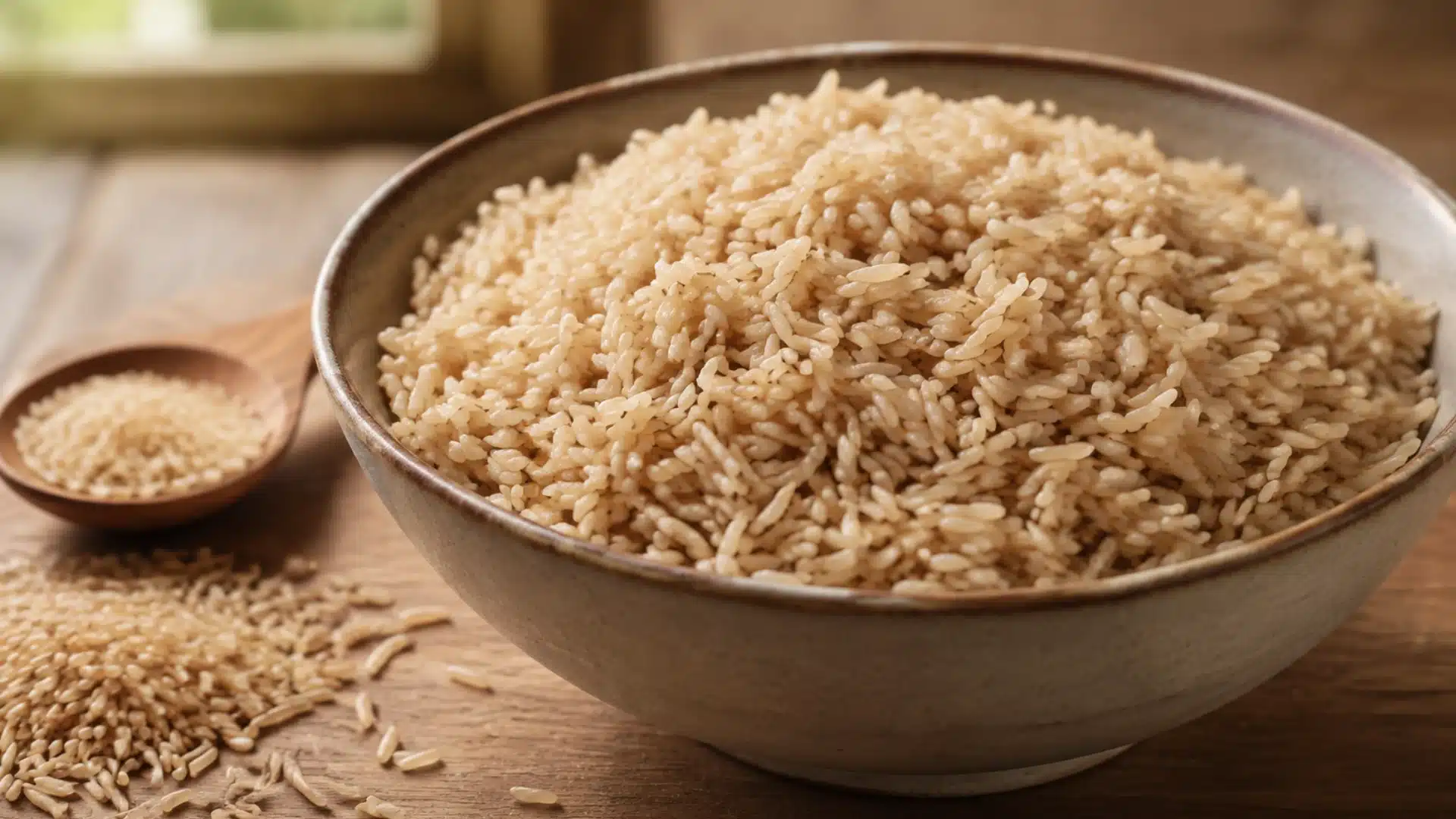
Brown basmati generally wins on overall nutrition, though the right choice depends on your goals.
It needs more water and twice the cooking time because of its intact bran layer. White basmati cooks faster and lasts longer on the shelf because removing the bran reduces spoilage from natural oils.
Brown basmati also has a shorter shelf life once opened, so smaller, more frequent purchases work better.
Brown basmati tends to keep you fuller longer per serving, which can help with portion control.
White basmati is perfect for recipes needing a soft, neutral base, like rice pudding or pilafs. Beginners to whole grains can mix both types in one pot for an easy transition without changing taste or texture.
Neither is wrong. Match the type to your health priorities and the dish you’re making.
Is Basmati Rice Good for Blood Sugar?
Basmati’s effect on blood sugar depends heavily on how it’s cooked and served, not just the grain itself.
- Cooling cooked basmati before eating raises its resistant starch content, which can blunt the blood sugar spike.
- Cooking basmati just until firm keeps its starch structure more intact than boiling it soft.
- A half-cup cooked serving is a common reference point for a single blood-sugar-conscious portion.
- Reheating chilled basmati doesn’t fully reverse the resistant starch benefit gained from cooling.
- Acidic dressings, like a vinegar-based sauce served with rice, can further slow glucose absorption.
Can People With Diabetes Eat Basmati Rice?
Yes, basmati rice can fit a diabetes meal plan when carbohydrate counting guides the portion.
Insulin and other diabetes medications are often dosed around total carbohydrate grams, so knowing exactly how much rice is on the plate matters more than the rice type itself.
A continuous glucose monitor, where available, shows how a specific meal affects your numbers in real time.
Medication timing relative to the meal also influences the outcome.
Work with your dietitian or endocrinologist to set a carbohydrate target that fits basmati into your routine safely.
Is Basmati Rice Good for Weight Loss?
Weight change depends on total daily calories, and rice contributes calories quickly once servings run large.
Measuring cups, or using your hand as a rough guide, keeps portions realistic without needing exact tracking.
Swapping a large starchy side for a smaller rice portion plus extra vegetables often cuts calories while keeping the plate satisfying. Consistency across weeks shapes results more than any single meal.
Treat basmati as one piece of a broader calorie-aware pattern, not a food to avoid or lean on for results.
Is Basmati Rice Good for Digestion and Gut Health?
Cooled, cooked basmati forms resistant starch that human enzymes can’t fully break down in the small intestine.
Gut bacteria in the colon ferment this starch instead, producing short-chain fatty acids like butyrate.
Butyrate feeds the cells lining the colon and supports a healthy gut barrier. This fermentation process differs from how digestion works with freshly cooked, warm rice.
Including cooled basmati in meals, like rice salads, may offer this gut-support benefit regularly.
Research on resistant starch and gut bacteria is still emerging, so consider it preliminary rather than established.
Is Basmati Rice Suitable for Different Diets?
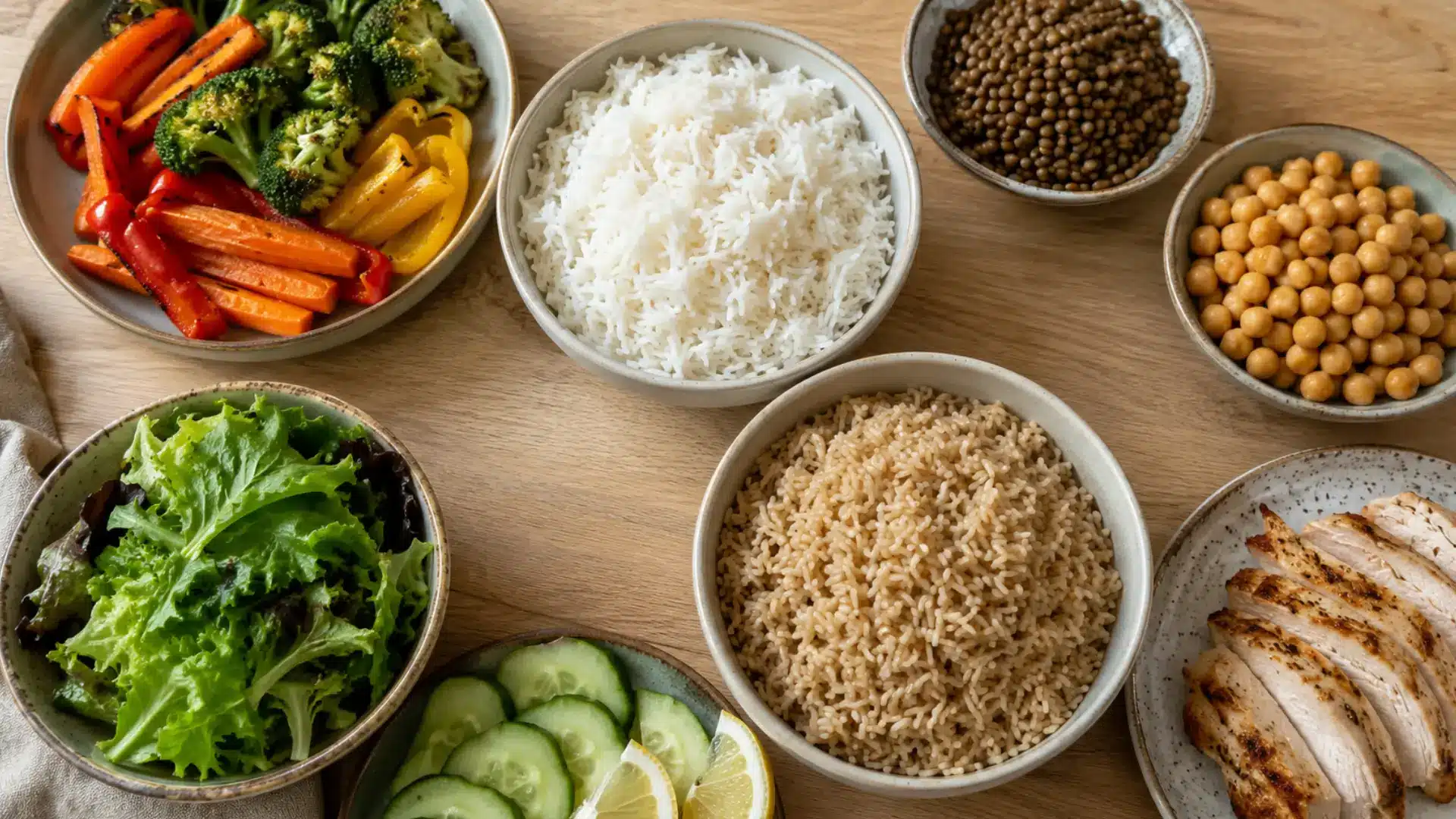
Basmati fits smoothly into some eating patterns and needs adjustment in others.
| Diet | Suitable? | Note |
|---|---|---|
| Mediterranean | Yes | Pairs naturally with olive oil, vegetables, and fish |
| Vegan/Vegetarian | Yes | Combine with legumes for a complete protein profile |
| DASH | Yes, in moderation | Watch added salt in seasoned or boxed varieties |
| Paleo | No | Grains fall outside standard paleo guidelines |
| Whole30 | No | Excludes all grains, including basmati |
| Low-FODMAP | Yes | Plain basmati is well tolerated in typical servings |
| Renal (kidney) diet | Yes, with limits | Lower in potassium and phosphorus than brown rice alternatives |
Who Should Limit or Be Careful With Basmati Rice?
Infants and toddlers process arsenic differently than adults due to lower body weight, so portion control is crucial.
Pregnant women may want to vary grains rather than eating rice daily, given ongoing arsenic exposure research.
Anyone with a rare rice allergy should avoid it entirely, even in small amounts. People on strict low-potassium plans beyond standard renal guidance should confirm exact serving limits with their care team.
Bodybuilders tracking strict macros might find rice’s high carbs crowd out protein during cutting.
How to Make Basmati Rice Healthier
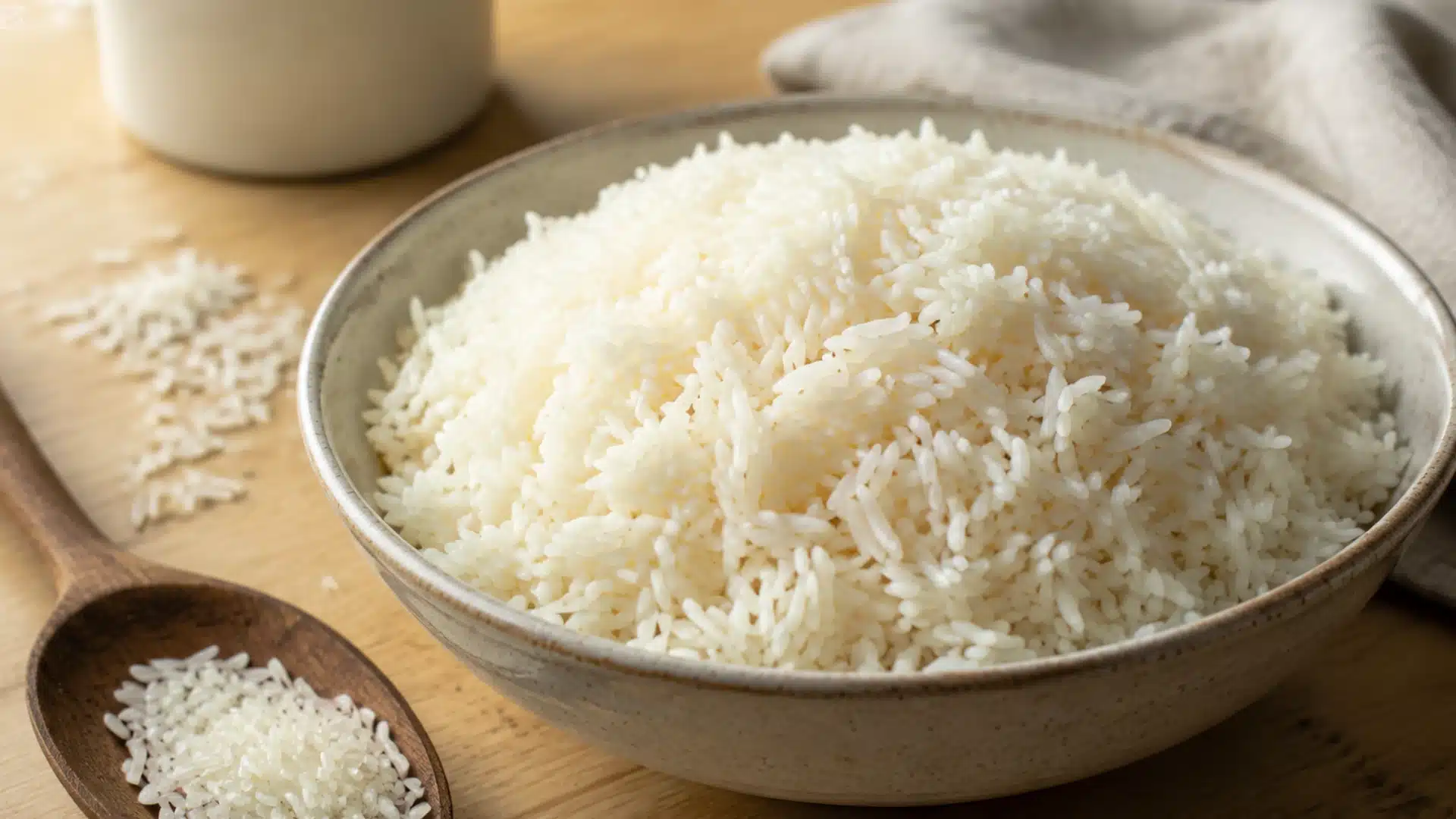
Rinse basmati two to three times before cooking to wash away surface starch and reduce stickiness.
Soaking it for twenty to thirty minutes shortens cook time and improves texture. Cook it in extra water, then drain the excess, since this method lowers arsenic content more than the standard absorption method.
Let cooked rice cool for a few hours before refrigerating, rather than leaving it warm on the counter.
Store it in the fridge within two hours of cooking to prevent bacteria. Small habits like this add up over time.
Healthy Meal Ideas Using Basmati Rice
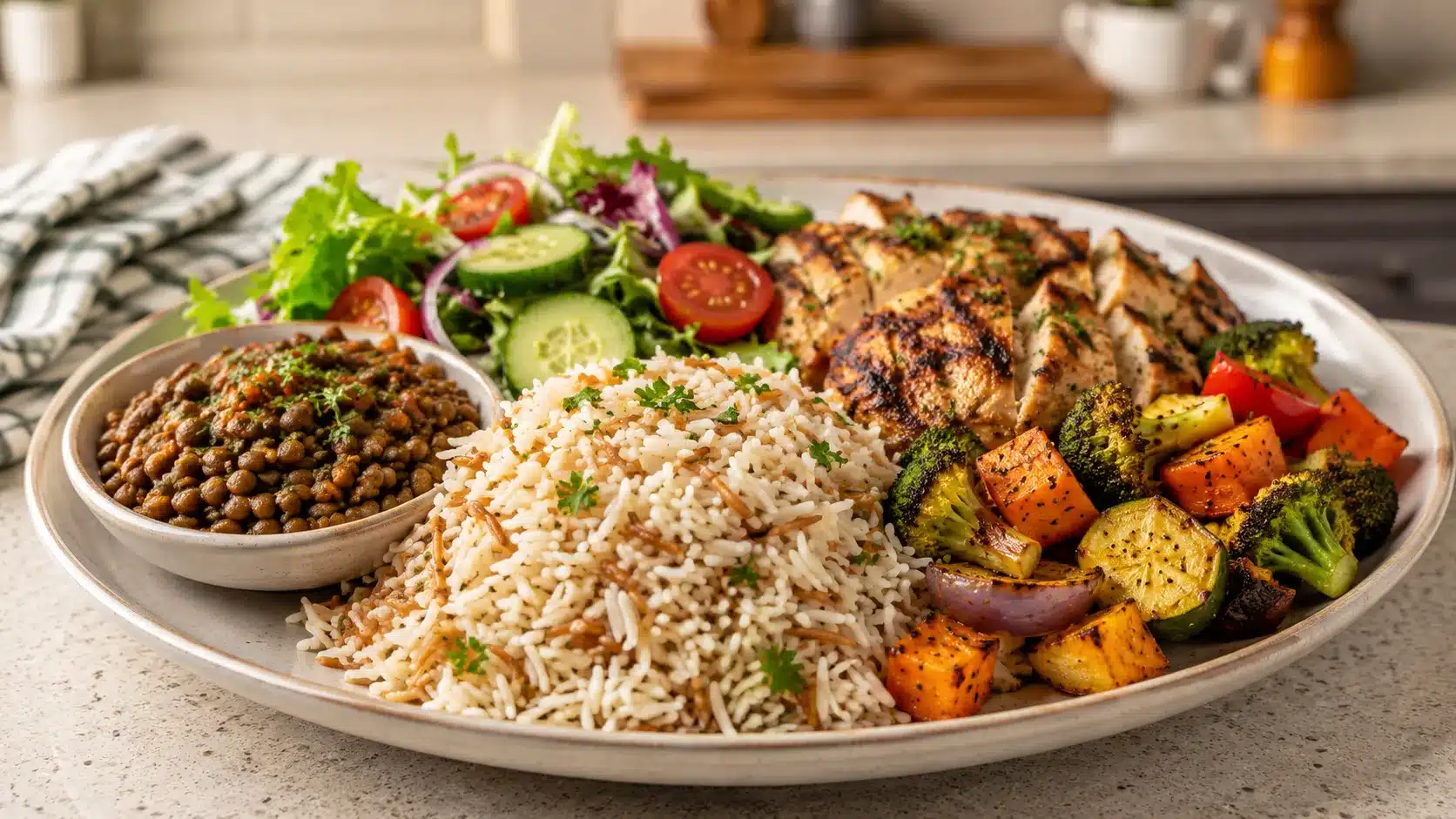
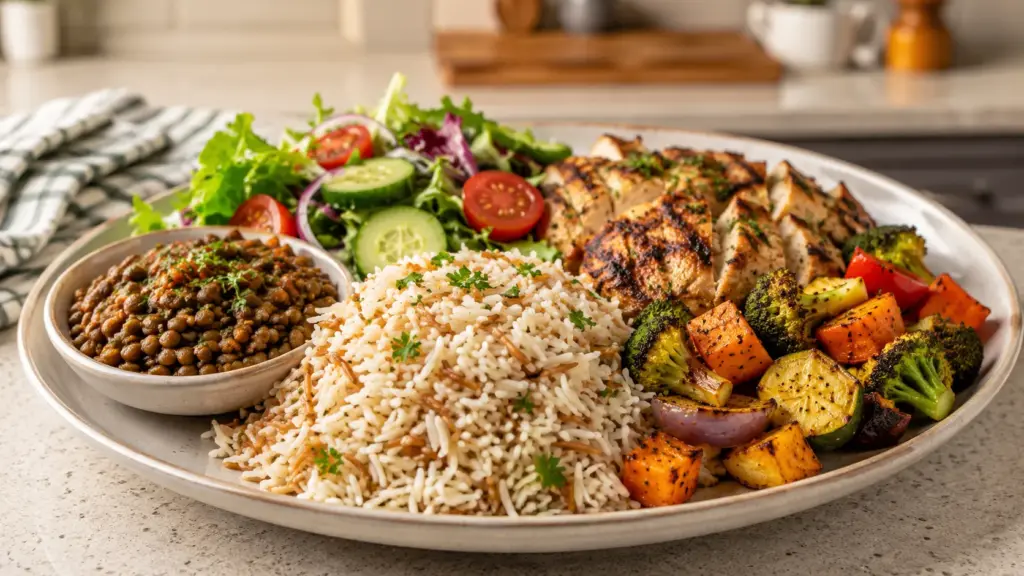
A few simple combinations turn basmati into a complete, balanced meal.
- Basmati and grilled salmon bowl with steamed broccoli and a lemon-olive oil drizzle
- Basmati stir-fry with shrimp, bell peppers, and snap peas in a light soy-ginger sauce
- Basmati and black bean bowl topped with avocado, corn, and lime
- Basmati pilaf with roasted chickpeas, spinach, and toasted almonds
- Basmati and grilled chicken tikka with cucumber raita on the side
- Basmati stuffed bell peppers with ground turkey, tomatoes, and herbs
- Basmati kitchari with lentils, turmeric, and sautéed vegetables
Potential Drawbacks and Myths of Basmati Rice
Basmati carries a few misconceptions worth clearing up, along with its real limitations.
| Myth or Drawback | Reality |
|---|---|
| Organic basmati has zero arsenic | Organic labels address pesticides, not soil-absorbed arsenic |
| Rice at night causes fat gain | Total daily calories matter more, not meal timing |
| Rinsing removes most nutrients | Rinsing removes surface starch, not bound nutrients |
| Higher price means higher quality | Price often reflects aging and branding, not nutrients |
| All basmati comes from India | Pakistan, Nepal, and the U.S. also grow it |
| Cost | Genuine aged basmati costs more than standard rice |
| Sourcing inconsistency | Nutrient and arsenic levels vary by farm and harvest |
Frequently Asked Questions (FAQ’s)
1. Is Basmati Rice Gluten-Free?
Yes, plain basmati rice is naturally gluten-free and safe for celiac or gluten-sensitive diets.
2. How Many Calories Are in a Cup of Cooked Basmati Rice?
White basmati has about 210 calories per cooked cup (roughly 163 grams).
3. Is Basmati Rice a Good Source of Protein?
No, it offers modest protein, around 4-5 grams per cooked cup serving.
4. Can I Eat Basmati Rice on a Low-Carb Diet?
Not easily, since one cup carries 45+ grams of carbohydrates.
5. Does Basmati Rice Need to Be Soaked Before Cooking?
No, but soaking for twenty to thirty minutes improves texture and shortens cook time.
End Note!
Basmati earns its reputation through substance, not just scent. It provides steady energy, micronutrients, and flexibility to suit diabetic plates, athletic routines, and family dinners.
Is basmati rice healthy? Yes, provided portions stay sensible, and preparation choices support your goals.
Cooling, pairing, and rotating grain types surpass obsessing over one “perfect” rice.
Food rarely works in absolutes, and basmati proves that point well.
Treat it as a reliable kitchen player, and let weekly consistency, not any single bowl, define your results.