



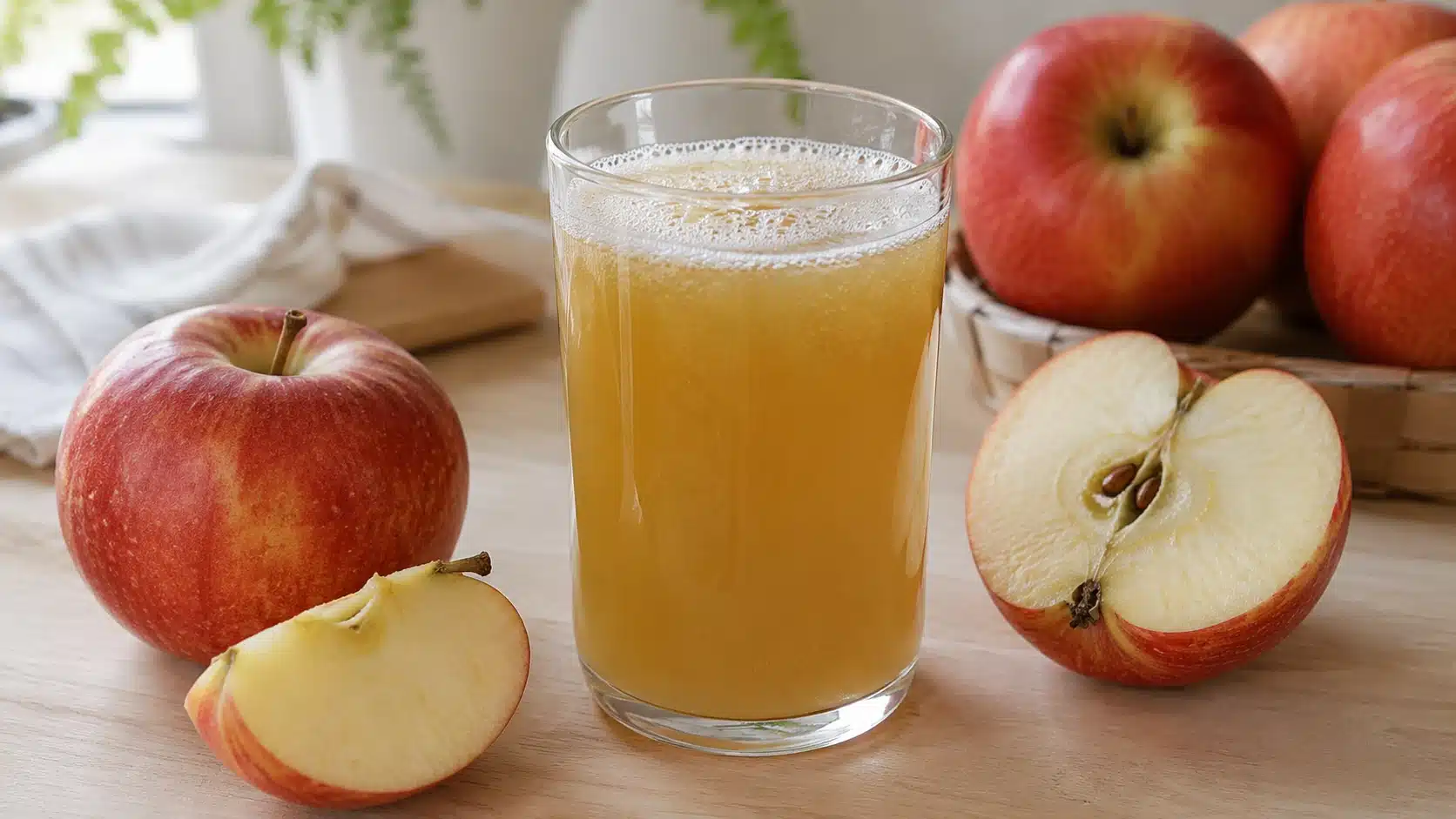










Apple juice sits on the breakfast table, looking harmless. It is bright, it smells like fruit, and it has been part of lunchboxes and sick-day routines for years.
Working closely with people on their diets, I see the same question come up often: is apple juice good for you, or just a sweet drink wearing a healthy label?
This piece breaks down the actual nutrition, where the real benefits and risks fall, how much is reasonable by age, and what to look for on the bottle.
| Medical Disclaimer: This is for informational purposes only and does not constitute medical advice, diagnosis, or treatment. If you have diabetes, insulin resistance, kidney disease, or other conditions, consult your healthcare provider before changing your diet. Results vary. |
Is Apple Juice Good For You? Here’s the Direct Answer
Apple juice can fit into a healthy diet, but it is not automatically a healthy drink just because it comes from fruit. It provides fluid, some plant compounds carried over from apples, and occasionally added vitamin C.
What it lacks is fiber. Juicing strips out nearly everything that makes a whole apple filling, leaving a drink that goes down fast and gets refilled even faster.
One cup makes the tradeoff easy to see:
| Nutrient | Amount in 1 Cup (Unsweetened) | Why It Matters |
|---|---|---|
| Calories | About 114 | Adds up fast with larger servings |
| Carbohydrates | About 28 g | The main energy source in the drink |
| Total Sugar | About 24 g | Natural, but still concentrated |
| Fiber | About 0.5 g | Far lower than a whole apple |
| Protein | About 0.25 g | Doesn’t add fullness |
| Fat | About 0.3 g | Very low |
| Potassium | About 250 mg | Supports fluid balance and muscles |
| Vitamin C | Varies | Often higher in fortified versions |
| Water | About 219 g | Adds to daily fluid intake |
Source: USDA FoodData Central
The gap between sugar and fiber is the real story here. A small glass can sit comfortably in a balanced day. A large or frequent one tips the scale toward excess sugar with little nutritional payoff.
| Note: Most commercial apple juice is fortified with ascorbic acid (vitamin C), explaining the high label content. If buying for vitamin C, check the label, as naturally occurring vitamin C in apple juice is much lower. |
What Are the Actual Health Benefits of Apple Juice?

Apple juice does carry some research-backed benefits, but they are narrower and more conditional than most juice labels suggest, unlike carrot juice daily, which delivers a broader nutrient range per cup. Here is what the evidence actually shows.
1. Polyphenol Content and Antioxidant Activity
Apples contain chlorogenic acid, catechin, phloridzin, and quercetin, polyphenols that can help the body manage oxidative stress at the cellular level.
Some of these compounds survive the juicing process, though in smaller concentrations than you would get from eating a whole apple.
Freshly pressed juice retains polyphenol concentrations roughly two to four times higher than commercial bottled versions, which matters if antioxidant support is your reason for drinking it.
2. Heart Health Markers
A randomized controlled trial found that participants consuming cloudy apple juice showed reductions in LDL cholesterol over four weeks.
Clear, filtered juice did not produce the same result; in the same trial, it was associated with a slight increase in LDL. The distinction between cloudy and clear is not a marketing distinction.
It reflects the presence of apple pulp solids, which contain additional polyphenols and a small amount of fiber. If cardiovascular support is part of your reason for including apple juice, cloudy is the only version worth considering.
3. Hydration Support
Apple juice is approximately 88% water, which means it does contribute meaningfully to daily fluid intake.
For children who refuse plain water or electrolyte drinks during mild illness, diluted apple juice (half juice, half water) has been shown in a 2016 JAMA-published trial to reduce the need for intravenous fluids compared with standard electrolyte solutions in children with mild dehydration.
This is one of the strongest practical arguments for having it available at home, particularly for families with young kids.
4. Digestive Support (Limited)
The natural fructose and sorbitol content in apple juice can have a mild laxative effect for some people.
This is occasionally useful for occasional constipation, but it cuts both ways; in children or sensitive adults, the same fructose load can cause loose stools or bloating, especially in larger servings.
For long-term digestive health, whole fruit and dietary fiber remain the better choice by a wide margin, as do green juice options that tend to carry more fiber-friendly compounds.
5. Early Brain Health Research
A small 2010 study found that adults with Alzheimer’s disease who consumed one cup of apple juice daily for one month showed improvements in behavioral symptoms, including anxiety and restlessness.
Memory and problem-solving did not improve. The evidence here is preliminary. I tell clients this is an interesting finding, not a treatment strategy.
More human trials with larger cohorts are needed before apple juice can be said to meaningfully support brain health.
| Nutrition Tip: If buying apple juice for polyphenols, cloudy, unfiltered juice is best. Clear juice is filtered, removing pulp and polyphenols, leaving flavored sugar water. |
Why Is Apple Juice High in Sugar Even Without Added Sugar?
“Unsweetened” and “low sugar” are not the same thing. Apple juice can carry zero added sugar and still deliver a notable sugar load, for a few reasons:
- Juicing concentrates the sweet part: Pressing several apples into one glass keeps most of the natural sugar while leaving behind the skin and pulp that would have slowed things down.
- Fiber drops sharply: A whole apple has about 4 grams of fiber. One cup of juice has about 0.5 grams. That gap changes how the body handles the sugar.
- Liquid calories feel lighter: A glass of juice doesn’t feel like much food, but it still adds roughly 114 calories without the fullness a whole apple gives.
- Blood sugar can rise faster: Without fiber to slow digestion, the sugar in apple juice may enter the bloodstream more quickly than the same sugar eaten as whole fruit.
- The total sugar line still matters: The FDA label separates Total Sugars from Added Sugars. A juice with 0g added sugar is a good sign, but the total sugar count still tells the fuller story; the same logic applies when comparing natural sugar sources like coconut and cane sugar.
Is Apple Juice Good for Hydration?
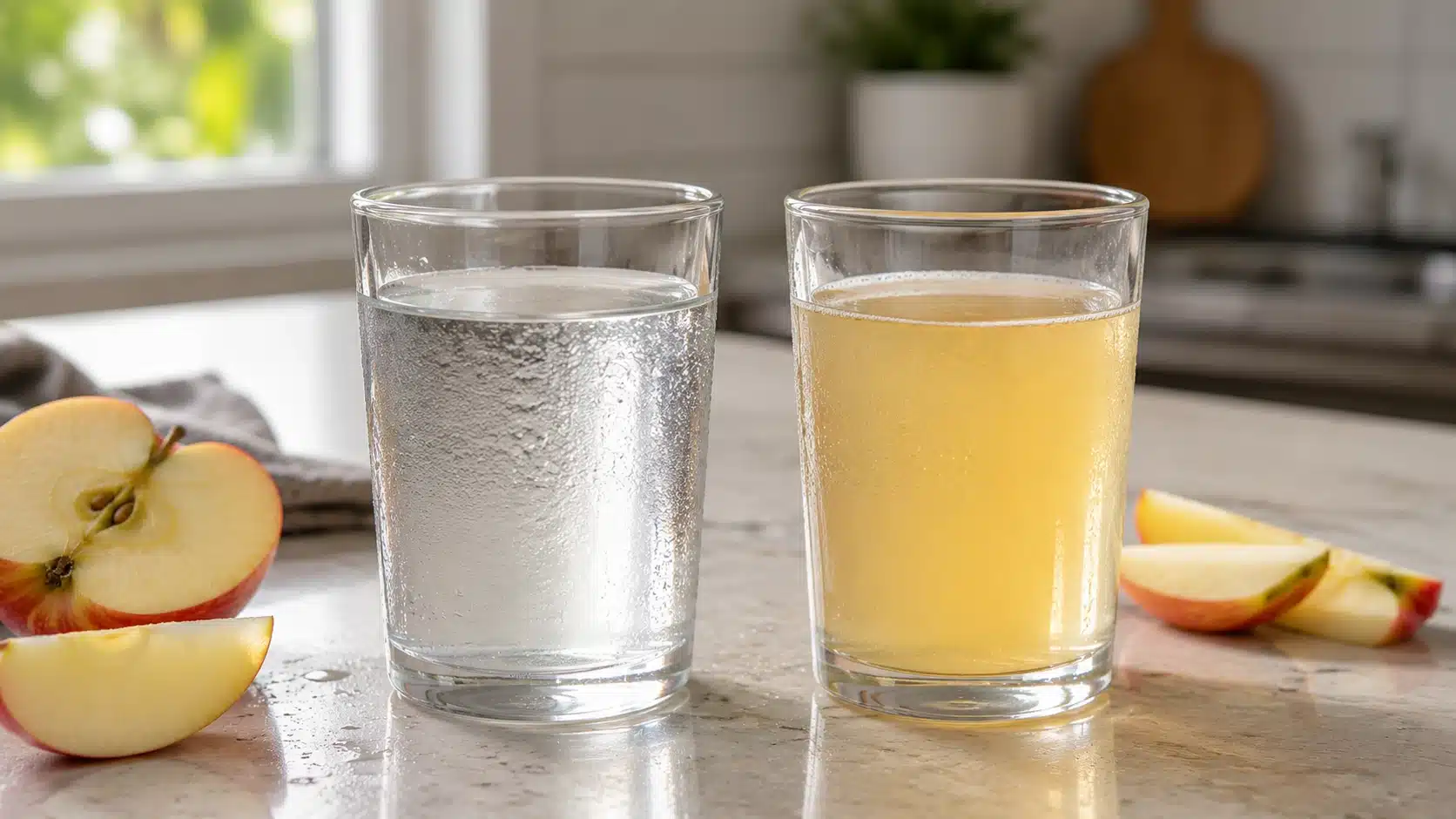
Apple juice does add to daily fluid intake since it’s mostly water. But for everyday hydration, water is still the better default; it provides fluid without the sugar or calories.
| Situation | Best Drink Choice |
|---|---|
| Daily hydration | Water |
| When water feels boring | Diluted apple juice |
| During mild illness | Diluted apple juice with food |
| Blood sugar concerns | Water, or guidance from a clinician |
| Bedtime drink | Water only |
| All-day sipping | Water, not juice |
Diluting juice half-and-half with water keeps the flavor while cutting the sugar per cup, a simple adjustment for people who drink it regularly. The pattern of consumption matters more than any single glass.
Drawbacks and Risks of Drinking Apple Juice Daily
One small glass is rarely a problem for most healthy adults. The concern builds when apple juice becomes a daily refill, replaces water outright, or gets sipped slowly across the day.
- Blood sugar swings: Natural sugar with almost no fiber can matter more for people managing insulin resistance or diabetes, especially on an empty stomach.
- Dental risk: The combination of sugar and acid can damage teeth over time, especially with slow sipping or bedtime juice.
- Low fullness: Juice is quicker to drink and far less filling than chewing through a whole apple, so the calories go down without much satisfaction.
- Arsenic exposure in children: The FDA has set an action level of 10 parts per billion for inorganic arsenic in apple juice, specifically to reduce exposure among babies and young children. Keeping portions small and avoiding juice as a child’s main drink is the practical takeaway.
- Easy to overdrink: A large glass each day adds sugar quickly, even with a “100% juice” label front and center.
How Much Apple Juice Is Too Much by Age?
| Group | Suggested Daily Limit | Best Way to Serve |
|---|---|---|
| Under 1 year | Avoid unless clinically advised | Not a routine drink |
| Ages 1 to 3 | Up to 4 oz daily | Open cup, with meals |
| Ages 4 to 6 | 4 to 6 oz daily | With meals |
| Ages 7 to 18 | Up to 8 oz daily | Avoid all-day sipping |
| Healthy adults | 4 to 8 oz if included | With food, or diluted |
| Diabetes or blood sugar concerns | Consult a clinician or RD | Prefer whole fruit |
| Dental concerns | Keep rare, with meals | Rinse with water after |
Source: American Academy of Pediatrics
Is Apple Juice Better Than Eating a Whole Apple?
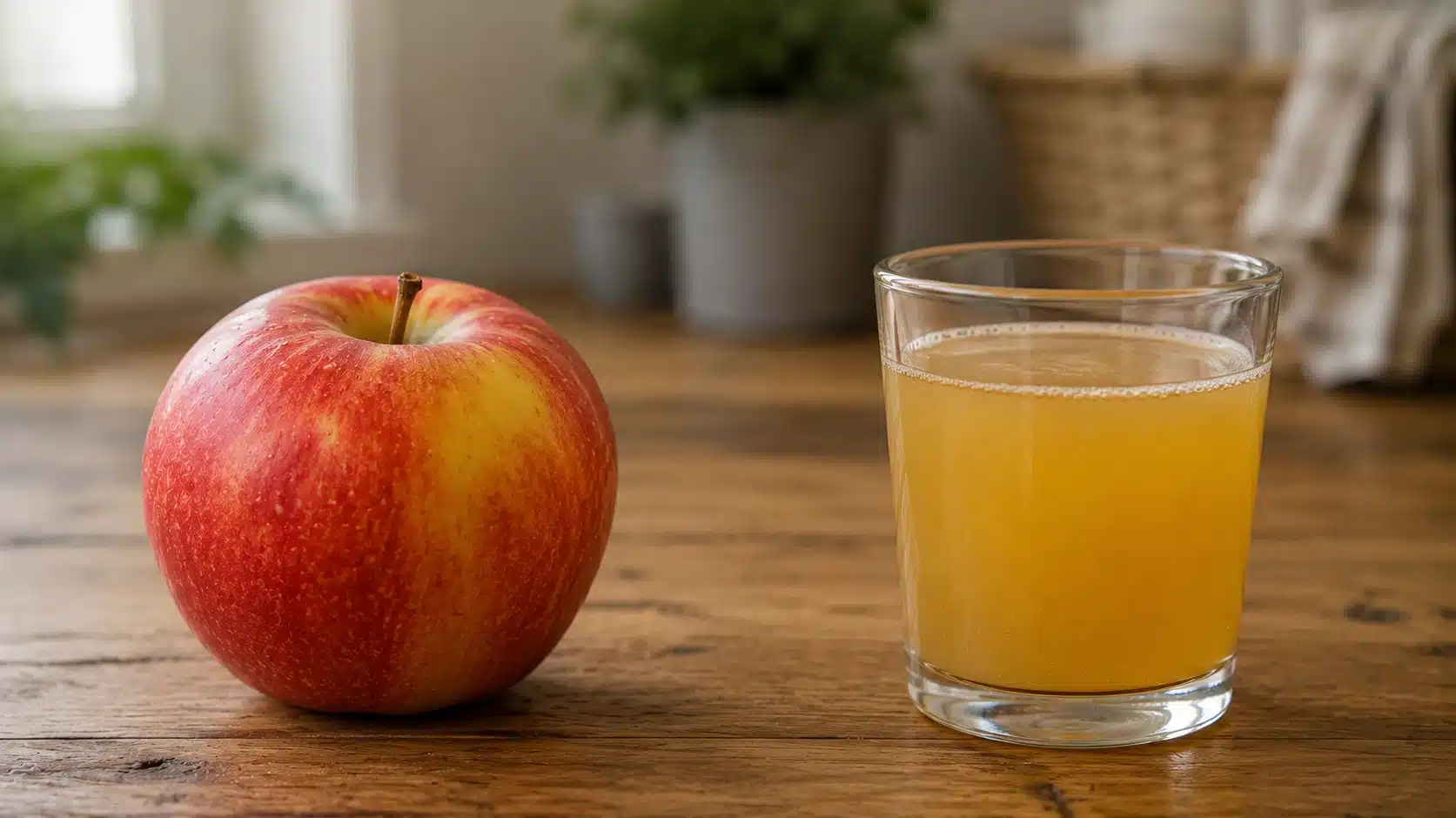
A whole apple remains the stronger everyday choice for most people; pairing apples with a source of protein is one of the better ways to make the fruit itself more filling.
Apple juice still has a place, but it works better as an occasional sweet drink than as a fruit replacement.
| Factor | Whole Apple | Apple Juice |
|---|---|---|
| Fiber | Higher | Very low |
| Fullness | Better | Lower |
| Sugar absorption speed | Slower | Faster |
| Hydration | Some | More fluid |
| Convenience | Requires chewing | Easy to sip |
| Best use | Daily fruit choice | Occasional drink |
The 2025–2030 Dietary Guidelines for Americans specifically advise that 100% fruit juice be consumed in limited portions or diluted with water, rather than treated as a stand-in for whole fruit. The form genuinely changes how the body processes it, eat the apple for its full value, and treat the juice as a smaller, occasional pour.
For people watching their sugar intake more broadly, the same logic that applies to apple juice, checking total sugar, not just added sugar, carries over into cutting back on sugar intake elsewhere in the diet.
Frequently Asked Questions
Does freezing apple juice change its sugar or nutrient content?
Freezing doesn’t meaningfully change the sugar or nutrient profile. The main shifts are in texture and flavor once thawed, and in slight vitamin C loss during long storage. It’s a safe way to portion juice into smaller servings ahead of time.
Can apple juice replace an electrolyte drink during mild dehydration?
Not well on its own. Apple juice has potassium but lacks the sodium balance that proper rehydration solutions provide. For mild illness, diluting it with water and pairing it with food is more useful than relying on it as a stand-alone rehydration drink.
Does the apple variety used affect the juice’s nutrition?
Slightly. Tarter varieties like Granny Smith tend to carry a bit less natural sugar than sweeter varieties, but once juiced and blended commercially, most bottled apple juice draws from multiple varieties, which evens out these differences.
Is homemade apple juice healthier than store-bought?
Homemade juice skips added preservatives and lets you control how much pulp stays in, which can mean more polyphenols are retained. It won’t lower the natural sugar content, though, since that comes from the apples themselves, not the bottling process.
Why does apple juice sometimes cause stomach upset in kids who tolerate whole apples fine?
This usually comes down to fructose concentration. Juice delivers a denser dose of fructose without the fiber that slows absorption in whole fruit, which can trigger loose stools or bloating in some children, particularly in larger servings.
So, Should You Drink Apple Juice?
Apple juice still has a place in the kitchen. A small glass adds flavor when plain water feels dull, and diluted, it can support fluid intake during mild illness.
The deciding factor isn’t the drink itself; it’s the pattern around it. A glass with breakfast looks nothing like three refills before lunch, even though the sugar per cup stays the same.
Choose 100% juice, keep the pour modest, and let whole fruit carry most of the daily load. If apple juice has become more of a habit than a treat in your house, it might be worth rethinking the portion before the next bottle.